
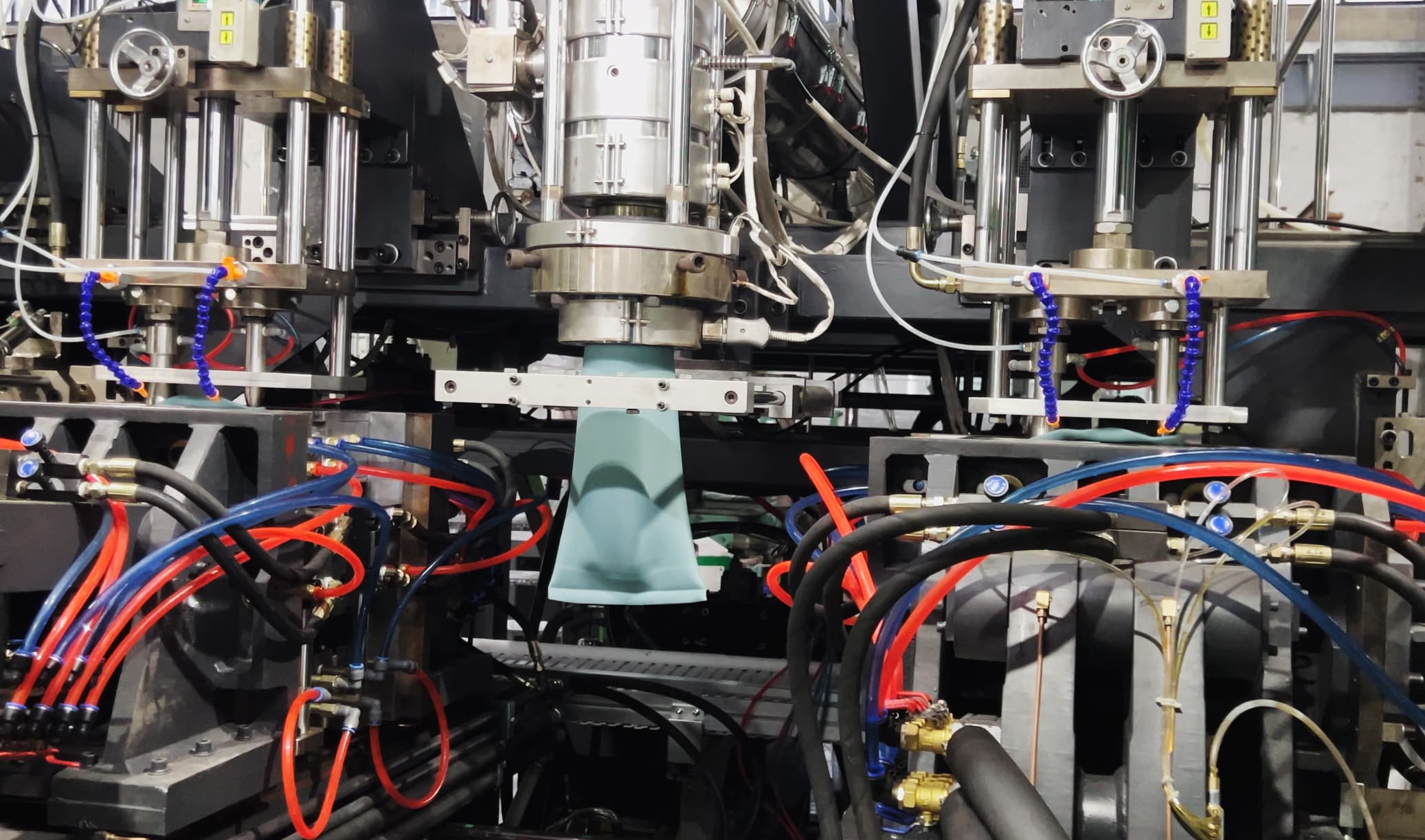
EBM Machine Setup Tips to Increase Real Output
If your line is running but output is still below target, setup is usually the first place to fix. This page focuses on practical setup, process control, and shift-floor actions that help production teams increase real bottle output.
This is not a general introduction page. It is a field guide for production managers, process engineers, and technicians who need more stable cycles, fewer interruptions, and better hourly output from existing extrusion blow molding capacity.
For a broader technical overview, see our extrusion blow molding machine guide.
Where Output Is Lost During Setup
Most output losses come from repeat small deviations, not one big fault. Typical loss points include unstable parison control, drifting thermal conditions, unbalanced cooling time, and inconsistent startup routines between shifts.
- Cycle time is not stable from one lot to the next.
- Frequent minor defects force speed reduction.
- Changeover takes too long to return to steady production.
- Operator adjustments are not standardized or documented.

Set a Stable Baseline Before Speed Tuning
Do not increase speed first. Build a stable baseline first, then optimize in small steps. If baseline stability is weak, faster settings often increase rejects and reduce net output.
Baseline checks before optimization
- Confirm material, mold, and target bottle spec are aligned with the active recipe.
- Confirm heating zones and mold temperature control are stable before aggressive tuning.
- Record current cycle sequence and operator actions as the reference condition.
- Define one verification window for quality and one for output, then evaluate every change against both.
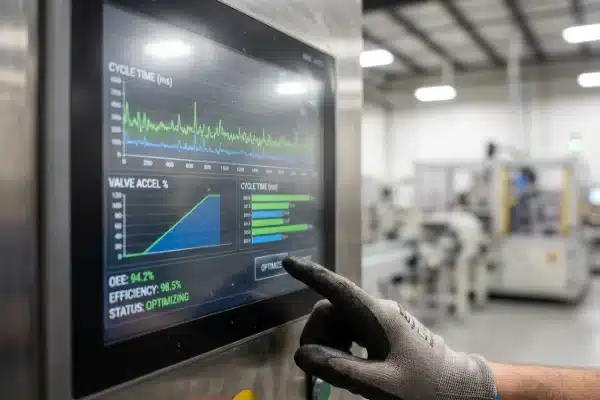
Setup Parameters That Most Affect Real Output
Parison profile and die-gap consistency
Unstable parison control quickly becomes thickness variation, trimming instability, and reject risk. Keep profile adjustments controlled and traceable. Make one variable change at a time and confirm repeatability before the next change.

Thermal stability across melt and mold stages
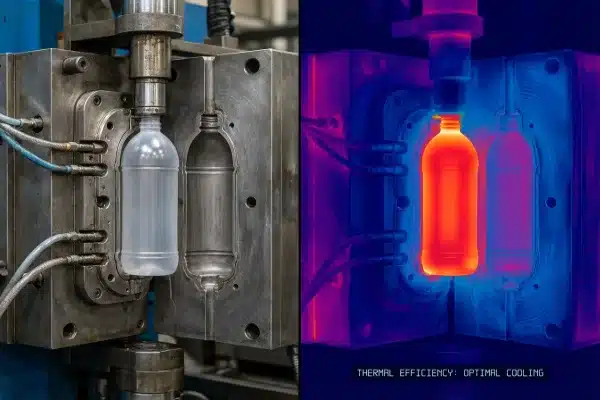
Output depends on thermal repeatability. If thermal drift appears, avoid chasing symptoms with random parameter edits. Re-center thermal conditions first, then re-check cycle balance and product quality.
Blow timing and pressure sequence
Blow sequence should support full forming without overloading cooling or creating unnecessary stress. Keep timing changes incremental and verify bottle consistency before pushing throughput.
Cooling balance and cycle discipline
Cooling is often the hidden bottleneck. Shorter cooling is useful only when bottle stability and downstream handling remain controlled. Optimize cooling with verification, not assumption.
Shift-Floor Actions That Improve Output Reliability
Setup quality is a management process, not only a machine setting task. Standardized shift actions reduce variation and protect output.
- Use one setup checklist per mold and bottle family.
- Require parameter handover notes between shifts.
- Define escalation rules when repeated drift appears.
- Review startup and changeover performance weekly with production and maintenance together.
Maintenance Actions That Protect Setup Performance
Many setup issues are recurring maintenance issues in disguise. Keep preventive checks aligned with output-critical components.
- Inspect air circuit stability and response consistency.
- Verify mold cooling passages and thermal transfer condition.
- Check wear points that affect repeatable clamping and forming.
- Clean and verify sensors that drive control feedback.
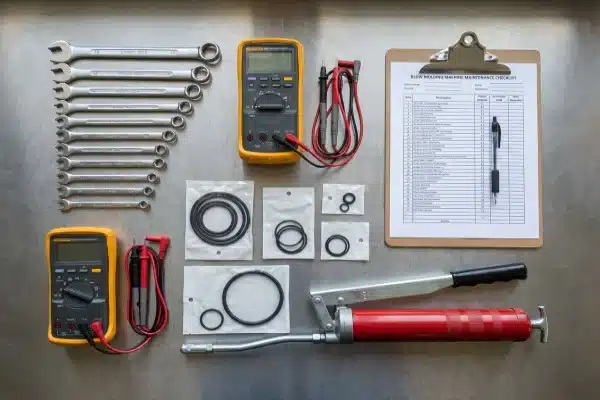
Practical Weekly Setup Review Template
| Review Area | What to Check | Action Rule |
|---|---|---|
| Parison control | Profile stability and repeatability by shift | Adjust in small steps and document each change |
| Thermal condition | Zone and mold temperature consistency | Re-stabilize thermal state before speed increase |
| Cycle sequence | Blow and cooling timing stability | Validate quality and output together before release |
| Shift execution | Handover quality and startup discipline | Use one checklist and close recurring gaps weekly |
Related Technical Pages
- how to operate an extrusion blow moulding machine
- extrusion blow molding troubleshooting
- extrusion blow molding machine maintenance checklist
- how to commission an extrusion blow molding machine to first good bottle in 1 day
If you are comparing process routes and factory requirements, review our extrusion blow molding machine solutions page for planning context.
Need Help Improving Line Output?
Share your current setup pain points and production goals. Our team can help you structure a practical optimization path for your line.