
What Are the Different Types of Blow Molding Machines?
Blow molding machines are used to make hollow plastic products such as bottles, jerry cans, drums, and other containers. But not all blow molding machines work the same way. Different machine types are designed for different materials, bottle shapes, production goals, and end-use industries.
In practical bottle and container manufacturing, the three main types are extrusion blow molding machines, injection blow molding machines, and stretch blow molding machines. However, for most commercial packaging projects, the most important decision is usually between extrusion blow molding (EBM) and stretch blow molding (SBM).
This guide explains the main types of blow molding machines, how they differ, where each one is used, and how to decide which machine type fits your product.

What Is Blow Molding?
Blow molding is a manufacturing process used to create hollow plastic products by forming heated plastic inside a mold with air pressure. It is widely used because it can produce lightweight, durable, and cost-effective bottles or containers at scale.
Typical blow molded products include:
- Beverage bottles
- Detergent bottles
- Milk bottles
- Chemical containers
- Jerry cans
- Industrial drums
- Technical hollow parts in industrial applications
The exact machine type depends on the material, bottle geometry, required output, and final use.
What Are the Main Types of Blow Molding Machines?
There are three main categories of blow molding machines:
- Extrusion Blow Molding Machines (EBM)
- Injection Blow Molding Machines (IBM)
- Stretch Blow Molding Machines (SBM)
Each one has a different forming method and is better suited for different products.
| Machine Type | Main Strength | Typical Applications |
|---|---|---|
| Extrusion Blow Molding | Shape flexibility and broad material range | HDPE bottles, detergent bottles, jerry cans, drums |
| Injection Blow Molding | High neck precision and small container accuracy | Small pharma or cosmetic bottles |
| Stretch Blow Molding | Clarity, strength, and lightweight PET bottles | Water bottles, beverage bottles, edible oil bottles |
Extrusion Blow Molding Machines
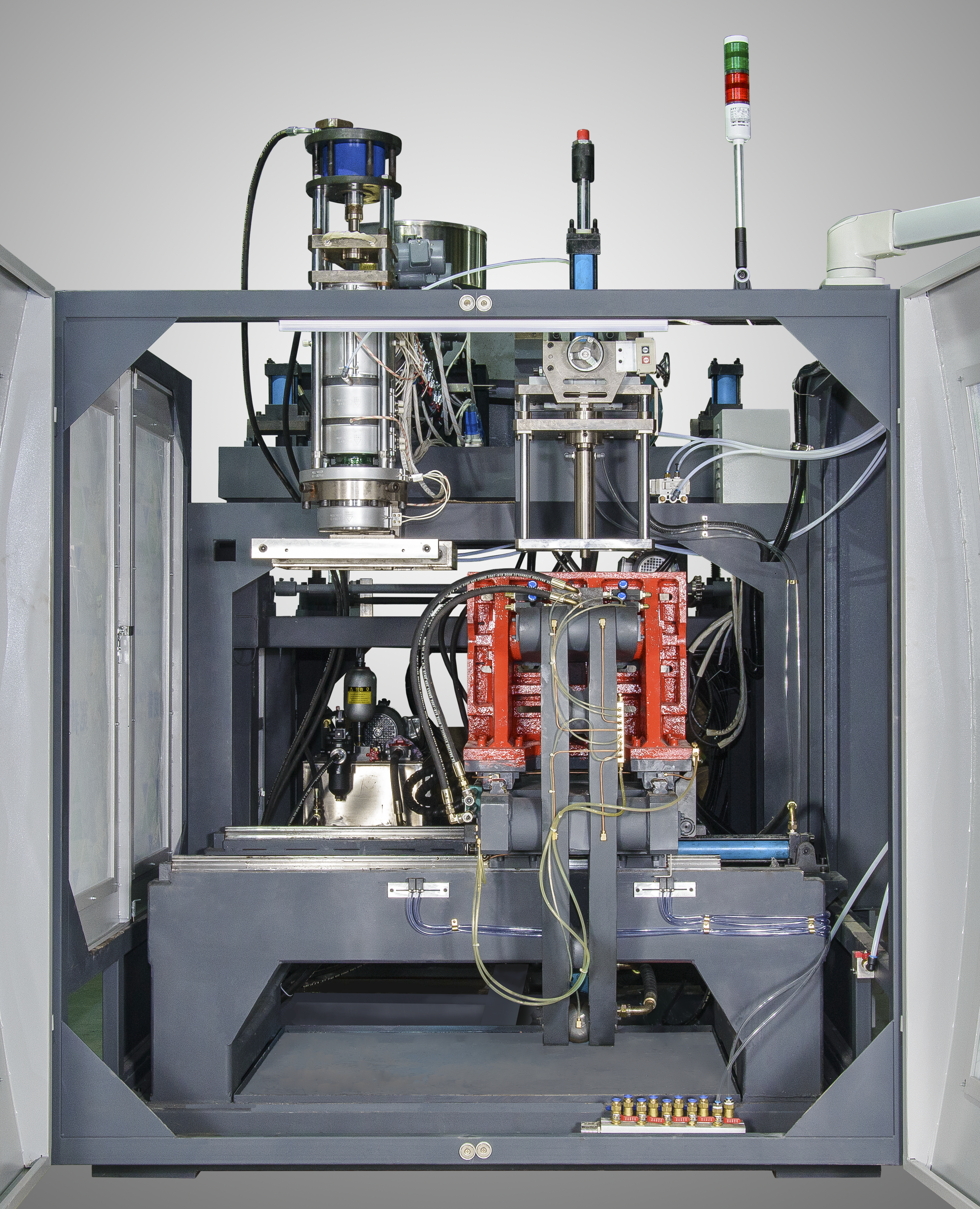
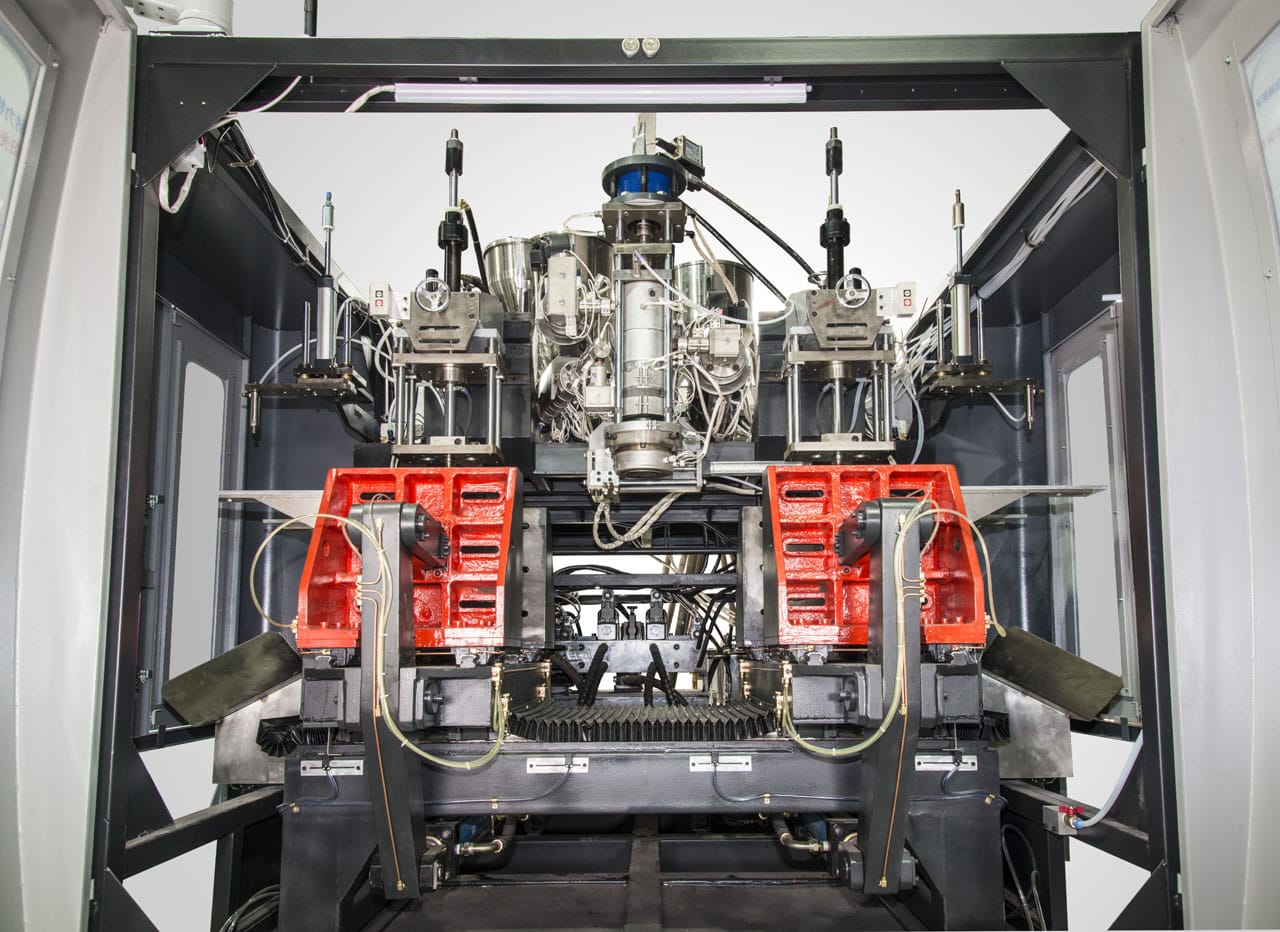
Extrusion blow molding machines work by melting plastic resin and extruding it into a hollow tube called a parison. A mold closes around the parison, air expands it to the mold wall, and the bottle or container is formed after cooling.
EBM is usually the right choice for HDPE and PP packaging projects that need toughness, shape flexibility, or handle design.
Typical applications of EBM
- Detergent bottles
- Milk bottles
- Shampoo bottles
- Chemical containers
- Lubricant bottles
- Jerry cans
- Industrial drums
- Some automotive and industrial hollow parts
Why manufacturers choose EBM
- Works well with HDPE and PP
- Handles bottles with handles or more complex shapes
- Suitable for opaque or colored packaging
- Better for chemical resistance and practical industrial use
- Can support larger bottle or container sizes
If your product is based on HDPE or PP and needs a practical container shape, your next step is usually to review the right extrusion blow molding machine solution.
Injection Blow Molding Machines
Injection blow molding machines are used for smaller hollow products that need tighter dimensional precision, especially around the neck finish. In this process, a preform is first injection molded and then blown into the final shape.
IBM is important in the wider plastics industry, but for most bottle factory investment decisions, it is not the main commercial route compared with EBM and SBM.
Typical applications of IBM
- Small pharmaceutical bottles
- Small cosmetic containers
- Precision containers with tighter neck requirements
IBM is best when container size is relatively small and dimensional accuracy matters more than production flexibility. It is useful to understand as part of the full machine landscape, but for most bottle and container projects, EBM and SBM remain the main machine types to focus on.
Stretch Blow Molding Machines
Stretch blow molding machines are mainly used for PET bottle production. The process starts with a PET preform. The preform is reheated, stretched vertically, and blown into the final bottle shape.
This stretching step improves bottle clarity, strength, and lightweight performance.
SBM is usually the right choice for clear PET bottles, especially in beverage and food-related packaging.
Typical applications of SBM
- Mineral water bottles
- Carbonated beverage bottles
- Juice and tea bottles
- Edible oil bottles
- Clear personal care bottles
- Other preform-based PET packaging
Why manufacturers choose SBM
- Works mainly with PET
- Creates clear and glossy bottles
- Suitable for lightweight bottle design
- Strong for high-speed beverage production
- Good for retail packaging where appearance matters
If your project is based on PET water bottles, beverage bottles, or edible oil bottles, your next step is usually the right stretch blow molding machine solution.
How Do These Machine Types Differ in Real Applications?
The simplest way to compare these machine types is to focus on material, bottle shape, and final use.
| Question | Likely Answer | Likely Machine Type |
|---|---|---|
| Do you need HDPE or PP bottles? | Yes | EBM |
| Do you need clear PET bottles? | Yes | SBM |
| Do you need bottles with handles? | Yes | EBM |
| Do you need high-clarity beverage bottles? | Yes | SBM |
| Do you need small precision pharma containers? | Yes | IBM |
For most commercial bottle projects, the decision becomes simple:
- HDPE / PP / detergent / chemical / jerry can / drum / handle bottle → EBM
- PET / water / beverage / edible oil / clear bottle / preform → SBM
How Should You Choose the Right Blow Molding Machine?
The best way to choose the right machine is to begin with the product, not the machine brochure.
Start with the material
- PET usually points to SBM
- HDPE and PP usually point to EBM
Then check the bottle design
- Handle bottle or jerry can → usually EBM
- Clear retail bottle → usually SBM
- Large industrial container → usually EBM
- Small precise pharma bottle → possibly IBM
Then check the production goal
- High-volume beverage bottles → usually SBM
- Flexible household and industrial packaging → usually EBM
- Smaller precision packaging → sometimes IBM
Most buyers do not need to start from all three machine types equally. In real packaging projects, they usually need to first separate whether the project belongs to EBM or SBM.
Which Machine Type Matters Most for Your Current Project?
This page is not only for explanation. It should help you move to the correct next step.
If your project involves the following, go deeper into EBM:
- HDPE bottles
- PP bottles
- Detergent bottles
- Chemical containers
- Milk bottles
- Jerry cans
- Industrial drums
- Handle bottles
Explore extrusion blow molding machines
If your project involves the following, go deeper into SBM:
- PET water bottles
- Beverage bottles
- Carbonated drink bottles
- Edible oil bottles
- Clear PET packaging
- Preform-based PET bottle production
Explore stretch blow molding machines
Conclusion
There are three main types of blow molding machines: extrusion blow molding machines, injection blow molding machines, and stretch blow molding machines. Each type has its own role, but for most bottle and container projects, the most important commercial decision is usually between EBM and SBM.
Extrusion blow molding machines are usually the right route for HDPE and PP bottles, handle containers, jerry cans, chemical packaging, and industrial hollow products.
Stretch blow molding machines are usually the right route for PET water bottles, beverage bottles, edible oil bottles, and other clear bottle formats.
Injection blow molding remains useful for smaller precision containers, but it is usually not the main route for the broader bottle packaging projects you are currently focusing on.
Need help choosing the right blow molding machine type?
Send us your bottle type, bottle volume, material, target output, and sample drawings or photos. We can help you determine whether your project should move toward extrusion blow molding or stretch blow molding, and recommend a practical machine direction for your factory.