
The Ultimate Guide to Stretched Plastic: A Revolution from Polymer Science to High-Performance Packaging

PETG container
Have you ever picked up a crystal-clear, durable PET water bottle and wondered: why is this bottle so strong, yet so thin and light? How can it withstand the internal pressure of a carbonated beverage and survive an accidental drop?
The answer isn’t magic, but a sophisticated manufacturing science centered around a technology known as “Stretched Plastic”.
Hello, I’m Slany Cheuang, the Technical Sales Manager at Leka Machine. With years of experience in this industry, I’ve found that many potential partners are not fully clear on the fundamental principles of plastics molding, which often leads to confusion when selecting equipment. The purpose of this guide is to completely demystify stretched plastic.
In simple terms, the essence of “Stretched Plastic” is the physical process of transforming the chaotic, tangled polymer chains within the plastic into a highly oriented, aligned state. This alignment bestows the plastic with unprecedented physical properties. Through this technology, we achieve three core advantages:
- Enhanced Mechanical Strength: Stretched plastic containers possess amazing top-load strength, drop resistance, and creep resistance.
- Superior Clarity: The orderly alignment of polymer chains reduces light scattering, giving the product a glass-like transparency.
- Excellent Barrier Properties: The neatly arranged molecular chains form a denser barrier, effectively preventing the escape of carbon dioxide (CO₂) and the ingress of oxygen (O₂), making it the ideal choice for preserving beverages and food.
The core process that makes all of this possible is Stretch Blow Moulding (SBM).
In this ultimate guide, we will take you on a journey from microscopic polymer science to macroscopic industrial production. Whether you are a manufacturer seeking packaging solutions, an engineer curious about material science, or a manager making equipment purchasing decisions, this guide will provide you with a comprehensive, one-stop resource.
Table of Contents
- The Science Behind It: The Principles of Stretched Plastic
- The Core Process Explained: Stretch Blow Moulding (SBM)
- A Manufacturer’s Perspective: Stretched Plastic vs. Other Processes
- Core Material Selection
- Applications: How Stretched Plastic is Transforming Industries
- B2B Purchasing Guide: How to Choose the Right Stretch Blow Moulding Machine
- Future Trends and Sustainability
- Conclusion: Your Reliable Partner in Stretched Plastic Manufacturing
- Frequently Asked Questions (FAQ)
Part 1: The Science Behind It: The Principles of Stretched Plastic
The Magic of Polymer Orientation
To understand why stretching makes plastic stronger, we must dive into the molecular level. Plastics are composed of thousands of long-chain polymer molecules. In their raw, unprocessed state, these chains are randomly entangled, much like a plate of cooked spaghetti. It’s this disordered state that limits the material’s macroscopic performance. The magic of “polymer orientation” is the process of combing through this messy plate of spaghetti, aligning the strands to unlock their maximum potential.
Amorphous vs. Crystalline Polymers
Let’s continue with the spaghetti analogy.
- Amorphous Polymer: This is like a plate of cooked spaghetti where the molecular chains are randomly entangled with no fixed structure. Materials in this state are typically transparent but have average physical strength. The PET preforms we use for stretch blow moulding are a classic example of an amorphous structure in their initial state.
- Crystalline Polymer: This is more like a box of uncooked spaghetti, where the molecular chains are tightly packed and arranged in an orderly, parallel fashion. This structure gives the material higher rigidity, strength, and opacity (due to light scattering at the boundaries between crystalline and amorphous regions).
The wonder of stretched plastic is that it transforms an amorphous polymer, through mechanical force, into a highly “oriented” state that is not fully crystalline, thereby achieving both transparency and high strength.
The Critical Glass Transition Temperature ($T_g$)
This is the most critical physical parameter in the entire stretching process. Every polymer has a specific temperature point known as the Glass Transition Temperature ($T_g$).
- Below $T_g$: The material is in a hard, brittle “glassy state.” If you try to stretch it, it will shatter like glass.
- Above $T_g$: The material transitions to a soft, elastic “rubbery state.” In this state, the molecular chains can be stretched and realigned without breaking. This is the ideal temperature window for our stretching operation.
For PET, its $T_g$ is approximately 70-80°C (158-176°F). In the SBM process, the preform is precisely heated to a temperature above this (typically 95-115°C or 203-239°F) to ensure it is malleable enough for stretching but not so hot that it loses its shape. Precise temperature control is an absolute prerequisite for successful biaxial stretching and the quality of the final product.
Uniaxial vs. Biaxial Stretching: Core Differences & Applications
- Uniaxial Stretching: As the name implies, the material is stretched in only one direction, like pulling on a rubber band. The polymer chains align along the direction of the stretch. This process is mainly used for products where strength is required in a single direction, such as strapping tapes, fibers, and certain types of films.
- Biaxial Stretching: This is the core technology for manufacturing high-performance hollow containers. The material is stretched in two perpendicular directions, either simultaneously or sequentially. For a bottle, these two directions are:
- Axial Direction: The stretch produced by a stretch rod moving down the length of the bottle.
- Radial Direction: The stretch produced by high-pressure air inflating the bottle outwards, along its circumference.
Through biaxial stretching, the polymer chains form an interlocking, “net-like” structure. This structure gives the container superior strength and toughness in all directions, enabling it to perfectly handle challenges from both internal pressure (like carbonation) and external forces (like dropping and stacking). Nearly every PET bottle you see in daily life is a masterpiece of biaxial stretching technology.
Part 2: The Core Process Explained: Stretch Blow Moulding (SBM)
Now that we understand the science, let’s look at how these principles are put into practice on an industrial scale. Stretch Blow Moulding (SBM) is the stage where theory becomes reality.
What is Stretch Blow Moulding? An Authoritative Definition
Stretch Blow Moulding (SBM) is a manufacturing process for producing hollow plastic parts (primarily bottles and jars). It combines mechanical force (a stretch rod) and pneumatic force (high-pressure air) to biaxially stretch a pre-molded polymer piece (a “preform”) that has been heated above its glass transition temperature ($T_g$), shaping it into the final form defined by a mold.
In short, you first injection mold a small “test tube” (the preform), and then you heat it and blow it up into a bottle. The SBM process is the global gold standard for producing high-quality, high-performance PET bottles.
The Two-Step SBM Process: The Industry Gold Standard
Within the world of SBM, the Two-Step process dominates the market due to its unparalleled efficiency, flexibility, and stability. It’s estimated that over 95% of all PET bottles worldwide are made this way. As the name suggests, it divides the entire operation into two independent steps.
Step One: Injection Moulding the Preform
This is the starting point of the entire value chain. In this stage, dried PET resin pellets are melted and injected under high pressure into a precision, multi-cavity mold. After cooling, they form the “preforms,” which resemble small, thick-walled test tubes with a finished neck.
The quality of the preform is the cornerstone of the final product’s success. A high-quality preform must have:
- Precise Weight: Directly determines the final bottle weight and cost.
- Uniform Wall Thickness: Ensures even material distribution during blowing, preventing weak spots.
- Perfect Clarity: Free from bubbles, black specks, or any other defects.
- High-Precision Neck Finish: The neck and threads are fully formed during injection molding, and their dimensional accuracy is critical for a perfect seal.
Because preform production can be separated from the bottle blowing stage, this process offers tremendous flexibility. Manufacturers can purchase standardized preforms from specialized suppliers or produce them in-house, depending on market demand.
Step Two: Reheat Stretch Blow Moulding (RSBM)
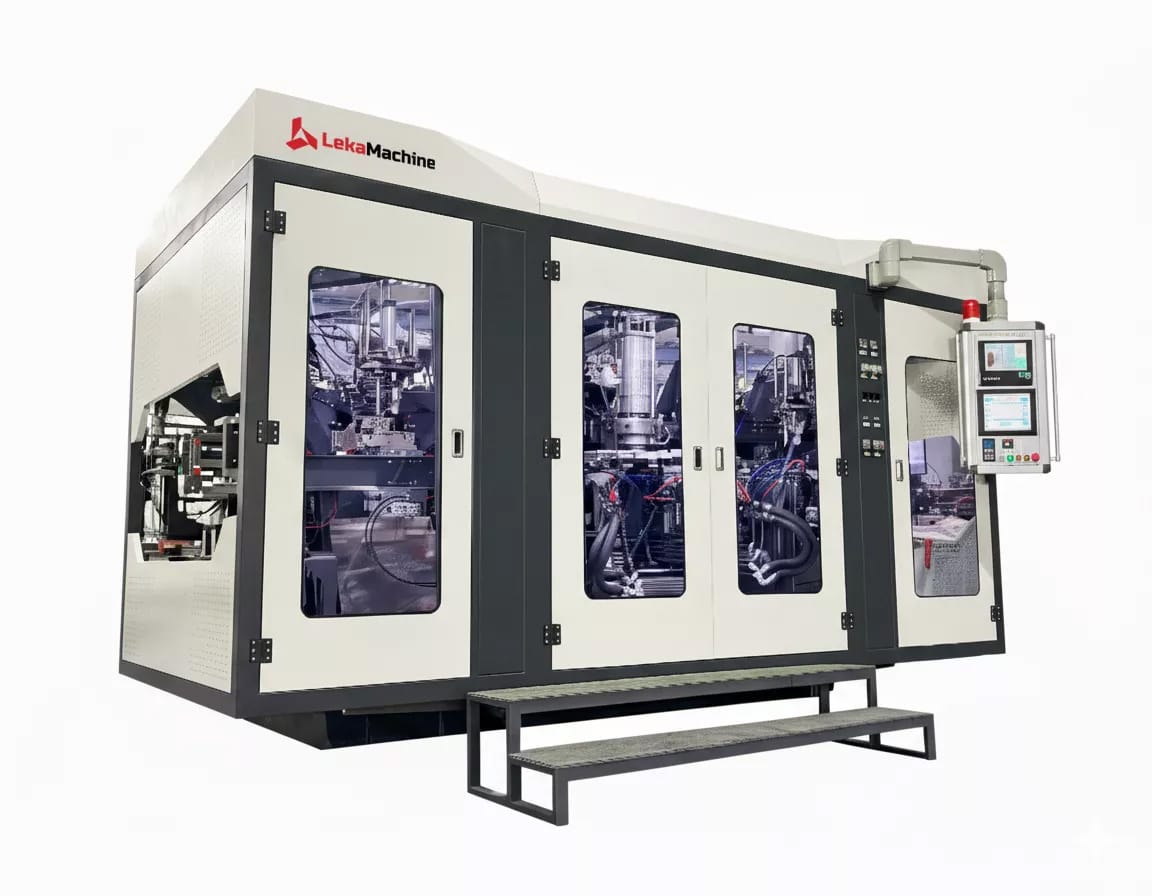
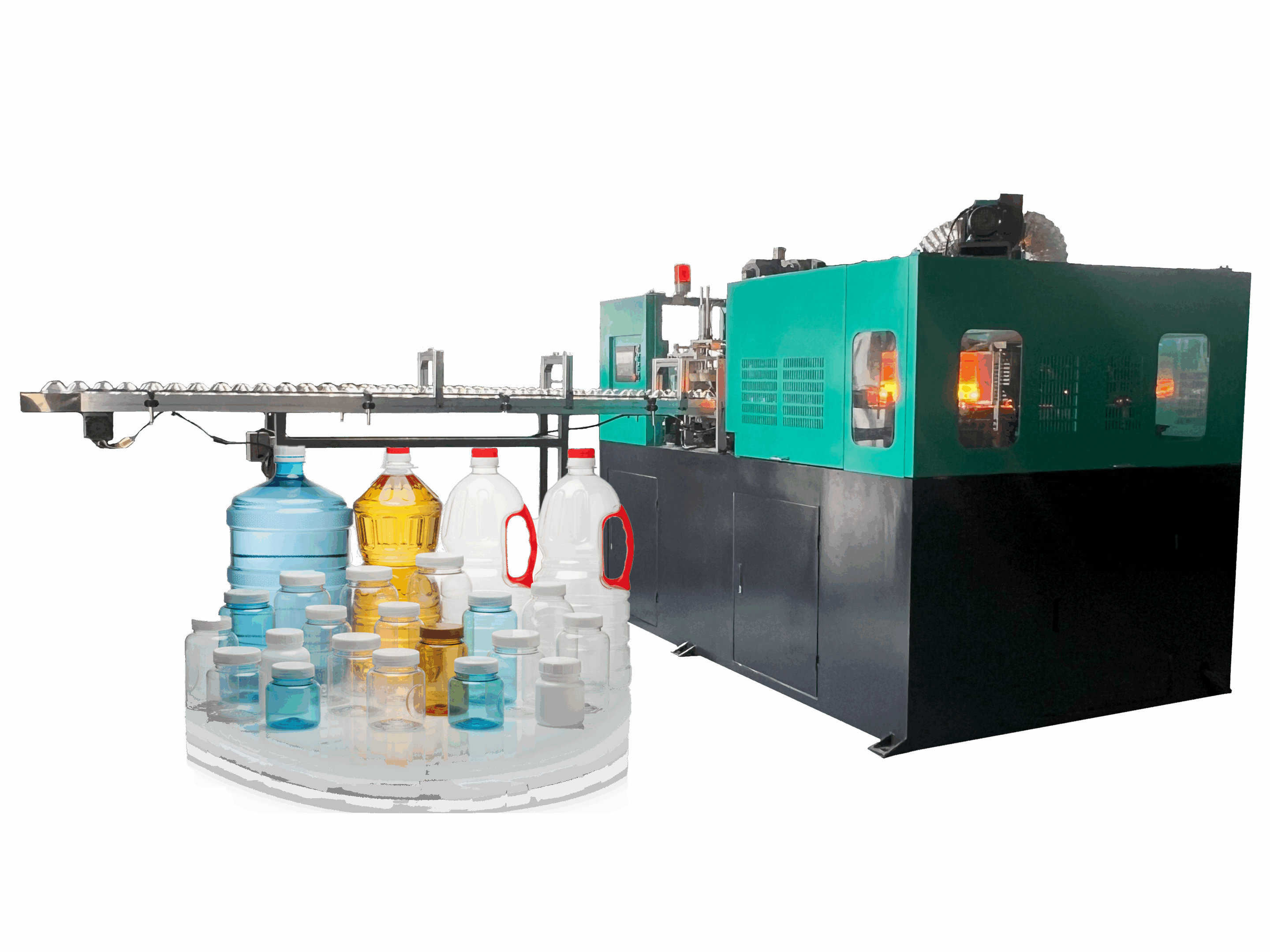
This is where the magic happens, as the preform is transformed into the familiar bottle. This process is carried out on a machine like the fully automatic PET stretch blow moulding machine offered by Leka Machine, and involves several key stages:
- Preform Feeding & Unscrambling: Preforms are loaded into a hopper, automatically sorted, and fed onto the heating conveyor.
- Reheating: The preforms rotate as they travel through a heating oven composed of multiple banks of infrared (IR) lamps. This heating process is meticulously controlled to ensure the body of the preform is evenly heated to the ideal stretching temperature (around 100°C / 212°F), while the already-formed neck area is kept cool to maintain its shape. Advanced machines allow for zone-by-zone temperature control to accommodate the demanding material distribution requirements of different bottle shapes.
- Stretching & Blowing: This is the heart of the process.
- The heated preform is quickly transferred into a cool blow mold, which then closes.
- A stretch rod descends into the preform at high speed, stretching it vertically (axial stretch).
- Almost simultaneously, a low-pressure “pre-blow” of air is introduced, slightly inflating the preform to ensure it doesn’t touch the cold mold walls prematurely.
- Immediately following, high-pressure “final blow” air (up to 40 bar / 580 psi) is injected, forcing the stretched preform to expand and conform tightly to the inner contours of the mold, completing the horizontal (radial stretch) and forming the bottle’s final shape and details.
- Cooling & Ejection: The high-pressure air is held for a short period to allow the newly formed bottle to cool and solidify against the cold mold walls. The mold then opens, and the finished bottle is ejected. A perfect PET bottle is born.
On a fully automatic machine, this entire cycle repeats at incredible speeds, with outputs ranging from a few thousand to tens of thousands of bottles per hour (BPH).
The One-Step SBM Process: Advantages for Niche Applications
As a complementary process, One-Step SBM, also known as Injection Stretch Blow Moulding (ISBM), holds its own in specific market segments.
As the name implies, the one-step process completes both preform injection and stretch blow moulding on a single machine in a continuous sequence. Molten plastic is first injection molded into a preform, which is then transferred—without being fully cooled—to the stretch-blowing station for forming.
Advantages:
- Energy Savings: It uses the residual heat from the injection process, eliminating the need for a reheat oven.
- High-Quality Finish: The preform is untouched throughout the process, preventing scratches that can occur during transport and storage, making it ideal for high-end cosmetic bottles.
- Good for Non-Standard Necks: Offers greater flexibility for custom neck designs.
Disadvantages:
- Longer Cycle Times: The overall cycle time is limited by the slower injection molding step.
- Less Flexibility: The number of injection cavities must match the number of blowing cavities, making production schedule changes difficult.
- Higher Capital Cost: For the same output, one-step machines are often more complex and expensive than their two-step counterparts.
Typical Applications: Low-volume production, non-PET materials (like PC, Tritan), irregularly shaped containers, wide-mouth jars, and cosmetic/pharmaceutical packaging with extremely high demands on surface finish.
Part 3: A Manufacturer’s Perspective: Stretched Plastic vs. Other Processes
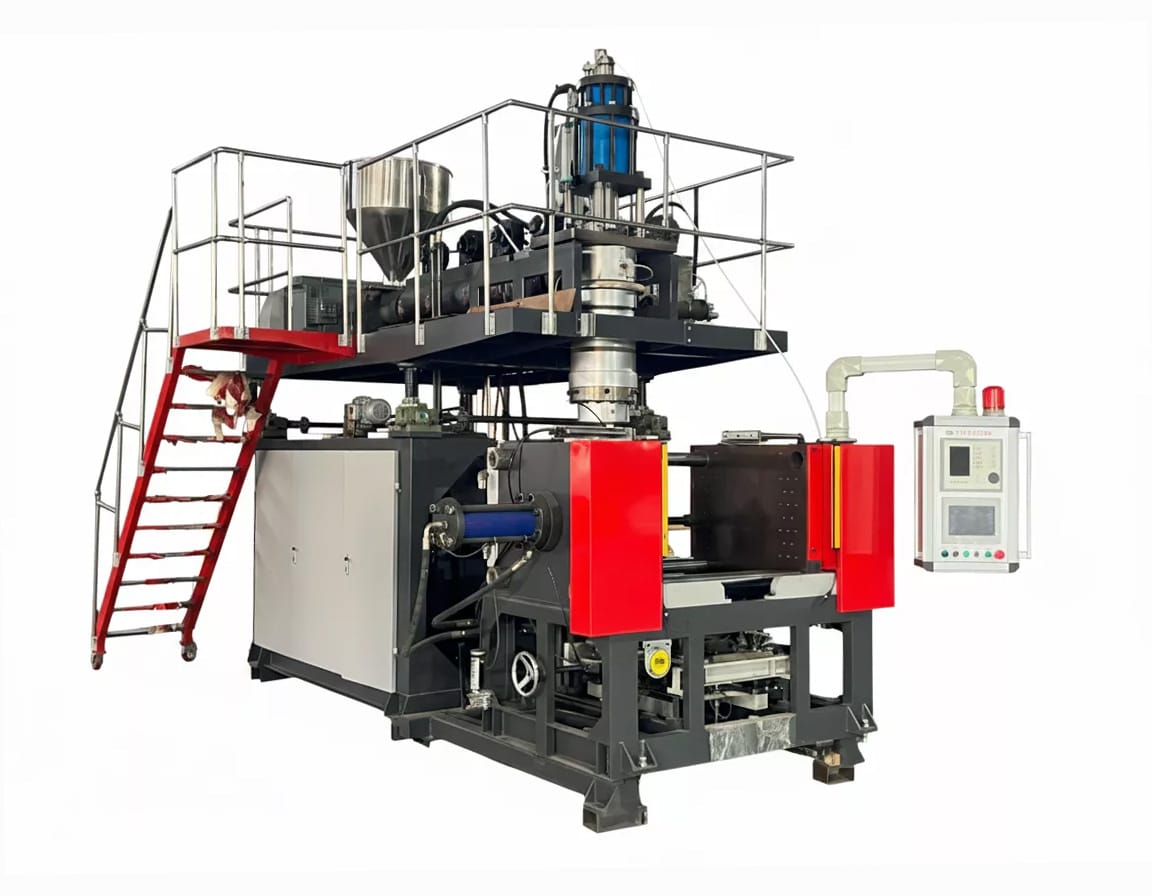
One of the most common questions you face as a manufacturer or purchasing manager is: “Which technology should I choose? Stretch Blow Moulding or Extrusion Blow Moulding?” These two technologies are fundamentally different and are suited for entirely different products and markets. As a company that provides both Stretch Blow Moulding Machines and Extrusion Blow Moulding Machines, Leka Machine can offer an unbiased, expert comparison to help you make the most informed decision.
Stretch Blow Moulding (SBM) vs. Extrusion Blow Moulding (EBM): A Critical Decision Matrix
Let’s summarize the core differences in a clear table.
| Feature | Stretch Blow Moulding (SBM) | Extrusion Blow Moulding (EBM) |
|---|---|---|
| Core Principle | Biaxial stretching of an injection-molded preform | Inflation of an extruded tube-like parison |
| Common Materials | PET, PP (special grades) | HDPE, LDPE, PP, PVC |
| Product Clarity | Extremely high, glass-like transparency | Typically translucent or opaque |
| Mechanical Strength | Very high (excellent pressure, drop, and creep resistance) | Good (known for flexibility and chemical resistance) |
| Neck/Thread Precision | Very high (from precision injection molding), ideal for carbonation seals | Fair (formed by cutting or within the mold), lower precision |
| Integrated Handles | Cannot be integrally molded | Easily achieved as part of the molding |
| Wall Thickness Control | More difficult to achieve precise thickness control on complex shapes | Flexible, can be precisely adjusted via parison programming |
| Typical Applications | Carbonated soft drink bottles, water bottles, edible oil bottles, cosmetic bottles, juice bottles | Milk jugs, shampoo bottles, motor oil containers, chemical drums, plastic jerry cans |
| Equipment Investment | Relatively higher, especially for high-output automatic systems | Relatively lower, with a lower barrier to entry |
Diving Deeper into the Comparison:
- Principle & Materials: This is the most fundamental difference. SBM’s “stretching” gives PET its unparalleled properties, making it the undeniable choice for pressure-holding and transparent applications. EBM’s “extrusion” process is more like blowing up a plastic balloon; it demands materials with high melt strength, making flexible HDPE its perfect partner.
- Clarity & Strength: Do you want consumers to see the product inside the bottle? If yes, SBM is your answer. Do you need packaging that can withstand the internal pressure of carbonation? The biaxially oriented structure from SBM provides the necessary strength. Conversely, if your product is milk or detergent, an opaque package can protect the contents from light, making EBM a better fit. HDPE’s toughness also makes it ideal for packaging hazardous chemicals.
- Neck Precision: Think of a bottle of soda. If the cap doesn’t seal perfectly, the CO₂ will leak out. SBM uses injection-molded preforms where the threads are formed with extremely tight tolerances, ensuring a perfect seal every time. The necks of EBM containers are typically cut or pinched off by the mold during the process, and they cannot match the precision of SBM.
- Design Freedom – The Importance of Handles: This is a major advantage for EBM. Do you need an easy-to-grip handle for a 5-liter motor oil container or laundry detergent bottle? The EBM process can easily form a handle as an integral part of the container by manipulating the shape of the parison. SBM starts with a fixed, tube-like preform and cannot achieve this. This is why you will never see a PET cola bottle with an integrated handle. If your goal is to learn how to make plastic jerry cans, EBM is the only correct technology.
- Investment Decision: Generally, the initial investment for a fully automatic SBM line is higher than for an EBM machine of similar output. However, for mass-produced, standardized products like bottled water, SBM’s extremely high production speed and efficient material usage result in a highly competitive unit cost.
The bottom line: Your product dictates the technology.
- If your products are water, beverages, edible oils, sauces, or high-end cosmetics, and you prioritize clarity, strength, and a high-quality seal, then a Stretch Blow Moulding Machine is your ideal choice.
- If your products are milk, detergents, chemicals, or automotive fluids, or if you require irregular shapes, integrated handles, and superior chemical resistance, then an Extrusion Blow Moulding Machine will be the more suitable solution.
Part 4: Core Material Selection
While several thermoplastic materials can theoretically be stretched, two have come to dominate commercial applications.
PET (Polyethylene Terephthalate): The King of Stretched Plastics
If SBM is the stage, then PET is the undisputed star performer. It is so popular because its properties are a perfect match for the SBM process:
- Excellent Stretch Performance: PET has a wide and stable processing window, making it easy to form uniform and strong biaxially oriented structures.
- Unmatched Clarity: Stretched PET has a crystal-like gloss and transparency that maximizes product visibility on the shelf.
- Superior Barrier Properties: Its resistance to CO₂ and O₂ is far superior to other general-purpose plastics, making it ideal for carbonated beverages and products with a sensitive shelf life.
- Lightweight & Strong: A PET bottle weighs only about 10% of a glass bottle of the same volume, significantly reducing transportation costs and carbon footprint.
- Extremely Safe: PET is chemically stable and approved by major food safety agencies worldwide (like the FDA and EFSA) for direct contact with food and beverages.
- 100% Recyclable: PET is one of the most recycled plastics in the world. Recycled PET (rPET) can be used to make new bottles, playing a key role in the circular economy.
From 500ml water bottles to 5L edible oil containers, PET’s applications are ubiquitous.
PP (Polypropylene): The Champion for Hot-Fill Applications
Polypropylene (PP) is another important player in the SBM field, especially in niche markets requiring heat resistance.
Stretched PP (often called OPP, Oriented Polypropylene) has significantly improved clarity and rigidity compared to standard PP, though it typically cannot match the crystal clarity of PET. Its single greatest, irreplaceable advantage is its excellent heat resistance.
- High-Temperature Resistance: PP has a higher melting point and can withstand hot-fill processes up to 120°C (248°F) without deforming. This is crucial for products that require pasteurization or hot filling, such as functional drinks, sports drinks, jams, and certain syrups.
However, processing stretchable PP presents challenges. Its processing window is narrower than PET’s, and its molecular structure is more complex, meaning it requires more precise process control and machinery specifically designed for the task.
Part 5: Applications: How Stretched Plastic is Transforming Industries
Thanks to its superior performance, stretched plastic technology has deeply integrated into every aspect of our daily lives. It is more than just packaging; it is a value-added solution for a wide range of industries.
The Beverage Industry: The Clear Choice for Carbonated Drinks, Water, and Juices
This is the largest application field for SBM technology. For carbonated drinks, the excellent CO₂ barrier of stretched PET means the fizz stays in the bottle longer, guaranteeing product taste and shelf life. For pure water, PET’s clarity and pristine appearance convey health and safety. This is the core technology behind every 5L water bottle manufacturing solution.
Food & Edible Oil Packaging: The Perfect Union of Preservation and Shelf Appeal
Large-volume edible oil bottles are another classic application. The excellent oxygen barrier prevents the oil from oxidizing and going rancid, extending its shelf life. The crystal-clear bottle showcases the oil’s color and purity, directly influencing consumer purchasing decisions.
Cosmetics & Personal Care: Uniting Exquisite Appearance with Functionality
Think of the shampoo or body wash bottle on your shower shelf. SBM technology, especially with PET, can create beautifully designed containers that rival the look and feel of glass while offering the lightweight and shatterproof benefits of plastic. A successful shampoo bottle production line is often powered by high-quality SBM equipment.
Pharmaceuticals & Healthcare: Safe, Clean, and Precise Containers
In the medical field, safety, cleanliness, and precision are paramount. Stretched plastics (mainly PET) are widely used for their chemical inertness and high purity to make items like eye drop bottles, oral liquid containers, and disinfectant bottles. The high-precision necks produced by the SBM process also ensure a perfect fit with functional closures like droppers and spray pumps.
Part 6: B2B Purchasing Guide: How to Choose the Right Stretch Blow Moulding Machine
Once you’ve decided to invest in SBM technology, selecting the right machine is critical to your success. This is more than just buying a piece of equipment; it’s choosing a long-term partner who can grow with you.
As the Technical Sales Manager at Leka Machine, I, Slany Cheuang, frequently discuss these points with clients. Based on my years of experience, here are the key factors to consider.
Key Factors to Consider Before Buying an SBM Machine
- Product Requirements:
- Bottle Volume: Are you producing small 300ml bottles or large 5L containers?
- Bottle Shape: Is it a standard round bottle, or a more complex square or oval shape? Complex shapes require more advanced process control.
- Output Requirements: What is your target production capacity? 2,000 bottles per hour (BPH) or 10,000 BPH? This will determine whether you need a linear or rotary machine and the number of mold cavities.
- Material Type: Will you be running primarily PET, or do you have a need for hot-fill PP bottles? As mentioned, PP requires a more specialized machine configuration.
- Degree of Automation:
- Fully Automatic Stretch Blow Moulding Machine: The entire process, from preform loading to bottle discharge, is automated. It is ideal for large-scale, high-efficiency production. While the initial investment is higher, it significantly reduces long-term labor costs and ensures consistent quality.
- Semi-automatic Machine: Requires an operator to manually load preforms into the heater and then transfer the heated preforms to the blowing station. It’s suitable for start-ups, small-scale operations, or businesses with a diverse range of products and limited budgets.
- Budget and Return on Investment (ROI): Don’t just look at the machine’s price tag. You must consider the total cost of ownership:
- Energy Consumption: Advanced machines use servo drives and optimized heating systems for lower power usage.
- Mold Costs: Molds are a significant investment, and their quality directly impacts product quality and efficiency.
- Maintenance Costs: Consider the machine’s durability and the availability and price of spare parts.
Understanding Machine Specifications: The Meaning Behind the Numbers
- Number of Cavities: Directly determines how many bottles are produced per cycle. A key indicator of output.
- Max. Container Volume: Defines the largest bottle size the machine can produce (e.g., 2L or 5L).
- Neck Diameter Range: Shows the range of preform neck sizes the machine is compatible with.
Why Choosing a Reliable Manufacturer is Crucial (The Leka Machine Advantage)
- Technical Expertise and Experience: Leka Machine has been deeply involved in the blow moulding industry for years. We don’t just sell equipment; we provide complete solutions, from bottle design to process optimization.
- Machine Quality and Stability: We use world-class components, such as Siemens PLCs and Festo pneumatic parts, to ensure our machines operate stably and efficiently for the long term.
- After-Sales Service and Technical Support: Purchasing a machine is just the beginning of our partnership. We provide comprehensive support, including installation, training, 24/7 technical assistance, and a reliable supply of spare parts.
- Transparent Delivery Time: A reliable delivery schedule is crucial for industrial projects. We operate with integrity and state clearly that our standard delivery time is 60-90 days. This transparency helps you plan your project with confidence.
If you are looking for the right SBM solution for your project, I would be delighted to assist you. As the Technical Sales Manager at Leka Machine, I, Slany Cheuang, can provide you with a customized technical proposal and quotation based on your specific needs. Please feel free to visit our website at www.lekamachine.com or contact us directly.
Part 7: Future Trends and Sustainability
As members of this industry, we are focused not only on current production efficiency but also on future sustainability. Stretched plastic technology is continuously evolving to become more environmentally friendly and efficient.
The Driving Force of the Circular Economy: The Use of rPET
The application of recycled PET (rPET) is a key step for the packaging industry toward a circular economy. Modern SBM machines, like those from Leka Machine, are already well-equipped to handle high percentages (even 100%) of rPET material, helping you add a “green” label to your products.
Lightweighting: Doing More with Less
Lightweighting is a perpetual theme in the packaging industry. It means reducing the amount of plastic used without sacrificing bottle performance. This not only lowers material costs but also reduces transportation energy and final waste.
Bio-plastics and the Stretching Process
Using renewable resources to make plastics is another important trend. Bio-plastics like PLA (Polylactic Acid), derived from corn starch, can also be stretch blow molded. While they still face challenges in heat resistance and cost, their future in this field is promising.
Conclusion: Your Reliable Partner in Stretched Plastic Manufacturing
From the microscopic alignment of polymer chains to macroscopic global packaging solutions, we have explored the amazing world of stretched plastic together.
We’ve learned that it is the core principle of biaxial stretching that gives materials like PET their superior strength, clarity, and barrier properties. And Stretch Blow Moulding (SBM), especially the efficient and flexible two-step process, is the key technology that turns this science into billions of high-quality containers.
Are you ready to elevate your plastic container production line? Choosing the right equipment and a reliable partner is your first step toward success.
Contact the expert team at Leka Machine today for a free consultation on our advanced stretch blow moulding solutions. Let’s work together to shape the future of your product!
Frequently Asked Questions (FAQ)
Q: What is the main difference between stretched plastic and regular plastic?
A: The primary difference is the internal molecular arrangement. Stretched plastic undergoes a physical stretching process that aligns its polymer chains in an orderly, oriented fashion. This structure gives it far superior mechanical strength, clarity, and gas barrier properties compared to regular plastic with its random molecular structure.
Q: Can all plastics be stretched?
A: No. Only specific polymers like PET and certain grades of PP have good stretching properties. They must be heated to a specific temperature (above their glass transition temperature, $T_g$) to be stretched effectively without breaking.
Q: Should I choose a one-step or a two-step stretch blow moulding machine?
A: For the vast majority of standard bottle production (like water, beverage, and oil bottles) on a large scale, the two-step process is the industry gold standard and the best choice due to its high efficiency, flexibility, and lower unit cost. The one-step process is better suited for low-volume, specialty shapes, or applications with extreme requirements for surface finish, like high-end cosmetics.
Q: Can an extrusion blow moulding machine produce clear PET bottles?
A: Absolutely not. This is a common misconception. The Extrusion Blow Moulding (EBM) process cannot biaxially stretch the material. Attempting to process PET with EBM would result in a cloudy, brittle, and very poor-quality product. To produce the iconic high-strength, high-clarity PET bottle, you must use a Stretch Blow Moulding (SBM) machine.
Q: What is the typical return on investment (ROI) for a fully automatic SBM machine?
A: ROI depends on many factors, including machine output, local labor and energy costs, raw material costs, and the selling price of your product. There is no single answer. However, our technical team at Leka Machine can provide you with a detailed ROI analysis based on your specific project to help you make an informed investment decision.
Q: Does Leka Machine offer custom mold services?
A: Yes, we do. In addition to high-quality blowing equipment, we have an experienced mold design and manufacturing team. We can work from your product concept or bottle sample to provide professional bottle design, 3D modeling, and the manufacturing of high-precision blow molds to ensure your product stands out in the market.


0 Comments