
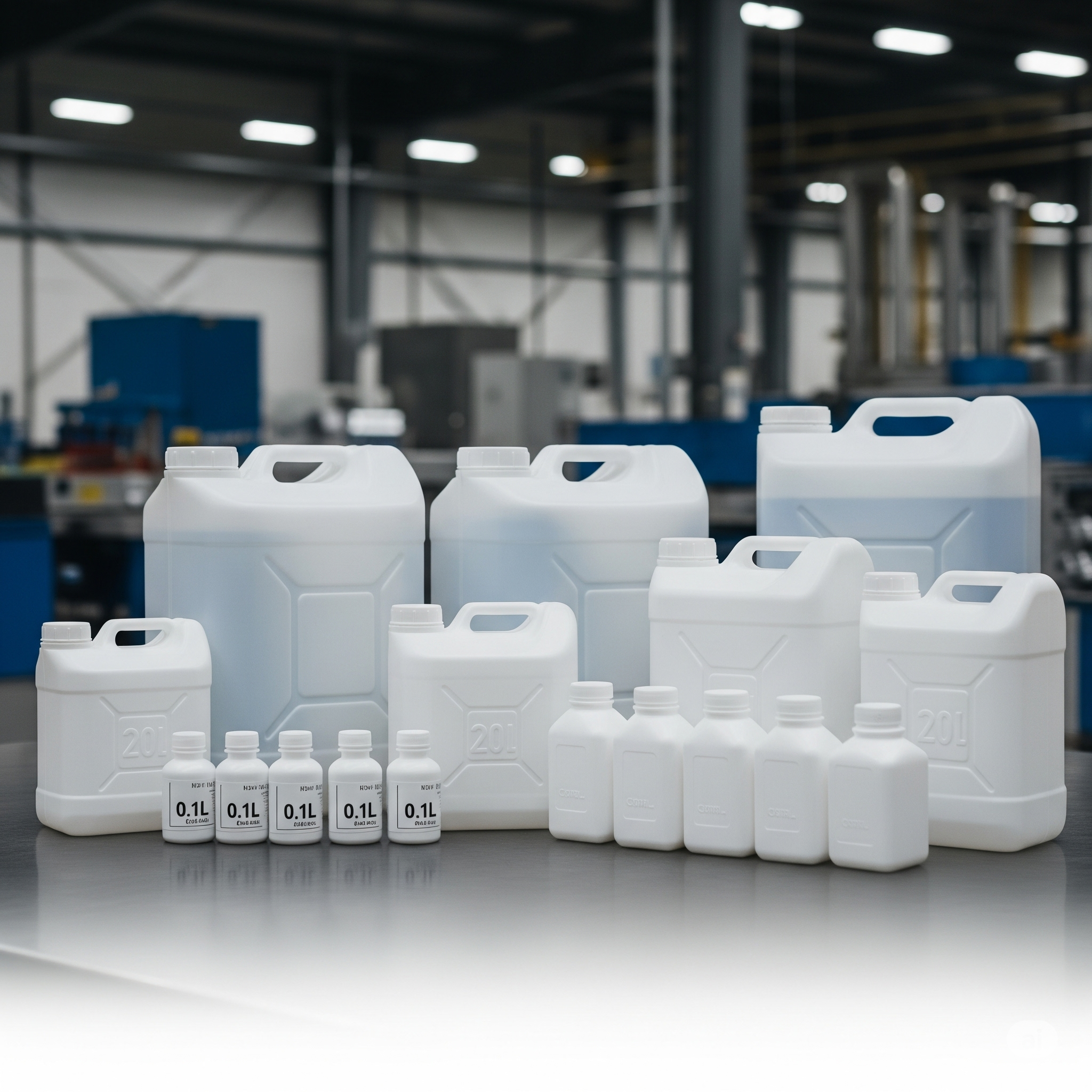
The Ultimate Guide to Jerry Can Blow Molding Machines in 2026
If you are planning to produce plastic jerry cans for lubricants, chemicals, detergents, or water, choosing the right blow molding machine is one of the most important decisions in the entire project.
A machine that is poorly matched to the bottle design, resin, or output target can create high scrap, unstable wall thickness, long downtime, and unnecessary operating cost. A machine that is well matched can support stable output, lower resin waste, and smoother downstream packaging.
My name is Slany Cheuang, and I work with LEKA Machine customers on bottle and container production projects. In this guide, I will walk you through how jerry can blow molding machines work, what technical points matter most, and how to choose a machine direction that fits your actual production plan.
What Is a Jerry Can Blow Molding Machine?
A jerry can blow molding machine is usually an extrusion blow molding machine designed to produce hollow plastic containers from HDPE and similar materials. For many industrial packaging applications, extrusion blow molding remains the most practical process because it combines strong container performance with good production efficiency.
Jerry cans are commonly used for:
- Lubricant and motor oil packaging
- Detergent and household chemical packaging
- Agrochemical containers
- Industrial liquid packaging
- Water and utility containers
The exact machine configuration depends on bottle size, handle design, output target, wall-thickness requirements, and whether the project needs features such as multi-layer production, view stripe, leak testing, or downstream automation.
How Extrusion Blow Molding Works for Jerry Cans

The working principle is simple, but stable container production depends on how well each step is controlled.
- Resin melting: HDPE pellets are fed into the extruder and melted into a uniform plastic mass.
- Parison formation: The melt is pushed through the die head and forms a hollow tube called a parison.
- Mold closing: The mold closes around the parison and captures the material in the cavity.
- Air blowing: Compressed air expands the parison against the mold wall, forming the jerry can shape.
- Cooling and ejection: The plastic cools, the mold opens, and the formed container is released.
- Deflashing and finishing: Excess material is removed, and the container moves to later inspection, leak testing, conveying, or packing.
For many buyers, the real issue is not understanding the basic process. The real issue is making sure the machine can hold stable wall thickness, neck accuracy, and bottle weight across continuous production.
Why HDPE Is the Standard Material for Jerry Cans
For most jerry can applications, HDPE is the preferred material because it offers a strong balance of toughness, chemical resistance, process stability, and cost control. It performs well in extrusion blow molding and is suitable for a wide range of container sizes.

HDPE jerry can packaging applications
HDPE is especially suitable when the container needs to be:
- Strong enough for handling and stacking
- Resistant to chemical products
- Cost-efficient in large-scale production
- Compatible with lightweighting and wall-thickness optimization
For some projects, recycled resin or multi-layer structure may also be considered. In those cases, the machine and die head need to be reviewed more carefully to maintain bottle consistency and quality.
Why Extrusion Blow Molding Is a Good Fit for Jerry Cans
Extrusion blow molding remains the mainstream production method for many jerry cans because it works well with HDPE and allows practical production across different container volumes.
- It is well suited to HDPE: The material processes reliably and delivers strong finished containers.
- It supports industrial bottle geometry: Handles, corners, panels, and structured bodies can be formed effectively.
- It works well for medium and large containers: This is especially important for industrial and household packaging.
- It supports efficiency: Continuous production with suitable mold design can achieve strong output.
- It allows advanced features: Multi-layer structures, view stripe systems, and downstream automation can be added based on project requirements.
Before You Choose a Machine, Define These 6 Project Inputs
Before asking for a quotation, buyers should prepare the production basics first. This helps avoid the common problem of choosing a machine too early without enough bottle detail.
| Project Item | Why It Matters |
|---|---|
| Container volume range | Determines machine size, die-head range, and mold scale. |
| Bottle weight target | Affects shot size, resin cost, and wall-thickness planning. |
| Output target | Helps define cavity count, cycle expectation, and machine model. |
| Product type | Lubricants, chemicals, detergent, or food-use packaging may require different bottle priorities. |
| UN or special compliance needs | Important for dangerous goods and higher-performance industrial containers. |
| Downstream packaging plan | Filling, capping, labeling, and packing requirements affect bottle stability and layout planning. |
In practice, good machine selection starts with good bottle and project definition.
How to Choose the Right Jerry Can Blow Molding Machine
Choosing a machine is not only about speed or price. It is about project fit. The best machine is the one that matches your bottle, output target, resin strategy, and long-term operating conditions.
- Check the output requirement: Your hourly and daily production target affects the machine size and cavity choice.
- Check the container size range: A machine for 1L to 5L containers is not automatically the right choice for 20L or 25L industrial drums.
- Check automation level: De-flashing, take-out, leak testing, and conveyor integration all affect labor demand and consistency.
- Check energy efficiency: Modern machine configuration can reduce long-term operating cost.
- Check mold-change practicality: If you run multiple products, downtime matters.
- Check after-sales support: Installation, training, spare parts, and service response are part of the real machine cost.
Which LEKA Machine Direction Fits Your Project?
1. For Flexible Production of Small to Medium Jerry Cans
If your production needs flexibility across smaller bottles and medium-sized containers, a versatile extrusion blow molding platform is usually the best starting point. This is often the case for detergent bottles, edible-oil packaging, and 1L to 10L jerry can projects.
For this type of requirement, customers often begin by evaluating the FORMA Series, especially when they want stable production with easier product switching and practical mold matching.
2. For Larger Industrial Jerry Cans and Drum-Type Containers
For 20L, 25L, and larger industrial containers, machine selection needs to focus more heavily on shot size, clamping stability, wall-thickness control, handle performance, and industrial container strength. These projects should be reviewed based on the exact container drawing, resin, and compliance requirement rather than by generic model comparison alone.
If your project is in this category, it is better to discuss the container details directly so the machine path can be matched more accurately.
Advanced Features That Matter in Jerry Can Production
Some buyers need more than basic container forming. Depending on the project, these features may be important:
- Multi-layer capability: Useful when adding barrier structure, recycled middle layer, or optimizing resin cost.
- View stripe system: Important when the end user needs to see the remaining liquid level.
- Parison wall-thickness control: Helps improve corner strength, weight consistency, and resin optimization.
- Automatic deflashing: Reduces manual work and helps improve output consistency.
- Leak testing integration: Valuable for industrial packaging reliability.
Not every project needs every feature. The key is choosing the right level of machine capability for the actual product and market requirement.
Common Problems in Jerry Can Production
Many production problems come from mismatch between the bottle design, mold, resin, and machine settings rather than from one single issue.
- Unstable bottle weight: Usually related to poor parison control, cavity imbalance, or process instability.
- Weak corners or handles: Often caused by poor wall-thickness distribution.
- Excessive flash: May result from clamping, mold condition, or process mismatch.
- High scrap during changeovers: Often linked to color changes, material switching, or inconsistent setup methods.
- Poor leak performance: May come from bottle design weakness, mold precision issues, or unstable process control.
If your project requires stronger quality consistency, it is useful to review how LEKA approaches quality control and production reliability.
Project Planning: Installation, Utilities, and Daily Operation
Buying the machine is only one part of the project. Real production success also depends on site readiness and post-installation support.
Typical Site Requirements
- Stable electrical power supply
- Compressed air for blowing
- Cooling water for mold and process temperature control
- Space for machine, auxiliaries, mold handling, material storage, and finished goods
What Good Supplier Support Should Include
- Machine commissioning support
- Operator training
- Maintenance guidance
- Spare parts support
- Remote troubleshooting when needed
For many customers, this support is especially important when the project includes more than bottle molding alone. If your line will later involve filling, capping, labeling, or packing, earlier planning usually reduces more problems than late-stage correction. That is why some customers also review broader packaging line solution planning before finalizing equipment scope.
What Affects the Total Investment?
The machine price is only one part of the investment. Buyers should also evaluate:
- Mold cost
- Auxiliary equipment
- Installation and commissioning
- Freight and insurance
- Training and service
- Local duties and taxes
- Operating cost, including energy and resin consumption
Delivery time also matters. Long lead times delay production and can delay revenue. In many projects, that hidden waiting cost becomes more important than buyers first expect.
Frequently Asked Questions
What plastic is most commonly used for jerry cans?
HDPE is the most common choice because it offers strong chemical resistance, durability, and good suitability for extrusion blow molding.
How many jerry cans can one machine produce per hour?
That depends on the bottle size, bottle weight, cavity count, mold design, and cycle time. A realistic estimate should be based on the actual product specification.
Can one machine produce multiple jerry can sizes?
In many cases, yes. But the practical range depends on the machine design, die head, mold configuration, and how frequently you need to change products.
Do I need a multi-layer machine?
Not always. Multi-layer capability is usually considered when the project needs barrier performance, recycled middle layers, or more advanced industrial packaging structure.
Can LEKA provide molds and project support together with the machine?
Yes. Many customers need more than one machine component. We can help review machine matching, mold planning, and broader bottle packaging project requirements.
Ready to Discuss Your Jerry Can Production Project?
If you are comparing machine options for 1L to 25L jerry cans, the most useful next step is to share your container size, bottle drawing or sample, target output, resin type, and any downstream packaging requirements.
That makes it much easier to recommend a more suitable machine path and avoid wasted time on the wrong specification.
Discuss Your Project With LEKA Machine