

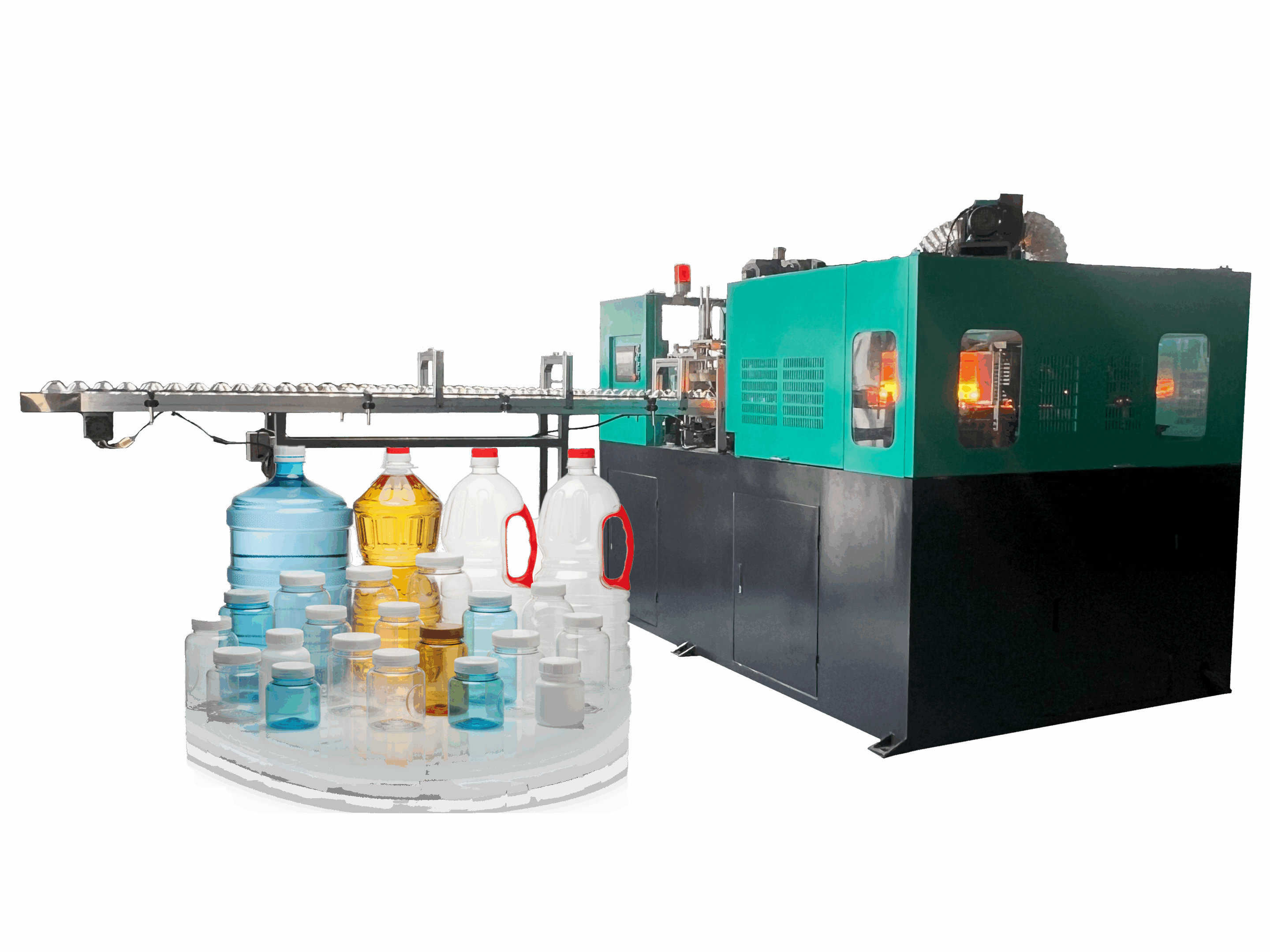
German Packaging Machinery Manufacturers: Is the Pr# FDA vs EFSA: How Can Blow Molding Manufacturers Ensure Food-Grade Compliance?

At our factory, we often see clients struggle to navigate conflicting safety standards, risking costly recalls and rejected shipments when exporting bottles to global markets.
To ensure food-grade compliance, manufacturers must align raw material selection with FDA 21 CFR 177.1520 or EFSA Regulation 10/2011, validate machine hygiene via GMP standards, and conduct finished-article migration testing. Successful audits require rigorous documentation, including Declaration of Compliance (DoC) and traceability logs for every production batch.
Understanding the nuances between US and European regulations is critical for protecting your brand and ensuring your production line delivers safe, market-ready containers.
How do I ensure my raw materials meet specific FDA and EFSA regulations?
When we assist customers with resin selection, confusion between American and European lists frequently delays project timelines and creates sourcing headaches regarding approved additives.
FDA compliance relies on generic material approval under 21 CFR standards without mandatory finished-product testing, whereas EFSA requires substances to be listed on the Union List followed by migration testing on the final bottle. You must verify supplier certifications against these distinct frameworks before purchasing resin.

Navigating the regulatory landscape for raw materials is the foundation of food safety. In our experience, many producers assume that a resin labeled "food grade" is universally acceptable, but this is a dangerous misconception. The United States and the European Union operate on fundamentally different philosophies regarding plastic safety.
FDA: The "Recipe" Approach
The US Food and Drug Administration (FDA) operates primarily under 21 CFR 177.1520 for olefin polymers (like HDPE and PP used in blow molding). This regulation acts like a recipe book. If your resin’s chemical composition matches the "recipe" allowed in the Code of Federal Regulations (CFR), it is generally considered compliant. The FDA focuses heavily on the raw material itself rather than the final container.
- GRAS (Generally Recognized As Safe): Many additives fall under this category.
- FCN (Food Contact Notification): For newer substances, suppliers submit an FCN, which becomes effective if the FDA doesn’t object within 120 days.
EFSA: The "Result" Approach
The European Food Safety Authority (EFSA) is stricter. Under Commission Regulation (EU) No 10/2011, simply using an approved resin isn’t enough. You must prove that the final blown bottle does not transfer chemicals into the food above specific limits. This is known as "migration testing."
- The Union List: Only substances explicitly listed in Annex I of the regulation can be used.
- OML (Overall Migration Limit): The total amount of non-volatile substances released must not exceed 10mg/dm² of surface area.
- SML (Specific Migration Limit): Specific hazardous chemicals have strict individual caps.
Comparison of Regulatory Frameworks
| Recurso | FDA (United States) | EFSA (European Union) |
|---|---|---|
| Primary Regulation | 21 CFR 177.1520 | Commission Regulation (EU) No 10/2011 |
| Focus | Raw Material Composition (The Ingredients) | Finished Article Migration (The Result) |
| Testing Requirement | Material specifications (density, melting point) | Migration testing using food simulants (Time/Temp) |
| Lists | Inventory of Effective Food Contact Substances | Union List of Authorized Substances |
| Responsibility | Heavily on the Resin Supplier | Shared: Resin Supplier + Bottle Manufacturer |
For our clients targeting both markets, we recommend securing a Dual-Certification Statement from resin suppliers. This document confirms the material meets both 21 CFR requirements and appears on the EU Union List, saving significant time during the validation phase.
What machine features do I need to prevent contamination during food-grade production?
Our engineering team designs specific contamination safeguards into our food-grade models because standard machines often trap debris that ruins hygiene audits.
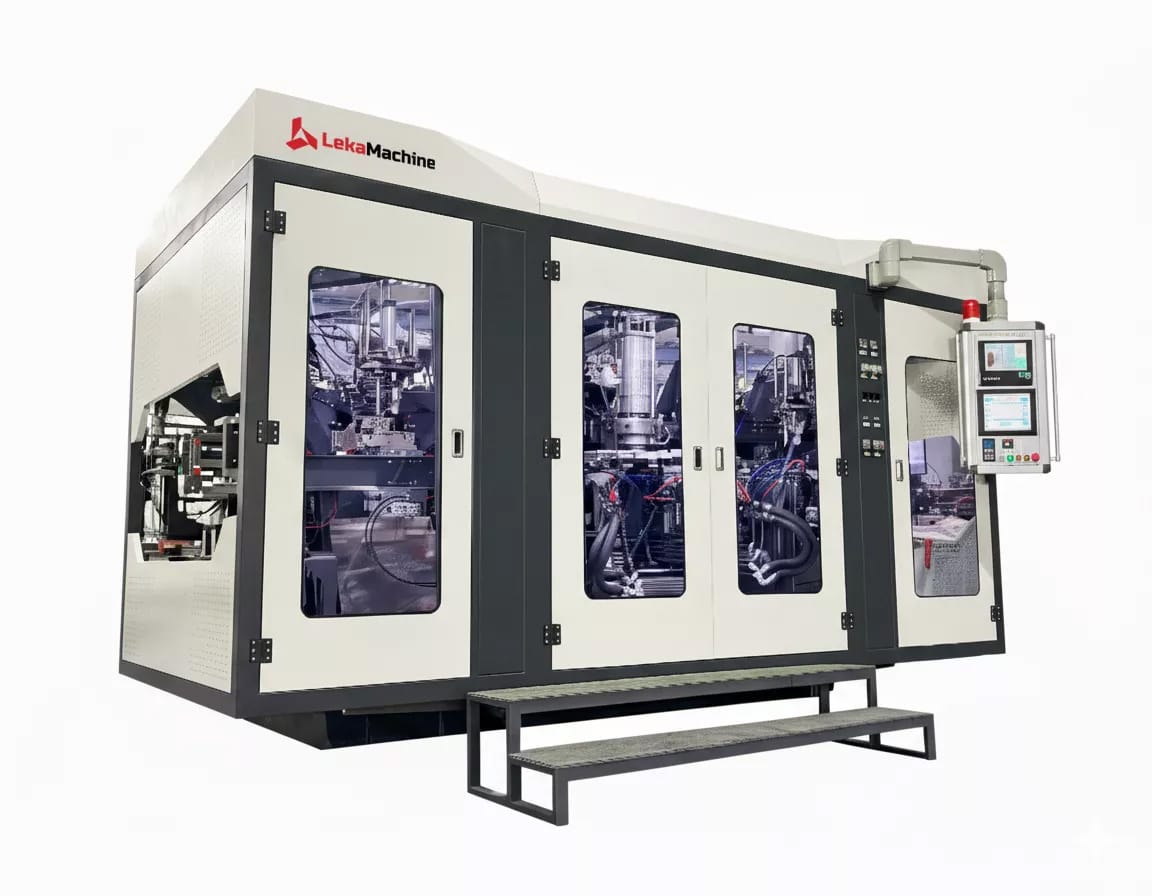
Food-grade blow molding machines require oil-free pneumatic systems, stainless steel contact surfaces, and enclosed parison heads to prevent particulate contamination. Essential features include electric clamping to eliminate hydraulic leaks and high-efficiency air filtration systems that maintain a Class 100 cleanroom environment inside the mold area.
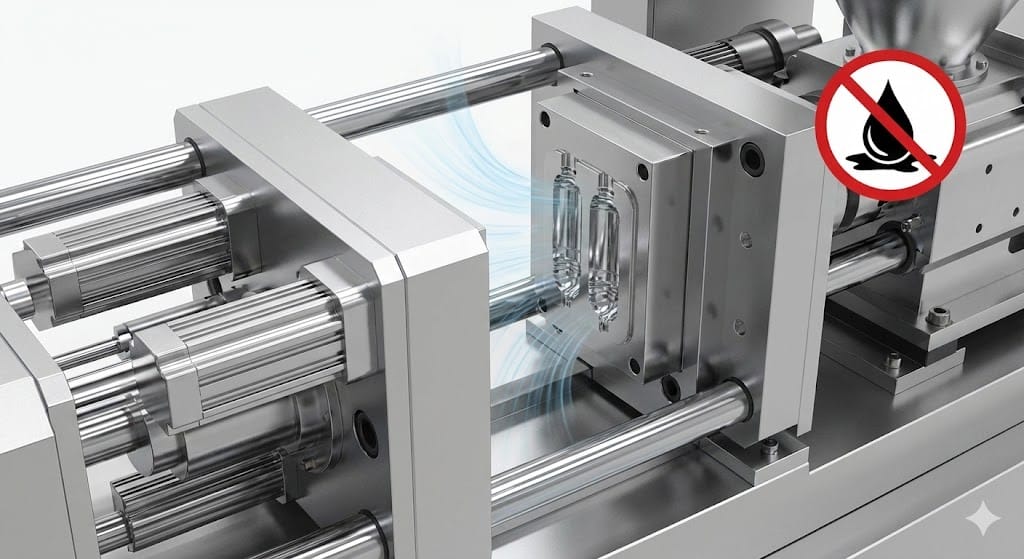
When we build machines destined for food or pharmaceutical applications, the hardware configuration looks quite different from a standard industrial drum machine. The goal is to eliminate "harborage points"—areas where bacteria, dust, or oil can accumulate and eventually contaminate the container.
The Shift to All-Electric Systems
Traditional hydraulic machines pose a significant risk in food environments. A single blown hose or a weeping seal can mist hydraulic fluid into the air, settling on the parison (the hot plastic tube) before it is blown. This is why we increasingly recommend All-Electric Blow Molding Machines for food applications.
- Cleanliness: No hydraulic oil means zero risk of fluid contamination.
- Precision: Servo motors provide exact control over the parison wall thickness, ensuring consistent barrier properties.
Air Quality Management
The air used to blow the bottle actually touches the food contact surface. If your compressed air contains moisture or oil from the compressor, your bottle is contaminated instantly.
- Filtration: We install multi-stage filtration systems (0.01 micron) to ensure blowing air meets ISO 8573-1 Class 1.4.1 standards.
- Exhaust: Air exhausted from pneumatic valves should be piped away from the molding area or filtered to prevent turbulence that kicks up floor dust.
Hygienic Mold and Die Head Design
The die head—where the molten plastic flows—is critical. In our designs, we use high-grade chrome-plated or stainless steel flow channels.
- Streamlined Flow: The internal channels must be highly polished to prevent material from "hanging up" and degrading (burning). Black specks in a milk bottle are not just a visual defect; they are degraded carbon that can harbor contaminants.
- No Dead Spots: We design the head to ensure continuous flow velocity, preventing plastic from stagnating.
Material Contact Surface Standards
| Machine Component | Standard Material | Food-Grade Upgrade | Benefício |
|---|---|---|---|
| Hopper | Carbon Steel | 304 Stainless Steel | Prevents rust and allows for easy sanitization. |
| Mold Platen | Cast Iron | Nickel Plated / Stainless | Resists corrosion from daily washdowns/sanitizing. |
| Transportadores | PVC Belt | Intralox Food Grade / PU | Easy to clean, prevents belt particles from flaking off. |
| Lubrication | Standard Lithium Grease | NSF H1 Food Grade Grease | Safe for incidental food contact. |
How should I document my blow molding process to pass food safety audits?
We advise our partners to prioritize traceability immediately, as missing paperwork during a surprise audit can shut down a production line faster than a mechanical failure.
Passing food safety audits requires a robust traceability system linking every bottle batch to specific resin lots, machine process parameters, and operator shifts. You must maintain a Declaration of Compliance (DoC), migration test reports, and Good Manufacturing Practice (GMP) logs that demonstrate consistent hygiene control.

In the eyes of an auditor (whether from the FDA, a local health authority, or a client like Nestlé or Coca-Cola), if it isn’t written down, it didn’t happen. We have seen excellent factories fail audits simply because their filing system was disorganized.
The Declaration of Compliance (DoC)
For the EU market, the DoC is the "passport" for your product. As a converter (the person blowing the bottle), you legally must issue a DoC to your customer (the filler). This document must state:
- The identity and address of the manufacturer.
- The identity of the materials used (referencing the resin supplier’s data).
- Confirmation of compliance with Regulation 10/2011.
- Specifications on the use of the material (e.g., "Safe for acidic foods at room temperature").
Traceability: The Golden Thread
You must be able to trace a defective bottle back to the exact hour of production and the specific bag of resin used.
- Raw Material Logs: Record Lot #, Date Received, and Supplier for every hopper refill.
- Process Parameters: Modern machines like ours allow you to save "Recipes" (heat profile, blow pressure, cycle time). Changes to these parameters must be logged. If a heater band fails and the temperature drops, the plastic may not cure correctly, affecting the migration properties.
- Mock Recalls: We suggest running a drill once a year: pick a bottle from your warehouse and see if you can find its resin source within 4 hours.
Good Manufacturing Practices (GMP)
Under Regulation (EC) No 2023/2006, GMP is mandatory. This covers the "human" and "environmental" side of things.
- Pest Control: Records of traps and inspections.
- Personal Hygiene: Hairnets, beard snoods, and hand-washing logs.
- Glass & Brittle Plastic Policy: No glass allowed on the production floor to prevent physical contamination.
Essential Audit Documents Checklist
| Document Type | Finalidade | Frequency of Update |
|---|---|---|
| Resin CoA (Certificate of Analysis) | Proves raw material purity | Every Shipment |
| Migration Test Report | Proves chemical safety of final bottle | Annually or upon Process Change |
| Pest Control Log | Proves environment is secure | Weekly/Monthly |
| Machine Cleaning Log | Proves equipment hygiene | Daily/Shift Change |
| Registos de Formação | Proves staff knows HACCP/GMP | Upon Hiring & Annual Refresher |
Can I use recycled PCR plastic for food containers under current safety standards?
We are currently helping several brands transition to sustainable packaging, but navigating the strict purity requirements for recycled content remains their biggest hurdle.
Using PCR in food containers requires FDA "No Objection Letters" (NOL) confirming the recycling process removes contaminants, or EFSA authorization for the specific recycling technology. You must use super-clean recycling machinery and often employ a functional barrier layer of virgin plastic to prevent contaminant migration.

Sustainability is driving the industry, but Post-Consumer Recycled (PCR) resin introduces a massive variable: you don’t know where that plastic has been. Was the milk jug used to store motor oil before it was recycled? This "misuse" scenario is what regulators fear most.
The "Super-Clean" Requirement
Standard mechanical recycling (washing and grinding) is generally not sufficient for food-contact PCR.
- FDA Approach: The recycler must submit data to the FDA proving their "surrogate challenge test" works. If successful, the FDA issues a No Objection Letter (NOL). When buying PCR, you deve ask for the supplier’s NOL number.
- EFSA Approach: EFSA evaluates recycling processes. The recycling plant must use a technology authorized by the EU Commission. Currently, rPET is the most accepted, while rHDPE and rPP face steeper regulatory hills due to their ability to absorb contaminants.
Machine Solutions: Multi-Layer Co-Extrusion
To mitigate risk and cost, we often configure machines with Co-Extrusion capabilities (Multi-layer heads). This allows you to sandwich the PCR material between layers of virgin plastic.
- The ABA Structure:
- Layer A (Inner): 10-20% Virgin material (Food Contact Safe).
- Layer B (Middle): 60-80% PCR (Structural bulk).
- Layer A (Outer): 10-20% Virgin material (Aesthetics).
- Functional Barrier: By keeping the PCR away from direct food contact using a virgin inner layer, you can often bypass the strictest "super-clean" requirements, provided the virgin layer is thick enough to act as a "Functional Barrier" against migration.
Operational Challenges with PCR
Running PCR is not the same as running virgin resin.
- Melt Filtration: PCR often contains tiny contaminants (paper, aluminum). We recommend installing finer screen packs on the extruder to catch these before they enter the die head.
- Viscosity Fluctuation: PCR varies in flow rate (MFI) from batch to batch. Our machines utilize adaptive parison control to adjust wall thickness in real-time, compensating for these inconsistencies to ensure the bottle remains strong.
Conclusão
Compliance requires the right resin, hygienic machinery, and rigorous documentation. By aligning these elements now, you protect your business from regulatory risks and ensure safe delivery to global consumers.chines and expensive European brands. The initial price gap is huge, but so is the fear of failure.
German packaging machinery commands a premium because of superior Overall Equipment Effectiveness (OEE) and longevity, often lasting over 20 years. While the initial cost is 30–50% higher, the lower Total Cost of Ownership (TCO) and minimal unplanned downtime make them a safer investment for high-speed, complex production lines.
Let’s break down the real costs, the hidden risks, and how to find the right balance for your production line.
We analyze competitor specs daily, and the engineering depth in German equipment is undeniable. However, does your specific bottle production really demand that level of precision and cost?
You pay a premium for German machinery to secure distinct ROI advantages like "giveaway" reduction and asset liquidity. Their high-precision weighing technologies reduce product overfill by 1–2%, saving raw material costs, while top-tier brands retain high resale value compared to equipment that depreciates to scrap quickly.
When you look at the price tag of a machine from a top German brand, you are not just buying steel and wires. You are buying insurance against inefficiency. In our experience building blow molding machines, we know that the initial purchase price is only the tip of the iceberg.
The Real Cost of "Giveaway"
The biggest hidden killer of profit in packaging is "giveaway." This is the product you give the customer for free because your machine cannot fill or mold accurately enough.
German machines excel here. Their weighing and filling technologies are incredibly precise. For example, if you are filling 500ml bottles, a cheaper machine might need to fill 505ml to ensure no bottle is under-filled. A German machine might hit 501ml consistently.
That 4ml difference seems small. But if you run 10,000 bottles an hour, that is 40 liters of product lost every hour. Over a year, that precision pays for the machine. At our facility, we strive to match this precision, but we admit that the German logic for weighing consistency is the industry benchmark.
Asset Liquidity and Resale
Another factor we emphasize to our clients is the exit strategy. German machines are financial assets.
- High Liquidity: Brands like Krones or Schubert are like the "Mercedes" of the industry. You can sell them easily on the secondary market.
- Collateral: Banks are more willing to lend money against a German machine because they know the value holds.
- Scrap vs. Asset: Many low-end Asian machines depreciate to scrap value in 5 years. A well-maintained German machine can be sold for a good price even after 15 years.
Regulatory Safety Nets
Finally, you are paying for peace of mind regarding compliance. German machinery comes pre-compliant with strict EU regulations, such as the Machinery Regulation 2023/1230. This "baked in" compliance insulates you from safety liability risks that can plague cheaper, non-compliant imported equipment.
| Fator de custo | German Machinery | Standard Low-Cost Alternatives |
|---|---|---|
| Initial CAPEX | High (100% baseline) | Low (50-60% of baseline) |
| Material Waste ("Giveaway") | Very Low (<0.5%) | High (2-4%) |
| Resale Value (10 Years) | High (30-40% of original) | Scrap Value |
| Regulatory Risk | Minimal (CE Standard) | High (Often requires retrofitting) |
How can I find a manufacturer that matches German engineering standards?
When we build our blow molding machines, we benchmark against VDMA standards. Finding a partner who does this without the European price tag requires knowing where to look.
Siemens 1
To find manufacturers matching high engineering standards, you should utilize the VDMA directory for authentic German brands or look for "Hybrid" lines from top manufacturers. These hybrid options often combine German engineering architecture with assembly in countries like China or Poland, offering European quality at a significantly reduced capital cost.
Finding the right machine is not about blindly buying the most expensive option. It is about matching the machine to your complexity needs. We often tell our clients: do not buy a Ferrari to deliver pizza.
Machinery Regulation 2023/1230 3
The Complexity Threshold
There is a "complexity split" in the market today. You do not always need German engineering.
- Low-to-Medium Speed: For standard tasks, like simple cartoning or blow molding standard water bottles, high-end Asian machines (like ours) have closed the gap. The technology is mature.
- High-Complexity: If you are running aseptic lines, high-speed pharmaceuticals, or multi-format lines where failure must be near zero, German engineering is still the undisputed requirement.
The "Eco-Line" Hybrid Secret
Here is a sourcing secret: many top German brands know they are too expensive for some markets. So, they have created "Global" or "Hybrid" lines.
These machines are engineered in Germany. The software logic is German. But the steel is cut and assembled in subsidiaries in China, Poland, or India. This allows you to get the "brain" of a German machine with a price tag that is closer to Asian competitors. When sourcing, explicitly ask the sales rep if they have a "hybrid" model available.
Regulation (EC) No 2023/2006 4
Verifying the Source
If you demand 100% German origin, use the VDMA (Verband Deutscher Maschinen- und Anlagenbau) directory. Specifically, look at the "Food Processing and Packaging Machinery" association. They act as a strict gatekeeper. If a company is listed there, their "Made in Germany" claim is verified. If they are not listed, be skeptical of their claims.
Quality Control Checklist
When you compare a high-end Asian manufacturer (like LEKA) against a German one, use this checklist to see if the gap is real or just marketing:
- Brand of PLC: Do they use Siemens/Beckhoff (German standard) or an obscure brand?
- Safety Interlocks: Are safety gates hard-wired or easily bypassed?
- Frame Solidity: Is the machine frame welded for heavy-duty vibration dampening, or just bolted together?
| Recurso | Pure German Machine | High-End Asian (e.g., LEKA) | Budget Asian Machine |
|---|---|---|---|
| Core Engineering | Alemanha | Domestic (benched on German) | Domestic Copy |
| PLC Brand | Siemens / Beckhoff | Siemens / B&R / Omron | Local / Proprietary |
| Assembly Location | Alemanha | China / Taiwan | China |
| Ideal Application | Aseptic, Ultra-High Speed | Standard High-Speed, Custom | Low Speed, Simple |
What are the maintenance challenges I might face with European packaging equipment?
Our service team often helps clients who are stuck waiting for parts from Europe. The "safety logic" on those machines can also frustrate technicians who want quick fixes.
NSF H1 Food Grade Grease 5
European equipment often creates maintenance hurdles due to proprietary spare parts that are 2–3 times more expensive than generic components. Additionally, rigid safety interlocks (PL-d/PL-e levels) can cause friction with local maintenance teams, as these systems cannot be bypassed for quick fixes without shutting down production.
While German machines are reliable, they are not invincible. When they do break, the headache can be significant if you are not prepared. We have seen production lines stopped for weeks because of a single sensor.
Commission Regulation (EU) No 10/2011 7
The Proprietary Parts Trap
German manufacturers often lock you into their ecosystem.
- Custom Firmware: You might see a standard Siemens motor, but the manufacturer has loaded custom firmware onto it. You cannot just buy a replacement from a local distributor; you must buy it from the machine builder.
- Cost and Lead Time: These proprietary parts are often 2–3 times more expensive than off-the-shelf versions. Plus, shipping a specific valve from Stuttgart to Ohio or Sydney takes time.
- Our Approach: At LEKA, we try to use standard global parts (like standard Siemens or Mitsubishi) so you can buy replacements locally. When buying German, check which parts are "locked."
The "Safety Logic" Friction
There is a cultural clash in maintenance. German machines feature "Over-Engineering" in safety. They use rigid safety interlocks (PL-d/PL-e levels).
If a sensor detects a guard door is slightly loose, the machine will not run. You cannot simply tape over the sensor or bypass it with a wire jumper to finish the shift. This drives local maintenance teams crazy. They are used to "quick fixes" to keep throughput up. With German machines, you must fix it properly, or it will not run. You need to train your team to accept this discipline.
European Food Safety Authority 8
Talent "Golden Handcuffs"
Investing in German machinery mandates a parallel investment in human capital.
These machines do not run on simple logic. They use complex architectures. If you buy a machine running a high-end Beckhoff system, your local factory electrician who knows basic relay logic will be lost.
You effectively lock yourself into needing highly specialized mechatronics engineers. These employees are expensive and hard to find. If your star engineer leaves, and you have a complex German line, you are vulnerable.
Food Contact Notification 9
| Maintenance Aspect | Proprietary German System | Open Standard System (e.g., LEKA) |
|---|---|---|
| Spare Parts Source | OEM Only (Must Import) | Local Distributors (Global Brands) |
| Part Cost | High (Premium pricing) | Market Price |
| Resolução de Problemas | Requires Specialized Engineer | Standard Technician |
| Safety Bypass | Impossible (Rigid Logic) | Possible (Flexible but riskier) |
Conclusão
German machinery offers unmatched longevity and precision, but high-end Asian alternatives often provide a faster ROI for standard applications. Choose based on your product complexity and Total Cost of Ownership analysis.
21 CFR 177.1520 10
Notas de rodapé
- Official product page for the specific industrial automation brand cited as a standard. ↩︎
- Official website of the German Engineering Federation, a key industry authority mentioned. ↩︎
- Official legal text of the new EU regulation governing machinery safety requirements. ↩︎
- Official EU legislation text establishing good manufacturing practice for materials intended for food contact. ↩︎
- Official NSF page describing H1 registration for lubricants with incidental food contact. ↩︎
- Official standard page for compressed air contaminants and purity classes. ↩︎
- Official legal text of the EU regulation regarding plastic materials intended for food contact. ↩︎
- Authoritative website of the EU agency responsible for food safety risk assessment. ↩︎
- Official FDA page explaining the notification process for new food contact substances. ↩︎
- Direct link to the specific US federal regulation governing olefin polymers mentioned in the text. ↩︎


0 comentários