

PET vs HDPE: How to Choose the Right Plastic for Bottles and Containers
Choosing the wrong plastic for your packaging can lead to unnecessary material cost, filling compatibility issues, transport damage, recycling challenges, and poor shelf presentation. For most bottle and container projects, the comparison usually comes down to PET vs HDPE.
PET is typically preferred for clear bottles, beverage packaging, and products that benefit from visibility and premium appearance. HDPE is usually the better choice for detergent bottles, chemical containers, jerry cans, and other packaging that requires impact strength and chemical resistance.
This guide explains the practical differences between PET and HDPE so you can choose the right material based on product type, performance target, sustainability goals, and production method.

What is the main difference between PET and HDPE?
PET is known for clarity, stiffness, and shelf appeal. HDPE is known for toughness, chemical resistance, and practical performance in heavy-duty packaging.
PET and HDPE are both widely used in bottle manufacturing, but they serve different packaging priorities. PET, or polyethylene terephthalate, is commonly used for water bottles, carbonated beverage bottles, edible oil bottles, and other applications where transparency and barrier performance matter. HDPE, or high-density polyethylene, is commonly used for milk bottles, detergent bottles, chemical containers, and industrial packaging where durability and resistance matter more than transparency.
In simple terms, PET is often chosen for clear consumer packaging, while HDPE is often chosen for strong functional packaging.
Material structure and packaging behavior
PET has a structure that supports transparency, rigidity, and good appearance. That makes it suitable for products where customers need to see the contents or where brand presentation matters. HDPE has a more practical structure focused on toughness, flexibility, and resistance to cracking, which is why it performs well in household, chemical, and industrial packaging.
Clarity, rigidity, and appearance
PET bottles are usually clear and glossy, which makes them attractive for beverages, food products, and some personal care applications. HDPE bottles are usually opaque or translucent and are more often selected for products where appearance is secondary to strength and protection.
Chemical resistance and use conditions
HDPE generally offers stronger resistance to aggressive chemicals, making it the standard option for many detergent bottles, bleach bottles, lubricant containers, and industrial packages. PET performs well in many food and beverage uses, but it is usually not the first choice for harsher chemical exposure.
Quick comparison: PET vs HDPE
| Property | PET | HDPE | Typical Packaging Direction |
|---|---|---|---|
| Appearance | Clear and glossy | Opaque or translucent | PET for visual shelf appeal |
| Impact resistance | Good | Very good | HDPE for tougher handling conditions |
| Chemical resistance | Moderate to good | Excellent | HDPE for detergents and chemicals |
| Typical bottle style | Water, juice, edible oil, beverage bottles | Detergent, milk, chemical, jerry can containers | Depends on product application |
| Common process route | Stretch blow molding | Extrusion blow molding | PET usually SBM, HDPE usually EBM |
When should you choose PET?
PET is usually the better option when clarity, shelf presentation, barrier performance, and lightweight bottle design are key priorities.
PET is widely used in packaging applications where the bottle needs to look clean, transparent, and consumer-friendly. It is especially common in water bottles, carbonated drinks, juice bottles, edible oil bottles, and many food-related packages.
PET works well for beverage and visible packaging
If your product benefits from a clear bottle and strong shelf presence, PET is often the more suitable material. It is commonly selected for drinking water, soft drinks, teas, juices, and other liquid products where visual presentation matters.
PET is usually processed through stretch blow molding
For most PET bottle projects, the production route is stretch blow molding rather than extrusion blow molding. That means if your project is focused on PET bottles, PET preforms, water bottles, beverage bottles, or clear food packaging, your evaluation should usually start with the right stretch blow molding machine.
Typical PET packaging applications
- Water bottles
- Carbonated beverage bottles
- Juice and tea bottles
- Edible oil bottles
- Clear food packaging bottles
- Some pharmaceutical and personal care bottles
When should you choose HDPE?
HDPE is usually the stronger choice when packaging must withstand impact, chemical contact, squeezing, and tougher logistics conditions.
HDPE is widely used for practical, durable packaging where transparency is not the main goal. It performs well in detergent bottles, bleach bottles, chemical containers, lubricant bottles, milk bottles, agrochemical packaging, and jerry cans.
HDPE is better for chemical and industrial packaging
If your product contains chemicals, cleaning liquids, or industrial fluids, HDPE is often the safer and more proven option. It handles demanding use conditions better and is widely accepted across household and industrial packaging sectors.
HDPE is usually processed through extrusion blow molding
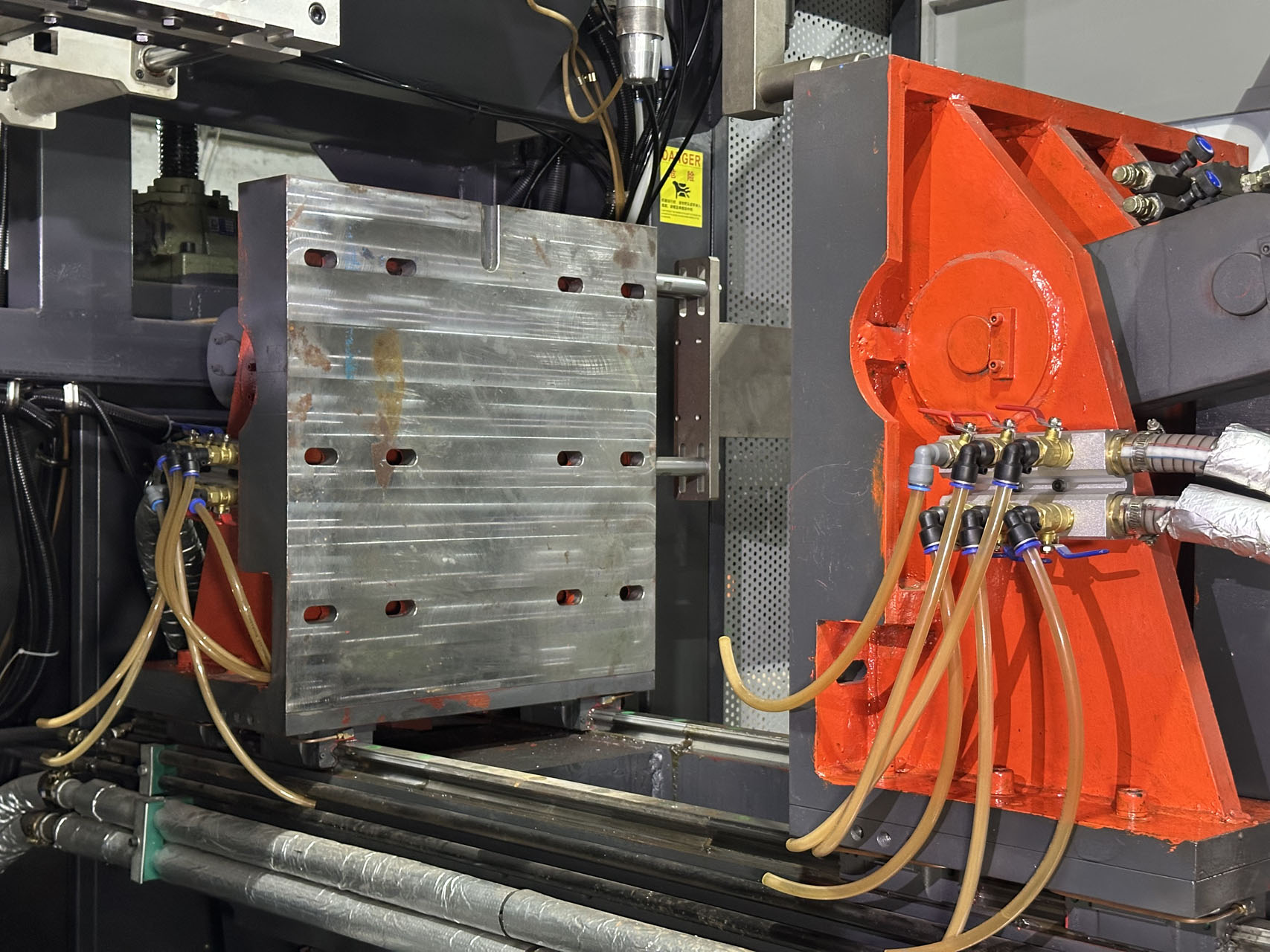
For most HDPE bottle and container projects, the standard production route is extrusion blow molding. So if your application involves detergent bottles, chemical bottles, household bottles, handle bottles, jerry cans, drums, or industrial containers, the correct direction is usually a suitable extrusion blow molding machine.
Typical HDPE packaging applications
- Detergent bottles
- Bleach bottles
- Milk bottles
- Chemical containers
- Lubricant bottles
- Jerry cans
- Industrial drums and large containers

PET vs HDPE in sustainability and recycling
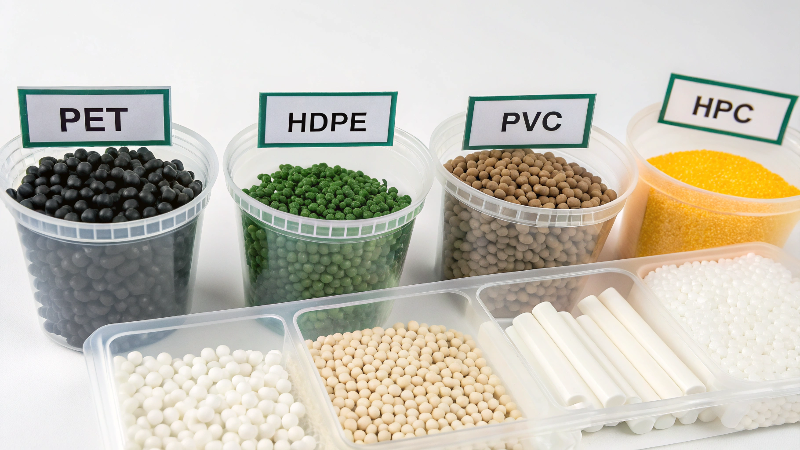
Both PET and HDPE are recyclable, but real sustainability performance depends on local collection systems, recycled resin quality, and how the package is designed.
Many buyers compare PET and HDPE based on recyclability alone, but the more useful question is whether the material can be effectively collected, sorted, and reused in the target market. In some regions, PET bottle collection is stronger because beverage packaging systems are more developed. In other cases, HDPE performs well because it is widely used in household and industrial packaging streams.
Recycling depends on region, not only material type
A packaging material may look sustainable on paper, but local recycling infrastructure matters more in practice. If your target market has strong PET bottle recovery, PET may support your sustainability strategy better. If your packaging is reusable, refillable, or based on durable household containers, HDPE may offer practical advantages.
Design for recycling matters
Material choice is only one part of the sustainability decision. Bottle color, label coverage, additives, barrier layers, cap combinations, and recycled content targets also affect recyclability and downstream performance.
Practical sustainability view
| Factor | PET | HDPE | Practical Note |
|---|---|---|---|
| Recyclability | Widely recyclable in many bottle systems | Widely recyclable in many packaging systems | Actual recovery depends on local infrastructure |
| Typical use pattern | Consumer beverage packaging | Household and industrial packaging | End-use affects collection quality |
| Recycled content potential | Common in many bottle projects | Common in many non-clear container projects | Regulatory requirements vary by region |
| Main sustainability question | Can the bottle be collected and reused effectively? | Can the container be recovered without performance loss? | Design and market conditions matter |
How production method affects the PET vs HDPE decision
In many projects, the material decision also determines the machine direction. PET usually points to stretch blow molding. HDPE usually points to extrusion blow molding.
One of the most practical ways to evaluate PET vs HDPE is to look at how the bottle will actually be manufactured. Material selection is not only about bottle performance. It also affects machine type, mold design, output planning, and investment direction.
PET usually means SBM
If your product is a clear PET bottle for water, beverages, edible oil, or similar consumer packaging, the main production route is typically stretch blow molding. In that case, you should compare bottle design, preform compatibility, output target, and the right PET stretch blow molding solution.
HDPE usually means EBM
If your product is an HDPE detergent bottle, chemical bottle, milk bottle, handle bottle, jerry can, or large industrial container, the main production route is typically extrusion blow molding. In that case, you should focus on wall thickness control, handle design, multilayer options, and the right HDPE extrusion blow molding solution.
Simple decision framework
| Question | If Yes | Likely Direction |
|---|---|---|
| Do you need a clear bottle with strong shelf appeal? | Yes | PET → SBM |
| Do you need high chemical resistance? | Yes | HDPE → EBM |
| Is the package for water, soda, or beverage use? | Yes | PET → SBM |
| Is the package for detergent, chemicals, or industrial liquids? | Yes | HDPE → EBM |
| Do you need a jerry can, drum, or handle bottle? | Yes | HDPE → EBM |

Video: PET bottle production example
If your project is more aligned with PET bottles and beverage packaging, this production video helps show the kind of bottle application that usually belongs in the SBM route.
How should packaging engineers decide?
The best material is not the one with the best isolated property. It is the one that fits the actual product, filling condition, market requirement, and production route.
When comparing PET and HDPE, start with the product itself. Ask what the bottle must do in real use. Does it need to be clear? Does it need to resist chemicals? Does it need to survive rough logistics? Does it need to support a beverage line? Does it need a handle or large capacity format?
Then move to manufacturing logic. If the application points toward clear PET bottles, your next step is usually evaluating a suitable stretch blow molding machine. If the application points toward HDPE bottles, detergent packaging, or industrial containers, your next step is usually evaluating a suitable extrusion blow molding machine.
This is the practical way to avoid choosing the wrong material and the wrong equipment path at the same time.

Conclusion
PET and HDPE are both important packaging materials, but they solve different problems. PET is usually the better choice for clear bottles, beverage packaging, and applications where presentation and visibility matter. HDPE is usually the better choice for detergent bottles, chemical containers, jerry cans, and packages that need strength and chemical resistance.
If your project is focused on PET bottles, water bottles, beverage bottles, or preform-based production, the right path is usually SBM.
If your project is focused on HDPE bottles, household containers, chemical bottles, handle bottles, jerry cans, or industrial containers, the right path is usually EBM.
Need help choosing the right bottle production route?
Send us your bottle type, volume, material, output target, and sample photos or drawings. We can help you determine whether your project should go in the PET stretch blow molding direction or the HDPE extrusion blow molding direction.
Request a bottle production recommendation or quote
FAQ
Q1: Is PET or HDPE better for beverage bottles?
A1: PET is usually the preferred choice for beverage bottles because it offers clarity, good presentation, and is commonly used with stretch blow molding systems.
Q2: Is HDPE better for detergent and chemical bottles?
A2: In many cases, yes. HDPE is widely used for detergent bottles, bleach bottles, chemical containers, and other packaging that needs stronger chemical resistance and practical durability.
Q3: Is PET made by extrusion blow molding?
A3: Most PET bottle projects are produced by stretch blow molding rather than standard extrusion blow molding. PET bottle production usually starts from a preform-based process route.
Q4: Is HDPE made by extrusion blow molding?
A4: Many HDPE bottles and containers are produced through extrusion blow molding, especially detergent bottles, milk bottles, handle bottles, jerry cans, and industrial containers.
Q5: Which material is more suitable for clear packaging?
A5: PET is generally more suitable for clear packaging because it offers much better transparency and shelf appeal than HDPE.
Q6: Which material is better for chemical resistance?
A6: HDPE is generally the better option for packaging that needs stronger chemical resistance, especially in household and industrial liquid products.
Q7: Are both PET and HDPE recyclable?
A7: Yes. Both are widely recyclable, but actual recycling performance depends on local collection systems, packaging design, and the available recycling infrastructure in the target market.
Q8: How do I decide between PET SBM and HDPE EBM?
A8: Start with the bottle application. Clear beverage bottles usually point to PET and SBM. Detergent bottles, chemical containers, jerry cans, and industrial packaging usually point to HDPE and EBM.