
Fully Automatic Edible Oil Bottle Blowing Machine Price Guide for PET Bottle Projects
- Why the Price Is Never Just One Number
- What Machine Are Buyers Actually Pricing?
- Main Factors That Affect Machine Price
- Machine Price vs. Complete Packaging Line Cost
- What You Should Budget Beyond the Blowing Machine
- How to Choose the Right Solution for Your Project
- What to Prepare Before Asking for a Quote
- Why Serious Buyers Focus on Total Cost, Not Lowest Price
- Conclusion
- FAQ
Why the Price Is Never Just One Number
Many buyers search for the fully automatic edible oil bottle blowing machine price expecting a simple catalog number. In real industrial packaging projects, that is rarely how pricing works. The final quotation depends on your bottle size, bottle design, output target, mold configuration, automation level, and whether you are buying only a blowing machine or planning a broader bottle packaging line.
For PET edible oil bottles, the machine itself is only one part of the investment. Buyers also need to think about molds, high-pressure air supply, chilling, bottle conveying, and often downstream equipment such as an edible oil filling machine, capping machine, labeling machine, and shrink wrapping equipment.
That is why the better buying question is not simply “What is the machine price?” but rather: “What is the right machine configuration and project scope for my edible oil bottle production plan?”
What Machine Are Buyers Actually Pricing?
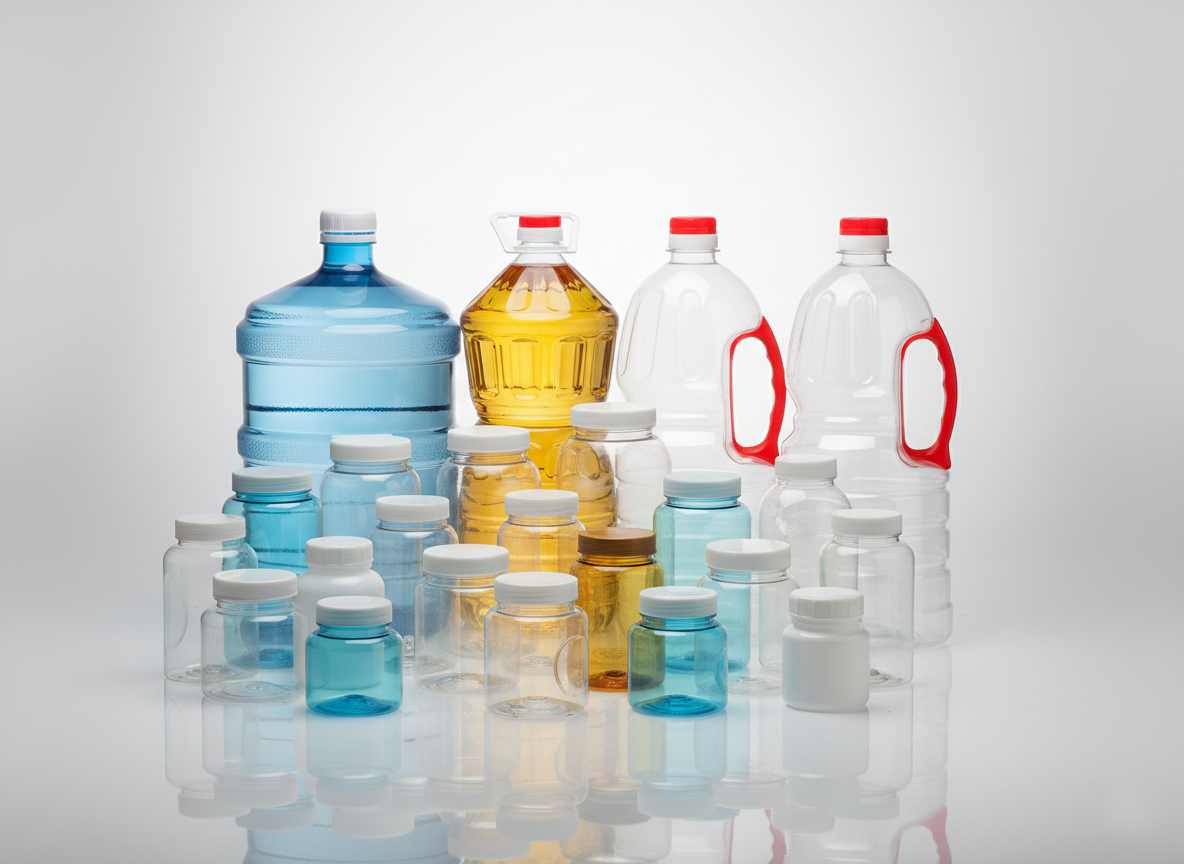
In most edible oil bottle projects, buyers are not looking for an extrusion blow molding machine. They are usually pricing a two-stage PET stretch blow molding solution, because PET is widely used for transparent edible oil bottles in formats such as 500ml, 1L, 2L, 3L, and 5L.
In this process, PET preforms are made first. Then the preforms are reheated, stretched, and blown into the final bottle shape. This is the standard route for many edible oil bottle applications because it offers good clarity, stable neck accuracy, reliable body formation, and efficient mass production.
If your project is focused on PET oil bottles, the most relevant machine category is usually a stretch blow molding machine or a PET preform stretch blow molding machine configured around your bottle size, output target, and mold layout.
This matters because many low-quality comparisons online mix together bottle blowing technologies, bottle materials, and machine categories. If the technical route is wrong, the price comparison is meaningless from the start.
Main Factors That Affect Machine Price
Two machines may both be described as “fully automatic edible oil bottle blowing machines,” yet their quotations can be very different. That is normal. The real price is driven by the configuration behind the machine.
1. Bottle size and bottle family
A machine built for a standard 1L bottle project is not the same as a machine designed for multiple bottle sizes, larger 5L containers, or a wider bottle family. Larger bottles often require different mold dimensions, heating behavior, blowing parameters, and mechanical stability.
2. Output target
Buyers who need higher bottles per hour will need a stronger production platform. Higher-speed production usually means more demanding requirements for transfer stability, oven performance, blowing rhythm, and air management. More output usually means a higher quotation.
3. Number of cavities
Cavity count is one of the biggest commercial drivers. More cavities can improve production efficiency, but they also increase the complexity of molds, heating balance, blowing synchronization, and overall machine structure.
4. Automation level
“Fully automatic” can still mean different things. Some projects only include automatic preform loading and bottle discharge. Others also require automatic conveying, integration with downstream equipment, and reduced manual intervention across the line. More automation usually raises the initial cost, but often reduces labor dependence later.
5. Machine architecture and component level
Buyers should also compare servo systems, oven design, control system quality, air recovery approach, and overall build quality. A cheaper quotation may reflect a more basic component level, a simpler mechanical structure, or lower long-term production stability.
Machine Price vs. Complete Packaging Line Cost
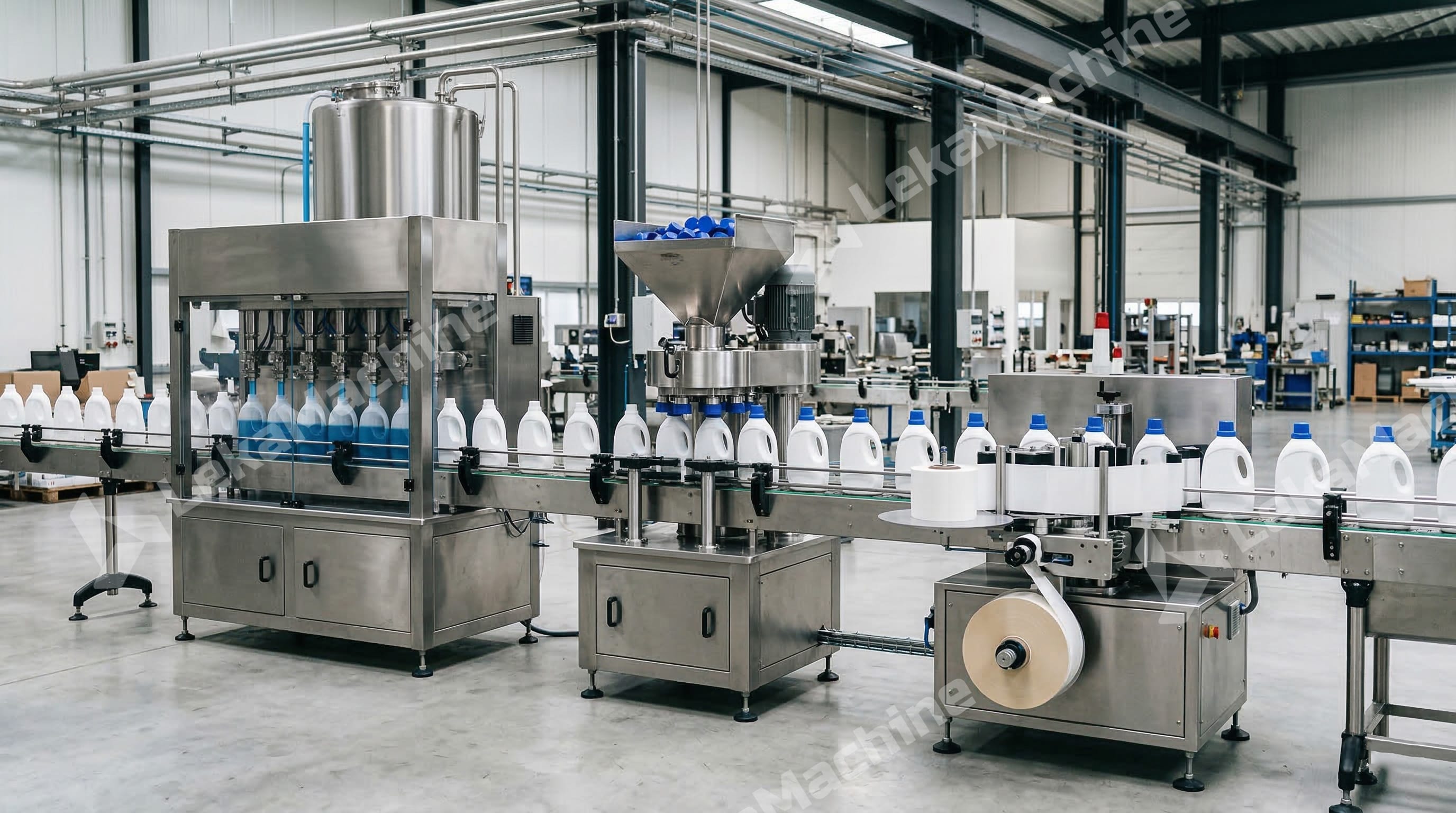
One mistake many buyers make is treating the bottle blowing machine as if it were the entire edible oil packaging investment. In reality, many factories are not buying a machine in isolation. They are building or upgrading a PET bottle packaging workflow.
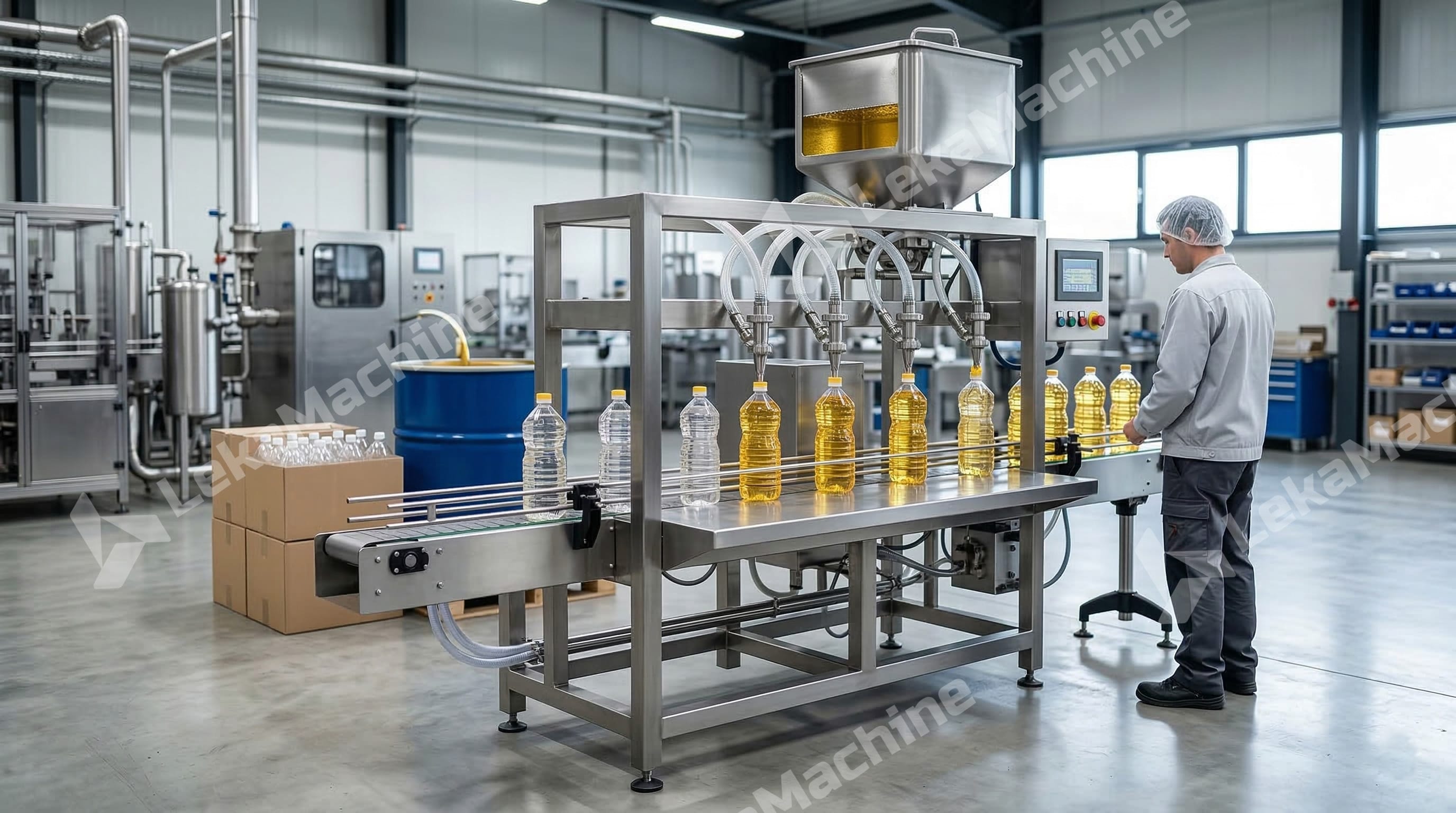
If your real goal is to produce, fill, cap, label, and pack edible oil bottles efficiently, then the decision should not stop at blowing. The project may later need to connect with:
- Edible oil filling machines
- Capping machines
- Labeling machines
- Shrink wrapping and packing machines
- Conveyors, bottle buffers, and line integration controls
This does not mean every buyer needs to purchase a complete line immediately. It means the blowing machine should be selected with your future packaging logic in mind. A machine that works as a standalone unit today but becomes difficult to integrate tomorrow may not be the best commercial choice.
What You Should Budget Beyond the Blowing Machine
A practical edible oil bottle project budget usually includes more than the machine body. Buyers should ask for clear scope confirmation so they do not compare incomplete quotations against more complete ones.
Typical budget items include:
- Main PET bottle blowing machine
- Blowing molds
- High-pressure air compressor
- Air tank, dryer, and filtration system
- Water chiller
- Preform feeding system
- Bottle conveyors or discharge connection
- Spare parts package
- Installation, commissioning, and training
- Optional downstream machines for filling, capping, labeling, or packing
This is exactly why two quotations that both claim to be for an “automatic edible oil bottle blowing machine” can differ so much. One supplier may be quoting only the main machine frame. Another may be quoting a more realistic project package.
Mold cost matters more than many buyers expect
Mold cost is often quoted separately, and it can change significantly depending on bottle design complexity. A simple, standard PET oil bottle is easier and cheaper to mold than a bottle with a custom grip area, special shoulder shape, deeper panel design, or stricter appearance requirements.
If you want a reliable quotation, send your supplier a bottle sample, drawing, or at least the main bottle dimensions and neck finish. Without bottle data, the price is only a rough estimate.
How to Choose the Right Solution for Your Project
The best solution depends on what kind of buyer you are. In edible oil packaging, not every customer should buy the same machine configuration.
When a standalone blowing machine may be enough
- You already have a filling line and only need bottle production
- You want to control bottle supply in-house first
- Your current project focuses on one or two PET bottle formats
- You want a simpler first-stage investment
When you should think in line terms from the beginning
- You are building a new edible oil packaging plant
- You want to reduce outsourced bottle purchasing cost
- You expect bottle blowing to connect with filling and packing later
- You need smoother material flow and lower manual handling
- You want one supplier ecosystem that understands the full bottle packaging process
This is where LEKA’s current product direction becomes important. We are no longer positioned only around blow molding. For many buyers, the stronger commercial value is in selecting a solution path that can support the wider bottle packaging process through multiple machine categories, not only one standalone machine.
What to Prepare Before Asking for a Quote
If you want a serious quotation instead of a vague price range, prepare real project data first. Better inputs produce better machine recommendations.
At minimum, you should send:
- Bottle size such as 500ml, 1L, 2L, 3L, or 5L
- Bottle drawing, photo, or physical sample
- PET preform weight, if known
- Neck finish / neck size
- Target bottles per hour
- Number of bottle types or SKUs
- Your local power supply details
- Whether you only need bottle blowing or plan to add filling and packing
Buyers who only ask, “What is your price?” usually get generic answers. Buyers who send bottle data and output goals usually get better technical proposals and more useful commercial comparisons.
Why Serious Buyers Focus on Total Cost, Not Lowest Price
The lowest machine quotation is not always the lowest production cost. In industrial packaging, smart buyers think in terms of total cost of ownership.
That usually includes:
- Initial machine cost
- Mold and auxiliary investment
- Energy consumption
- Reject rate
- Maintenance workload
- Spare parts planning
- Downtime risk
- Labor input
- Future integration flexibility
A machine with a lower initial price can become expensive if it causes unstable bottle quality, frequent stoppages, higher reject rates, or difficult downstream integration. A better-matched configuration often creates better cost per bottle over time, even if the starting quotation is higher.
For edible oil bottle production, that difference matters because bottle consistency, output stability, and packaging flow directly affect your operating margin.
Conclusion
The fully automatic edible oil bottle blowing machine price is shaped by much more than the machine frame. It depends on bottle size, bottle design, output target, cavity count, automation level, molds, auxiliaries, and whether your project is limited to bottle blowing or planned as part of a wider PET bottle packaging line.
The right buying strategy is not to chase the cheapest number. It is to match the machine to your actual bottle project, production target, and future packaging plan.
If you are comparing PET edible oil bottle production options, the most practical next step is to review your bottle details, output goals, and line scope with a supplier that understands both bottle blowing and downstream packaging equipment.
FAQ
What affects the fully automatic edible oil bottle blowing machine price the most?
The biggest factors are bottle size, bottle design, output requirement, cavity count, mold scope, automation level, and whether auxiliary systems are included in the quotation.
Is the mold usually included in the bottle blowing machine price?
Not always. In many projects, the machine and the mold are quoted separately. Buyers should confirm clearly whether the mold is included and whether the quotation also includes air systems, chiller, and commissioning support.
What machine is usually used for PET edible oil bottles?
In most cases, buyers use a two-stage PET stretch blow molding solution. That is why a stretch blow molding machine is usually the correct technical direction for transparent PET edible oil bottles.
Should I buy only a blowing machine or plan a full packaging line?
It depends on your production stage. If you already have downstream equipment, a standalone blowing machine may be enough. If you are building a new packaging workflow, it is smarter to consider future integration with filling, capping, labeling, and packing from the beginning.
Why do quotations from different suppliers vary so much?
Because suppliers often quote different scopes. Some only quote the main machine. Others include molds, auxiliaries, spare parts, installation, or broader project support. You should compare scope, not just the final number.
What should I send before requesting a serious quotation?
Send bottle size, bottle drawing or sample, neck finish, preform data if available, target output, and whether you want only bottle production or a broader edible oil bottle packaging solution.