
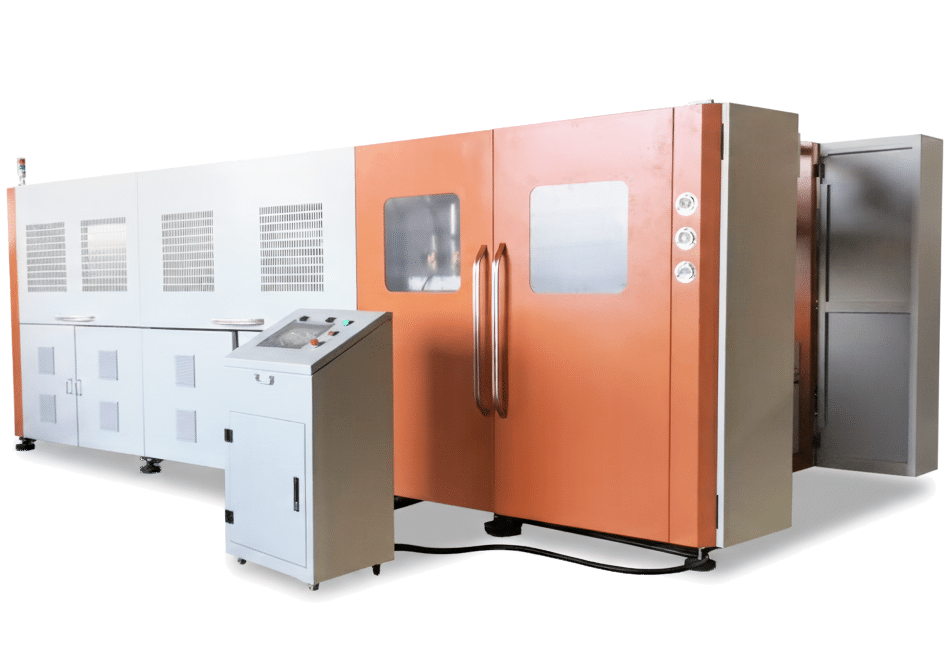
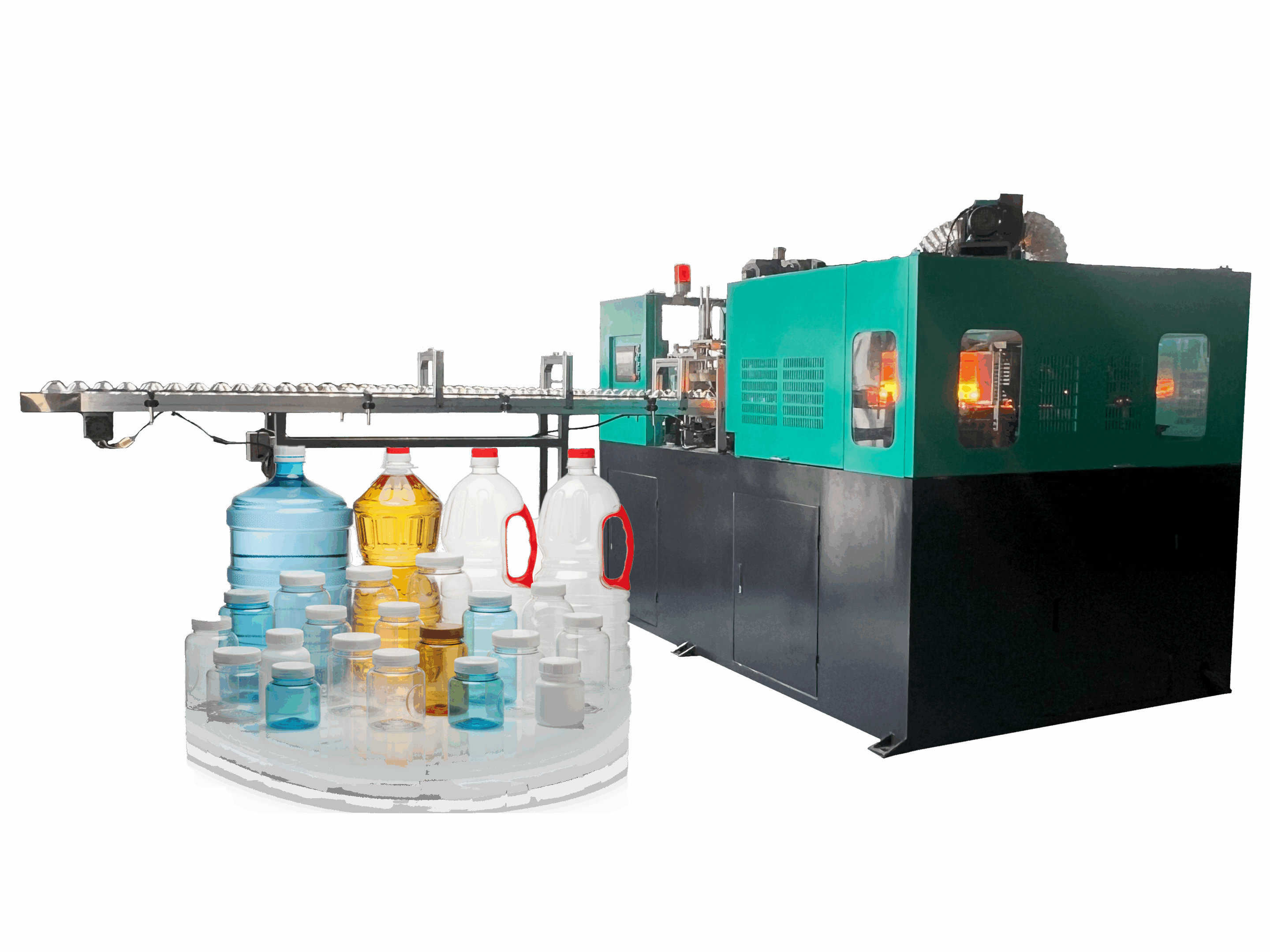
Latest Automatic Extrusion Blow Molding Machine for HDPE Detergent Bottles
When people talk about the latest automatic extrusion blow molding machine for detergent bottles, they usually mean more than just a new model.
They are looking for a HDPE detergent bottle blow molding machine that runs with fewer operators, uses less energy per 1,000 bottles, produces stable leak-free bottles, and fits smoothly into a modern, highly automated detergent packaging line.
In other words, a machine that turns packaging from a daily headache into a predictable, controlled process.
This guide walks through what “latest automatic” really means today and how to judge if such a line makes sense for your detergent plant.
Overview: What “Latest Automatic” Really Means for Detergent Bottle Lines
Older lines were often semi-automatic. Operators cut parisons, pulled bottles out of the mold by hand, and stacked them in crates. Output was limited, and qualité depended heavily on individual skill.
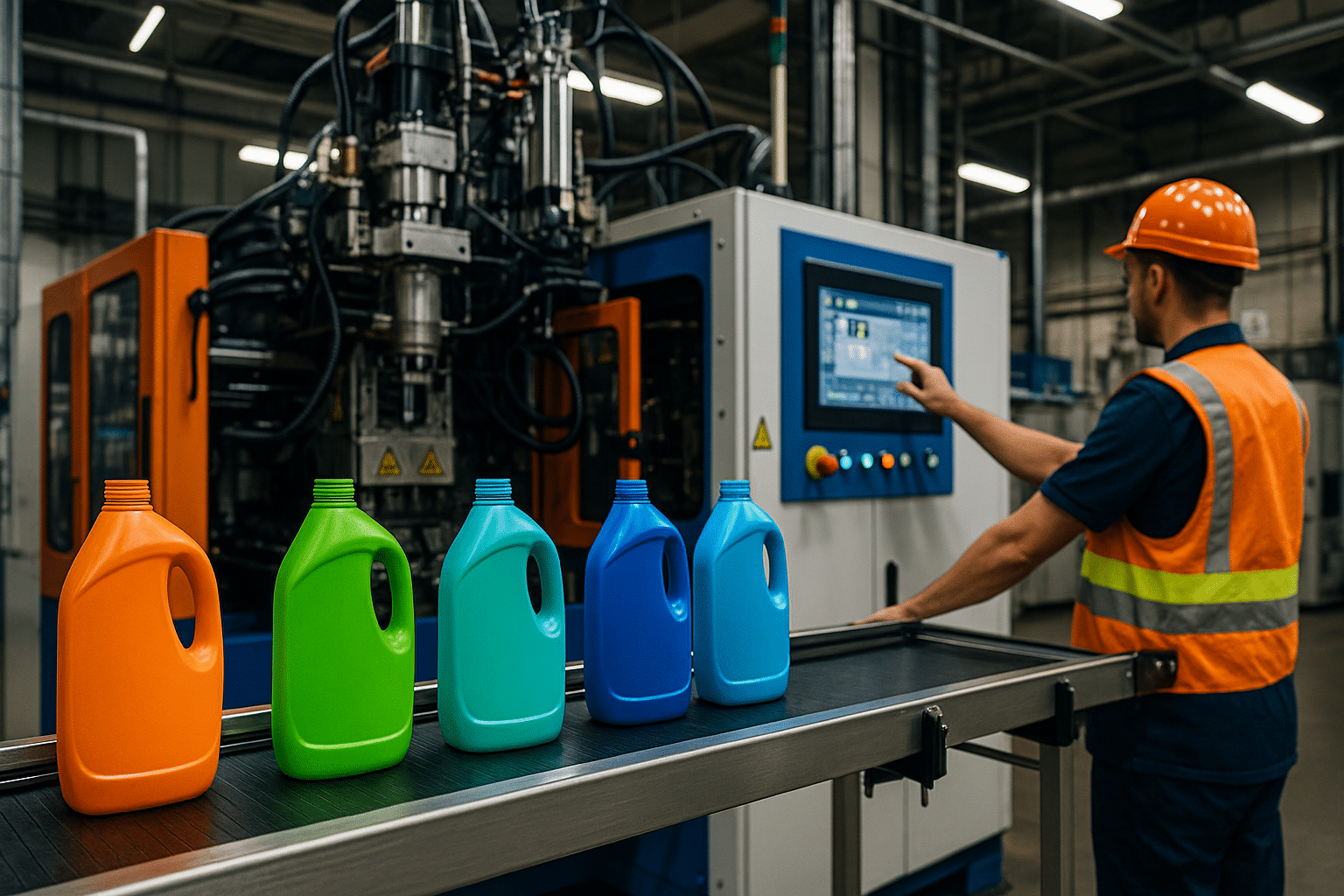
A fully automatic HDPE detergent bottle machine de moulage par soufflage looks very different. Parison extrusion, mold closing, blowing, cooling, deflashing, and take-out run in a continuous, synchronized cycle. Bottles leave the machine on a conveyor, already trimmed and separated.
A leak tester checks every bottle in-line, and good bottles flow directly to packing or palletizing. Automation does not remove the human team. It simply moves their work upstream into setup, supervision and qualité control instead of constant manual handling.
On a complete detergent bottle extrusion blow molding line, the automatic machine sits between material handling (silo, dryer, blender) and downstream equipment (leak tester, vision check, packing, palletizing, or even the filling hall).
The result is a line that behaves more like a continuous process than a collection of separate machines.
Why Listen to LEKA Machine on Detergent Bottle Blow Molding
An automatic line is not a small purchase. Buyers want advice from people who live in this world every day.
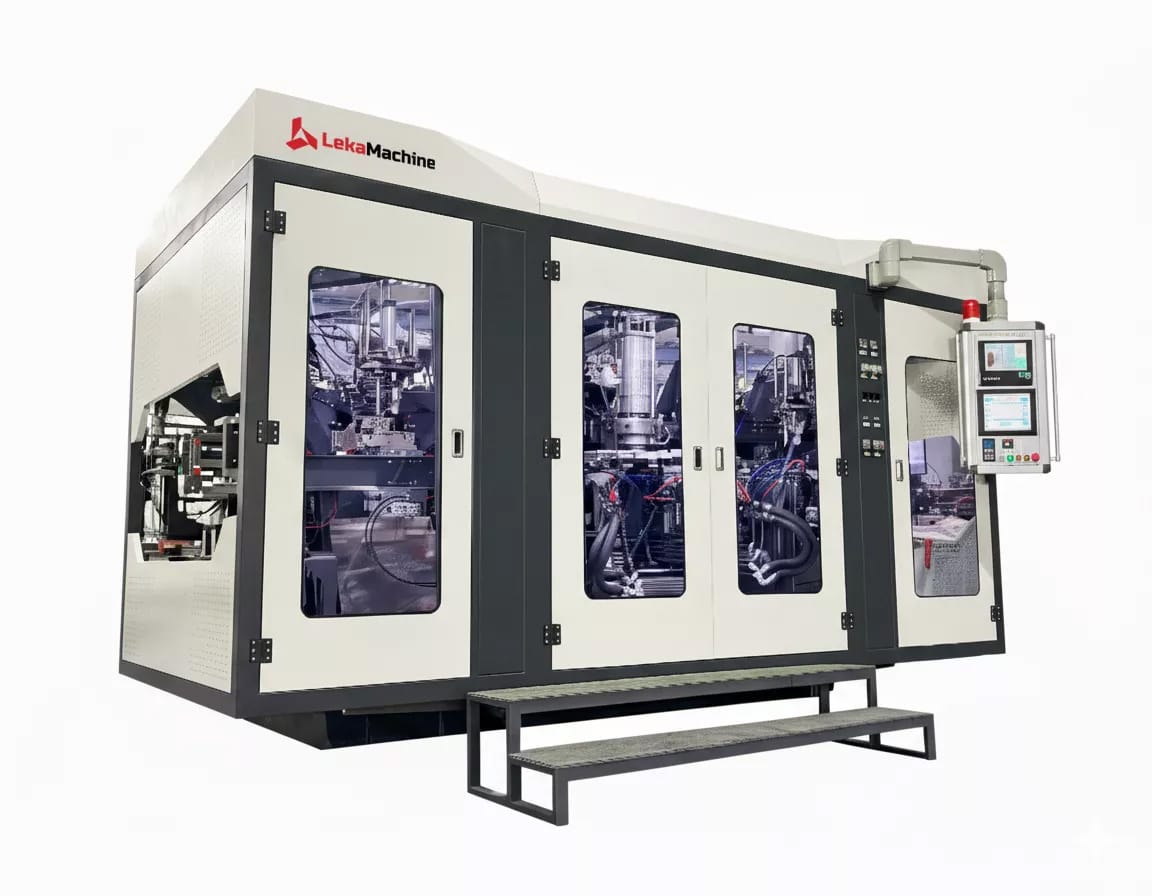
LEKA Machine focuses specifically on extrusion blow molding machines for HDPE and PP bottles, jerrycans and containers, from small packs up to large industrial volumes. The portfolio is structured into clear series so you can match the platform to your detergent project.
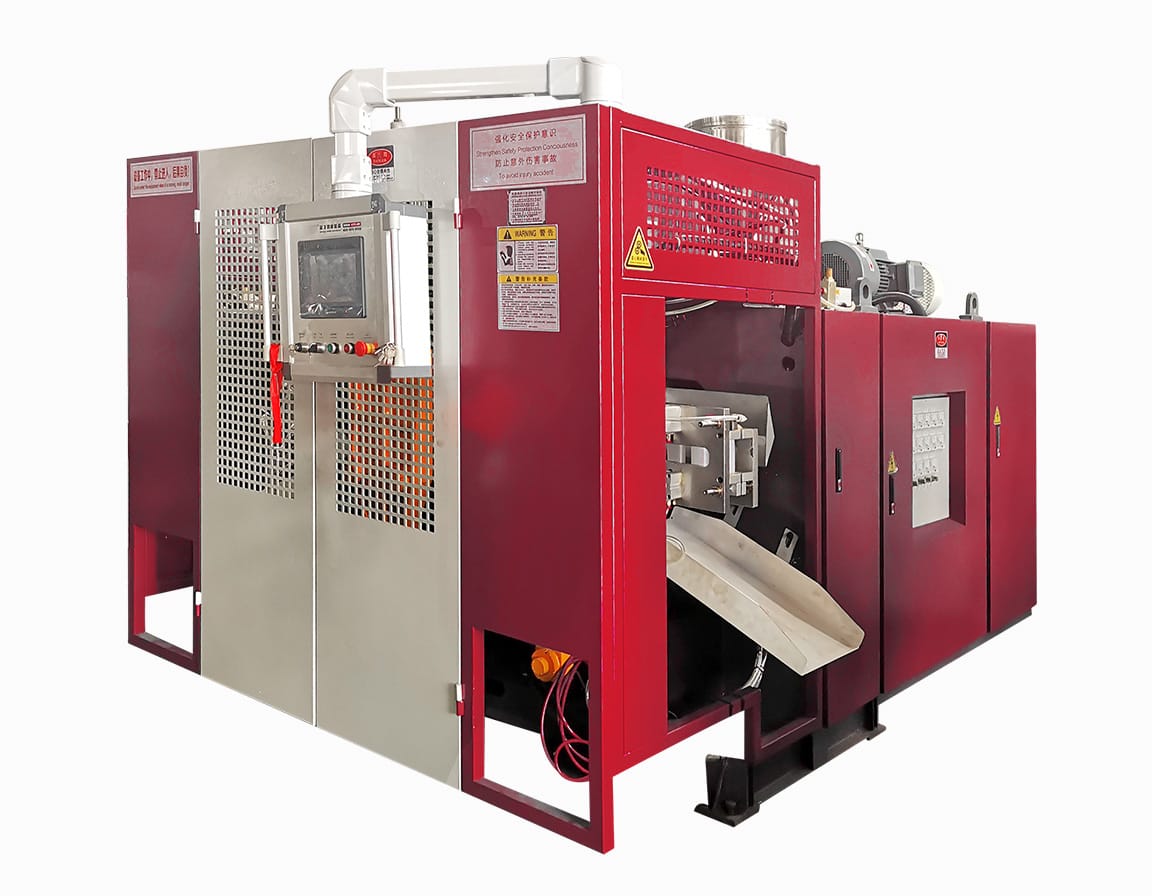
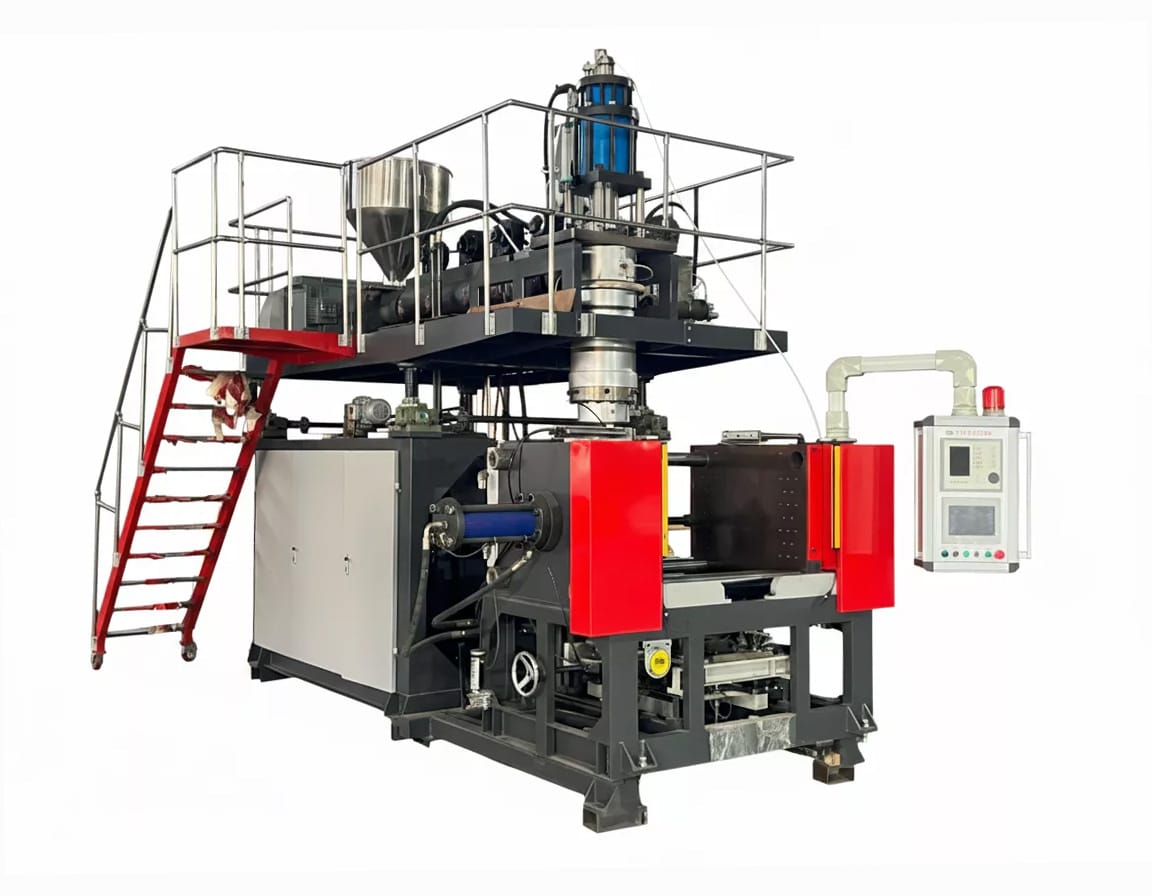
The FORMA series is a versatile extrusion blow molding machine line for bottles and jerrycans with fast mold change and closed-loop parison control for stable wall thickness. The AERO-type high-output solutions target continuous production of jerrycans and large packs where uptime is critical. Compact SMART-type small EBM solutions serve factories where floor space and up-front investment are tight.
Projects already cover chemical cleaners, laundry detergents and HDPE jerrycans for cleaning products in real customer factories. That long-term field experience is what shapes the practical checklist in the rest of this article.
Why HDPE Detergent Bottles Use Extrusion Blow Molding Machines, Not Injection or PET
Detergent bottles sit in a tricky niche. They need integrated handles for easy pouring, thick impact-resistant walls and good resistance to surfactants, alkalis and perfumes.
This is why HDPE (High-Density Polyethylene) and sometimes PP (Polypropylene) are the dominant materials for accueil and fabric care bottles.
For this kind of bottle, moulage par soufflage-extrusion has structural advantages over other methods.
- Versatile handle forming
The parison can be pinched and formed around a handle core, making ergonomic 1–5 L jugs in one shot. Injection- or stretch-based processes struggle here. - Wide wall thickness window
Wall thickness distribution can be tuned to reinforce corners, bottoms or handles while still keeping weight under control. - Flexible bottle families
One machine can run 0.5 L trigger bottles in the morning and 4 L jugs at night, with the right head and mold set.
Injection blow molding and PET stretch blow molding excel in clear, pressure-resistant packaging like cosmetics or water bottles. For opaque, handled HDPE detergent bottles, extrusion moulage par soufflage is the natural fit.
What “Automatic” Means on a Detergent Bottle Extrusion Blow Molding Line
Lors de l'achat suppliers call a machine “automatic”, they do not always mean the same level of automation. For detergent bottles, it is important to look carefully at what is included.
A truly automatic HDPE detergent bottle making machine usually covers several key elements.
- Automatic take-out and conveyor
Bottles leave the mold on a take-out device and drop onto a conveyor without manual handling. - Inline deflashing and trim removal
Flash around the handle, neck and bottom is removed mechanically. Scrap is collected in a grinder and returned as controlled re-grind. - Inline leak testing
A leak tester checks each bottle before it reaches packing or filling, so only good bottles move downstream. - Integrated scrap handling
Neck and handle flash do not end up in random bins. They go back into the material loop with a defined re-grind ratio.
Once these elements are in place, the operator is no longer cutting parisons or fighting with hot bottles. Their job becomes line supervision, quality checks and recipe adjustments, which is a more sustainable use of skilled labor.
Key Design Upgrades in the Latest Automatic Extrusion Blow Molding Machines
Modern machines are not only more automatic. They are smarter and more energy-efficient. In practical terms, this means looking for several design upgrades.
Servo or Hybrid Motion
Newer machines often use servo-hydraulic or hybrid actuation for clamp and carriage movement. This reduces energy consumption, shortens cycles and brings more repeatable movements. Oil temperature drift is lower, which improves process stability over long shifts.
Closed-Loop Parison Control
A key feature on the latest generation is closed-loop parison control. A wall-thickness controller adjusts the die head profile so bottle weight stays consistent within tight tolerances.
For detergent bottles, this directly impacts leak rate, top-load strength and resin usage per bottle. Small gram savings repeated over millions of bottles add up to serious money.
Fast Mold and Head Changes
Detergent factories often run multiple SKUs and handle shapes. Frequent changeovers are inevitable. Modern machines offer quick-clamp systems and guided alignment for molds, accessible die heads with reference marks and preset torque patterns, and recipe storage for process parameters by SKU.
All these elements shorten changeovers and reduce the “tribal knowledge” needed to switch between bottle types.
Safety and Smart Alarms
Good machine design also reduces risk with full enclosure around moving parts, guard doors with safety interlocks and clear alarm messages. A safe machine protects both people and uptime, because fewer incidents and fewer ambiguous alarms mean fewer unplanned stops.
Detergent-Specific Features to Look For in an Automatic EBM Machine
Detergent bottles are unforgiving. A small issue on the moulage par soufflage side can create major chaos on the filling and capping line.
Neck and Thread Consistency
The filling line wants a clean, concentric neck with stable ovality and thread dimensions. Otherwise caps do not seat properly, torque windows become narrow, and micro-leaks appear during transport.
A good combination of machine, mold and parison program keeps the neck area very repeatable, even when recycled content is used.
Handle Ergonomics and Strength
Consumers expect a comfortable grip and no deformation when they lift a full 4 L bottle. Handle regions need extra material and correct cooling.
Modern machines d'extrusion-soufflage support accurate parison programming in the handle zone, stable clamping and cooling, and robust repeatability shift after shift.
View Stripes and Color Masterbatch
Many brands want a view stripe so the user can see remaining liquid. Others rely heavily on intense colors and highly loaded masterbatches.
Here it is important to check how well the machine handles co-extrusion for stripes, mixing performance for uniform color, and surface quality when running perfume-loaded or additive-rich formulations.
Surface Quality and Aesthetics
Detergent bottles carry the brand on the shelf. Flow lines, die lines or orange-peel surfaces look cheap. Stable extrusion, consistent parison temperature and good mold venting all help produce a clean, uniform skin that makes your label or direct printing look superior.
How Automation Improves Daily Production in a Detergent Factory
On paper, the benefit of an energy saving de moulage par soufflage par extrusion is clear. In day-to-day operation, it shows up in several ways.
Fewer Operators per Machine
A semi-automatic line may need three or four operators around one machine: cutting parisons, deflashing, checking leaks, packing. An automatic line can often run with one operator supervising one or two machines, supported by a quality technician and a maintenance engineer.
Labor becomes more strategic instead of purely repetitive.
More Consistent Output per Shift
Automated sequences, digital recipes and stable parison control mean less variation in cycle time, fewer unexplained slowdowns and easier planning of daily and weekly bottle volumes.
This consistency lets planning teams synchronize moulage par soufflage with filling and shipping more confidently.
Lower Real Cost per Bottle
Cost is not only resin price. It includes energy per 1,000 bottles, grams per bottle, scrap percentage, labor per 1,000 bottles and downtime on the filling line caused by bad bottles.
A well-specified automatic de moulage par soufflage par extrusion directly reduces several of these variables at once.
Fewer Stoppages on Filling, Capping and Labeling
If the moulage par soufflage side is unstable, the filling line pays the price. Bottles jam at infeed, caps cross-thread and labels wrinkle over warped walls.
Better bottle quality means smoother downstream efficiency and less firefighting across departments.
How to Size the Right Automatic Extrusion Blow Molding Machine for Detergent Bottles
Buying a machine that is too big or too small is a common error. Sizing needs a calm, numerical approach.
Match Bottle Range to Machine Envelope
First, clarify your range: smallest and largest bottle volume, neck finishes, handle types, and required materials such as virgin HDPE, PCR blends and colors.
Then check each candidate machine’s clamp force and daylight, die head type and center distance, maximum parison weight and shot size. The goal is coverage with margin, not theoretical extremes that will never be used.
Single vs Double Station, Heads and Cavities
A double station de moulage par soufflage par extrusion for detergent bottles doubles the molding area and, combined with multi-head tooling, can give very high output.
The trade-offs are more complex mold systems, higher initial investment and a different staffing pattern around the line. Work with realistic bottles-per-hour numbers based on your specific bottle weight and cycle time, not only brochure values.
Think in Terms of the Whole Line
Remember to reserve space and capacity for conveyors and buffer tables, leak testers and vision systems, packing stations and palletizing. A highly productive machine squeezed into a cramped corner will never reach its full potential.
Energy, Scrap Rate and Real Cost per Detergent Bottle
Energy and resin costs are under constant scrutiny. A modern line gives you more levers to reduce both.
Look at kWh/kg and kWh per 1,000 Bottles
Instead of only looking at motor power, ask for kWh per kilogram of HDPE processed and kWh per 1,000 bottles at your target weight. These metrics capture the combined efficiency of extrudeuse, hydraulics, servo drives and cooling.
Use Parison Control to Save Resin
With accurate parison programming, material can be removed from over-built regions while maintaining or improving top-load strength. Weight variability is reduced, so fewer “safety grams” are needed.
Over time, trimming even a small amount per bottle becomes a substantial cumulative saving.
Identify and Attack Scrap Sources
Common scrap sources include startup rejects, color changes, neck flash issues, handle defects and under-blown corners on large jugs.
An automatic line makes these patterns visible through counters and dashboards, so the team can systematically reduce them.
Digital Control, Recipes and Remote Support on New Machines
The control system is the brain of an automatic HDPE detergent bottle machine de moulage par soufflage.
Modern human–machine interfaces provide recipe libraries by SKU, color and material combination, trend graphs for key process variables, production counters and basic efficiency indicators. These tools make troubleshooting more analytical and less guess-based.
Remote support is another important layer. Many suppliers now offer secure remote connections so their engineers can diagnose alarms, suggest parameter changes and push software updates. For buyers without a large in-house engineering team, this remote layer often makes the difference between a quick fix and long downtime.
Quality, PCR and Sustainability for Home Care Brands
Retailers and brand owners increasingly ask for post-consumer recycled HDPE and better sustainability metrics. An outdated machine may struggle with this.
A modern automatic line is better prepared to handle blends of virgin and PCR HDPE with variable melt behavior, maintain stable wall thickness and surface quality, and reach energy benchmarks expected in new sustainability audits.
In some projects, multilayer structures make sense, for example using a virgin inner layer for product contact, a PCR middle layer for sustainability and a colored outer layer for branding. Whether this is needed or not depends on market requirements and should be discussed at project stage.
Real-World Scenario: Upgrading From a Semi-Automatic Detergent Bottle Line
Consider a typical situation.
The starting point is one semi-automatic de moulage par soufflage par extrusion with manual take-out and trimming, three to four operators per shift and frequent micro-stops on the filling line due to inconsistent bottles.
The upgrade plan is to replace it with an automatic line using a modern platform with conveyor, leak tester and packing table, and to redefine roles so one operator supervises two machines, supported by shared quality control and maintenance staff.
After stabilization, the plant usually sees higher and more predictable output per shift, lower energy per 1,000 bottles, reduced scrap and fewer unexplained rejects in the filling hall. Operator fatigue and turnover also tend to decrease because the work becomes more technical and less physically draining.
The technical upgrade becomes a business upgrade: more volume, better quality and a less fragile operation.
Comparing Automatic Extrusion Blow Molding Machine Suppliers
Once you know roughly what you need, suppliers can start to look similar on paper. To differentiate, it helps to go beyond the quoted price.
- Technical data that matter
Compare output range, energy figures, supported bottle sizes, die head configuration and mold range. - Service footprint
Check how quickly a technician can reach your site and whether spare parts are stocked in your region. - Installation and training
Look for a clear plan that covers layout review, commissioning phases, operator training and handover criteria. - References
Ask to see real detergent or daily chemical projects already running on similar equipment. Case studies and factory videos are valuable proof.
Simple Checklist Before You Invest in a New Automatic EBM Line
Before requesting a detailed proposal, prepare a concise data pack.
- All relevant SKUs and bottle drawings, including volumes, necks and handles
- Daily and peak demand by SKU
- Resin specifications, color requirements and PCR targets
- Available factory space, power supply, compressed air and cooling capacity
During technical meetings, make sure to ask about realistic output at your bottle weights, expected energy per 1,000 bottles, changeover time between key SKUs, remote support capability and training scope.
This preparation allows you to compare offers on a like-for-like basis instead of relying on vague brochure language.
FAQ: Automatic Extrusion Blow Molding Machines for Detergent Bottles
What bottle range can one automatic machine realistically cover?
Most detergent lines are sized to cover a family such as 0.5 to 5 liter bottles with similar neck finishes. With the right die head and molds, a single platform can run several SKUs, but very small and very large formats are usually split across different machines.
How many operators are needed per automatic EBM machine?
It depends on plant layout and downstream automation, but many factories aim for one operator to supervise one or two machines, supported by shared quality and maintenance staff.
Can PCR HDPE be used for detergent bottles on this type of equipment?
Yes. Modern machines with stable extrusion and good parison control can handle significant PCR blends, as long as material quality is monitored and process windows are defined carefully.
How long do installation and commissioning usually take?
For a standard detergent bottle line, installation, wiring, dry runs and wet trials can take from a few weeks to a couple of months, depending on factory readiness, utilities and the complexity of downstream integration.
Conclusion: Is the Latest Automatic Extrusion Blow Molding Machine Right for Your Detergent Bottles?
It may be time to upgrade if operators are constantly firefighting on the moulage par soufflage side, filling and capping lines suffer from unstable bottle quality, energy and resin usage per bottle keep creeping up, or your team wants to introduce PCR but fears instability.
The latest automatic de moulage par soufflage par extrusion for detergent bottles is not just new hardware. It is a way to bring stability, predictability and better economics into one of the most critical parts of your packaging flow.
The next step is straightforward: collect your bottle drawings, volume forecasts and material plans, then share them with a supplier who can translate them into a concrete line concept and payback model. From there, you can decide with data whether this is the right moment to move to a entièrement automatique future.


0 commentaires