
The Ultimate B2B Guide to 8 oz HDPE Plastic Bottles
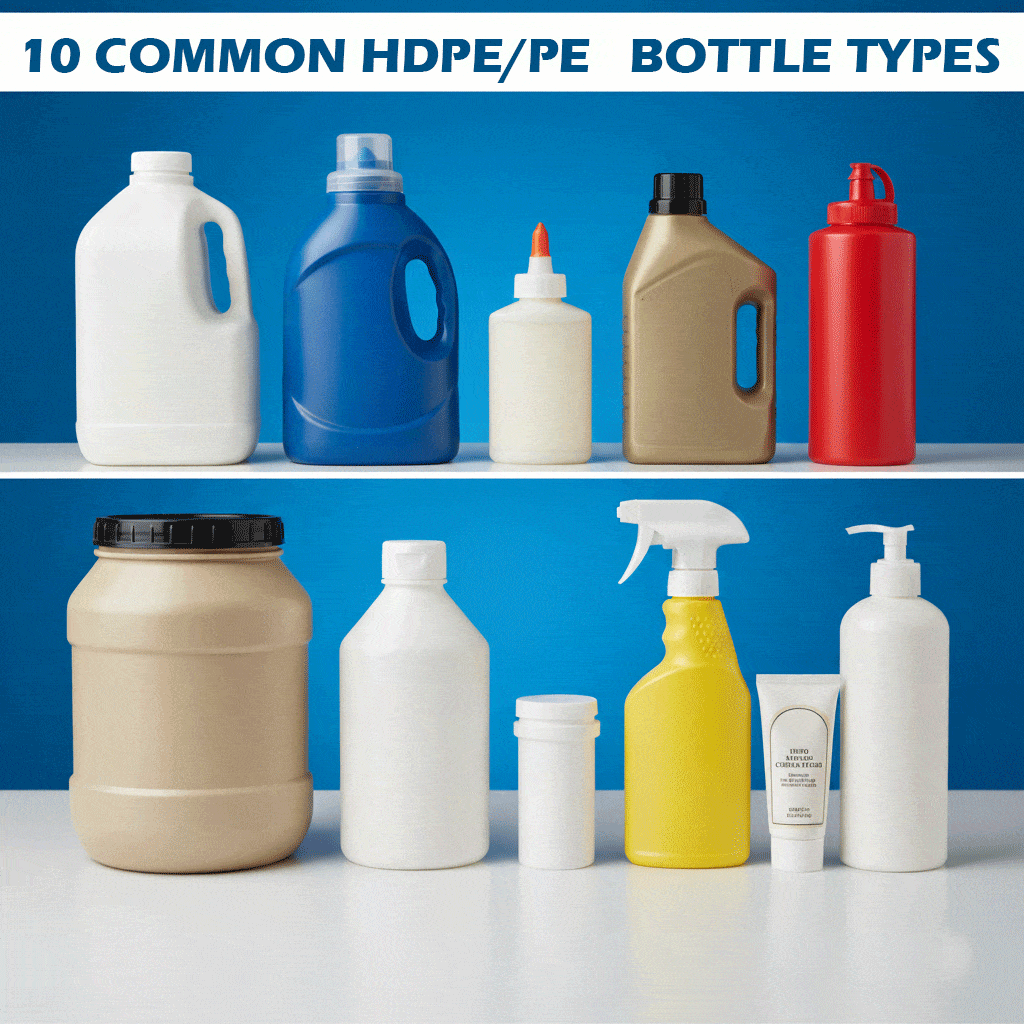
A range of HDPE and PE containers shows common extrusion blow molded forms for household, chemical, and personal care packaging.
Are you looking for a packaging solution for your product that is durable, cost-effective, and highly customizable? The 8-ounce HDPE bottle might just be your best answer.
When you walk down the aisle of a store, you’re surrounded by it, even if you don’t notice. High-Density Polyethylene, or HDPE, is the workhorse of the packaging world. It’s that #2 plastic that’s trusted for everything from milk jugs to shampoo bottles.
And for good reason. It has some key features that make it a smart choice:
- Excellent Chemical Resistance: It doesn’t react with a lot of chemicals, which is great for cleaners or industrial products.
- High Impact Strength: It can take a drop without shattering.
- Cost-Effectiveness: It’s an affordable material, which helps keep your product costs down.
- High Recyclability: HDPE is one of the most recycled plastics, which is something customers care about more and more.
This article will serve as a comprehensive B2B guide. I’ll take you through the design choices, the core manufacturing technology, cost factors, and sustainability of 8 oz HDPE bottles. The goal is to give you professional insight for purchasing the right equipment for your needs.
Choosing the Right 8 oz Bottle Style for Your Product Application
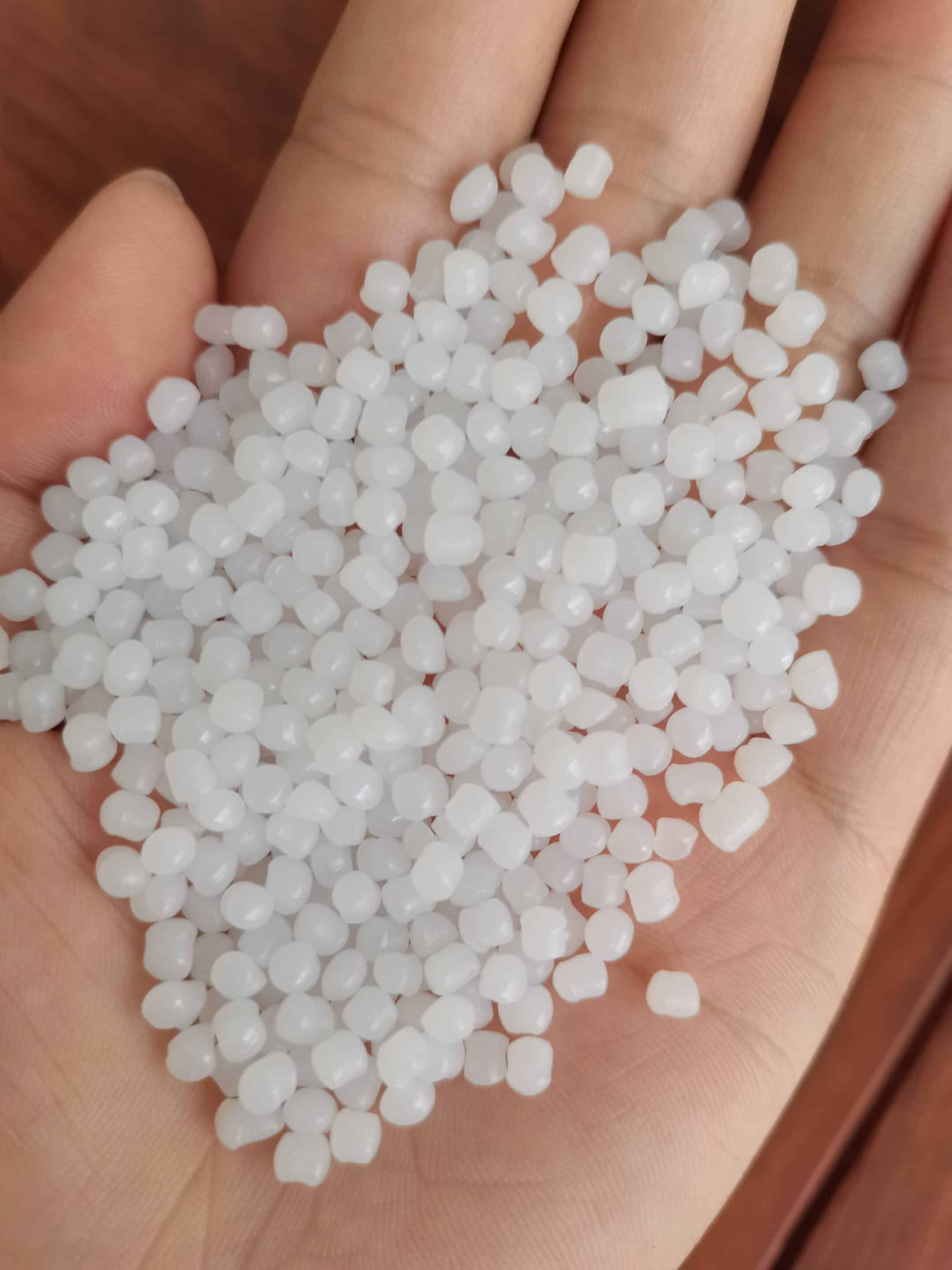
HDPE material
Not all bottles are created equal. The shape and style you choose depend entirely on what you’re selling and how you want it to look on the shelf.
Here’s a quick comparison of the most common styles for 8 oz HDPE bottles.
| Bottle Style | Key Advantage | Best For | Label Area |
|---|---|---|---|
| Cylinder/Modern Round | Maximizes label space | Cosmetics, Cleaners | Excellent |
| F-Style | Space-efficient, sturdy | Industrial, Auto Chemicals | Good |
| Custom Shape | Brand differentiation | Niche Market Products | Variable |
Cylinder & Modern Round: The Classic Choice for Maximum Shelf Appeal
This is probably the style you picture in your head first. It’s simple, clean, and effective.
The smooth, straight sides give you the most possible space for your label, which is perfect for showing off your branding. They are also very efficient to manufacture, which helps keep production costs in check. You’ll see this style used for shampoos, conditioners, lotions, household cleaners, and even some food sauces.
F-Style Bottles: The Robust, Space-Saving Solution for Industrial Use
F-Style bottles have a distinct rectangular shape with a handle on top.
This design is incredibly practical. It’s sturdy and “shipping-friendly,” meaning the flat sides allow you to pack more bottles into a box, saving space and money on shipping and storage. This makes them a top choice for industrial and automotive products like motor oil, chemical solvents, concentrated cleaners, and gardening chemicals.
Imperial Round & Custom Shapes: Differentiating Your Brand on the Shelf
Sometimes, you need to stand out from the crowd.
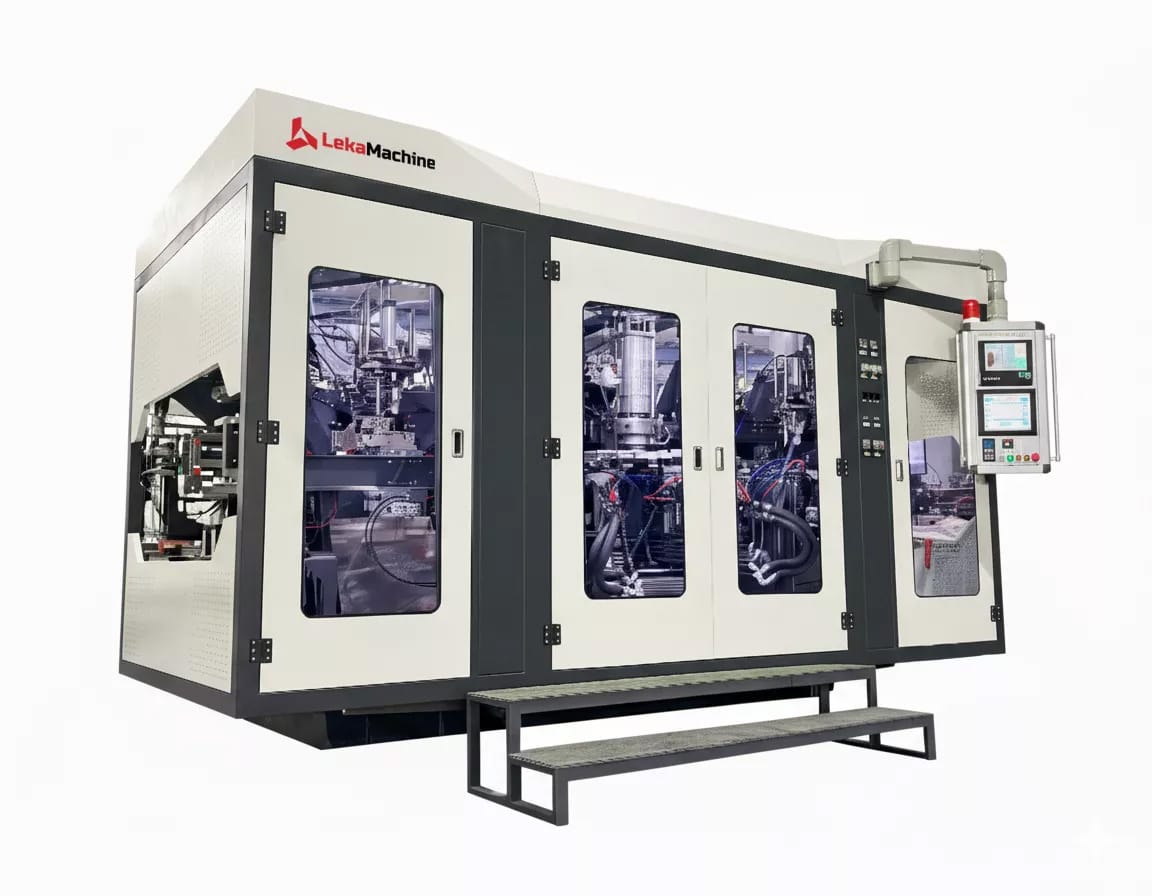
A unique bottle shape can catch a customer’s eye and become a key part of your brand identity. While it might cost a bit more in mold design, the payoff can be huge in a competitive market. With a flexible machine, like the ones we build at Leka Machine, you can use custom molds to create a bottle shape that is truly your own. Our FORMA series, for example, is designed to be versatile and handle diverse production demands with a single machine.
Technical Deep Dive: How to Choose the Right Neck Finish (24-410 vs 28-410)
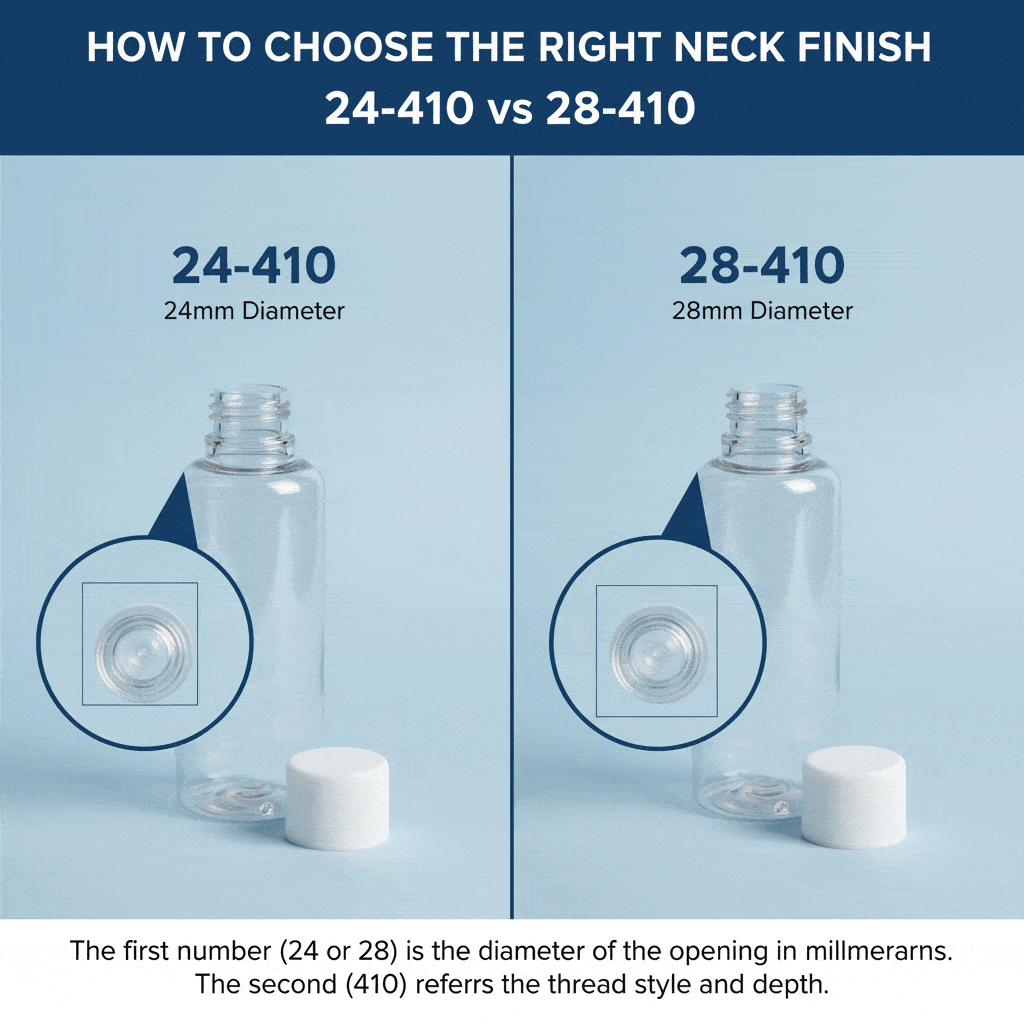
Two PET bottles display different neck finish diameters and thread styles to guide closure matching for plastic bottle production.
The neck of the bottle might seem like a small detail, but it’s critical.
When you see a neck finish described as “24-410” or “28-410,” it’s telling you two things.
- The first number (24 or 28) is the diameter of the opening in millimeters.
- The second number (410) refers to the style of the threads. The “410” is a very common, standard thread style.
Getting the neck finish right is essential. It ensures your caps, pumps, or sprayers fit perfectly. A proper fit prevents leaks, protects your product, and makes sure the closure works as intended for your customer. It’s a small detail that makes a big difference in product quality and user experience.
How 8 oz HDPE Bottles are Made: The Extrusion Blow Moulding (EBM) Process
Ever wonder how tiny plastic pellets become a finished bottle? I’ll walk you through the manufacturing journey. For HDPE bottles, the magic happens through a process called Extrusion Blow Moulding, or EBM for short.
It’s a reliable method that’s perfect for creating hollow plastic parts.
Step-by-Step Breakdown of the Extrusion Blow Moulding (EBM) Process
The whole thing happens very quickly, but it can be broken down into four main steps.
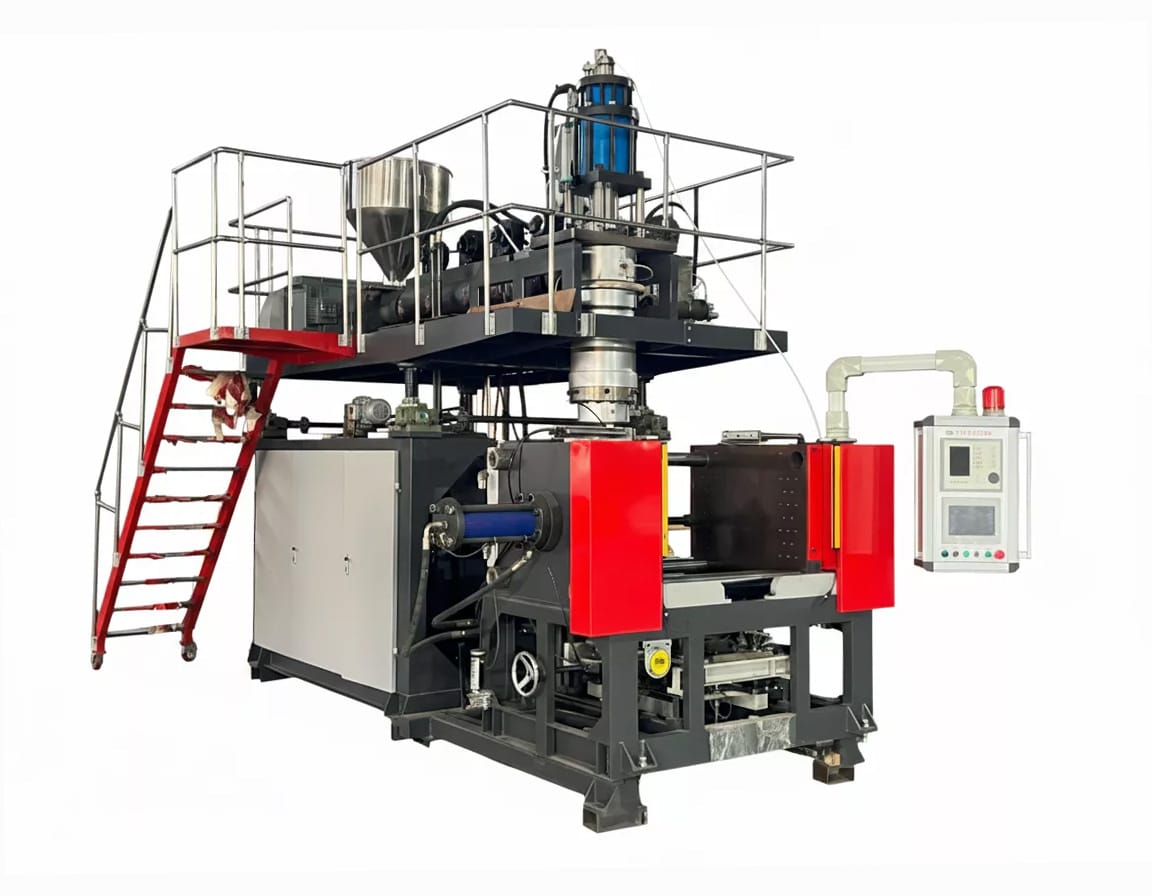
- Melting & Extrusion of Parison: First, solid HDPE pellets are fed into the machine. They are heated and melted into a thick, molten plastic. This plastic is then pushed (or extruded) downwards through a circular die, forming a hollow tube of hot plastic. This tube is called a “parison.”
- Mold Closing & Clamping: A two-part mold, which is the exact shape of the finished bottle, closes around the parison. As it closes, it pinches the bottom of the parison shut.
- Inflation & Cooling: A pin is inserted into the top of the parison and blows compressed air inside, kind of like blowing up a balloon. The air pressure pushes the soft plastic outwards against the walls of the cold mold. The plastic takes the shape of the mold as it cools and hardens.
- Ejection & Deflashing: After a few seconds, the plastic is cool enough to hold its shape. The mold opens up, and the newly formed bottle is pushed out. Often, there is some excess plastic, called “flash,” where the mold halves came together. This flash is trimmed off, and the bottle is sent on its way for printing, filling, and capping.
To really see this in action, you can imagine a video here showing a Leka Machine EBM in operation, smoothly moving from one step to the next.
Key Specifications for an Efficient EBM Machine: A Manufacturer’s Perspective
When you’re looking to buy an extrusion blow moulding machine, it’s easy to get lost in the technical specs. As someone who works with these machines every day, here’s what I believe you should really pay attention to.
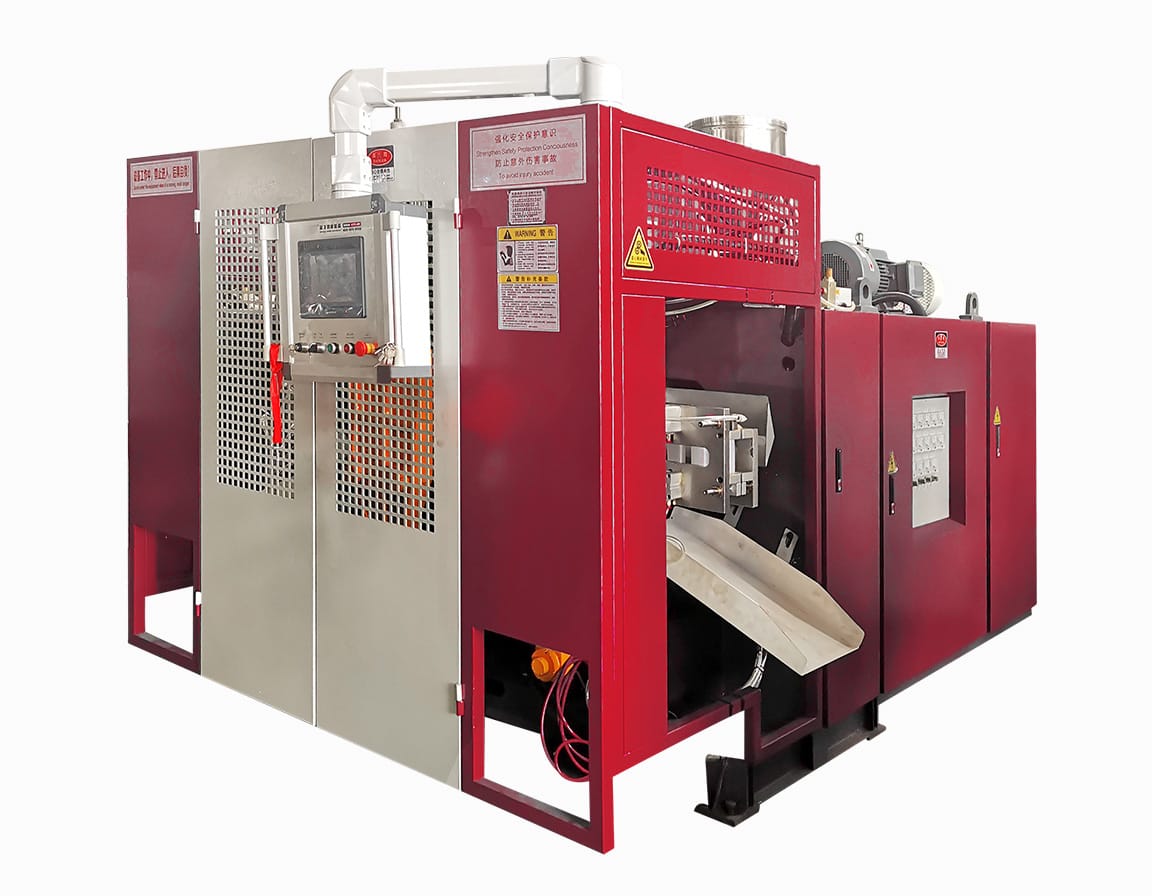
- Energy Efficiency: This is a big one. Older machines can use a lot of electricity. Modern machines, including our Leka Machine models, use servo-hydraulic systems. These systems are much more precise and use significantly less power, which directly lowers your operating costs over time.
- Control System: The control system, or PLC, is the brain of the machine. A stable and user-friendly PLC is crucial for maintaining consistent bottle quality and high production rates. It means fewer rejected bottles and less downtime.
- Cycle Time: This is how fast the machine can produce a single bottle. A shorter cycle time means higher output. This is affected by the die head design, the cooling system, and the speed of the clamping unit. For example, a good machine might produce a 20-gram 8 oz bottle in just a few seconds. Our AERO Series is specifically engineered for this kind of high-volume, continuous production.
- Automation Level: You can choose between semi-automatic and fully automatic machines. A fully automatic machine can handle everything from feeding the plastic pellets to checking for leaks and packing the finished bottles. A semi-automatic machine requires more hands-on work from an operator. The right choice depends on your production volume, labor costs, and budget.
Extrusion Blow Moulding vs. Stretch Blow Moulding: Which is Right for HDPE?
People sometimes get these two processes mixed up, but they are used for very different things.
Here’s the main thing to remember: Extrusion Blow Moulding (EBM) is the go-to process for HDPE bottles. It’s perfect for things like shampoo bottles, milk jugs, and chemical containers.
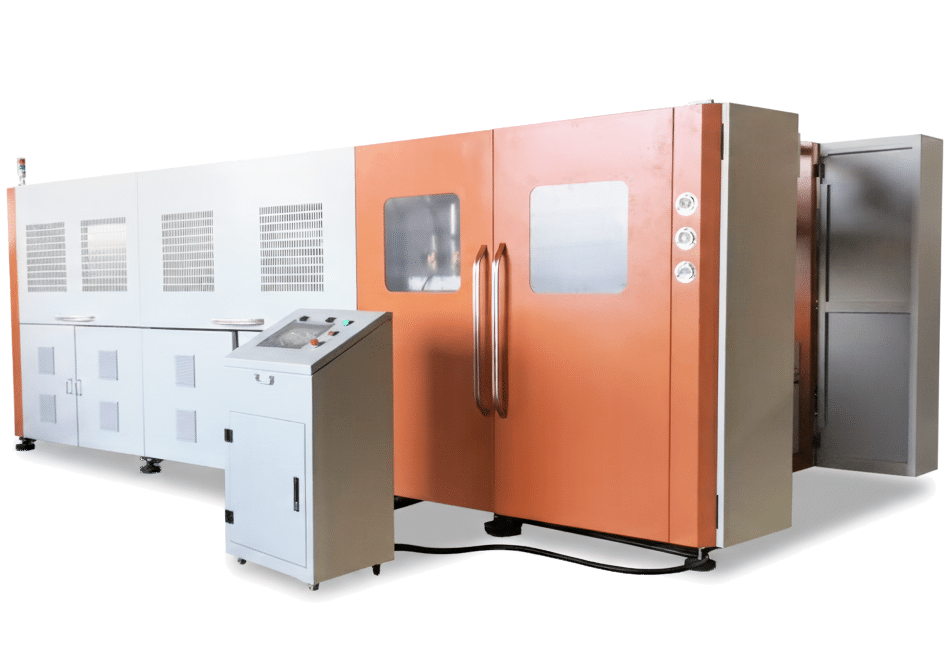
Stretch Blow Moulding (SBM), on the other hand, is used almost exclusively for PET plastic—the clear, rigid plastic used for water and soda bottles. Our AQUA Series is a line of SBM machines designed for exactly that.
So, if you want to make 8 oz HDPE bottles, you need an EBM machine.
Want to learn more about the technical differences between EBM and SBM? You can read our full comparison guide here.
The Economics and Environmental Impact of HDPE Bottles
Choosing a packaging material isn’t just about the bottle’s shape. You also have to think about the cost to produce it and its impact on the environment.
A Detailed Cost Breakdown of Manufacturing a Single 8 oz HDPE Bottle
The final cost of a bottle depends on several factors. It’s not just about the plastic.
Here are the main components that make up the cost of one bottle:
- Raw Material Cost: The price of HDPE resin is the biggest factor. It fluctuates based on the global oil market.
- Machine & Energy Costs: This includes the depreciation of the blow moulding machine itself and the electricity it uses. An energy-efficient machine can save you a lot of money here.
- Labor & Overhead: This is the cost of the staff who operate the machinery and the general costs of running the factory, like rent and maintenance.
- Mold Amortization: A high-quality mold can be expensive, but its cost is spread out over the hundreds of thousands or even millions of bottles it will produce in its lifetime.
So, what’s the final number? The cost to make one 8 oz HDPE bottle can range from a few cents to over ten cents ($0.0X – $0.1X). This depends heavily on your production efficiency. An efficient machine from a trusted supplier like Leka Machine helps you save money on every single bottle by using less energy and producing fewer defects.
The Real ROI: Calculating the Value of Recycled HDPE Plastic
Sustainability isn’t just a buzzword; it’s good business. HDPE is plastic #2, and it’s one of the most valuable and easily recycled plastics in the world.
According to data from recycling markets, the demand for post-consumer recycled HDPE (rHDPE) is strong, particularly as major brands commit to using more recycled content in their packaging. This creates a stable market for used HDPE bottles.
From a business perspective, this matters.
- Brand Image: Using recycled material and promoting recyclability builds a positive brand image that customers appreciate.
- Regulations: Many regions are introducing regulations that require a certain percentage of recycled content in plastic packaging.
- Cost Savings: Promoting recycling can sometimes lower your company’s costs for waste disposal.
Reuse & Safety: The Difference Between Single-Use PET and Durable HDPE Bottles
You’ve probably heard that you shouldn’t reuse disposable PET water bottles. That’s because their thin walls can easily harbor bacteria and they can degrade with repeated use.
HDPE bottles are different. They are typically thicker, more rigid, and more durable. This makes them much safer for reuse under the right conditions, especially for non-food items like cleaning solutions. This durability is one of the reasons why HDPE is chosen for so many reusable containers.
Partnering with Leka Machine for Your Bottle Production Line
Choosing the right machine is a big decision, and it’s about more than just the hardware. You need a partner who understands your goals and can support you through the process.
At Leka Machine, here is what we focus on:
- Expert Support: We don’t just sell you a machine. We provide technical advice from start to finish, from choosing the right model to helping you plan your production line layout. As a technical sales manager, my job is to make sure you get the right solution for your specific project.
- Reliable Machinery: Our focus is on building stable and efficient Extrusion Blow Moulding and Stretch Blow Moulding machines that you can count on. We have different series for different needs, from the versatile FORMA series to the heavy-duty TITAN series for large industrial containers.
- Global Service: We are a China-based factory that serves customers all over the world, from Europe to Latin America. We have a lot of experience with international logistics and providing support to our global clients.
- Transparent Process: We know that planning is key for your business. We give you a clear delivery timeline, which is a major advantage when you’re trying to schedule a new production launch.
Ready to boost your packaging production?
Contact me, Slany Cheuang, your technical sales manager, for a free consultation and a custom quote.
Visit our website at www.lekamachine.com or download our product catalog to see more details about our machines.
Key Takeaways for Your 8 oz HDPE Bottle Strategy
We’ve covered a lot of ground. To sum up, here are the key points to remember when planning your 8 oz HDPE bottle production:
- Choose the right style: Your bottle’s shape should match your product and brand strategy.
- EBM is the process: For HDPE bottles, Extrusion Blow Moulding is the correct manufacturing technology.
- Focus on efficiency: A reliable, energy-efficient machine will lower your long-term production costs.
- Think sustainably: HDPE’s high recyclability is a valuable asset for your brand.
Frequently Asked Questions (FAQ)
Q1: Is food-grade HDPE safe for beverages and sauces?
A: Yes, virgin HDPE resin is FDA-compliant and safe for direct food contact. However, you should always verify the specific grade of the resin with your supplier to ensure it meets all the requirements for your product.
Q2: What is a typical Minimum Order Quantity (MOQ) for custom bottles?
A: If you are buying finished bottles from a bottle manufacturer, the MOQs can be very high—often tens of thousands of units or more. This is one of the biggest advantages of investing in your own EBM machine. It gives you the flexibility of no MOQ, allowing you to produce what you need, when you need it.
Q3: Can Leka Machine also provide the bottle molds?
A: Yes, we can offer a one-stop solution. We assist with mold design and manufacturing to ensure that the mold integrates perfectly with our machines, giving you a smooth and seamless production start-up.
About the Author
Slany Cheuang, Technical Sales Manager at Leka Machine
I have been working in the blow moulding technology industry for years, specializing in helping global clients configure the most effective production solutions for their plastic containers. My focus is on understanding your specific needs and translating complex technical requirements into reliable, high-return-on-investment production systems.


0 Comments