
Buying an extrusion blow molding machine should start with technical fit, not only with a quotation. Many buyers compare machine price first, but the bigger risks usually come from the wrong bottle range, unrealistic output claims, unsuitable die head configuration, weak wall thickness control, or a supplier who cannot connect technical specs to real production goals.
This guide explains which extrusion blow molding machine technical specs actually matter before you buy, how to compare suppliers more practically, and what information you should define before asking for a formal quotation.
If your project is actually for clear PET bottles, you may need a stretch blow molding machine instead. But if you are planning HDPE, PP, multilayer, jerry can, detergent, lubricant, or other hollow plastic container production, this extrusion blow molding machine buying guide is the right place to start.

On This Page
Before You Read Technical Specs, Define the Product First
One of the biggest mistakes in buying an extrusion blow molding machine is comparing technical data before the buyer has clearly defined the bottle or container project. A machine can look impressive on paper and still be the wrong choice for your production plan.
Before you compare suppliers, define these points first:
- container material: HDPE, PP, or multilayer structure
- container volume range
- container shape complexity
- neck finish and cap style
- target output per hour or per month
- whether the project needs monolayer or multilayer production
- whether the machine must support future mold changes or future bottle families
- whether bottles will later connect to filling, capping, labeling, or end-of-line packing
The right question is not “Which extrusion blow molding machine is best?” The right question is “Which machine configuration matches my real bottle, resin, output, and production plan?”
If you are still in the early planning phase, LEKA’s Smart Extrusion Blow Molding Production Calculator & Simulator can help you think through output and production assumptions before supplier discussions go too far.
Which Extrusion Blow Molding Machine Technical Specs Actually Matter?
Not every spec line in a brochure has the same value. Buyers usually get better results when they focus on the specs that directly affect production fit, bottle quality, daily output, and future flexibility.
| Technical Spec | Why It Matters | What Buyers Should Check |
|---|---|---|
| Bottle or container size range | Determines whether the machine is really suitable for your current and future products | Real usable range, not only best-case brochure examples |
| Output and cycle time | Affects labor planning, ROI, and downstream line matching | Output by actual bottle volume, cavity count, resin, and wall thickness target |
| Clamping force and platen structure | Affects mold stability, flash control, and bottle consistency | Whether the tonnage and mechanical design fit your mold and product shape |
| Extruder size and plasticizing capacity | Directly impacts melt stability and output potential | Screw diameter, motor power, resin fit, and stable production range |
| Die head type | Strongly affects product range and process suitability | Whether you need continuous extrusion or an accumulator head route |
| Wall thickness control | Affects weight consistency, drop performance, panel stability, and scrap rate | Available control system, repeatability, and suitability for your bottle shape |
| Mold compatibility and changeover logic | Affects future flexibility and real operating efficiency | Mold width, mold depth, changeover time, and tooling support |
| Utilities requirement | Impacts installation cost and project readiness | Power, compressed air, water, floor space, and auxiliary equipment demand |
| Automation and downstream interface | Affects labor cost and future line integration | Leak testing, deflashing, conveyor transfer, robot take-out, and line connection |
If you only compare machine dimensions and motor power, you will miss the deeper production logic. A buying decision becomes much stronger when the supplier can explain how these specs translate into your actual bottle application.

Why Output Claims Can Be Misleading
Many buyers ask for the highest possible bottles per hour. That is understandable, but it often leads to poor comparisons. In extrusion blow molding, output depends on much more than one large number in the quotation.
Real output is affected by:
- bottle volume
- bottle weight
- number of cavities
- material type
- wall thickness target
- cooling time
- mold layout
- deflashing and downstream handling
A supplier may quote attractive output under ideal conditions, but that number may not match your bottle design or quality standard. Buyers should ask for output assumptions in writing, not only a headline claim.
Better question: “What output can this machine deliver for my exact bottle volume, bottle weight, resin, and cavity layout while maintaining stable wall thickness and acceptable scrap rate?”
Wall Thickness Control Is Not a Minor Detail
When buyers review extrusion blow molding machine technical specs, wall thickness control is one of the most important points to understand. It affects bottle weight consistency, top-load performance, handle strength, panel stability, and long-term material cost.
This is especially important when the project includes:
- irregular bottle shapes
- containers with handles
- thin-wall lightweight projects
- detergent and lubricant bottles
- technical bottles where weak shoulders or corners can create defects
If your bottle quality depends on more precise material distribution, the supplier should explain the control logic clearly. Generic claims about “stable quality” are not enough.
Continuous Extrusion or Accumulator Head: Which Route Should You Choose?
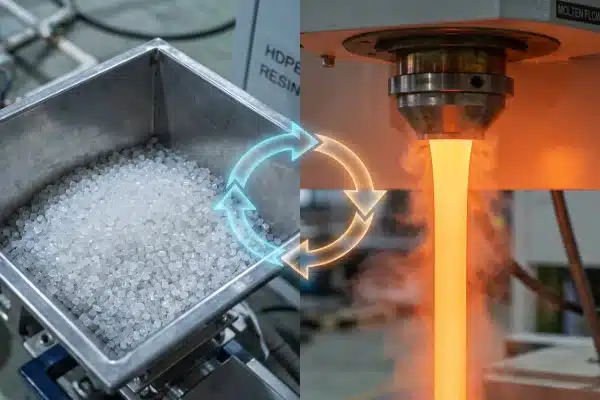
Another key technical decision is die head configuration. Buyers should not treat this as a small hardware difference. It changes the project direction.
Continuous Extrusion
This route is commonly used for smaller to medium bottle projects with stable output needs and practical bottle geometries. It is often the stronger fit when buyers are comparing extrusion blow molding machines for everyday HDPE packaging projects.
Accumulator Head
This route is more suitable when the project moves into larger containers, thicker parisons, and higher-shot-volume applications. If your container range goes beyond ordinary bottle work, review LEKA’s accumulator head extrusion blow molding machine direction.
The correct choice depends on product size, resin behavior, required shot volume, and the production economics of the project. Buyers who mainly produce small containers may also want to compare this with LEKA’s small extrusion blow moulding machines path.
What Else Should You Check Beyond the Core Specs?
Even if the basic machine specs look acceptable, a serious buyer should still check several practical details that influence the full investment result.
- Utilities and installation requirements: confirm real power, air, water, and floor layout needs. If needed, review your supplier discussion against a dedicated utility requirements guide.
- Maintenance access: ask whether daily service points are easy to reach and whether spare parts planning is realistic.
- Leak testing and downstream handling: if quality control matters, ask how the machine connects to leak testing, conveyors, or take-out systems.
- Mold support: a supplier should be able to discuss bottle drawings, mold feasibility, and future size expansion.
- Future scaling: if you may later add more SKUs or move toward integrated packaging, the machine should support that path.
In other words, buying the machine alone is not enough. Buyers should understand how the machine fits the full project.
What Should You Send Before Asking for a Quotation?
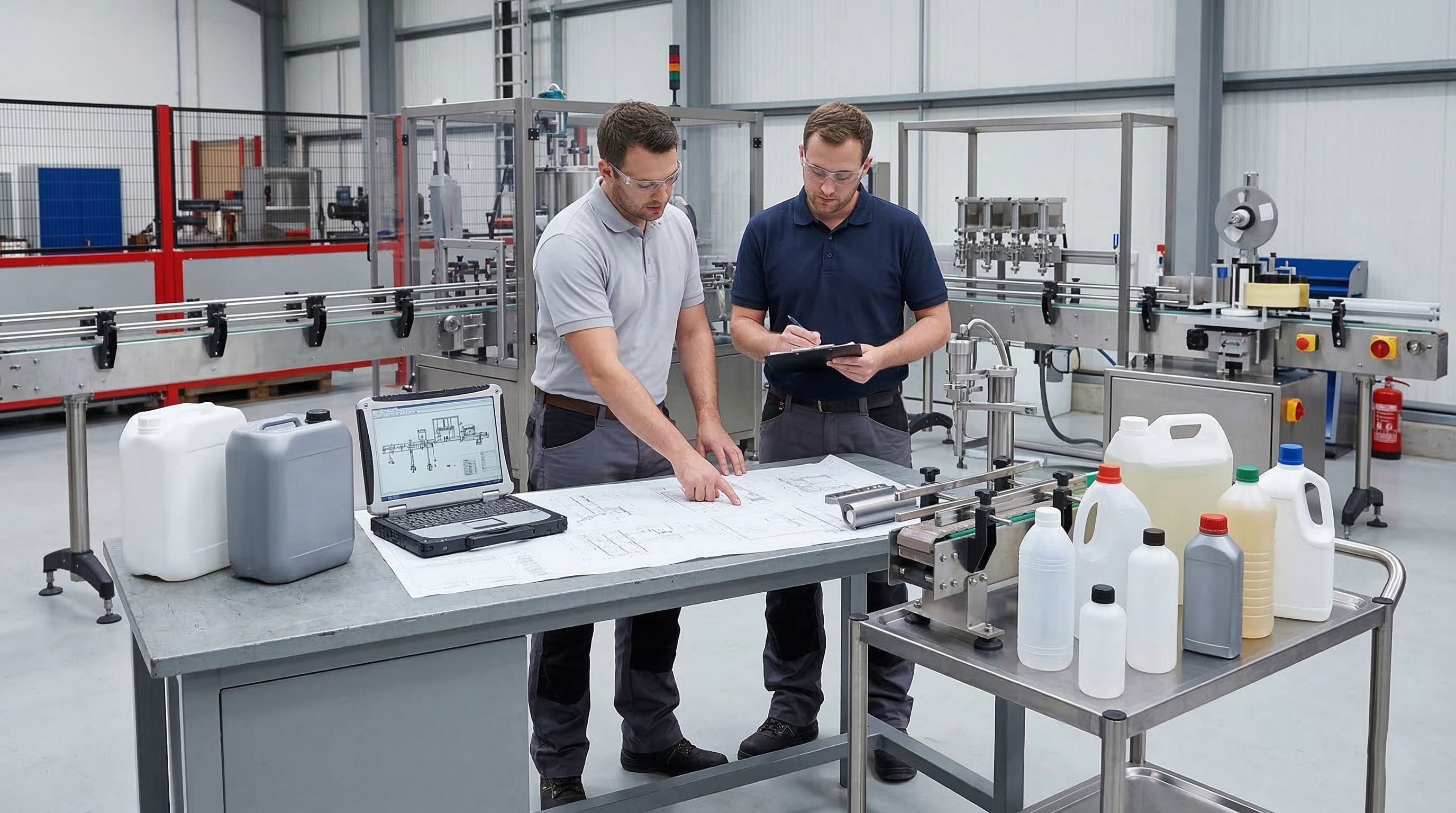
If you want a supplier to recommend the right machine instead of sending a generic quotation, prepare the product requirement first. The more clearly you define the project, the easier it becomes to compare real technical fit.
You should ideally send:
- container drawing, sample photo, or 3D reference
- material type
- volume range
- target bottle weight
- neck finish requirements
- target output per hour or per day
- whether you need monolayer or multilayer production
- whether the machine must connect with leak tester, conveyor, or downstream packaging equipment
- your market priorities: lower resin consumption, higher output, easier mold change, or future expansion
Better RFQs lead to better quotations. Buyers who send only “Please quote your machine” usually get weaker answers and poorer comparisons.
How to Evaluate the Supplier, Not Just the Machine
The stronger supplier is not only the one with a lower machine price. The stronger supplier is usually the one that can connect technical data to the actual production problem you need to solve.
Before choosing a supplier, ask whether they can:
- review your actual bottle or container requirement
- explain why a given tonnage and die head type fit your project
- clarify the assumptions behind the output claim
- support mold planning and changeover logic
- provide quality, commissioning, and service support
- show how the machine fits a longer-term production plan
Buyers who want a broader view of supplier capability can also review LEKA’s Quality, Services, and About pages before moving into quotation discussions.
Final Recommendation
If you are buying an extrusion blow molding machine, do not start by comparing quotations line by line without first defining the bottle, material, output target, and die head direction. The right machine is the one that matches your real production logic, not the one with the most attractive top-line brochure claim.
For practical buyer work, focus first on bottle size range, output assumptions, clamping and extrusion capacity, die head type, wall thickness control, utilities, mold compatibility, and supplier support. Once those points are clear, the comparison becomes much more useful.
Need a Practical Machine Recommendation?
Tell LEKA your bottle or container type, material, target volume, output requirement, and whether you need monolayer or multilayer production. We can help you narrow down the right extrusion blow molding machine direction before you waste time comparing the wrong specifications.
Frequently Asked Questions About Buying an Extrusion Blow Molding Machine
What technical specs matter most when buying an extrusion blow molding machine?
The most important specs usually include bottle size range, output assumptions, clamping force, extruder capacity, die head type, wall thickness control, mold compatibility, and utilities requirement. These affect real production much more than generic brochure language.
How do I choose between continuous extrusion and accumulator head?
That depends mainly on product size, shot volume, and application range. Continuous extrusion is often better for smaller and medium packaging projects, while accumulator head systems are more suitable for larger containers and heavier-shot applications.
Is higher bottles-per-hour always better?
No. Output claims only make sense when they are based on your real bottle volume, bottle weight, cavity layout, resin, and quality target. A high BPH number without context can be misleading.
What should I send before asking for a machine quotation?
You should ideally send bottle or container drawings, material type, volume range, bottle weight target, neck finish, output requirement, and whether you need monolayer or multilayer production. This helps the supplier recommend a more accurate configuration.
Can one extrusion blow molding machine run different bottle sizes?
In many cases, yes, but the practical range depends on machine structure, mold dimensions, die head suitability, and production target. Buyers should discuss future product families early instead of only focusing on one sample bottle.