introduction:
New machine on the floor, clock ticking, production waiting. The fastest wins come from a clean start: correct utilities, proven recipe, and tight quality gates. In this guide, I walk through a practical, 7-step path to reach first good bottle in one day. No fluff—just the checks, setpoints, and sign-offs that move a line from idle to stable. If you’re in B2B manufacturing, you’ll get a crisp checklist you can hand to a tech and run. Let’s cut downtime, reduce scrap, and get paid bottles rolling.

What You’ll Need:Choose extrusion blow molding machine
Before you even think about starting up a new machine or production line, it helps to have a short list of the essentials. Having these items ready means you’re not scrambling in the middle of setup, and it also reduces the chance of making mistakes under pressure.
Utility specs are the first piece of the puzzle. You’ll need to confirm the basics like power supply—what voltage and phase the machine runs on. If it connects to compressed air, make sure you know the required pressure and flow rate. Some equipment also uses chilled water, so note the target temperature and flow. And if the machine needs hydraulic oil or resins, have the material data sheets handy, especially values like melt flow index (MFI) or melt flow rate (MFR). Those details save you from guessing later.
Next up are startup tools. These are the instruments you’ll lean on for dialing in the machine. A thermal camera or IR thermometer helps you check if heaters and cooling zones are behaving properly. Mechanical tools like a torque wrench, feeler gauges, and calipers make it possible to set parts with accuracy. Even small things, like a scale for weighing samples, play a big role in quality checks.
Don’t forget safety gear. It’s not optional—it’s what protects you. At a minimum, wear gloves and safety glasses. You’ll also need a lockout/tagout kit whenever you’re servicing or adjusting the machine, so nobody accidentally energizes it while you’re working.
Finally, gather SOP templates. These don’t just make paperwork easier—they keep your start-up process consistent and traceable. A pre-start checklist ensures you don’t miss a step. A parameter sheet records your machine settings. A QC sheet captures inspection results. And a first-article form makes it clear whether your startup sample meets requirements before full production begins.
Think of this list like a backpack before a hike. If you pack it right, the trip is smoother, safer, and much less stressful.
Start with hard numbers, not hopes. Three things decide the machine: how many containers are needed, what sizes and shapes they are, and when demand spikes happen. Those inputs set motor power, screw diameter, die-head setup, and cooling capacity, so they’re the first knobs to get right. A solid baseline now prevents rushed upgrades and missed orders later.
Actions to take
Calculate current annual bottle volumes by product and size, then spread them into monthly buckets to reveal seasonality and true peaks. This turns averages into a real capacity picture the team can plan around.
Project three-year growth from sales trends and market signals, and write the assumptions next to the numbers. Use low/base/high scenarios so leaders can stress‑test plans without rebuilding the model.
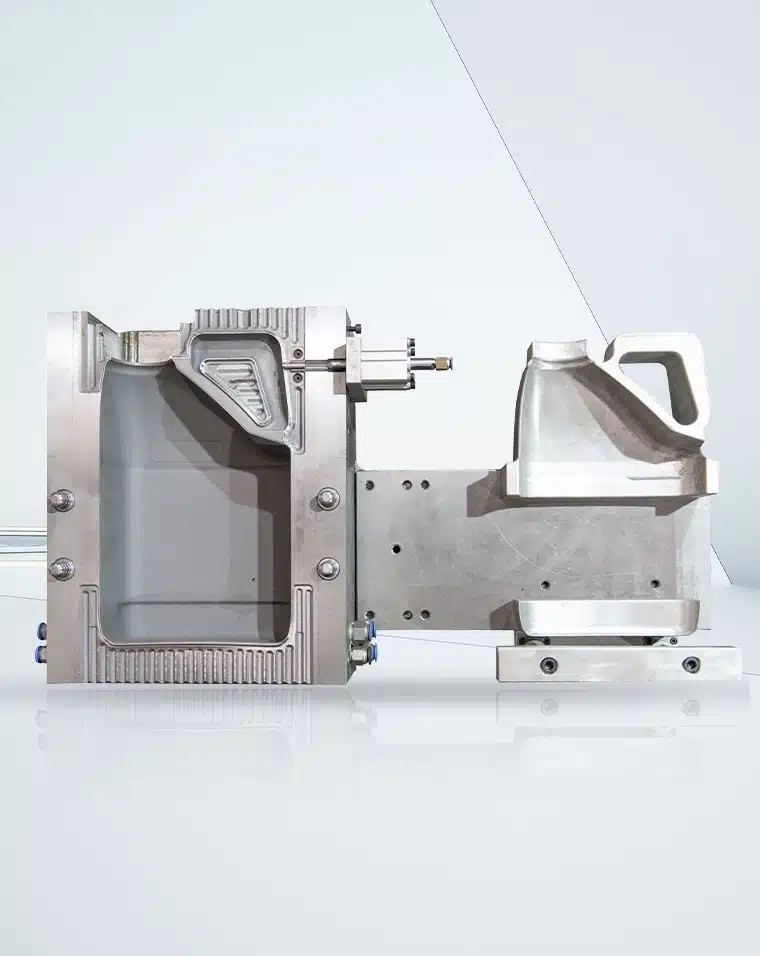
Document container specs: volume range, neck finish, wall‑thickness targets, and tolerances that affect cycle time and QA gates. Note any special features (handles, view stripes) that impact tooling and cooling.
Identify peak periods and set a safety‑capacity buffer above average weeks to cover promos and seasonal swings. Plan lead times for tooling and labor so extra capacity arrives before the surge.
Mistakes to avoid
Underestimating future capacity by 20% or more; that’s how lines get overloaded and scrap creeps up. Tying forecasts to demonstrated capacity and seasonality reduces this risk.
Ignoring multi‑layer or barrier requirements that change die heads, back pressure, and control needs; these aren’t “optional” settings. Capture them early to avoid re‑quotes.
Assuming all sizes run on one setup; wide ranges often need different heads, screw profiles, or tooling packages to hold quality and cycle time. Match specs to real mold and clamp constraints.
Expected result
Clear, numeric targets that drive machine specs—for example: “Need 2,000 bottles/hour for 500 ml–2 L HDPE with 15% annual growth.” That statement becomes the north star for sizing and investment timing.
Visual aids
A production planning sheet with volume forecasts by product line and a capacity‑utilization chart showing average vs. peak demand. These visuals make gaps obvious and help justify buffers and equipment timing.
Analyze material compatibility and requirements

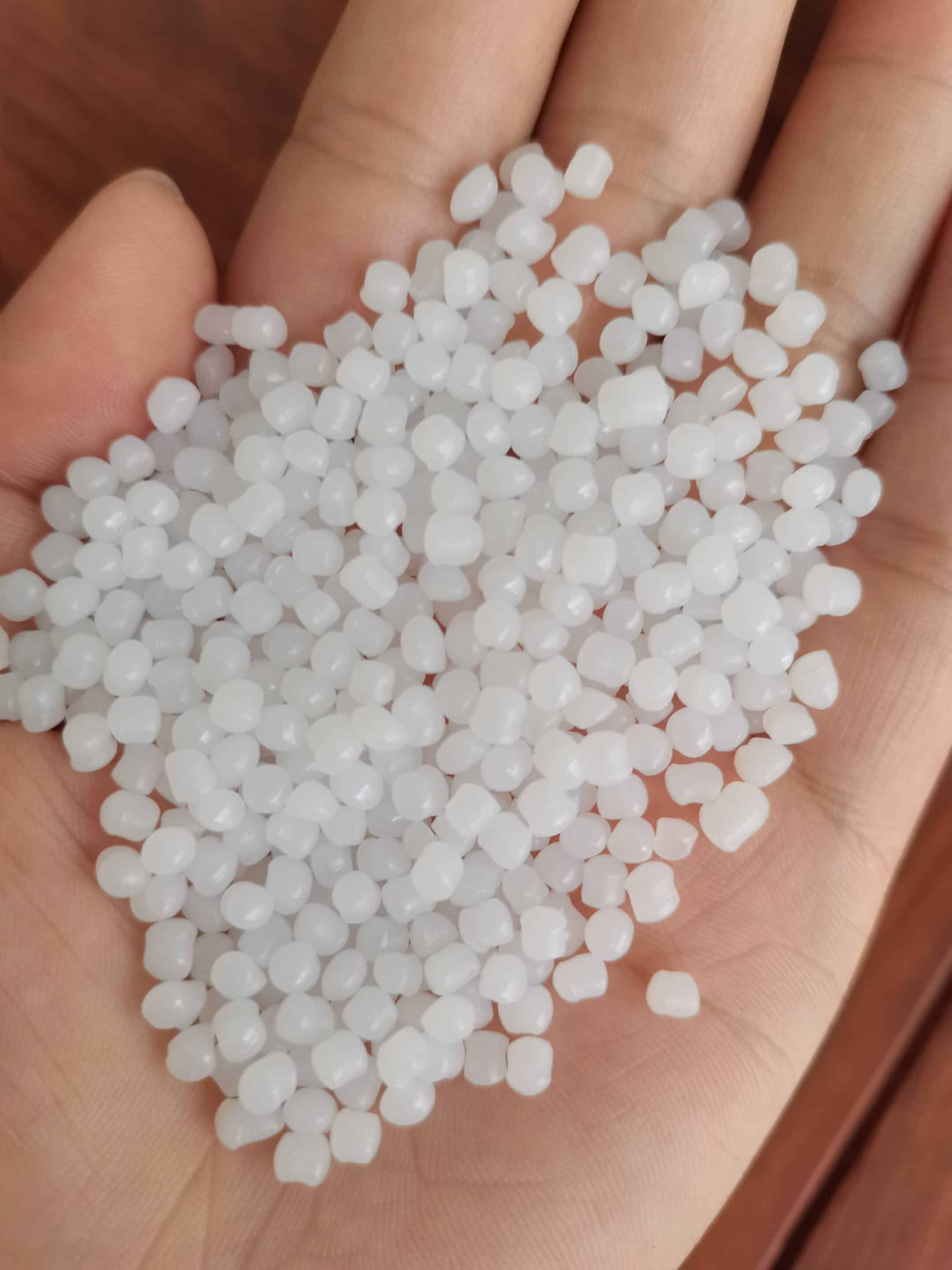
HDPE material
Material choice drives most of the machine design. HDPE and PET behave differently in the barrel and head, so they need different screw profiles, temperature zones, and even drying practices to run clean. Multilayer bottles add another layer of complexity—barrier resins like EVOH change die‑head design and control needs. When the resin mix and additives are known early, many unsuitable machine options can be ruled out before time is wasted on quotes.
Actions to take
List all plastics in scope: HDPE, PET, PP, and any specialty or minority resins that show up even 10% of the time, because small volumes still affect screw, die, and drying strategy. Keep a single-page spec per resin for fast reference.
Define barrier needs for chemical resistance or oxygen protection; this determines layer count, tie layers, and tooling notes like permissible EVOH percent for recyclability. Capture OTR goals and any recycling constraints.
Calculate cost per pound and expected waste rates; scrap and purge can swing gross margin more than small price differences between resins. Include color change purge and regrind limits in the math.
Test sample materials with suppliers to find processing windows—melt temperature, back pressure, and maximum stable throughput before haze, voids, or flash appear. Record any resin-specific quirks like shear sensitivity or neck crystallization.
Mistakes to avoid
Buying a general‑purpose machine when a material‑optimized setup would stabilize quality and reduce scrap; resin‑specific screw and head choices matter to melt quality.
Overlooking drying needs for moisture‑sensitive resins like PET; insufficient drying leads to hydrolysis, drop in molecular weight, and visible haze or brittleness. Drying specifications should be part of the standard run sheet.
Ignoring additive compatibility for colorants, UV stabilizers, or fillers, which change viscosity and heat profile; some additive packages require different screw mixing sections or temperature profiles.
Tools/settings
Use material data sheets to line up melt flow index, melt temperatures, and screw recommendations with target cycle times and part weights; keep these sheets centralized so set‑ups stay consistent. Cross‑check polyolefin blow‑molding guides for typical MI/MFR ranges and additive impacts.
Expected result
A set of material specifications that map each product to a compatible machine configuration—screw, die/head, drying, and controls—eliminating roughly 40% of ill‑fitting options before quoting and speeding up procurement.
Visual aids
A resin compatibility matrix listing each resin’s processing temperatures, drying needs, melt flow index/MFR, additive notes, and recommended screw/die options, so engineers and buyers can align quickly.
Evaluate machine specifications and performance

Three specs make or break production: clamping force, melt capacity, and cycle-time capability. If any one is undersized, flash, shorts, or throttled throughput will follow. Controls matter, too—good recipes, closed-loop feedback, and clean data logging can remove seconds and stabilize repeatability across shifts. Make choices on proven calculations and measured performance, not brochure best-cases.
Actions to take
Match clamping force to the largest container’s projected area and the pressure seen during blowing, then add a safety buffer; a common rule is projected area × blowing pressure (about 100 psi) ÷ 2000 to estimate tons for EBM. Validate against real cavity/runner area and resin behavior.
Verify extruder capacity covers the heaviest bottle plus about 20% so thicker walls, handles, or new SKUs don’t cap output; check screw design, L/D, and drive power at the target melt temperature and back pressure.
Calculate cycle times per product—extrusion, parison conditioning, blow/cool, takeout—and compare to demonstrated machine performance on similar parts, not lab numbers. Capture tool-change and start-up stabilization time, too.
Review control systems for recipe management, alarms, closed-loop features (e.g., parison or clamp monitoring), and data logging that supports SPC and traceability; this is what keeps runs consistent week to week.
Mistakes to avoid
Undersizing clamp tonnage—flash, leaks, and rework will erase any savings and add downtime. Tie the calculation to projected area and real blowing pressures.
Choosing too-small extruder capacity that blocks future multi-layer builds or heavier bottles; confirm output at temperature with the actual resin window.
Overlooking automation—takeout, trimming, inspection—because labor and consistency become constraints as volume rises; plan for integrated post‑processing where practical.
Tools/settings
Use clamping calculators, cycle-time worksheets, and side‑by‑side control feature lists to keep evaluations objective and comparable across vendors. Include a column for demonstrated vs. stated cycle and energy curves.
Expected result
A spec sheet that meets today’s load with headroom—right‑sized clamping, verified melt capacity, and proven cycle capability—so bottlenecks and quality problems are avoided as SKUs and volumes grow.
Visual aids
A comparison table listing clamping force, melt/extruder capacity, cycle capability by SKU, and control features for each machine option, with a note on the evidence used (FAT videos, data logs, customer references).
Calculate total cost of ownership (TCO)
The sticker price is only one piece of the puzzle. Over a 10‑year life, energy, maintenance, and labor often outweigh the initial check, which means the “cheapest” quote can become the most expensive to own. The goal is the lowest cost per good bottle, not the lowest invoice—so model the full lifecycle before deciding.

Actions to take
Estimate annual energy costs from real kWh at representative cycles and local tariffs; log a sample run to capture heat‑up, steady‑state, idle, and peaks, then scale by hours and rate tiers. Nameplate amps aren’t enough.
Project maintenance costs for parts, labor, and planned downtime; include wear components, PM intervals, and service travel, and tie them to hours or cycles instead of calendar time for accuracy.
Factor labor for different automation levels—takeout, trimming, inspection, packing—and model scenarios where automation offsets labor or boosts uptime and yield.
Include training, installation, and startup support so ramp‑up doesn’t stall; count on‑site days, commissioning, recipe development, and operator training time in the plan.
Mistakes to avoid
Comparing only purchase prices without operational models; whole‑of‑life costing is standard practice and exposes hidden differences between options.
Underestimating energy costs on large frames; logged data usually beats estimates and has flipped selection decisions in real factories.
Ignoring maintenance complexity that drives service calls and spares; include parts lead times, accessibility, and required skill level.
Tools/settings
Use a TCO spreadsheet with identical inputs per vendor: purchase, financing, energy (kWh by mode), maintenance (parts/labor by interval), labor (by staffing plan), and residual value; require supplier energy curves and PM schedules.
Apply a simple formula as a starting point—Initial cost + Maintenance + Energy + Labor − Residual value—and then refine with downtime, consumables, and training to get true apples‑to‑apples.
Expected result
A full cost picture that often shows a higher‑priced machine winning on total cost because it runs with lower energy, less downtime, or fewer people for the same output. This is the number that should guide the quote decision.
Visual aids
A 10‑year TCO chart that breaks out purchase, energy, maintenance, and labor by machine, pulled from the same spreadsheet and assumptions. This makes trade‑offs visible and defensible in front of finance.
Assess supplier capabilities and support
Reliability on paper means little without strong support in the field. Check application track record, local service coverage, parts availability, and response commitments to protect uptime and make the TCO real after installation.
Assess supplier capabilities and support
Reliability matters, but support determines real uptime. A great machine with slow service or hard‑to‑get parts is still expensive. Look for proven applications that match the products and company size, local technicians with clear response commitments, and ready access to wear parts. Reference calls with active users surface issues brochures never mention.

Blowing machines Screw
Actions to take
Research track record on similar products and companies of similar size; confirm case studies, installed base, and ongoing performance metrics. A structured scorecard keeps the review objective.
Verify local service coverage and written response time SLAs, plus first‑time‑fix targets; response time without parts-on-hand won’t save uptime.
Check parts availability and pricing for critical wear and long‑lead components; ask about stocking levels, lead times, and consignment/spares programs.
Request references in the same industry and region; ask specifically about ramp‑up support, recipe help, and year‑two responsiveness after the honeymoon period.
Mistakes to avoid
Picking suppliers without local service; travel and shipping delays turn small faults into long outages.
Overlooking parts availability for older models; legacy spares and obsoleted controls can create chronic downtime.
Skipping reference checks and live site visits; on‑floor reality checks reveal service habits and true cycle stability.
Tools/settings
Use supplier scorecards, reference interview guides, and service agreement comparisons to standardize evaluations and weight the criteria that matter most (e.g., TCO, quality, risk).
Expected result
A qualified shortlist of suppliers with verified capability and support readiness to sustain production long‑term, not just win the quote. Weighted matrices help show value beyond sticker price.
Visual aids
A supplier matrix listing technical strengths, support levels (coverage, SLAs, first‑time‑fix), parts posture, and reference feedback, so stakeholders can compare options at a glance.
Plan financing and ROI analysis
Good financing protects cash, and a solid ROI model justifies the spend. Terms should mirror real cash flow during installation and ramp, not a perfect world. A simple, realistic model beats a fancy one full of wishful numbers—and it’s easier to explain to finance.
Actions to take
Calculate payback and ROI with real inputs: run rates by SKU, scrap, energy per cycle, staffing, and gross margin. Use standard ROI and payback formulas so results are comparable across options.
Compare financing structures—term loans, $1‑buyout and FMV leases, and credit lines—and note fees, covenants, residuals, and end‑of‑term paths. Capture tax treatment differences (depreciation vs. expensed payments).
Model cash flow month by month, including installation, training, and the ramp where yield improves over weeks; plot cumulative cash flow to see when breakeven occurs.
Include tax benefits and potential utility rebates that cut net cost; check local programs for energy‑efficient equipment incentives and add them as upfront credits or recurring bill reductions.
Mistakes to avoid
Using optimistic throughput or uptime; small misses compound and push payback out. Anchor the model to recent production data and conservative assumptions.
Ignoring cash timing during startup when inventories rise and scrap is higher; the first months rarely match steady‑state.
Forgetting financing costs—interest, fees, and residuals—so the “cheap” option doesn’t quietly become expensive.
Tools/settings
Use ROI calculators, financing comparison tools, and a shared cash‑flow template to pressure‑test assumptions; standardize inputs across vendors to keep it apples‑to‑apples.
Keep one page of definitions and formulas (ROI, payback, NPV/IRR) with example calculations, so stakeholders interpret results the same way.
Expected result
A financing plan that preserves working capital yet still lands ROI in the 18–36 month window under base‑case assumptions, with clear sensitivity to run rate, yield, and energy price changes.
Visual aids
An ROI chart showing payback timing and cumulative cash flow for each financing path (loan vs. FMV lease vs. $1 buyout), plus a sensitivity band for run‑rate and scrap assumptions.
Execute due diligence and final selection
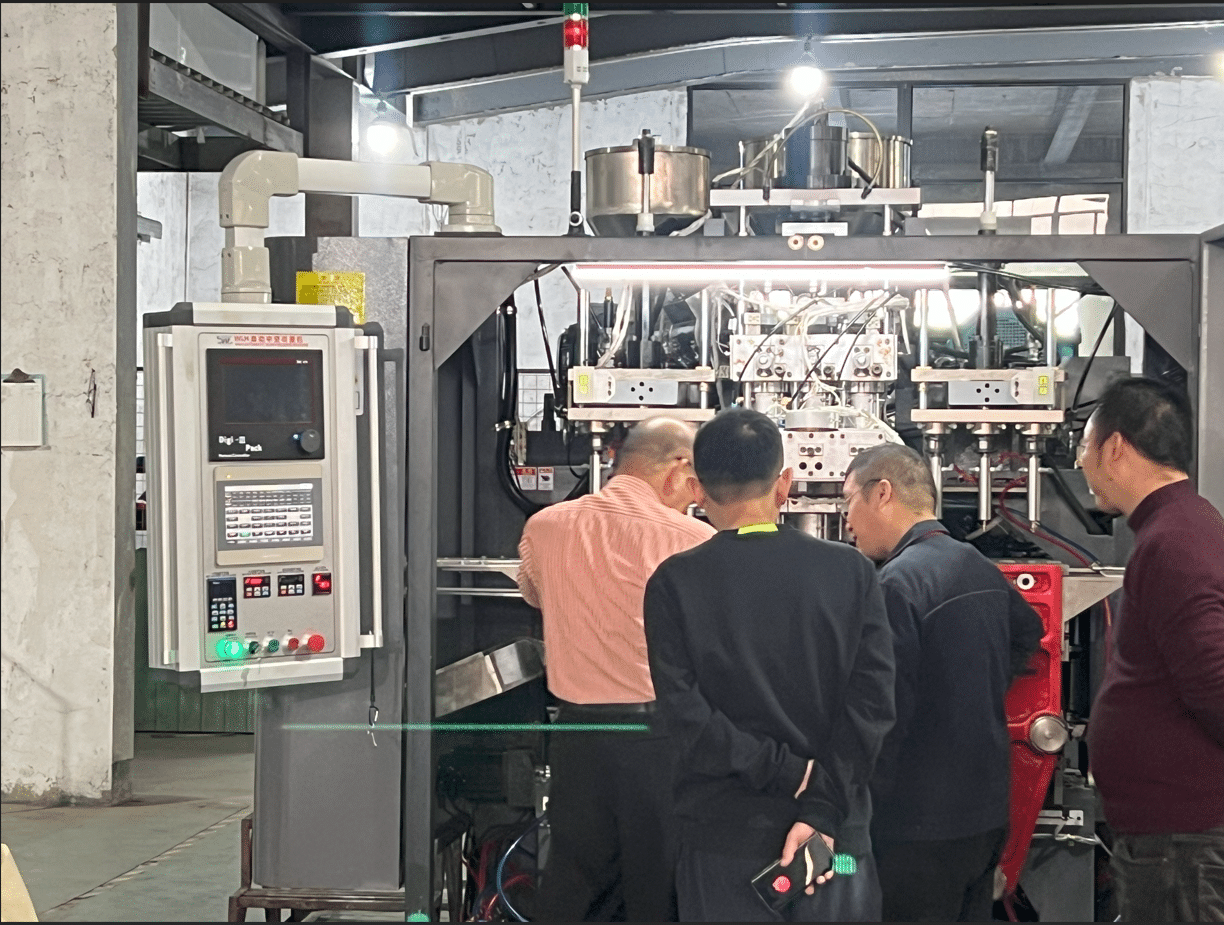
Validate everything on real machines, not just spec sheets. Factory visits and test runs show stability, scrap behavior, and true cycle times, and they expose integration and safety issues before shipment. Close with crisp warranty language, defined training and startup support, and an installation plan that protects live orders.
Actions to take
Visit factories to watch identical machines run similar products and log cycle stability over time; use a checklist so nothing gets missed, from controls to guarding and documentation.
Request sample parts from test runs using actual resin and target specs; measure weights, wall profiles, neck/finish, and dimensional tolerances against agreed criteria. Tie results to acceptance sampling so the decision is evidence‑based.
Negotiate warranty scope, training, and startup support, including on‑site days, response commitments, and first‑time‑fix targets; get terms in writing and aligned with serviceability and parts posture.
Finalize installation and transition plans—utilities, rigging, SMED-style changeover timing, and contingency for utilities—to avoid derailing orders during the swap.
Mistakes to avoid
Deciding without seeing real floor performance; live FATs catch throughput, safety, and integration gaps that paperwork hides.
Rushing selection without service and training terms; unclear warranty paths create long outages and finger‑pointing.
Underplanning installation, utilities, and downtime windows; lack of changeover planning multiplies startup delays and scrap.
Tools/settings
Use visit checklists, sample evaluation criteria with pass/fail limits, and negotiation templates; include documentation, control system tests, calibration certificates, and sign‑off. This keeps the process objective and traceable.
Expected result
A confident selection backed by test data, signed terms, and a realistic installation plan—so launch is smooth and uptime holds once production begins.
Visual aids
A due‑diligence checklist with scoring across test runs, support, and commercial terms, plus FAT evidence links, so stakeholders can compare options side by side.
Execute due diligence and final selection
Validate everything on real machines, not just spec sheets. Factory visits and test runs show stability, scrap behavior, and true cycle times, and they expose integration and safety issues before shipment. Close with crisp warranty language, defined training and startup support, and an installation plan that protects live orders.
Actions to take
Visit factories to watch identical machines run similar products and log cycle stability over time; use a checklist so nothing gets missed, from controls to guarding and documentation.
Request sample parts from test runs using actual resin and target specs; measure weights, wall profiles, neck/finish, and dimensional tolerances against agreed criteria. Tie results to acceptance sampling so the decision is evidence‑based.
Negotiate warranty scope, training, and startup support, including on‑site days, response commitments, and first‑time‑fix targets; get terms in writing and aligned with serviceability and parts posture.
Finalize installation and transition plans—utilities, rigging, SMED-style changeover timing, and contingency for utilities—to avoid derailing orders during the swap.
Mistakes to avoid
Deciding without seeing real floor performance; live FATs catch throughput, safety, and integration gaps that paperwork hides.
Rushing selection without service and training terms; unclear warranty paths create long outages and finger‑pointing.
Underplanning installation, utilities, and downtime windows; lack of changeover planning multiplies startup delays and scrap.
Tools/settings
Use visit checklists, sample evaluation criteria with pass/fail limits, and negotiation templates; include documentation, control system tests, calibration certificates, and sign‑off. This keeps the process objective and traceable.
Expected result
A confident selection backed by test data, signed terms, and a realistic installation plan—so launch is smooth and uptime holds once production begins.
Visual aids
A due‑diligence checklist with scoring across test runs, support, and commercial terms, plus FAT evidence links, so stakeholders can compare options side by side.
Execute due diligence and final selection
Validate everything on real machines, not just spec sheets. Factory visits and test runs show stability, scrap behavior, and true cycle times, and they expose integration and safety issues before shipment. Close with crisp warranty language, defined training and startup support, and an installation plan that protects live orders.
Actions to take
Visit factories to watch identical machines run similar products and log cycle stability over time; use a checklist so nothing gets missed, from controls to guarding and documentation.
Request sample parts from test runs using actual resin and target specs; measure weights, wall profiles, neck/finish, and dimensional tolerances against agreed criteria. Tie results to acceptance sampling so the decision is evidence‑based.
Negotiate warranty scope, training, and startup support, including on‑site days, response commitments, and first‑time‑fix targets; get terms in writing and aligned with serviceability and parts posture.
Finalize installation and transition plans—utilities, rigging, SMED-style changeover timing, and contingency for utilities—to avoid derailing orders during the swap.
Mistakes to avoid
Deciding without seeing real floor performance; live FATs catch throughput, safety, and integration gaps that paperwork hides.
Rushing selection without service and training terms; unclear warranty paths create long outages and finger‑pointing.
Underplanning installation, utilities, and downtime windows; lack of changeover planning multiplies startup delays and scrap.
Tools/settings
Use visit checklists, sample evaluation criteria with pass/fail limits, and negotiation templates; include documentation, control system tests, calibration certificates, and sign‑off. This keeps the process objective and traceable.
Expected result
A confident selection backed by test data, signed terms, and a realistic installation plan—so launch is smooth and uptime holds once production begins.
Visual aids
A due‑diligence checklist with scoring across test runs, support, and commercial terms, plus FAT evidence links, so stakeholders can compare options side by side.
Bonus Tips / Advanced Moves
Here are polished Bonus Tips and Advanced Moves written for extrusion blow molding and stretch blow molding teams, with practical checks and numbers to make decisions stick.
Multi-cavity optimization
If volumes are high, multi-cavity can lift throughput without pushing cycle times into risky territory. Aim for 4–6 cavities where tooling, cooling, and takeout can hold tolerance, then verify cavity-to-cavity consistency during factory acceptance tests. Run weight studies across all cavities, inspect for flash/shorts, and confirm balanced flow, cooling, venting, and clamp pressure to avoid defects. Add cavity balance checks to the FAT: equal runner lengths/diameters, uniform cooling circuits, and documented part-weight variation limits per cavity.
Energy efficiency upgrades
Servo-driven or all-electric motions typically cut energy use versus classic hydraulics by a wide margin. In many plastics applications, savings of roughly 30–50% are cited for servo/electric systems due to demand-driven power and lower idle losses, with added benefits of quieter operation and lower oil-related maintenance. To justify the premium, build a 5-year energy model using machine kWh at representative cycles, local tariff rates, and expected utilization; the analysis often flips total cost in favor of servo/electric. Note: hybrid and servo-hydraulic configurations can approach electric efficiency, but results vary by duty cycle and frame size.
Predictive maintenance
Modern control systems with IoT sensors can flag anomalies—bearing vibration, temperature drift, current spikes—before failures stop a line. Predictive programs aim to shift repairs into planned downtime windows, protecting throughput when each hour of unplanned stop can be costly. Benchmarks from industrial studies put median unplanned downtime around five figures to low six figures per hour in many sectors, underscoring the ROI potential when alerts are accurate. Start with a focused scope: critical drive axes, extruder gearboxes, and chillers, then expand as signal quality and alert precision improve.
Important scope note
Support is dedicated to extrusion blow molding and stretch blow molding selection and optimization. Injection blow molding follows different rules for tooling, clamp/shot sizing, and heating layouts, so it isn’t covered here.
Fast checklists
Multi-cavity: specify max allowed part-weight delta per cavity, verify runner balance, and trend cavity QA results during FAT.
Energy: request supplier power curves at idle, heat-up, steady-state, and peak; model tariff tiers and duty cycles for a 5-year view.
Predictive: define top failure modes, map sensors to them, and set thresholds with a pilot before full rollout to avoid alert fatigue.
Conclusion
This seven-step process turns big, risky equipment buys into disciplined decisions grounded in real production needs, true operating costs, and verified performance. It walks from sizing and materials through TCO and supplier validation, so the final pick is based on data, not guesses. Following a structured approach also helps secure financing by reducing uncertainty, a key barrier many manufacturers cite when delaying upgrades.
What this delivers
Faster payback: disciplined specs, energy modeling, and uptime focus can bring payback into the 18–36 month window when volumes and margins support it. Use a standard payback method or discounted variant to show the timeline clearly.
Fewer pitfalls: validating performance with factory tests and planning service/parts cuts the risk that derails many capital projects after installation. Supplier capability and integration costs are common sticking points.
Stronger negotiations: a clean spec, TCO model, and reference checks shift talks from sticker price to total economics and service terms. That’s where long-term savings live.
Call to action
Ready to start selection with less guesswork and more math? Grab the EBM Machine Selection Worksheet with built‑in calculators for production planning and ROI—it mirrors the steps in this guide and saves weeks of set‑up. Use it to model volumes, cycle times, energy, and payback so the team can align on a clear target and timeline.
Scope reminder
Support here covers extrusion blow molding and stretch blow molding. Injection blow molding uses different tooling, clamp/shot sizing, and heating approaches, so it isn’t included in this framework.
Total Cost of Ownership (TCO) — Your Procurement Guide for 2025 — Procurement Tactics
https://procurementtactics.com/total-cost-of-ownership-model/Total Cost of Ownership: How It’s Calculated With Example — Investopedia
https://www.investopedia.com/terms/t/totalcostofownership.aspTCO Practical Guide (PDF) — Gehl
https://www.gehl.com/sites/default/files/2022-10/guide_tco_interactive_en_us.pdfEstimating Manufacturing Energy Consumption and Emissions (PDF) — U.S. Department of Energy
https://www.energy.gov/sites/default/files/2023-07/2023-04-14%20-%20Manufacturing%20Energy%20and%20Emissions%20PDF_0.pdfTotal Cost of Ownership: An introduction to whole-of-life costing (PDF) — New Zealand Govt. Procurement
https://www.procurement.govt.nz/assets/procurement-property/documents/guide-total-cost-ownership.pdfHow to calculate the ROI on a potential packaging machine purchase — Viking Masek
https://vikingmasek.com/blog/how-calculate-roi-potential-packaging-machine-purchaseFree ROI Templates and Calculators — Smartsheet
https://www.smartsheet.com/roi-calculation-templatesLeasing and Loan Options — Mazak Corporation
https://www.mazak.com/us-en/financing/leasing-loan-options/How to Size a Machine and Tooling for Industrial Parts — Plastics Technology
https://www.ptonline.com/columns/how-to-size-a-machine-and-tooling-for-industrial-partsFree Factory Acceptance Test Checklists — SafetyCulture
https://safetyculture.com/checklists/factory-acceptance-test/


0 Comments