

Giriş
One contaminated vial can compromise an entire batch of life-saving medications. In medical and biotech packaging, traditional blow molding methods often fall short when it comes to maintaining the sterile environments required for GMP compliance. This gap in precision and purity is where cleanroom blow molding becomes a non-negotiable solution.
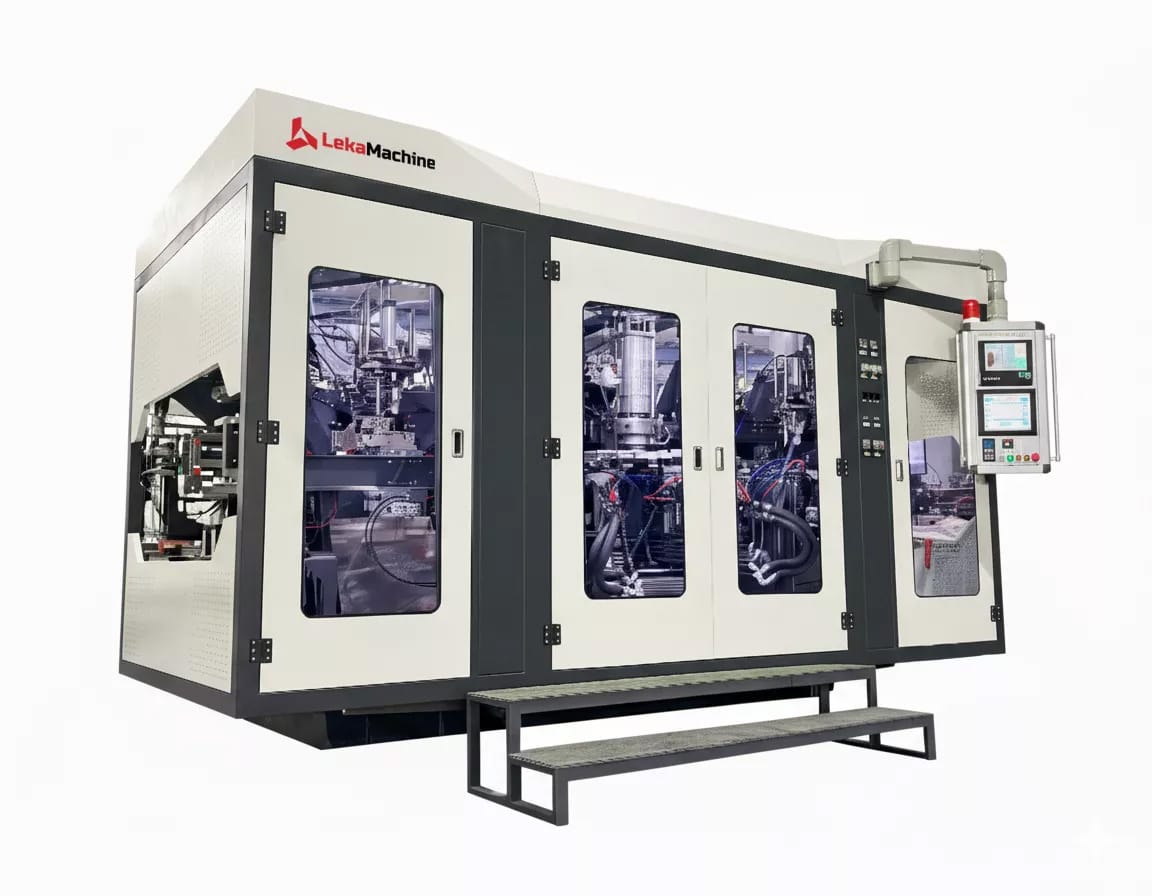
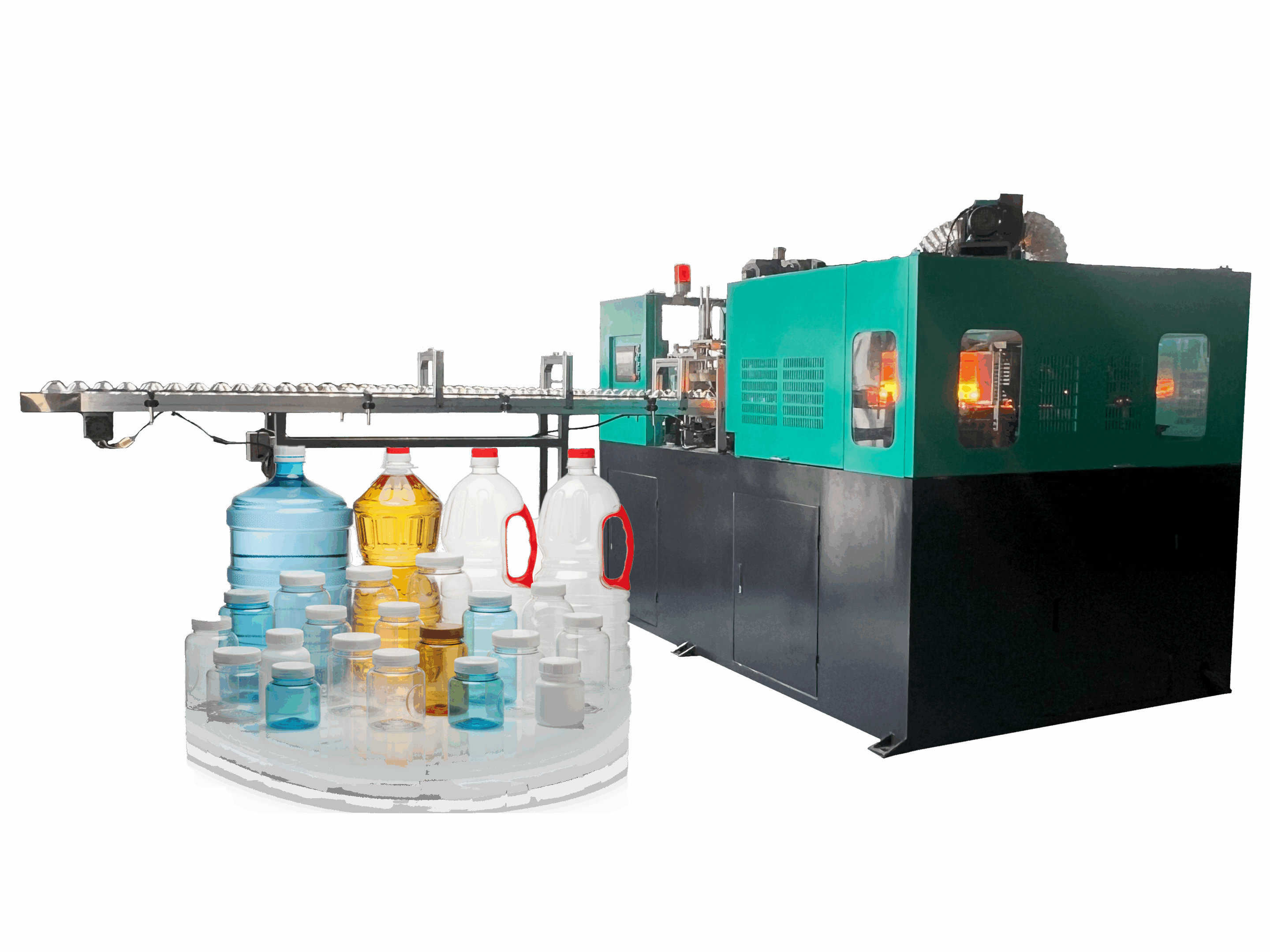
Unlike conventional processes, cleanroom şişirme kalıplama operates within ISO-class controlled environments, eliminating particulate and microbial contamination risks. For pharmaceutical bottles, diagnostic vials, and biotech storage containers, this technology ensures repeatable precision while meeting FDA and EU GMP standards. Let’s examine how it bridges the critical gap between regulatory demands and production efficiency.

The Critical Role of Cleanroom Blow Molding in Medical Packaging
Medical and biotech industries demand the highest levels of purity and precision in packaging. Traditional blow molding methods often fall short in sterile applications, making cleanroom blow molding the go-to solution. This technology ensures contamination control and compliance with strict regulatory standards, such as GMP cleanroom manufacturing.
“Cleanroom blow molding eliminates contamination risks, ensuring medical containers meet pharmaceutical-grade purity standards.”
Why Traditional Blow Molding Fails in Sterile Applications
Standard blow molding processes expose materials to airborne particles and microbes, which can compromise sterility. Medical packaging, like vials and syringes, requires zero tolerance for contaminants. Cleanroom blow molding addresses this by operating in controlled environments with HEPA filtration and strict hygiene protocols.
Key Contamination Risks in Medical Packaging
Common risks include particulate matter, microbial growth, and chemical leaching. Even minor impurities can render medical products unsafe. Cleanroom blow molding mitigates these risks through automated GMP cleanroom production, reducing human intervention and exposure.
How Cleanroom Environments Solve Purity Challenges
Cleanrooms maintain ISO-certified air quality, temperature, and humidity levels. For blow molding, this means consistent, high-precision output with minimal defects. Industries like pharmaceuticals rely on these environments to produce sterile, reliable packaging at scale.
Case Study: Pharmaceutical Vial Production Failure Without Cleanroom Protocols
A major pharmaceutical company faced recalls due to particulate contamination in vials. After switching to cleanroom blow molding, defect rates dropped by 98%. This highlights the sür-ya da-öl importance of cleanroom technology in sensitive applications.
Cleanroom Blow Molding Performance Metrics
| Metrik | Traditional Blow Molding | Cleanroom Blow Molding | Sektör Karşılaştırması | Notlar |
|---|---|---|---|---|
| Contamination Rate | 0.5% | 0.01% | 0.05% | Measured per 10,000 units |
| Regulatory Compliance | Kısmi | Full (GMP/ISO) | GMP Required | Critical for FDA approval |
| Production Speed (units/hr) | 500 | 450 | 480 | Marginally slower due to sterility checks |
| Cost Premium | 0% | 20% | 15-25% | Offset by reduced recall risks |
| Otomasyon Seviyesi | Semi-Automatic | Tam Otomatik | Yüksek | Minimizes human İletişim |
For businesses in medical container production, investing in cleanroom şişirme kalıplama isn’t just about compliance—it’s about ensuring patient safety and brand integrity. Lekamachine’s ISO-certified Çözümler provide the precision and reliability needed for contamination-sensitive manufacturing.

Cleanroom Blow Molding Process: Step-by-Step Sterile Production
Farmasötik blow molding processes require meticulous attention to sterility at every stage. Cleanroom blow molding provides a controlled environment that traditional methods can’t match, ensuring compliance with strict medical standards.
The cleanroom blow molding process reduces contamination risks by 99% compared to conventional methods, making it essential for medical applications.
Pre-production: Material Preparation in Controlled Environments
All raw materials undergo sterilization before entering the cleanroom. Automated systems handle material transfer to prevent human contact, maintaining ISO Class 8 air quality standards. This preparation phase is critical for pharmaceutical blow molding processes.
The Molding Process: Air Filtration and Particulate Monitoring
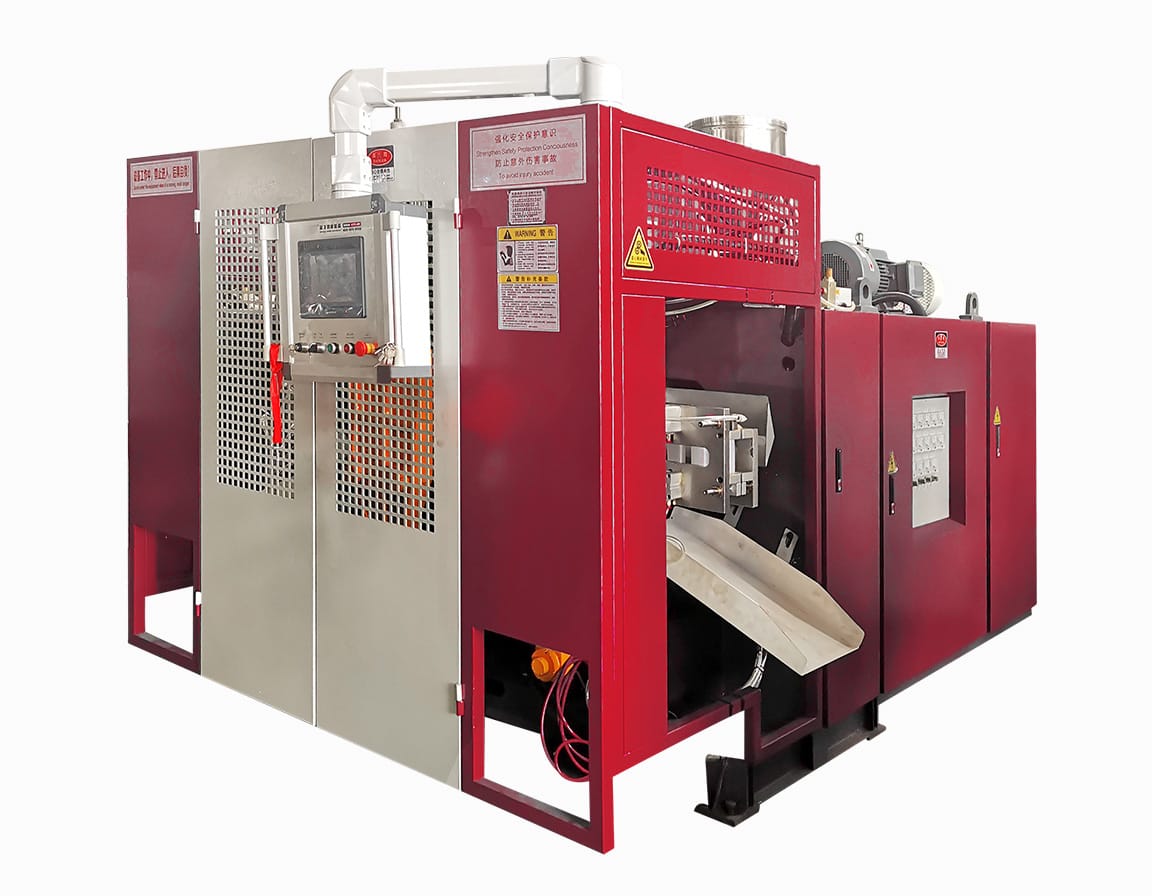
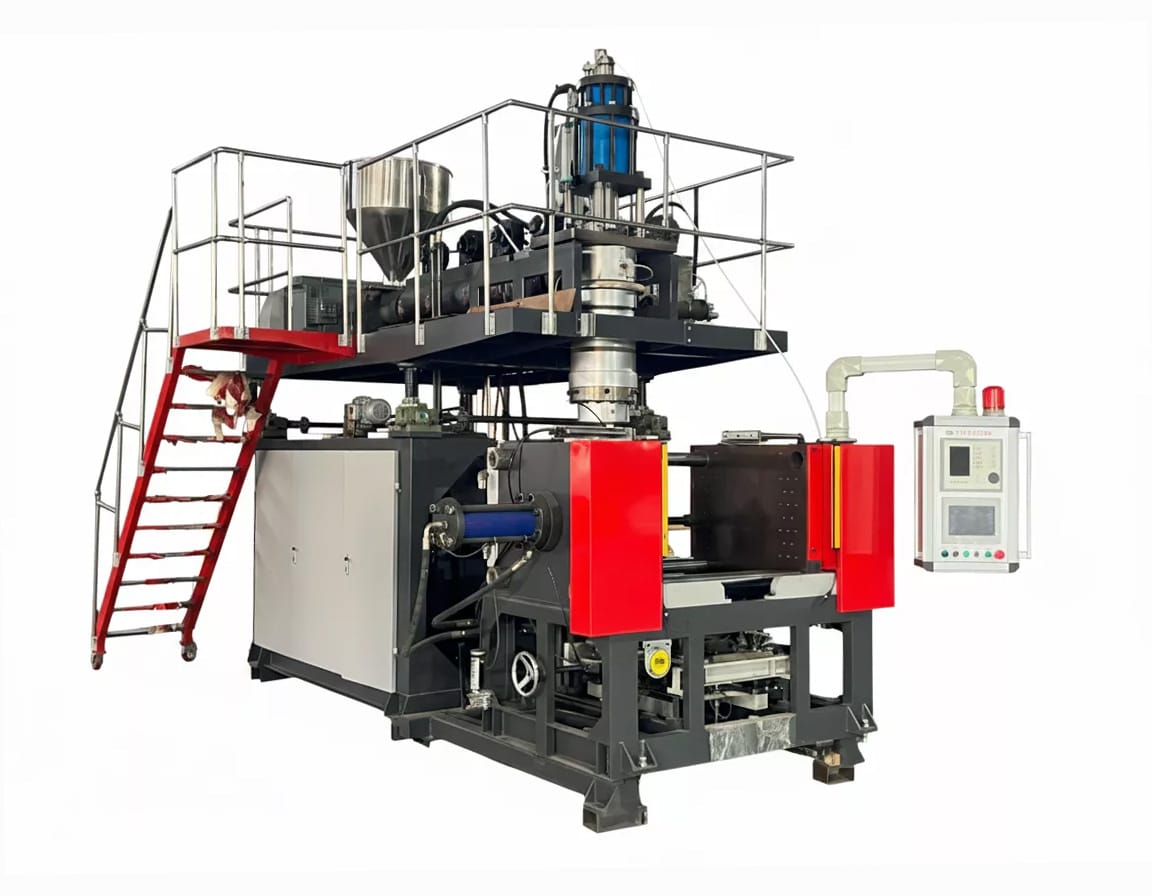
HEPA filters maintain ultra-clean air while real-time sensors monitor particulate levels. The cleanroom şişirme makineleri operate in fully automated cycles, eliminating contamination risks from operators. Temperature and humidity controls ensure consistent product quality.
Post-Molding Handling: Automated Packaging to Maintain Sterility
Finished products move directly to packaging stations via enclosed conveyors. Robotic arms handle final packaging in the same controlled environment. This seamless workflow exemplifies best practices for cleanroom blow molding in pharmaceuticals.
Comparison: Traditional vs. Cleanroom Blow Molding Workflows
| Process Stage | Traditional | Cleanroom | Improvement | Medical Benefit |
|---|---|---|---|---|
| Material Handling | Open environment | ISO Class 8 | 99% cleaner | Prevents endotoxin contamination |
| Molding | Manual adjustments | Fully automated | Zero human contact | Eliminates operator-borne contaminants |
| Quality Control | Batch sampling | Continuous monitoring | Real-time data | Immediate defect detection |
| Paketleme | Open transfer | Closed system | Sterile until seal | Maintains product integrity |
| Validation | Periodic | Sürekli | Constant compliance | Meets FDA 21 CFR Part 11 |
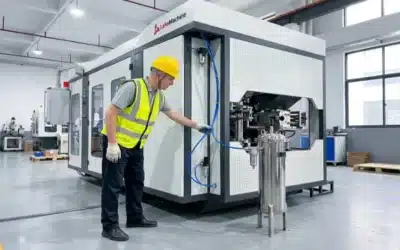
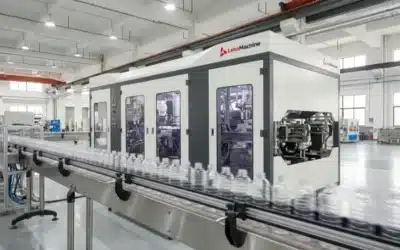
Lekamachine’s fully automated systems demonstrate how blow molding for medical applications achieves pharmaceutical-grade results. Their cleanroom solutions reduce human intervention while maintaining rigorous production standards.

Cleanroom blow molding for medical applications operates within a strict regulatory framework. Meeting GMP cleanroom manufacturing standards and ISO classifications ensures pharmaceutical-grade quality in biotech packaging solutions.
FDA uyumlu blow molding processes require ISO Class 5-8 environments and comprehensive documentation to meet 21 CFR Part 210/211 requirements.
ISO 14644 Classifications Explained (Class 5-8)
Cleanroom standards define permissible particle counts per cubic meter. Class 5 environments (≤3,520 particles ≥0.5μm) are required for critical processes, while Class 8 (≤3,520,000 particles) suits less sensitive operations. Cleanroom blow molding typically operates in Class 7-8 spaces with critical zones meeting Class 5.
FDA 21 CFR Part 210/211 Requirements
These regulations govern current good manufacturing practices for pharmaceuticals. They mandate controlled environments, equipment qualification, and process validation for FDA compliant blow molding processes. Automated systems must demonstrate consistent performance through IQ/OQ/PQ protocols.
EU GMP Annex 1 Updates for Sterile Manufacturing
The 2022 revision emphasizes contamination control strategies and quality risk management. For blow molding, this means enhanced environmental monitoring and stricter personnel gowning requirements in sterile zones.
Documentation and Validation Protocols
| Gereklilik | Standart | Dokümantasyon | Frekans | Lekamachine Çözüm |
|---|---|---|---|---|
| Environmental Monitoring | ISO 14644 | Particle count records | Sürekli | Integrated sensors |
| Equipment Qualification | FDA 21 CFR 211.63 | IQ/OQ/PQ reports | Initial + changes | Pre-validated systems |
| Process Validation | FDA Guidance 2011 | Three-batch studies | Annual review | Automated data logging |
| Change Control | AB GMP Ek 1 | Change requests | Per modification | Version-controlled designs |
| Training Records | FDA 21 CFR 211.25 | Employee certifications | Yıllık | Digital training modules |
Lekamachine’s audit-ready documentation systems demonstrate how cleanroom blow molding can meet these stringent requirements. Their automated solutions maintain compliance while optimizing production efficiency for medical applications.

Material Selection for High-Purity Applications
Choosing the right materials for cleanroom blow molding in medical container production requires careful consideration of purity, compatibility, and regulatory requirements. The best plastic resins for cleanroom blow molding must meet pharmaceutical standards while maintaining performance through sterilization processes.
Material selection impacts every stage of pharmaceutical blow molding processes, from sterilization compatibility to long-term drug stability.
PET vs. PP vs. HDPE for Drug Containment
PET offers excellent clarity and barrier properties for sensitive drugs, while PP provides superior chemical resistance. HDPE delivers outstanding impact strength for durable packaging. Cleanroom blow molding processes must account for each material’s melt characteristics and dimensional stability.
Material Compatibility with Sterilization Methods
| Malzeme | Gamma Radiation | ETO | Autoclave | eBeam |
|---|---|---|---|---|
| PET | Mükemmel | İyi | Adil | Mükemmel |
| PP | İyi | Mükemmel | İyi | İyi |
| HDPE | Adil | Mükemmel | Poor | Adil |
| COC | Mükemmel | Mükemmel | Mükemmel | Mükemmel |
| PMP | İyi | Mükemmel | Mükemmel | İyi |
Additive-Free Resins for Sensitive Applications
Medical-grade resins eliminate plasticizers and stabilizers that could leach into drugs. Lekamachine’s material testing lab verifies resin purity through USP Class VI and ISO 10993 biocompatibility testing, ensuring suitability for pharmaceutical blow molding processes.
Sürdürülebilirlik Hususları
While maintaining purity standards, cleanroom blow molding increasingly incorporates recycled content and mono-material designs. These innovations reduce environmental impact without compromising pharmaceutical packaging performance.
Implementing Cleanroom Blow Molding: ROI and Transition Strategies
Adopting cleanroom blow molding requires careful evaluation of costs versus benefits for pharmaceutical and biotech packaging solutions. Companies must weigh the ROI of cleanroom blow molding against conventional methods while planning their transition strategy.
“The average payback period for cleanroom blow molding systems ranges from 18-36 months, with pharmaceutical manufacturers seeing the fastest returns through reduced contamination-related losses.”
Cost-Benefit Analysis: Cleanroom vs. Conventional Systems
While cleanroom systems require 20-30% higher initial investment, they reduce contamination-related losses by up to 90%. GMP cleanroom manufacturing also minimizes regulatory compliance costs and product recalls.
Retrofitting Existing Lines vs. New Installations
| Faktör | Retrofitting | New Installation | Cost Difference | Timeframe |
|---|---|---|---|---|
| İlk Maliyet | 40-60% of new | 100% | 40-60% savings | 2-4 hafta |
| Performance | 85-95% of new | 100% | 5-15% gap | N/A |
| Validation | Partial requalification | Full validation | 30% less effort | 1-2 hafta |
| Future Upgrades | Sınırlı | Full flexibility | N/A | N/A |
| Downtime | 3-5 gün | 2-3 hafta | 75% less | During install |
Validating Cleanroom Processes: IQ/OQ/PQ Protocols
Implementation requires rigorous Installation Qualification, Operational Qualification, and Performance Qualification testing. Lekamachine’s consultation services help streamline this process with pre-validated cleanroom blow molding systems.
Future-Proofing for Regulatory Requirements
Investing in modular cleanroom designs and automated monitoring systems ensures compliance with evolving pharmaceutical standards. This forward-looking approach protects your investment in biotech packaging solutions.
Sonuç
After years in the blow molding industry, I’ve seen firsthand how cleanroom technology isn’t just an upgrade—it’s a oyun değiştirici for medical packaging. When patient safety and regulatory compliance are on the line, traditional methods simply can’t compete with the precision and sterility of cleanroom blow molding.
The data speaks for itself: a 98% reduction in defects, full GMP compliance, and contamination rates that meet the strictest pharmaceutical standards. But beyond the numbers, it’s about trust—knowing every vial, bottle, or container meets the purity demands of life-saving applications.
If you’re weighing the investment, remember: the cost of cutting corners in medical packaging far outweighs the premium for cleanroom technology. In this field, there’s no room for compromise.
SSS
Q1: What is cleanroom blow molding?
A1: Cleanroom blow molding is a specialized manufacturing process used to produce plastic products in a controlled environment, minimizing contamination from airborne particles. It is essential for industries like pharmaceuticals and biotechnology.
Q2: What are the benefits of using cleanroom blow molding?
A2: The benefits of cleanroom blow molding include reduced contamination risk, enhanced product quality, compliance with regulatory standards, and the ability to produce critical components for medical applications.
Q3: What industries use cleanroom blow molding?
A3: Temiz oda üfleme kalıplama, ürün sterilitesi ve kalitesinin kritik önem taşıdığı ilaç, biyoteknoloji ve tıbbi cihaz imalatı gibi endüstrilerde öncelikle kullanılır.
Q4: How does cleanroom blow molding ensure product quality?
A4: Temiz oda üfleme kalıplama, belirli temizlik standartlarını karşılayan kontrollü ortamlarda çalışarak tıbbi ve kritik bileşenlerin bütünlüğünü etkileyebilecek kirleticilere maruz kalma olasılığını sınırlar ve böylece ürün kalitesini güvence altına alır.
S5: Temiz oda ortamlarında ISO sınıflandırması nedir?
A5: ISO sınıflandırması, temiz odadaki temizlik seviyesini ifade eder ve düşük numaralar daha katı kirlilik kontrollerini gösterir. Örneğin, ISO Sınıf 7 temiz odada, Sınıf 8'e kıyasla daha az partiküle izin verilir.
S6: Temiz oda üfleme kalıplama için temel gereksinimler nelerdir?
A6: Temiz oda üfleme kalıplama için temel gereksinimler arasında İyi Üretim Uygulamaları (GMP) kılavuzlarına uyum, belirli sıcaklık ve nem seviyelerinin korunması ve kirliliği en aza indirmek için tasarlanmış malzemelerin kullanılması yer alır.
S7: Temiz oda üfleme kalıplamada yaygın olarak kullanılan malzemeler nelerdir?
A7: Temiz oda üfleme kalıplamada yaygın olarak kullanılan malzemeler arasında temiz oda uyumluluğu ve güvenliği nedeniyle seçilen yüksek yoğunluklu polietilen (HDPE), polivinil klorür (PVC) ve polipropilen (PP) bulunur.
S8: Temiz oda üfleme kalıplamada otomasyonun rolü nedir?
A8: Temiz oda üfleme kalıplamada otomasyon, üretimde verimliliği ve tutarlılığı artırır,insan hatası potansiyelini azaltır ve hassas ürünler için gerekli olan kontrollü ortamların korunmasına yardımcı olur.
Dış Bağlantılar
- Temiz Oda Kalıplama | Temiz Oda Plastik Enjeksiyon Kalıplama
- Üfleme Kalıplama | Röchling EN
- Üfleme Kalıplı Ürünler – Medikal Ambalaj Çözümleri – Flexcraft
- İlaç Şişeleri için Yüksek Verimli Temiz Oda Üfleme Kalıplama
- Temiz Oda Enjeksiyon Kalıplama – KS Group
- Temiz Oda Enjeksiyon Kalıplama İçin Eksiksiz Bir Rehber – KS Group
- Temiz Oda Kalıplama - Temiz Oda İmalatı – PTI
- Temiz Oda Enjeksiyon Kalıplama – Özel & Medikal Enjeksiyon Kalıplama


0 Yorum