


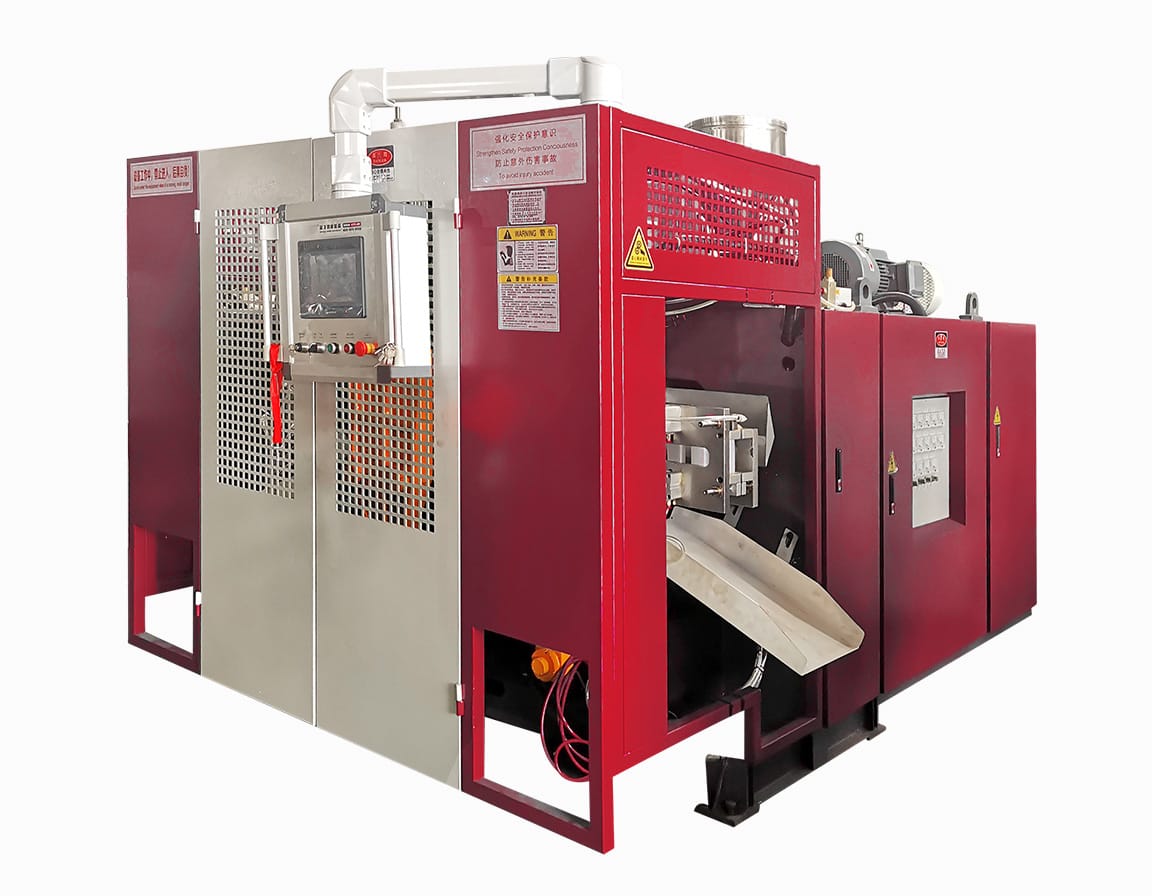
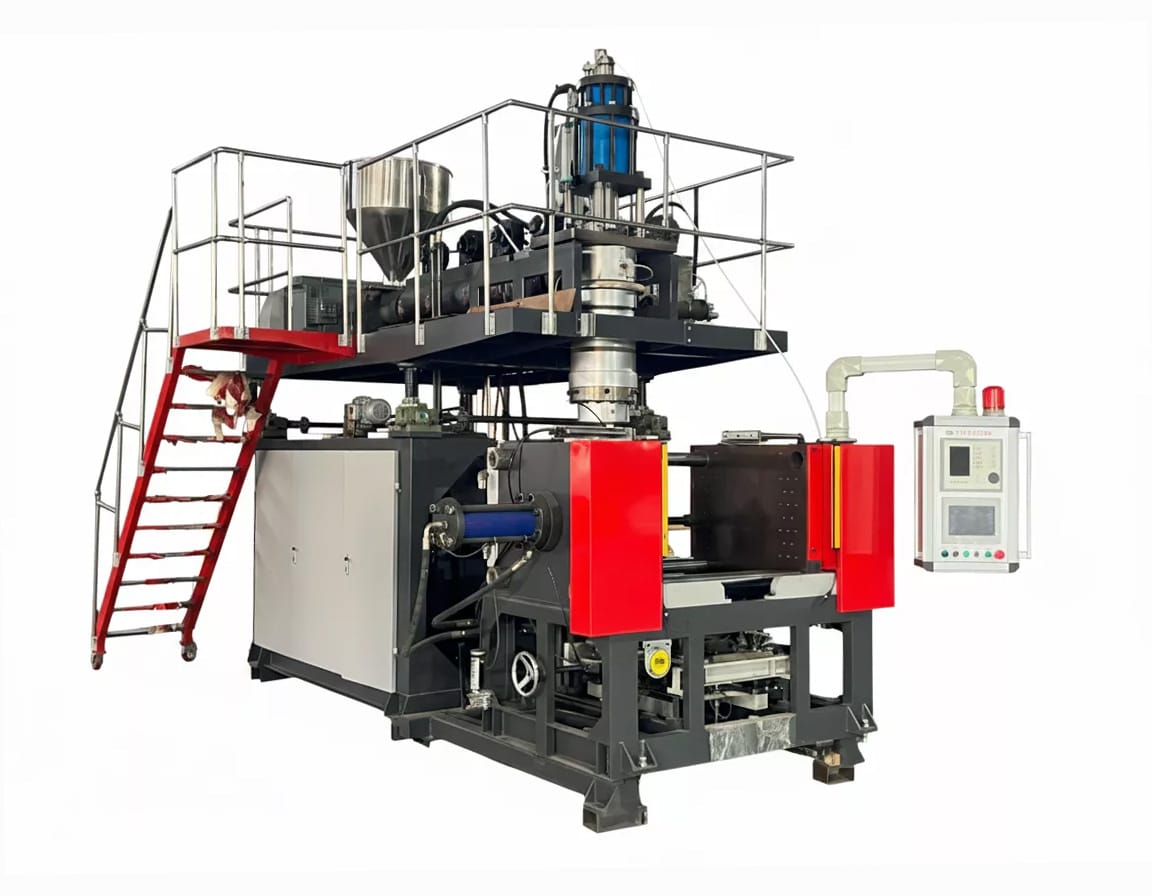

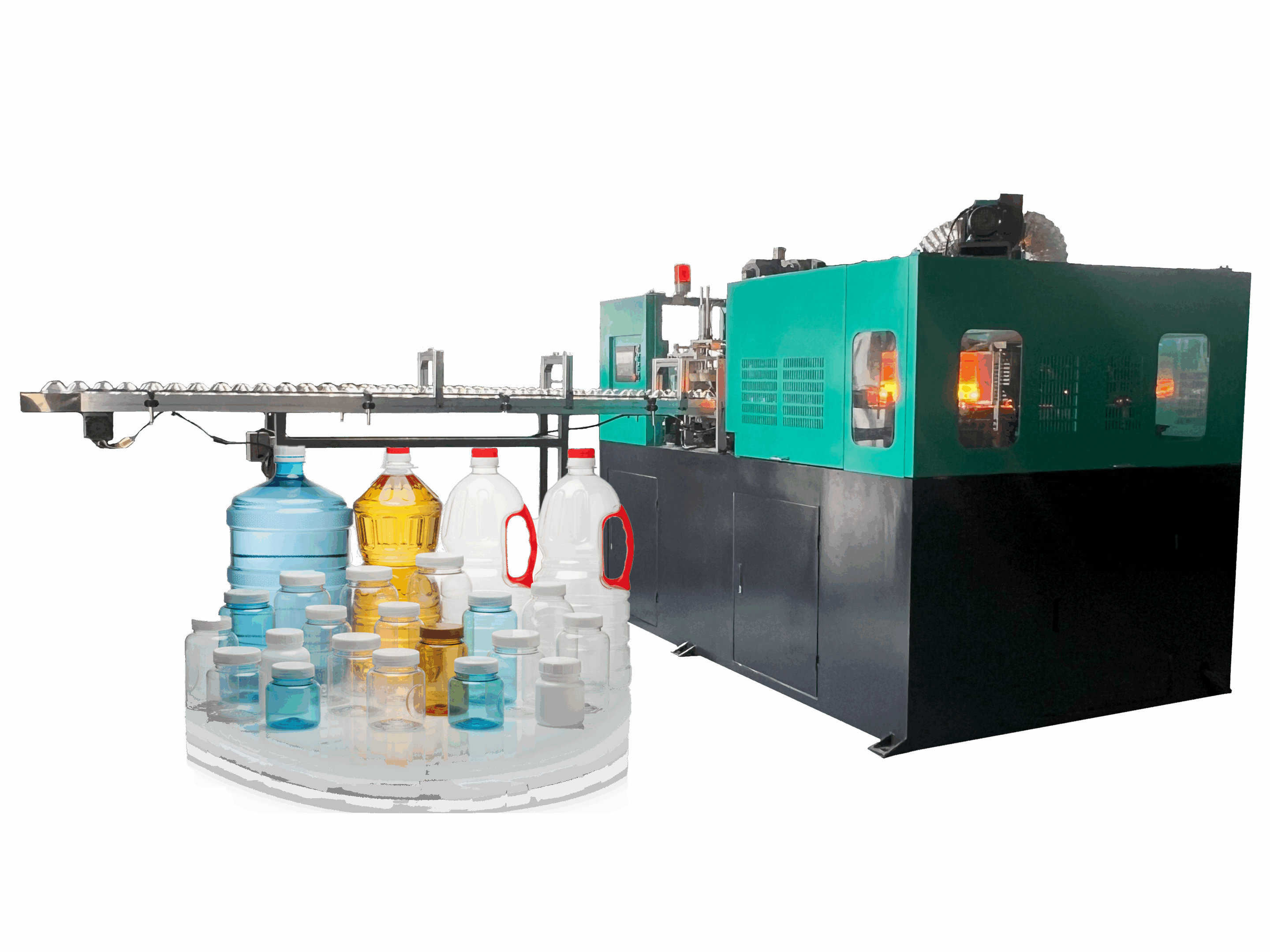
How can I ensure that the all-electric extrusion blow molding machine I purchase is capable of producing bottles with uniform wall thickness?

Inconsistent wall thickness kills profit margins through high scrap rates and wasted resin. At our factory, we know that achieving the perfect container requires more than just a machine; it requires absolute control over the material flow from the hopper to the mold.
High-viscosity materials 1
To guarantee uniform wall thickness, prioritize all-electric machines equipped with high-resolution servo valves and closed-loop LVDT feedback systems. These features ensure positioning accuracy within 0.03mm, eliminating the hydraulic hysteresis that causes material drifting. Verify this capability through specific dry-cycle tests and resin-specific profile validations.
Investing in the wrong technology often leads to "morning sickness," where machine performance drifts as the day warms up. To avoid this, we need to look deeply into the technical specifications that separate high-precision engineering from budget-grade equipment.
Post-Consumer Recycled content 2
What parison control features should I look for to guarantee precise wall distribution?
If your parison programmer lacks resolution, you will see visible rings and weak spots on your bottles. When we configure machines for our clients, we insist on advanced software architectures that can manipulate the plastic tube with microscopic precision.
die swell ratio 3
Look for a parison programmer offering at least 100 control points with cubic spline interpolation for smooth transitions. Crucially, ensure the system includes dynamic radial control (PWDS) to adjust thickness around the bottle’s circumference, not just its length, ensuring complex shapes maintain structural integrity.
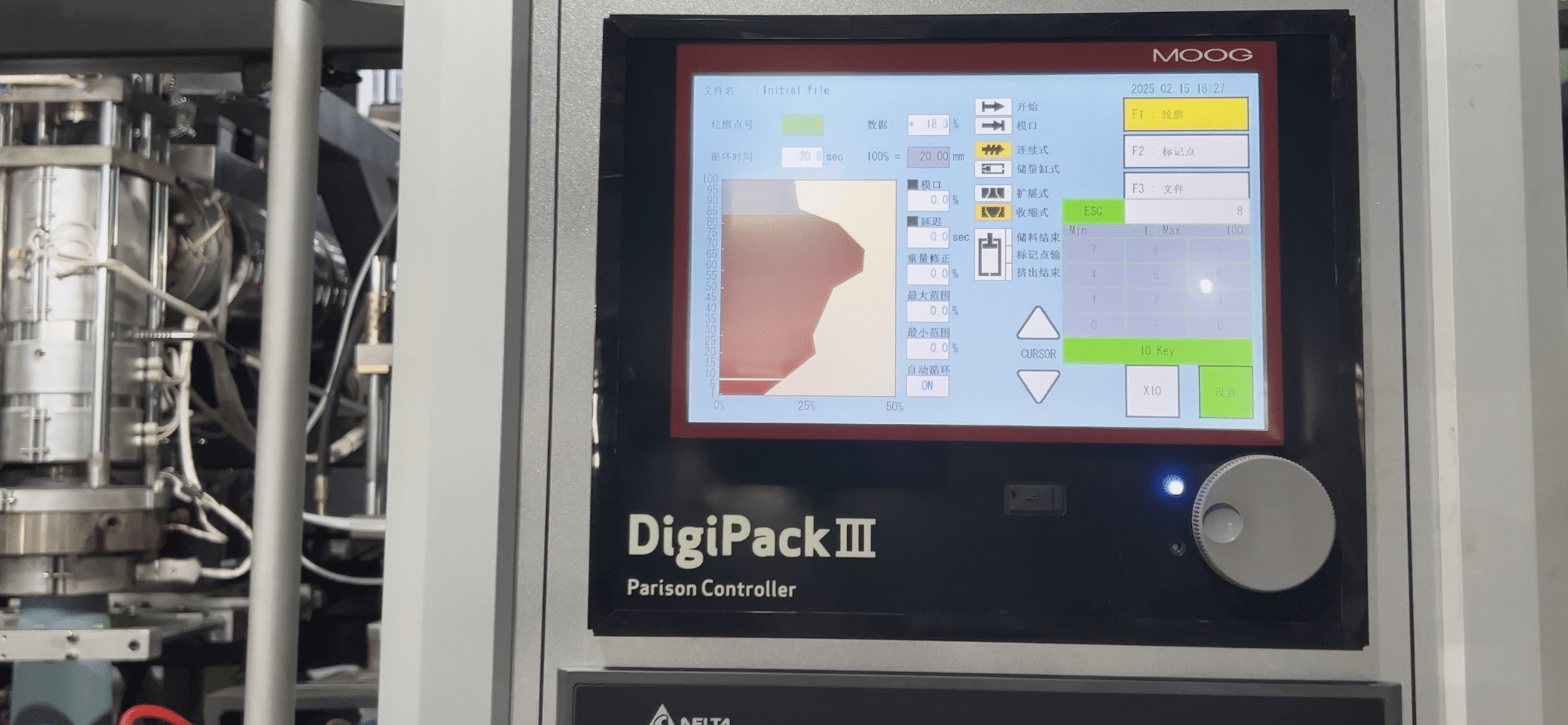
The Necessity of High-Resolution Points
The parison—the hollow tube of plastic extruded before blowing—is the foundation of your bottle’s quality. In the past, 30-point controllers were standard. However, for modern lightweight bottles, this resolution is insufficient.
We recommend systems with 100-point master profiles. This divides the parison into 100 discrete segments, allowing you to strengthen a specific corner or thin out a flat panel with granular precision. Without this resolution, the machine forces you to add weight to the entire bottle just to meet the minimum thickness in one weak area.
Interpolation Algorithms: The Math Behind the Smoothness
The number of points matters, but how the machine moves between them matters more.
- Linear Interpolation: Creates jagged, abrupt changes in servo speed. This often results in visible horizontal lines on the finished bottle.
- Cubic Spline/S-Curve Interpolation: The controller calculates a smooth curve through the points. This ensures the servo motor glides rather than jumps, resulting in a wall thickness distribution that is optically perfect.
Radial Control (PWDS vs. SFDR)
Most buyers focus on axial control (top-to-bottom). However, if you are making oval, rectangular, or handle-ware bottles, radial control is mandatory.
A standard round die creates a parison that stretches further to reach the corners of a square mold, resulting in thin corners. We integrate PWDS (Partial Wall Thickness Distribution System) to dynamic deform the die ring. This actively pushes more plastic into the areas that will become the corners of the bottle.
Table 1: Parison Control Feature Comparison
| Özellik | Basic Specification | Recommended High-End Spec | Impact on Wall Uniformity |
|---|---|---|---|
| Control Points | 30 – 64 Points | 100 – 300 Points | Eliminates "steps" in wall thickness; allows precise lightweighting. |
| Interpolation | Linear | Cubic Spline / S-Curve | Prevents horizontal ribbing and servo vibration marks. |
| Feedback Loop | Open Loop (Stepper) | Closed Loop (LVDT/Encoder) | Corrects for melt pressure resistance to maintain gap size. |
| Radial Control | Static Ring (SFDR) | Dynamic Servo (PWDS) | Essential for non-round bottles to prevent thin corners. |
How does servo motor precision impact the stability of bottle wall thickness compared to hydraulic systems?
Hydraulic oil fluctuations often force operators to constantly adjust settings throughout the shift. We switched our primary focus to servo-driven platforms to eliminate this thermal drift and ensure the first bottle of the day matches the last.
lag (hysteresis) 5
Servo motors provide a rigid 1:1 mechanical linkage that eliminates fluid compressibility, reducing response latency from 50ms to under 5ms. This stiffness allows for positioning tolerances of ±0.01mm, ensuring that the die gap remains perfectly stable regardless of melt pressure surges or temperature changes.

tighter tolerances (CPK > 1.33) 6
Eliminating the "Sponge" Effect
The fundamental flaw in hydraulic systems regarding precision is the compressibility of the medium. Hydraulic oil acts like a stiff spring. When melt pressure inside the head rises (due to a screen pack clogging or a slight change in screw speed), the hydraulic actuator can be pushed back slightly. This is known as "blowout," and it alters your wall thickness unpredictable.
In contrast, our all-electric machines use high-torque servo motors coupled to planetary roller screws or ball screws. This connection is mechanically rigid. If the controller commands a 2.50mm die gap, the motor holds that position with massive torque. There is no fluid to compress. This 1:1 stiffness means the machine dictates the process, not the material.
Thermal Stability and "Morning Sickness"
One of the most frequent complaints we hear from plant managers running hydraulic fleets is "morning sickness."
- Cold Start: At 8:00 AM, the oil is cold and viscous. The valves respond slowly.
- Mid-Day: By 12:00 PM, the oil is hot and thin. The valves respond faster.
- The Result: The wall thickness profile set in the morning is no longer valid by lunch.
All-electric systems are thermally stable. The kinematic behavior of a servo motor does not change with temperature. This stability allows you to run tighter tolerances (CPK > 1.33) and reduce the safety factor on your bottle weight, saving thousands in resin costs annually.
planetary roller screws 7
Energy Coupling and Latency
Beyond stability, speed is critical. A hydraulic system requires time to build pressure, open a valve, and move fluid. This creates a lag (hysteresis) of 20-50ms. An electric servo reacts in 1-5ms. When you are running a fast cycle with complex geometry, that speed difference allows the machine to execute sharp profile changes (like thickening a neck finish) that a hydraulic machine physically cannot keep up with.
Table 2: Drive System Performance Analysis
| Performance Metric | Hidrolik Sistem | All-Electric Servo System | Benefit for Wall Thickness |
|---|---|---|---|
| Positioning Accuracy | ± 0.05mm – 0.10mm | ± 0.01mm – 0.03mm | Allows for thinner designed walls without risk of failure. |
| Response Latency | 20 – 50 ms | 1 – 5 ms | Enables sharp profile changes for complex bottle necks/handles. |
| Thermal Drift | High (Viscosity changes) | Negligible | Settings remain valid 24/7; no operator tuning required. |
| Force Transmission | Indirect (Fluid) | Direct (Mechanical) | Eliminates "sponginess" and die push-back. |
Can I request a trial run with my specific resin to verify uniformity before delivery? What are the signs of poor parison control I should watch out for during the testing phase?
A machine that runs well on generic HDPE might fail when processing your specific PCR blend or high-load material. We always encourage clients to supply their exact production resin for the Factory Acceptance Test (FAT) to reveal hidden rheological issues.
high-torque servo motors 8
You must insist on a trial run using your specific resin to identify rheological incompatibilities like excessive die swell. During the test, watch for horizontal ring lines, "curtaining" in the parison, or random weight fluctuations, which indicate the servo system cannot react fast enough to the material flow.
The Importance of Resin-Specific Testing
"Blow Molding Grade HDPE" is a broad category. Resin A might have a die swell ratio of 1.2, while Resin B (especially if it contains Post-Consumer Recycled content) might swell to 1.5.
If we test your machine with our standard shop resin, it might produce a perfect bottle. However, when you run your high-swell material, the parison might be too wide (causing flash) or too thick. By using senin resin during the FAT, we can:
- Verify Head Tooling: Ensure the mandrel and bushing sizes are optimized for your material’s swell behavior.
- Stress Test the Servo: High-viscosity materials require more torque to manipulate. We need to prove the servo motor won’t overheat or fault under your specific load.
Visualizing Defects: What to Look For
During the trial, do not just look at the finished bottle. Look at the parison as it hangs.
- Curtaining/Pleating: If the parison looks like a folded curtain, the diameter is too large for the die, or the pre-blow air is poorly controlled. This creates folds in the wall.
- Hooking: If the parison swings to the left or right, it indicates uneven heating in the head or a bent mandrel. This guarantees one side of the bottle will be thin.
- Drawdown (Sag): Watch the bottom of the parison. If it thins out excessively due to gravity, check if the machine’s "Sag Compensation" software is active and effective.
Measurement Protocols
Do not rely on tactile feel. Use data.
- Ultrasonic Gauging: Ideal for measuring wall thickness on closed containers without cutting them.
- Hall-Effect (Magna-Mike): Best for rigid corners and complex geometries where ultrasonic probes might decouple.
- Cut-and-Weigh: Section the bottle into top, middle, and bottom thirds. Weigh each section to verify the vertical distribution matches your target.
Table 3: Troubleshooting Common Parison Defects
| Defect Observation | Likely Technical Cause | Corrective Action |
|---|---|---|
| Horizontal Ring Lines | Servo "Jitter" or Linear Interpolation | Enable Cubic Spline smoothing; check servo PID tuning. |
| Orange Peel Surface | Melt Fracture / High Shear | Die gap is too small for throughput; increase die temperature or tool size. |
| Random Thin Spots | Surging / Unstable Melt Pressure | Check extruder screw design; verify gravimetric feeder consistency. |
| One Side Consistently Thin | Die Misalignment or Heater Failure | Re-center die bushing; use thermal camera to check heater bands. |
Sonuç
Ensuring uniform wall thickness is not about luck; it is about engineering physics. By choosing an all-electric platform, you secure the mechanical rigidity and thermal stability necessary for precision. However, the hardware is only half the equation. You must validate the control software’s resolution (100+ points) and insist on a rigorous FAT using your specific resin. Only then can you be confident that the machine will deliver consistent quality from the moment it hits your production floor.
hollow tube of plastic 10
Dipnotlar
- Explains the fluid property that increases motor load. ↩︎
- Contextualizes the recycled material type mentioned. ↩︎
- Defines the polymer behavior affecting parison dimensions. ↩︎
- Defines the study of flow responsible for material inconsistencies. ↩︎
- Defines the delay phenomenon affecting hydraulic response times. ↩︎
- Explains the statistical metric for production stability. ↩︎
- Explains the mechanical component ensuring rigid force transmission. ↩︎
- Describes the electric motor technology replacing hydraulics. ↩︎
- Explains the medium causing compressibility issues in hydraulic systems. ↩︎
- Defines the fundamental plastic component used in blow molding. ↩︎


0 Yorum