
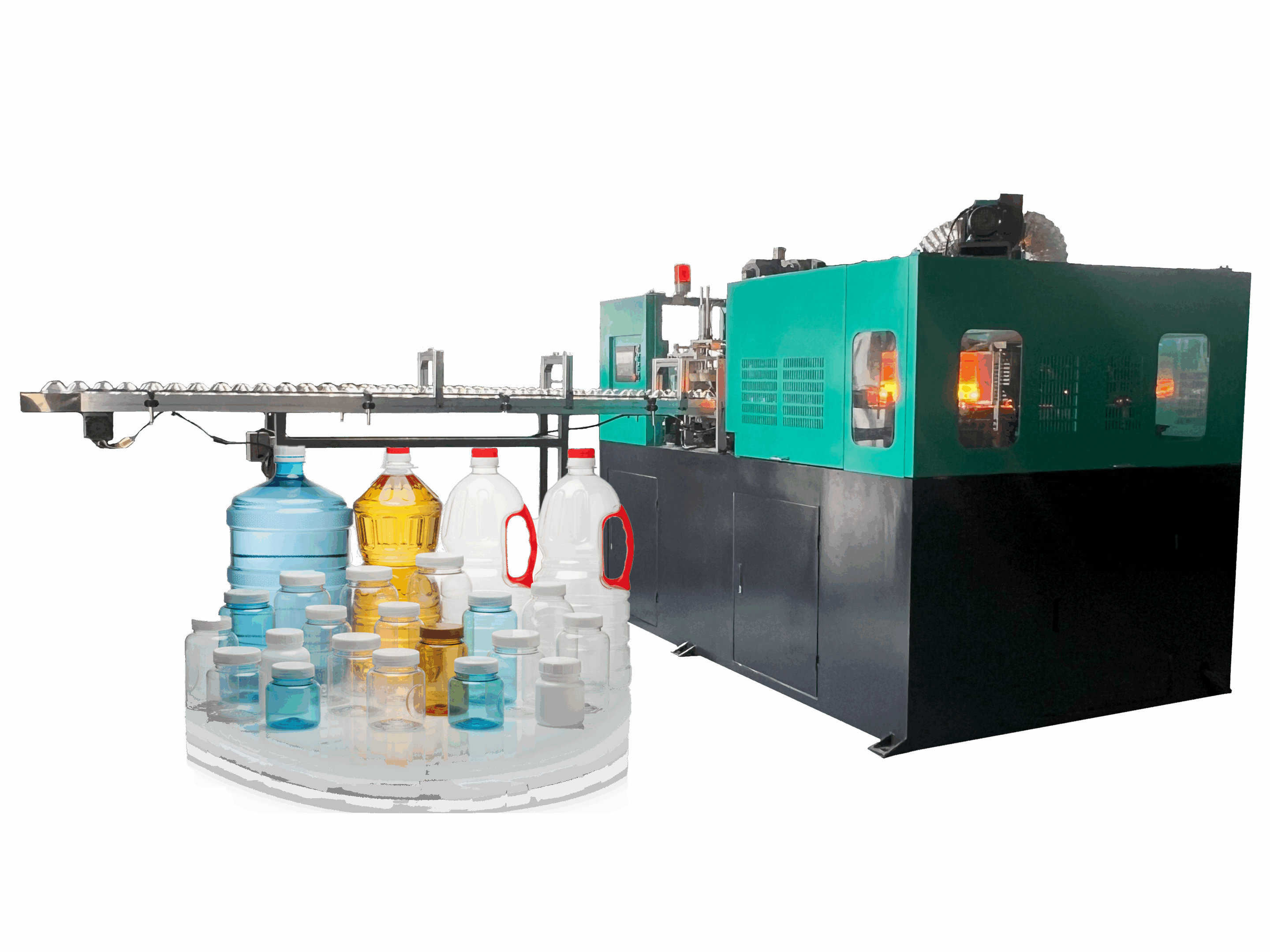
Blow Molding Plant Startup Cost: The Honest 2025 Guide (ROI & Prices)
İçindekiler
- Introduction: So, You Want to Make Bottles?
- Module 1: The “Back of Napkin” Feasibility Test
- Module 2: The Machine Cost (The “Big Ticket” Item)
- Module 3: The “Hidden” Hardware (Auxiliaries)
- Module 4: Logistics & Installation
- Module 5: Operating Expenses
- Module 6: The ROI Calculation
- Module 7: Funding & Sourcing Strategy
- Sonuç
- Appendix: Buyer FAQs
Introduction: So, You Want to Make Bottles?
I talk to new investors every week. They all see the same thing: plastic pellets are cheap, empty air is free, and bottles sell for real money. It feels like printing cash.
Here is the truth: It can be profitable, but it is not easy money. The margins in this industry are often counted in decimals. Most business plans I see fail not because the product is bad, but because the owner only budgeted for the machine and forgot about the infrastructure.
At Leka Makine, we help customers navigate this reality every day. We don’t just sell machines; we manage the whole supply chain to make sure you actually get a production line that works.
In this guide, we are going to talk about Ekstrüzyon Şişirme (HDPE/PP) ve Stretch Blow Molding (PET).
Note: We do not do Injection Şişirme Kalıplama (IBM). If you are looking for that, this guide isn’t for you.
My promise is simple: By the end of this guide, you will have a realistic checklist of costs to show your investors.
Module 1: The “Back of Napkin” Feasibility Test
Before you even ask me for a price list, I want you to grab a napkin and a calculator. I stop about half of the people who İletişim me right at this stage. Why? Because sometimes, the basic math just doesn’t work for your specific market.
Do not spend a single dollar until you pass this test.
The “Rule of 60%” (Resin vs. Bottle Price)
The biggest cost in your factory is not the machine. It isn’t the electricity. It is the raw material (Resin).
Here is the simple math you need to do:
- Weigh your competitor’s bottle (in grams).
- Find the current local price of resin (HDPE or PET) per kilogram.
- Calculate:
Weight (g) x Resin Price ($/kg) = Raw Material Cost.
The Golden Rule: If your Raw Material Cost is more than 60% of your target selling price, stop immediately.
If the plastic pellets cost you $0.10 and you can only sell the bottle for $0.15, you have only $0.05 left to pay for electricity, labor, rent, machine depreciation, and packaging. You will likely lose money on every bottle you make. You need a healthy margin to cover the “Total Cost of Ownership,” which includes energy consumption and maintenance.
HDPE vs. PET: Pick Your Lane
You cannot make every type of bottle on one machine. You need to decide what you are üretme, as this determines your machinery and your business model.
1. HDPE (Extrusion Blow Molding)
This is for opaque, durable containers. Think of shampoo bottles, detergent jugs, bidonlar, and chemical drums.
- The Game: This is usually a slower production process compared to water bottles, but the profit margin per bottle is usually higher.
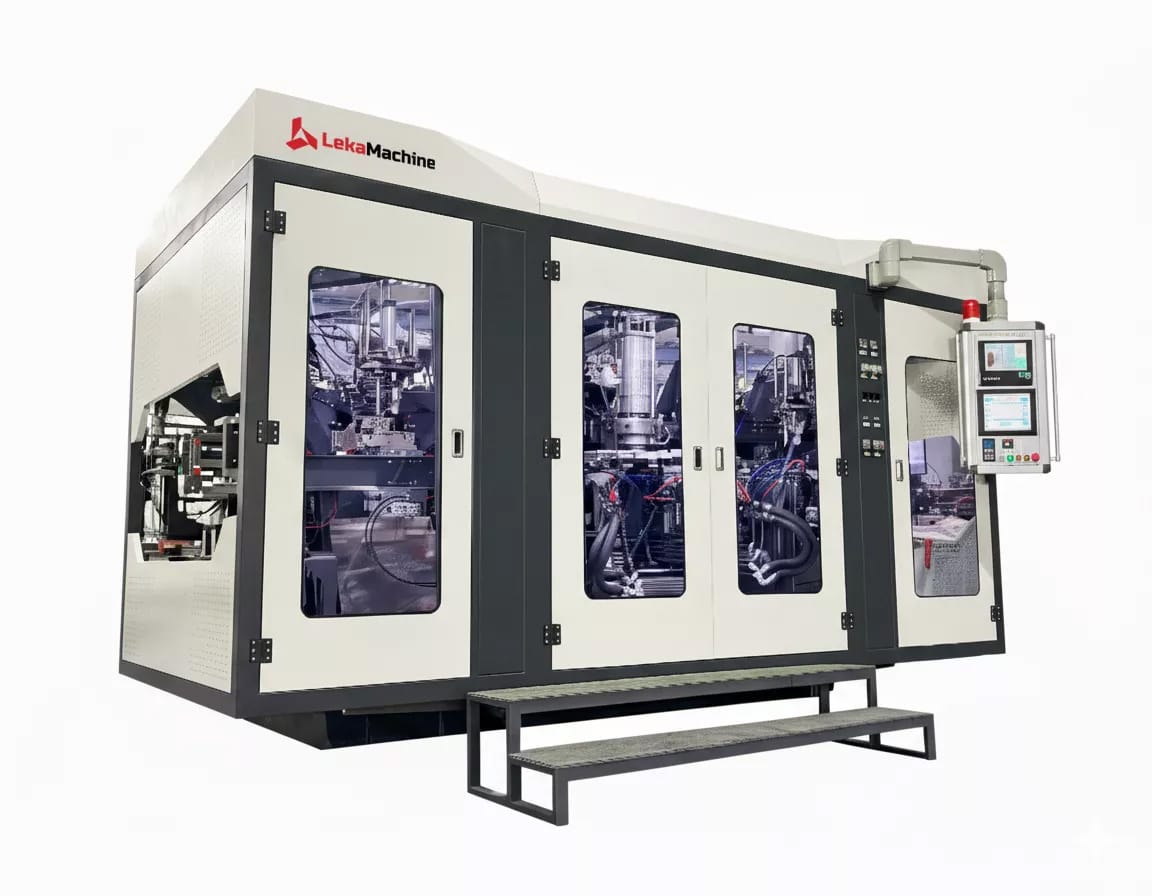
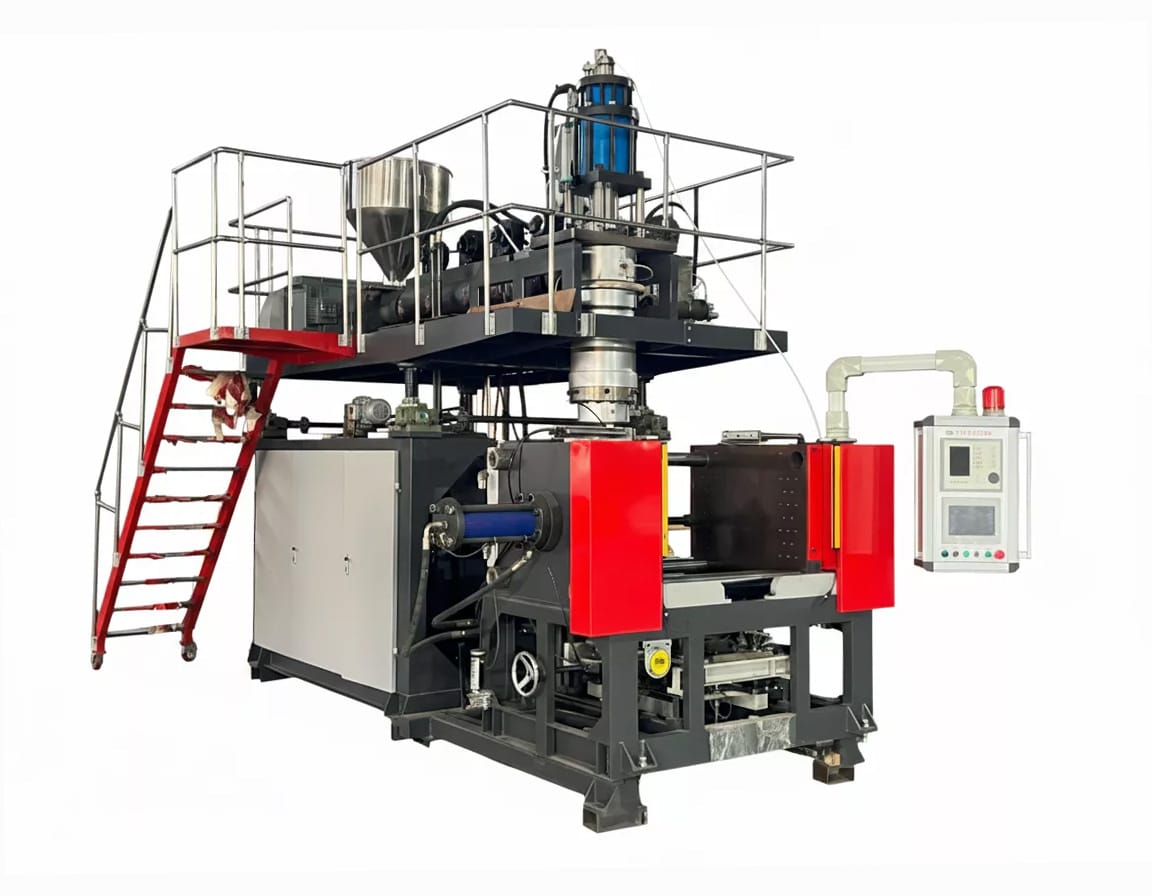
- The Machine: You need an Extrusion Blow Molding Machine. Our FORMA Serisi is built for this—it is versatile, flexible, and reliable for diverse production needs. If you are making large industrial containers, you would look at our TITAN Serisi.
- Learn more here: Ekstrüzyon Şişirme Makineleri
2. PET (Stretch Blow Molding)
This is for clear, lightweight bottles. Think of mineral water, carbonated soft drinks, and juice.
- The Game: This is a high-volume, low-margin game. You need massive speed to make money. Margins are tiny, so if your machine is slow or wastes energy, you lose.
- The Machine: You need a Stretch Blow Molding Machine. Our AQUA Serisi is optimized for this—it is built for high-speed, stable production of standardized bottles.
- Learn more here: Streç Şişirme Makinesi
The “Niche” Factor
Here is my best advice for a startup: Do not try to compete with Coca-Cola or Nestlé.
If you want to start a factory to make standard 500ml water bottles, you are entering a war zone. The big guys produce these at speeds of 40,000+ bottles per hour. Their cost per bottle is lower than your cost for resin.
Instead, look for the Niche.
- Custom Shapes: Big factories hate changing molds. If you can offer a unique shape for a local juice brand, you can charge a premium.
- Handles and Jerry Cans: Making a 5L bottle with a handle (using the FORMA Serisi) is complex. It requires specialized machinery that high-speed water lines can’t do.
- Cosmetics: High-value PET şişeler for lotions or serums (using our BOTTLER Serisi) have much higher margins than water bottles.
Find a product that is hard to make, or hard to ship. That is where the money is.
Module 2: The Machine Cost (The “Big Ticket” Item)
Once you have confirmed that your material costs allow for a profit, the next question is always: “How much is the machine?”
This is where the industry gets murky. If you email five different suppliers, you will get five wildly different prices for what looks like the same machine. It is confusing.
To help you build a realistic budget, I categorize the market into three specific tiers. You need to decide which tier matches your business model.
Tier 1: The “Alibaba Special” ($15k – $25k)
This is the “Wild West.” You will find machines listed for incredibly low prices. They look shiny in the photos.
- Risk: These machines often use low-grade steel and generic components. The biggest issue isn’t just that they break down; it’s that they lack precision.
- The Reality: İçinde şişirme kalıplama, if your parison control cannot hold a ±1% tolerance on wall thickness, you waste plastic. If your machine consumes 2 grams of extra resin per bottle because it is unstable, that cost adds up. Over a year, that “cheap” machine costs you more in wasted plastic than the price of a brand-new high-end machine.
- Support: When it breaks (and it will), spare parts lead times can be weeks, and there is rarely a technician available to help you.
Tier 2: The “European Giant” ($200k – $500k+)
On the other end, you have the famous European brands. These are the Ferraris of the industry. They are incredible machines—fast, efficient, and precise.
- The Problem: Do you need a Ferrari to deliver pizza? For a startup or a regional manufacturer, the CapEx (Capital Expenditure) here is massive.
- The ROI: Banks and CFOs look for an ROI (Return on Investment) of under 3.5 years. If you spend half a million dollars on your first machine, your payback period might stretch to 5 or 6 years. That is a heavy burden for a new company’s cash flow.
Tier 3: The “Sweet Spot” (The Leka Approach)
Burası Leka Makine sits. We aim for the balance between performance and investment.
- The Strategy: We use top-tier global components—Siemens PLCs, Festo pneumatics, and high-quality hydraulic valves. We engineer the reliability you need, but we manufacture in Vietnam and China to keep the CapEx 25-40% lower than European competitors.
- The Result: You get a machine that offers the “Total Cost of Ownership” (TCO) efficiency of a high-end line, but with an ROI timeline that makes your investors happy (typically 12–18 months).
Selection Guide: Which Series Do You Need?
A common mistake is buying the wrong type of machine. A machine built for water bottles cannot make chemical drums. Here is how to match your product to our machine series:
- Scenario A: The Household Brand (Shampoo, Detergent, Sauces)
You need versatility. You might run 500ml shampoo bottles this week and 5L detergent jugs next week.
Senin Çözüm: The FORMA Series.
It is born for versatility. It is stable, reliable, and multi-purpose, designed to efficiently craft diverse plastic containers from small bottles to medium-sized jerry cans. It allows for quick mold swaps, which is crucial if you have many SKUs. - Scenario B: The Industrial Supplier (Chemical Drums, Jerry Cans)
You are making heavy, dangerous goods. You need strength. If a chemical drum leaks, it’s a disaster.
Your Solution: The TITAN Series.
This series is synonymous with strength and scale. It delivers unparalleled power and clamping force, specifically engineered for large-capacity, high-strength industrial-grade containers like chemical drums and automotive parts. - Scenario C: The Beverage Startup (Water, Juice, Soda)
You are competing on volume. You need speed above all else.
Your Solution: The AQUA Series (Stretch Blow Molding).
This is the high-speed beverage packaging expert. It is built for maximum throughput and optimized for the stable production of standardized PET water and beverage bottles. - Scenario D: The Premium Boutique (Cosmetics, Serums)
You are selling a high-priced product where the bottle o the marketing. You need crystal-clear PET and unique shapes.
Your Solution: The BOTTLER Series.
This is the master of PET container craftsmanship. It focuses on the fine-moulding of high-value containers, delivering exceptional precision for cosmetic bottles and wide-mouth jars.
Module 3: The “Hidden” Hardware (Auxiliaries)
You have picked your machine series. You have done your resin math. You feel ready.
But here is where 80% of startup budgets fail.
In your business plan, you likely have a line item called “Machinery.” If that number only includes the Şişirme Makinesi itself, your budget is wrong. You are missing the “Lungs” and the “Heart” of the factory. These are the Auxiliaries.
In many cases, the auxiliary equipment can cost 30% to 50% of the machine price. If you don’t budget for this, you will have a shiny machine sitting on your floor that can’t produce a single bottle.
1. The Air Compressor System (The Lungs)
This is the most critical and most expensive auxiliary component. A şişirme makinesi does not “blow” anything on its own. It needs compressed air to expand the hot plastic against the mold walls.
The Pressure Trap:
Most factories have a standard air compressor that puts out 7–10 bar (100–145 psi).
- İçin Ekstrüzyon Şişirme (FORMA/TITAN): This standard pressure is often enough (typically 0.6–0.8 MPa).
- İçin Streç Şişirme (AQUA/BOTTLER): You often need High Pressure Air (30–40 bar).
Standard compressors cannot do 40 bar. You need a specialized High-Pressure Booster System. This is expensive.
It is Not Just a Compressor:
You cannot just buy a pump. You need a full Air System:
- The Compressor: Creates the air.
- The Air Tank: Stores the air so the pressure doesn’t drop when the machine cycles.
- The Air Dryer: Crucial. If your air has moisture, that water gets blown into the hot plastic. The result? Bubbles, cloudiness, and weak bottles.
- Filters: To remove oil and dust.
My Advice: Do not buy a cheap local compressor to save money. If the compressor stops, your entire factory stops. We usually supply the correct compressor system matched to the machine so you don’t have to guess the specs.
2. The Chiller (The Speed Limiter)
Here is the physics of profit: Plastic enters the mold hot (around 180°C – 200°C). It cannot leave the mold until it is hard.
If you have a fast machine but a small Chiller, you have to leave the bottle in the mold longer to cool it down.
- If your machine can run at 10 cycles per minute…
- But your Chiller is too weak, so you have to wait 5 extra seconds for cooling…
- You are now running at 6 cycles per minute.
You just lost 40% of your production capacity because you tried to save $2,000 on a Chiller.
For our machines, we specify the exact cooling water pressure (usually 0.2–0.3 MPa) and water consumption (e.g., 60L/min for a FORMA M5L). We ensure the Chiller is sized to handle the “Heat Load” so your machine runs at maximum speed.
3. The Mold (The Soul of the Bottle)
The machine is just a robot; the Mold is what actually makes the bottle.
I see startups spend $100,000 on a machine and then buy a cheap $1,000 mold from a random shop. The result?
- Ugly Parting Lines: A rough seam down the side of the bottle that cuts the customer’s hand.
- Uneven Cooling: The bottle warps after a week.
- Leaks: The neck doesn’t seal perfectly with the cap.
Retailers like Walmart or Tesco will reject your entire shipment if the bottles leak or look cheap.
The Leka Advantage:
We don’t just sell you the steel. We help you source the mold. We test the mold on your machine in our factory before we ship. We ensure the “Flash” (waste material) cuts off cleanly and the cooling lines are optimized.
4. The Scrap Crusher (The Money Saver)
İçinde Ekstrüzyon Şişirme (EBM), you have “Flash.” This is the extra plastic at the top and bottom of the bottle that gets trimmed off.
- The Amateur Way: Throw the flash in a bin. Sell it as scrap for pennies.
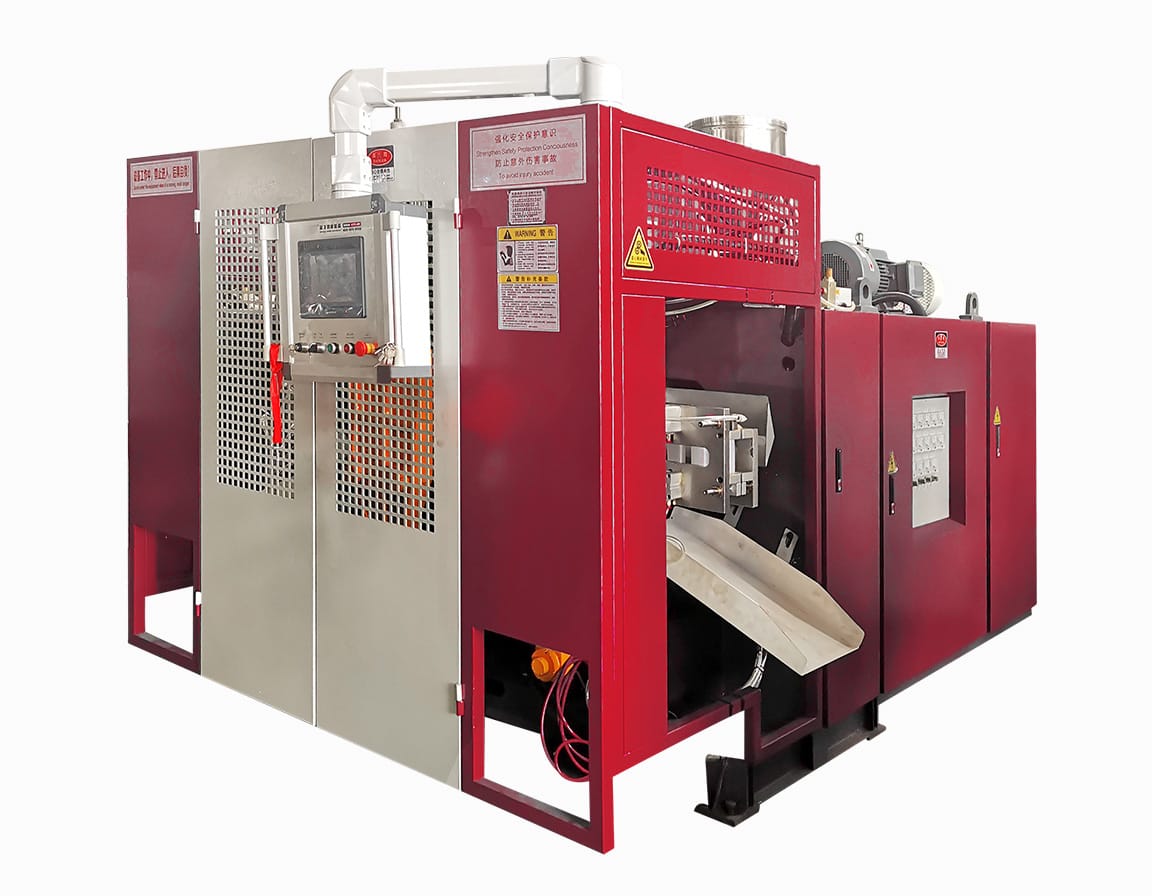
- The Professional Way: Kullanın Scrap Crusher.
A crusher sits next to the machine. It grinds the flash immediately into “Regrind” flakes. You then mix this regrind (usually 10% to 30%) back in with your virgin resin.
The Math: If you throw away your flash, you are throwing away 10-20% of your raw material cost. A crusher pays for itself in a few months by recycling that material instantly.
Module 4: Logistics & Installation (Getting it to Your Floor)
You have selected your machine (Module 2) and budgeted for the auxiliaries (Module 3). Now comes the part where most first-time importers panic: Getting a 10-ton metal beast from our factory floor in Asia to your warehouse door.
Logistics is not just “shipping.” It is a minefield of acronyms and hidden fees. If you get this wrong, your machine could sit in a customs warehouse racking up $500/day in storage fees while you scramble for paperwork.
FOB vs. CIF vs. DDP: The Alphabet Soup
When you ask for a price, suppliers will usually quote you FOB (Free On Board).
- FOB Price: This means the supplier puts the machine on the ship in Asia, and their job is done.
- The Trap: The price looks low. But once that ship leaves the port, you are responsible for ocean freight, insurance, unloading at your port, customs clearance, import duties, taxes, and trucking to your factory.
I have seen customers buy a machine for $50,000 FOB, thinking they got a deal, only to pay another $15,000 in unexpected logistics fees before the truck arrives.
The Leka Solution: DDP (Delivered Duty Paid)
We operate differently. Because we manage the full supply chain, we can offer Door-to-Door hizmet.
- We handle the ocean freight.
- We handle the customs clearance.
- We pay the duties.
- We hire the truck to drive it to your factory.
You get one fixed price. No surprises. You just open your warehouse door when the truck arrives. This predictable cost is crucial for your business plan.
The Installation Engineer: You Cannot Do This Yourself
Let me be very clear: You cannot install a şişirme makinesi by watching YouTube videos.
These machines have complex hydraulic systems, high-voltage electrical cabinets, and precision-aligned molds. If you wire the phases backward, you can fry the servo drives instantly. If you level the machine incorrectly, the mold platens will warp.
Budget for the Human Element:
At Leka Machine, we send engineers to your site for assembly and commissioning. But you must budget for this “Launch Cost”:
- Visa Fees: For the technician.
- Round-Trip Flights: From Asia to your city.
- Accommodation & Food: A decent hotel and meals for 7–10 days.
- Daily Rate: A technician fee (usually $100-$200/day) for their time.
This might cost you an extra $3,000 to $5,000, but it is the best insurance policy you can buy. The engineer will not only set up the machine but also train your staff. They will teach your operator how to adjust the parison thickness, how to change the mold, and how to troubleshoot alarms.
Power & Water: Prepare the Floor Before We Arrive
Do not wait for the container to show up to call your electrician.
1. The Foundation:
Bizim TITAN H30L weighs 16 tons. If you put that on a standard thin garage floor, the concrete will crack, the machine will sink, and your mold alignment will be ruined. Check the machine weight in our specifications and reinforce your concrete floor if necessary.
2. Voltage Stability:
Hydraulic motors and servo drives hate voltage spikes. If your local power grid is unstable (common in many developing industrial zones), you must install a Voltage Stabilizer. If you don’t, you risk burning out expensive electronic boards within the first month.
3. The “Drops”:
You need the electricity, water pipes (for the chiller), and air pipes (for the compressor) to be run to the exact spot where the machine will sit. We provide the layout drawings weeks before shipping. Give these to your local contractor immediately.
If the engineer arrives and there is no power cable ready, you are paying his daily rate for him to sit in the hotel watching TV. Don’t burn money like that.
Module 5: Operating Expenses (The “Bleeding” Cash)
You have bought the machine (CapEx). That is a one-time pain. Now you have to deal with Operating Expenses (OpEx). This is the monthly “bleeding” that determines if you actually make a profit or just churn cash.
If you ignore these numbers in your business plan, you will run out of working capital in six months.
Electricity: The Silent Killer
İçinde blow molding industry, electricity is often 15% to 30% of the unit cost of every container. It is not just a utility bill; it is a raw material.
Şişirme makineleri are hungry. They need massive heat to melt plastic (200°C+) and massive force to clamp molds (20 to 50 tons).
The Technology Choice: Hydraulic vs. Electric
This is where your choice in Module 2 comes back to haunt you or save you.
- Standard Hydraulic Machines: These are cheaper to buy upfront. But the hydraulic pump runs constantly, even when the machine is idle for a few seconds. They typically consume 0.35–0.50 kWh per kg of plastic processed.
- Electric/Hybrid Machines (AERO & AQUA Series): These machines use servo motors that only consume power when they move. They can target energy consumption of ≤0.22 kWh/kg.
The Math:
If you process 100 tons of plastic a year:
- Hydraulic cost @ $0.15/kWh: ~$6,000/year in just wasted energy difference.
- Over 10 years, that “cheaper” hydraulic machine costs you $60,000 more in electricity.
This is why we push the AERO Serisi ve AQUA Serisi for high-volume production. It costs more today but saves you 30% on your electric bill forever.
Labor: You Need Brains, Not Just Hands
A common myth is: “I’ll just hire a minimum-wage worker to push the green button.” This is a recipe for disaster.
1. The Operator vs. The Technician:
- The Operator: Moves finished bottles to boxes. If you have a FORMA Serisi machine with auto-deflashing and conveyors, one operator can easily manage two machines at once.
- The Process Technician: This is the person who knows how to adjust the parison wall thickness profile on the HMI. They know that if the bottle is too thin at the corner, they need to adjust “Point 4” on the controller.
You need at least one skilled Technician on your payroll. If you rely on unskilled labor for machine settings, your scrap rate will jump from 2% to 10%, and you will bleed money.
Maintenance: The 3% Rule
Machines have moving parts. Moving parts wear out. You must budget for:
- Hydraulic Oil: It needs changing every year (for hydraulic models). It gets dirty and loses viscosity.
- Seals and O-rings: These blow out under high pressure.
- Grease: Your toggle system needs automatic lubrication.
The Budget Rule: Set aside 2% to 3% of the machine’s purchase price annually için maintenance parts.
If you bought a $100,000 machine, put $2,500/year into a “Maintenance Fund.”
At Leka, we use standard components like Siemens PLCs ve Festo pneumatics. This lowers your maintenance stress because you can often buy a replacement sensor locally instead of waiting 3 weeks for a shipment from China. But you still have to pay for it.
Module 6: The ROI Calculation (The Holy Grail)
This is the module your investors are waiting for. This is the section you will copy and paste directly into your business plan.
When you ask a bank for a loan, they don’t care about the clamping force or the screw diameter. They care about one thing: “When do I get my money back?”
The Formula
Months to Break Even = Total Initial Investment / Monthly Net Profit
To get the “Monthly Net Profit,” you first need to calculate the Gross Profit Per Bottle.
Step 1: The Unit Economics (The 5L Jerry Can Example)
Let’s build a realistic case study. We will call this company “Startup A.” They want to manufacture 5L HDPE Jerry Cans (common for detergent or automotive oil) using a LEKAmachine FORMA H5L.
The Assumptions (Conservative Estimates):
- Bottle Weight: 250 grams (0.25 kg).
- Resin Cost (HDPE): $1.30 per kg.
- Electricity Cost: $0.15 per kWh.
- Selling Price: $0.75 per can (Wholesale).
- Production Speed: The FORMA H5L is rated at 500 cycles/hour. Let’s assume 80% efficiency (breaks, maintenance, slow operators), so 400 bottles/hour.
The Unit Cost Breakdown:
| Cost Item | Calculation | Cost Per Bottle |
|---|---|---|
| Resin (Material) | 0.25 kg × $1.30/kg | $0.325 |
| Electricity | Approx. 0.35 kWh/kg × 0.25 kg × $0.15 | $0.013 |
| İşgücü | 1 Operator ($15/hr) / 400 bottles | $0.038 |
| Paketleme | Bags/Pallets | $0.020 |
| Waste/Scrap | 2% allowance | $0.008 |
| TOTAL COGS | Cost of Goods Sold | $0.404 |
The Profit Margin:
- Selling Price: $0.750
- (-) Cost to Make: $0.404
- (=) Gross Profit: $0.346 per bottle
Note: This is a 46% Gross Margin. This is healthy. If your margin is below 20%, you are in the danger zone.
Step 2: The Total Investment (The CapEx)
Now, how much cash does “Startup A” need to put down before selling the first bottle?
(Note: These are estimated market averages for this tier, not official quotes.)
- Machine (FORMA H5L): The 5-liter extrusion blow molding machine. ~$45,000
- The Mold: 5L Single Cavity, high-quality steel. ~$4,500
- Auxiliaries: High-pressure compressor system, Chiller (60L/min capacity), Crusher, Hopper Loader. ~$18,000
- Logistics (DDP): Shipping, customs, trucking to factory. ~$6,000
- Installation: Engineer flight, visa, hotel, daily rate. ~$4,000
- Working Capital: Resin stock for 1 month. ~$10,000
Total Investment Required: ~$87,500
Step 3: The Payback Timeline
Now we run the production numbers.
Scenario: Single Shift (8 Hours)
- Çıktı: 400 bottles/hr × 8 hours × 22 days = 70,400 bottles/month.
- Monthly Gross Profit: 70,400 × $0.346 = $24,358.
- (-) Monthly Fixed Costs: Rent, Manager Salary, Marketing (~$6,000).
- Net Monthly Profit: $18,358.
ROI Calculation:
$87,500 (Investment) / $18,358 (Profit/Month) = 4.8 Months
Wait. 5 Months? Is that real?
On paper, yes. But in reality, you won’t sell 100% of your capacity on Day 1. You will ramp up. You will have sales delays.
- Month 1-3: Installation, sampling, finding customers. (Cash flow negative).
- Month 4-6: Running at 30% capacity.
- Month 7+: Running at full capacity.
Realistic ROI: For a well-run factory with customers lined up, expect to break even in Month 12 to Month 14.
The “Double Shift” Secret
The magic of manufacturing is that your Machine Cost is Fixed, but your Profit scales.
If you run Two Shifts (16 hours):
- Your Rent stays the same.
- Your Machine payment stays the same.
- You only pay for more resin, electricity, and one more operator.
- Your Monthly Output doubles to 140,800 bottles.
- Your Net Profit jumps significantly, cutting your ROI time in half.
This is why successful factories run 24 hours a day. The machine doesn’t get tired; it prints money faster the longer you run it.
Module 7: Funding & Sourcing Strategy (Closing the Deal)
You have the budget, the operational plan, and the ROI calculation. The final hurdle is usually cash. Unless you are funding this entirely from your own savings, you will likely need a bank loan, a lease, or an investor.
This is where your choice of machinery supplier becomes a financial decision, not just a technical one.
Why Banks Hate “Unknown” Machinery
When a bank lends you money to buy a machine, that machine is their Collateral. If you go bankrupt, they want to know they can sell the machine to get their money back.
- The Problem: If you buy a “No-Name” machine from a random Alibaba trading company, the bank assigns it a Salvage Value of $0. They cannot find the brand online, they don’t see a service network, and they fear it’s scrap metal in 3 years. Therefore, they will refuse the loan or demand 100% cash collateral.
- The Leka Advantage: We understand finance. We provide the documentation banks require:
- CE & UL Certification: Proof that the machine meets safety standards (crucial for insurance).
- Commercial Invoice & Sales Contract: Formal, verifiable documents.
- Track Record: We can show that our machines are running in Poland, Turkey, Mexico, and the USA.
If your bank knows the asset is real and supported, they are much more likely to approve your 5-year equipment lease.
The Spare Parts Strategy: The “3-Day Rule”
Here is a question you must ask every potential supplier: “If the main computer (PLC) dies today, how long until I get a new one?”
If the answer is “We will ship one from our factory in 2 weeks,” do not buy that machine.
Every hour your machine is down, you are losing money. If you are down for 2 weeks, you will lose your customers to a competitor.
The “Standard Component” Safety Net
This is why we build Leka machines with global, standardized components.
- PLC: Siemens (Germany)
- Pneumatics: Festo (Germany)
- Hydraulics: Yuken or Rexroth
Why does this matter?
If a Siemens card burns out in your factory in Ohio or Manchester, you don’t need to call us in Asia. You can call your local industrial distributor and have the part the next morning.
Next Steps: Don’t Just Ask for a Price
If you send me an email saying “Price for 5L machine please,” I cannot give you an accurate answer. You will get a generic quote that might be wrong for your business.
To get a Project Quotation that you can take to the bank, I need you to be specific.
The “Solution Request” Checklist:
Please gather this data before you contact us:
- The Bottle Photo: I need to see the shape. Is it round? Square? Does it have a handle? (Complex shapes need different molds).
- The Size: What is the maximum volume? (e.g., 500ml, 5L, or 20L).
- The Weight: How many grams is the bottle? (This determines the cooling time and cycle speed).
- Target Output: How many bottles per hour (BPH) do you really need?
- Resin Type: HDPE, PP, or PET?
Sonuç
Manufacturing is not for everyone. It is loud, it is hot, and it requires discipline.
But there is a reason why people do it. When you own the production line, you control your destiny. You are no longer waiting for a supplier to ship your bottles. You are no longer paying their markup. You are building an asset that generates cash flow day and night.
We have helped startups in over 20 countries go from “Idea on a Napkin” to “Full Production.” We know where the pitfalls are, and we know how to avoid them.
Are you ready to see the real numbers for your project?
Don’t guess. Let’s build a real quotation.
Want a Precise Production Calculation?
Send me your bottle drawing or a photo of a sample.
I will calculate the exact Çevrim Süresi (seconds per bottle) and the Cost Per Unit for your specific design.
Slany Cheuang
Technical Sales Manager, LEKAmachine
Appendix: Buyer FAQs
- Q: Why is your machine cheaper than European brands? Is it lower quality?
- A: We engineer our machines using the same top-tier components (Siemens, Festo) as European brands, but we assemble them in Vietnam and China. This allows us to lower labor and overhead costs significantly, passing a 25-40% CapEx saving to you without sacrificing component Kalite.
- Q: What happens if the machine breaks down?
- A: We have a “3-Layer” support system. First, we use global parts (Siemens/Festo) so you can buy replacements locally. Second, we offer remote troubleshooting where our engineers log into your machine online. Third, we can dispatch engineers for on-site repair if needed.
- Q: Can one machine make both HDPE shampoo bottles and PET water bottles?
- A: No. These are two completely different technologies. HDPE uses “Extrusion Blow Molding” (like our FORMA series), while PET uses “Stretch Blow Molding” (like our AQUA series). You would need two separate machines.
- Q: Do you help with shipping and customs?
- A: Yes. We offer a “Door-to-Door” (DDP) service. We handle the ocean freight, customs clearance, duties, and inland trucking, so you receive the machine at your factory with one fixed price.
- Q: How long does it take to get the machine?
- A: Our typical lead time is 60-90 days, which is significantly faster than many European competitors who often quote 6-8 months.


0 Yorum