
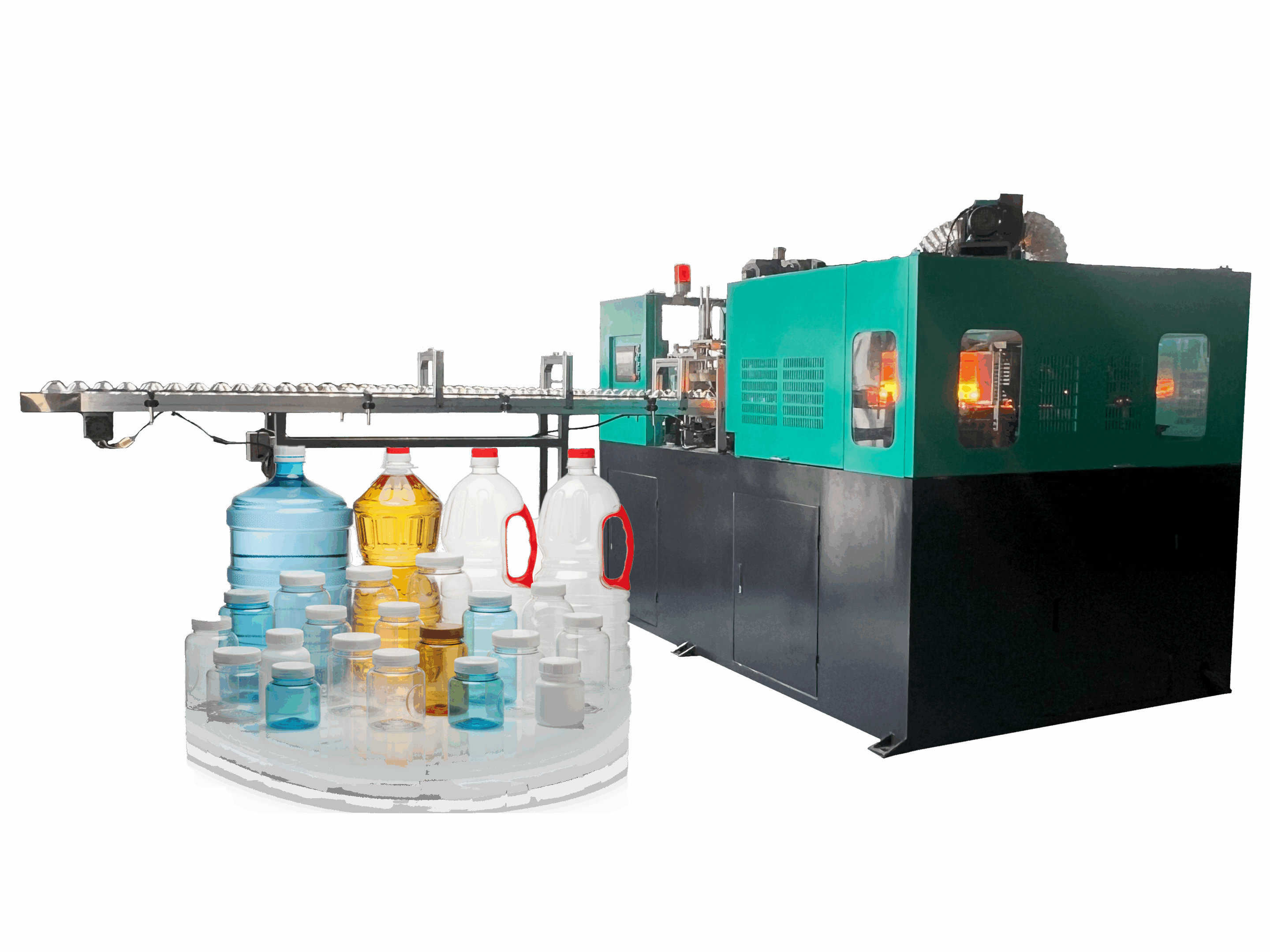
What are the real costs and solutions in packaging machinery manufacturing?

At LEKA Machine, we often see factory owners fixate on the sticker price of a new line, ignoring the financial reality of daily operation. You want to expand capacity, but a poorly planned investment can drain your margins through hidden inefficiencies and unexpected fees.
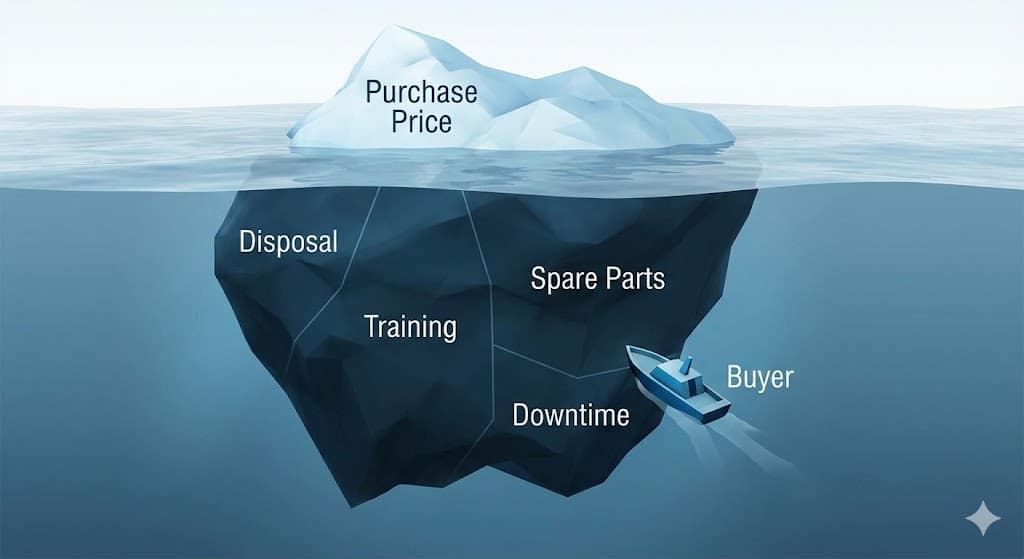
To accurately calculate Total Cost of Ownership (TCO), you must sum acquisition, installation, training, lifetime consumables, energy, and maintenance costs, then subtract the resale value. Ignoring hidden expenses like disposal fees or proprietary material lock-ins will significantly skew your budget and ROI projections.
Understanding the full financial picture is the only way to protect your bottom line. Here is how we recommend you approach the math.
How do I calculate the total cost of ownership for a new packaging machine line?
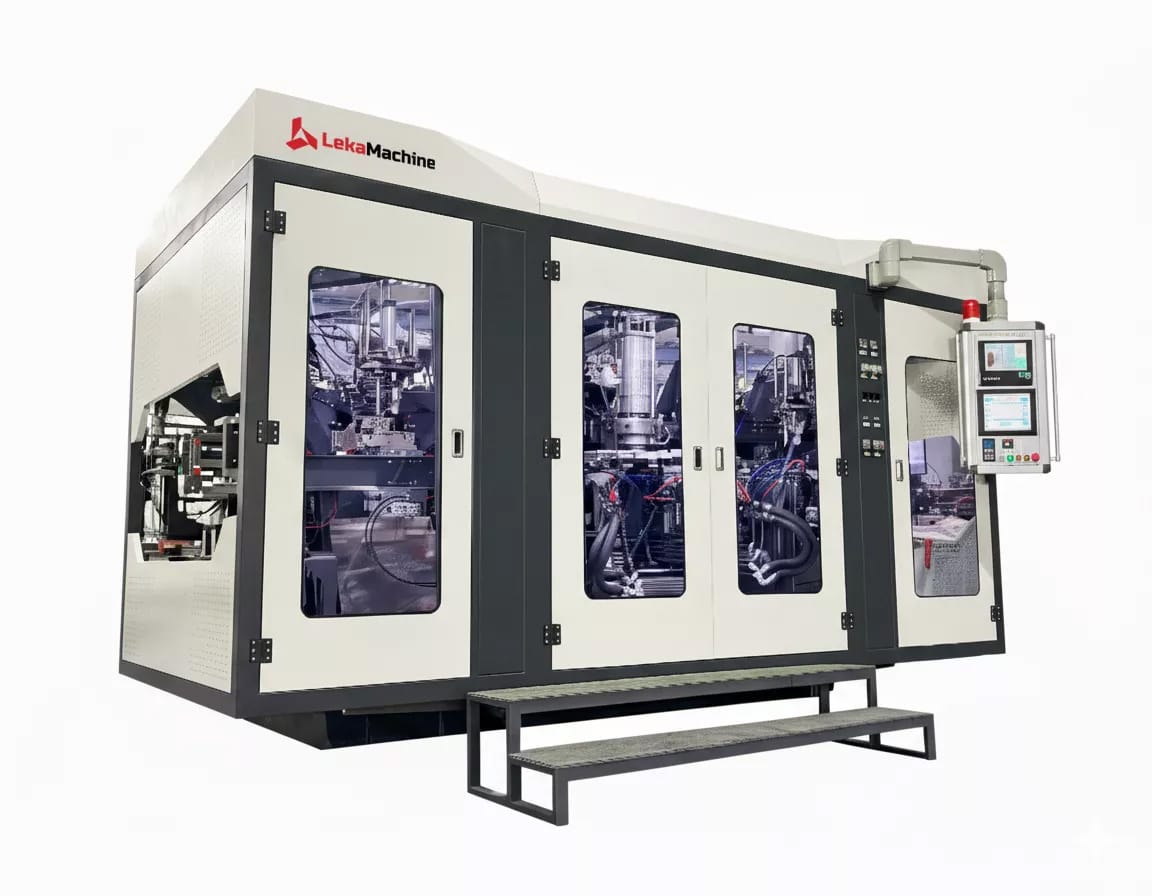
When we design blow molding lines for our clients, we remind them that the initial purchase order is just the entry fee to the game. If you only budget for the invoice price, you will run out of cash before the machine produces its first sellable bottle.
şişirme kalıplama 1
Calculate TCO by adding the machine’s purchase price to installation, commissioning, and staff training expenses, plus the lifetime projection of consumables, energy usage, and maintenance. Finally, subtract the estimated resale value to determine the true financial impact over the equipment’s operational life.

To get a realistic figure, you need to move beyond the "Capex" (Capital Expenditure) mindset and look at "Opex" (Operating Expenditure). The formula we use during consultation is comprehensive:
TCO = Acquisition + Installation + Training + Lifetime Consumables + Maintenance + Energy + Disposal – Resale Value.
The Lifecycle Consumables Trap
The biggest variable in this formula is often Lifetime Consumables. For a packaging line, this isn’t just oil and grease. It includes ink for coders, glue for labelers, and stretch film.
- The Scenario: You buy a cheaper machine ($50,000 less) but it consumes 10% more glue due to poor application control.
- The Result: Over 5 years, that wasted glue could cost you $100,000, wiping out your initial savings twice over.
Energy and Disposal
Many buyers forget Disposal Costs. What happens when the machine is obsolete? Will you have to pay someone to haul it away, or does it have scrap value? Furthermore, energy costs are not static. A servo-driven machine might cost more upfront than a hydraulic one, but the electricity savings over 10 years can be massive.
| Cost Component | Typical Oversight | Impact on TCO |
|---|---|---|
| Acquisition | Focusing only on the machine price, ignoring shipping/insurance. | Düşük |
| Installation | Forgetting riggers, crane rental, and utility hookups. | Orta |
| Sarf Malzemeleri | Underestimating adhesive, ink, or film waste. | Yüksek |
| Enerji | Ignoring the cost of compressed air and cooling water. | Yüksek |
By mapping these out, you can make a decision based on the 10-year horizon, not just this quarter’s budget.
escrow agreement 2
Our project managers frequently warn clients about the "invisible" expenses that only appear after the contract is signed. These are the line items that cause arguments between procurement managers and suppliers if they are not discussed early.
PLC source code 3
Hidden costs often include "clean power" infrastructure for sensitive servos, integration fees to handshake with existing conveyors, and the "commissioning material tax" where sellable inventory is destroyed during testing. Additionally, budget for travel and downtime during Factory and Site Acceptance Testing.
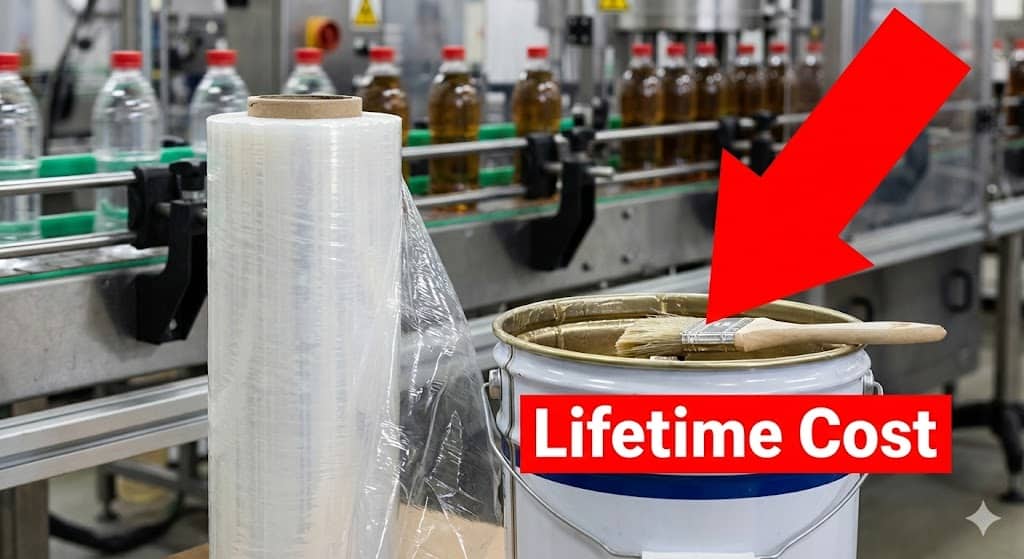
It is painful to ask for more budget approval halfway through a project. Here are the specific hidden costs we see catching buyers off guard.
voltage stabilizers 5
The FAT and SAT Burden
You must budget explicitly for Factory Acceptance Testing (FAT) ve Site Acceptance Testing (SAT).
- Travel Expenses: Airfare, hotels, and per diems for your engineering team to visit our factory in China or elsewhere.
- Shipping Test Materials: We need your specific preforms, caps, or labels to test the machine. Shipping three pallets of material by air freight to meet a deadline is incredibly expensive.
- Downtime: Your team is away from your plant, not managing your current production.
The "Commissioning Material" Tax
This is the cost of the product destroyed to get the machine running. During SAT, we might need to run the machine for 4 hours to prove stability. That means producing thousands of bottles. If those bottles are not sellable because the weight isn’t dialed in yet, that is direct financial loss. You might sacrifice thousands of dollars of resin or semi-finished goods just to calibrate the tolerance.
Infrastructure "Clean Power" Costs
Modern packaging machines use sophisticated servo drives that are highly sensitive to voltage spikes. If your factory has "dirty power" (fluctuations), you risk blowing out expensive drive components.
- The Surprise: You may need to install industrial voltage stabilizers or power conditioners.
- The Cost: This can easily add $5,000 to $15,000 to the installation tab, which was likely not in the original machine quote.
The "Integration Handshake" Fees
Do not assume your new packer will talk to your old conveyor. Connecting new equipment to legacy systems requires a software "handshake" (interlocks).
- Risk: The manufacturer of your existing downstream equipment might charge a service fee to unlock their PLC to accept signals from the new machine. This "ransom" for connectivity is a common unexpected cost.
How can I choose a cost-effective solution that still meets my production targets?
We have found that the fastest machine is rarely the most profitable if it cannot handle your SKU variety efficiently. Buyers often chase "bottles per minute" (BPM) stats, but efficiency is lost in the gaps between production runs.
servo drives 6
Prioritize rapid changeover capabilities over maximum theoretical throughput if you produce multiple SKUs, as downtime kills efficiency. Avoid machines with "consumable tethering" that lock you into proprietary materials, ensuring you retain the flexibility to source standard films or inks at market rates.
Factory Acceptance Testing (FAT) 7
Cost-effectiveness comes from flexibility and freedom, not just raw speed.
Changeover Downtime vs. Speed
Imagine two machines:
- Machine A: Runs 200 units/minute but takes 4 hours to switch from 500ml to 1L bottles.
- Machine B: Runs 150 units/minute but switches in 15 minutes.
If you change formats once a day, Machine B will actually produce more bottles by the end of the week. Machine A spends half a shift idle. When choosing a solution, look for "tool-less changeovers" and recipe-driven adjustments on the HMI.
Proprietary Consumable Lock-In
A major trap is "consumable tethering." Some manufacturers sell machines at a loss, much like inkjet printers, only to force you to buy their proprietary consumables.
- The Lock: The machine might only run on specific film gauges or use ink cartridges with RFID chips that prevent third-party ink.
- The Cost: You end up paying 30-50% above market rates for materials for the next 15 years.
- Çözüm: Always specify that the machine must be compatible with "open market" standard materials.
| Özellik | Cost Trap | Cost Effective Solution |
|---|---|---|
| Material Source | Proprietary/Coded Cartridges | Open Standard/Universal |
| Changeover | Manual tools, 4+ hours | Tool-less, <30 minutes |
| Throughput | High speed, low flexibility | Moderate speed, high uptime |
What factors should I consider to ensure a fast return on investment for my equipment?
In our experience, reducing scrap rates yields better financial returns than simply increasing machine speed. ROI is not just about making more; it is about wasting less and controlling your software future.
Operating Expenditure 8
Focus on material waste reduction, as lowering scrap rates by even 1% significantly boosts profits. Additionally, secure access to the PLC source code to avoid expensive "black box" engineering fees later, and account for the cost of skilled technicians needed to maintain automation.
To get a fast ROI, you need to look at where the money leaks out of the system.
Material Waste Reduction as ROI Driver
Speed is vanity; yield is sanity. A machine’s "scrap rate" (rejected bottles, film trim, bad seals) is a critical ROI driver.
- The Math: If a machine runs 10% faster but generates 2% more scrap, you are likely losing money. The cost of the wasted material, plus the energy used to process it, eats into margins.
- Hedef: Choose equipment with closed-loop controls that automatically adjust to prevent defects. A 1% reduction in waste often contributes more to the bottom line over 5 years than a 10% speed boost.
Software Sovereignty and Source Code
This is a factor almost everyone overlooks until it is too late: The Black Box Risk.
- The Problem: If you do not own the PLC source code, you are held hostage. Years down the line, if you need a minor logic change (e.g., adding a new sensor), the original manufacturer can charge exorbitant engineering fees because they are the only ones with the "key."
- The Fix: Demand an escrow agreement or direct access to the uncompiled source code in the contract. This ensures you can hire local engineers to troubleshoot or upgrade the machine later, keeping maintenance costs low.
Labor "Redeployment" vs. Reduction
ROI calculations often falsely assume labor costs disappear.
- The Reality: You might replace three low-wage manual packers with one high-wage automation technician.
- The Shift: While headcount drops, the cost per hour of the remaining staff increases. You need to budget for this higher tier of skilled labor to keep the complex automation running. If you don’t, the machine will fail, and ROI will plummet.
Sonuç
To ensure profitability, calculate TCO beyond the sticker price, avoid proprietary material lock-ins, and demand software access to prevent future bottlenecks.
Total Cost of Ownership (TCO) 10
Dipnotlar
- Explains the specific manufacturing process mentioned. ↩︎
- Explains the legal arrangement for securing software code. ↩︎
- Defines the industrial computer system controlling the machine. ↩︎
- Explains the technology used for consumable verification. ↩︎
- Details the equipment needed to protect sensitive electronics. ↩︎
- Explains the motor technology used in modern machinery. ↩︎
- Provides context on standard equipment verification procedures. ↩︎
- Defines the ongoing costs associated with running equipment. ↩︎
- Defines the financial term for initial investment costs. ↩︎
- Defines the core financial metric discussed in the article. ↩︎


0 Yorum