
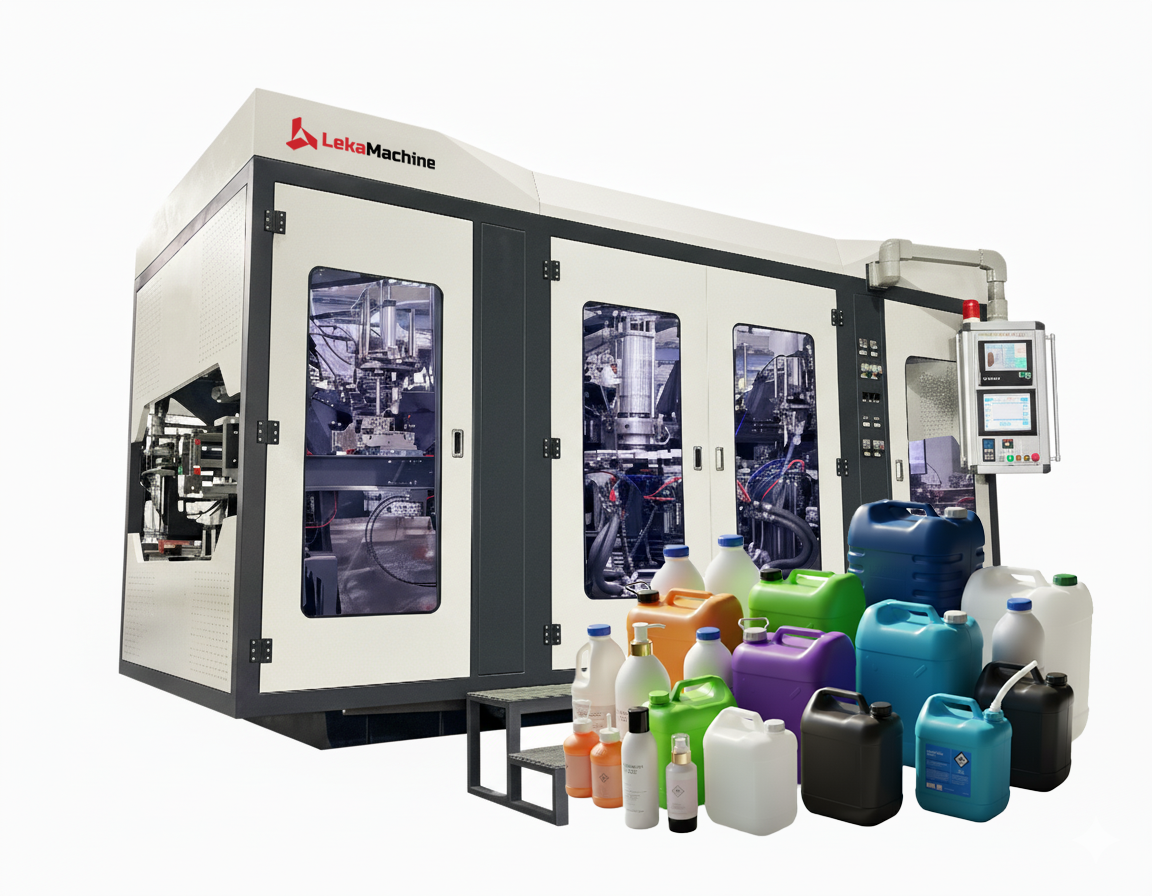
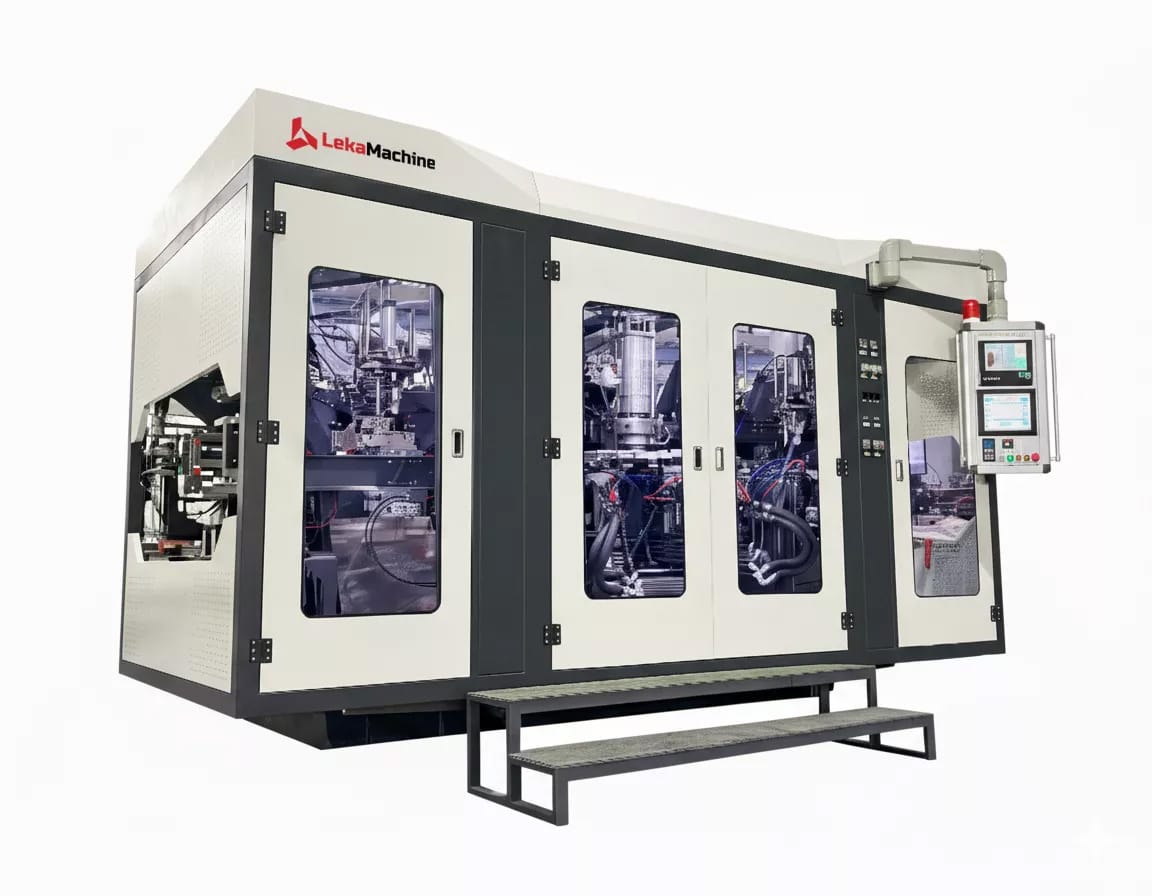
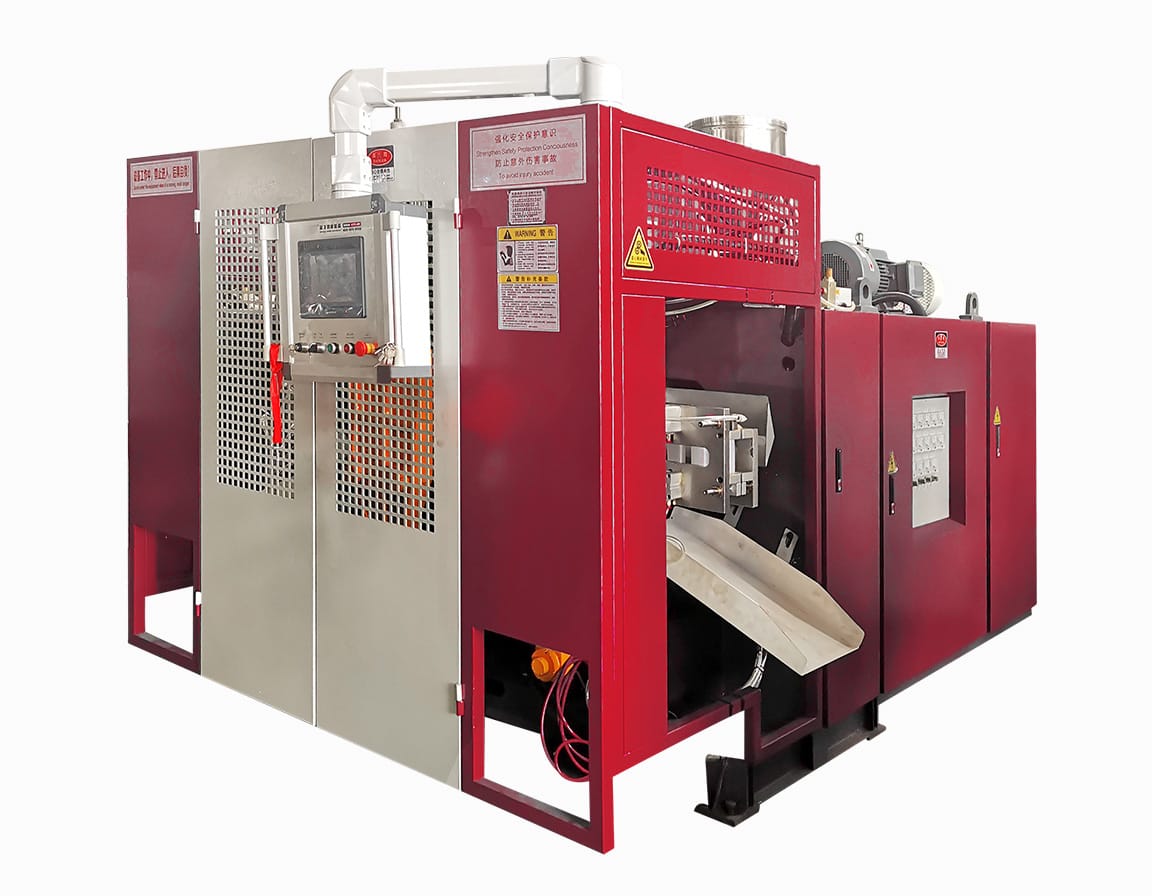
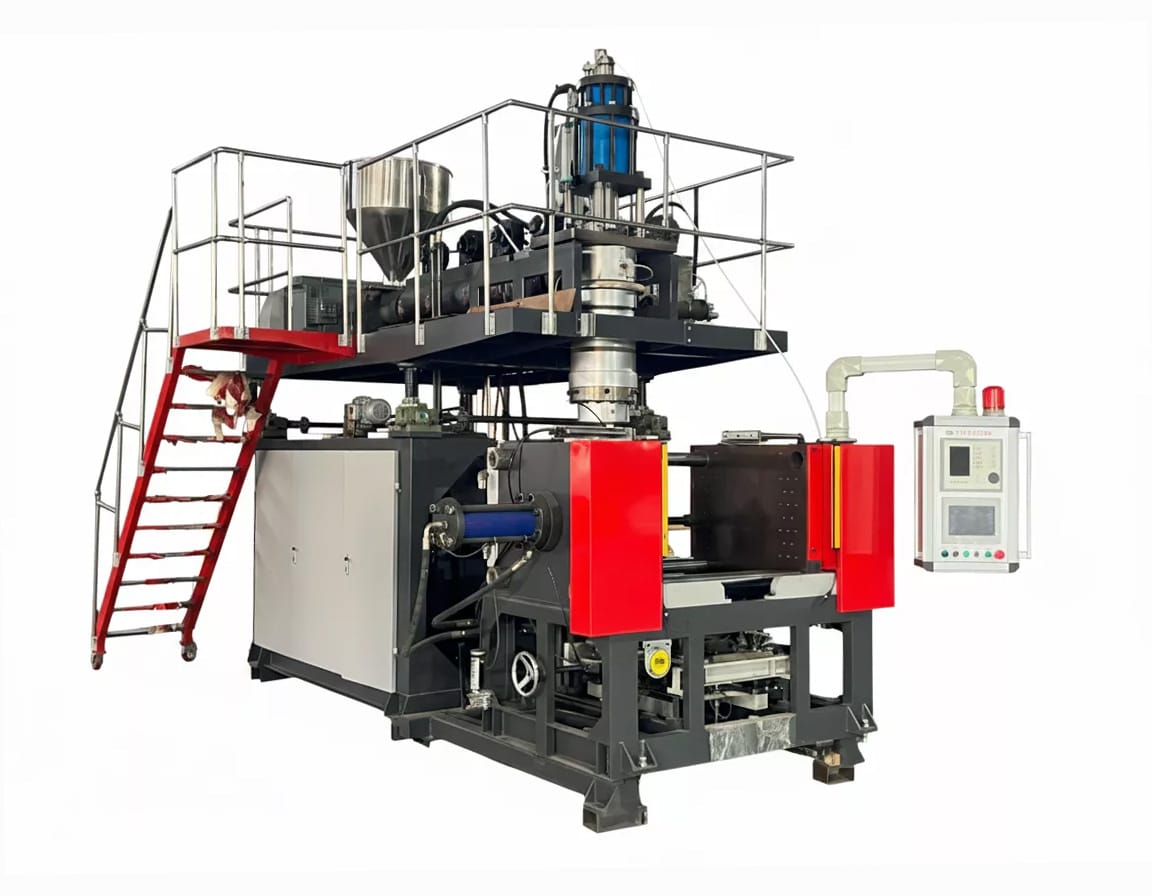
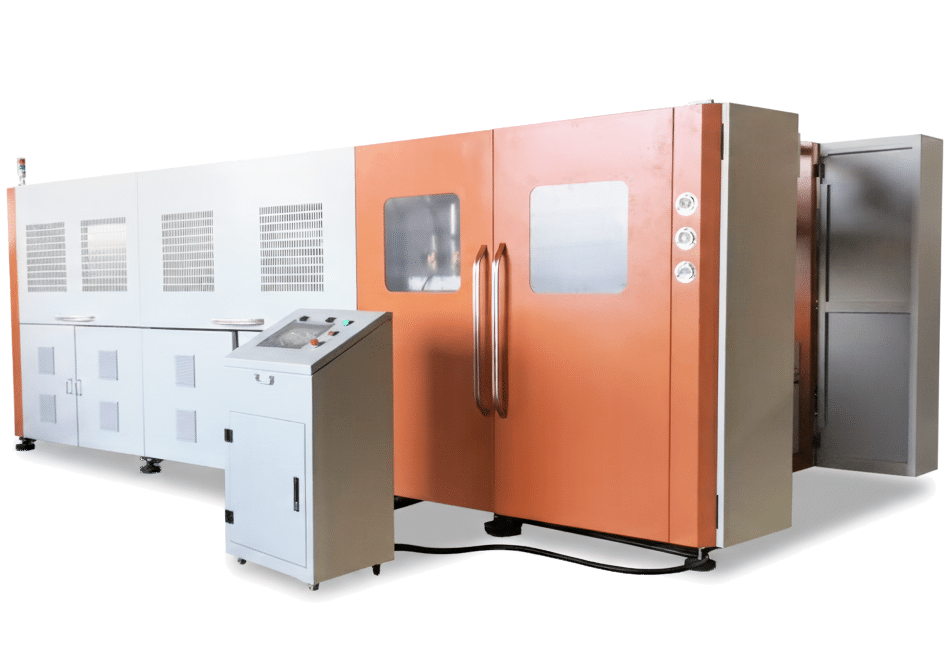
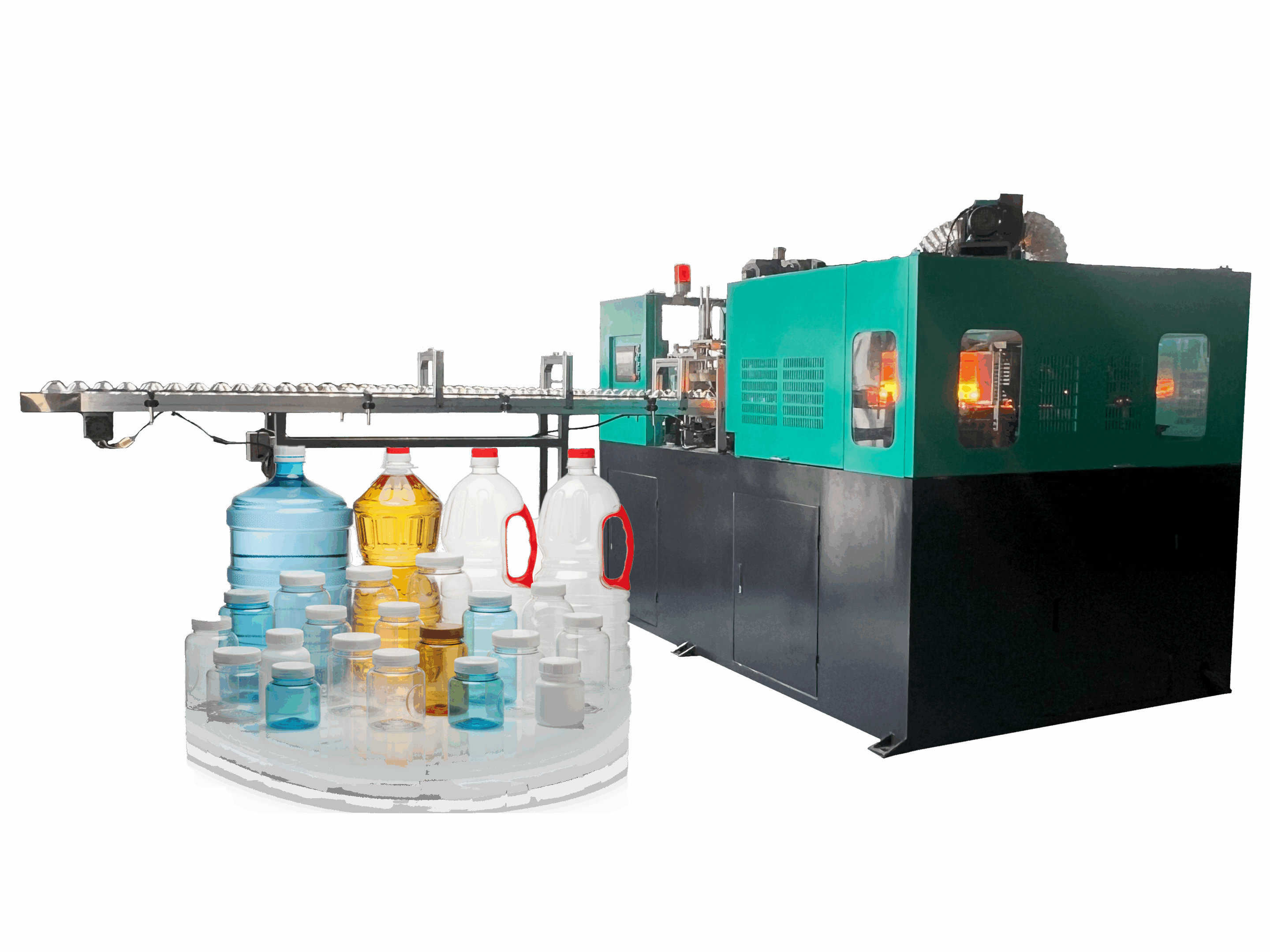
Automatic 5L Detergent Bottle Blow Molding Machine Guide
Introduction: Automatic Machines for 5L Detergent Bottle Manufacturing
A 5L detergent bottle looks simple on the supermarket shelf. Behind it, there is usually a fully automatic plastic industry machine running all day, melting HDPE pellets, forming parisons, closing molds, and pushing out bottles in a steady rhythm.
This guide focuses on those machines, especially the automatic 5L detergent bottle blow molding machine, and is written for people who need to make real decisions, not just read theory.
Who this guide is for
This content is designed for plant managers in detergent and household chemical factories, factory owners who are tired of unstable bottle supply from outside vendors, project and process engineers planning a new 5 liter detergent bottle production line, and OEM packaging üretici considering in-house 5L HDPE detergent bottle manufacturing.
If the goal is to reduce packaging risk, control cost, and build a more stable production base, this guide is relevant.
From HDPE pellets to finished 5L bottles
The journey of a 5L bottle usually looks like this: HDPE pellets are fed into the extruder; the screw melts and homogenizes the material; a hollow tube of plastic, called a parison, is pushed through a die head; the mold closes around the parison and compressed air inflates it against the cavity; the bottle cools, the mold opens, and the part is taken out; flash is trimmed, the bottle is leak tested, and then packed.
All of this can be handled by an automatic ekstrüzyon şişirme makinesi for 5L detergent bottles with minimal manual intervention.
Why 5L detergent bottles are a sweet spot
The 5L format sits in a comfortable middle ground. It is large enough to be economical for families, hotels, and laundries, yet small enough to be handled easily by one person. It offers a big label area for brand communication and a good density for palletizing and transport.
For factories, that means 5L is often a high-volume, high-frequency SKU. A dedicated automatic machine for this bottle size can quickly become a strategic asset.
How automation reduces risk and scrap
When bottles are bought from outside suppliers, a factory is exposed to transport delays, price fluctuations, quality variation between batches, and extra freight and pallet costs. The logistics chain becomes fragile.
When in-house 5L detergent bottle üretme is done on a modern automatic line, a factory gains stable daily output, predictable quality and weight, lower hidden logistics cost, and better synchronization between bottle production and filling.
Why this perspective is trustworthy
The approach in this guide follows the same logic used in real projects for HDPE packaging. The focus is on ekstrüzyon şişirme and stretch blow molding, without distraction from unrelated processes. It reflects experience from multiple detergent, cleaning, and chemical packaging lines, and it links machine specifications with real bottle demand instead of only catalog numbers.
The aim is simple: help make a smart decision on automatic 5L detergent bottle blow molding machines with less guesswork.
How 5L Detergent Bottles Are Really Made: Extrusion Blow Molding Basics
What an automatic plastic industry machine means here
In this context, an automatic plastic industry machine is not a vague term. It specifically means an extrusion blow molding machine designed for 5L HDPE bottles with automatic parison extrusion, automatic mold closing, blowing, cooling, and opening, and automatic take-out, trimming, and often leak testing.
Operators supervise, adjust, and inspect. The machine does the repetitive work.
Step-by-step process flow
A typical cycle looks like this: the extruder feeds and plasticizes HDPE pellets, sometimes blended with regrind or recycled material. The die head forms the parison and controls the wall thickness profile for good weight distribution. The clamping unit closes the mold around the parison with defined clamping force. Compressed air inflates the parison into the cavity and cooling channels remove heat. Deflashing or trimming removes excess plastic, and a leak test station confirms that each 5L bottle is tight and safe for liquids.
The whole loop can be as short as 15 to 22 seconds, depending on the mold layout and bottle design.
Where stretch blow molding fits
For PET 5L water or edible oil bottles, factories may use stretch blow molding instead of extrusion blow. The material is different and the process is different: PET preforms are injection molded first, then reheated and stretch-blown into bottles.
However, most detergent and household chemical bottles in 5L size are HDPE, not PET. That is why extrusion şişirme kalıplama is the standard choice here.
Quick process comparison for 5L bottles
Extrusion blow molding is best for HDPE, strong handles, and rectangular shapes. It works well for off-center necks and recessed grips. Stretch şişirme kalıplama is best for transparent bottles, water, and edible oil, but it needs preforms and different tooling.
For a 5L detergent factory looking at in-house bottles, extrusion şişirme kalıplama is usually the starting point.
Why Extrusion Blow Molding Is the Standard for 5L HDPE Detergent Bottles
Material and performance advantages
HDPE plus extrusion blow molding offers a reliable combination of properties. It provides chemical resistance against surfactants, bleaches, and fragrances, strong impact resistance so bottles survive handling and transport, good stacking performance for warehouse pallets, and low temperature stability for colder regions.
The process is robust and forgiving, even with small variations in material batch.
Design freedom for ergonomic containers
Five-liter detergent bottles are not just simple cubes. Brands ask for built-in handles for easy pouring, off-center necks for better ergonomics, wider bases for stability, and sculpted panels for label, logo, and grip.
Ekstrüzyon şişirme handles these complex shapes well, especially in the 1 to 30 liter range.
Wall thickness and weight control
A 5L bottle must be strong but not overweight. If it is too thin, it deforms or leaks. If it is too thick, resin cost explodes.
Modern machines use parison thickness control, servo-driven actuators, and fine tuning of die head and cooling. This makes it realistic to hold bottle weight tolerance around plus or minus one to two percent when the line is stable, which has a big impact on yearly resin cost.
HDPE grades and MFI ranges
For 5L detergent bottles, factories usually choose blow molding grades with a suitable melt flow index. The material should balance stiffness, impact strength, and environmental stress crack resistance.
The exact grade depends on local suppliers and whether recycled content will be blended. Machine and die head design should be compatible with that rheology range from the beginning.
Define Your 5L Detergent Bottle Project Before Choosing a Machine
Bottle specification checklist
Before looking at catalogs, it helps to specify the project clearly. Key questions include the exact volume, whether the 5L is nominal or slightly above, the neck finish and cap type such as screw cap or dosing cap, the handle design including open or closed handle and position, the label area type such as shrink sleeve or in-mold label, and the stacking pattern on pallet and in container.
These decisions affect the mold, die head, and even machine size.
Daily and annual volume
A machine is not bought for one week. It should match realistic annual volume. Think about bottles per hour needed, shifts per day, working days per year, and the number of SKUs sharing the line.
If the factory needs eight to twelve thousand bottles per day of one main 5L SKU, the optimal configuration will be different than for a plant with six different 5L SKUs and small batches.
Local standards and tests
Detergent bottles are usually checked for drop tests from defined heights, stack tests with compression load over time, leak tests under pressure or vacuum, and transport and vibration simulation.
Machines, molds, and process control should be capable of meeting the strictest customer requirement in the chain, not just the average one.
Flexibility level: only 5L or 1–5L family
Some factories want a dedicated line for one 5L SKU. Others need the same machine to cover 1L, 2L, 3L, and 5L bottles, slight shape variations, and different neck finishes.
If flexibility is a priority, look for wider tie-bar spacing and platen size, kalıp tasarımı that supports multiple cavities and formats, and quick-change neck inserts and accessories. This decision should be made before choosing a specific automatic 5L HDPE deterjan şişesi making machine.
Typical Automatic Machine Configurations for 5L Detergent Bottles
Single vs double station
Single station ekstrüzyon şişirme makineleri have a simpler layout, lower initial investment, and are suitable for moderate demand and limited floor space. Double station machines offer higher output with two molds alternating, better for high-volume 5L detergent lines, but with slightly more complex utilities and layout.
The choice depends on target throughput and available space.
Die head configurations for 5L
A 5L bottle is fairly large, so cavity count is more limited than for small bottles. Common setups include one by 5L, two by 5L, and in some cases mixed molds such as one 5L and one 3L family. More cavities mean more output but also more clamp force, more cooling demand, and higher mold cost.
Machine selection should consider all three factors.
Example 1–30 L FORMA-type configurations
A versatile series covering 1 to 30 liters can handle one or two cavities for 5L bottles, larger cavities for 10L, 20L, or 25L jerrycans, and tooling combinations for detergent, lubricants, and other chemicals.
For a factory still growing, this kind of flexible platform is useful and helps avoid being locked into one narrow uygulama.
When a high-output series makes sense
If a plant has multiple 5L SKUs with very high volume, stable long-term orders, and strong utility infrastructure, then a higher-output automatic ekstrüzyon şişirme makinesi for 5L detergent bottles may be justified. This may include double station design, optimized cooling, and advanced energy management.
The ROI calculation will show whether this is justified or if a more modest configuration is enough.
Core Features You Should Demand in a 5L Detergent Bottle Machine
Closed-loop parison control and servo clamping
For stable quality, look for digital parison programmers with multiple points across the cycle, closed-loop feedback to keep thickness profiles consistent, and servo-driven clamping motion for smooth, repeatable operation.
These features reduce bottle weight variation and help keep scrap under control.
Energy performance and kWh per kilogram
Energy is not a minor detail. Over the machine lifetime, it becomes a major cost line. Important aspects include servo hydraulic systems or hybrid designs, insulated barrels and efficient heating zones, and intelligent cooling management.
Suppliers should be able to state typical kilowatt hours per kilogram for common HDPE şişeler. A small difference per kilogram becomes large over millions of bottles.
Integrated downstream automation
For near hands-off production, consider in-line deflashing units, conveyors taking bottles out of the safety area, automatic leak testers integrated into the cell, and simple packing stations or interfaces to palletizing systems.
This reduces manual handling and makes it easier to maintain a clean, organized shop floor.
HMI, recipes, and remote diagnostics
Operators benefit from intuitive touch-screen HMI, recipe storage for each SKU with machine settings and parison profiles, user level management, and remote access for troubleshooting and software updates.
These elements may not appear in a simple brochure, but they have a big impact on uptime and ease of use.
Quick mold change design
When SKUs change frequently, mold change time becomes a bottleneck. Features to look for include sliding or quick-release platens, well-positioned utilities with quick couplings, and clear mold change procedures and checklists.
A realistic target is to küfü azaltmak change to under sixty to ninety minutes, instead of a half-day stop.
Line Layout: From Raw Material to Ready-for-Filling 5L Bottles
Upstream: material handling and preparation
Good bottle quality starts before the extruder. Proper storage of HDPE to avoid contamination, controlled feeding of virgin, regrind, and possibly recycled HDPE, and stable masterbatch dosing for color consistency are all important.
Even simple handling improvements can reduce scrap and color variation.
Core blow molding island
The heart of the line includes the automatic ekstrüzyon şişirme makinesi, mold cooling water circuits and chiller, air system for low and high pressure with filtration, electrical cabinets, and safety guarding.
Layout should allow clear access for operators and maintenance while keeping safety zones respected.
Downstream: finishing and packing
After blowing, the bottle moves through deflashing or trimming stations, leak test machine, visual inspection, and packing tables or automated packing cells.
For detergents, leak testing is critical. A single leaking 5L bottle can cause a large mess in transport or at the customer.
Integration with filling and packaging
The bottle line can be independent, feeding bottles to warehouse, connected to a buffer then to a filling line, or integrated into a more complex packaging line with conveyors, case packers, and palletizers.
Even if full integration is a future step, it is wise to plan the layout with that in mind.
Cost, Energy Use, and ROI for an Automatic 5L Detergent Bottle Line
Estimating output in bottles per hour
Output depends on cycle time, number of cavities, and effective uptime per hour. For example, one 5L cavity with a 20 second cycle produces around 180 bottles per hour, while two 5L cavities at the same cycle time produce around 360 bottles per hour.
Multiply by working hours and days to estimate yearly capacity.
Main cost drivers per bottle
Each 5L bottle cost usually includes HDPE resin, color masterbatch, energy, compressed air, labor, scrap and regrind losses, and maintenance and spare parts.
Even small improvements in bottle weight, energy use, or scrap rate can change the cost per bottle significantly.
Buying bottles vs producing in-house
When buying bottles, the factory pays per piece including supplier margin, adds freight and pallet costs, must accept minimum order quantities, and faces risk of delays. When producing in-house, there is higher initial investment and the need for staff and maintenance, but lower cost per bottle once the line is stable and better control of quality, design changes, and timing.
A simple spreadsheet comparing total annual bottle cost and payback period is a useful decision tool.
Example ROI scenario
Imagine a plant producing three million 5L bottles per year, with a clear saving per bottle when produced in-house after energy and labor. The payback period of two to four years, depending on line configuration, often justifies investing in an automatic 5L detergent bottle blow molding machine instead of staying dependent on external suppliers.
Quality, Compliance, and Sustainability in Modern Detergent Packaging
Meeting brand and retailer requirements
Large retailers and global brands care about avoiding leakage or panel collapse, achieving good dimensional stability, ensuring clean surfaces and consistent color, and having readable batch codes.
A well-tuned machine and mold combination makes it easier to pass incoming inspections and audits.
Running recycled HDPE and PCR blends
More factories are using recycled HDPE or post-consumer blends. This affects melt behavior, cooling time, and surface appearance.
Machines should have enough robustness in extrusion and control to handle these blends without losing quality.
Reducing scrap and regrind
Scrap cannot be fully avoided, but it can be minimized by stable parison control, good mold venting and cooling, and regular preventive maintenance.
Regrind management is important. Too much low-quality regrind can create surface defects, thin spots, or weak handles.
Safety, noise, and compliance
Factories must also consider noise levels around the machine, guarding and interlocks, emergency stop circuits, and relevant safety regulations such as CE or ISO.
These are not optional extras; they are part of running a professional, export-ready packaging operation.
How to Choose the Right Automatic 5L Detergent Bottle Machine Supplier
Why application experience matters
Not all şişirme kalıplama experience is the same. A supplier focused on toys or small cosmetic bottles does not automatically understand 5L detergent requirements.
Helpful signs include references in detergent, household cleaning, or chemical jerrycans, proven projects in the 1 to 30 liter range, and the ability to discuss process, not just machine catalog numbers.
Questions to ask about design support and trials
Good questions include whether the supplier can help refine the 5L bottle design for moldability and stacking, whether pilot or sample production is possible before final machine shipment, and whether drop and leak tests can be demonstrated on sample bottles.
This kind of support reduces risk and speeds up commissioning.
Service package checklist
A serious supplier typically offers installation and start-up support, operator and maintenance training, a recommended spare parts list and stock strategy, remote troubleshooting for controls and process issues, and clear response times for hizmet calls.
Without this, the machine becomes a black box when something goes wrong.
Reading quotations carefully
Quotations should be read line by line. Check what is included, such as installation, molds, auxiliaries, and training; what is optional, such as chiller, compressor, leak tester, and conveyor; and what is not included at all, such as building works, power supply, and local approvals.
Sometimes a very cheap quote is missing essential items, which later appear as unexpected extra costs.
Where a specialist fits in
A specialist in extrusion blow molding and stretch blow molding, with focus on HDPE and PET packaging, can provide machine platforms tailored to 1 to 30 liter bottles and jerrycans, solutions for detergent, cosmetics, lubricants, and other liquid packaging, and a full chain of support from project definition to after-sales service.
This type of partner behaves more like a long-term process advisor than a simple machine trader.
Case Example: Moving a Detergent Factory from Buying Bottles to In-House Blow Molding
Starting point: relying on external bottle suppliers
Imagine a factory buying all 5L bottles from an outside source, facing price increases and long lead times, paying high freight and pallet costs, and struggling when suppliers prioritize other customers.
Management decides to explore in-house 5 liter detergent bottle production line options.
Defining the project clearly
Together with the machine supplier, the factory team finalizes the 5L bottle drawing including handle and label area, confirms annual volume and daily production targets, decides on HDPE grade and possible recycled content, and chooses whether to run only 5L or a family of 1 to 5L bottles.
This becomes the technical base for RFQs and proposals.
Choosing the machine and mold configuration
Based on the requirements, a suitable configuration is selected. For example, a double station ekstrüzyon şişirme makinesi with a two-cavity 5L mold for the main detergent bottle, parison control, servo clamping, and integrated leak test, arranged in a layout allowing future connection to a filling line.
Bu mold supplier designs cooling channels, vents, and neck geometry to match the bottle and machine.
From FAT to stable production
The typical path includes factory acceptance testing at the supplier, where the machine runs with test molds and material, installation on site with machine, utilities, and auxiliaries connected, commissioning to tune parameters for the real 5L bottle, training for operators, and a stabilization phase where cycle time and parison profile are optimized for repeatable quality.
After this phase, the factory has its own automatic 5L detergent bottle blow molding machine running daily.
Before and after
Before, there was high dependence on external bottle suppliers, little control over cost trends, and constant worry about packaging delays. After, there is stable in-house bottle supply, more predictable cost per bottle, and better alignment between bottle production and filling schedule.
The plant becomes more resilient and less exposed to bottleneck risks in the supply chain.
Ready-to-Use RFQ and Buying Checklist for 5L Detergent Bottle Machines
RFQ data to prepare
A strong request for quotation usually includes two-dimensional or three-dimensional bottle drawings and photos of similar bottles, material information such as HDPE grade, color, and recycled content, target output in bottles per hour and bottles per year, available utilities such as power, air, and water, and local standards and safety requirements.
Clear RFQs receive better and more precise proposals.
Technical checklist
When reviewing proposals, check clamping force and platen size, die head type and number of layers if a barrier is needed, parison control system details, expected cycle time and energy consumption, and compatibility with your bottle sizes whether 1 to 5L, 5L only, or a 1 to 30L family.
This ensures that the quoted machine really matches the project.
Operations checklist
Consider the operational side, such as number of operators per shift, skill level needed for normal running versus maintenance, required tools and lifting equipment for mold changes, and recommended spare parts and wear components.
This will affect daily labor cost and long-term uptime.
Service and training checklist
Important questions include how many training days are included, whether remote support is available for the control system, what the standard response time is for urgent issues, and whether local service partners are available in your country or region.
Good answers here reduce risk during the life of the machine.
How to move forward with a proposal
Once a shortlist of suppliers is ready, request a video or live demonstration of a similar 5L bottle line, ask for sample bottles produced on the proposed machine type, and compare not just price but configuration, support, and energy performance.
Then, choose the partner that offers the best balance of machine capability, service, and long-term reliability.
Conclusion: Turning 5L Detergent Bottles into a Stable In-House Capability
Choosing an automatic ekstrüzyon şişirme makinesi for 5L detergent bottles is not only a technical decision. It is a strategic move that affects cost structure, supply chain risk, and brand flexibility.
Key points to remember are to define the 5L bottle project clearly before shopping for machines, to focus on ekstrüzyon şişirme as the natural choice for HDPE 5L detergent bottles, to look beyond headline output and study energy use, parison control, and service, and to treat the machine supplier as a long-term partner, not just a one-time vendor.
With the right machine configuration and a well-planned project, 5L detergent bottles can shift from an external dependency into a stable in-house capability that supports growth for many years.
“`


0 Yorum