
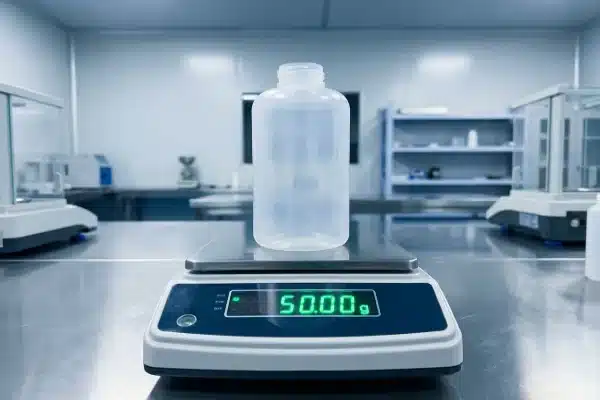
At LEKA Machine, we often see buyers struggle with vague promises about bottle consistency weight uniformity 1. Inconsistent weight kills profit margins, yet many contracts lack specific deviation guarantees. (26 words)
You must demand a written performance guarantee specifying weight uniformity, typically expressed as a percentage (e.g., ±0.1% to ±0.3%) relative to the mean product weight. Require this metric to be validated through a continuous dry-cycle or wet-test protocol using your specific mold and resin before final payment. (46 kelime)
To ensure you get a machine that delivers precision rather than just promises, you need to break down your inquiry into the following critical questions all-electric extrusion blow molding machines 2.
What Is the Acceptable Weight Variation Tolerance for High-Speed Continuous Production?
We often test competitor machines and find shocking instability during long runs parison wall thickness controller 3. High scrap rates destroy margins, so knowing the industry standard for electric machines is crucial. (26 words)
For high-end all-electric extrusion blow molding machines, the acceptable weight variation should fall between ±0.1% and ±0.3% of the total bottle weight. In contrast, traditional hydraulic systems often struggle to maintain tolerances better than ±0.5% to ±1.0% due to oil temperature fluctuations and valve response times. (47 kelime)
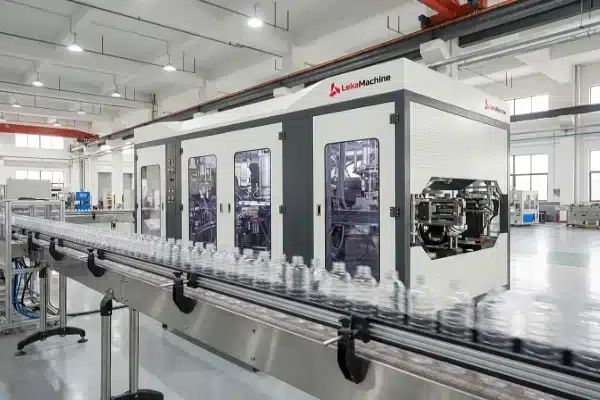
Why Electric Machines Must Be More Precise
When we design our all-electric platforms, we use servo motors 4 because they remove the biggest variable in molding: hydraulic oil. In a traditional machine, as the oil heats up, its viscosity changes. Thinner oil moves through valves faster, changing the speed of the clamp or the extruder screw. This results in bottles that get heavier or lighter throughout the day.
An all-electric machine should not have this problem. The servo motors provide exact repeatability. If a supplier offers you an all-electric machine but only guarantees ±0.5% weight deviation, they are using inferior motors or poor control software. You should expect better performance.
Examining the Data
When you ask for a guarantee, you need to know what constitutes "World Class" versus "Average." Use the table below as a benchmark when negotiating with suppliers.
Table 1: Weight Deviation Benchmarks by Machine Type
| Machine Type | Drive Technology | Typical Weight Deviation | Cause of Instability |
|---|---|---|---|
| Old Hydraulic | Induction Motor + Vane Pump | ± 1.0% – 2.0% | Oil heat, valve wear, hose expansion. |
| Standard Hybrid | Servo Hydraulic Pump | ± 0.5% – 0.8% | Reduced oil heat, but fluid dynamics still apply. |
| High-End All-Electric | Full Servo Direct Drive | ± 0.1% – 0.3% | None (Digital precision). |
Critical Thinking: The "Gram" Trap
Do not just ask for a deviation in "grams." A 1-gram deviation on a 20-liter jerry can is excellent. A 1-gram deviation on a 10ml eye-dropper bottle is a disaster. Always insist that the guarantee is written as a percentage of the total part weight. This protects you regardless of the bottle size you produce.
How Does the Parison Wall Thickness Controller Ensure Consistent Bottle Weight?
In our assembly hall, we calibrate controllers to micron-level precision. Without this precise calibration, even the best servo motors cannot prevent uneven material distribution in the final product. (27 words)
The parison wall thickness controller regulates the die gap opening via a servo-driven actuator, adjusting the profile up to 100 points along the parison length. This system compensates for gravitational sagging and die swell, ensuring that the plastic distribution remains identical for every single cycle. (46 kelime)

The Heart of Weight Control
The parison controller is the brain of the operation. In our experience, simply having a controller is not enough; it must be fast and responsive. As the plastic tube (parison) extrudes downwards, gravity stretches it. The top becomes thin, and the bottom remains thick.
To fix this, the machine must push a "mandrel" or "pin" up and down inside the die head to change the thickness of the plastic as it comes out. This happens in a split second.
Key Features to Ask For
When inquiring about the controller, do not settle for "Yes, we have one." You need to dig deeper into the specifications.
- Points of Control: A basic machine might offer 30 points of control. This creates a "stair-step" thickness profile. High-end machines offer 100 points. This creates a smooth curve, saving material and stabilizing weight.
- Actuation Method: Is it hydraulic or electric? On an all-electric machine, this must be an electric servo actuator. Hydraulic actuators in this position are prone to oil leaks which ruin the product.
- Profile Storage: Can the machine save the weight profile for your specific bottle? This reduces setup time for future runs.
Table 2: Parison Controller Performance Tiers
| Özellik | Standard Solution | LEKA / High-End Solution | Fayda |
|---|---|---|---|
| Control Points | 30 – 50 Points | 100 Points | Smoother wall thickness, less material waste. |
| Cycle Response | 20ms – 40ms | < 5ms | Faster corrections for high-speed cycles. |
| Actuator Type | Hydraulic Cylinder | Electric Servo | No oil contamination, higher precision. |
| Weight Setting | Manual Adjustment | Integrated into HMI | Operator can adjust weight from the screen. |
Impact on Corner Thickness
Weight deviation isn't just about the total bottle weight. It is also about where the weight goes. A good controller ensures the corners of your bottle are thick enough to pass drop tests without adding excess plastic to the flat areas. If the supplier cannot demonstrate this "profile shaping" capability, your bottle weight will fluctuate as you try to fix weak corners manually.
Can the Supplier Demonstrate Weight Stability With a Continuous Run Test?
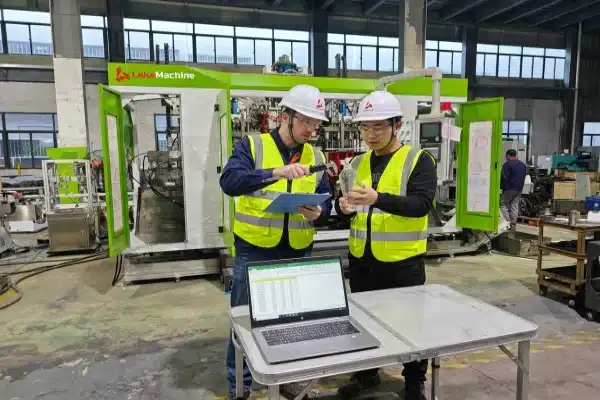
We always encourage clients to visit Shantou for Factory Acceptance Test 5s (FAT). Accepting a machine based on a theoretical datasheet alone is a recipe for future production nightmares. (27 words)
Suppliers should perform a Factory Acceptance Test (FAT) running at least 4 to 8 hours of continuous production. During this trial, random samples must be weighed every 15 minutes to calculate the Cpk (Process Capability Index), proving the machine can hold tolerances under thermal equilibrium. (47 kelime)
The "Golden Sample" Fallacy
We often see a common trick in the industry. A supplier will run the machine for ten minutes, pick the best three bottles, and send them to you. These are "Golden Samples." They prove the mold is correct, but they do not prove the machine is stable.
To verify weight stability, you need a statistical approach. You need to know if the machine stays stable after it gets hot, or after the voltage in the factory fluctuates slightly.
What is Cpk?
You do not need to be a mathematician, but you should ask for the Cpk (Process Capability Index 6).
- Cpk < 1.0: The process is not capable. You will have many bad bottles.
- Cpk = 1.33: The process is good. This is the standard target.
- Cpk > 1.67: The process is excellent.
Designing Your Acceptance Test
When you draft the contract, include a clause for a "Dry Cycle" test (running without plastic) to check speed, and a "Wet Cycle" test (running with plastic) to check weight.
Here is a checklist of what we recommend you monitor during the weight stability test:
- Warm-up Time: Does the machine hit the target weight immediately, or does it take 1 hour of waste to get there?
- Restart Stability: Stop the machine for 10 minutes (simulating a lunch break). Start it again. Are the first 5 bottles the correct weight?
- Multi-Cavity Balance: If you have a 4-cavity machine, Cavity 1 must weigh the same as Cavity 4.
Table 3: Sample FAT Weight Data Log (Target: 100g)
| Time | Cavity 1 (g) | Cavity 2 (g) | Cavity 3 (g) | Status |
|---|---|---|---|---|
| 09:00 | 100.1 | 100.2 | 99.9 | PASS |
| 10:00 | 100.0 | 100.1 | 100.0 | PASS |
| 11:00 | 100.2 | 100.3 | 99.8 | PASS |
| 12:00 | 98.5 | 99.0 | 98.2 | FAIL (Drift) |
If you see data like the 12:00 entry above, the machine has a thermal issue or a feeding issue. Do not ship the machine until this is fixed.
How Do Material Changes and Regrind Percentages Affect the Guaranteed Weight Precision?
Our engineers struggle with inconsistent recycled materials daily. Variations in melt flow index can ruin weight precision if the machine cannot auto-compensate for density changes. (25 words)
Regrind and material changes alter the bulk density and Melt Flow Index (MFI) of the resin, causing pressure fluctuations that shift bottle weight. Advanced all-electric machines utilize melt pressure sensors and adaptive software to automatically adjust screw speed, maintaining weight guarantees even with up to 40% regrind. (48 words)

The Challenge of Regrind
In blow molding, you almost always crush the waste plastic (flash) and put it back into the machine. This is called "regrind."
The problem is that regrind is "fluffy." It does not feed as smoothly as virgin round pellets.
- Virgin Pellets: High bulk density, consistent feeding.
- Regrind: Low bulk density, inconsistent feeding.
If your machine runs 100% virgin material, the weight might be stable. But the moment you add 30% regrind, the screw might slip, or the pressure might drop. This results in lightweight bottles.
Asking About "Adaptive" Features
To guarantee weight deviation even when using recycled material, you must ask the supplier about Melt Pressure Control.
In a standard machine, the extruder screw rotates at a fixed RPM (e.g., 50 RPM). If the material density drops, less plastic comes out, and the bottle gets lighter.
In an advanced LEKA machine, we use a closed-loop system. We place a pressure sensor at the tip of the screw.
- The sensor detects that pressure is dropping (because of fluffy regrind).
- The computer instantly tells the servo motor to speed up (e.g., to 52 RPM).
- The pressure returns to normal.
- The bottle weight remains correct.
Practical Advice for Buyers
When inquiring, define your material mix in the contract.
- Weak Guarantee: "Machine guarantees ±0.2% weight deviation."
- Strong Guarantee: "Machine guarantees ±0.2% weight deviation using HDPE 5502 with up to 40% in-house regrind."
If you do not specify the regrind percentage, the supplier can claim that the weight variation is your fault for using "bad material." By including the regrind percentage in the guarantee, you force the supplier to use high-quality screw designs and adaptive software.
Sonuç
Demanding specific weight guarantees ensures you buy a production tool, not a liability. Verify specs, test thoroughly with real materials, and protect your margins from the start. (26 words)
Dipnotlar
1. Explains the importance of consistent product weight and content in manufacturing quality control. ↩︎
2. Details the advantages and characteristics of all-electric blow molding technology. ↩︎
3. Explains how parison programming and controllers manage plastic distribution in blow molding. ↩︎
4. Describes the function and widespread industrial applications of servo motors for precision control. ↩︎
5. Defines FAT as a critical quality assurance process before equipment delivery. ↩︎
6. Replaced HTTP 404 PDF with an authoritative HTTPS .gov article on Process Capability, which includes Process Capability Index. ↩︎


0 Yorum