
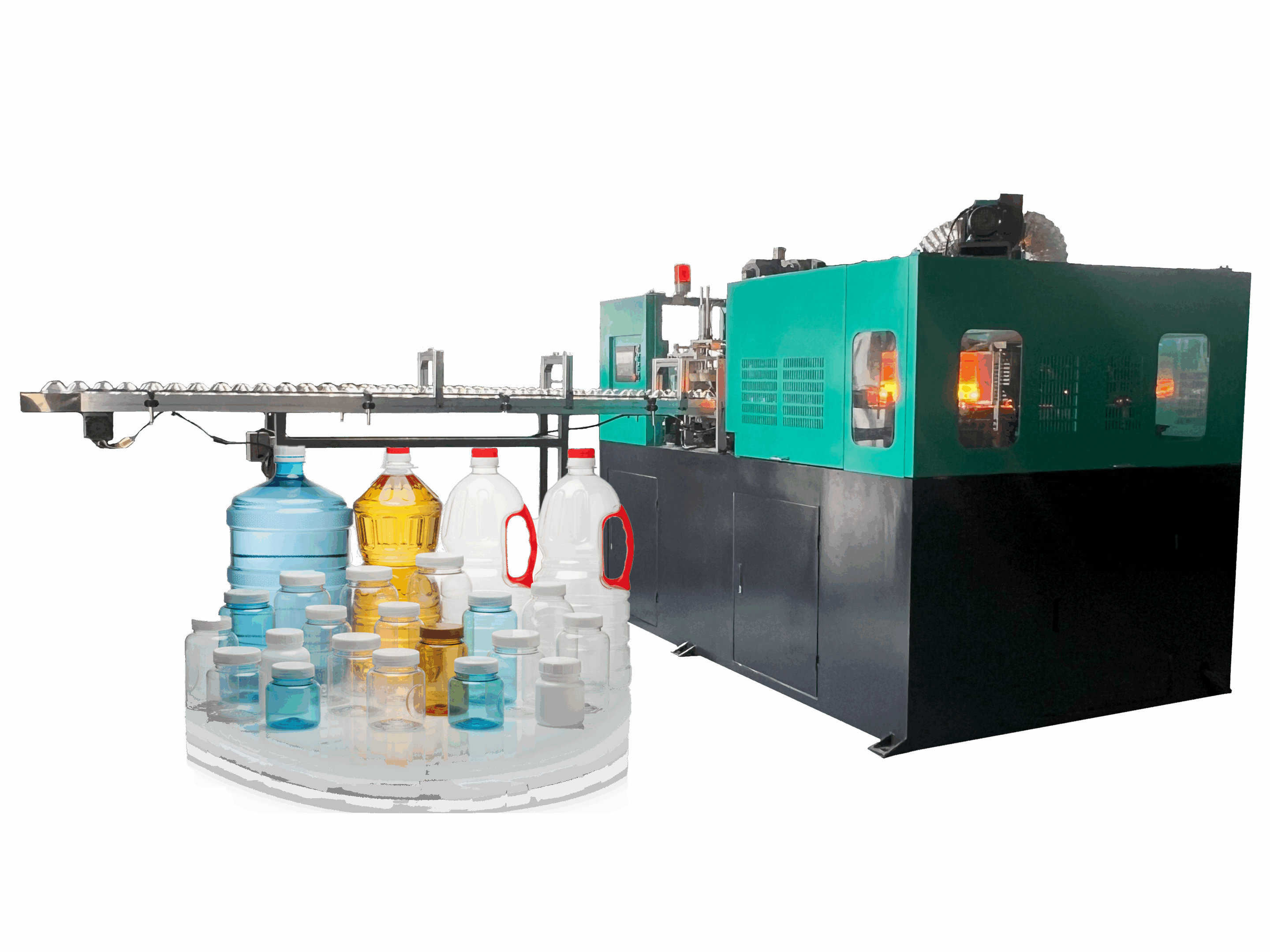
How should I inquire about the balance of multi-cavity molds when purchasing an all-electric extrusion blow molding machine?
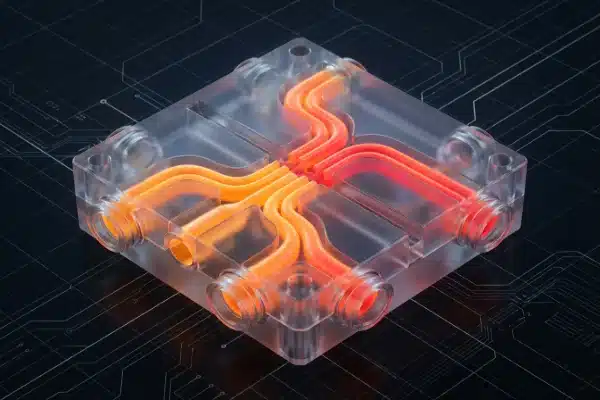
Buying an all-electric machine without verifying multi-cavity balance often leads to high scrap rates. At our factory, we see that uneven flow destroys profitability, so we advise clients to prioritize balance over speed during the ekstrüzyon şişirme 1 selection process. (36 words)
To inquire about balance effectively, request a Rheological Simulation report to verify First-In-First-Out (FIFO) delivery across the manifold. Ask if specific heater zones exist for each head for fine-tuning, and define a strict Factory Acceptance Test (FAT) tolerance of less than 2% weight variation to ensure long-term stability.

Before you sign a contract, use the following technical breakdown to ensure your machine delivers consistent bottles from every cavity.
How do I verify that the parison distribution is identical across all cavities to ensure consistent bottle weight?
In our experience debugging client molds, inconsistent wall thickness often stems from relying solely on software rather than mechanical precision. We always emphasize that the controller cannot fix a mechanically uncalibrated head. (32 words)
You must verify that the machine includes independent mechanical weight adjustments on each head to calibrate gaps manually. Additionally, confirm that the die and mandrel sets feature independent centering adjustments to correct specific wall thinning issues without altering the global parison profile controlled by the programmer.

Achieving identical parison distribution requires a dual approach: global software control and local mechanical precision. When we build machines, we often see buyers confuse the Wall Thickness Control System (WDS) 2 with individual cavity control. It is vital to understand that the WDS typically applies a profile to the entire manifold or group. If cavity #1 is heavy and cavity #4 is light, the WDS cannot fix this imbalance alone; it will simply make both lighter or heavier simultaneously.
The Role of Mechanical Calibration
You must ask the supplier if their heads feature a "Mechanical Weight Adjustment" mechanism. This allows your operators to manually turn a calibration ring on the die head to slightly open or close the gap for that specific cavity. This compensates for the inherent pressure drops that occur as plastic travels to the outer edges of the manifold.
Centering and Ovalization
Furthermore, inquire about the centering adjustments. In our production line, we use a 4-point adjustment system on the die/mandrel. If one bottle has a thin left side while the others are perfect, you need the ability to mechanically shift that specific mandrel. Do not accept a machine where centering is "fixed" or difficult to access.
Comparison of Control Methods
Understanding what controls which variable is key to your inquiry:
| Özellik | Scope of Control | Primary Function | Sınırlamalar |
|---|---|---|---|
| Parison Programmer (WDS) | Global (All Cavities) | Controls vertical thickness profile (top-to-bottom). | Cannot fix weight differences between cavities. |
| Mechanical Gap Adjuster | Individual Cavity | Balances total weight between Cavity A and Cavity B. | Requires manual intervention; not automatic. |
| Die Centering Screws | Individual Cavity | Fixes radial thickness (left-to-right balance). | Improper adjustment causes "curling" parisons. |
By clarifying these mechanical features upfront, you prevent the nightmare of having to run the machine slower just to accommodate the "weakest link" cavity.
What specific questions must I ask about the manifold design to prevent uneven flow?
We have replaced many competitors’ manifolds where stagnant plastic caused black specks and uneven flow. A poorly designed manifold creates a permanent bottleneck that no amount of servo tuning can overcome. (31 words)
Ask the supplier for a flow channel analysis proving the manifold uses a "First-In, First-Out" (FIFO) design with balanced channel lengths. Explicitly inquire about pressure drop data to ensure the pressure gradient does not force material into center cavities faster than the outer ones.

The manifold is the heart of a multi-cavity system. If the heart is defective, the system fails. When evaluating a supplier, you must move beyond general assurances and demand engineering evidence. The primary goal is to ensure that the plastic molecule entering the extruder first is also the first one to leave the die head, a principle known as First-In, First-Out (FIFO) 3.
Analyzing Flow Geometry
Ask specifically about "Center-Feed" vs. "Side-Feed" geometry. In our engineering analysis, side-feed manifolds often suffer from dead spots on the far side of the flow, leading to material degradation 4 (black specs) and uneven temperatures. A balanced center-feed design splits the flow mathematically, ensuring that the distance from the extruder to Cavity 1 is identical to the distance to Cavity 4.
The Necessity of Rheological Simulation
Do not just take their word for it. Request a Rheological Simulation 5 (Moldflow) report. This report should visualize:
- Shear Rates: Yüksek shear rates 6 in corners generate heat. If outer cavities have more corners in the flow path, the plastic will be hotter and runnier, leading to sagging parisons.
- Residence Time: Confirm there are no "eddies" where plastic sits for minutes.
- Pressure Drop: This is the most critical metric. An imbalanced pressure gradient means the path of least resistance (usually the center) gets more plastic.
Static Mixers
Finally, investigate the use of Static Mixers 7 in the head adapters. These are passive devices inside the pipe that fold the molten plastic over itself. They are essential for homogenizing the melt temperature. Without them, the plastic touching the hot metal walls of the extruder is hotter than the plastic in the center of the stream. If this thermal variation isn’t mixed, Cavity 1 might get the "hot" stream while Cavity 2 gets the "cold" core, resulting in different swell rates and impossible bottle weights.
Can the servo system independently adjust parameters if imbalance occurs?
During our internal testing, we find that even perfect manifolds fail if temperature control is weak. Precise thermal regulation is the only way to fine-tune viscosity differences across a wide die head. (32 words)
Verify that the system offers individual heater zone controls for each extrusion head rather than a single zone for the whole block. Also, propose a "stress test" during the FAT by varying screw RPM to confirm the manifold maintains thermal symmetry under different throughput loads.
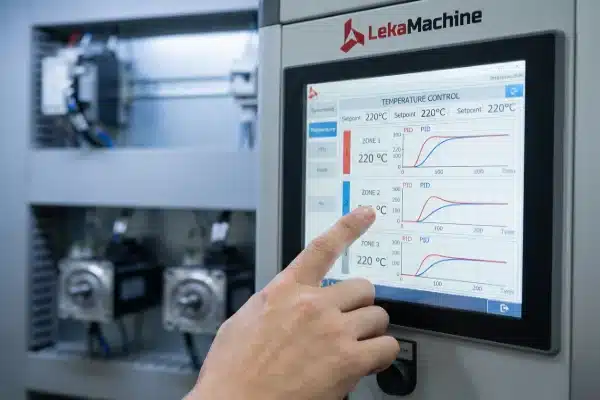
While mechanical adjustments set the baseline, thermal control provides the fine-tuning necessary for high-speed production. In an all-electric machine, the servo motors provide consistent extrusion speed, but they cannot change the viscosity 8 of the plastic inside the head—only temperature can do that.
Granularity of Heating Zones
You must ask: "Does each die head have its own thermocouple and heater band control?"
In cheaper machines, one thermocouple might control the entire manifold block. This is disastrous for balance. If Cavity 1 is near a drafty window or a cooling fan, it will run cooler than Cavity 4. If you have individual zone control, you can bump Cavity 1 up by 2°C to match the flow of the others. Without it, you are flying blind.
Thermal Symmetry and FAT Verification
When we conduct a Factory Acceptance Test (FAT) 9, we often perform an Infrared Thermography Scan. You should request this. It visually proves if the heat soak from the extruder is creating a gradient.
Furthermore, propose a RPM Stress Test. A manifold might be balanced at 50% speed, but what happens at 90%?
- Test: Run the machine at low RPM, measure weights. Jump to high RPM, measure weights.
- Hedef: Bu ratio of weights between cavities should remain constant. If Cavity 4 suddenly becomes much heavier than Cavity 1 at high speeds, the manifold design is sensitive to shear and is not robust.
Servo Response to Pressure
Ask if the servo system monitors torque/pressure relative to the manifold back-pressure. While the servo generally pushes the main screw, advanced systems can detect if back-pressure rises abnormally, indicating a clogged screen changer or a cold spot in the manifold.
| Gösterge | Good System Behavior | Bad System Behavior |
|---|---|---|
| Zone Control | +/- 1°C per head | One temp for 4 heads |
| Start-up | Even flow from all heads | Center flows first, outer flows later |
| RPM Change | Weight ratio stays constant | Balance shifts wildly at high speed |
How should I define the acceptance criteria for weight variation between cavities during the FAT?
We never ship a machine without a signed checklist because vague standards lead to disputes. You must define "acceptable quality" in numbers, not adjectives, before the machine leaves the factory floor. (31 words)
Define a strict acceptance criterion requiring a weight variation standard deviation of less than 1-2% across all cavities. Demand a continuous production run of at least 2 hours during the FAT to prove that stability holds once the machine reaches full thermal saturation.
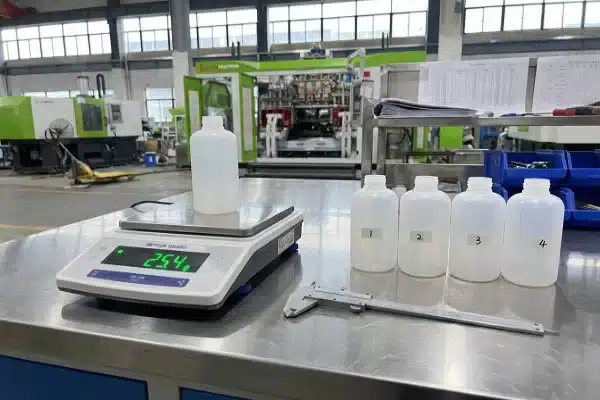
The Factory Acceptance Test (FAT) is your final leverage point. Once the machine is on a ship, fixing a balance issue becomes expensive and difficult. We recommend our clients bring their specific resin and mold design to the FAT, or use a "Crash Kit" approach where critical spare parts are verified alongside the machine performance.
Defining the 1-2% Rule
Do not accept "visually good" bottles. You need data.
- Collect Samples: Take 5 consecutive shots from all cavities (e.g., 4 cavities x 5 shots = 20 bottles).
- Weigh Individually: precise to 0.1g.
- Calculate Deviation: The weight difference between the heaviest cavity and the lightest cavity should not exceed 1-2% of the total bottle weight. Using a standard deviation 10 metric (Cpk) is even better. If your bottle is 100g, a difference greater than 2g between cavities is a red flag for future processing windows.
Thermal Saturation is Key
A common trick is to run the machine for 10 minutes and claim it works. You must demand a Thermal Saturation Run. Manifolds are massive blocks of steel; they take hours to fully heat soak. An imbalance often reveals itself only after 2 hours of running, when the heat from the friction of the plastic builds up in the manifold corners. If the balance drifts after 2 hours, the cooling or heating PID logic is flawed.
Acceptance Checklist Components
Your FAT checklist for multi-cavity balance should include:
- Dry Cycle Test: Verify servo movements are synchronized.
- Weight Variation Test: <1.5% variation across cavities.
- Wall Thickness Check: Cut bottles to ensure no cavity has thin corners.
- Leak Test: 100% of samples from all cavities must pass.
- Spare Parts Verification: Ensure you have heaters and thermocouples for individual zones (part of our recommended "Crash Kit").
By enforcing these standards, you protect your investment and ensure that the machine hitting your floor is ready to produce profit, not problems.
Sonuç
Correctly inquiring about multi-cavity balance requires looking beyond the brochure. By demanding rheological data, individual zone controls, and strict FAT weight tolerances, you ensure your all-electric machine delivers the efficiency it promises. (31 words)
Dipnotlar
1. Overview of the extrusion blow molding manufacturing process. ↩︎
2. Industrial solutions for parison wall thickness control. ↩︎
3. Understanding residence time distribution in flow systems. ↩︎
4. Causes of black specks and material degradation in extrusion. ↩︎
5. Explanation of rheology and its importance in plastics. ↩︎
6. Impact of shear rates on polymer product quality. ↩︎
7. Benefits of static mixers for melt homogenization. ↩︎
8. Relationship between temperature and polymer viscosity. ↩︎
9. Comprehensive guide to Factory Acceptance Testing (FAT). ↩︎
10. Statistical process capability and standard deviation explained. ↩︎


0 Yorum