

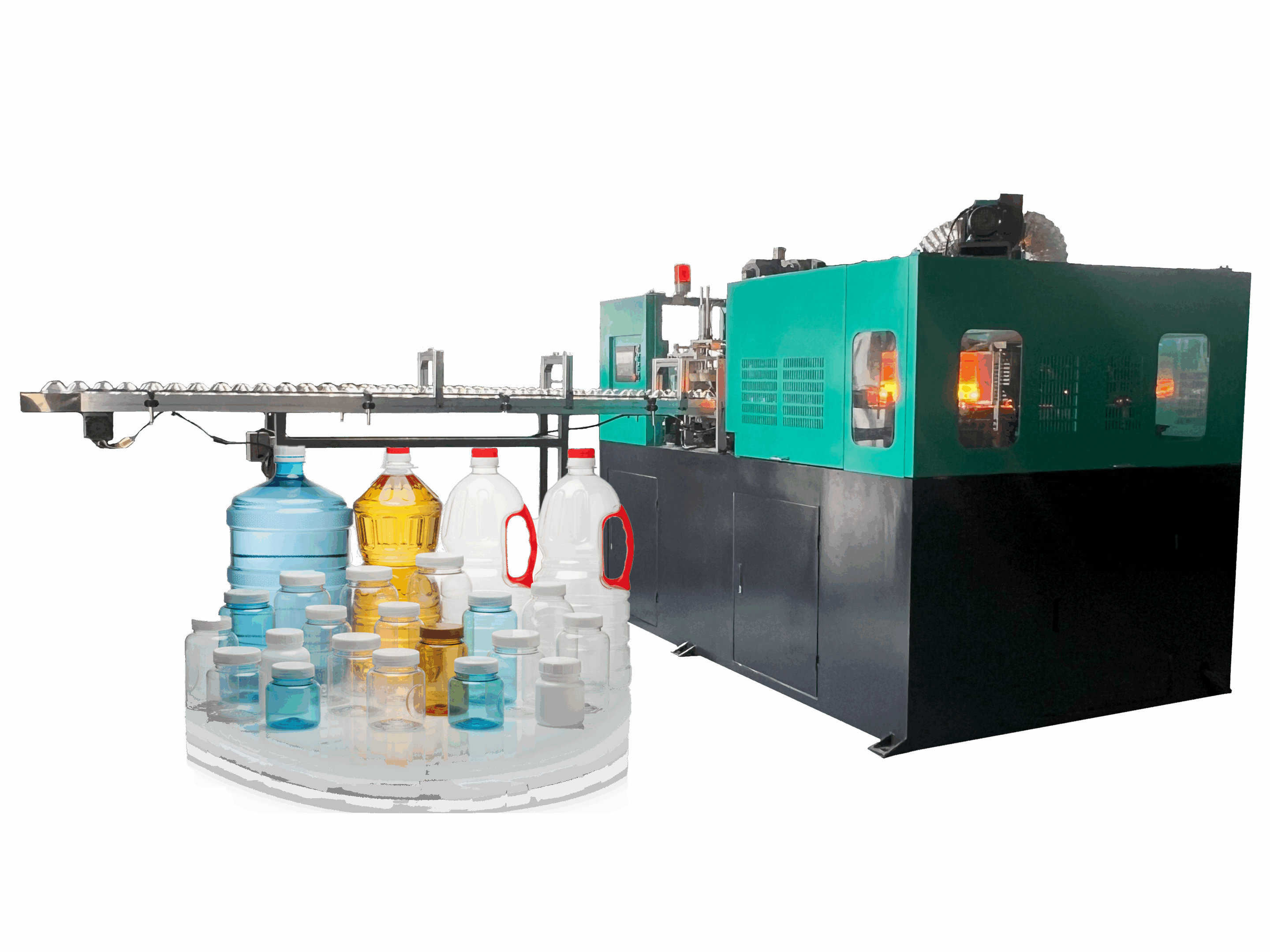
Industrial Extrusion Blow Moulding Line for Lubricant Oil Bottles (HDPE/PP)
If you run a lubricant or industrial oil business, your bottles are not just containers. They hold a high-value, messy liquid that cannot leak, deform, or crack in storage.
If you are buying those bottles from outside suppliers today, you probably feel the pressure from freight, stock, and quality issues.
This guide walks through what it really means to build an industrial HDPE extrusion blow moulding line for lubricant oil bottles, from bottle design and materials to machines, layout, cost and payback.
Why Build an Industrial Extrusion Blow Moulding Line for Lubricant Oil Bottles?
Bringing bottle production in-house is a big decision. It changes your cost structure and how your factory operates every day.
Buying bottles vs producing in-house
Staying with external bottle suppliers can make sense when your volume is still low or unstable, when you have many SKUs but small batch sizes, or when you lack space or technical staff to run an ekstrüzyon üfleme moulding line.
But over time, some pain points usually grow:
- Freight cost: shipping empty HDPE şişeler is basically shipping air.
- Stock risk: you need large safety stock to protect your filling line.
- Delivery delays: if bottles are late, your oil cannot ship.
- Leak complaints: weak handles or thin corners cause returns and brand damage.
Producing in-house with an extrusion blow moulding line flips this model. You invest in equipment, but you gain control over wall thickness, weight and Kalite, shorter lead times, lower long-term packaging cost per litre of oil, and less dependency on one or two local bottle suppliers.
When an in-house HDPE EBM line makes sense
An industrial line becomes interesting when you run one or more core SKUs at steady volume, your yearly bottle demand is high enough to keep at least one machine busy on two or three shifts, and freight plus storage cost for bottles are eating into your margin.
Once you clearly see those patterns in your numbers, it is time to seriously evaluate building your own HDPE extrusion blow moulding line.
Lubricant Oil Bottles 101: Sizes, Shapes and Real-World Requirements
Lubricant and industrial oil packaging has its own logic. If you get the bottle wrong, everything downstream suffers.
Common bottle and jerrycan sizes
Most lubricant plants work with a familiar family of HDPE containers:
- Small: 0.5 L and 1 L engine oil bottles.
- Medium: 3 L, 4 L and 5 L jerrycans for automotive and motorcycle oil.
- Large: 10 L, 20 L or even 30 L pails and jerrycans for industrial fluids.
This cluster of sizes is one reason 1–30 L extrusion blow moulding machines are the workhorse of the industry.
Features that matter in the field
For engine and gear oil bottles, details such as these are important:
- Integral handles that feel rigid when a customer carries a heavy bottle.
- View-strips to show fill level.
- Stacking feet and ribs so cartons and pallets stay stable.
- Embossed or debossed logos for brand recognition and anti-counterfeiting.
These are not just aesthetic choices. They affect mould cost, cycle time, and wall-thickness distribution.
Performance must-haves
A good lubricant bottle must meet several tests:
- ESCR (Environmental Stress Crack Resistance) so the bottle does not crack after months with aggressive additives.
- Impact and drop strength so bottles survive handling and falls in hot and cold climates.
- Perfect sealing and zero-leak performance at the cap and handle.
- Long-term stacking in warehouses and containers without paneling or deformation.
You also need to think in pallets, not just in bottles. The bottle footprint and height directly affect how many units you can pack per layer and how many layers per pallet, and therefore your logistics cost per litre.
Why HDPE Extrusion Blow Moulding Is the Standard for Lubricant Bottles
There are several plastic processes on the market. HDPE extrusion blow moulding dominates lubricant bottles for good reasons.
How extrusion blow moulding works
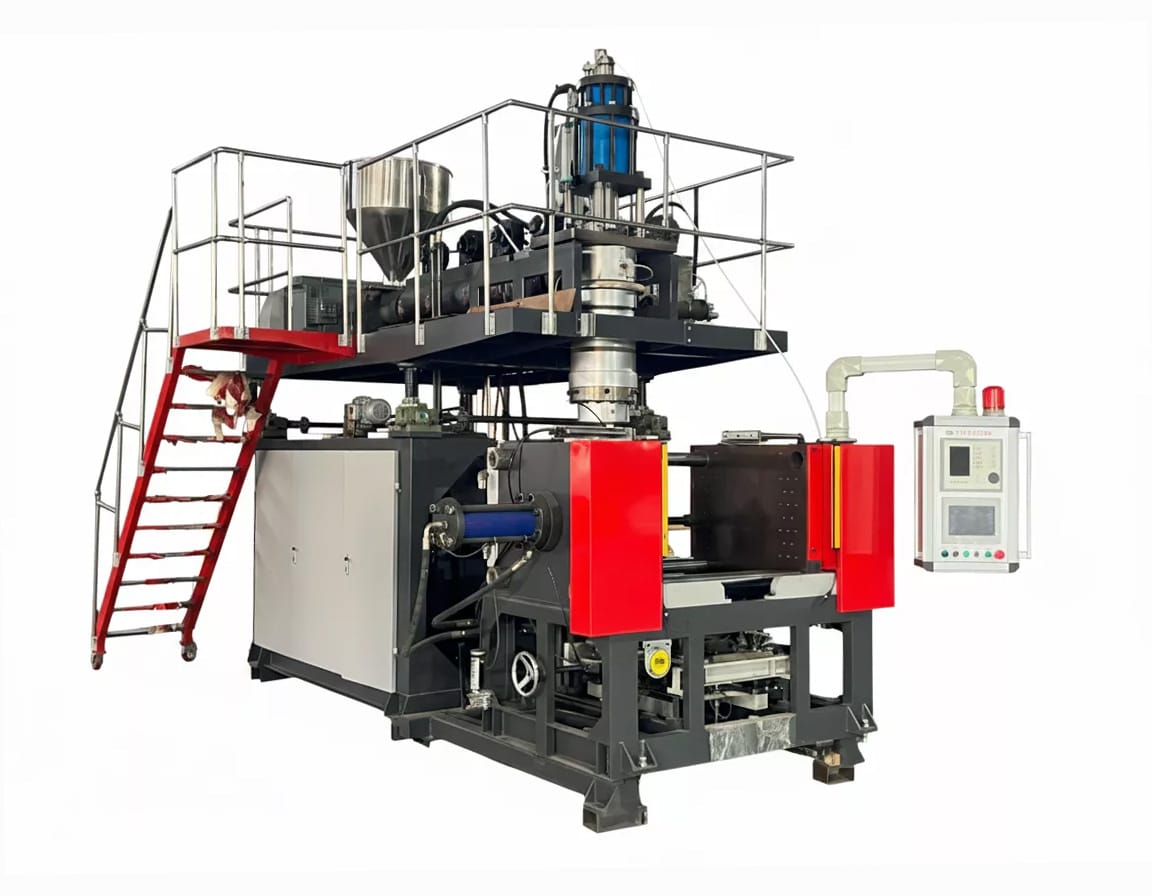
In extrusion blow moulding, HDPE pellets are melted in an ekstrüder and pushed out as a hot, hollow tube called a parison. A mould closes around the parison, compressed air inflates it against the mould, the plastic cools, and the bottle is ejected. This continuous process is very efficient for hollow parts like bottles and jerrycans with handles.
EBM vs injection blow vs PET stretch blow
Enjeksiyon blow moulding is common for small, precise bottles like pharma vials, but is less flexible and usually more expensive for larger, handled containers. PET stretch blow moulding is ideal for clear, pressure-resistant bottles for water, soft drinks and some edible oils, but PET is not always the best choice for heavy oils and high-temperature storage.
HDPE extrusion blow moulding is robust, flexible and cost-effective for opaque, handled lubricant bottles and jerrycans. Your plant can still use PET stretch blow for some lines, but for core lube oil jerrycans and HDPE engine oil bottles, extrusion blow moulding remains the standard.
Mono-layer vs multilayer structures
Most lubricant bottles are still mono-layer HDPE. However, for very aggressive chemicals, long storage, or special barrier needs, multilayer co-extrusion structures become useful. You can combine:
- Outer virgin HDPE for appearance and mechanical strength.
- Inner recycled or regrind layer.
- Optional barrier or coloured layers.
Modern extrusion blow moulding machines can run multiple layers, so you can combine sustainability and performance in one package.
Materials and Additives: Building a Stable HDPE Recipe for Lubricant Oils
Material choice is not just “HDPE or not”. It is about the full formulation and how it behaves over time.
Why HDPE leads this segment
HDPE is the workhorse resin for lubricant packaging because it offers good chemical resistance to oils and additives, high stiffness and impact strength, easy processing on standard extrusion blow moulding machines, and recyclability within existing HDPE streams.
Its melt behaviour also allows you to form integral handles and complex shapes without extreme process conditions.
Typical additives in a lubricant bottle recipe
To fine-tune performance, converters often add:
- Colour masterbatch for brand colours and light protection.
- UV stabilisers to protect the bottle and oil from sunlight.
- Slip and antistatic agents so bottles do not stick together or attract dust.
- Processing aids to stabilise extrusion and reduce parison defects.
Together, these elements create a more predictable, durable container.
ESCR-friendly grades
Lube formulas can be aggressive. Choosing ESCR-optimised HDPE grades helps prevent micro-cracks that appear after long exposure to stress and chemicals. It is worth testing your actual oil formulation with candidate resins rather than only relying on datasheets.
Using PCR / rHDPE in lubricant bottles
Brands are under pressure to increase recycled content. With the right set-up, you can use PCR HDPE in the middle layer and virgin in inner and outer layers, reach significant recycled content while keeping a clean, stable surface, and maintain top-load and drop performance by tuning layer ratios and parison programming.
Core of the Line: Choosing an Extrusion Blow Moulding Machine for Lubricant Bottles
Bu ekstrüzyon şişirme makinesi is the heart of your line. If you choose it well, daily work becomes much easier.
Machine configurations for 1–30 L lubricant bottles
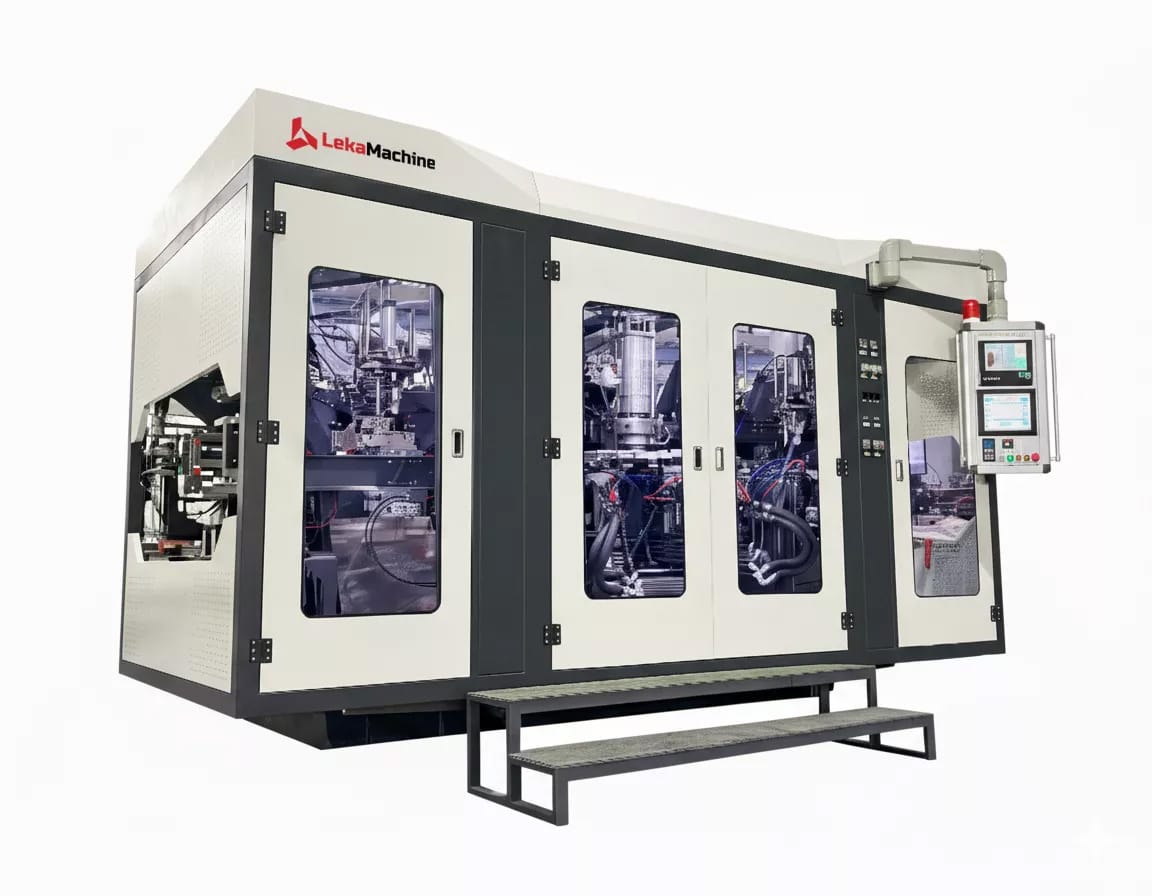
For lubricant bottles and jerrycans, the sweet spot is usually a dual-station shuttle extrusion şişirme makinesidir covering 0–30 L. In this range, you will typically choose between flexible, high-automation models for jerrycans and mass-production models for standard lube bottles.
Specs that really matter
When you compare machines, look closely at:
- Clamp tonnage and platen size: can it hold your largest mould safely?
- Die head and parison control: mono or co-ex, number of layers, precision of parison programming.
- Energy window: typical modern lines run in a low kWh/kg range to stay competitive.
- Mould change time: fast changeover protects productivity when you run many SKUs.
Closed-loop parison programming
For lubricant bottles, you need extra thickness in the handle area and in corners and threads, where stress concentrates. Modern machines use closed-loop parison control to adjust thickness along the parison. This helps keep neck and body variation tight and reduces leak risk.
Moulds and Tooling: Designing Lubricant Oil Bottles That Run Smoothly
Even the best machine cannot fix a poor mould. Tooling Kalite has a direct influence on bottle quality and cycle time.
Design details that drive cost and cycle time
Every curve in your bottle has a cost. Deep, complex handles need more steel, more cooling, and longer cycle times. Heavy logos and ribs may require special machining and add weight. Sharp corners can cause wall thinning if the parison is not well controlled.
A good design balances branding, ergonomics and manufacturability.
Cooling layout and steel choices
For high-volume lubricant lines, moulds should use proper cooling channels close to the cavity surface, be built from steels with good thermal conductivity and wear resistance, and allow quick insert changes for different brand logos or neck variants.
Better cooling means shorter cycles and more bottles per hour.
Standard vs proprietary neck finishes
Neck design affects cap cost, leak rate and compatibility with filling lines. Standardised neck finishes make it easier to buy closures and change suppliers. Proprietary necks can help anti-counterfeiting but may lock you into one closure source. Think carefully before choosing a very unusual neck design.
Brand identity and view-strips
View-strips, in-mould engraving and special textures support your brand and help customers use the product. Designed well, they also help the operator check fill level and detect defects. Designed badly, they can trap material, cause flow marks or create weak spots.
Downstream Automation: From Deflashing to Leak Testing and Packing
A modern lubricant bottle line is more than a machine and a mould. Downstream automation keeps quality consistent and reduces manual labour.
Deflashing and trimming
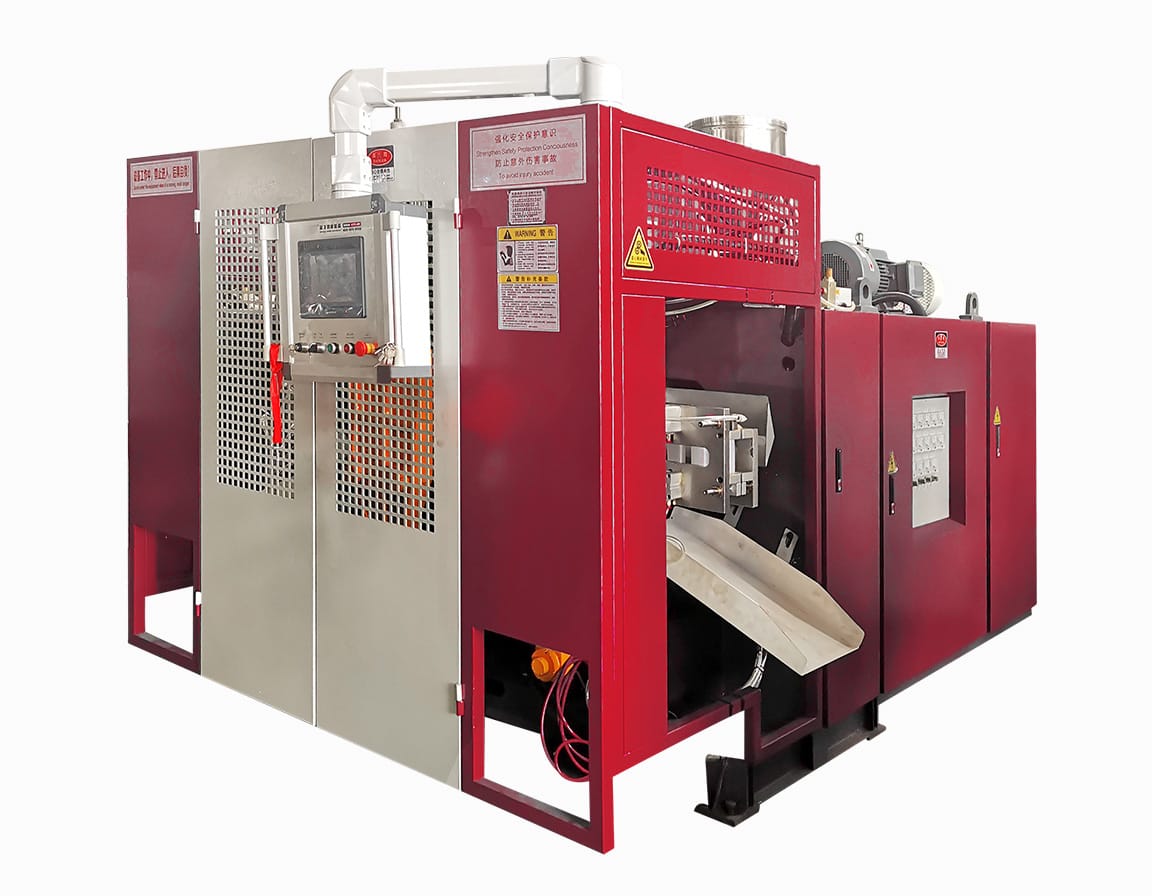
After blowing, bottles usually have flash at the neck and handle. You can trim inside the machine with in-mould deflashing or trim on an inline station after the mould opens. Well-designed deflashing avoids sharp edges and reduces rework.
Inline leak testing and vision
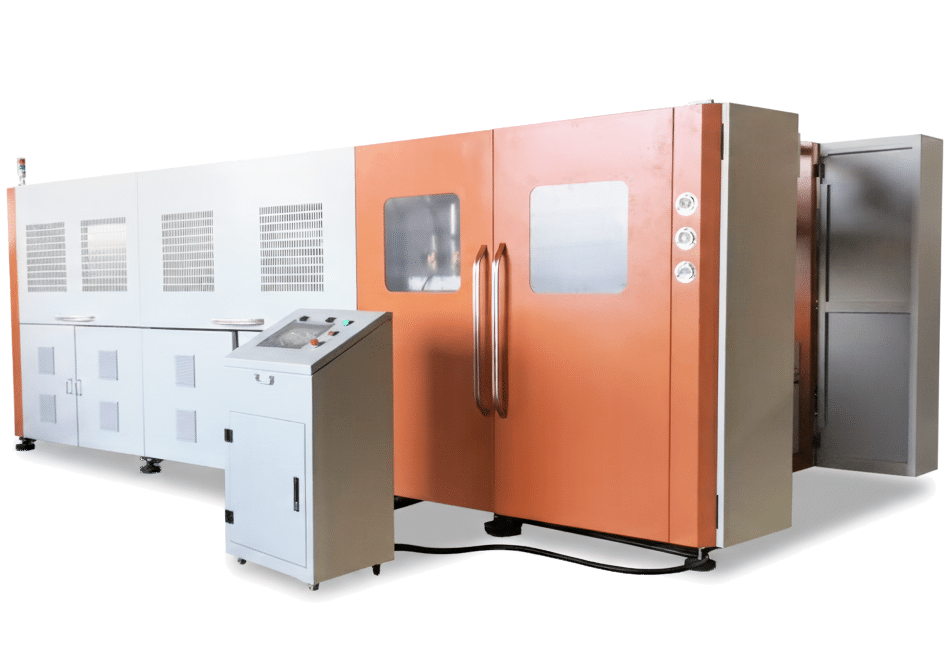
Leak testing is absolutely essential for oil bottles. Each bottle is pressurised and checked for pressure loss, and you define pass/fail limits to balance sensitivity and false rejects.
Adding vision inspection lets you catch short shots, flashing, burns and wrong colour or contamination. This prevents leaky or defective bottles from reaching your filling line.
Checkweighing, conveyors and packing
A typical high-volume line includes conveyors from machine to QC to packing, checkweighers to monitor bottle weight and resin usage, and automatic case packing or palletising to cut handling time.
Automation level depends on your labour cost and required throughput. You can start semi-manual and add more automation modules later.
From Pellets to Pallet: Process Flow of an Industrial Lubricant Bottle Line
It helps to see the line as one continuous flow from raw material to finished pallets.
Step-by-step process
- Material feeding – HDPE and additives go from bags or silos into hoppers.
- Dosing and mixing – gravimetric feeders add colour and PCR at controlled ratios.
- Extrusion and parison formation – the extruder melts and pushes material into the die head.
- Blowing and cooling – the mould closes, air inflates the parison, the part cools.
- Deflashing and trimming – flash is cut away and recycled as regrind.
- Inspection and testing – leak test, weight check and vision where needed.
- Packing and palletising – good bottles are packed into bags, cartons or directly palletised.
Where operators add value
Even in a highly automated plant, operators are crucial to adjust recipes and parameters during start-up or colour change, respond to alarms and investigate root causes of defects, and perform routine checks on neck finish, threads and visual appearance.
Automation handles repetition. People handle judgement.
Quality, Compliance and Traceability for Lubricant and Industrial Oil Packaging
Lube bottles must protect both the product and your reputation. Quality management, compliance and traceability all play a role.
Common quality tests
Typical checks include:
- Drop tests from defined heights and at different temperatures.
- Stack tests to simulate warehouse and container stacking.
- Torque tests for cap uygulama and removal.
- Leak tests at different pressures and durations.
- ESCR tests with aggressive reference fluids.
These tests can be done inline for every bottle or offline in a lab on samples, or both.
Designing for long-term storage and tough transport
Your bottles may face heat and UV on docks or in trucks, cold and mechanical shocks in winter transport, and long-term stacking in mixed warehouses. It is important to test not only fresh bottles but also bottles after accelerated ageing.
Traceability, serialisation and MES
Modern ekstrüzyon üfleme moulding lines can connect to MES systems to log output per shift and per mould, scrap and leak-fail rates, and energy consumption per kilogram or per bottle.
You can combine this with serialisation or batch coding on bottles or cartons to track quality issues back to specific production windows.
Hygiene, safety and standards
Even though lubricants are not food, you still benefit from clean, well-enclosed machines to reduce dust and oil mist, clear safety zoning around moving parts, and compliance with CE, ISO and local safety regulations. This makes audits easier and keeps your operation more robust.
Productivity, OEE and Labour Planning on a Lubricant Bottle EBM Line
A line that runs is a line that earns. Productivity, OEE and staffing are all connected.
What good OEE looks like
Overall Equipment Effectiveness combines availability, performance and quality. For a stable lubricant bottle line, many plants target OEE in a healthy range once the line is mature. Lower than that, and you probably have frequent stoppages, leaks, or long changeovers.
Main sources of scrap and how to reduce them
Common scrap sources include start-ups after shutdowns or weekend stops, colour and material changes, parison instability leading to wall-thickness issues, and leak testing failures.
You can reduce scrap with recipe libraries and standard start-up procedures, quick-change colour systems and good purging practices, proper parison programming and maintenance of thickness control, and regular training for operators and technicians.
Suggested staffing per shift
Staffing depends on automation level, but a typical 1–30 L line might need one line operator for machine and process, one helper for packing, inspection and material handling, and shared maintenance and QC Kaynaklar across several lines.
With higher automation such as robot take-out, automatic packing and inline QC, you can run more cavities or more lines with the same team.
Quick mould change and recipe recall
If you run many SKUs, mould change time becomes critical. Modern machines with quick-connect utilities, precise mould locating and saved recipes per mould and resin can reach very short mould change times from last good bottle on one SKU to first approved bottle on the next. This protects your OEE even with frequent changeovers.
Line Layout Examples and Capacity Scenarios
Space and layout planning can make or break your project. It is easier to plan well once than to fix a cramped layout later.
Single-SKU 1–5 L automotive oil line
For a plant focused on one or two main SKUs, such as 1 L and 5 L engine oil, a typical layout includes one dual-station ekstrüzyon şişirme makinesi with jerrycan moulds, inline deflashing, leak testing and checkweighing, a simple conveyor to manual or semi-automatic packing, and palletising at the end of the line.
This layout is compact and efficient. It suits plants that want stable, high output on a few core products.
Multi-SKU line with frequent changes
If you must run many SKUs per day, keep the machine centre line clear for mould handling, add space for spare mould storage and pre-heating, design conveyors and packing so they can handle different bottle heights and footprints, and plan utilities to support peak loads when you speed up for smaller bottles.
A good layout reduces the hidden time lost during set-up and clean-up.
Estimating output and planning expansion
Machine suppliers can help you estimate bottles per hour for each SKU and annual bottle capacity at different shift patterns. When you design the hall, try to reserve space for a second machine in the future, leave room for extra automation like robots or palletisers, and plan cable trays and pipe routes so expansion is not painful later.
Energy, Sustainability and Cost-Per-Bottle Control
Energy and sustainability are no longer nice to have. They affect your payback and your brand positioning.
Reducing kWh/kg without hurting quality
Modern extrusion blow moulding machines are designed to run bottles at a low kWh/kg range in typical conditions. You save energy by insulating barrels and heads, using efficient drives and pumps, and running stable cycles with minimal scrap.
Every kilowatt-hour you save reduces your long-term cost per bottle.
PCR and lightweighting
Two strong levers for sustainability are PCR and lightweighting. Using PCR in a core layer reduces virgin resin use while keeping a clean surface. Lightweighting optimises design and wall distribution to remove grams without losing top-load and drop strength.
Linking data to carbon and cost reporting
If your ekstrüzyon üfleme moulding line is connected to a data system, you can track energy per kilogram or per bottle, scrap percentage by SKU, and recycled content ratios. This data supports both carbon reporting and internal continuous improvement projects.
Investment, Cost and Payback of an Industrial Lubricant Bottle EBM Line
Investment and payback are central questions for any new line. Understanding cost structure helps you make a clear decision.
Main CAPEX blocks
Your investment typically includes extrusion şişirme kalıplama makineleri, moulds and neck tooling for each SKU, downstream automation for deflashing, leak test, weighing, packing and palletising, resin handling systems, and utilities or building work for power, air, chilled water and handling equipment.
Main OPEX drivers
Every month, your operating costs include HDPE and PCR resin, masterbatch and additives, energy, labour, maintenance and spare parts, and scrap and rework, especially during starts and changes.
Good machine efficiency, recipe discipline and trained staff reduce these costs over time.
Building a simple cost-per-bottle model
To compare buying vs producing, you can calculate your current average bottle fiyat including freight and any duties, then estimate in-house cost per bottle using resin and masterbatch per bottle, energy per bottle, labour per bottle and an allowance for maintenance and scrap.
Adding annual CAPEX depreciation to your in-house model gives you a fair comparison and shows how sensitive your payback is to volume and scrap.
Typical payback patterns
Many projects aim for a three to five year payback. You can accelerate payback if you run higher throughput with good OEE, consolidate more SKUs onto the same line, use PCR and lightweighting to cut resin cost, and reduce freight and storage space taken by outsourced bottles.
How to Choose the Right Extrusion Blow Moulding Machine and Turnkey Partner
The right partner makes your life easier for the next decade or more. Choosing wisely now avoids headaches later.
Questions to answer before you talk to suppliers
Before you start discussions, try to be clear on which bottle sizes and SKUs you want to run now and in the next few years, required annual volume per SKU, number of shifts you plan to run, target markets and quality standards you must meet, and available space, power and utilities in your factory.
This helps the supplier design a realistic proposal instead of a generic çözüm.
0–30 L shuttle vs larger accumulator-head equipment
For lubricant bottles and jerrycans up to 30 L, a shuttle extrusion şişirme makinesidir is usually enough. You only need accumulator-head machines when you move into drums, IBCs and very large tanks or heavy-duty industrial containers.
Must-have options for lubricant lines
For this segment, it is worth considering at least multilayer co-extrusion heads for PCR or barrier, sight-stripe capability for view-strips, parison thickness control, inline leak testing and optional checkweigher, and recipe management with connectivity.
You can keep some options future-ready if budget is tight, but try not to close the door entirely.
What a true turnkey project looks like
A real turnkey partner helps with line design and layout, machines, moulds and downstream automation, utilities specification, installation and commissioning, training for operators and maintenance, and remote diagnostics and spare-parts planning.
Ideally, you work with someone who has run similar lubricant oil projects before, not just any packaging line.
Checklist and FAQ: Are You Ready to Build Your Own Lubricant Bottle Line?
To close, here is a simple way to check your readiness before making a major investment.
Technical checklist
You are in good shape if you have enough power, compressed air and cooling water capacity, can allocate stable floor space for at least one ekstrüzyon üfleme moulding line and future expansion, and have basic resin handling and QC lab capability such as scales and leak testers.
Organisation checklist
You are ready organisationally if you can assign or train dedicated line operators and technicians, your planning team can handle one more internal process for bottle production, and management is ready for a multi-year investment horizon with clear KPIs.
SSS
How many bottles per year justify an extrusion blow moulding line?
There is no single number, but if your core SKUs reach several million bottles per year each, it is usually worth serious analysis.
Can one line handle both 1 L and 5 L lubricant bottles?
Yes, with the right machine size and mould set. You will change moulds and adjust process parameters, but it is a common setup.
Can we run PCR in lubricant oil bottles safely?
Yes, if you use proper co-extrusion design, filtration and quality control. Many brands use PCR in a middle layer with virgin inner and outer layers.
How long does installation and commissioning usually take?
For a standard 1–30 L line, many projects move from machine arrival to stable production in a few weeks, depending on site readiness and number of SKUs to qualify.
Simple next steps
If your volume, costs and pain points match what you have read here, the next logical step is to map your current bottle spend and freight, define your priority SKUs, and talk to an extrusion blow moulding supplier about a tailored lubricant bottle line concept. From there, you can decide calmly whether an industrial extrusion blow moulding line for lubricant oil bottles is the right move for your factory.
“`


0 Yorum