
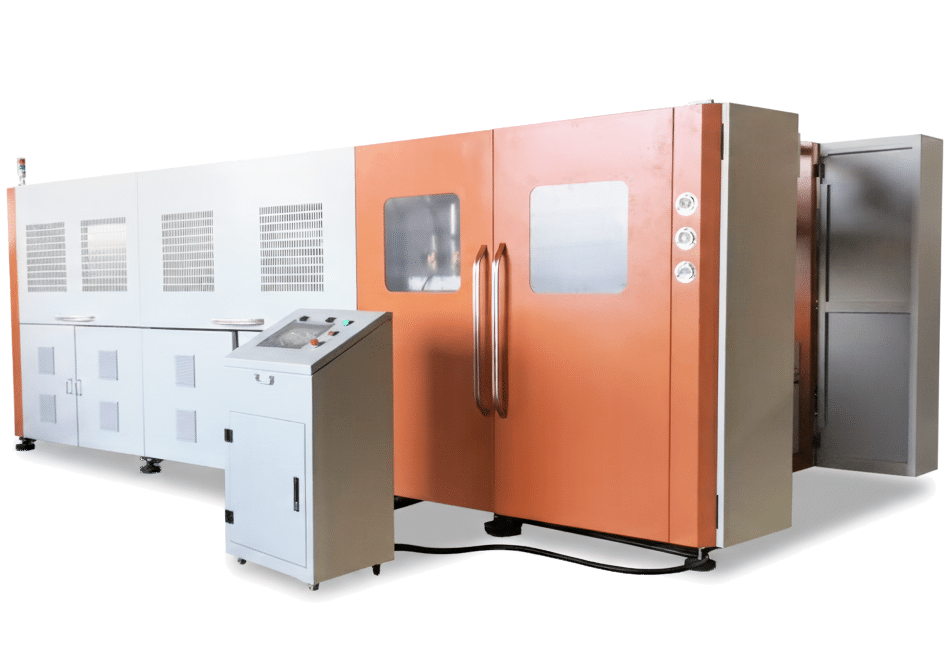
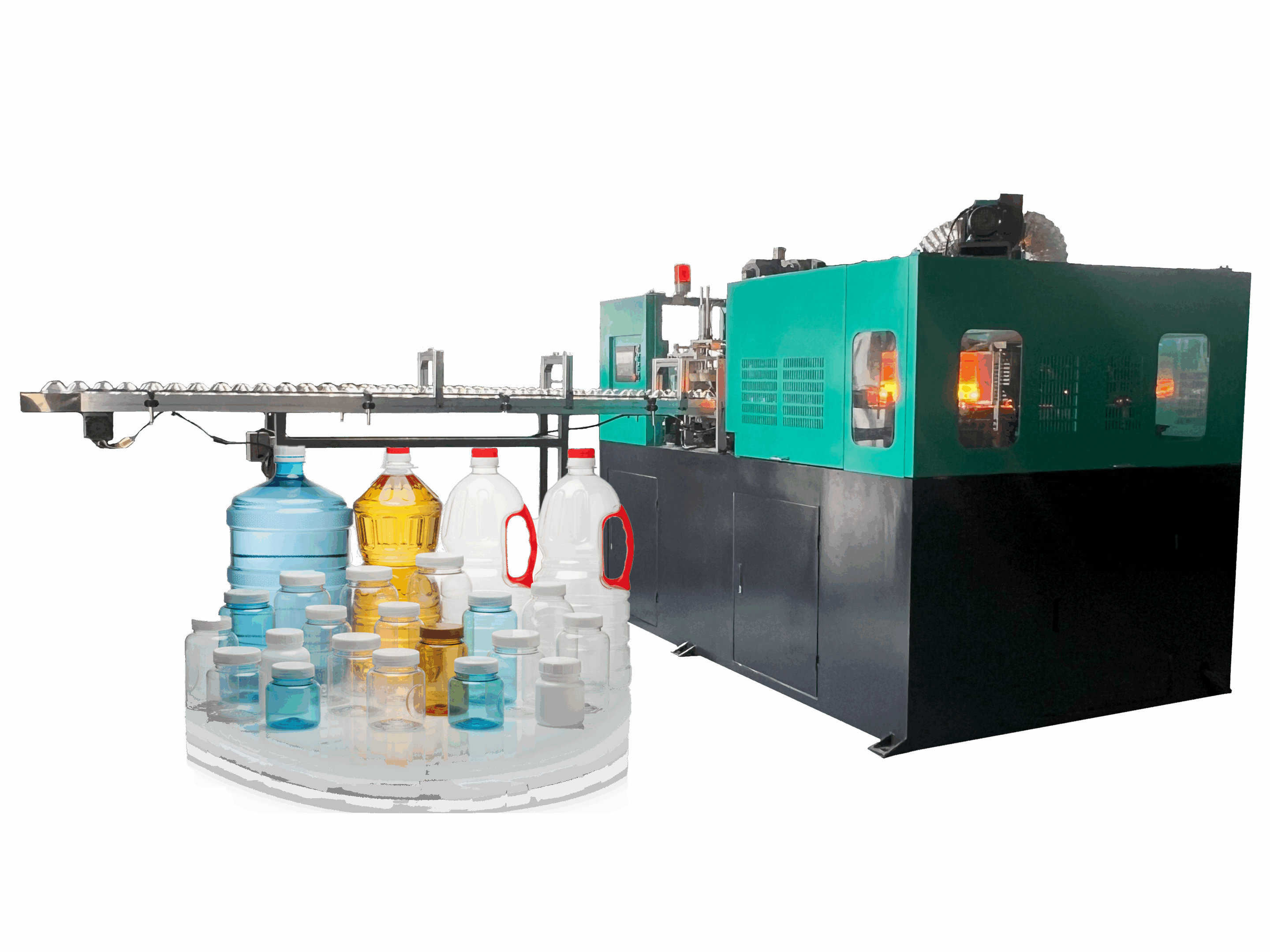
Plastic Processing Machine for Jerry Can Manufacturing: A Practical Guide for HDPE Jerry Can Factories
If you make jerry cans, or you are planning to start, the plastic processing machine you care about is quite specific. In most cases, it means an HDPE extrusion blow molding line that can run safely, steadily, and with predictable quality.
This guide walks through what that machine really is, how it fits into your factory, and how to judge if a solution is right for your jerry cans and your budget.
What Is a Plastic Processing Machine for Jerry Cans?
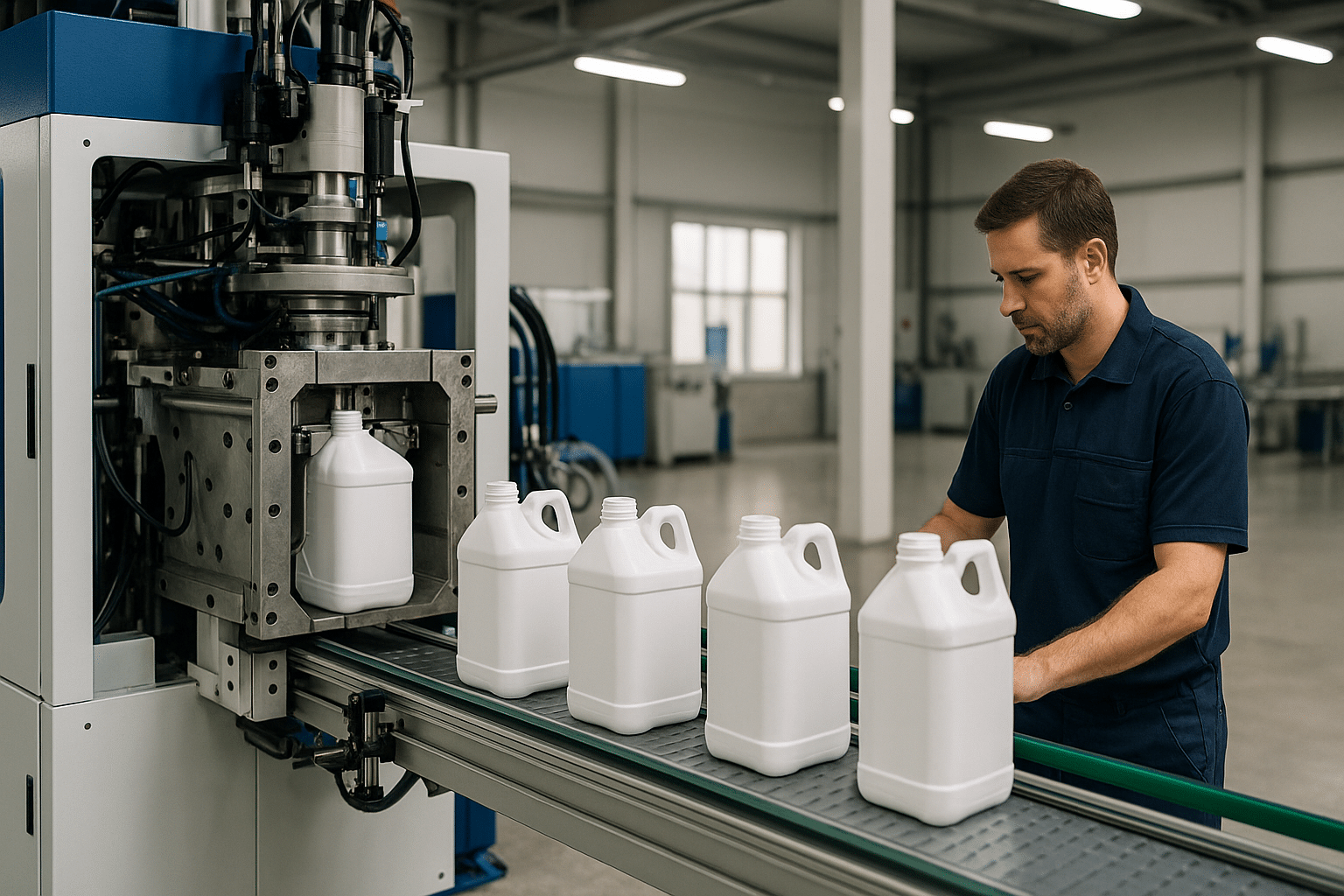
When people say plastic processing machine for jerry can manufacturing, they usually mean a complete system that turns plastic pellets into strong, leak-proof HDPE jerry cans.
In simple steps:
- HDPE pellets are dried and fed into an extruder.
- The extruder melts and homogenizes the plastic and pushes it into a die head.
- A hot hollow tube (parison) drops between open molds.
- Air is blown inside, pushing the parison against the mold walls.
- The plastic cools, the mold opens, and a finished jerry can is ejected.
This is the extrusion blow molding process.
For HDPE jerry cans used in chemicals, lube oil, detergents, and industrial packaging, extrusion blow molding is the standard because it:
- Handles thick walls and strong corners.
- Works well with integrated handles and complex shapes.
- Can run multi-layer structures if you need barrier or recycled layers.
Sometimes buyers ask about PET jerry cans. In that case, a single-stage stretch blow molding machine can be used, but this is more common for transparent edible oil or beverage packaging than for heavy industrial jerry cans.
Jerry Can Basics: Sizes, Uses, and Material Requirements
Common sizes and applications
Jerry cans are widely used in many industries. Typical sizes include:
- 1–5 L – cleaning chemicals, car care products, small engine oils.
- 10–20 L – lubricants, industrial chemicals, agricultural inputs.
- 20–30 L and above – stackable chemical jerry cans, bulk detergents, logistics and warehouse use.
Each size range places different demands on the plastic processing machine: cavity number, clamp force, die head size, and cycle time.
Why HDPE is the default
For most jerry cans, HDPE (High Density Polyethylene) is still the workhorse resin because it offers:
- High impact strength, even at lower temperatures.
- Excellent chemical resistance against many acids, alkalis, and solvents.
- Good stiffness for stacking and palletizing.
- Easy recyclability and compatibility with post-consumer recycled (PCR) resin.
Key performance needs
A good jerry can is more than just a container. It must:
- Survive drop tests without cracking.
- Stack safely on pallets for long periods.
- Resist swelling, softening, or stress cracking from the filled product.
- Remain leak-free after transport and handling.
Your plastic processing machine for jerry can manufacturing must help you hit these performance targets in a repeatable way, not just “run parts”.
Core Components of a Jerry Can Blow Molding Line
A complete jerry can line is more than a single machine. It is a small ecosystem.
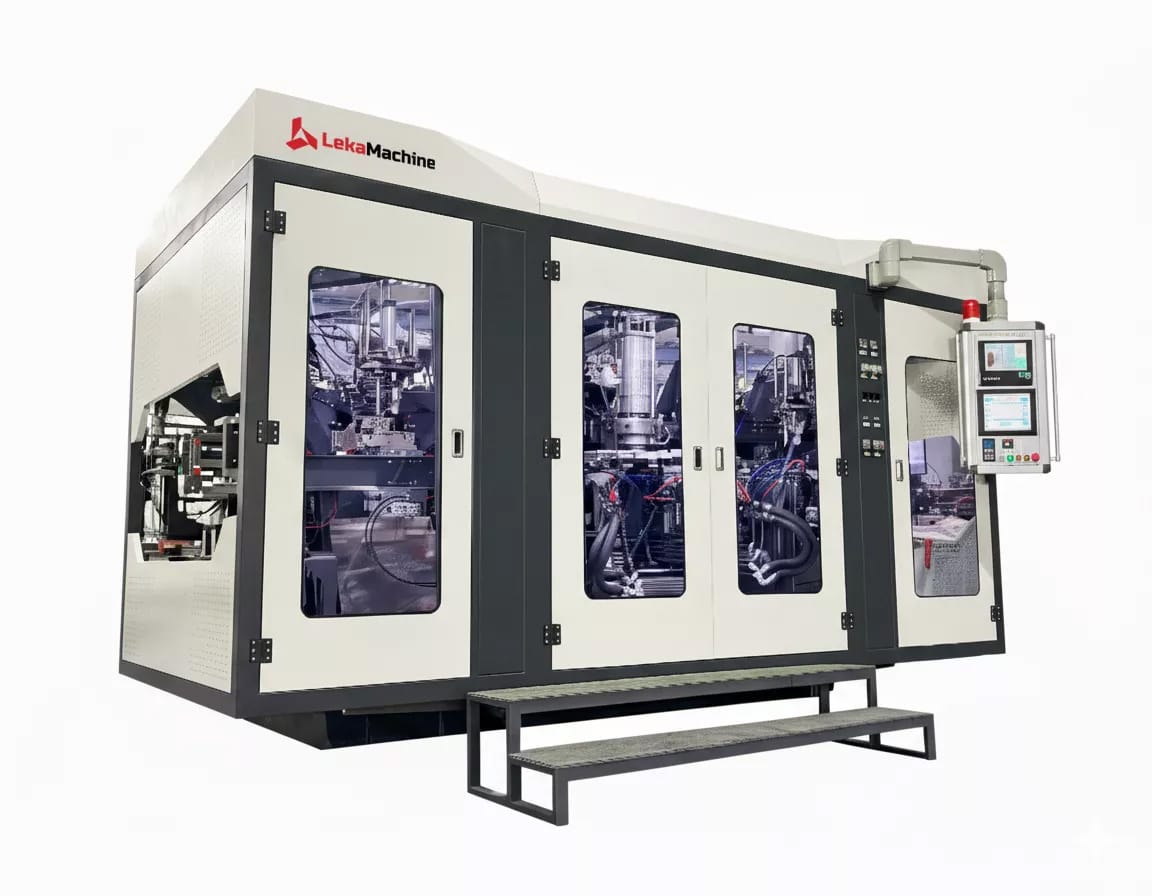
Ekstrüzyonla şişirme makinesi
Core units on the extrusion blow molding machine include:
- Ekstrüder – melts and homogenizes HDPE, sometimes mixed with additives or PCR.
- Die head – shapes the parison; can be single-layer or multi-layer.
- Clamping unit – opens and closes the mold with enough force to form sharp ribs and strong handles.
- Control system (PLC + HMI) – lets operators control temperatures, speeds, parison profile, recipes, and alarms.
Jerry can blow mold
The mold is the blueprint of your jerry can. Important design areas include:
- Handle design for grip comfort and strength.
- Corner radii to balance impact strength and material usage.
- Bottom structure and feet for stability.
- Stacking ribs and side panels for load distribution.
- Optional view stripe windows to see fill level.
Good mold design plus good parison control equals stable weight and fewer rejects.
Downstream equipment
After demolding, jerry cans move through:
- Deflashing or trimming to remove excess material at the handle and parting lines.
- Leak tester for 100% testing, especially for chemicals and oils.
- Conveyors to move jerry cans toward packing.
- Packing or palletizing stations, manual or automatic.
Utilities and support systems
To keep everything stable, you also need:
- A chiller for mold and oil cooling.
- An air compressor and air treatment system.
- Material loaders, mixers, and storage silos.
- A basic QC area near the line for quick checks.
Think of the whole line as one organism. If one part is weak, the entire system suffers.
Choosing the Right Machine Type for Your Jerry Can Portfolio
Your product mix should drive your machine choice, not the other way around.
Tek istasyonlu makineler mi yoksa çift istasyonlu makineler mi?
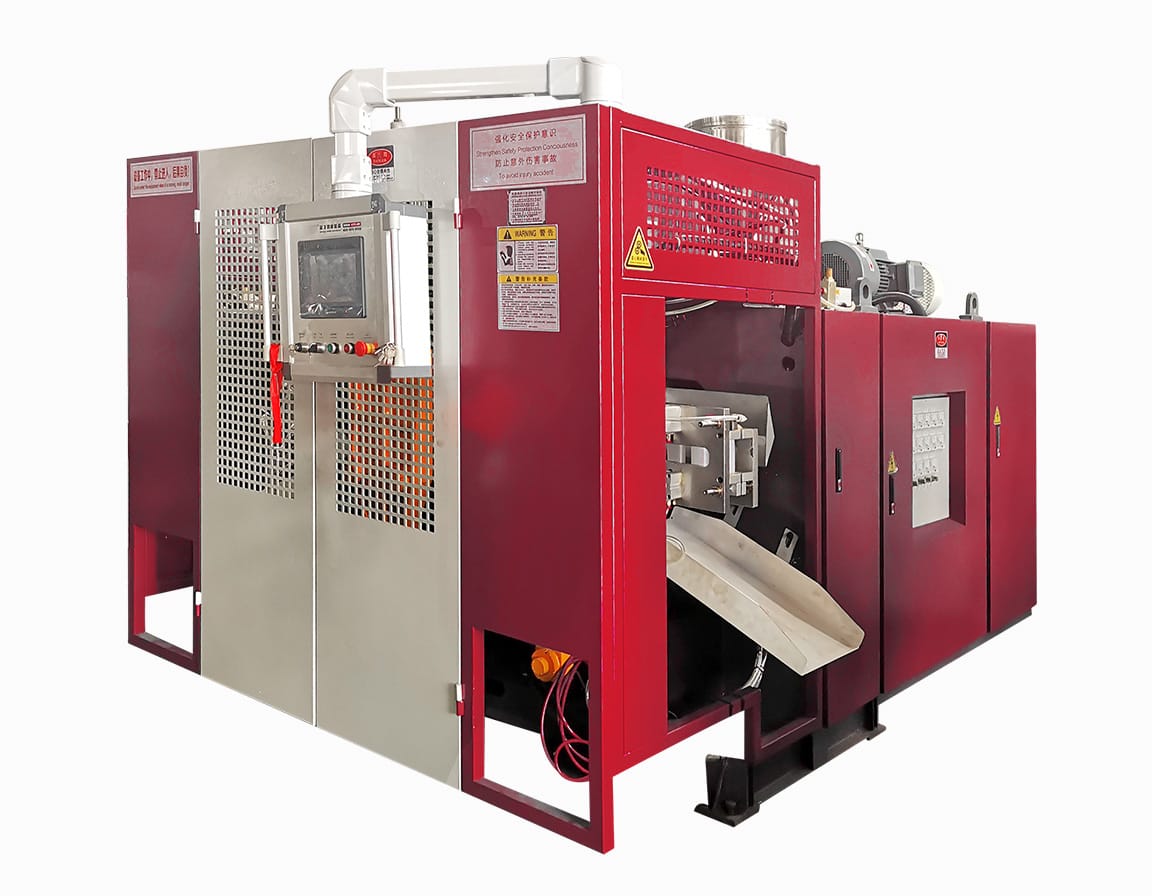
- Single-station machines
- Simpler layout and mechanical structure.
- Well suited for 10–30 L jerry cans with lower to medium output.
- Often preferred where changeovers are frequent.
- Double-station machines
- Higher output for 1–5 L and 5–10 L jerry cans.
- Molds shuttle between left and right stations.
- Useful when you need more cavities and consistent high volume.
When to consider accumulator-head machines
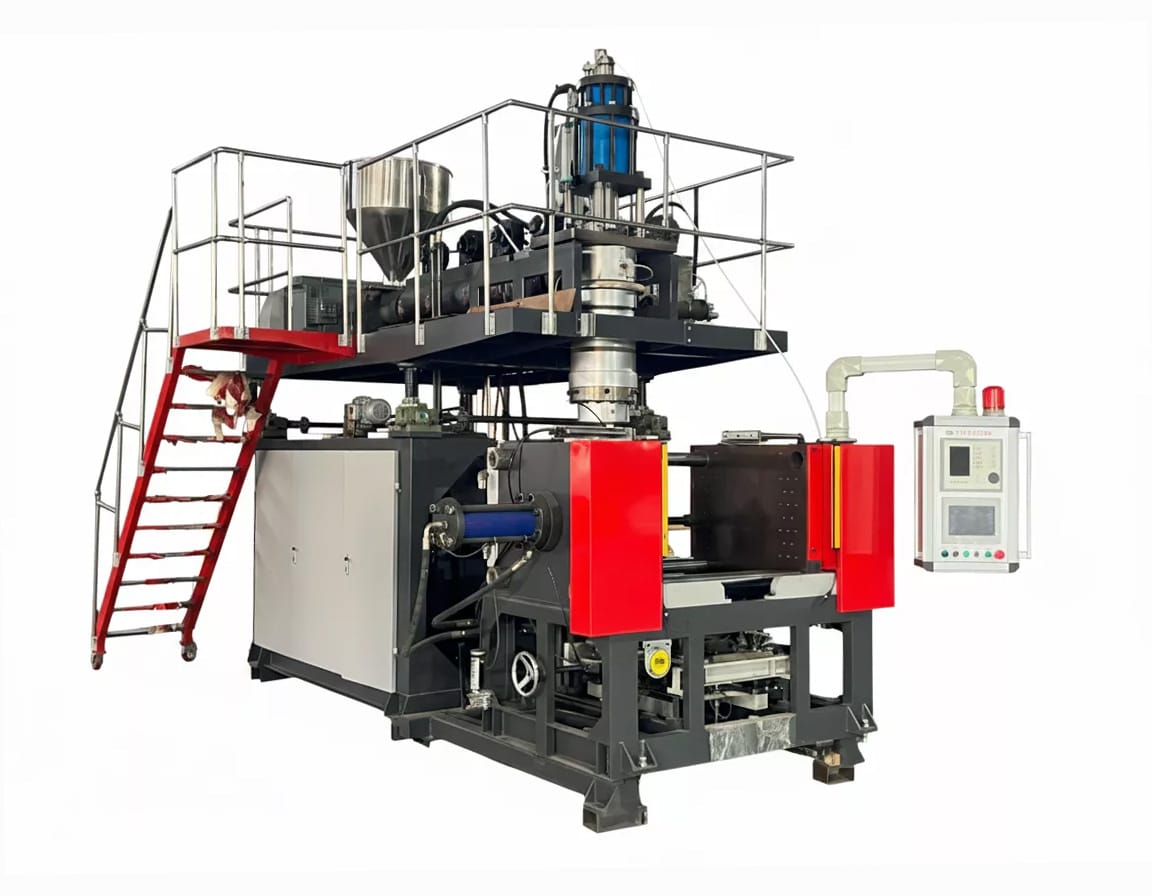
For large, thick-wall jerry cans and small drums, an accumulator-head extrusion blow molding machine is often used:
- Plastic builds up in an accumulator.
- A large shot is pushed into a heavy parison at once.
- Ideal for very thick, robust containers and heavy-duty applications.
Matching screw, die head, and cavities to your SKUs
Key questions to answer before setting specifications:
- What is your main jerry can size by volume and weight?
- How many pieces per day do you need in peak season?
- How many cavities do you need to hit that output comfortably?
From there, you choose:
- Screw diameter and L/D ratio to set melt output in kg/h.
- Die head size and type to set parison size and layer structure.
- Cavity number and spacing to determine how many jerry cans you produce per cycle.
When stretch blow molding applies
If you want transparent PET jerry cans for edible oil or niche products, a single-stage stretch blow molding machine can be considered. For classic HDPE industrial jerry cans, the extrusion blow molding machine remains the dominant option.
Performance Targets for a Modern Jerry Can Plastic Processing Machine
You do not buy a plastic processing machine only for the catalogue photo. You buy it for clear, measurable performance.
Output
Typical output ranges will depend on size, weight, and cavities, but in general:
- 5 L jerry can with 2–4 cavities: several thousand pieces per day.
- 10–20 L jerry can with 1–2 cavities: from hundreds to low thousands per day.
- Larger stackable jerry cans or drums: fewer units, but much higher value per piece.
Real output also depends on cycle time, uptime, and reject rate.
Wall thickness and weight control
For jerry cans, you want:
- Stable weight within tight tolerance.
- Controlled wall thickness at corners, handles, and the bottom.
Closed-loop parison control systems can adjust the parison profile during the cycle to keep thickness more uniform and reduce overweight parts.
Cycle time and OEE
Cycle time for jerry cans is driven by:
- Part weight and wall thickness.
- Cooling time in the mold.
- Leak testing configuration and settings.
A realistic Overall Equipment Effectiveness (OEE) target mixes high availability, stable performance, and low reject rate.
Scrap and regrind ratio
Some scrap is normal, especially from flash and start-up. Your goals should be:
- Minimize scrap percentage.
- Reuse reasonable amounts of regrind without harming quality.
- Track material loss per shift and per SKU.
This directly influences your true cost per jerry can.
Key Features to Look For in a Jerry Can Extrusion Blow Molding Machine
Not all extrusion blow molding machines are equal. Small technical differences can save money every day.
Closed-loop parison control
A modern plastic processing machine for jerry can manufacturing should offer closed-loop parison control. This helps you:
- Reduce overweight containers.
- Improve dimensional stability and stacking performance.
- Keep quality consistent between shifts.
Strong clamping and handle pinch quality
For jerry cans, the pinch at the handle and corners is critical. You need:
- A rigid clamping structure.
- Accurate mold alignment.
- Sufficient closing force to avoid weak weld lines and excessive flash.
Energy-efficient drives
Energy consumption per kilogram is a key cost driver. Modern extrusion blow molding machines use optimized hydraulic or hybrid systems designed to lower kWh/kg and reduce your operating cost.
Recipes, quick changeover, and user-friendly HMI
To make daily operation easier, look for:
- Recipe storage for each jerry can SKU.
- Clear and intuitive HMI screens.
- Quick mold change design to cut changeover time.
Safety and maintenance access
Safety and serviceability should not be afterthoughts. Good design includes:
- Proper guarding and interlocked doors.
- Clear access to extruder, head, and clamp for cleaning and maintenance.
- Logical routing of cables and hoses to reduce downtime.
Factory Layout and Labor Planning Around the Machine
The same machine can feel easy or difficult to run depending on your layout and staffing.
Example layout
A simple linear layout might be:
- Extrusion blow molding machine.
- Take-out system or conveyor.
- Leak tester.
- Visual QC point.
- Packing or palletizing area.
Short paths mean less walking, fewer handling steps, and lower risk of mix-ups.
How many operators do you need?
For a semi-automatic line, a common setup per shift is:
- One main operator at the machine and HMI.
- One person handling leak testing, QC checks, and packing.
With higher automation, such as automatic take-out, deburring, and integrated leak testing, a single skilled operator can sometimes oversee more than one line for stable SKUs.
Typical operator tasks
- Start and stop the machine safely.
- Change recipes and basic process settings.
- Carry out simple QC checks: weight, visual inspection, manual leak tests.
- Remove scrap and keep the work area clean.
- Record basic production data and report issues early.
New plant vs retrofit
For a new plant, you can design the building and layout around the flow of jerry cans and pallets from the beginning. For a retrofit project, you may have to work around existing walls, columns, and other machines. In both cases, a 2D layout drawing prepared with your machine supplier helps avoid bottlenecks later.
Quality, Testing, and Compliance in Jerry Can Production
If your jerry can fails in the field, the problem will eventually return to you. A strong quality system is essential.
Critical tests
Most jerry can producers will perform:
- Weight checks to verify material control.
- Leak tests, often on 100% of production.
- Drop tests from a defined height, sometimes at low temperature.
- Stacking tests to ensure safe pallet loads.
How machine and mold design help quality
Good machine stability and mold design make quality easier to maintain:
- Stiff molds and reliable clamping protect weld lines in critical areas.
- Accurate parison control reduces thin spots and weak corners.
- Stable extrusion temperatures keep material properties consistent.
SOPs and QC checkpoints
Clear standard operating procedures should define:
- How often to check weight and dimensions.
- How often to perform manual leak tests in addition to automatic testing.
- When to adjust parison profile, temperature, or other settings.
- When to stop the line and involve maintenance.
Using production data
Even simple data helps you stay ahead of problems. Track:
- Hourly counts and downtime reasons.
- Scrap rates by cause and by shift.
- Alarm history and recurring issues.
Over time, patterns become clear and you can reduce unplanned downtime and improve consistency.
Cost, Energy, and ROI: Does In-House Jerry Can Production Make Sense?
Many factories start by buying jerry cans from external suppliers. Later, they ask a critical question: should we bring jerry can production in-house?
Cost breakdown for in-house production
Main cost components include:
- Investment in the plastic processing machine and auxiliaries.
- Blow molds for each jerry can size and design.
- Utilities such as power, water, and compressed air.
- Resin and additives.
- Labor for operation and maintenance.
- Spare parts and ongoing service.
You compare this with the current purchase price per jerry can, including:
- Transport and logistics costs.
- Supplier margin.
- Extra safety stock in your warehouse.
Energy and scrap impact
Modern extrusion blow molding machines are designed to lower energy consumption per kilogram of plastic. If you also keep scrap under control, your true cost per jerry can can drop significantly compared to outsourcing.
Simple payback logic
For example, if you replace an outsourced supply of 5 L jerry cans with your own line and save a few cents per piece, and you run tens of thousands of pieces per month, the savings become substantial. In many cases, a well-specified line can pay back in a few years, sometimes faster, depending on volume and local energy costs.
The key is to calculate using realistic uptime and reject rates, not only theoretical cycle times.
Case Study: HDPE Jerry Can Project
The following is a simplified example inspired by common HDPE jerry can projects.
Project background
- Customer: regional chemical producer.
- Location: export-oriented market with growing demand.
- Main product: 20 L stackable HDPE jerry can for cleaning chemicals.
Machine configuration
- Extrusion blow molding machine for 10–30 L jerry cans.
- Single station with single die head.
- One-cavity mold with optional view stripe.
- Closed-loop parison control system.
- Integrated leak tester and basic conveyor.
Sonuçlar
After installation and fine-tuning, the line achieved:
- Stable daily output meeting the customer’s target.
- Improved wall thickness distribution at corners and bottom.
- Consistent leak test pass rate.
- Reduced weight per part compared with the previous supplier, without loss of performance.
Lessons for new buyers
- Share real drawings and performance needs as early as possible.
- Plan utilities and layout together with the machine configuration.
- Invest time in operator training during the first months; it pays back quickly.
How to Choose a Reliable Plastic Processing Machine Supplier for Jerry Cans
A blow molding machine is a long-term investment and a partnership, not a one-off purchase.
Experience you should look for
- Proven projects in industrial packaging and jerry cans.
- References in chemicals, lubricants, and cleaning products.
- Ability to discuss machine, mold, process, and layout, not only price.
Technical questions to ask
- What typical output can I expect for my main jerry can size?
- What kWh/kg figures do your customers usually reach?
- How long is the mold change time on this model?
- What is the standard warranty and spare parts response time?
Service, installation, and training
Good suppliers support you with:
- Installation and commissioning on site or guided remotely.
- Operator and maintenance training.
- Preventive maintenance recommendations and spare parts support.
Red flags
- Vague answers on output and energy consumption.
- No clear case studies or references.
- Weak service network or unclear after-sales responsibility.
Practical Pre-Investment Checklist
Before you sign a purchase contract, put your information in order.
- Final jerry can drawings or at least draft sketches.
- Target daily or monthly output per size.
- Planned working days and shifts per year.
- Available power supply, water, and compressed air.
- Floor space near your mixing, filling, or warehouse areas.
- Support you expect from the supplier: mold design, layout, installation, trial production, and training.
The clearer you are at the start, the smoother your project will run later.
FAQ: Common Questions About Jerry Can Plastic Processing Machines
What machine size do I need for my main jerry can size?
You need to match screw output, die head size, and cavity count to your target volume and daily output. A good supplier will make a sizing proposal once you share your jerry can drawing and required capacity.
Can I run multiple jerry can sizes on one machine?
In many cases, yes. As long as the mold size fits the clamp and tie-bar spacing, you can run multiple sizes on one extrusion blow molding machine. You may need different die heads or inserts, and recipe storage on the HMI helps you switch faster between SKUs.
How much space do I need for a full jerry can line?
Space depends on jerry can size and automation level, but you should plan room for the machine, leak tester, conveyors, QC area, packing station, pallet storage, and forklift paths. A layout drawing prepared with your supplier will give a clearer picture.
What is the typical lead time to get a machine running in my factory?
Lead time includes manufacturing, shipping, installation, and commissioning. The exact timing depends on customization and your location, but it is usually several months from order to stable production.
How long does a blow mold usually last?
With proper maintenance and correct settings, a quality blow mold can run for hundreds of thousands to millions of cycles. Regular cleaning and inspection of pinch areas, cooling channels, and alignment surfaces will extend mold life.
About LEKA Machine and How We Support Jerry Can Projects
LEKA Machine is a blow molding machine manufacturer from China, focusing on extrusion blow molding machines for HDPE and PP bottles, jerry cans, and industrial containers, as well as stretch blow molding machines for PET and PP bottles.
With years of experience and customers in many countries, LEKA supports projects from the first idea to stable mass production.
For jerry can manufacturing, support typically includes:
- Early consultation on jerry can design and performance requirements.
- Machine and mold selection tailored to your SKUs.
- Layout suggestions and utility planning.
- Installation, training, and after-sales service.
If you are planning a plastic processing machine for jerry can manufacturing, the next step is simple. Gather your jerry can drawings, target output, and basic factory information, then discuss them with a trusted supplier to design a line that is productive, safe, and ready to grow with your business.


0 Yorum