
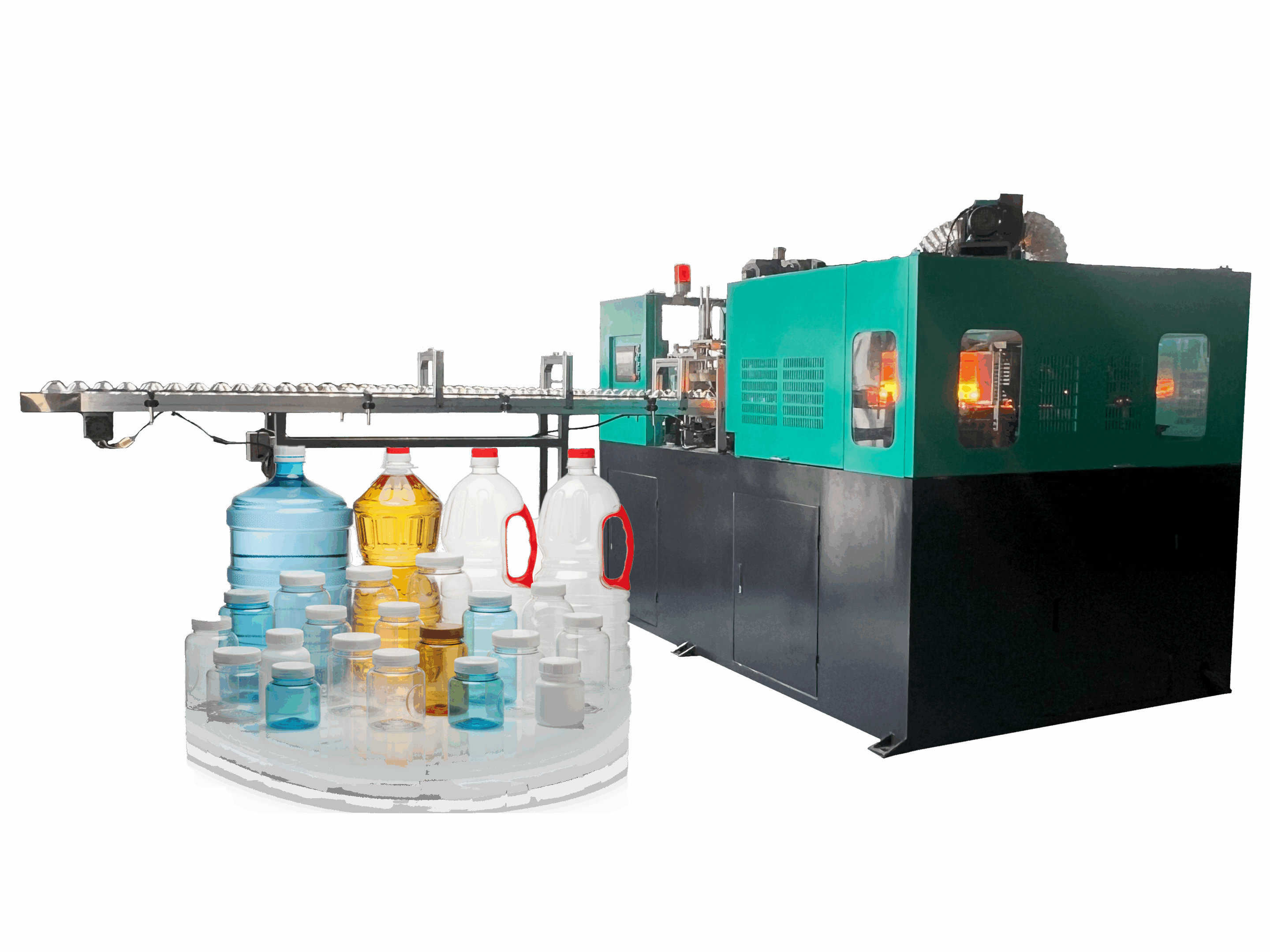
How should I choose between a single-station and a double-station all-electric extrusion blow molding machine?
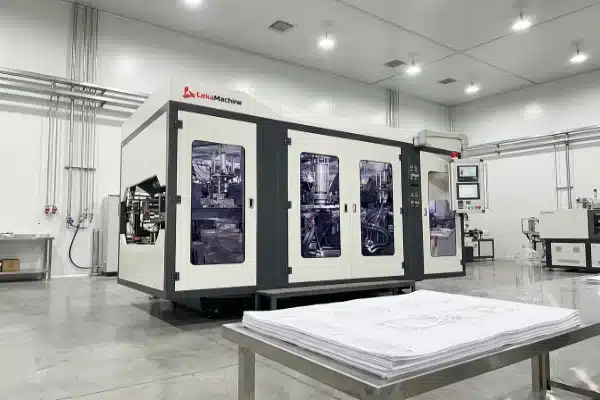
At our facility, we frequently see clients struggle to balance their budget with their actual output needs. Choosing the wrong configuration often creates a production bottleneck that kills profitability or wastes capital on idle capacity.
The choice between single-station and double-station models depends primarily on your production volume and product wall thickness. Select a single-station machine for small batches under 3,000 units monthly or frequent mold changes. Choose a double-station system for high-volume runs exceeding 8,000 units, as it utilizes cooling time to double output efficiency.
Let’s break down the technical and financial differences to find the right fit for your factory.
How does my daily production target dictate the choice between single and double stations?
During our pre-shipment FAT (Factory Acceptance Tests), we often notice that theoretical output calculations fail to account for real-world operator pauses. Missing your daily quotas because of inherent equipment limitations creates painful delivery delays and lost revenue.
Factory Acceptance Tests 1
For daily targets below 1,000 bottles, a single-station machine suffices and offers easier changeovers. However, if your target exceeds 2,000 units, a double-station model is essential. It enables continuous extrusion while one mold cools, increasing output by 60% to 80% without doubling your labor costs.
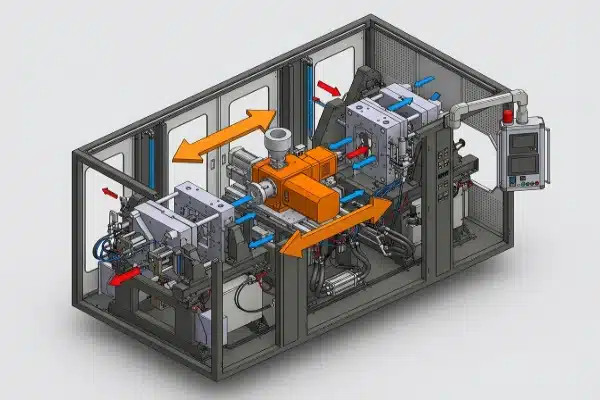
To make the right selection, you must look beyond the brochure speed and understand the mechanical rhythm of the machine. In a single-station setup, the process is sequential: the extruder must often wait or slow down while the mold is cooling and the part is ejected. This stop-and-go nature inherently limits your maximum throughput.
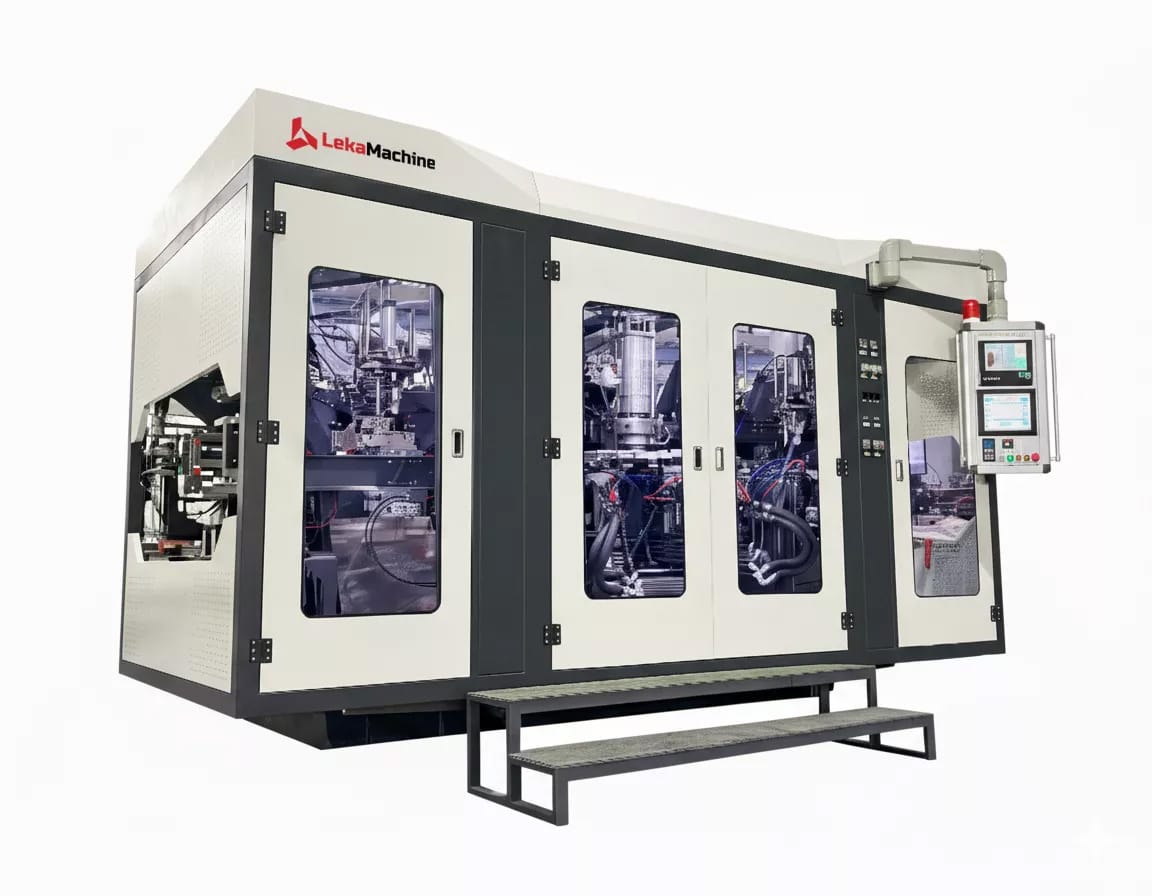
In contrast, our engineering team designs double-station machines to maintain continuous extruder operation. The carriage shuttles back and forth; while the left station is blowing and cooling, the right station is ejecting the finished part and capturing a new parison. This parallel processing is critical for meeting high-volume contracts.
Analyzing the Output Gap
The efficiency gap widens significantly as bottle size decreases. For small bottles where cooling time is short, the mechanical movement speed becomes the limit. However, for standard sizes (1L – 5L), the double-station advantage is massive.
Table 1: Estimated Daily Output Comparison (20 Hours Operation)
| Container Size | Single-Station Output (Units) | Double-Station Output (Units) | Efficiency Gain |
|---|---|---|---|
| 500ml Bottle | 4,000 – 5,000 | 7,500 – 9,000 | ~80% |
| 1L Jerry Can | 3,000 – 4,000 | 5,500 – 7,000 | ~75% |
| 5L Detergent | 1,800 – 2,200 | 3,200 – 3,800 | ~70% |
| 20L Drum | 600 – 800 | 1,000 – 1,200 | ~60% |
The "High-Mix" Trap
However, volume isn’t everything. If your business model involves "High-Mix, Low-Volume" orders—for example, producing 500 units of ten different bottle shapes per month—a double-station machine becomes a liability. You have to align two molds, calibrate two sets of blow pins, and manage double the scrap during startup. In these cases, we advise clients to stick with single-station machines to minimize downtime between job changeovers.
Does a double-station machine require significantly more floor space and auxiliary gear?
When we draft layout proposals for clients with limited factory real estate, expanding the footprint is often not an option. Cramped production floors lead to safety risks, difficult maintenance access, and inefficient material flow that hurts your bottom line.
safety risks 2
A double-station machine typically requires 30–40% more floor space than a single-station unit, not double. However, it demands robust auxiliary support, including larger chillers and increased compressed air capacity to handle the simultaneous operations, which must be factored into your facility planning.
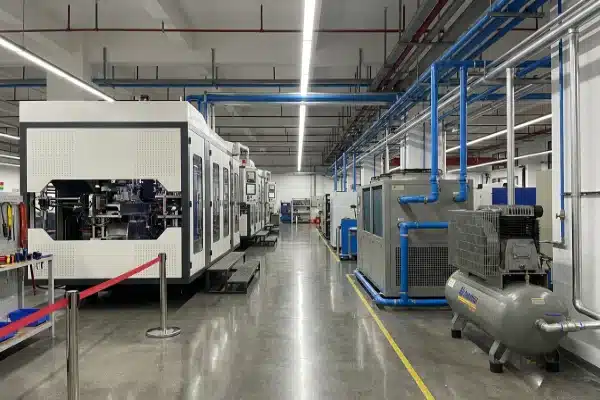
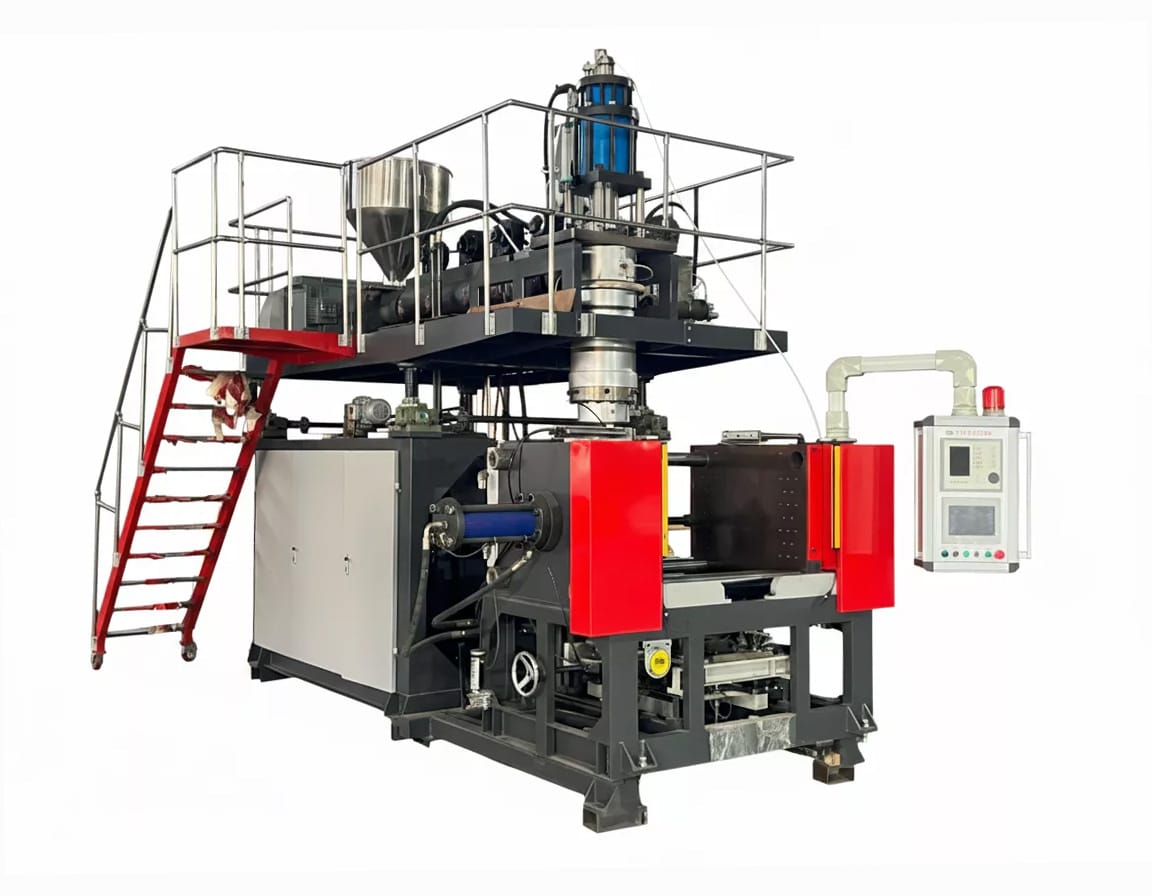
It is a common misconception that a double-station machine takes up twice the space of a single-station unit. In reality, the electrical cabinet, extruder platform, and hydraulic/servo systems are shared. The physical width increases to accommodate the second clamping unit and shuttle stroke, but the depth remains largely similar.
For factories where rent is high or space is at a premium, the "output density"—the number of bottles produced per square meter—is actually superior with a double-station machine. You get nearly double the output without doubling the physical footprint.
Infrastructure Upgrades Required
While the machine fits, the supporting systems must be upgraded. A standard single-station auxiliary setup will choke a double-station machine. We always remind clients to audit their utilities before the machine arrives.
Table 2: Auxiliary Equipment Scaling
| Utility System | Single-Station Requirement | Double-Station Requirement | Reason |
|---|---|---|---|
| Chiller Capacity | 5 – 10 HP | 15 – 20 HP | Two molds need simultaneous cooling. |
| Air Compressor | 1.5 – 2.0 m³/min | 3.0 – 4.0 m³/min | Blowing happens twice as often. |
| Conveyors | Single Lane | Dual Lane / Merger | Rapid ejection can jam single belts. |
| Power Supply | 40 kW | 65 kW | Heavier load from continuous motor usage. |
Downstream Integration Risks
Another critical factor we check during project planning is the "take-away" capacity. Double-station machines eject bottles from alternating sides. If you try to funnel these into a single leak tester or bagger without a proper merging conveyor or buffering system, your expensive machine will stop frequently due to downstream jams. We recommend verifying that your packer and labeler can handle the burst speed of a dual-station cycle.
Will a double-station setup provide the necessary cooling time for thick-walled bottles?
In our experience troubleshooting client quality issues, we find that rushing the cooling phase is the primary cause of warped necks and unstable bottoms. This results in high scrap rates that eat directly into your raw material profits and ruin your yield KPIs.
Double-station machines are ideal for thick-walled containers like jerry cans because they mask the long cooling phase. While one station cools the product, the other station accepts the parison, allowing for extended cooling times without halting the extrusion process or sacrificing overall cycle speed.
This is where the physics of blow molding dictates the machine choice. If you are manufacturing a thick-walled item, such as a 5-liter automotive lubricant jug or a heavy-duty chemical drum, the plastic requires a significant amount of time to solidify in the mold.
Total Cost of Ownership 4
On a single-station machine, the extruder must sit idle (or rotate very slowly) while the mold stays closed for cooling. This is "dead time." Your expensive extruder is doing nothing for 60% of the cycle.
energy consumption 5
The "Masking" Effect
A double-station machine solves this by "masking" the cooling time.
- Station A closes on the parison and begins blowing/cooling (e.g., 20 seconds needed).
- The extruder immediately moves to Station B.
- Station B grabs the parison and begins its cycle.
- By the time the extruder returns to Station A, the 20-second cooling is finished, and the mold is ready to open.
Solving Parison Sag
Another technical benefit we observe involves parison control. For heavy containers, if a parison hangs too long waiting for a single station to open, it stretches under its own weight ("parison sag"), causing thin tops and thick bottoms. Because the double-station process accepts parisons more frequently, the plastic hangs for less time, resulting in better wall thickness uniformity.
Table 3: Cycle Time Analysis for Thick-Walled Part (20s Cooling Required)
| Cycle Phase | Single-Station Duration | Double-Station Duration (Per Station) |
|---|---|---|
| Extrusion Time | 6s | 6s |
| Cooling Time | 20s | 20s (Happens while other side works) |
| Mechanical Movement | 3s | 3s |
| Total Cycle Time | 29s (Sequential) | ~15s (Effective output rate) |
| Extruder Status | Idle for 20s | Running Continuously |
Is the higher cost of a double-station model justified by the output efficiency?
We understand that the initial price tag is a major barrier for business owners, and we respect the need to manage cash flow cautiously. However, buying a cheaper machine that fails to scale often costs more in the long run through missed opportunities and higher energy bills.
parison control 6
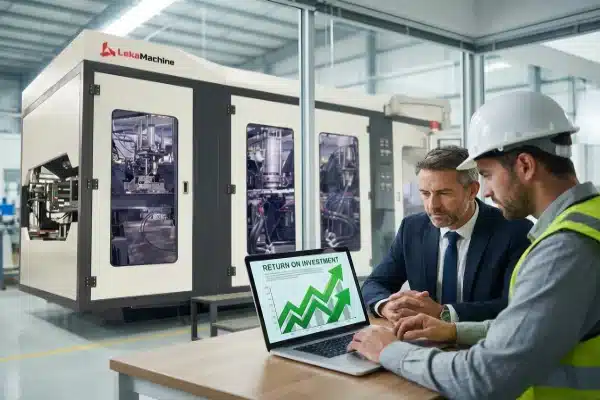
Although a double-station model costs 30–50% more initially, it often offers a better ROI for long-run products. By reducing energy consumption per unit and consolidating labor efforts, the machine typically pays for the price difference within 12 to 18 months of full-capacity operation.

When we calculate the Total Cost of Ownership (TCO) for our partners, the double-station machine almost always wins for established product lines. The math changes depending on whether you are looking at an All-Electric machine or a hydraulic one, but the efficiency principle remains.
compressed air capacity 8
Energy Efficiency Per Unit
Even though a double-station machine draws more total power, it produces nearly twice the product. This means the "Energy Cost Per Bottle" drops significantly. In an All-Electric system, where servo motors only draw power when moving, the efficiency is even higher because you aren’t wasting energy idling the clamp motor while waiting for cooling.
Labor Optimization
Labor is often the second highest cost after resin.
- Scenario A: You need 10,000 bottles a day. You buy two Single-Station machines. You likely need two operators (or one very busy one) and double the maintenance checks.
- Scenario B: You buy one Double-Station machine. You need one operator.
When Single-Station Wins Financially
We advise clients to choose the single-station option if:
- Budget is the primary constraint: You are a startup and cannot finance the larger unit.
- Uncertain Demand: You don’t have signed contracts for large volumes yet.
- Technical Simplicity: Your maintenance team is small and inexperienced. A double-station machine has more moving parts (shuttles, flow splitters) and is harder to calibrate.
At LEKA Machine, we believe in "Right Machine Selection." We don’t want to sell you the most expensive unit; we want to sell you the unit that matches your business stage. If you share your bottle drawing and monthly targets with us, we can calculate the exact ROI for both options.
larger chillers 9
Conclusion
To decide, assess your volume (over/under 3,000 units), floor space, and wall thickness. Contact us for a precise ROI calculation based on your specific bottle design.
cooling time 10
Footnotes
- Definition of the standard engineering testing procedure mentioned. ↩︎
- Official government guidelines on machinery safety hazards. ↩︎
- Product page from a top manufacturer of electric machines. ↩︎
- Definition of the financial metric used for analysis. ↩︎
- Government resource on industrial motor energy efficiency. ↩︎
- Leading supplier of parison control technology explanation. ↩︎
- Authoritative industry definition of the core manufacturing process. ↩︎
- Industry authority on compressed air system standards. ↩︎
- Major manufacturer page for auxiliary cooling equipment. ↩︎
- Educational resource explaining the physics of polymer cooling. ↩︎


0 Comments