
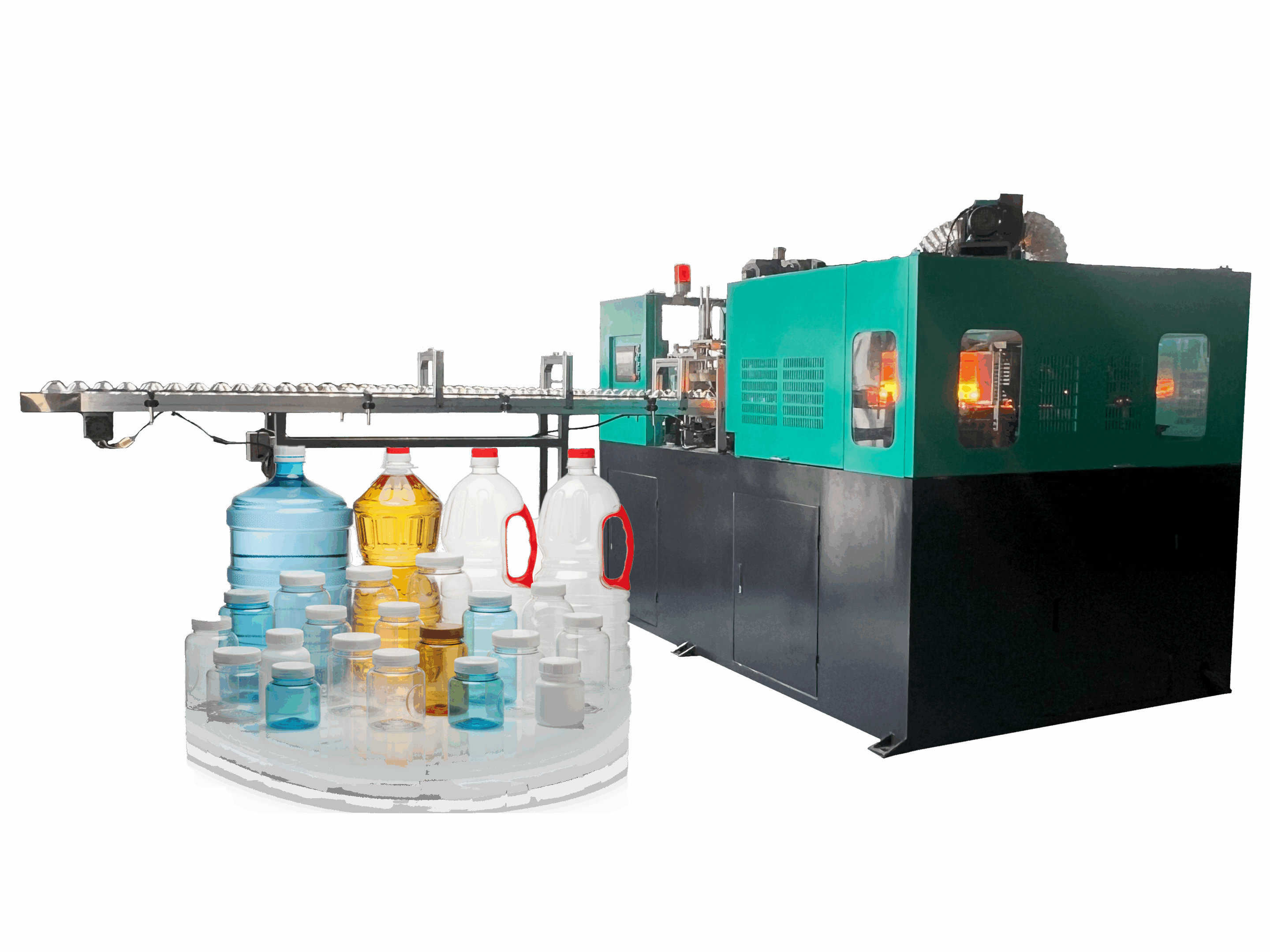
How can I determine if the servo motor performance of the all-electric extrusion blow molding machine is superior?
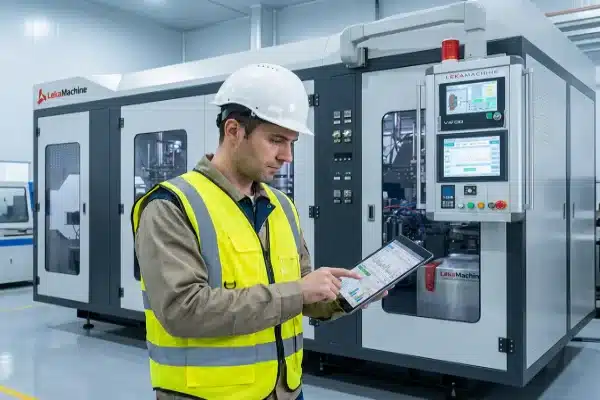
When we design our machine layouts, we know that upgrading to an all-electric platform is a significant financial commitment for any factory owner. You are likely worried that the "high-performance" specs on a datasheet won’t translate to actual stability on your production floor. It is frustrating to pay a premium for electric technology only to face the same downtime and inconsistency issues as hydraulic systems.
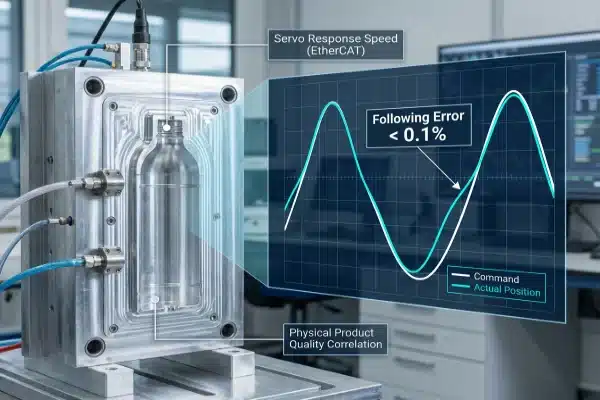
To truly evaluate servo superiority, look beyond the rated torque and focus on the "Peak Torque" duration and thermal derating curves. Superior systems maintain precision under heat, use liquid cooling for clamping motors, and demonstrate a "Following Error" of less than 0.1% during rapid movements.
This guide goes beyond the glossy brochure. We will break down the specific engineering metrics—from DC bus energy sharing to EtherCAT cycle times 1—that separate a top-tier all-electric machine from a budget model that struggles to hold tolerance.
How do I compare the torque and speed specifications of the servo motors against my production requirements?
At our factory, we often see customers get confused by the "Rated Torque" numbers listed in catalogs, thinking higher is always better. However, simply having a big motor doesn’t guarantee a fast cycle if that motor overheats or stutters at low speeds. You need to verify how that power is delivered during the most intense parts of the molding cycle.
You must prioritize the "Peak Torque" duration over continuous ratings, ensuring the carriage motor can sustain high-energy bursts for milliseconds without overheating. Additionally, verify that clamping motors utilize liquid cooling to handle "hold" forces and check for low-speed cogging issues that cause parison ripples.

The Reality of Peak Torque vs. Rated Torque
In экструзионно-выдувном формовании (ЭВФ) 2, the machine does not run at a constant speed like a conveyor belt. It is a violent process of starting and stopping. The mold carriage is a heavy mass of steel that must accelerate, stop instantly, and lock.
When we select motors for our machines, we ignore the "Rated Torque" (continuous duty) for the carriage. Instead, we look at the Peak Torque Duration. Many standard servo motors can hit their peak torque for only 1 or 2 seconds before thermal protection kicks in. However, a high-speed shuttle machine might need that burst energy repeatedly every few seconds.
If the motor spec sheet does not show a robust Overload Capacity, your cycle time will drift as the shift progresses. The motor will get hot, the resistance will rise, and the drive will limit current to protect itself, slowing down your carriage.
Thermal Derating in Factory Conditions
Your factory is not a climate-controlled laboratory. In summer, ambient temperatures near the machine 3 can easily exceed 40°C or 45°C.
Most servo motors are rated at 25°C. A superior servo motor manufacturer provides a Temperature Derating Curve. We always verify that the motor can still deliver the required clamping tonnage when the environment is hot. Inferior motors will trip "Overheat" alarms or lose holding force, leading to flash on your bottles during the afternoon shift.
Liquid Cooling for "Hold" Performance
This is a critical detail often overlooked. Unlike a hydraulic ram that locks mechanically, an electric toggle clamp motor often has to "fight" to hold the position against the blowing pressure. This generates immense heat at 0 RPM.
Air cooling is ineffective when the motor is not spinning. Therefore, for the clamp unit, you should demand Liquid Cooled servo motors. This ensures the motor stays cool even when holding high tonnage, preventing the magnets inside from degrading over time.
The "Cogging Torque" Effect
Have you ever seen faint, rhythmic ripple lines on a parison as it extrudes? This is often caused by Cogging Torque.
Inferior servo motors have a "stepping" sensation at low speeds. During color changes or slow startup extrusion, the motor pulses. Hydraulic motors naturally dampen this, but a cheap electric motor will transfer those pulses directly to the plastic. We test for Low-Speed Cogging to ensure the extrusion is glass-smooth even at 1 RPM.
Motor Cooling Comparison Table
| Характеристика | Air-Cooled Servo | Liquid-Cooled Servo | Влияние на производство |
|---|---|---|---|
| Cooling Method | Fan attached to shaft | Water jacket around stator | Liquid is more consistent. |
| Efficiency at 0 RPM | Poor (No airflow) | Отличная | Vital for clamping motors holding tonnage. |
| Техническое обслуживание | High (Fans clog with dust) | Low (Closed loop) | Clogged fans lead to overheating alarms. |
| Size | Bulky (Needs airflow space) | Compact | Easier access for mold changes. |
Which servo brands offer the best global support and spare parts availability?
We have learned the hard way that a machine is only as good as its spare parts supply chain. When we export to the US or Europe, we cannot rely on obscure components that take weeks to ship. A servo drive failure can shut down your entire production line, costing you thousands of dollars per day in lost output.
Select machines using Tier 1 brands like Baumüller, Beckhoff, or Siemens that maintain local stock of high-amperage drives. Avoid "custom OEM" labels and insist on Multi-Turn Absolute Encoders to prevent crash startups after power outages.
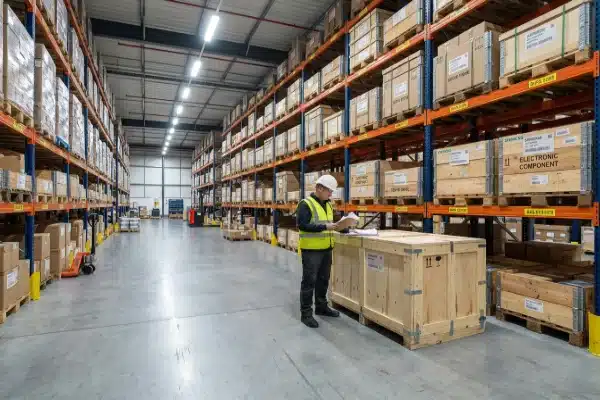
The "Local" Drive Stock Requirement
Servo motors are generally very durable; they are essentially magnets and copper wire. The weak link is usually the Servo Drive (Inverter). These complex electronics handle massive power loads and are susceptible to voltage spikes.
When evaluating a machine, ask for the exact model number of the servo drive. Then, call a local distributor in your country and ask: "Do you have this specific drive on the shelf?"
Many manufacturers use "Custom OEM" drives. These are standard drives with a custom sticker or firmware, meaning you cannot buy a replacement from a local distributor; you must buy it from the machine builder. This creates a bottleneck. We prefer using standard, off-the-shelf high-end drives so our customers have global access to replacements.
Why Multi-Turn Absolute Encoders Matter
Imagine a power outage hits your factory while the mold is half-open. Power comes back on. What happens next?
- Incremental Encoders: The machine has "forgotten" where it is. It needs to slowly move to a "Home" switch to recalibrate. If an operator isn’t careful, they might crash the mold during this homing sequence.
- Single-Turn Absolute Encoders: Good, but if the motor rotated more than once while off (unlikely but possible during maintenance), position is lost.
- Multi-Turn Absolute Encoders: The Superior Choice. These have a battery backup or mechanical gear memory. The machine knows exactly where the mold is, down to the micron, immediately upon startup.
We specify Multi-Turn Absolute Encoders 4 to prevent catastrophic "crash" startups. It removes the human error factor after a blackout.
Assessing Brand Support Levels
| Servo Brand Tier | Examples | Global Availability | Technical Support | Recommended? |
|---|---|---|---|---|
| Tier 1 | Siemens, Baumüller, Beckhoff, Yaskawa | High (Local Warehouses) | Excellent & Local | Yes |
| Tier 2 | Delta, Mitsubishi, Omron | Умеренный | Хорошая | Conditional |
| Tier 3 | Obscure Regional Brands | Low (Import Only) | Poor / Time Zone Delay | No |
Can I monitor the real-time energy consumption of the servo system during the dry cycle test?
Marketing claims about "energy savings" are easy to make, but we prefer to verify them with data on the assembly floor. True efficiency in an all-electric machine doesn’t just come from using electric motors; it comes from how those motors manage power between themselves. You need to see where the energy goes when the heavy carriage slows down.
high-speed Fieldbus 5
True efficiency is verified by monitoring the "DC Bus voltage" and regenerative data on the HMI during dry cycles. A superior system pumps braking energy from the carriage deceleration back into the extruder motor rather than burning it as heat.
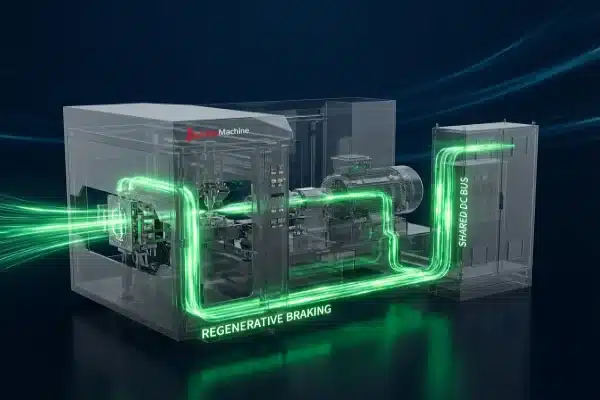
The Power of the DC Bus
In a superior all-electric system, all the servo drives share a common DC Bus. Think of this as a shared "energy pool" between the motors.
Here is the physics of it: When the heavy mold carriage decelerates to close the mold, that braking action generates electricity (like a hybrid car braking).
- Inferior Systems: This energy is dumped into a "Braking Resistor" and turned into heat. You are literally paying for electricity to heat up your factory, which you then pay to air condition.
- Superior Systems: This energy flows onto the shared DC Bus. At that exact moment, the Extruder motor needs power to melt plastic. The Extruder consumes the "free" energy generated by the Carriage braking.
How to Test This
During the Factory Acceptance Test (FAT), ask to see the DC Bus Voltage on the scope function of the HMI.
- Start a dry cycle.
- Watch the voltage when the carriage brakes.
- If the system is efficient, you will see the bus voltage rise slightly but stay stable, indicating the energy is being absorbed by other motors or the capacitor bank.
- If you see the braking resistor glowing hot or the voltage spiking violently, the energy management is poor.
following error of <0.1% 7
Managing Peak Loads
Monitoring real-time consumption also helps you size your factory transformer. Servo machines have very high "inrush" currents compared to hydraulic pumps. By analyzing the Real-Time Energy Consumption graph, we can adjust the machine sequence (milliseconds delay) to prevent all motors from accelerating at the exact same moment. This "peak shaving" prevents you from blowing main fuses without slowing down the overall cycle time.
Energy Flow Comparison
| System Type | Braking Energy Destination | Extruder Power Source | Overall Efficiency |
|---|---|---|---|
| Independent Drives | Resistor (Heat Waste) | Grid | Средний |
| Shared DC Bus | The Extruder Motor | Regenerated Power + Grid | Высокий |
| Active Front End | Grid (Pushed back to utility) | Grid | Very High (Complex) |
How does the servo motor’s response time affect the precision of the parison wall thickness control?
Speed is irrelevant if the machine cannot stop exactly where you tell it to. When we calibrate flight controllers for drones, we look for stability; the same logic applies to parison control. If the servo reacts too slowly to the programmer’s command, you get thick and thin spots in your bottle, wasting resin and failing drop tests.
EtherCAT or Profinet IRT 8
Do not rely on generic response time specs; instead, request the "Following Error" graph from the HMI scope. Superior performance means the actual position tracks the command with a lag of <0.1%, enabled by high-speed fieldbus systems like EtherCAT.
The "Following Error" Metric
Manufacturers often quote "Response Time" (e.g., 5ms). This number is vague. The real metric is Following Error (or Lag).
On the machine’s HMI scope function, we overlay two lines:
- Command Position: Where the controller tells the servo to be.
- Actual Position: Where the servo actually is.
In a perfect world, these lines overlap. In reality, there is a gap. A superior servo system will have a following error of <0.1%. If the gap is large during rapid die-gap changes, your bottle’s wall thickness will not match your programmed profile. You will waste material trying to compensate for this lag.
The Speed Limit: Bus Cycle Time
The servo motor might be fast, but is it getting the signal fast enough?
Old machines used analog signals (0-10V) or slow digital communications. Modern, high-precision molding requires a high-speed Fieldbus, typically EtherCAT или Profinet IRT.
We ensure the Bus Cycle Time is ≤1ms. This means the central computer talks to the servo drive 1,000 times per second. This is critical for the Parison Wall Thickness Controller. If the communication is too slow, the die gap won’t open quickly enough for sharp transitions (like the shoulder of a bottle), resulting in weak spots.
Smoothness vs. Jerk: The S-Curve
Finally, superior performance isn’t just about being "snappy." It’s about being smooth. Instant torque can snap drive belts and pit ball screws.
very high "inrush" currents 10
We look for drives that allow customizable "S-Curve" acceleration profiles. This limits "Jerk" (the rate of change of acceleration). It smoothes out the motion at the very start and end of the move. This protects your mechanical investment while maintaining high average speeds. A machine that bangs and clanks has poor servo tuning; a superior machine hums.
Заключение
Determining servo superiority requires looking under the hood. By prioritizing Peak Torque duration, verifying liquid cooling for clamp units, insisting on Tier 1 brands with local stock, and analyzing Following Error data, you can separate high-performance engineering from marketing hype. These details ensure your machine runs efficiently, precisely, and reliably for years.
Сноски
- Technical explanation of the EtherCAT communication protocol used for high-speed industrial automation. ↩︎
- Provides general background on the manufacturing process described in the article. ↩︎
- Safety guidelines regarding industrial heat exposure and ambient temperature limits. ↩︎
- Technical background on how absolute encoders maintain position data during power loss. ↩︎
- Beckhoff’s overview of high-speed fieldbus technology for real-time motion control. ↩︎
- Technical details on liquid-cooled servo motors designed for high-tonnage industrial applications. ↩︎
- Educational resource for understanding control systems and following error in motor dynamics. ↩︎
- Official site for the Profinet industrial Ethernet standard used in precision manufacturing. ↩︎
- Government resource explaining energy efficiency opportunities in industrial motor-driven systems. ↩︎
- Siemens documentation on managing inrush currents and power quality in industrial drive systems. ↩︎


0 Комментариев