FAQ About Blow Molding Machines, Filling Machines, and Packaging Line Support
This FAQ page helps buyers quickly understand LEKA Machine’s product scope, including blow molding machines, filling machines, capping machines, labeling machines, shrink wrapping and packing equipment, molds, leak testing, autoloaders, utility systems, and related after-sales support. If you are planning a bottle, jerrycan, liquid packaging, or line integration project, this page gives you a clearer starting point before quotation and technical discussion.
Browse FAQ Topics
Explore the section that matches your current project stage, machine category, packaging line requirement, or after-sales support question.
General Project Questions
Start here if you are still comparing machine options, planning a new packaging project, or preparing technical information before requesting a quotation. These are the most common questions buyers ask before moving into model selection and detailed discussion.
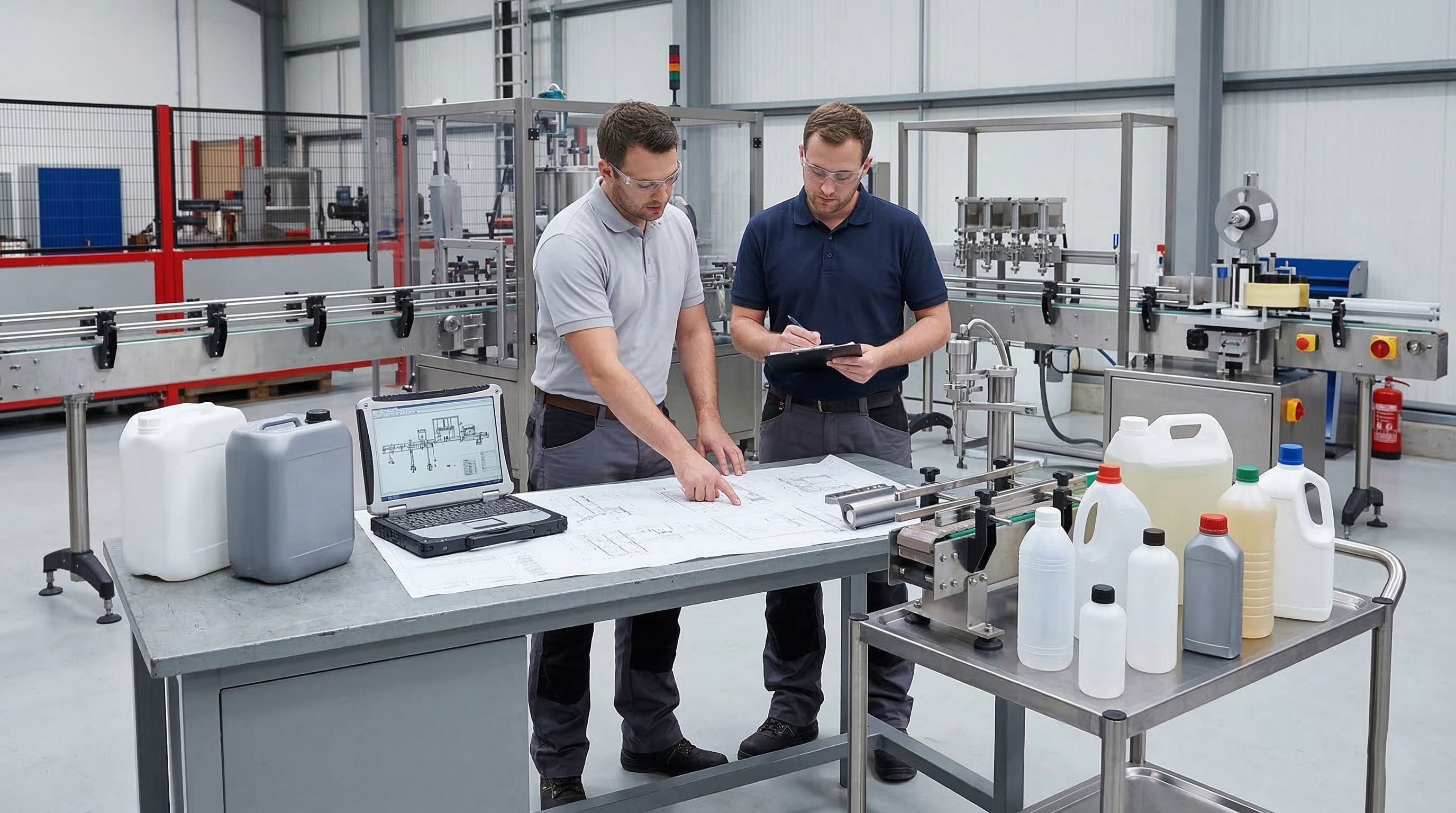
The most useful information includes your product type, bottle or container volume, target output, liquid or material type, bottle photos or drawings, preferred automation level, and any special requirements related to blowing, filling, capping, labeling, leakage testing, or line layout. The clearer the input, the easier it is to recommend a more suitable machine configuration.
Yes. Many customers begin with only a bottle concept, a production target, or a basic product description. LEKA can first evaluate whether the project is more suitable for blow molding equipment, filling equipment, packaging line equipment, or a more complete integrated solution, then narrow the recommendation step by step.
LEKA can support both single-machine projects and broader packaging line planning. Depending on your requirements, this may include blow molding machines, filling machines, capping units, labeling equipment, shrink wrapping and packing systems, molds, leak testers, and other supporting equipment needed for smoother production integration.
Yes. Customization normally depends on bottle dimensions, material type, filling range, output target, neck finish, container structure, automation scope, and factory conditions. For many projects, the best solution is not a purely standard machine, but a configuration adjusted to the real production requirement and downstream process.
Машины для выдувного формования
This section covers common questions about extrusion blow molding and stretch blow molding, including container applications, process selection, machine suitability, and planning considerations for bottle, jerrycan, and industrial hollow-container projects.
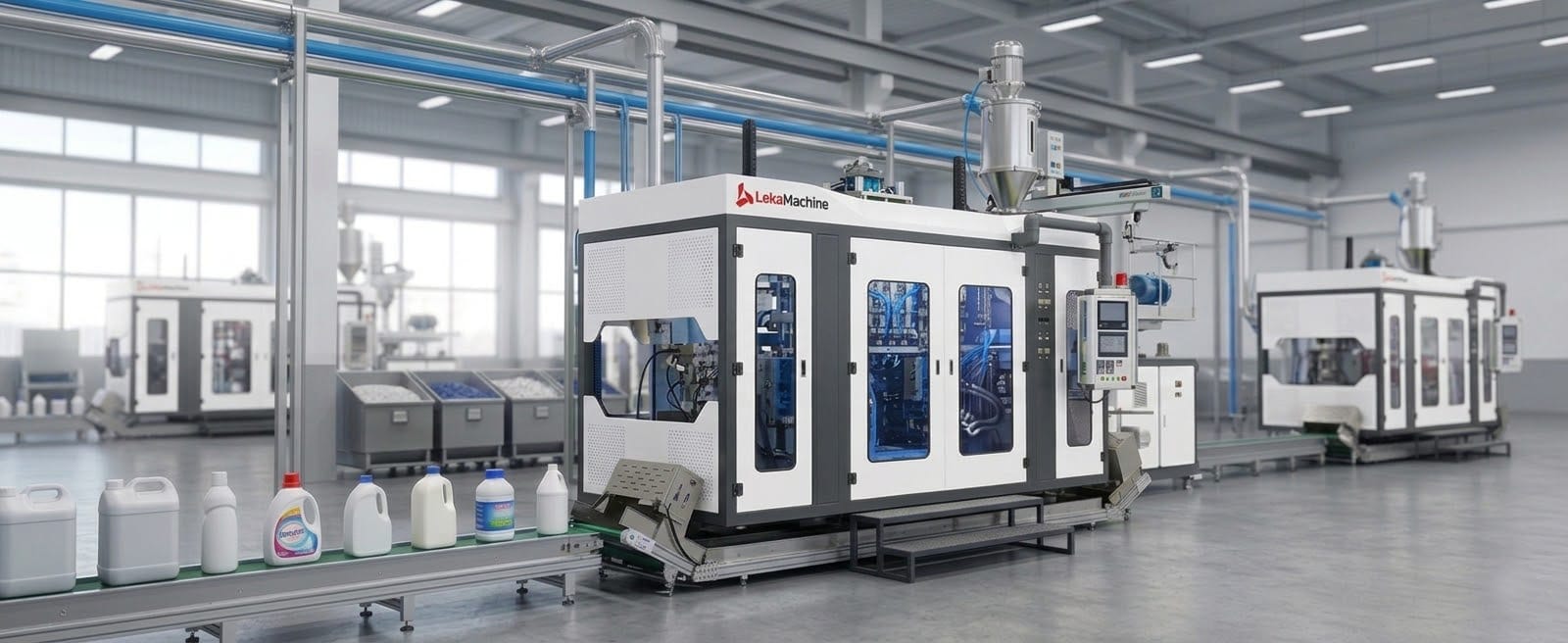
Extrusion blow molding is commonly used for HDPE or PP bottles, jerrycans, chemical containers, lubricant containers, and other hollow products that may require handles or more flexible shapes. Stretch blow molding is more commonly used for PET bottles where clarity, bottle strength, and finished appearance are especially important. The correct choice depends on bottle material, container structure, and production goals.
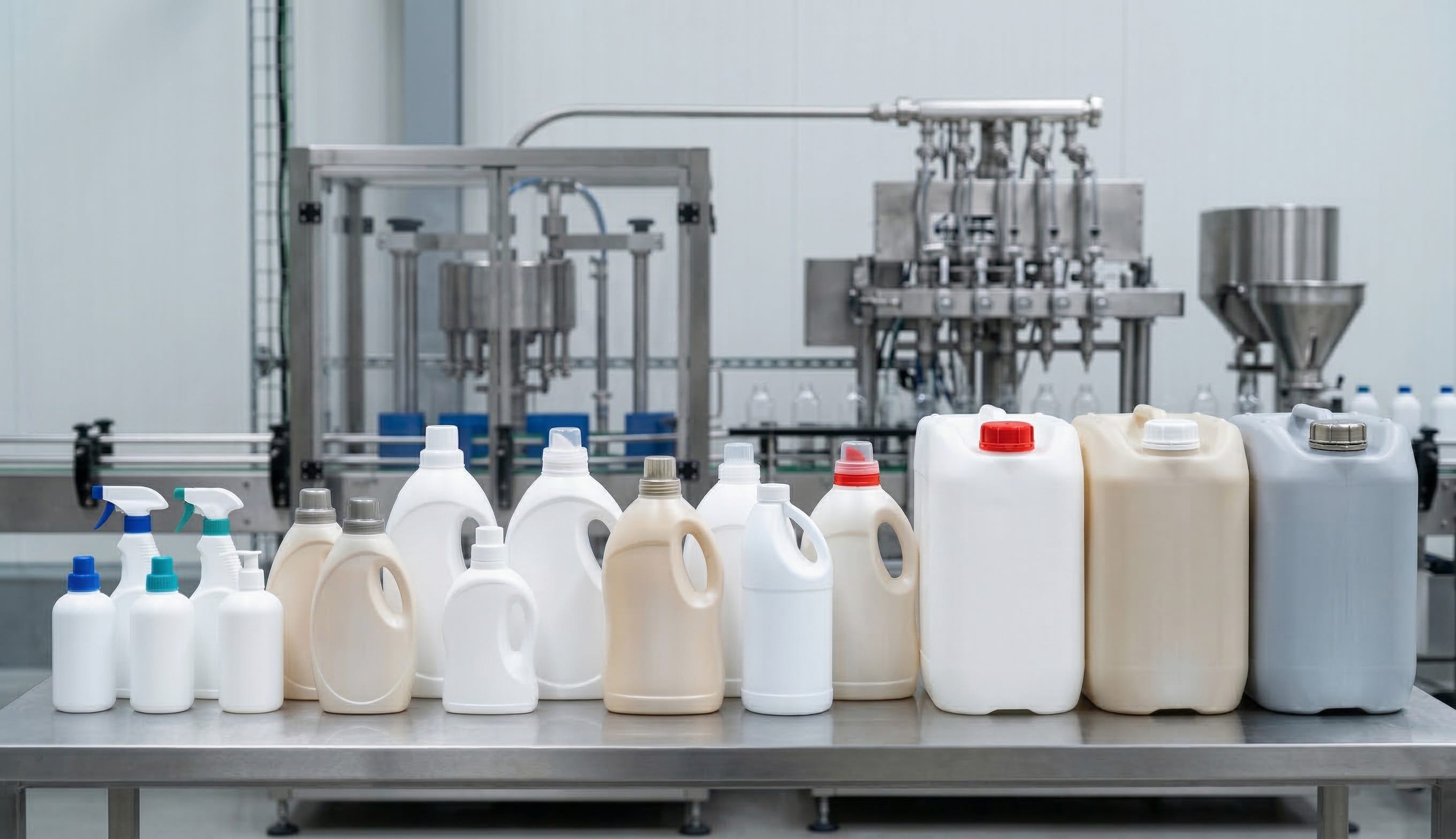
Typical applications include detergent bottles, chemical bottles, shampoo bottles, edible oil containers, jerrycans, industrial containers, and selected PET bottle projects depending on the machine type. The most suitable solution depends on bottle size, material, wall-thickness expectations, handle requirements, and target output.
This mainly depends on the bottle material, container structure, product appearance requirement, size range, and application scenario. Projects involving HDPE or PP bottles, jerrycans, and handled containers often point toward extrusion blow molding, while PET bottle projects with stronger transparency and presentation requirements are more often better suited to stretch blow molding.
Yes, but the right configuration depends on container size range, material, wall-thickness requirements, output expectations, and whether frequent mold changeovers are needed. If your project covers multiple bottle families or different container volumes, these requirements should be defined early so the machine platform can be matched more accurately.
Разливочные машины
This section answers common questions about filling machine selection for edible oil, detergent, liquid soap, chemical liquids, and other bottle filling projects, including automation level, liquid compatibility, and matching with downstream packaging equipment.
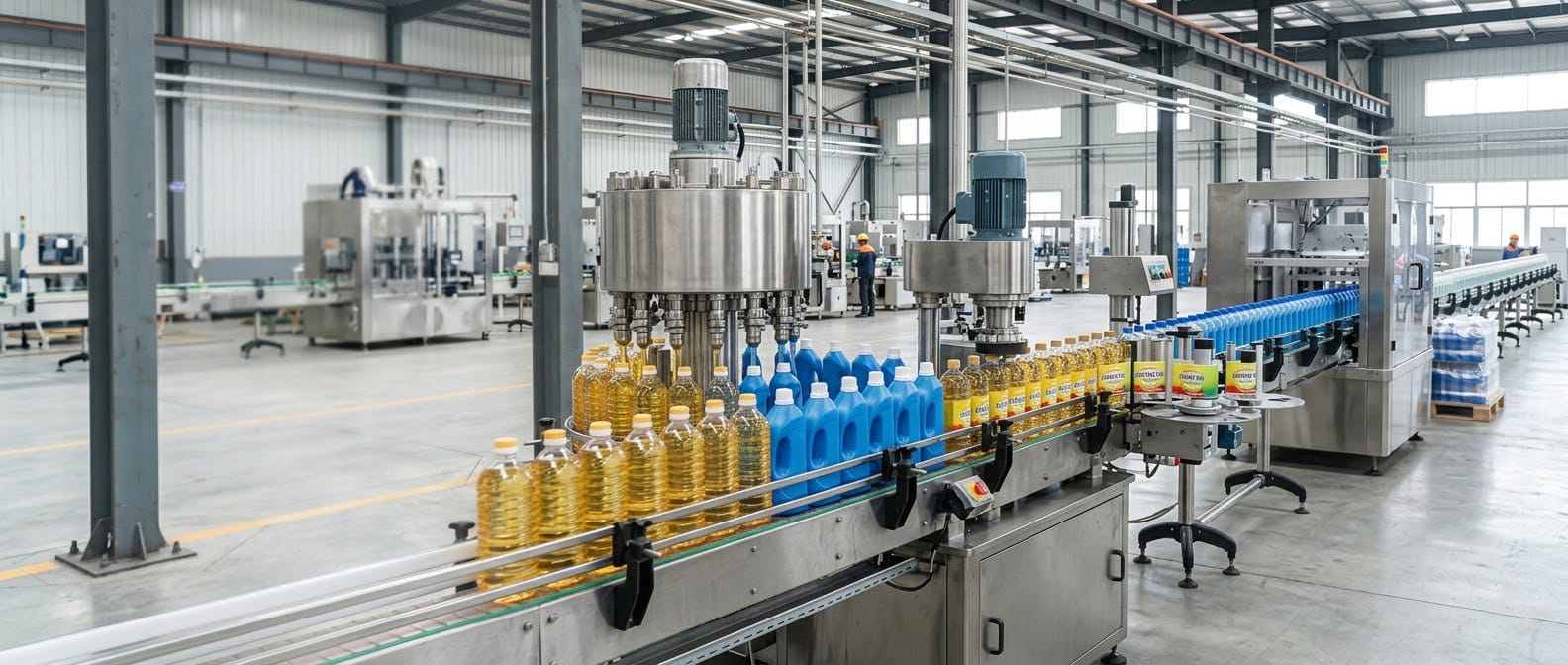
LEKA can support filling machine projects for different liquid products and packaging requirements. The suitable configuration depends on liquid characteristics, bottle size, target output, filling accuracy expectations, and whether the project needs a standalone filler or integration with capping, labeling, conveying, or packing equipment.
Yes. Filling machine selection should always match the actual product characteristics, such as viscosity, foaming tendency, filling temperature, bottle size range, and required production speed. Edible oil, detergent, liquid soap, and chemical liquid projects usually have different filling behaviors, so the filling method and machine layout should be evaluated according to the real product.
This mainly depends on your production volume, labor arrangement, budget range, and future expansion plan. Semi-automatic filling machines are usually more suitable for lower output or flexible production needs, while automatic filling machines are better for higher output, more stable line rhythm, and integration with downstream equipment.
Yes. A filling machine can be configured according to bottle dimensions, filling range, liquid type, production speed, nozzle quantity, and the level of automation needed in the line. If your project includes multiple bottle sizes or changing products, this should be discussed early so the machine layout becomes more practical and easier to operate.
Packaging Line Equipment
This section answers common questions about capping machines, labeling machines, shrink wrapping and packing equipment, and how these systems can work together with filling machines or other packaging equipment in a more complete production line.
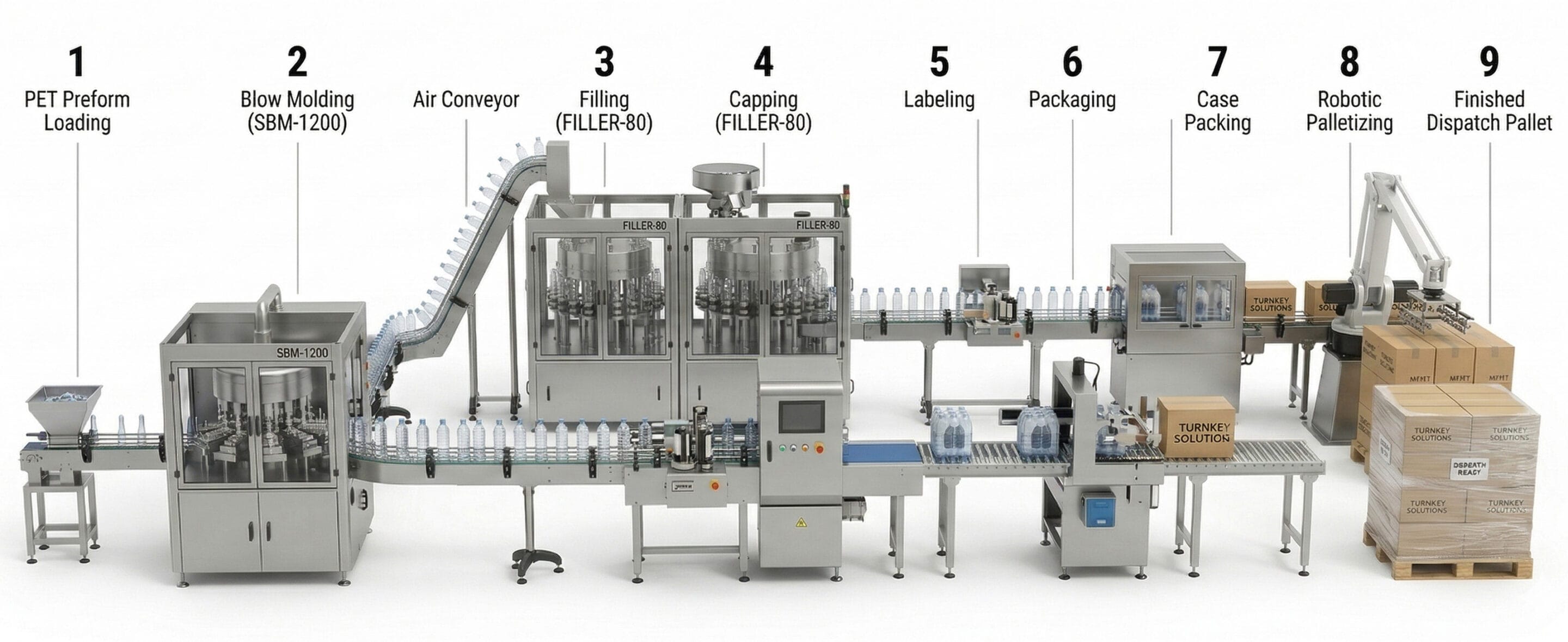
Yes. LEKA can support packaging line projects that include filling, capping, labeling, conveying, shrink wrapping, and other downstream equipment. This is especially useful when customers want better line consistency, easier installation planning, and fewer compatibility issues between machines.
This depends on your production target, labor cost, bottle changeover frequency, product type, and the level of automation required. Some customers only need one machine to upgrade a section of the line, while others need a more complete setup so the bottle can move more smoothly from filling to capping, labeling, and final packing.
Yes, but the machine choice should be based on the actual cap type, bottle shape, label format, container dimensions, and target speed. Round bottles, flat bottles, square bottles, and different cap styles do not always use the same solution, so these details should be confirmed before final quotation.
Yes. Shrink wrapping and packing equipment can be planned as part of a more complete end-of-line system. The final arrangement depends on bottle grouping format, pack size, line output, conveyor design, and the level of automation required for final dispatch.
Auxiliary & Essential Support
This section answers common questions about molds, leak testers, autoloaders, utility systems, and other essential supporting equipment that help blow molding machines, filling machines, and packaging lines run more smoothly in real production.
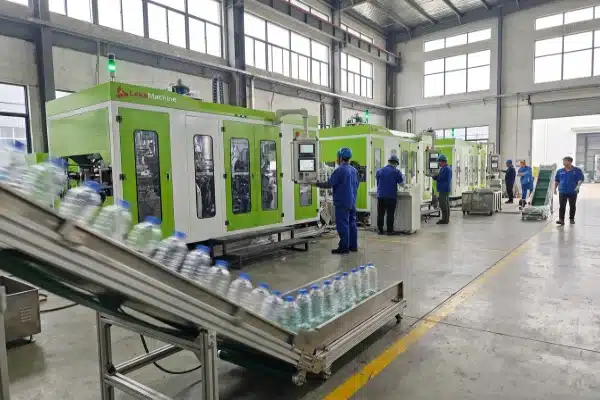
Yes. Mold support can be included with the machine project when needed. In many cases, bottle design, container structure, cavitation plan, cooling performance, and machine configuration should be evaluated together, because mold quality and machine matching directly affect production stability and final bottle consistency.
Yes. For many bottle and jerrycan projects, leak testing can be an important part of the production process, especially where sealing reliability, transport safety, or chemical packaging standards matter. The suitable testing arrangement depends on bottle type, product application, line speed, and inspection requirement.
This depends on the actual project. Common supporting equipment may include autoloaders, hopper dryers, air compressors, water chillers, mixers, crushers, conveyors, and other utility or material-handling systems. The final list should be based on material type, bottle structure, machine type, output target, and plant conditions.
The required support equipment depends on your product type, plastic material, bottle or container design, automation target, line layout, and local factory conditions such as air supply, cooling capacity, and operating habits. A practical review of the full production process is usually the best way to define which auxiliary systems are truly necessary.
Delivery & After-Sales
This section answers common questions about lead time, machine testing, shipment preparation, installation guidance, spare parts, operator training, and technical support after delivery.
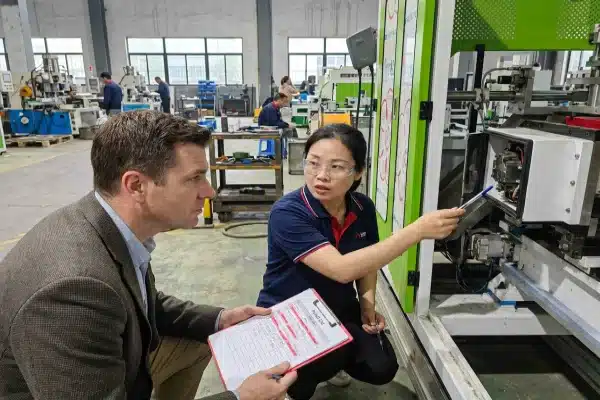
Delivery time depends on the machine type, level of customization, whether molds or line integration are included, and the final confirmed technical scope. Standard single-machine projects and broader packaging line projects do not usually follow the same schedule, so lead time should be confirmed according to the final agreed configuration.
Yes. Shipment preparation normally includes machine testing and confirmation of the agreed configuration before dispatch. The exact testing scope can vary depending on the project, machine type, mold readiness, and whether the project requires sample validation or a more detailed pre-shipment check.
Yes. LEKA can provide installation guidance, machine operation support, and training according to the actual project scope. This helps customers move more smoothly from delivery to stable production, especially when the project includes new bottle formats, line integration, or a higher automation level.
After installation, customers should keep the confirmed machine model, configuration details, and key component information available. This makes spare-parts support and technical communication faster and more accurate when future service is needed.
Need Help Choosing the Right Machine or Packaging Line Solution?
If you already know your bottle type, liquid product, target output, or packaging requirement, LEKA Machine can help you narrow down a more practical solution for blow molding, filling, downstream packaging, auxiliary support, and production planning.
Share your bottle or container type, liquid product, capacity target, and automation requirement. LEKA Machine will help you evaluate a more suitable solution path.
Свяжитесь с нами
Улучшите свой бизнес с помощью передовых решений для выдувного формования
Обладая более чем 20-летним опытом, компания Lekamachine производит долговечные, высокопроизводительные выдувные машины, отвечающие требованиям промышленности. Расширяйте свое производство с помощью надежного, точно спроектированного оборудования.
- Надежный лидер в области технологий выдувного формования.
- Сильный научно-исследовательский и производственный потенциал способствует инновациям.
- Обслуживает клиентов в более чем 70 странах.
- Быстрое реагирование, как правило, в течение 24 часов.
- Индивидуальные решения с учетом потребностей вашего бизнеса.