
Start from Your Bottle Material
Different materials need different forming logic. Some projects are better suited to stretch blow molding, while others are more suitable for extrusion blow molding. Use this quick guide to narrow the machine direction first.
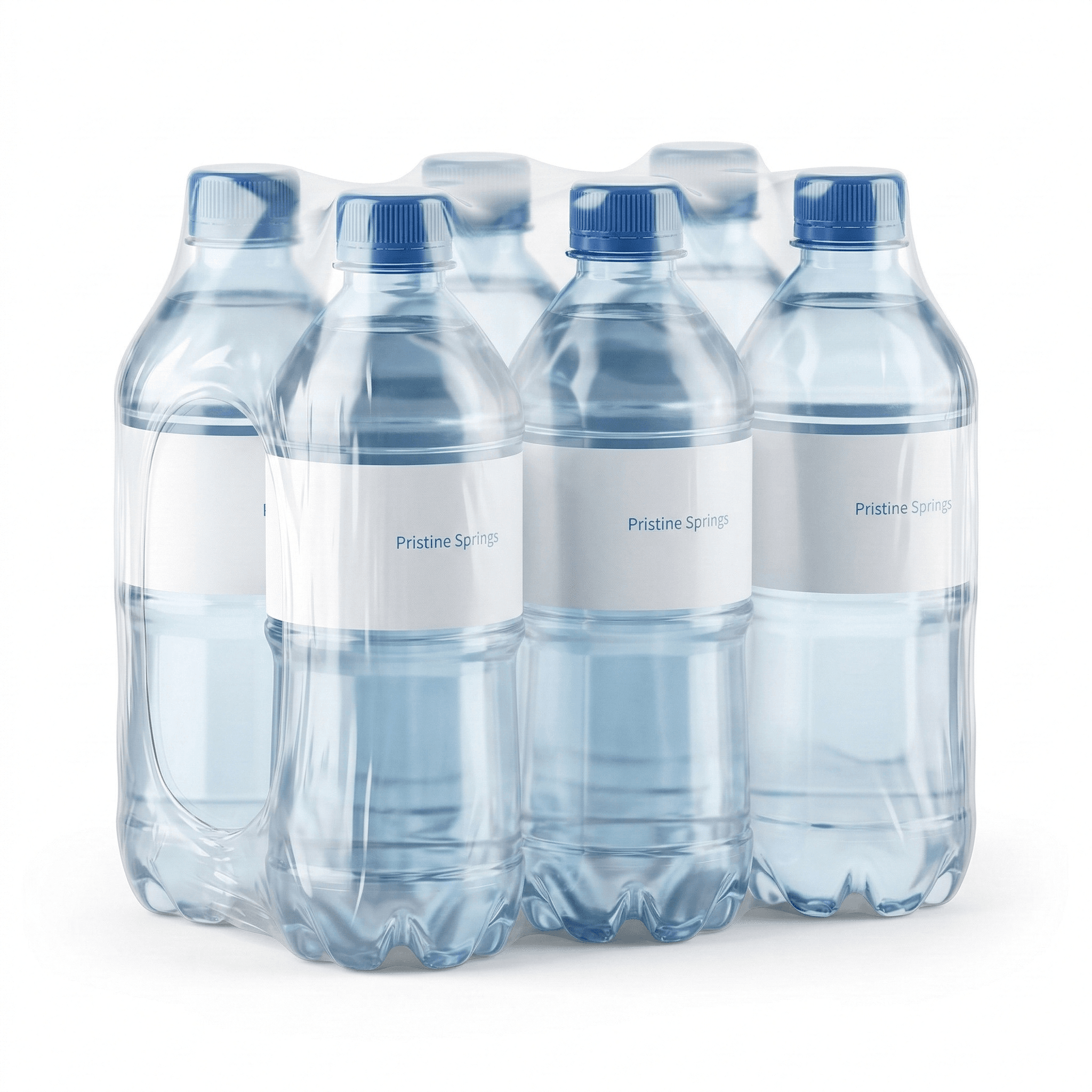
ПЭТ
Commonly used for water, beverage, edible oil, and other clear bottle packaging projects.
- High clarity bottle appearance
- Common in beverage and food packaging
- Usually matched with SBM solutions
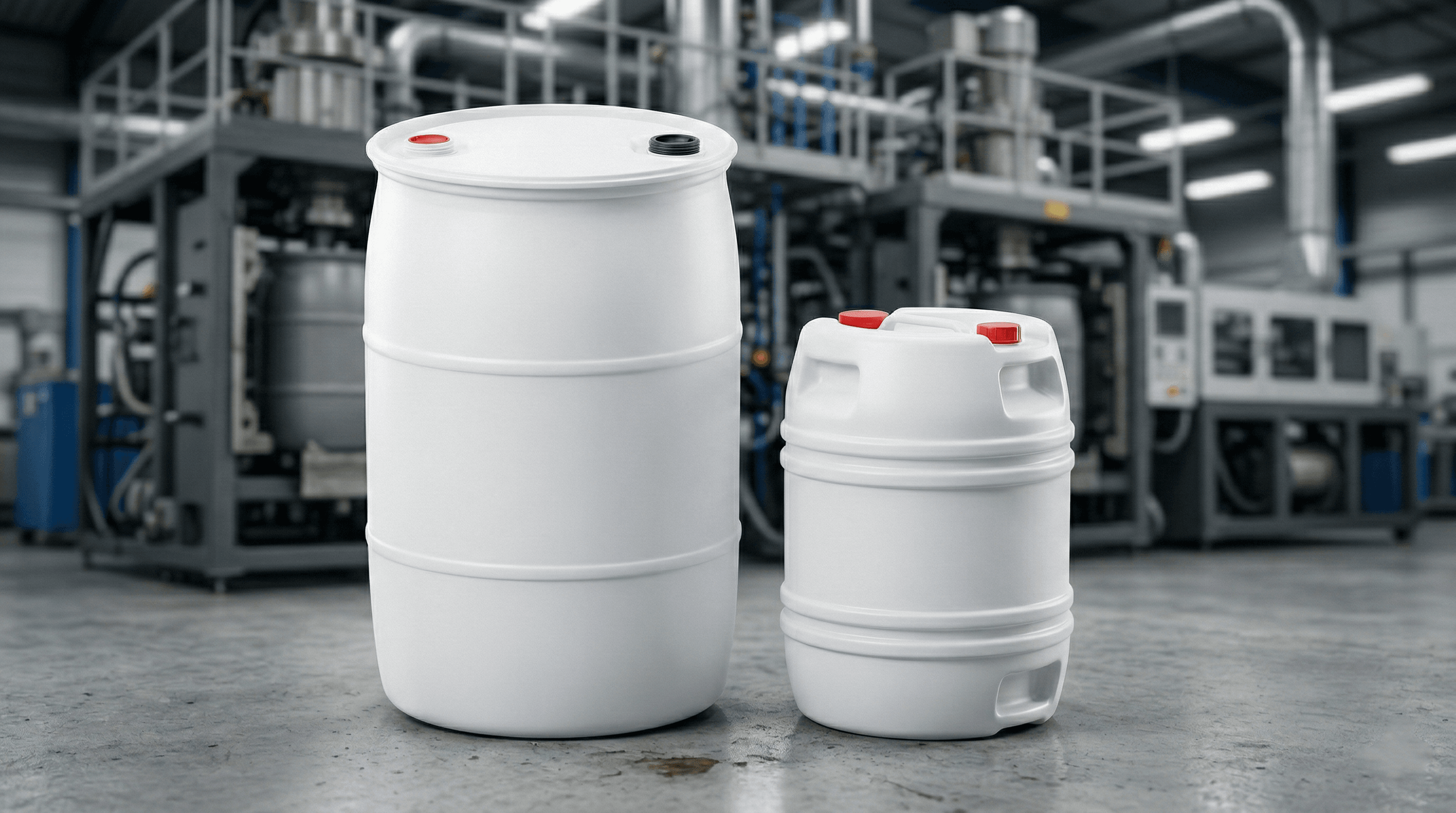
ПНД
Often used for detergent, shampoo, chemical, lubricant, and jerry can packaging.
- Strong and practical bottle structure
- Suitable for many industrial containers
- Usually matched with EBM solutions
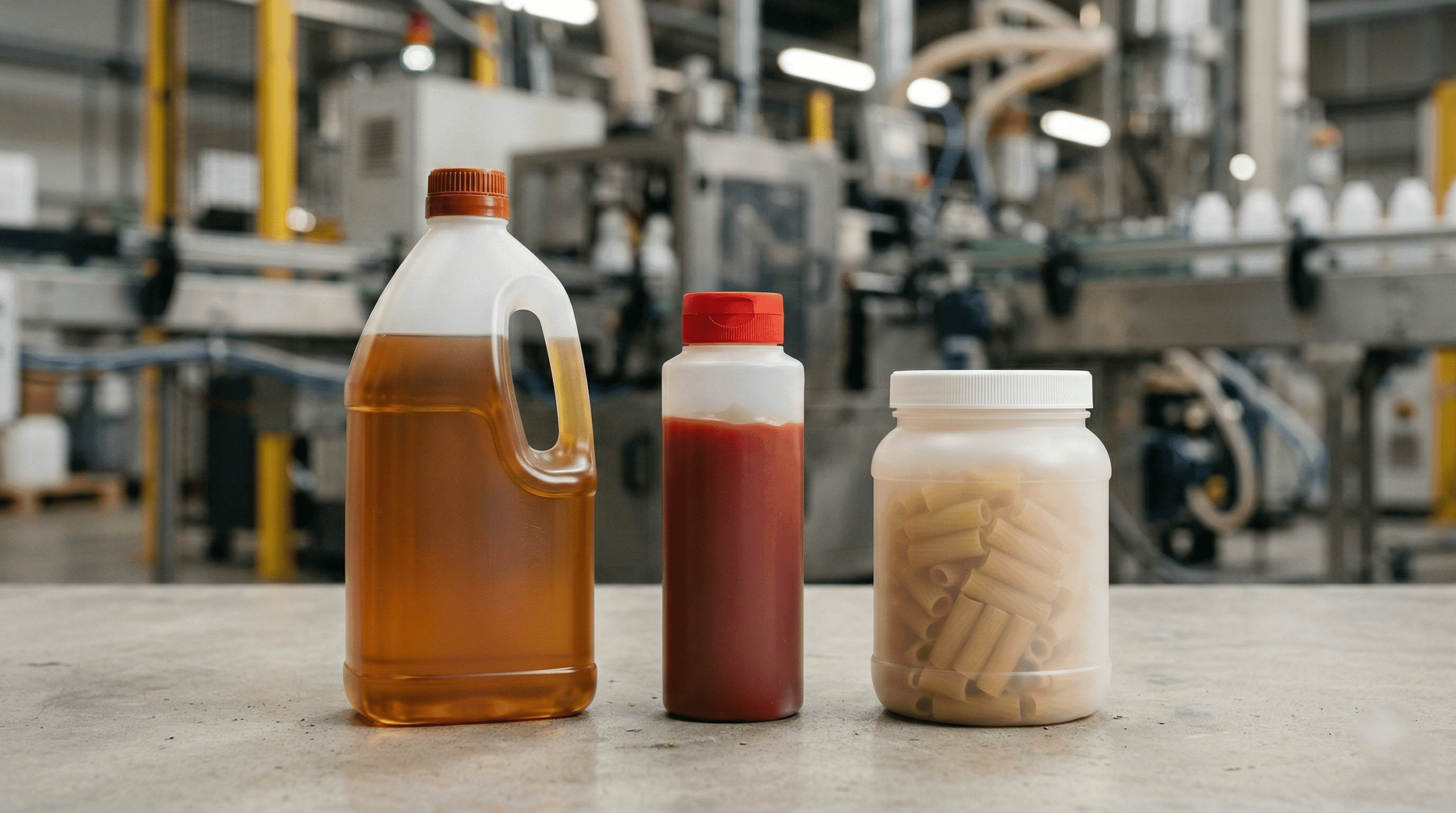
PP
Used in selected packaging projects that need heat resistance or specific product compatibility.
- Used in selected food and industrial packaging
- Processing behavior differs from HDPE
- Usually matched with EBM solutions

ПВХ
More niche and project-specific today, usually requiring careful application review before machine matching.
- Less common in modern bottle projects
- Needs application-specific evaluation
- Best discussed case by case
Material, Process, and Machine Direction
Start with the bottle material, then move to the most practical process path and machine category. For most projects, PET points toward stretch blow molding, while HDPE and many PP container projects point toward extrusion blow molding.
| Материал | Recommended Process | Common Bottle Types | Typical Project Direction | Main Decision Factors | Recommended Next Step |
|---|---|---|---|---|---|
ПЭТ
Best known for clear bottle applications |
Вытяжная выдувная формовка Usually the preferred process for clear PET bottle projects that require stable neck finish, bottle clarity, and repeatable output. | Water bottles, beverage bottles, edible oil bottles, and other clear PET packaging applications. | Semi-automatic or fully automatic PET bottle production, depending on output target, bottle design, and downstream line requirements. | Bottle volume, neck finish, clarity expectation, production speed, and how the bottle will connect with filling, capping, and packing. | Explore Stretch Blow Molding Machines |
ПНД
Common in detergent, chemical, and industrial packaging |
Экструзионно-выдувное формование Usually the preferred process for practical containers, handle bottles, industrial packaging, and many HDPE bottle projects. | Detergent bottles, shampoo bottles, chemical containers, lubricant bottles, household packaging, and jerry cans. | Single-station, dual-station, or multi-cavity EBM projects depending on bottle size, structure, automation level, and output plan. | Bottle weight, handle design, wall thickness control, resin consumption, output target, and long-term production stability. | Explore Extrusion Blow Molding Machines |
PP
Often used in selected packaging and specialty container projects |
Usually Extrusion Blow Molding Many PP bottle and container projects are evaluated under EBM logic, although the final direction still depends on structure and application. | Selected food containers, household packaging, and special industrial bottle or container projects. | Usually reviewed as an extrusion blow molding project, with final confirmation based on bottle geometry, resin behavior, and end-use conditions. | Heat resistance requirements, bottle structure, resin performance, appearance expectations, and compatibility with actual production conditions. | See LEKA Extrusion Blow Molding Machine Solutions |
ПВХ
More niche and project-specific today |
Case-by-Case Evaluation Not every modern bottle project is suitable for PVC. Application review is usually needed before confirming process direction. | Legacy packaging projects, selected industrial containers, and niche bottle applications where PVC is still under review. | Usually discussed as a custom project rather than a standard machine path, especially when compliance and end-use requirements matter. | Local compliance, end-use safety, project feasibility, and whether PET, HDPE, or PP may be a better long-term material choice. | Discuss Your Bottle Project |
Recommended Machine Path by Material
Once the bottle material is clear, the machine direction usually becomes much easier. PET bottle projects typically move toward stretch blow molding, while HDPE and many PP container projects usually move toward extrusion blow molding.
For PET Bottle Projects
If your project focuses on clear PET bottles for water, beverages, edible oil, or similar applications, the next step is usually to review stretch blow molding solutions built for PET bottle production.
- Best suited to clear PET bottle production
- Common in beverage, food, and consumer packaging projects
- Easy to connect with downstream filling, capping, labeling, and packing lines
For HDPE / PP Container Projects
If your project involves HDPE or PP bottles, jerry cans, lubricant containers, detergent packaging, or other practical bottle and container structures, the next step is usually to review extrusion blow molding solutions.
- Suitable for handled bottles, household packaging, and industrial containers
- Common in detergent, chemical, lubricant, and daily-use packaging applications
- Can also support broader bottle packaging line planning around the machine
Material Is Only the Starting Point
Choosing between PET, HDPE, PP, or PVC is useful, but real machine selection does not stop there. In most B2B projects, the final solution also depends on bottle size, shape, neck finish, output target, automation level, and whether the machine will later connect to a broader packaging line.
That is why this page should not only explain materials. It should also help visitors move from material choice to machine direction, and then into a real project discussion.
- Match the bottle material to the right forming process
- Match the process to the right machine family
- Match the machine to your bottle project and output plan
- Decide whether the project stays standalone or extends into a full packaging line
What LEKA Can Help You Evaluate
Need Help Matching Material to Machine Direction?
Send LEKA your bottle material, bottle type, volume range, and target output. We can help you evaluate whether your project should move toward stretch blow molding, extrusion blow molding, or a broader bottle packaging line solution.
Request Machine Direction AdviceЧасто задаваемые вопросы
These are some of the most common questions buyers ask when choosing bottle production equipment by material, process direction, and project type.
Is PET usually made by stretch blow molding or extrusion blow molding?
In most standard bottle projects, PET is usually matched with вытяжка с раздувом, especially for water, beverage, and edible oil bottles. This is the more common direction when bottle clarity, neck finish, and stable appearance are important.
Is HDPE more suitable for extrusion blow molding?
Yes. HDPE is commonly used in экструзионно-выдувном формовании (ЭВФ) projects for detergent bottles, shampoo bottles, chemical containers, lubricant bottles, and jerry cans. It is widely used for practical bottle shapes and industrial packaging.
Can PP bottles also use extrusion blow molding machines?
In many cases, yes. PP projects are often evaluated under extrusion blow molding logic, but the final direction depends on bottle structure, application needs, heat resistance requirements, and resin behavior during production.
Is PVC still a common bottle material for new projects?
PVC is more niche today and is usually discussed case by case. For many new bottle projects, buyers first review whether PET, HDPE, or PP may be a more suitable and practical option. If your project still requires PVC, it is better to discuss it directly before selecting a machine direction.
How do I know whether my project should go to SBM or EBM?
The starting point is usually the bottle material, but the final decision also depends on bottle volume, shape, neck finish, output target, and end-use packaging requirements. PET often moves toward SBM, while HDPE and many PP projects often move toward EBM.
Can LEKA also help with filling, capping, labeling, and packing equipment?
Yes. If your project is moving beyond standalone bottle making, LEKA can also help evaluate broader bottle packaging line planning, including downstream equipment such as filling, capping, labeling, and packing systems.
What information should I send before asking for a recommendation?
The most useful information includes your bottle material, bottle volume, sample photo or drawing, target output, bottle application, and whether you only need bottle making equipment or a broader packaging line solution.
You can also go directly to the inquiry form and send your project details.