
Bleach bottles may look simple on the shelf, but manufacturing them reliably is a serious packaging project. A good bleach bottle must resist chemical stress, maintain stable wall thickness, seal well with the cap, run smoothly on the filling line, and hold up during transport and storage.
For most standard household bleach bottle projects, the practical solution is HDPE bottle production with extrusion blow molding. This is the common route for rigid chemical bottles because it supports durable hollow containers, controlled bottle geometry, and efficient production for daily chemical packaging.
At LEKA Machine, bleach bottle manufacturing is not treated as an isolated bottle-making step. In real factories, the bottle must also work with filling, capping, labeling, а также packing. That is why bottle design and machine selection should always be considered as part of the full packaging line.
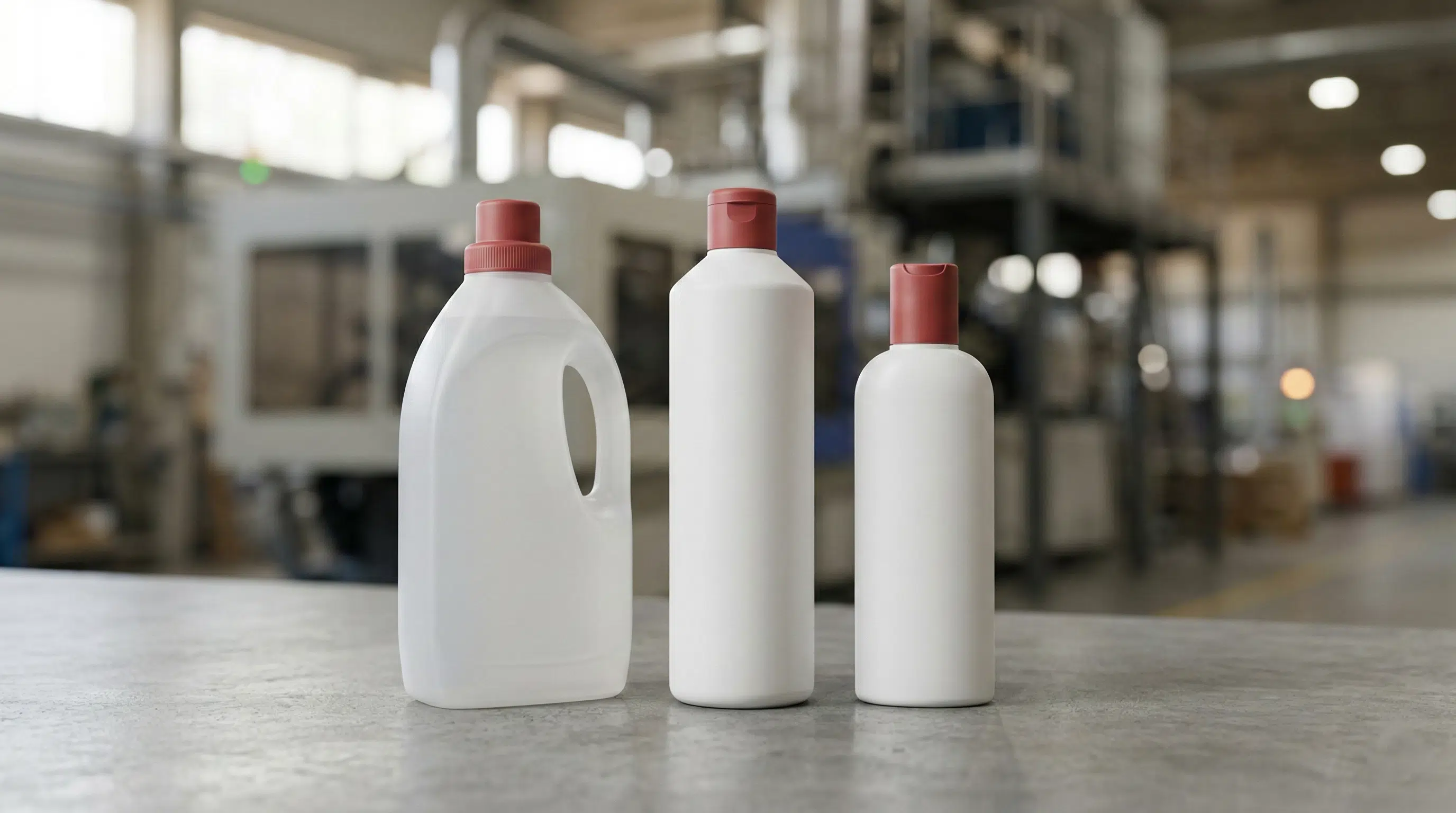
What Material Are Bleach Bottles Usually Made From?
Most bleach bottles are made from ПНД, or high-density polyethylene. This material is widely used in household chemical packaging because it combines toughness, practical chemical resistance, and good performance in extrusion blow molding production.
For bleach packaging, the bottle must do more than just hold liquid. It must also:
- stay stable during filling, capping, and conveying
- maintain reliable wall strength during transport and handling
- support accurate neck finishing for closure performance
- work well in opaque bottle formats commonly used for household chemicals
- balance material cost, bottle weight, and production stability
This is why HDPE remains one of the most practical materials not only for bleach bottles, but also for detergent bottles, cleaner bottles, and many other rigid chemical containers.
What Machine Is Used to Make Bleach Bottles?
In most standard projects, bleach bottles are made with Экструзионно-выдувные машины. This process forms a hollow bottle directly from molten HDPE, making it highly suitable for rigid packaging used in household and industrial chemical applications.
Extrusion blow molding is commonly used for:
- bleach bottles
- detergent bottles
- cleaner bottles
- chemical jerrycans
- handle bottles and utility containers
If your project involves opaque HDPE bottles rather than clear PET containers, extrusion blow molding is usually the more practical production method. For buyers comparing machine routes, this matters because bleach bottle projects normally focus on chemical packaging performance, structural strength, and downstream line compatibility rather than bottle transparency.
Explore LEKA extrusion blow molding machines
How Bleach Bottles Are Made Step by Step
The exact process can vary depending on bottle size, cavity layout, output target, and mold design, but most bleach bottle manufacturing lines follow the same basic production logic.
1. HDPE resin feeding
The process starts with HDPE resin pellets. These are fed into the extruder through the hopper. If the bottle requires a specific appearance or color, masterbatch can also be added at this stage.
Stable raw material feeding is important because early inconsistency often leads to unstable melt flow, bottle weight variation, and wall thickness problems later in production.
2. Melting and plasticizing
Inside the extruder, the resin is heated, compressed, and mixed into a uniform molten material. Good plasticizing is essential because unstable temperature or material flow can cause weak bottle sections, surface defects, or inconsistent cycle performance.
3. Parison formation
The molten HDPE exits the die head as a hollow tube, called a parison. This stage is critical because the parison strongly influences material distribution across the shoulder, body, handle zone, base, and neck area.
If parison control is poor, the finished bottle may show:
- uneven wall thickness
- weak shoulder sections
- base instability
- unnecessary material consumption
4. Mold closing and blowing
The mold closes around the parison, and compressed air expands the material against the mold cavity. This is where the final bottle shape is formed, including the body contour, shoulder geometry, grip area, and base profile.
For bleach bottles, this stage must be stable because bottle strength, dimensional accuracy, and sealing performance all depend on repeatable forming conditions.
5. Cooling and bottle stabilization
After forming, the bottle remains in the mold long enough to cool and stabilize. Cooling directly affects cycle time, bottle rigidity, and dimensional consistency. Poor cooling may lead to deformation, unstable geometry, or downstream problems during filling and capping.
6. Trimming and deflashing
Extrusion blow molding creates excess material where the mold pinches and seals. This extra plastic must be removed after forming. Proper trimming is important not only for appearance, but also for base quality, sealing reliability, and stable bottle handling.
7. Inspection and leak testing
Finished bottles are typically checked for visual defects, dimensional consistency, and leakage performance. Leak testing is especially important in bleach bottle manufacturing because even small sealing problems can create transport risk, product loss, and downstream line issues.
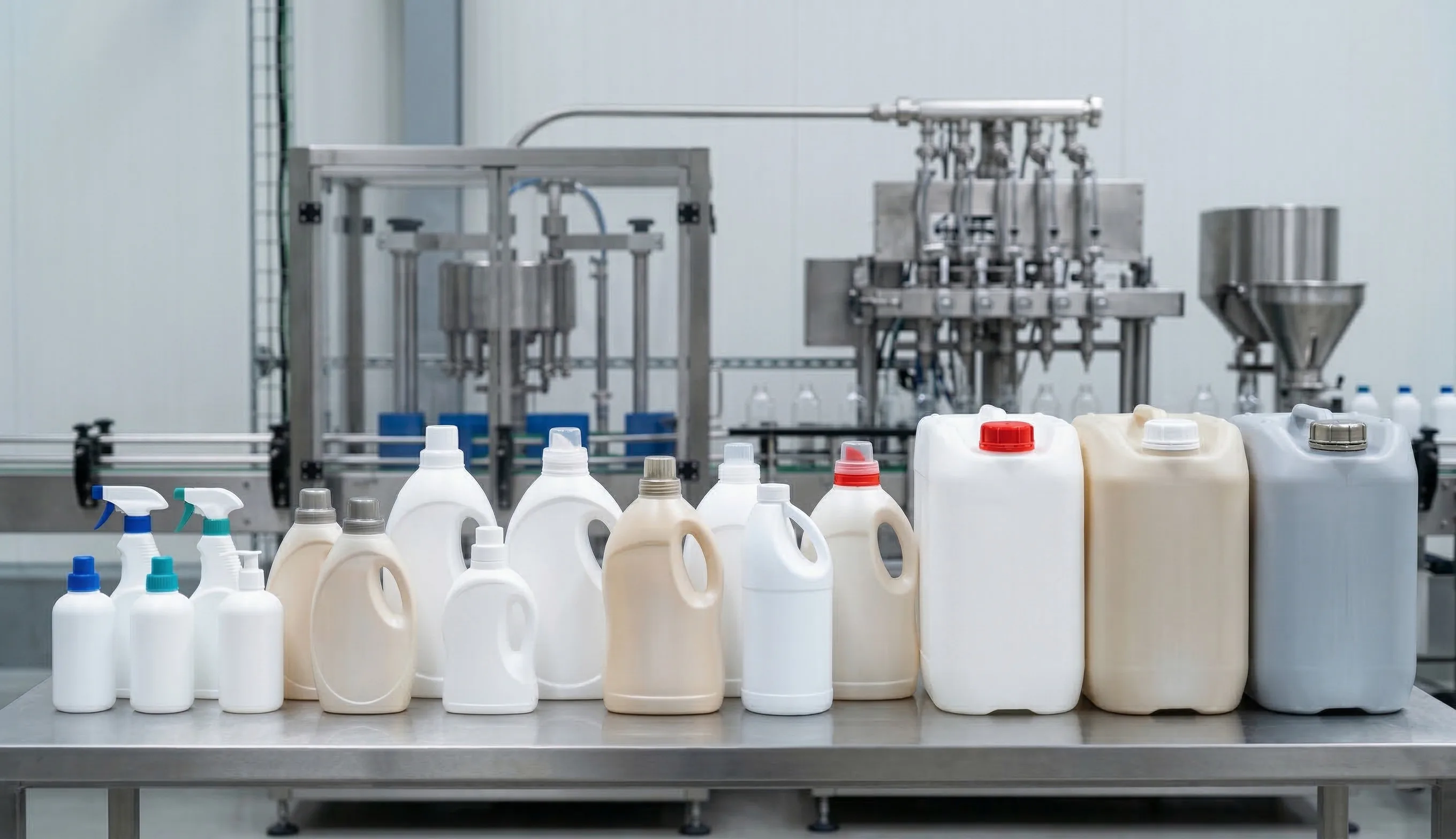
Why Bottle Design Matters in Bleach Bottle Manufacturing
Bleach bottle production is not only about choosing a machine. It also depends on whether the bottle design is practical for manufacturing, capping, labeling, transport, and real-world use.
Wall thickness distribution
Wall thickness is one of the most important quality factors in bleach bottle production. Thin areas may reduce bottle strength and increase leakage risk. Over-thick areas increase resin consumption and production cost. A good bottle design supports balanced material distribution instead of forcing the process to compensate for a weak structure.
Neck finish accuracy
The neck area must match the closure system accurately. Poor neck finish control can lead to capping defects, sealing problems, torque inconsistency, and leakage after filling. In bleach packaging, this point is especially important because closure performance directly affects transport safety and shelf reliability.
Base stability
A bottle that stands well on the shelf may still perform poorly on a filling line if the base design is not stable. Bleach bottles must move smoothly through conveyors, filling stations, cap application, labeling, and secondary packing. Base structure should therefore be evaluated as a line-performance factor, not just a visual design choice.
Grip and handling structure
Some bleach bottles use side grips or ergonomic shapes to improve handling. These features can make the bottle easier to use, but they also make blow molding control more demanding. Complex shapes often require better parison programming, more balanced mold design, and closer control of weak sections.
Label panel area
Bleach bottles still need a clear and stable surface for label application. If the bottle shape is too aggressive or the panel area is inconsistent, labeling performance may suffer. A practical bottle design should support branding without creating unnecessary difficulty in downstream packaging.
Common Problems in Bleach Bottle Production
When bottle design, mold layout, resin behavior, and blow molding conditions are not properly matched, several problems tend to appear repeatedly.
- uneven wall thickness
- neck finish defects
- poor cap fit or sealing problems
- bottle deformation after cooling
- unstable bottle weight
- rough trimming edges
- base instability on conveyors or filling machines
- leakage after capping or transport
In most cases, these are not isolated defects. They usually reflect a broader mismatch between bottle design, blow molding settings, mold cooling, trimming quality, and downstream packaging requirements.
Bleach Bottle Manufacturing Should Be Planned as a Packaging Line
Many buyers make the mistake of evaluating the bottle machine alone. In real production, the bottle is only one part of the final packaging result. Once the bottle leaves the mold, it still needs to perform well during liquid filling, cap application, label positioning, and final packing.
That is why bleach bottle projects should be planned as a complete system that may include:
- Экструзионно-выдувные машины
- chemical detergent filling machines
- capping machines
- labeling machines
- shrink wrapping and packing equipment
If bottle dimensions are unstable, if the neck finish is inconsistent, or if the base does not run smoothly, downstream efficiency will suffer. That is why the best bleach bottle projects are designed from the start as integrated bottle packaging solutions rather than isolated machine purchases.
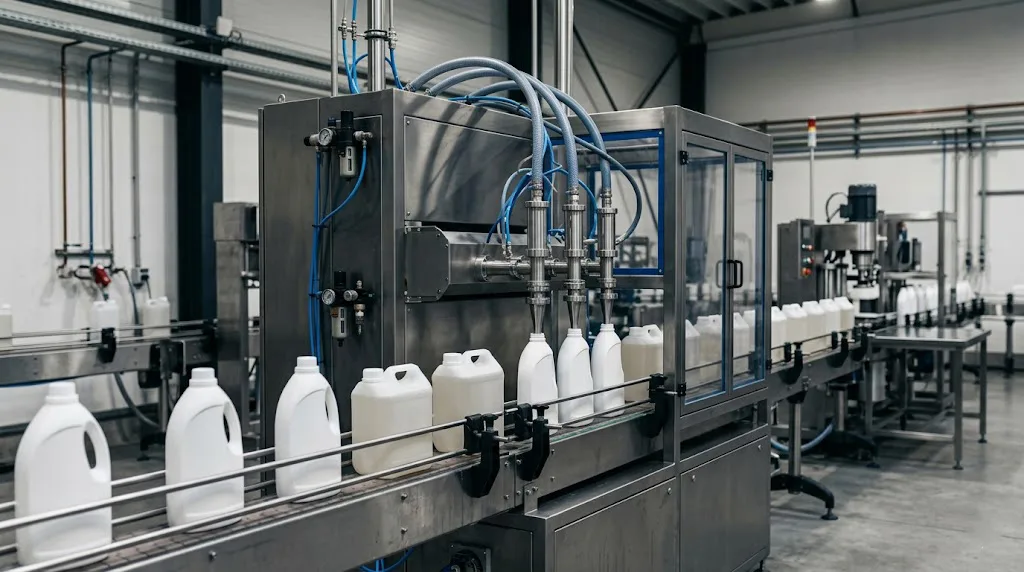
What Buyers Should Confirm Before Ordering a Bleach Bottle Production Solution
If you are planning a new bleach bottle project, these are the practical points that should be confirmed early:
- bottle volume range
- HDPE bottle structure and drawing status
- target output per hour
- whether handle bottles are required
- neck finish and cap type
- whether the project includes only bottle blowing or the full packaging line
- labeling format and secondary packing method
- available factory space and line layout limits
The clearer these inputs are, the easier it becomes to match the right machine configuration, mold structure, and downstream packaging solution.
ЧАСТО ЗАДАВАЕМЫЕ ВОПРОСЫ
What material is normally used for bleach bottles?
Most bleach bottles are made from HDPE because it offers durability, practical chemical resistance, and strong suitability for extrusion blow molding production.
What machine is used to make bleach bottles?
In most standard projects, bleach bottles are produced with extrusion blow molding machines.
Are bleach bottles made the same way as PET bottles?
No. Bleach bottles are usually made from HDPE by extrusion blow molding, while clear PET bottles are usually made by stretch blow molding from preforms.
Why is leak testing important for bleach bottles?
Leak testing is important because bleach packaging requires reliable sealing during storage, transport, retail handling, and daily use. Poor sealing can quickly create packaging and safety problems.
Should bleach bottle projects be planned together with filling and capping?
Yes. In practical factory production, bottle quality directly affects filling, capping, labeling, and packing performance. Planning the full line from the start is usually more efficient than treating each machine as a separate project.
Заключение
Bleach bottle manufacturing is not just about making a hollow plastic container. It is a packaging process that depends on the right combination of HDPE material, bottle structure, extrusion blow molding stability, and downstream line compatibility.
For most projects, the practical route is HDPE bottle production by extrusion blow molding, combined with reliable control of wall thickness, neck accuracy, cooling, trimming, and leak testing. But for real production success, that bottle must also work smoothly with filling, capping, labeling, and packing.
If you are planning a bleach bottle project, the best approach is to evaluate the bottle, machine, mold, and packaging line as one connected system rather than as isolated equipment.
Planning a bleach bottle project?
Tell LEKA your bottle size, output target, cap type, and whether you need only bottle blowing or a complete packaging line. We can help match a practical solution for HDPE bottle production and downstream packaging.