
How Many Workers Do You Need for One Extrusion Blow Molding Machine?
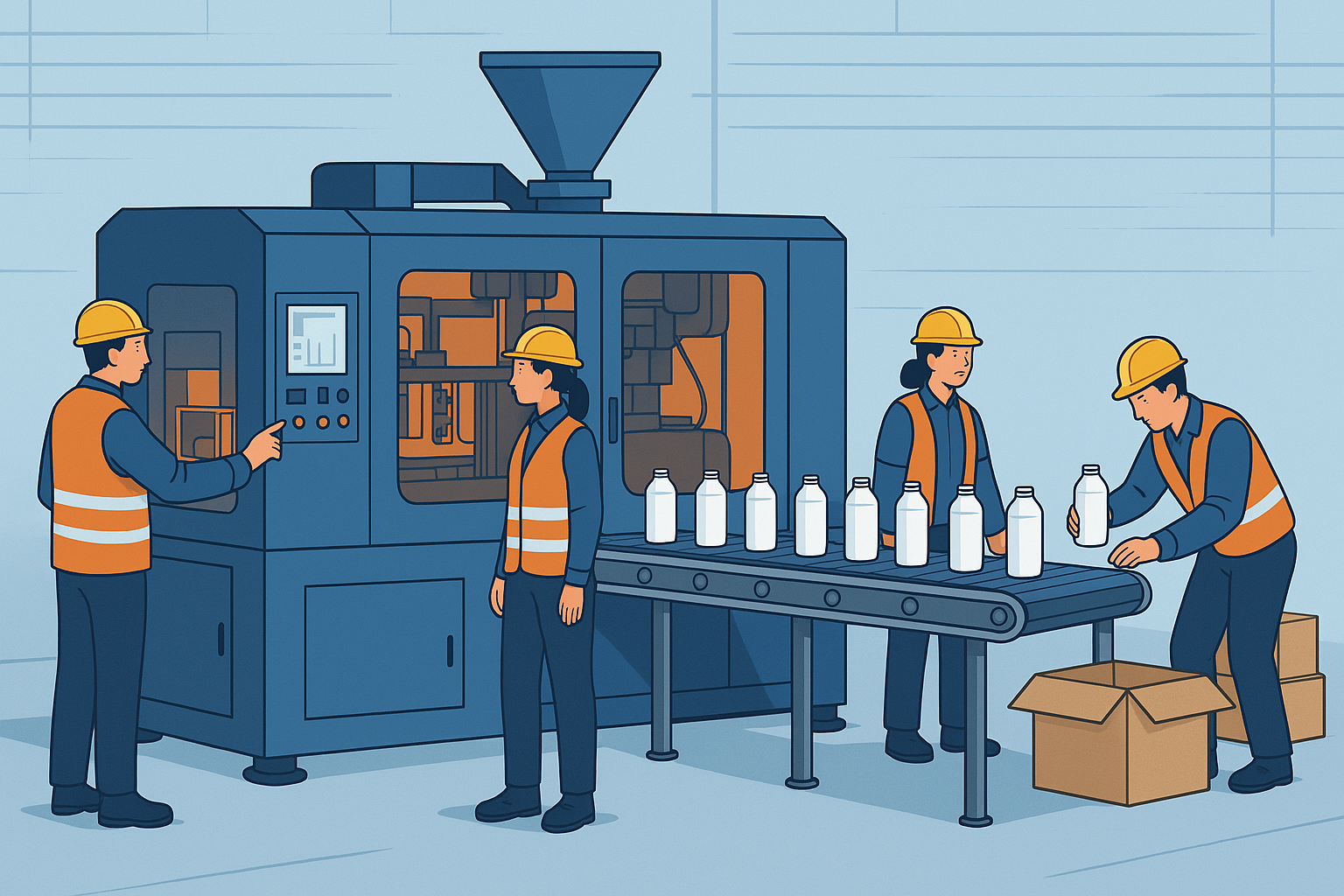
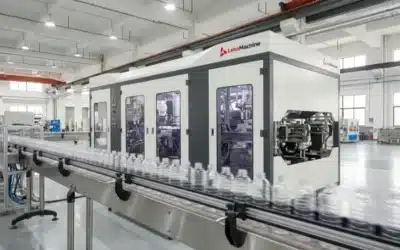
Operators supervise an extrusion blow molding machine as finished plastic bottles move along the conveyor for packing.
When you plan a new extrusion blow molding line, one of the first questions is very simple:
How many people do I need to run one machine?
If you put too many people on one line, your cost per bottle goes up. If you put too few, you risk unstable quality, low output, and safety problems.
This article gives you a practical view of how many workers are usually needed for one extrusion blow molding machine, and how the staffing looks for fully automatic and semi-automatic setups.
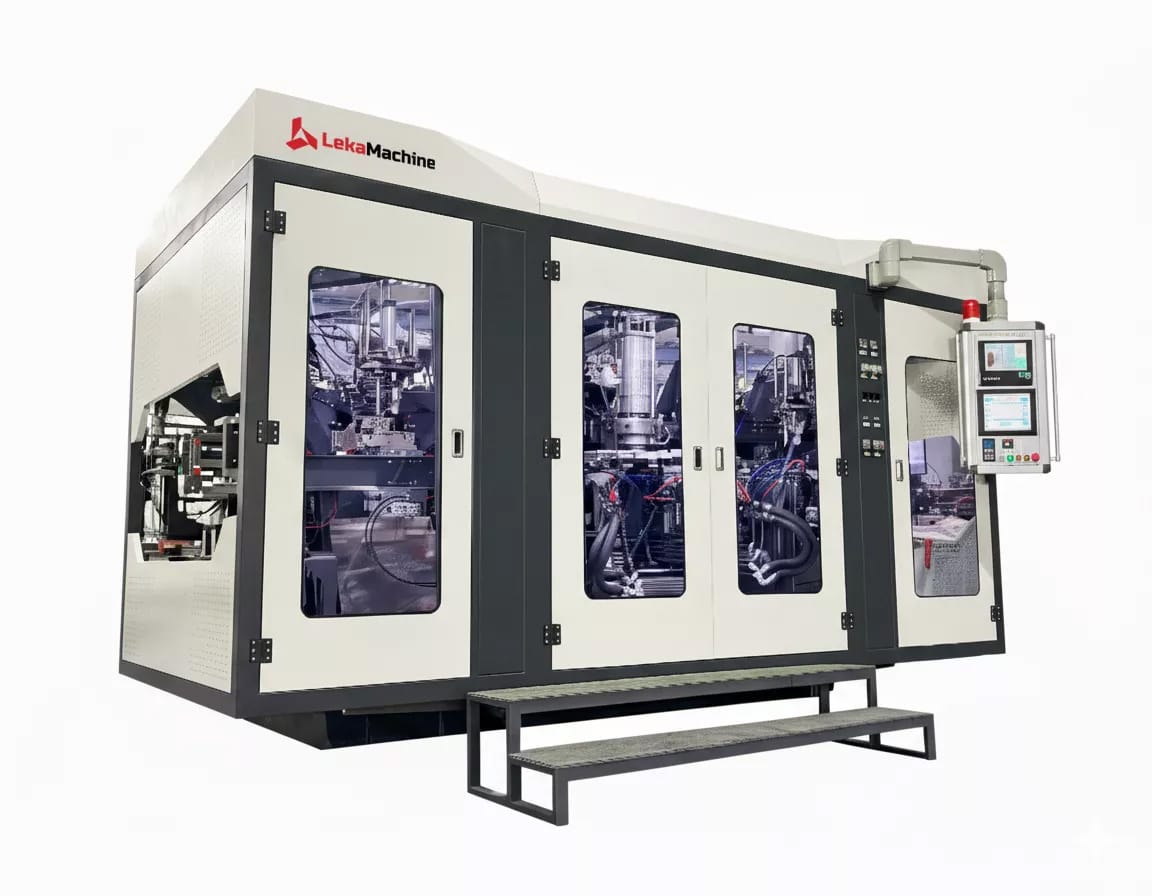
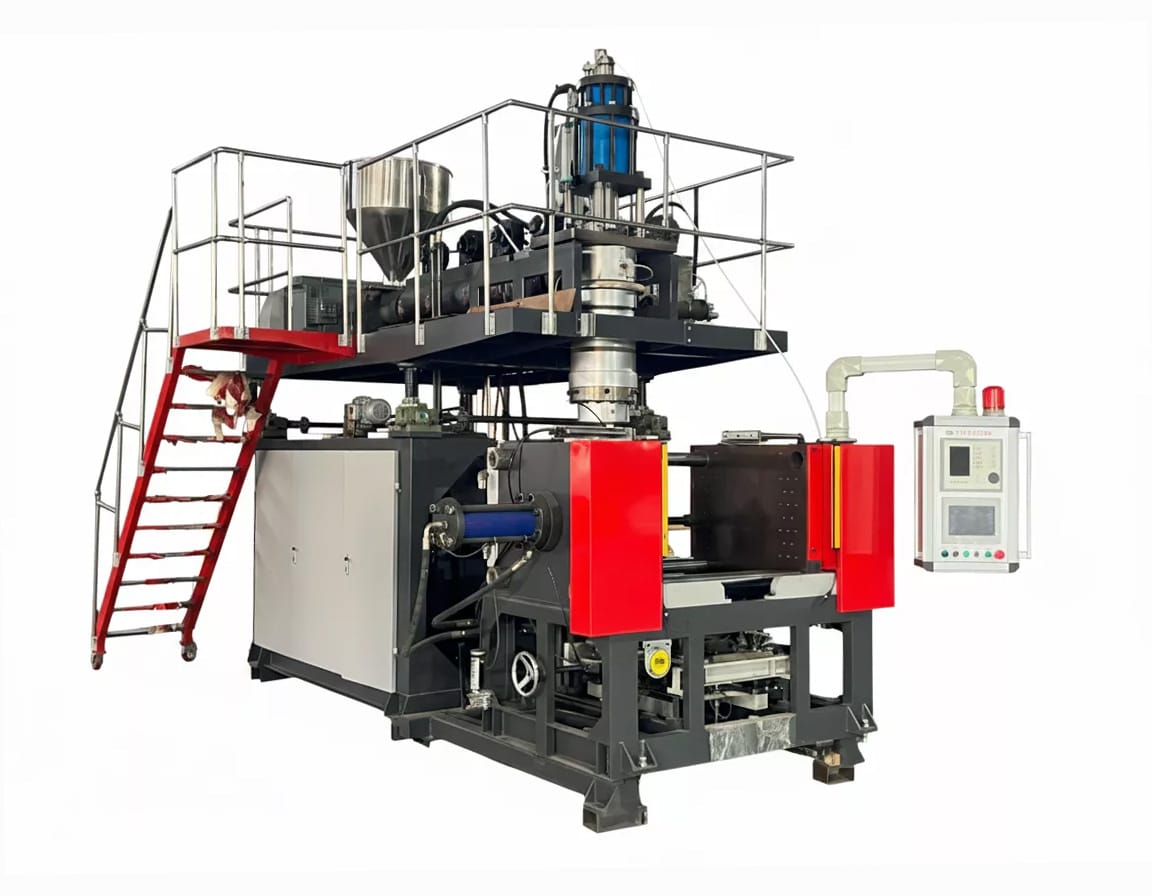
If you want to learn more about the machines themselves, you can also check the extrusion blow molding machine range here.
Why “How Many People per Machine” Matters
For most blow molding factories, labor is one of the biggest running costs, together with raw material and energy.
Every extra person on the line is a fixed cost. But every missing person can create quality issues, bottlenecks, or downtime.
The goal is not to “save people at all cost”. The goal is to match the right number of workers with the right level of automation, so that your cost per bottle stays low and quality stays stable.
In this article, we will look at:
- What steps the extrusion blow molding machine covers by itself
- Which steps still need people
- How many workers are usually needed for fully automatic and semi-automatic lines
What the EBM Line Does vs What People Do
First, let’s break down a typical extrusion blow molding line. This helps you see where the machine works and where people are involved.
| Step No. | Process step | What the machine does | What workers do on FULLY automatic line | What workers do on SEMI-automatic line |
|---|---|---|---|---|
| 1 | Resin feeding & plasticizing | Auto dosing HDPE/PP, plasticizing in extruder | Check material silo, follow production order, basic records | Manually add bags of resin, check dryer/feeder, basic records |
| 2 | Parison extrusion | Extrude parison with thickness control | Monitor HMI, adjust parameters when needed | Same as left, but operator usually stands closer to machine |
| 3 | Mould closing & blowing | Close mould, cut parison, blow to bottle | Monitor alarms, check cycle time and bottle quality | Same as left |
| 4 | Take-out / deflashing | Robot takes bottles, auto deflashing | Watch robot motions, clear jams if any | Workers manually take bottles, cut flash, remove scrap |
| 5 | Leak test / vision check | Inline leak tester, optional vision system | Random re-check, record QC data | Manual leak test (air gun, water) and visual check |
| 6 | Conveying to packing area | Conveyor brings good bottles to packing table | Keep packing table clean and tidy | Often no conveyor; workers carry trays/boxes to packing area |
| 7 | Packing & labelling | Optional auto counting/packing/labelling | Pack in bags/cartons, print and stick labels, keep pallet tidy | Same tasks, but more manual moving and lifting |
| 8 | Palletizing & warehouse handover | Optional palletizer, finished goods out | Call forklift/handler, confirm pallet quantity | More manual stacking and pallet organizing |
As you can see, fully automatic lines use robots, conveyors, and online inspection to replace simple manual work like take-out, trimming, leak testing, and carrying boxes.
This is why one person can watch more than one fully automatic machine, while semi-automatic machines need more hands on the floor.
Typical Positions on an Extrusion Blow Molding Line
One machine does not mean only one position. And one position can often support more than one machine.
Below is a simple list of typical positions you will see in an EBM workshop.
| Position / Station | Main responsibilities | Usually covers how many machines per shift |
|---|---|---|
| Line leader / Shift leader | Overall output, quality, safety, changeover decisions, communication with production | 2–4 lines (depending on size and automation level) |
| Extrusion blow molding operator | Start-up, shut-down, parameter adjustment, recipe change, basic troubleshooting | FULL-auto: 2–3 machines; SEMI-auto: 1 machine |
| Helper / Assistant operator | Help with mould change, material loading, cleaning area, support packing if needed | 1–2 machines |
| Deflashing / trimming worker | Manual take-out, cutting flash, placing bottles neatly | Mainly SEMI-auto; often 1 worker per machine |
| QC inspector | Weight check, visual inspection, dimension check, leak-test records | 2–4 machines (central QC per workshop) |
| Packer | Bagging/boxing, labelling, counting, pallet arranging | FULL-auto: 1 for 1–2 machines; SEMI-auto: 1 per machine |
| Material handler / Forklift | Bring resin, take finished pallets, connect with warehouse | Shared by the whole workshop |
| Maintenance technician | Preventive maintenance, breakdown support | Shared by the whole factory |
When we talk about “how many people for one machine per shift”, we usually allocate shared positions like QC, material handler, and maintenance back to each machine as a fraction.
Fully Automatic EBM Line: People per Machine
A fully automatic extrusion blow molding line will normally include:
- Multi-station extrusion blow molding machine
- Automatic take-out robot and online deflashing
- Inline leak tester and sometimes vision inspection
- Conveyors to packing area and maybe automatic palletizing
Because many manual steps are automated, one operator and one packer can often look after more than one machine, especially after the line is stable.
Here is a simple comparison of people per machine per shift for fully automatic and semi-automatic lines.
| Position | FULLY automatic EBM line (per machine / shift) | SEMI-automatic EBM line (per machine / shift) | Примечания |
|---|---|---|---|
| Line leader / Shift leader | 0.5 (1 leader for 2 machines) | 0.5 (1 leader for 2 machines) | Manages several machines at the same time |
| Main machine operator | 0.5–1 (1 operator for 1–2 machines) | 1 (1 operator for 1 machine) | Workload is heavier on semi-auto lines |
| Helper / Assistant operator | 0–0.5 (depending on changeover frequency) | 1 (mainly for take-out and trimming) | Semi-auto needs more hands for manual handling |
| QC inspector | 0.25–0.5 (central QC for 2–4 machines) | 0.25–0.5 | Usually shared across the workshop |
| Packer | 0.5–1 | 1 | Semi-auto packing workload is higher |
| Material handler / Forklift | 0.1–0.2 | 0.1–0.2 | Shared by many machines |
| Total (approx.) | ≈ 2–3 people per machine | ≈ 4–6 people per machine | Including shared positions allocated back to one machine |
For a fully automatic extrusion blow molding machine, a common target is about 2–3 people per machine per shift, including shared staff.
During start-up, trial runs, or frequent mould changes, you may temporarily add one more helper. Once the product and parameters are stable, you can take that extra person away and keep the lean team.
Semi-Automatic EBM Line: People per Machine
A semi-automatic extrusion blow molding machine still automates the blowing process itself, but many steps depend on people:
- Manual take-out of bottles
- Manual trimming and deflashing
- Manual leak testing and visual checks
- Manual packing and pallet stacking
Because of this, one semi-automatic machine usually needs:
- 1 main operator, focused on that one machine
- 1–2 workers for take-out and trimming, especially at higher cycle speeds
- 1 packer who also does simple quality checks
Plus shared positions like line leader, QC inspector, material handler, and maintenance.
When you add this up, the typical range is about 4–6 people per machine per shift on a semi-automatic line.
If you are making heavy products, large containers, or if you need 100% visual inspection, the real headcount can be even higher.
Key Factors That Change the Headcount
The numbers above are typical, but every factory is different. Here are the main factors that will push the number of people per machine up or down.
- Product type and bottle size
Small bottles at high speed need strong downstream automation. Large jerrycans or oil bottles are heavy and hard to move, so manual handling is more tiring and slower. - Level of automation
Robots, conveyors, online deflashing, leak testers, and palletizers all help reduce simple manual work and let one person handle more machines. - Customer quality requirements
If your customer demands 100% leak test and strict visual standards, you may need more QC and packing staff even on an automatic line. - Local labor cost and hiring difficulty
In regions with high labor cost or where it is hard to find stable workers, it usually makes more sense to invest in automation and run with a leaner team. - Shift pattern
Two-shift and three-shift operations need different ways of sharing line leaders, QC staff, and maintenance across the machines.
Factory Types and Typical Staffing Strategies
Different types of factories also make different choices on automation and staffing.
| Factory type | Typical product / order pattern | Preferred machine setup | People per machine (target) |
|---|---|---|---|
| OEM bottle factory | Few SKUs, large volume, long production runs | High-speed fully automatic EBM + automated downstream | 2–3 per machine |
| Brand-owned in-house bottle workshop | Many SKUs, medium volume, frequent changeovers | Flexible EBM, mix of automatic and semi-automatic | 3–5 per machine |
| New factory (start-up stage) | Unstable orders, still testing market and product | Lower automation at first, upgrade step by step | Start at 4–6, then optimise down to 2–3 over time |
Many factories begin with more manual work, just to get the orders and process stable. Later, they add robots, conveyors, and online testers to reduce the people needed per machine.
Conclusion: Look at People per Machine, Not Only Machine Price
When you compare extrusion blow molding machines, it is easy to focus only on the purchase price.
But for a blow molding factory, the real question is simple:
How many people do I need per machine, and how much will each bottle really cost me over the next 3–5 years?
To keep things simple, you can use these ranges as a starting point:
- Fully automatic extrusion blow molding machine: about 2–3 people per machine per shift
- Semi-automatic extrusion blow molding machine: about 4–6 people per machine per shift
When you plan a new line, ask your equipment supplier to help you simulate:
- Headcount per machine under different automation levels
- Cost per bottle including labor, energy, scrap, and maintenance
This way, you can choose a machine and automation level that really fits your factory, your local labor situation, and your long-term business goals.


0 Комментариев