

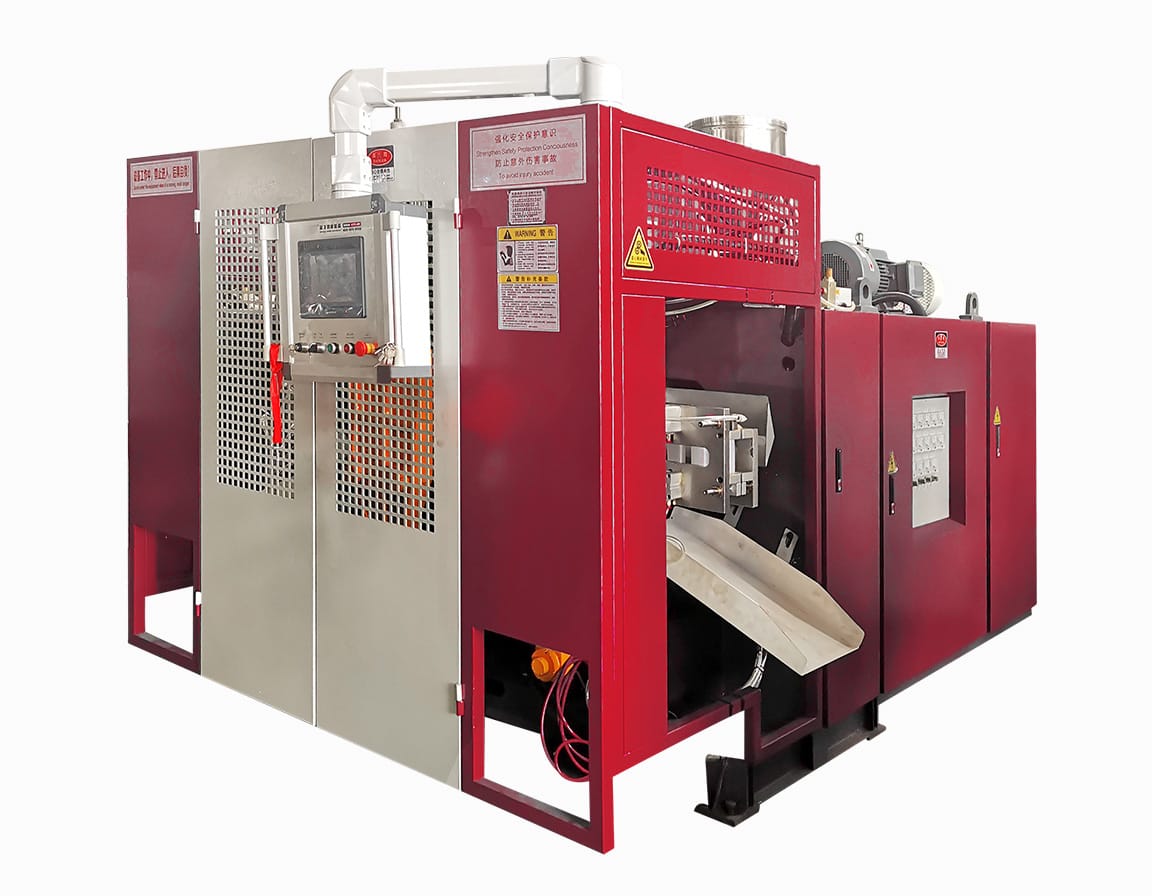

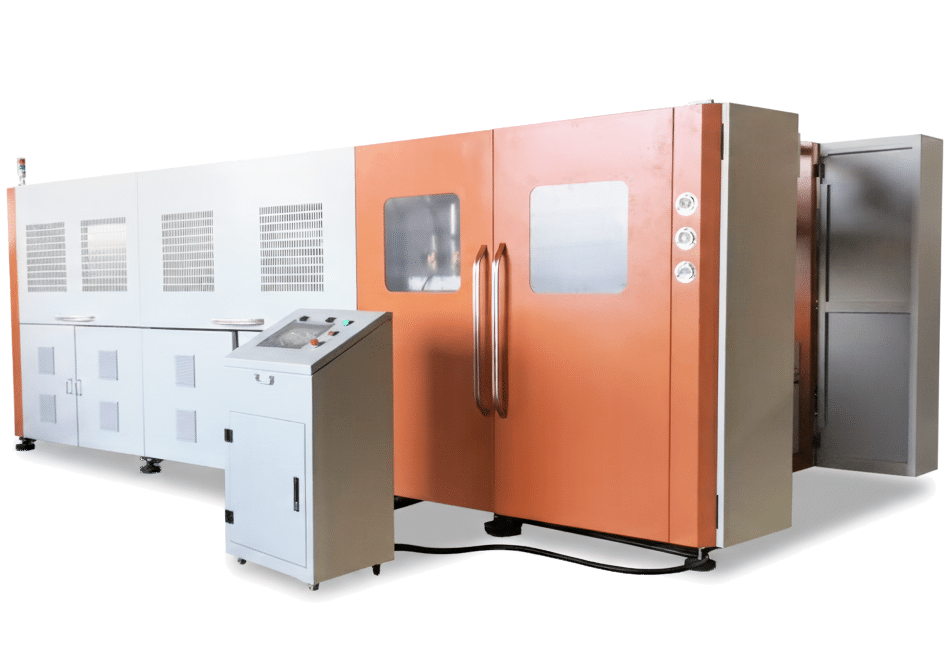

How can I assess the factory capabilities for an all-electric extrusion blow molding machine remotely via video conference?

When we host remote inspections at our Shantou facility, buyers often struggle to see beyond the showroom. You need a specific strategy to uncover hidden risks before the machine ships. (29 words)
To assess factory capabilities remotely, demand a structured video audit focusing on "live" stress tests rather than scripted tours. Inspect EMI shielding in cable tracks, verify servo load percentages during dry cycles, and require real-time remote diagnostic connections to prove the machine’s software stability and support infrastructure. (46 words)
Here is the exact checklist we recommend our clients use to validate a supplier’s true manufacturing power without stepping foot in the factory.
What specific production areas should I ask to see live during the video call?
In our assembly hall, we often see competitors hide messy wiring behind nice covers. Don’t let a shiny exterior distract you from critical internal assembly details that dictate machine longevity. (29 words)
Direct the camera operator to inspect the electrical cabinet’s organization and the flexible cable carriers. You must verify physical separation between high-voltage power cables and low-voltage encoder cables to prevent signal interference. Also, check the spare parts warehouse to confirm critical drives are actually in stock. (46 words)

The "Cable Track" EMI Audit
The most critical yet overlooked area in an all-electric blow molding machine is the flexible cable carrier (drag chain). Electric machines rely heavily on servo motors, which generate significant electromagnetic interference (EMI). If the high-voltage power cables are bundled tightly with sensitive low-voltage encoder cables, you will experience "signal jitter." This manifests as unstable parison thickness or erratic clamp movements that are impossible to tune out via software.
During the video call, ask the operator to open a section of the cable track. You want to see physical dividers or spacers separating the power lines from the data lines. If they look like a tangled plate of spaghetti, it indicates a lack of electrical engineering knowledge.
Inside the Electrical Cabinet
Next, demand a high-resolution close-up of the main electrical cabinet. Do not settle for a wide shot. You are looking for two specific things:
- Finger-Safe Standards: Are the terminal blocks covered? Exposed live terminals suggest a disregard for safety standards (like CE or UL), which often correlates with poor general assembly quality.
- Labeling Consistency: Pick a random wire and ask to see the label at both ends. In our experience, troubleshooting a machine remotely is impossible if the wires are not numbered clearly and consistently.
The Spare Parts Inventory Check
Finally, verify their after-sales capability by looking at their shelves, not their catalog. Direct the camera to their spare parts warehouse. Ask them to zoom in on a specific servo drive or ball screw model used in your machine.
If the boxes are covered in thick dust, or if they cannot find the part immediately, it is a major red flag. It implies they do not stock high-value spares, meaning you will face weeks of downtime waiting for parts to be ordered from their sub-suppliers if a breakdown occurs.
Critical Inspection Points for Cabling and Parts
| Inspection Area | Visual Indicator (Pass) | Visual Indicator (Fail) | Фактор риска |
|---|---|---|---|
| Cable Carriers | Dividers present; Power and Data separated. | Cables mixed, twisted, or zip-tied together. | Signal interference; unstable molding. |
| Cabinet Wiring | Wires in ducts; labels on both ends. | "Birds nest" wiring; loose terminals. | Impossible to troubleshoot remotely. |
| Запчасти | Clean boxes; organized shelves; inventory visible. | Thick dust; empty shelves; "we order when needed." | Extended downtime during failures. |
How can I verify their in-house machining and assembly standards through a camera?
We manufacture our own platens to ensure precision, but many suppliers outsource cheap parts. You need to verify if they are real builders or just assemblers using low-cost components. (29 words)
Ask to see fresh metal chips inside CNC machines to prove in-house manufacturing of structural components. Additionally, zoom in on component nameplates for servos and PLCs to verify they match the Bill of Materials (BOM) and are not counterfeit or lower-tier substitutes hidden inside the chassis. (46 words)

The Machining "Chip" Check
Many trading companies pose as manufacturers. They buy cheap frames from one workshop, electronics from another, and assemble them in a warehouse. To verify if a factory actually builds its own core components (like platens and die heads), ask to see the inside of their CNC milling machines.
Request the camera operator to open the door of a CNC machine. You want to see fresh metal chips (swarf) and coolant on the table. If the machine is clean, dry, or being used as a storage shelf, they are likely outsourcing their machining. Outsourced structural parts often suffer from stacked tolerances, leading to mold alignment issues that eat up mold guide pins and reduce bottle quality.
fresh metal chips (swarf) 1
Component Nameplate Verification
Suppliers sometimes promise premium brands like Siemens, B&R, or Gefran in the quote but swap them for cheaper alternatives or domestic versions during assembly. Do not rely on the specification sheet.
Instruct the camera operator to physically zoom in on the nameplates of:
- The Servo Drives (not just the motors).
- The PLC CPU.
- The Frequency Inverters.
You need to read the model codes clearly. We have seen instances where a supplier uses a "Siemens compatible" brand that looks identical from a distance but lacks the reliability of the genuine article.
Critical Thinking: The "Assembler" Trap
Why does it matter if they just assemble parts? An "assembler" rarely understands the deep engineering physics of the machine. If you have a complex processing issue later—like uneven wall thickness in a corner—an assembler will blame the resin or the mold. A true manufacturer with in-house machining knows exactly how frame deflection affects the bottle and can offer a real engineering solution.
Component Verification Strategy
| Компонент | What to Check on Video | Common Deception |
|---|---|---|
| Structural Frame | Fresh chips in CNC machines; Works in progress. | Clean/idle CNCs; Claims of "outsourced for better quality." |
| Servo Drives | Specific model number on the side label. | Using a smaller kW drive than quoted (under-powering). |
| PLC System | CPU model number; Expansion card brands. | Genuine CPU but cheap, generic I/O modules. |
Should I request a live demonstration of a machine running at full speed?
During FATs (Factory Acceptance Tests) at our plant, we encourage pushing the machine to its limits. A slow demonstration often hides thermal issues or undersized motors that fail in production. (29 words)
use absolute encoders 2
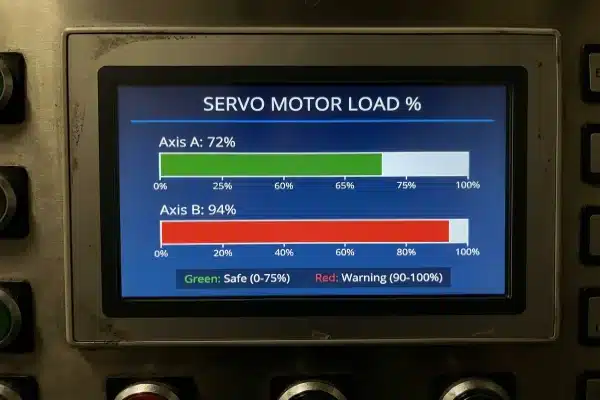
Yes, you must request a full-speed dry cycle and check the "Motor Load %" on the HMI. If clamping motors exceed 90% load, the system is undersized. Perform a safety logic test by triggering an E-stop mid-cycle to verify immediate servo braking and correct zone fault registration. (47 words)
granite square and feeler gauges 3
The Servo "Load" Meter Verification
A machine can run smoothly when empty (dry cycle), but if the motors are undersized, they will overheat once the mold is added and plastic is being processed. Since you cannot mold plastic remotely easily, the best proxy is the Motor Load Percentage.
Ask the operator to navigate to the "Servo Monitor" or "Torque" page on the HMI. Have them run the machine at full dry-cycle speed. Watch the "Clamping Motor" load peak.
- Good: Peaks around 60-75% during lock-over.
- Bad: Peaks above 90%.
If the motor is hitting 90% load just moving the platen without a mold, it will definitely stall or overheat when trying to clamp a heavy mold under tonnage. This is a clear sign the manufacturer cut costs on the servo system.
IPC (Industrial PC) 4
The "Cold Start" Homing Test
Ask the factory to power the machine down completely, wait a minute, and turn it back on. Watch what happens next.
- True Absolute Encoders: The machine knows exactly where it is immediately. It can start automatic mode instantly.
- Incremental Encoders: The machine must slowly move every axis to a "Home" switch to find its position.
We use absolute encoders because power bumps happen. If your machine needs a 10-minute homing sequence every time the power flickers, you lose valuable production time and risk crashing the mold if the homing switch fails.
Emergency Stop works correctly 5
Safety Logic Demonstration
Never assume the Emergency Stop works correctly. Ask the operator to run the machine and hit the E-Stop button while the clamp is closing (ensure they do this safely).
- Mechanical Reaction: The clamp should stop instantly. No drifting.
- Software Reaction: The HMI should display the exact button pressed (e.g., "Front Gate E-Stop Active").
If the screen just says "General Servo Fault," their programming logic is lazy, which will make future diagnostics a nightmare.
How do I validate their quality control documentation and testing equipment remotely?
Our engineers rely on remote diagnostics to solve client issues globally. If a factory cannot demonstrate stable connectivity during the audit, their after-sales support will likely fail when you need it. (29 words)
premium brands like Siemens 6
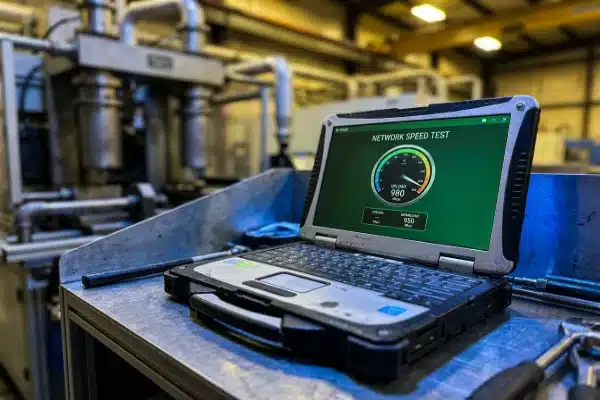
Validate remote support capabilities by asking their engineer to connect via VPN simultaneously during the video call. Run an internet speed test directly on the machine’s HMI to rule out factory "dead zones," ensuring they have the bandwidth and technical skill to troubleshoot your equipment remotely. (47 words)
The Remote-In-Remote Proof
Every manufacturer claims to offer "Remote WiFi Support." Few actually know how to use it. During the video conference, verify this live.
- Have the machine running on the video call.
- Ask their service engineer (who should be in a different room or office) to connect to the machine via their VPN tunnel.
- Ask the engineer to change a parameter (like a temperature setting or timer) from their laptop and have the camera operator show it changing on the machine screen in real-time.
If they struggle to connect, lack the passwords, or cannot establish a link, their "Remote Support" feature is a marketing gimmick, not a functional tool.
ball screw model 8
Connectivity Bandwidth Test
A remote module is useless if the factory floor has no internet signal. We have seen factories where the WiFi is only strong in the office, not on the production floor.
Ask the operator to open a browser on the machine’s IPC (Industrial PC) or a laptop connected to the machine’s ethernet cable. Go to a speed test site (like fast.com).
- Требование: You want to see stable upload speeds (at least 5-10 Mbps).
- Why: Remote desktop control requires good bandwidth. If the connection lags during the audit, it will be impossible for them to upload software patches or view camera feeds when you are down in the future.
Validating the "Human Element" of QC
Documentation is only as good as the person writing it. Ask to see the QC Manager. Ask a specific, technical question about their testing standard, such as: "What is your tolerance for platen parallelism, and what tool do you use to measure it?"
- Good Answer: "We allow 0.05mm per meter, measured with a granite square and feeler gauges."
- Bad Answer: "We check it is flat."
This simple interrogation reveals if their QC is data-driven or based on "feeling."
safety standards (like CE or UL) 9
Remote Capability Verification Checklist
| Test Item | Action Required | Success Criteria |
|---|---|---|
| VPN Functionality | Engineer modifies HMI param remotely. | Value changes on screen instantly (<2s latency). |
| Signal Strength | Speed test on machine/local laptop. | Upload speed > 5 Mbps; Low jitter. |
| QC Competence | Ask about specific tolerances (e.g., parallelism). | Specific numeric answer provided immediately. |
Заключение
Remote audits require skepticism. By directing the camera to hidden areas like cable tracks and load meters, you expose the true quality of the machine before spending a dollar. (29 words)
electromagnetic interference (EMI) 10
Сноски
- Defines the technical term for machining debris used as proof of manufacturing. ↩︎
- Explains the sensor technology that prevents homing requirements. ↩︎
- Explains the precision measurement tools mentioned for quality control. ↩︎
- Defines the specific industrial computing hardware mentioned. ↩︎
- Explains the critical safety mechanism being tested. ↩︎
- Links to the official site of the specific brand mentioned. ↩︎
- Provides context on the manufacturing equipment used for core components. ↩︎
- Explains the mechanical component mentioned in the spare parts section. ↩︎
- Links to the official Underwriters Laboratories authority mentioned. ↩︎
- Defines the electrical noise phenomenon affecting machine stability. ↩︎



0 Комментариев