
Edible Oil Filling Machine: Key Buying Factors Before You Invest
An edible oil filling machine should do more than move product into bottles. For small and medium OEM factories, it needs to handle different package sizes, maintain stable dosing, reduce dripping, support daily changeovers, and leave room for future line expansion. That is why the right investment decision depends less on brochure claims and more on how well the machine fits actual production conditions.
Edible oil projects often look simple from the outside. In reality, buyers still need to think carefully about bottle size, filling range, output expectations, operator workflow, and whether the filling machine can work smoothly with downstream capping and labeling equipment. A machine that looks acceptable on paper may become inefficient if it does not match the real packaging process.
For OEM factories, the right edible oil filling setup is usually the one that balances filling stability, flexibility, practical investment, and upgrade potential. In this guide, I will walk through the key buying factors that matter before you choose an edible oil filling machine for bottle packaging projects.
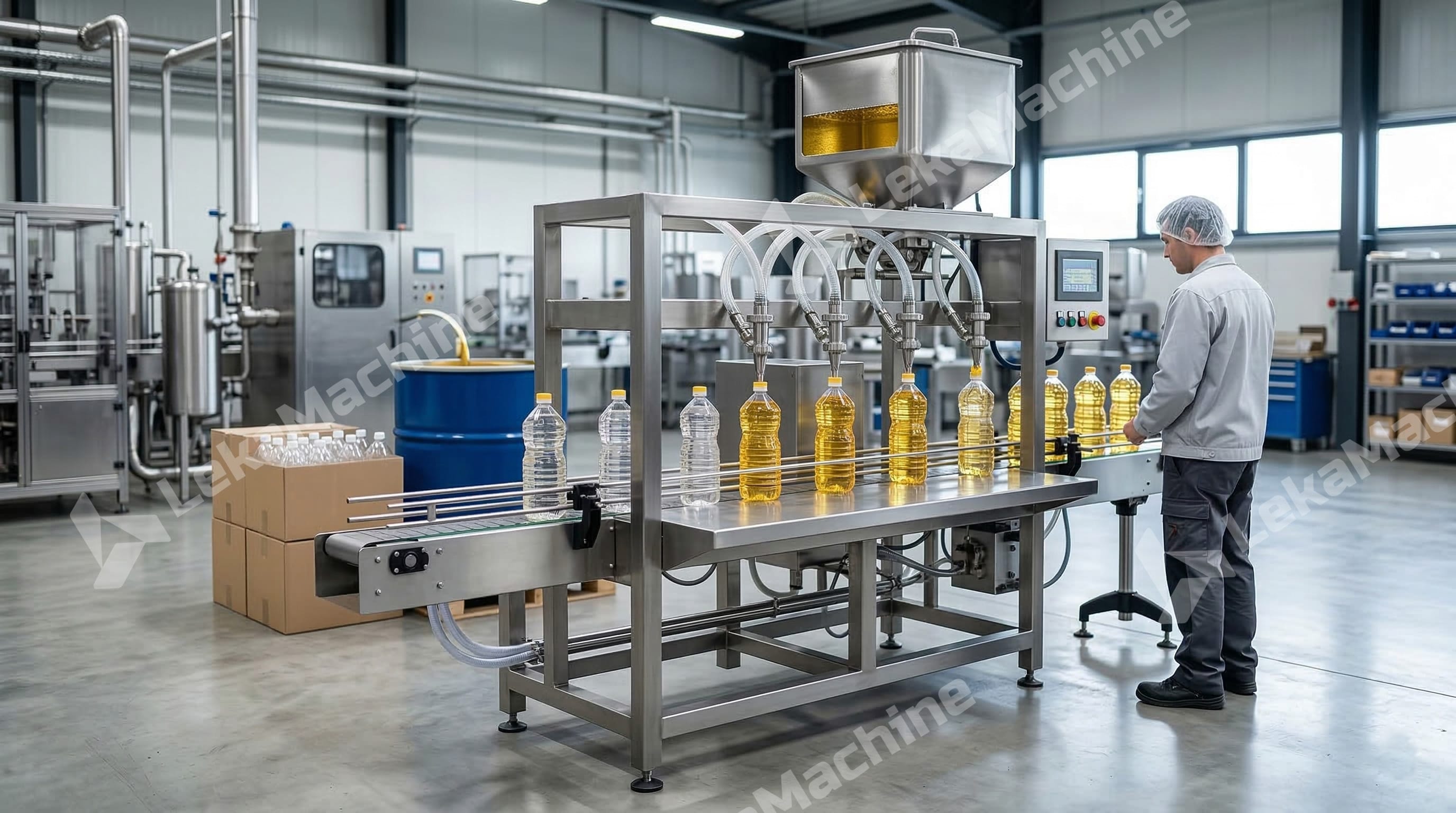
Why Edible Oil Filling Projects Need Careful Equipment Selection
Edible oil packaging is not only about speed. Buyers also need to consider fill consistency, bottle cleanliness, product handling, and the smooth flow of the packaging process after filling. Small and medium OEM factories often handle more than one bottle format, and that creates greater demand for flexible equipment selection.
Different edible oil projects may involve:
- small retail bottles for consumer packaging
- medium household packs with handle bottles
- larger containers for bulk use
- frequent bottle changes between customer orders
- future plans for capping, labeling, sealing, or carton packing
This is why buyers should not judge a machine by output headline alone. The better approach is to evaluate how the machine fits the actual bottle packaging workflow from filling through to final line coordination.
Why Servo Piston Filling Can Be a Practical Direction
For many edible oil bottle packaging projects, servo piston filling is a practical direction because it offers more stable filling control and suits production environments where repeatability matters. This is especially useful for OEM factories that want better process consistency without moving immediately into a large, more capital-intensive automatic line.
Based on your current equipment direction, the setup is positioned around a semi automatic servo piston filling solution with a typical production target of 20 to 70 bottles per minute, built with SUS316 material, and with the ability to connect later to capping, labeling, induction sealing, and carton packing equipment.
That combination makes sense as a practical starting point. It gives the factory better filling control than low-efficiency manual methods, while keeping investment more manageable and preserving room for later packaging line upgrades.
A Practical Reference Table for Edible Oil Packaging Projects
Before choosing a machine, it helps to review the project by packaging scenario instead of machine label alone. The table below is designed as a selection reference. It uses packaging ranges that have already appeared in the supplied equipment material, while matching the production direction you have already confirmed. It should not be treated as one fixed machine specification for every edible oil application.
| Packaging Scenario | Reference Filling Range | What Buyers Usually Focus On | What Should Be Confirmed First |
|---|---|---|---|
| Small edible oil retail bottles | 100–1000ml | Clean filling, volume consistency, easier bottle changeover | Bottle opening, fill volume target, required output |
| Medium household oil packs | 1–5L | Stable dosing, convenient handling, bottle positioning | Handle bottle format, filling rhythm, operator workflow |
| Larger edible oil containers | 1–10L | Container stability, filling consistency, downstream coordination | Container shape variation, drip control, line layout |
| Bulk liquid oil projects | 100–300kg | Robust container handling and more suitable transfer process | Transfer method, workshop safety, project layout |
| Current LEKA edible oil direction | Semi automatic, 20–70 bottles/min | Flexible OEM production, manageable investment, future expansion | Oil type, package size, labor plan, later line integration |
Note: The packaging ranges above are reference ranges for project evaluation. They should not be presented as one fixed machine specification for all edible oil packaging projects. Final machine selection should still be confirmed according to the actual oil type, bottle format, filling target, and production plan.
How Bottle Size and Container Design Affect the Filling Process
In edible oil packaging, bottle size affects more than just fill volume. It also influences bottle stability, operator convenience, changeover time, and the smooth connection between filling and downstream equipment. A machine that works well for one bottle format may become less efficient when the project shifts to another package size or another bottle shape.
This matters even more for OEM factories, because they often need to serve multiple brands or multiple packaging formats within the same workshop. If bottle changes happen frequently, the wrong machine can slow down production far more than the quotation stage suggests.
Before buying, it is worth checking:
- whether the bottle stands stably during filling
- how often package sizes will change between projects
- whether the same machine must support both smaller bottles and larger containers
- how container shape may affect later capping and labeling
- whether the filling process is practical enough for daily operation
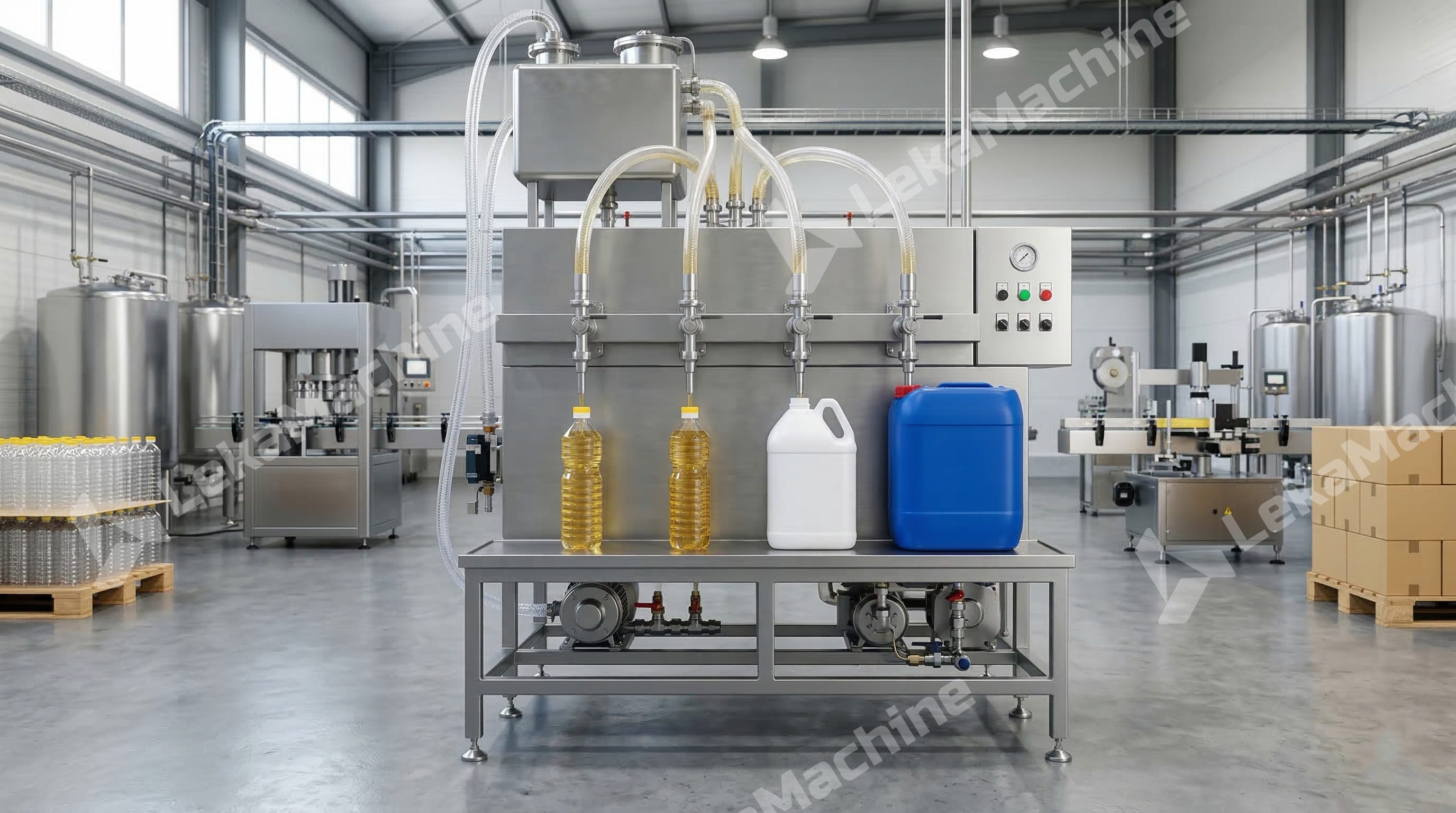
Why Semi Automatic Can Still Be the Smarter First Investment
Some buyers assume fully automatic equipment is always the better option. That is only true when production volume, package consistency, and investment plan already support it. For many small and medium OEM factories, a semi automatic edible oil filling machine is actually the more practical first step.
A semi automatic setup often makes better sense when:
- monthly order volume is still growing
- package sizes change regularly
- budget control remains important
- available workshop space is limited
- the business wants to upgrade step by step instead of investing all at once
This is why a semi automatic servo piston filling solution can work well for edible oil packaging projects. It gives better control than low-efficiency manual filling, while keeping the investment path more flexible and realistic for growing OEM production.
Think Beyond Filling: Can the Machine Support Your Future Line?
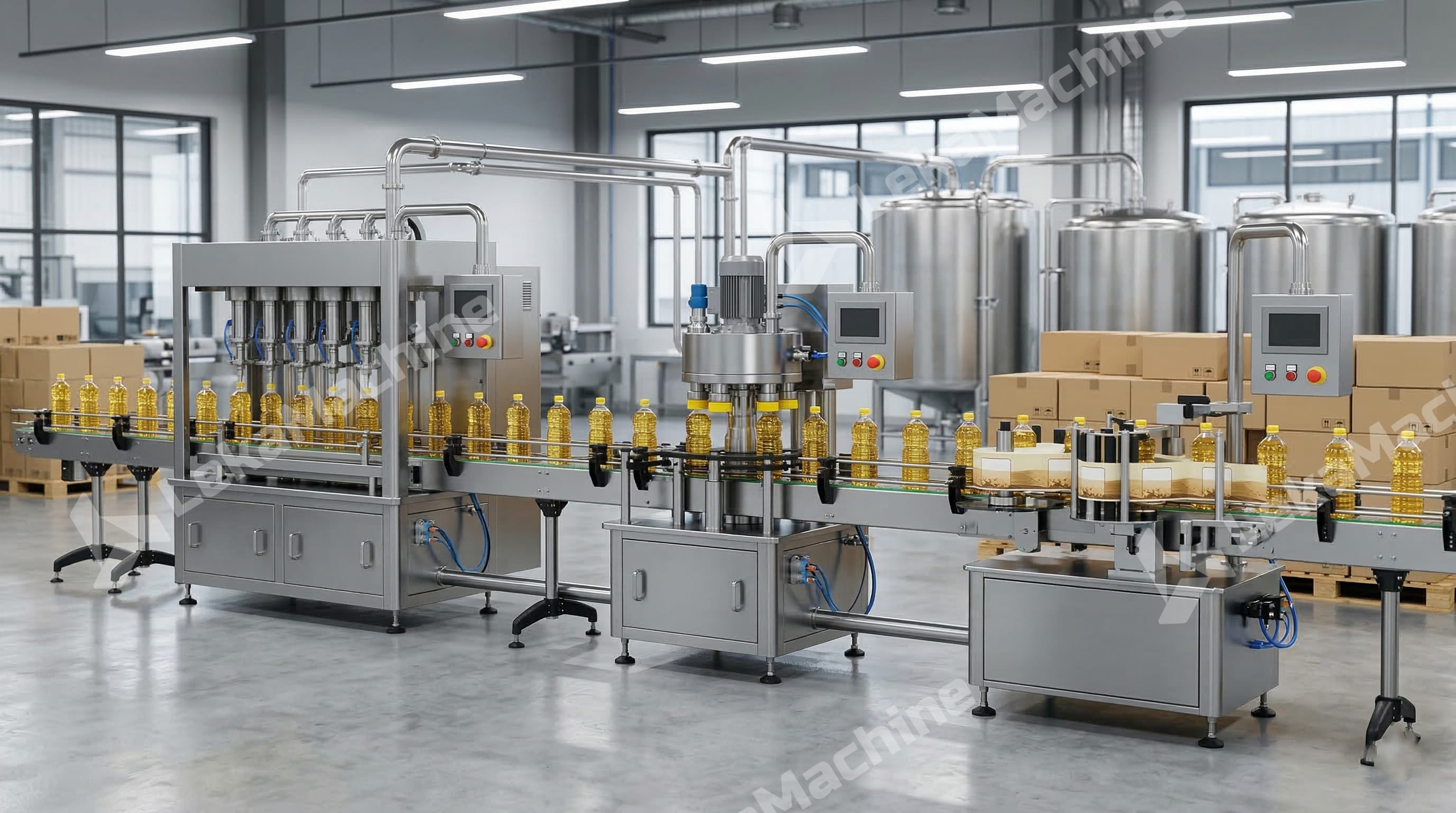
An edible oil filling machine should not be treated as a standalone unit. In real production, filling is only one stage of the packaging workflow. If the machine cannot connect smoothly with later equipment, the project becomes harder to expand and less efficient to manage.
Your current direction already supports future connection with:
- capping machines
- labeling machines
- induction sealing equipment
- carton packing systems
That matters because many OEM buyers start with filling first, then gradually improve the rest of the packaging line as order volume increases. Choosing a machine with integration potential from the beginning usually reduces upgrade cost and avoids avoidable matching problems later.
Common Mistakes Buyers Make Before Investing
The most common mistake is choosing only by quotation price. The second is focusing on output while ignoring bottle variation, operator workflow, and future packaging line needs. In real projects, weak equipment matching usually causes more trouble than modest speed differences.
Buyers should avoid these common mistakes:
- assuming all liquid oil projects require the same machine setup
- ignoring bottle format variation across OEM orders
- buying a machine that is oversized for current production reality
- forgetting future capping and labeling coordination
- assuming quoted speed automatically means stable real production output
The better method is to judge the machine by total production fit. That means looking at oil type, package size, container structure, operating convenience, material suitability, and future upgrade potential together.
Final Advice for Edible Oil Packaging Buyers
The right edible oil filling machine is not the one with the most aggressive brochure claim. It is the one that fits your actual product, your real package range, your workshop conditions, and your realistic production growth plan.
For many small and medium OEM factories, a semi automatic servo piston filling solution is a strong starting point because it offers a practical balance between filling stability, flexibility, manageable investment, and future line expansion. When the machine can also connect with capping, labeling, induction sealing, and carton packing equipment, it becomes more than a filling unit. It becomes the foundation of a more complete edible oil packaging process.
If you are comparing edible oil filling options for bottles or larger containers, talk to LEKA about your product type, package size, and production target before finalizing the machine configuration.
Talk to LEKA About Your Edible Oil Filling Project