

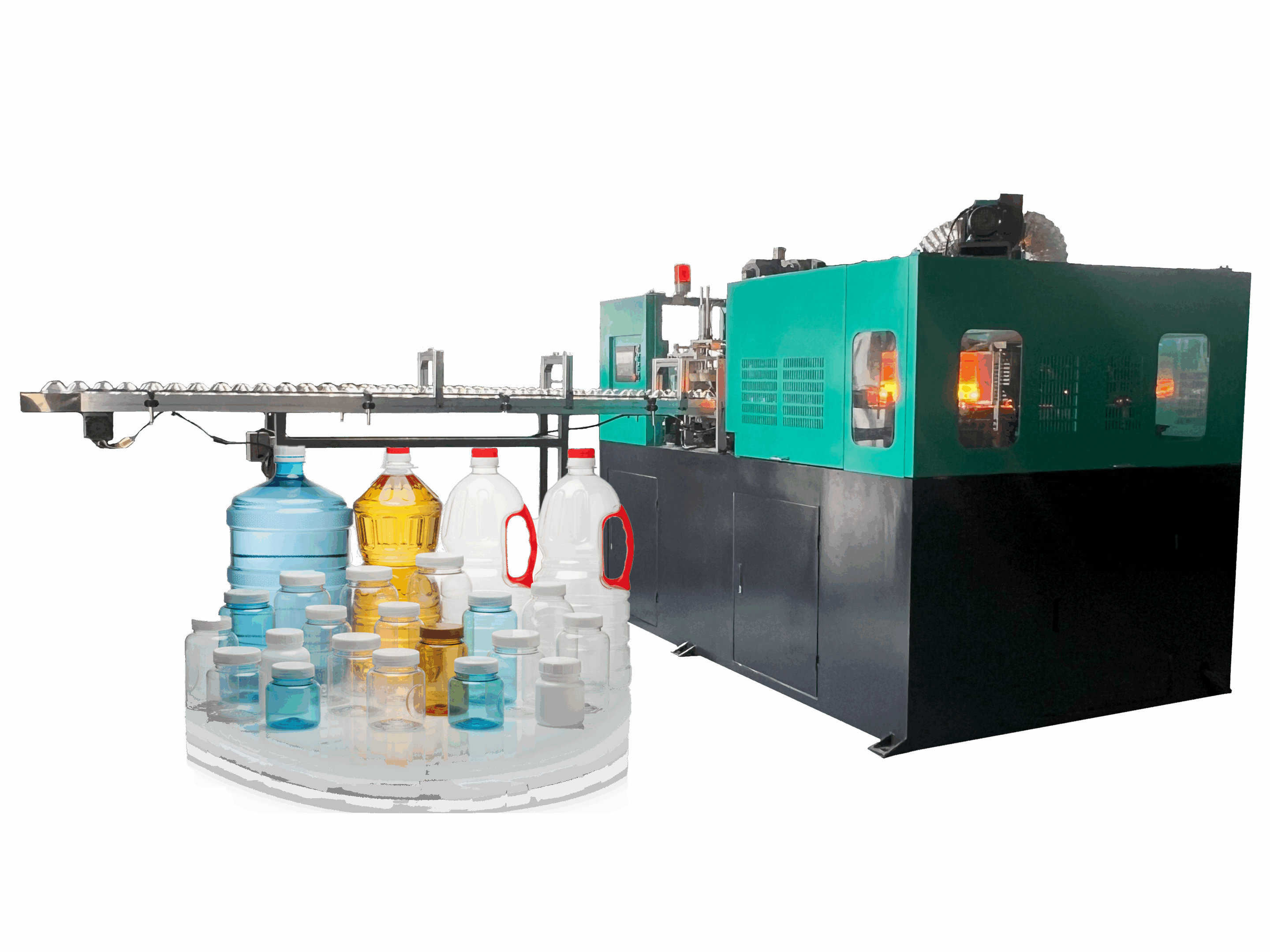
How should I check whether the electrical components of the all-electric extrusion blow molding machine comply with EU import standards?

At our manufacturing facility, we understand that importing machinery into Europe involves navigating a complex maze of directives and safety regulations. Neglecting these verification steps can lead to your equipment being seized at customs or, worse, causing a safety incident on your factory floor. (Max 30 words)
To verify compliance, you must ensure the machine holds a valid CE Declaration of Conformity referencing the Machinery Directive (2006/42/EC) and EMC Directive. Crucially, verify that an EU-based Authorized Representative is listed, and audit the specific component brands against the Bill of Materials to confirm they carry individual CE marks.
Simply having a CE sticker on the electrical cabinet is not enough proof of compliance. You need to dig into the documentation and physical architecture of the machine before it leaves the factory floor.
Does the machine carry a valid CE Declaration of Conformity for its electrical system?
When we compile technical files for our European clients, we often encounter confusion regarding what constitutes a legal certificate. Many buyers mistakenly accept a generic "Certificate of Compliance" from a third-party lab, which carries no legal weight for customs clearance.
IEC 60204-1 standard 1
A valid CE Declaration of Conformity must explicitly list the Machinery Directive 2006/42/EC and the Low Voltage Directive. It must also include the name and address of a legal entity located within the EU authorized to compile the technical file, otherwise, the document holds no legal weight for import.
To ensure you are not liable for a non-compliant machine, you must scrutinize the paperwork with a critical eye. The most common "trap" we see is suppliers issuing a Declaration of Incorporation (Annex II 1 B) instead of a Declaration of Conformity (Annex II 1 A). If you accept a Declaration of Incorporation, the supplier is legally stating that the machine is "incomplete." This shifts the entire burden of risk assessment, final certification, and CE marking onto you, the buyer.
burden of risk assessment 3
Validating the Authorized Representative
The "Authorized Representative" (EU Rep) is a non-negotiable requirement for manufacturers located outside the EU, such as those in China. A valid Declaration of Conformity (DoC) must list an address в пределах the European Union.
- Check the Address: If the DoC only lists a Chinese factory address, it is invalid for import.
- Verify Existence: Search the listed EU address to ensure it is a registered legal entity. This entity holds the legal liability for the machine’s safety data.
The Technical File Availability
While we are not required to hand over our proprietary design drawings (the full Technical File) to customers, we must verify its existence. The supplier must confirm in writing that they have compiled the Technical File and can present it to EU market surveillance authorities upon request. If a supplier hesitates to confirm this, it is a strong red flag that the CE mark is decorative rather than legitimate.
Specific Standards for Blow Molding
Generic machinery standards are insufficient for our industry. You must check the DoC for EN 422, the specific harmonized standard for "Plastics and rubber machines – Blow moulding machines – Safety requirements." If this standard is missing, the risk assessment likely ignores specific crushing hazards found in the clamping unit.
Document Comparison Table
| Характеристика | Declaration of Conformity (DoC) | Declaration of Incorporation (DoI) |
|---|---|---|
| Legal Status | Machine is complete and safe to use. | Machine is incomplete; cannot be operated yet. |
| Annex Reference | Annex II 1 A | Annex II 1 B |
| Your Responsibility | Verify document validity. | Complete certification and risk assessment yourself. |
| Import Result | Clears customs for immediate use. | Clears customs but illegal to operate without further work. |
Are critical components like servo drives and breakers sourced from recognized global brands?
In our experience sourcing parts for high-end builds, using "equivalent" domestic brands for safety-critical components is a recipe for disaster. While they may function initially, they often lack the necessary certification to pass European safety audits.
Safe Torque Off (STO) 4
You should verify that major electrical components like PLCs, contactors, and servo drives come from brands with established global support networks, such as Siemens, Schneider, or B&R. Request a detailed Bill of Materials (BOM) before production and verify these specific model numbers during a video audit.

The quality of the components directly dictates the machine’s compliance with the Low Voltage Directive (LVD) and the EMC Directive. An all-electric extrusion blow molding machine relies heavily on servo motors, which are significant sources of electromagnetic noise.
Auditing the Bill of Materials (BOM)
Request a detailed BOM before the machine assembly begins. You need to look for specific brand names for safety relays, breakers, and contactors.
- Visual Verification: During a pre-shipment video inspection, ask the engineer to zoom in on the electrical cabinet.
- Check for Swaps: Ensure a specified "Siemens" breaker hasn’t been swapped for a domestic clone that lacks a valid CE certificate.
The EMC Directive Challenge
All-electric machines generate high-frequency noise that can interfere with other electronics in your plant. A generic CE certificate is not enough here. You must ask for the specific EMC Directive (2014/30/EU) test report.
- Mains Filters: Check for large EMC filters installed on the main power input.
- Shielding: Verify that all cables running to servo motors are shielded and grounded properly. Without these, the machine will fail local EMC inspections in Europe.
Safe Torque Off (STO) Certification
For electric machines, the safety system often relies on the drive itself stopping the motor. You must verify that the servo drives utilize Safe Torque Off (STO) functions. These must be independently certified (e.g., by TÜV Nord or UL) to SIL 3 или PLe standards. If the safety relies solely on a standard contactor cutting power, the reaction time may be too slow for the high speeds of electric platens.
Component Risk Assessment
| Компонент | Preferred Global Brands | Compliance Risk if Generic |
|---|---|---|
| Servo Drives | Siemens, B&R, Delta | High EMC noise, lack of STO safety function. |
| Safety Relays | Pilz, Sick, Schneider | Failure to trip during emergency; invalid CE. |
| Main Breakers | Eaton, ABB, Schneider | Fire hazard; poor short-circuit protection. |
| ПЛК | Siemens, Omron, Beckhoff | Software instability; inability to source spares. |
How do I verify that the safety circuits and emergency stops meet Category 3 standards?
Our engineers prioritize safety logic above all else, knowing that the clamping force of a blow molding machine can be devastating. We design our circuits to fail-safe, ensuring that a single wire break detects a fault rather than disabling a safety guard.
sources of electromagnetic noise 6
To verify Category 3 compliance, examine the wiring diagrams for dual-channel architecture on all emergency stops and guard doors. This means two separate wires must connect to two distinct inputs on the Safety PLC. If you only see a single wire, the system is unsafe and non-compliant.
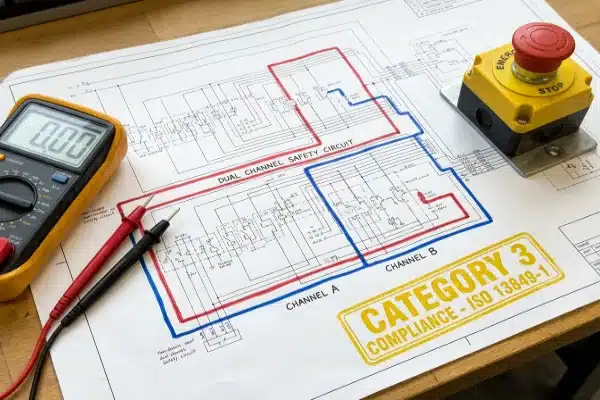
Understanding Category 3 (per EN ISO 13849-1) is vital. It dictates that a single fault in the safety system (like a stuck relay or a cut wire) must not lead to the loss of the safety function.
Visualizing Dual-Channel Wiring
Do not rely on verbal confirmation from a sales representative. Ask for the electrical schematic.
- Single Channel (Cat 1): You see one wire going from an E-stop button to one input. If this wire shorts or the switch welds shut, the machine will not stop when pressed. This is illegal for this type of machinery in the EU.
- Dual Channel (Cat 3/4): You see two parallel paths (Channel A and Channel B). Both must open to stop the machine, and the Safety PLC monitors the timing between them. If one fails, the other still stops the machine, and the system prevents a restart until the fault is fixed.
The Role of the Safety PLC
Modern all-electric machines should use a dedicated Safety PLC (or a Safety Integrated PLC like the Siemens F-series).
- Logic Check: A standard PLC is not rated for safety functions because standard code can freeze or bug out.
- Hardware Check: Look for the distinctive yellow (or red) terminals on the PLC modules, which typically indicate safety I/O modules.
Guard Doors and Interlocks
Blow molding machines have large safety doors. The switches on these doors must also be dual-channel. Furthermore, because electric platens move silently and quickly, simply opening the door must trigger an immediate STO (Safe Torque Off) in the drives. You should test this during FAT (Factory Acceptance Test) by attempting to open a guard while the machine is in dry-cycle mode—it must stop instantly.
Safety Category Comparison
| Category | Architecture | Fault Tolerance | EU Compliance Status |
|---|---|---|---|
| Category B / 1 | Single Channel | None. A single fault leads to danger. | Non-Compliant for blow molding. |
| Category 2 | Single Channel + Test | Low. Relies on periodic checks. | Generally insufficient. |
| Category 3 | Dual Channel | High. Single fault does not lose safety function. | Minimum Requirement. |
| Category 4 | Dual Channel + Monitor | Very High. Faults are detected immediately. | Recommended for high-speed zones. |
Can I hire a third-party inspector to audit the electrical cabinet prior to shipment?
We always encourage our clients to send third-party inspectors to our factory, as it validates our quality control processes. However, sending a general inspector to check complex electrical engineering often results in a superficial report that misses critical safety flaws.
Low Voltage Directive 8
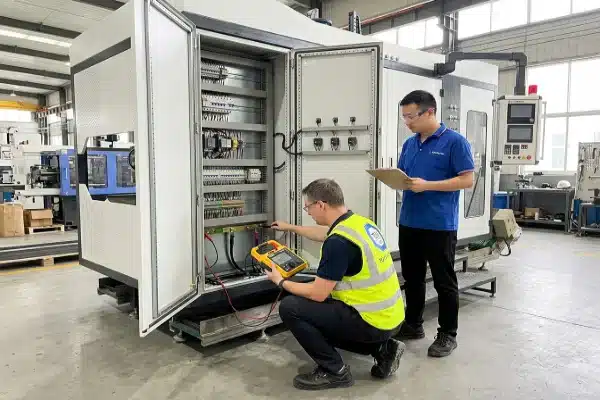
Yes, but you must hire a specialized agency like TÜV or SGS to perform a specific IEC 60204-1 Electrical Safety Audit. General quality inspectors lack the engineering expertise to test grounding continuity, insulation resistance, or electromagnetic interference, which are critical for passing strict EU customs inspections.
Machinery Directive (2006/42/EC) 9
A standard "pre-shipment inspection" usually focuses on cosmetics, quantity, and basic functionality. To ensure electrical compliance, you need to commission a technical audit that specifically targets the IEC 60204-1 standard (Safety of machinery – Electrical equipment of machines).
The Earth Continuity High-Current Test
A simple multimeter beep test is not enough to prove safety. High-voltage electric machines require a 10A or 25A Earth Bond Test (Pe ground continuity).
- Why it matters: In the event of a short circuit, the machine frame must be able to conduct high current to the ground to trip the breaker immediately, rather than electrocuting the operator.
- Тест: The auditor uses a PAT tester or specific injection tester to send a high current through the frame and measure resistance. It must be lower than 0.1 ohms.
Insulation Resistance and Voltage Drop
The auditor should also perform an insulation resistance test (Megger test) at 500V DC to ensure that the power conductors are not leaking current to the chassis. Additionally, they should verify voltage drops across the cabinet to ensure the wiring gauge is sufficient for the load of the servo heaters and motors.
Checking the Nameplate and Warnings
EU inspectors are pedantic about labeling. Your auditor must verify:
- The Nameplate: It must include the specific CE mark, manufacturer address, year of construction, and voltage/frequency ratings.
- Warning Labels: "High Voltage" and "Hot Surface" warnings must be present and use ISO standard symbols (the yellow triangle with a lightning bolt), not just Chinese text.
Third-Party Audit Checklist
| Audit Item | Метод | Критерии приемки |
|---|---|---|
| Ground Continuity | 10A/25A Current Injection | Resistance < 0.1Ω |
| Insulation Resistance | 500V DC Megohmmeter | Resistance > 1MΩ |
| E-Stop Function | Functional Test | Machine stops; requires reset to restart. |
| Component Marking | Визуальная проверка | All wires and components labeled per schematic. |
| Степень защиты IP | Visual/Probe Check | Cabinet sealed to IP54 (dust/splash proof). |
Заключение
Ensuring electrical compliance safeguards your staff and investment. By rigorously auditing documentation for the Authorized Representative, verifying component brands, and validating dual-channel safety circuits, you secure a smooth import process and reliable machine operation. (Max 30 words)
машины для экструзионно-выдувного формования 10
Сноски
- Official standard page from the International Electrotechnical Commission. ↩︎
- Official standard page from the International Organization for Standardization. ↩︎
- Educational resource defining the risk assessment process. ↩︎
- Technical explanation of the safety function by industry leader. ↩︎
- Official EU Commission page for the cited regulatory directive. ↩︎
- General background on the technical concept mentioned. ↩︎
- Official site of one of the listed component manufacturers. ↩︎
- Official EU Commission page for the cited regulatory directive. ↩︎
- Official EU Commission page for the cited regulatory directive. ↩︎
- Industry organization overview of the specific manufacturing process. ↩︎


0 Комментариев