
The Ultimate 2026 Buyer’s Guide to Blow Molding Machines
How to Choose Between Extrusion and Stretch Blow Molding, Reduce Buying Risk, and Match the Right Machine to Your Bottle Project
Blow molding machines are used to produce a wide range of hollow plastic products, from HDPE detergent bottles and industrial jerry cans to PET water bottles and edible oil containers. But choosing the right machine is not simply a matter of comparing quotations. The real decision is whether the process, bottle design, resin, output target, and supplier capability actually fit your production goals.
In most projects, the first and most important decision is not the machine brand. It is choosing the correct process route. If that decision is wrong, every later decision becomes more expensive. You may face higher energy cost, unstable cycles, poor bottle quality, difficult mold changes, higher scrap, or a production line that never reaches the output promised in the quotation.
This guide explains how buyers should evaluate blow molding machines in 2026, including the difference between extrusion blow molding and stretch blow molding, how bottle design affects process choice, how to think about energy and ROI, and how to verify a supplier before placing an order.
What are the main types of blow molding machines?
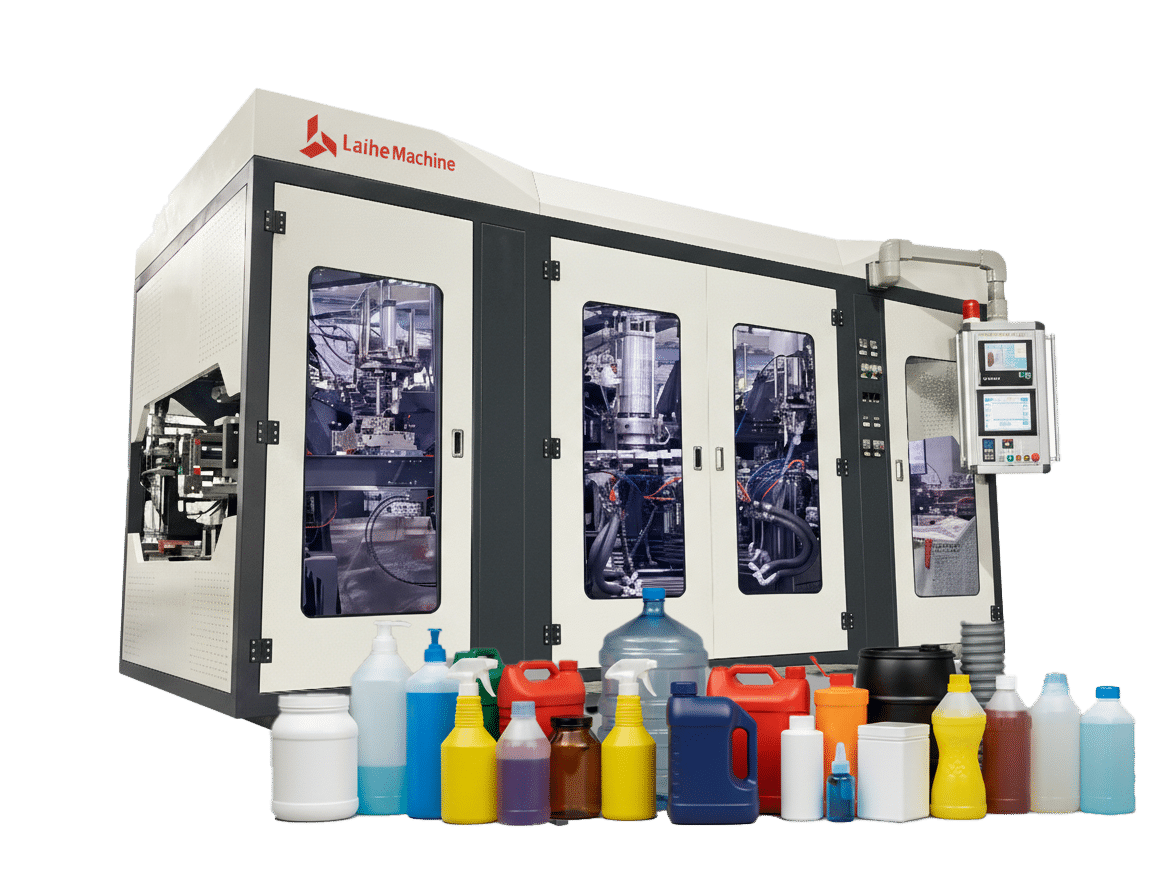
Blow molding forms hollow plastic products by shaping heated plastic inside a mold with air pressure. The general concept is simple, but the process route changes depending on the material, bottle design, and final application.
In practical bottle and container projects, the two most important routes are extrusion blow molding (EBM) and stretch blow molding (SBM). These two processes cover most mainstream industrial packaging and bottle production needs.
Extrusion Blow Molding (EBM)
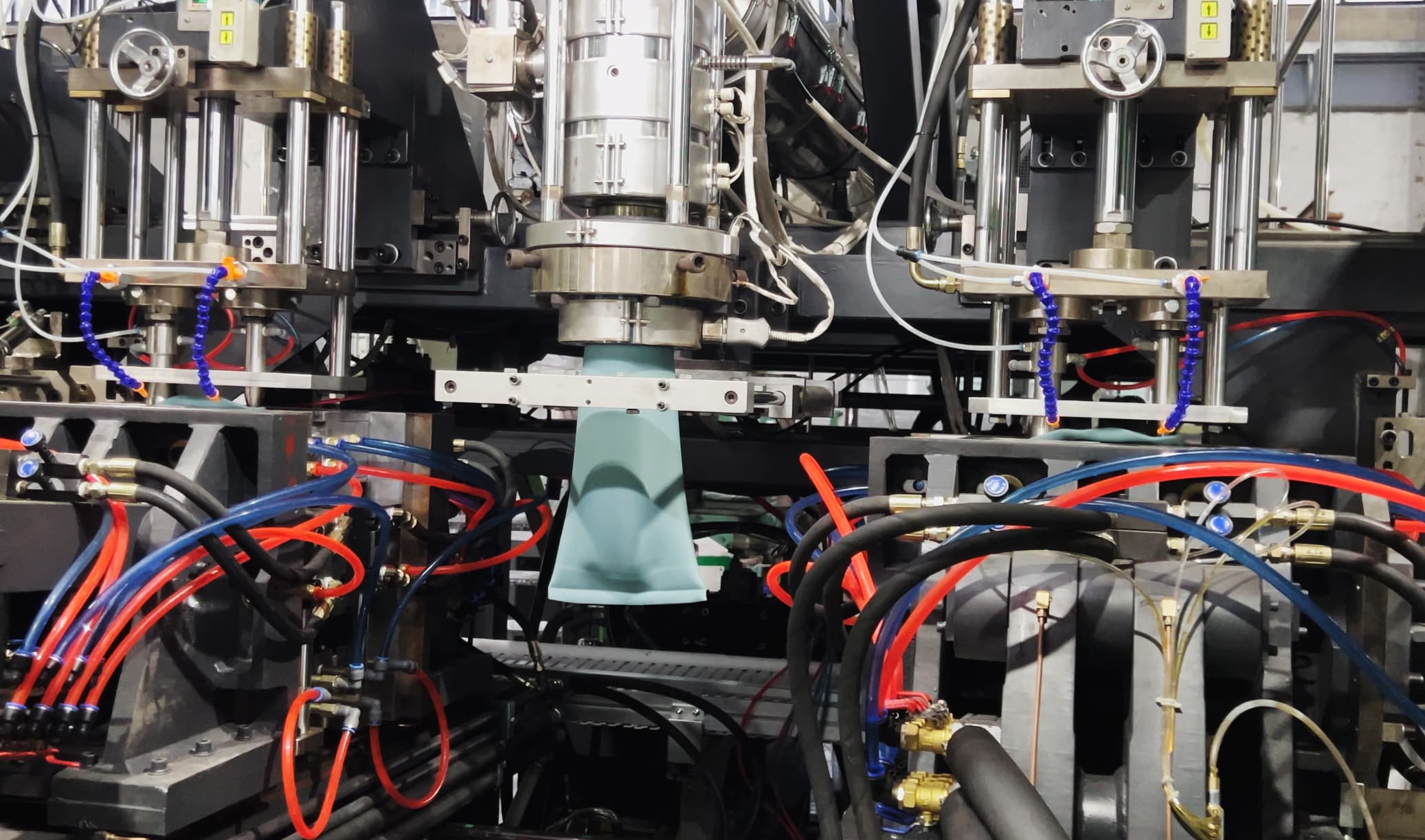
Extrusion blow molding starts by melting resin and extruding it into a hollow tube called a parison. A mold closes around the parison, compressed air expands it to the mold wall, and the bottle or container is formed after cooling.
EBM is usually the correct choice for HDPE and PP bottles or containers that need toughness, handle design flexibility, multilayer options, or more complex shapes. It is widely used for detergent bottles, milk bottles, chemical containers, lubricant bottles, jerry cans, drums, and many industrial packaging applications.
If your project involves non-clear packaging, asymmetric shapes, handle bottles, larger containers, or stronger practical performance, your next step is usually to review a suitable extrusion blow molding machine solution.
Stretch Blow Molding (SBM)

Stretch blow molding is mainly used for PET bottle production. The process starts with a PET preform. The preform is reheated, stretched, and blown into the final bottle shape. This process creates the clarity, strength, and lightweight performance expected in many beverage and food packaging applications.
SBM is usually the correct route for clear PET bottles, especially when product appearance, pressure resistance, and stable high-volume output matter. It is commonly used for mineral water bottles, carbonated beverage bottles, juice bottles, edible oil bottles, and other PET packaging formats.
If your project involves PET preforms, water bottles, beverage bottles, or clear bottle packaging, your next step is usually to compare the right stretch blow molding machine solution.
What about injection blow molding?
Injection blow molding also exists in the broader packaging industry, especially for smaller bottles with tighter dimensional requirements. But for most bottle factory investment decisions, the main commercial comparison still comes down to EBM versus SBM. That is why this guide focuses on those two routes.
How should you choose between EBM and SBM?

The most common mistake buyers make is starting from price instead of starting from product fit. A cheaper quotation does not help if the machine process is wrong for the bottle.
The right way to choose is to begin with bottle geometry, resin type, performance needs, and production target.
Choose EBM when the bottle or container needs:
- HDPE or PP material
- Handle design
- Wide-neck or non-standard geometry
- Chemical resistance
- Jerry can or drum format
- Thicker walls and stronger practical performance
Choose SBM when the bottle needs:
- PET material
- Clear appearance
- High shelf appeal
- Pressure resistance for beverages
- Lightweight bottle design
- High-volume repeatable bottle output
Simple decision table
| Project condition | Most likely direction | Typical applications |
|---|---|---|
| HDPE / PP bottles or containers | EBM | Detergent, milk, chemicals, jerry cans, drums |
| Clear PET bottles | SBM | Water, juice, carbonated drinks, edible oil |
| Handle bottles or asymmetric shapes | EBM | Household and industrial packaging |
| Preform-based production | SBM | Standard PET bottle lines |
| Large industrial container formats | EBM | Jerry cans, drums, technical packaging |
If your material and bottle style are already clear, the process direction usually becomes obvious: PET usually points to SBM, while HDPE and PP usually point to EBM.
How bottle design affects machine choice
Blow molding projects often become expensive because the bottle design and machine route were never aligned from the beginning. A bottle may look simple on a drawing, but small structural details can completely change the machine decision.
For EBM projects, key design points include:
- Handle integration
- Wall thickness distribution
- Drop resistance
- Neck finish and trimming logic
- Flash management and regrind use
- Multilayer or PCR compatibility
For SBM projects, key design points include:
- Preform size and neck standard
- Heating balance
- Bottle clarity
- Pressure resistance
- Weight reduction target
- Stable repeatability at target BPH
In short, the bottle should decide the machine route. The machine should not force the bottle into a poor manufacturing process.
What should buyers know about extrusion blow molding in real production?
Extrusion blow molding gives strong design flexibility, but daily production performance depends heavily on machine control quality. Buyers should not evaluate EBM only by clamp force or maximum bottle size.
In real EBM production, die head design, parison control, cooling efficiency, mold stability, and flash handling all affect cost per bottle.
Key EBM evaluation points
- Is parison control precise enough for lightweighting and stable wall thickness?
- Is the machine suitable for the actual bottle size and resin?
- How much flash and regrind is generated in normal production?
- Can the machine run HDPE, PP, PCR, or multilayer structures if needed?
- Is mold change practical for the factory’s product mix?
For buyers producing household bottles, chemical containers, HDPE drums, or industrial packaging, these details matter far more than generic sales language. That is why many serious buyers compare applications first and then move to the right EBM machine range.
What should buyers know about stretch blow molding for PET bottles?
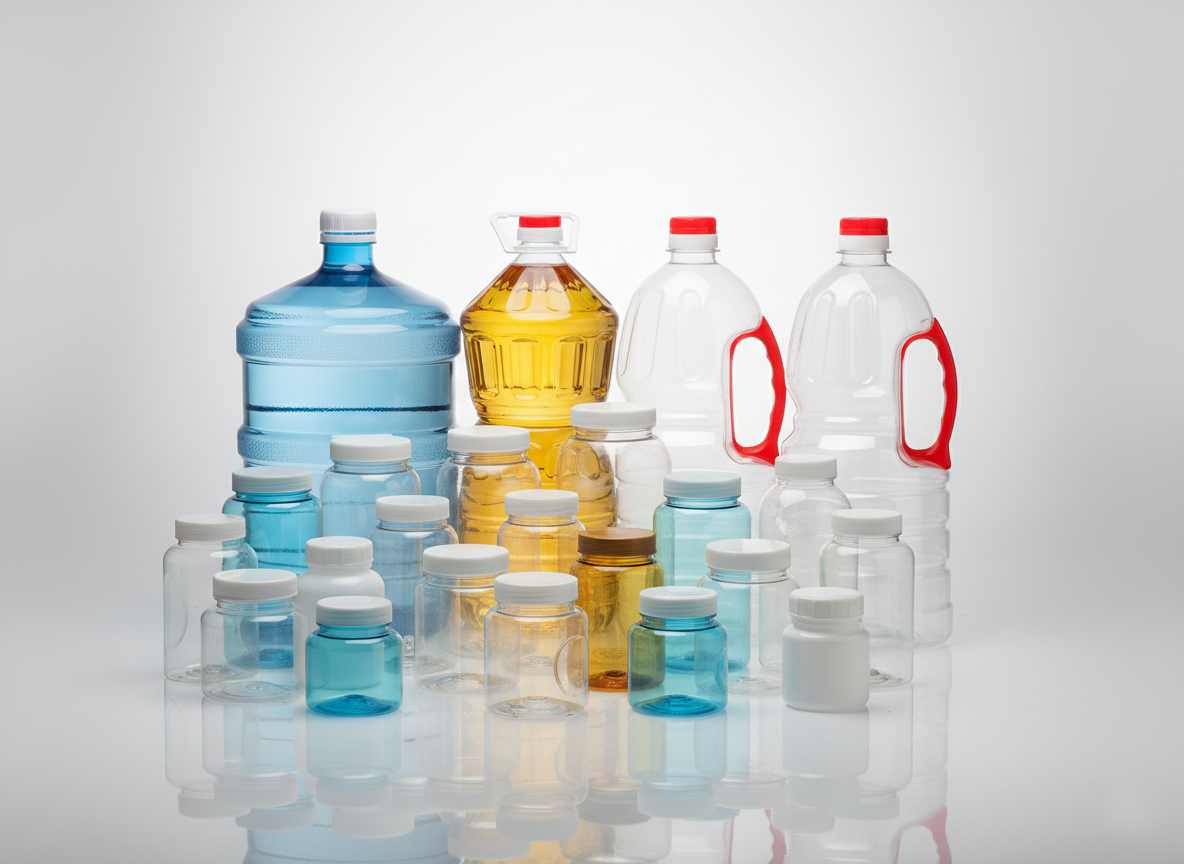
Stretch blow molding is usually more sensitive than EBM because PET bottle quality depends heavily on stable heating, correct preform handling, and repeatable blowing conditions.
For SBM projects, the key advantage is not only speed. It is the ability to produce clear, repeatable, lightweight PET bottles at stable high-volume output.
Key SBM evaluation points
- Does the machine match the target bottle volume and neck finish?
- Can it handle the real BPH target under stable production conditions?
- Is the heating system uniform enough for bottle consistency?
- How easy is it to change molds and bottle formats?
- Is the line designed for water, edible oil, beverage, or other PET applications?
If your project focuses on mineral water, soft drinks, edible oil bottles, or other PET bottle production, your commercial comparison should usually move toward the right stretch blow molding machine rather than stay in a broad process discussion.
How do energy cost and drive technology affect ROI?
Energy cost is no longer a secondary issue. In many factories, it directly affects cost per bottle, especially in higher-output projects. A machine with poor motion control or inefficient drive design can remain expensive every day, even if the purchase price looked attractive at the start.
Modern buyers should compare energy behavior as part of total cost of ownership, not as an optional extra.
Why energy efficiency matters
- Lower electricity use reduces cost per bottle
- Lower heat load improves system stability
- Better motion control often improves consistency
- Efficient machines are easier to scale in higher-output projects
In practice, buyers should not only ask, “How fast is the machine?” They should also ask, “How much energy does it use at stable production conditions?”
This matters especially in projects where margins are already tight, such as water bottles, detergent bottles, edible oil bottles, and other high-volume commodity packaging.
How should buyers think about cycle time?
Cycle time is one of the easiest numbers to exaggerate in machine sales. But a short cycle on paper does not always translate into better production economics.
The real target is stable sellable output, not only theoretical speed.
Three practical questions to ask
- What is the real output per hour under normal production conditions?
- What scrap rate is acceptable at that speed?
- How often does the machine stop outside planned maintenance?
A machine that runs slightly slower but with lower scrap and fewer interruptions may produce more sellable bottles over a month than a machine marketed as “high speed.”
Why full line planning matters
A blow molding machine never works alone. Actual production depends on the whole system, including resin handling, compressed air, cooling, mold support, bottle transfer, and downstream line logic.
Poor planning creates hidden bottlenecks. Good planning improves operator workflow, maintenance access, mold changes, and line scalability.
Buyers should plan the machine together with the production environment, not as a stand-alone piece of equipment.
This becomes even more important if the project will later connect to filling, capping, labeling, packing, or end-of-line automation. Even though this guide focuses on EBM and SBM selection, early layout thinking still reduces future retrofit cost.
How should you verify a blow molding machine supplier?
Supplier selection is one of the most underestimated parts of machine buying. A good supplier reduces risk long after shipment. A weak supplier creates problems that only become visible after installation.
Do not judge suppliers by brochure quality alone. Judge them by technical clarity, response speed, installed cases, and how honestly they discuss project limits.
Practical supplier checks
- Do they clearly explain which process fits your product?
- Can they show similar running installations?
- Are machine configurations explained clearly, not vaguely?
- Do they discuss spare parts, training, and service realistically?
- Can they explain energy use, output logic, and mold scope in practical terms?
One of the strongest signals of a serious supplier is the willingness to reject the wrong project fit. A supplier that says yes to everything usually creates more risk later.
When should this guide lead to EBM, and when should it lead to SBM?
This article is a decision guide, so it should not force every reader into the same path. Instead, it should separate projects according to bottle type, resin, and process logic.
If your project involves the following, go deeper into EBM:
- HDPE bottles
- PP bottles
- Detergent bottles
- Chemical containers
- Milk bottles
- Lubricant bottles
- Jerry cans
- Industrial drums
- Handle bottles
Explore extrusion blow molding machines
If your project involves the following, go deeper into SBM:
- PET water bottles
- Beverage bottles
- Carbonated drink bottles
- Edible oil bottles
- Preform-based bottle production
- Clear PET packaging
Explore stretch blow molding machines
Conclusion
Choosing the right blow molding machine in 2026 is not about chasing the lowest quotation or the highest advertised speed. It is about matching the correct process to the actual bottle, controlling daily production cost, and working with a supplier that understands how your line must run in real factory conditions.
If your project is based on HDPE, PP, detergent bottles, chemical bottles, jerry cans, or drums, your next step is usually EBM.
If your project is based on PET bottles, water bottles, beverage bottles, edible oil bottles, or preform-based production, your next step is usually SBM.
Need help choosing the right blow molding route?
Send us your bottle type, bottle volume, material, target output, and any sample drawings or photos. We can help you determine whether your project should move toward extrusion blow molding or stretch blow molding, and recommend a practical machine direction for your factory.