
Introduction
Every gram counts in modern automotive design. As emission regulations tighten and electric vehicle ranges become a competitive battleground, manufacturers face mounting pressure to reduce weight without sacrificing durability. This is where automotive blow molding emerges as a no-brainer solution—transforming fuel tanks, air ducts, and structural components with high-performance plastics that are up to 50% lighter than metal alternatives.
At Lekamachine, we’ve seen firsthand how blow-molded PET, PP, and HDPE parts solve critical pain points: they withstand extreme temperatures in engine bays, simplify complex geometries for EV battery housings, and slash production costs by up to 30% compared to traditional methods. This article breaks down the engineering advantages, material innovations, and real-world applications driving the shift toward blow-molded automotive components.
Fundamentals of Automotive Blow Molding
Automotive blow molding is a manufacturing process that creates hollow plastic parts by inflating a heated plastic tube inside a mold. This technique is widely used in the automotive industry for producing lightweight, durable components such as fuel tanks, air ducts, and fluid reservoirs. The process offers significant advantages in terms of cost-efficiency, design flexibility, and material savings.
“Automotive blow molding enables the production of complex, lightweight parts that contribute to improved fuel efficiency and reduced emissions in modern vehicles.”
What is Blow Molding?
Blow molding is a manufacturing process where thermoplastic material is melted and formed into a parison (hollow tube). This parison is then clamped into a mold and inflated with compressed air until it takes the shape of the mold cavity. Once cooled, the plastic retains its molded shape, resulting in a hollow part. In automotive applications, this process is particularly valuable for creating parts that need to be both strong and lightweight.
Process Overview
The automotive blow molding process typically involves three main stages: parison formation, blowing, and cooling. First, plastic resin is melted and extruded into a tube shape. This tube is then captured between two halves of a mold. Compressed air inflates the tube to conform to the mold’s shape. Finally, the molded part cools and hardens before being ejected. This process can produce parts with consistent wall thickness and complex geometries that would be difficult to achieve with other manufacturing methods.
Types of Blow Molding
| Type | Process Description | Automotive Applications | Advantages | Limitations |
|---|---|---|---|---|
| Extrusion Blow Molding | Continuous extrusion of parison into open mold | Fuel tanks, air ducts | Cost-effective for large parts | Limited precision |
| Injection Blow Molding | Preform injection followed by blowing | Small fluid reservoirs | Excellent surface finish | Higher tooling costs |
| Stretch Blow Molding | Preform stretched before blowing | Complex shaped containers | Improved material properties | Limited to certain materials |
| 3D Blow Molding | Controlled parison movement | Asymmetric parts | Reduced material waste | Specialized equipment needed |
| Multi-Layer Blow Molding | Multiple material layers | Fuel tanks with barrier layers | Enhanced performance | Complex process control |
Key Materials Used
The automotive industry primarily uses three types of plastics for blow molding: PET (Polyethylene Terephthalate), PP (Polypropylene), and HDPE (High-Density Polyethylene). PET offers excellent clarity and barrier properties, making it ideal for visible components. PP provides good chemical resistance and is often used for under-hood applications. HDPE combines durability with flexibility, perfect for fuel tanks and fluid containers. Each material is selected based on its specific properties and the requirements of the automotive component being produced.
Why Automotive Industry Prefers Blow Molding
The automotive industry increasingly favors blow molding for several key reasons. First, it enables significant weight reduction compared to metal alternatives, directly contributing to improved fuel efficiency. Second, the process allows for complex geometries that would be impossible or prohibitively expensive with other manufacturing methods. Third, blow molding supports the industry’s sustainability goals by minimizing material waste and enabling the use of recycled plastics. Companies like Lekamachine have developed specialized extrusion blow molding machines that meet the automotive sector’s stringent quality and performance requirements.
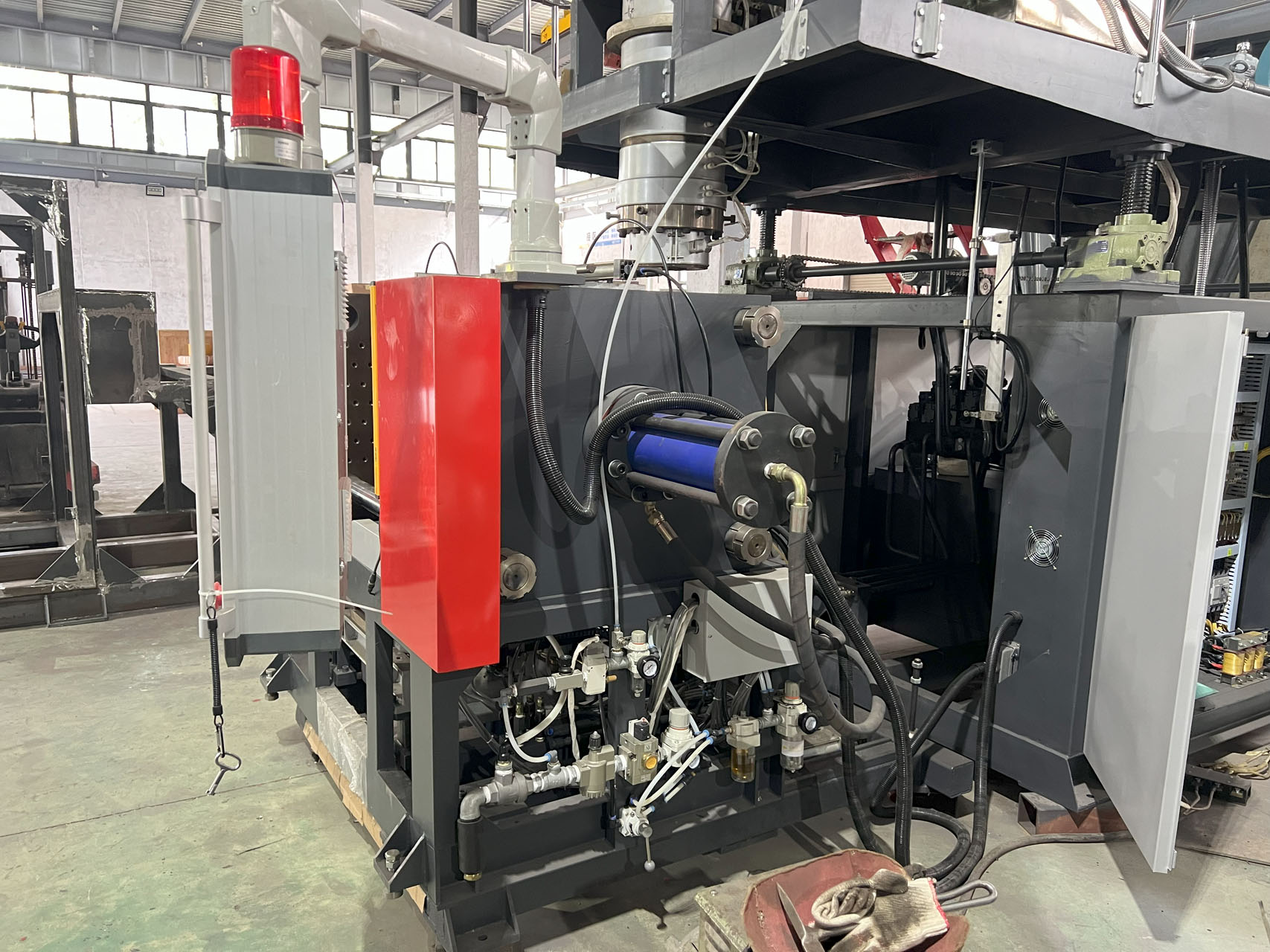
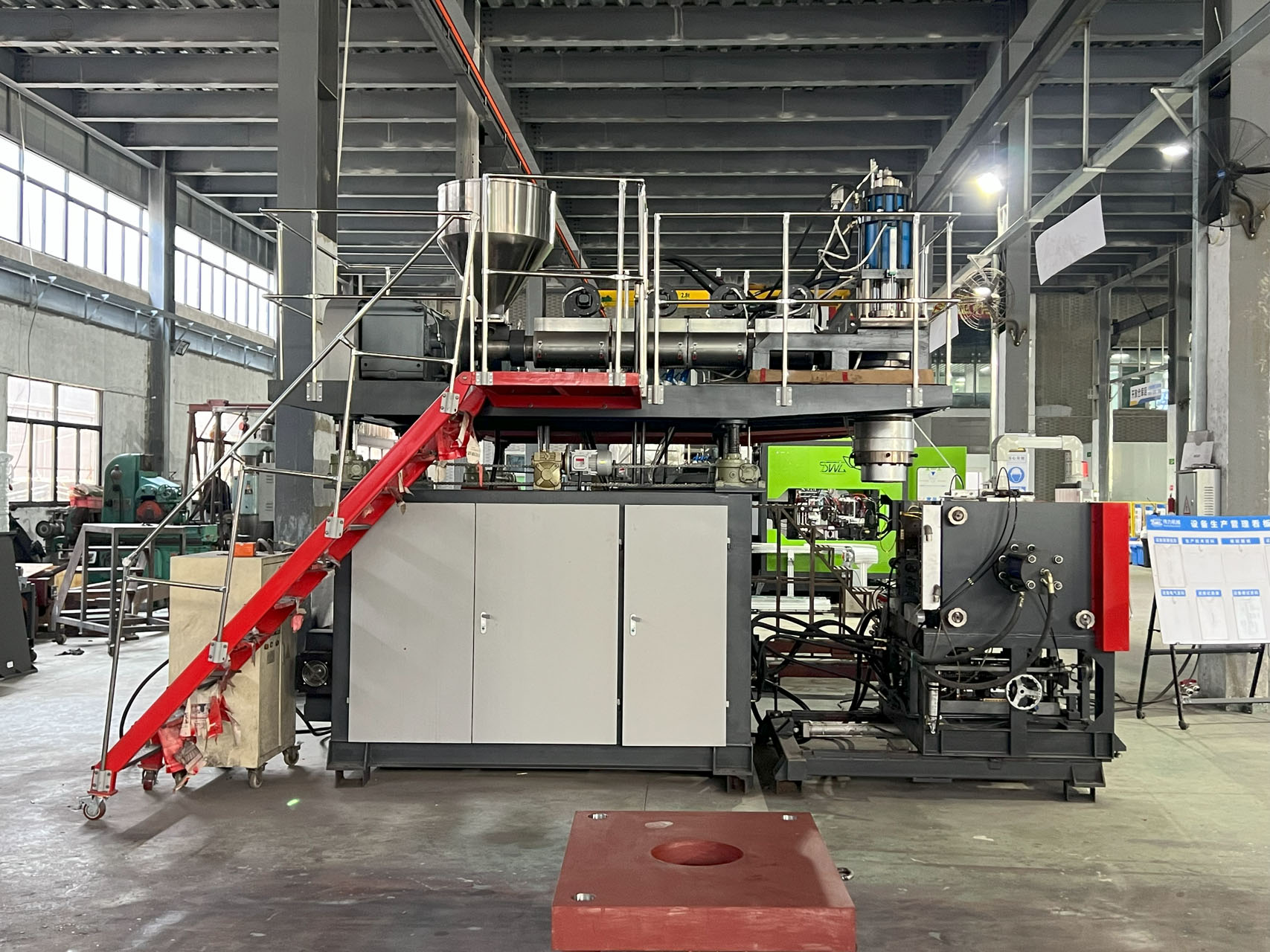
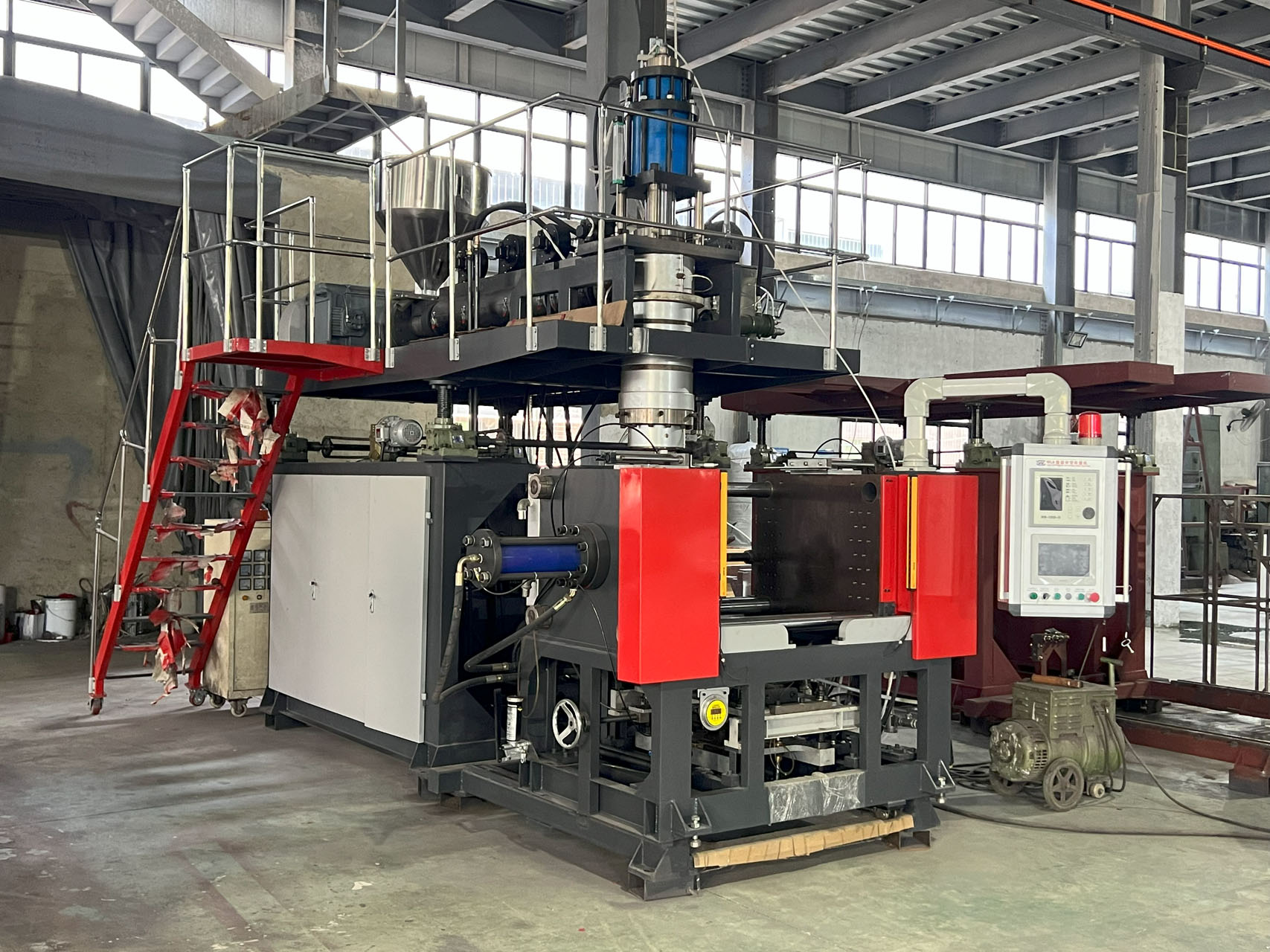
Featured image reference: High-precision automotive blow molding machine producing complex plastic components.
Key Applications in Vehicle Manufacturing
Automotive blow molding has become a cornerstone technology in modern vehicle production, enabling the creation of critical components that balance weight reduction with structural integrity. This manufacturing process is particularly valuable for parts requiring complex geometries and consistent material distribution, which are essential in today’s fuel-efficient and electric vehicles.
“From fuel tanks to EV battery housings, automotive blow molding delivers lightweight solutions without compromising durability or performance.”
Fuel Tanks: Weight Reduction & Leak Prevention
Modern multi-layer blow molded fuel tanks represent one of the most significant applications of this technology in the automotive sector. These tanks typically consist of 3-6 layers of specialized plastics, combining HDPE for structural integrity with barrier layers that prevent fuel permeation. Compared to traditional metal tanks, blow molded versions offer 30-40% weight reduction while meeting stringent safety standards. Lekamachine’s extrusion blow molding machines have been instrumental in producing these complex fuel systems for leading automakers.
Air Intake Systems: Complex Geometry Solutions
Blow molding enables the production of intricate air intake systems with smooth internal surfaces that optimize airflow. These components often feature complex curves and branching pathways that would be impractical to manufacture using other methods. The process allows for precise wall thickness control, ensuring consistent performance across the entire part. Recent advancements in blow mold design in automotive industry applications have further improved the efficiency of these systems.
Performance Comparison of Blow Molded Automotive Components
| Component | Material | Weight Reduction | Performance Benefit | Production Method |
|---|---|---|---|---|
| Fuel Tank | Multi-layer HDPE | 35% | Zero permeation | Extrusion Blow Molding |
| Air Intake | PP/PA blends | 25% | 15% better airflow | 3D Blow Molding |
| Coolant Reservoir | PP | 40% | Withstands 120°C | Injection Blow Molding |
| Battery Housing | Reinforced PET | 50% | Impact resistant | Stretch Blow Molding |
| Washer Fluid Tank | HDPE | 30% | Chemical resistant | Extrusion Blow Molding |
Fluid Reservoirs: Durability Under Heat
Blow molded coolant and washer fluid reservoirs demonstrate exceptional performance in harsh underhood environments. These components utilize specialized polypropylene formulations that maintain structural integrity at temperatures exceeding 120°C while resisting chemical degradation from automotive fluids. The seamless construction possible through blow molding eliminates potential leak points found in assembled alternatives.
EV Battery Housings: Lightweighting for Extended Range
The shift toward electric vehicles has created new opportunities for automotive blow molding applications. Single-stage stretch blow molding is particularly effective for producing lightweight yet rugged battery housings. These components must protect sensitive battery cells while contributing to overall vehicle efficiency. Lekamachine’s case studies demonstrate how their specialized machines can produce battery enclosures that meet strict flame-retardant and impact-resistance requirements while optimizing weight.
Featured image reference: High-performance plastic automotive components produced through advanced blow molding techniques.
Engineering Advantages Over Traditional Methods
Automotive blow molding offers distinct engineering advantages that make it superior to traditional metal stamping and injection molding for many vehicle components. This manufacturing approach delivers significant benefits in weight reduction, material efficiency, and design flexibility while maintaining the durability required for automotive applications.
“Blow molded automotive components achieve 30-50% weight savings compared to metal alternatives while maintaining equivalent structural performance.”
Weight Savings: 30-50% Lighter Than Metal Alternatives
The most immediate advantage of automotive blow molding is dramatic weight reduction. Plastic components typically weigh half as much as their metal counterparts, directly contributing to improved fuel efficiency. For electric vehicles, this weight savings translates to extended battery range. Lekamachine’s clients have documented 25% overall cost reductions by switching from metal to blow-molded parts, factoring in both material and assembly savings.
Material Efficiency: Reduced Waste vs. Injection Molding
Unlike injection molding which generates significant sprues and runners, blow molding produces minimal material waste. The process uses only the exact amount of plastic needed to form the hollow part, with scrap rates typically below 5%. This efficiency becomes particularly valuable with engineering-grade resins that command premium prices in the automotive market.
Comparative Analysis: Blow Molding vs Traditional Methods
| Parameter | Blow Molding | Metal Stamping | Injection Molding | Industry Benchmark |
|---|---|---|---|---|
| Weight Reduction | 30-50% | 0% | 15-25% | 40% |
| Material Utilization | 95%+ | 85% | 80-90% | 90% |
| Chemical Resistance | Excellent | Variable | Good | Excellent |
| Thermal Stability | 120°C+ | Unlimited | 100°C | 110°C |
| Part Consolidation | 3-5 parts into 1 | Limited | 2-3 parts into 1 | 4 parts into 1 |
Thermal & Chemical Resistance in Engine Bay Environments
Modern engineering plastics used in automotive blow molding withstand the harsh conditions of engine compartments, resisting temperatures exceeding 120°C while maintaining structural integrity. Specialized formulations provide excellent resistance to automotive fluids including gasoline, oil, and coolant. These lightweight automotive parts outperform many metals in corrosive environments.
Consolidation of Multi-Part Assemblies into Single Units
Blow molding enables the consolidation of what would traditionally be multi-component assemblies into single, seamless units. This eliminates potential leak paths in fluid systems and reduces assembly labor. Complex geometries with integrated mounting points, fluid channels, and sensor housings can be molded in one operation, improving reliability while lowering production costs.
Featured image reference: Comparison of blow molded automotive components versus traditional metal and injection molded alternatives.

Sustainability & Circular Economy Alignment
Automotive blow molding plays a crucial role in supporting the automotive industry’s sustainability initiatives through material innovation and energy-efficient production methods. This manufacturing approach aligns perfectly with modern ESG goals by enabling the use of recycled materials while reducing overall environmental impact.
“Blow molded automotive components contribute to circular economy principles through material recyclability and reduced energy consumption during production.
Recycled PET/PP in New Automotive Components
The automotive industry increasingly incorporates recycled PET and PP in blow molded components, with some parts now containing up to 30% post-consumer recycled content. These materials maintain the required mechanical properties while significantly reducing the carbon footprint of vehicle production. Lekamachine’s ISO 14001 certified facilities demonstrate how sustainability in automotive manufacturing can be achieved without compromising quality.
Lifecycle Analysis: Lower Carbon Footprint vs. Metal
Comprehensive lifecycle analyses reveal that blow molded plastic components generate 40-60% fewer CO2 emissions compared to equivalent metal parts when considering material production, manufacturing, and end-of-life processing. The energy savings begin with production, where blow molding requires less energy than metal forming processes, and continue through the vehicle’s operational life due to weight reduction benefits.
Sustainability Metrics for Automotive Components
| Material | Recycled Content Potential | Production Energy (kWh/kg) | End-of-Life Recyclability | Carbon Footprint Reduction |
|---|---|---|---|---|
| Virgin HDPE | 0% | 2.5 | 95% | Baseline |
| 30% Recycled HDPE | 30% | 1.8 | 95% | 25% |
| Virgin PP | 0% | 2.7 | 90% | Baseline |
| 50% Recycled PP | 50% | 1.5 | 90% | 40% |
| Steel | N/A | 6.5 | 85% | 0% |
Regulatory Compliance (EU End-of-Life Vehicle Directive)
Blow molded automotive components help manufacturers comply with stringent regulations like the EU End-of-Life Vehicle Directive, which mandates 85% recyclability for all vehicle components. The inherent recyclability of thermoplastic materials, combined with established collection and processing infrastructure, makes blow molded parts an ideal solution for meeting these requirements while maintaining cost-effectiveness.
Closed-Loop Systems for Scrap Reuse in Manufacturing
Advanced blow molding operations now implement closed-loop systems that immediately reintroduce production scrap back into the manufacturing process. Lekamachine’s partnerships with material recyclers enable efficient processing of post-industrial waste, with some facilities achieving near-zero scrap rates. This approach not only reduces waste but also lowers material costs, creating both environmental and economic benefits.
Featured image reference: Sustainable automotive blow molding process showing material recycling and energy-efficient production.
Future Trends & Partner Selection Criteria
The automotive blow molding industry is undergoing significant transformation, driven by technological advancements and evolving sustainability requirements. As manufacturers seek partners for their automotive components manufacturing needs, understanding these emerging trends and selection criteria becomes crucial for long-term success.
“Choosing the right blow molding partner requires evaluating both technical capabilities and strategic vision for future industry developments.”
Industry 4.0 Integration: Smart Molding with IoT Sensors
The next generation of automotive blow molding equipment incorporates IoT sensors and real-time monitoring systems that optimize production parameters automatically. These smart systems track variables like material temperature, pressure, and cooling rates, adjusting processes dynamically to maintain consistent quality while reducing energy consumption by up to 15%.
Bio-Based Polymers for Next-Gen Vehicles
Automotive manufacturers are increasingly adopting bio-based polymers that maintain performance characteristics while reducing environmental impact. These materials, derived from renewable sources, are particularly suitable for interior components and non-structural parts, offering comparable durability to traditional plastics with 20-30% lower carbon footprints.
Key Specifications for Blow Molding Equipment Evaluation
| Specification | Minimum Requirement | Industry Benchmark | Future Trend | Lekamachine Offering |
|---|---|---|---|---|
| Energy Efficiency | 3.5 kWh/kg | 3.0 kWh/kg | 2.5 kWh/kg | 2.8 kWh/kg |
| Production Speed | 50 cycles/hr | 70 cycles/hr | 90 cycles/hr | 85 cycles/hr |
| Material Flexibility | 2 material types | 3 material types | 5+ material types | 4 material types |
| IoT Connectivity | Basic monitoring | Real-time adjustment | Predictive maintenance | Real-time adjustment |
| Recycled Material Capacity | 20% content | 30% content | 50% content | 40% content |
5 Key Specs to Evaluate in Blow Molding Equipment
When choosing a blow molding partner for automotive applications, engineers should prioritize: energy efficiency ratings, production consistency (measured by defect rates), material flexibility, after-sales support responsiveness, and R&D investment levels. These factors collectively determine long-term operational success and adaptability to future requirements.
How Lekamachine’s Custom Solutions Address Unique OEM Needs
Lekamachine’s end-to-end service model provides comprehensive support from initial design consultation through production and after-sales service. Their automotive blow molding solutions feature modular designs that allow for future upgrades, ensuring equipment remains relevant as technology evolves. The company’s partnerships with material scientists enable them to recommend optimal resin formulations for specific automotive applications.
Featured image reference: Advanced blow molding equipment with IoT connectivity and real-time monitoring systems.
Conclusion
After more than a decade in this industry, I’ve seen firsthand how automotive blow molding isn’t just about making plastic parts—it’s about reinventing what’s possible in vehicle design. The weight savings alone make it a game-changer for manufacturers wrestling with emissions targets and EV range anxiety.
What excites me most is how this technology keeps evolving. From multi-layer fuel tanks to smart battery housings, we’re pushing materials and processes further than anyone imagined 20 years ago. And with sustainability becoming non-negotiable, blow molding’s ability to incorporate recycled content while slashing energy use positions it as the future of responsible manufacturing.
If your team is still debating metal versus plastic for that next component, consider this: every gram you save today could mean kilometers of added range tomorrow. That’s the kind of math that reshapes entire industries.
FAQ
Q1: What is automotive blow molding?
A1: Automotive blow molding is a manufacturing process used to create hollow plastic parts for vehicles. It involves heating a plastic parison and using air pressure to inflate it into a mold, producing lightweight and complex components such as fuel tanks and air ducts.
Q2: What are the benefits of blow molded automotive parts?
A2: Blow molded automotive parts are known for being lightweight, durable, and efficient. Their production process allows for complex shapes, which can lead to enhanced fuel efficiency and reduced emissions in vehicles.
Q3: How does blow molding differ from injection molding?
A3: Blow molding involves inflating a heated plastic tube inside a mold, while injection molding injects molten plastic into a mold cavity. Blow molding is often used for hollow parts, whereas injection molding is suitable for solid parts.
Q4: What types of components are made using blow molding in the automotive industry?
A4: Common components produced through blow molding in the automotive sector include fuel tanks, air ducts, coolant reservoirs, and various other housings that benefit from lightweight and durable plastic.
Q5: Is blow molding environmentally friendly?
A5: Blow molding can be environmentally friendly as it supports the use of recyclable materials and helps produce lighter parts, improving fuel efficiency and reducing greenhouse gas emissions in vehicles.
Q6: What are the design considerations for blow molded automotive parts?
A6: Design considerations include wall thickness, surface finish, and part geometry. The design must accommodate the blow molding process and ensure structural integrity while allowing for ease of manufacturing.
Q7: Are blow molded parts more durable than injection molded parts?
A7: Blow molded parts can be more durable for certain applications, particularly those requiring flexibility and impact resistance, as the process creates seamless structures that reduce weak points.
Q8: How is quality control managed in blow molding for automotive parts?
A8: Quality control in blow molding involves monitoring the materials, checking mold precision, and conducting tests on the final products to ensure they meet industry standards and specifications for safety and performance.
External Links
- Manufacturing Process: Blow Molding – Lumafield
- Blow Molding: Improving Vehicle Performance, Advancing Sustainability – JVIS
- Applications of Blow Molding in Automotive – Mayco International
- What Is Blow Molding? – Alwepo
- Blow Molding Process: What is it? – Auto Plastics World
- Technical Blow Molded Products and Applications – Gemini Group
- Top Uses for Blow Molds in the Automotive Industry – Mayco International
- Blow Molded HVAC Duct Components & Assemblies – Gemini Group