
How should I evaluate the production line supporting solution for the all-electric extrusion blow molding machine provided by the supplier?
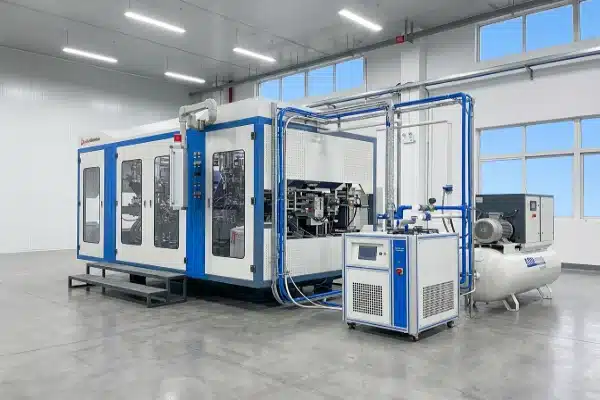
When we configure production lines for our clients, we see that ignoring auxiliary integration destroys efficiency. Are you risking 40% of your output by isolating the machine from its support system? (29 words)
To evaluate a supporting solution for all-electric blow molding, assess the chiller sizing based on resin specific heat rather than hydraulic load. Verify that compressors isolate high-pressure blowing air from motion air. Finally, ensure downstream equipment like leak testers utilize electronic handshakes to automatically pause production during consecutive reject events. (49 words)
Let’s break down the specific technical checkpoints you need to audit to ensure your investment performs as promised.
How do I assess the compatibility of downstream conveyors and leak testers with the main machine?
In our factory testing bay, we frequently see fast machines choked by slow conveyors. Is your downstream equipment capable of handling the high-speed output of an all-electric cycle? (28 words)
You must verify that the leak tester and conveyor are electronically integrated with the blower, not just mechanically inline. The system should trigger a "Cycle Stop" on the main machine if a consecutive reject threshold is met, and conveyor lengths must be calculated based on cooling time, not just distance. (50 words)
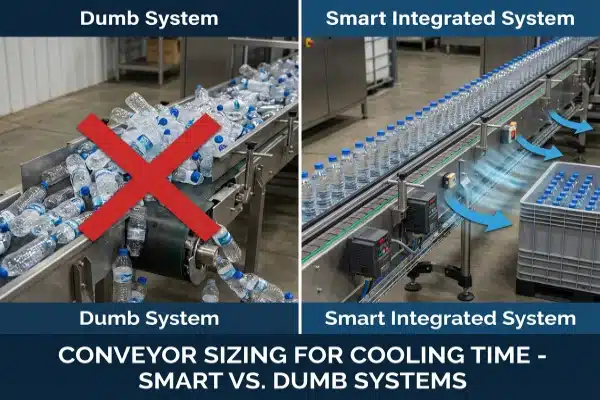
The biggest mistake we see buyers make is treating the conveyor and leak tester as passive "furniture" rather than active participants in the production logic. In an all-electric environment, cycle times are incredibly fast. If your downstream equipment is "dumb," you will produce scrap at record speeds.
The "Handshake" Logic
You must ask your supplier about the communication protocol between the leak tester and the blow molding machine. We recommend a "Three-Strike Logic." If the leak tester detects three consecutive rejects (whether for holes or crushed necks), it must send a signal to the blower to halt the cycle immediately. Without this electronic handshake, a silent process drift—such as a blocked vent or a cold die head—could result in thousands of bad bottles piling up in the packing bin before an operator notices.
Cooling on the Move
For all-electric machines, the bottle often leaves the mold hotter than in hydraulic systems because the cycle is faster. The conveyor is not just for transport; it is an extension of the cooling phase.
Table: Downstream Integration Checklist
| Характеристика | Dumb System (Avoid) | Smart Integrated System (Preferred) |
|---|---|---|
| Rejection Logic | Alarms only at the tester; blower keeps running. | Cycle Stop signal sent to blower after defined consecutive rejects. |
| Conveyor Sizing | Sized by physical distance to the packer. | Sized by Cooling Time required to prevent deformation. |
| Чистота | Standard oiled pneumatic chains. | Oil-free electric drives or dry-running belts for clean rooms. |
| Bottle Spacing | Random spacing causes jams at the tester. | Variable Frequency Drives (VFD) ensure precise gap spacing. |
Furthermore, if you are running a clean room application 1 (common with all-electric buyers), verify the "Oil-Free Ecosystem." We have seen projects fail validation because the supplier included a hydraulic lift table or an oil-mist lubricated pneumatic pusher in the packing zone, violating the clean standards established by the electric machine.
What details should I check regarding the chiller and compressor sizing for an all-electric setup?
When we engineer cooling circuits, we ignore old hydraulic rules because they lead to waste. Are you overpaying for a massive chiller that an all-electric machine simply does not need? (29 words)
Evaluate chiller capacity by calculating the resin’s specific heat and throughput, typically requiring 30–40% less tonnage than hydraulic lines since there is no oil to cool. For compressors, confirm the quote separates high-pressure blowing air from motion air, as all-electric machines do not require pneumatic pressure for carriage movement. (49 words)

Transitioning to all-electric requires a complete shift in how you view energy consumption 2 and heat dissipation. Using "rules of thumb" from the hydraulic era will result in bloated capital expenditure and inefficient operations.
The Chiller Capacity "Shift"
In a hydraulic machine, the chiller fights a war on two fronts: cooling the molten plastic and cooling the hot hydraulic oil generated by friction. In our all-electric machines, servo motors generate negligible heat. Therefore, your chiller sizing should be based almost exclusively on the physics of the plastic.
You need to calculate the load based on:
- The specific heat of your resin (HDPE vs. PP vs. PET).
- The throughput (kg/hr).
- The Delta T (temperature difference between the melt and ejection).
If a supplier quotes you a generic "20-ton chiller" just because that’s what they sell with hydraulic machines, challenge them. You can likely downsize, saving money on both the unit and the electricity to run it.
The Compressor "Process" Split
Air consumption is another area of misunderstanding. All-electric machines do not use air to move the carriage or the clamp. They only need air to blow the bottle.
- Standard Setup: A massive, energy-hungry compressor running at high pressure for everything.
- Optimized Setup: A smaller, high-pressure booster specifically for the "blowing phase," while eliminating the low-pressure demand entirely.
Table: Utility Sizing Comparison (Hydraulic vs. Electric)
| Utility Parameter | Traditional Hydraulic Line | All-Electric Line Optimization |
|---|---|---|
| Heat Source | Mold cooling + Hydraulic Oil (~30% load). | Mold cooling only. (No oil friction heat). |
| Chiller Sizing | High tonnage required. | 30–40% Reduction in required tonnage. |
| Air Demand | High volume (Motion + Blowing). | Blowing Air Only (Motion is Servo-driven). |
| Air Pressure | Single high-pressure line often wasted on motion. | Dedicated booster for blowing; zero air for motion. |
By separating "process air" (blowing) from "motion air" (which is now zero), you can drastically reduce the horsepower of the compressor you buy.
Euromap 82 3
Can the supplier provide a layout drawing that fits my specific factory floor constraints?
We always warn clients that a machine that fits physically might still fail logistically. Does your layout account for the invisible electrical noise and material flow 4 loops? (26 words)
Ensure the layout explicitly depicts the "Regrind Loop" for automatic flash recycling to prevent manual handling. Additionally, check if the electrical plan includes "Harmonic Filters" or line reactors, as the high-frequency noise from massive servo drives can interfere with sensitive downstream electronics like vision systems. (46 words)
A layout drawing is more than just a floor plan; it is a workflow logic chart. When we review competitor layouts, we often see they fit the machine in the room but forget how the material gets in and out.
Siemens or Omron controls 6
The "Regrind Loop" Reality
Extrusion blow molding (EBM) generates flash—tails and moils—that typically account for 20–30% of the material shot. If your layout does not show an automated path for this material, you are planning for failure.
- The Problem: Manual scrap handling negates the labor savings of an automated machine.
- The Solution: The drawing must show a conveyor taking flash from the deflasher directly to a granulator, and a blower system returning that regrind to the hopper.
- The Check: Verify the granulator screen size. All-electric plasticizing screws are precise (dosing to 0.1g). If your auxiliary granulator feeds inconsistent "fines" and chips, it alters the bulk density. This confuses the precise servo injection, leading to weight fluctuations.
Electrical Hygiene: Harmonic Distortion
This is a critical, often overlooked detail. All-electric machines use powerful servo drives. These drives chop electricity at high frequencies, creating "noise" or harmonic distortion on your power lines.
- Риск: This noise can travel down the wire and confuse the delicate electronics of your leak tester or vision inspection camera, causing flickering or false rejects.
- The Fix: Ask the supplier: "Where are the Line Reactors or Harmonic Filters in this electrical layout?" If they look confused, they have not properly integrated the auxiliary systems for an electric platform.
Table: Layout "Red Flags" and Solutions
| Layout Element | The Red Flag (Warning Sign) | The Engineering Solution |
|---|---|---|
| Scrap Flow | Flash falls into a bin for manual carry. | Closed-loop conveyor & dedusting system. |
| Power Quality | Standard breaker connection. | Line Reactors to isolate servo noise. |
| Granulator | Placed randomly; no dust control. | Integrated near discharge; Screen quality matches screw needs. |
| Cooling Lines | Long, uninsulated runs across the floor. | Short, insulated overhead runs to maintain Delta T. |
How do I verify that the auxiliary equipment brands match the quality of the main blower?
We refuse to pair our high-precision blowers with generic, unbranded peripherals. Are you letting a cheap granulator or a non-compliant interface compromise your entire production line’s reliability? (26 words)
harmonic distortion 7
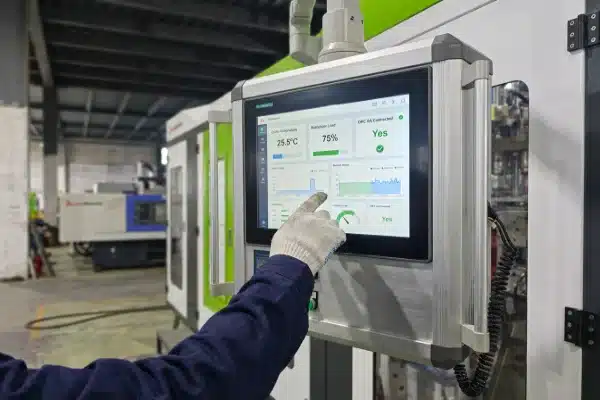
Request a detailed Bill of Materials for all auxiliary equipment to confirm critical components match the main machine’s tier. Furthermore, verify support for Euromap 82 or OPC UA protocols, allowing the main HMI to act as a "Single Source of Truth" for monitoring peripheral data. (46 words)

A production line is only as strong as its weakest link. It makes no sense to invest in a top-tier all-electric blower with Siemens or Omron controls, only to feed it with a granulator running a generic, unbranded motor that burns out in six months.
bulk density 9
The Component Audit
You have the right to demand a "BOM Transparency" for the auxiliary package. You are not just buying a "conveyor"; you are buying the motor and the drive inside it.
- The Question: "If my main machine uses Schneider electrics, why does the leak tester use an unknown brand?"
- The Standard: We ensure that the Mean Time Between Failures (MTBF) of the auxiliary components aligns with the main machine. If the blower is rated for 40,000 hours, the conveyor motor should not be rated for 5,000.
The "Single Source of Truth" (OPC UA / Euromap 82)
In the past, an operator had to walk around the factory to check the chiller temperature, then check the dryer dew point, then check the leak tester count. This is inefficient.
Modern integration means using OPC UA или Euromap 82 interfaces.
- Why it matters: These protocols allow the auxiliary equipment to talk to the main blower’s HMI.
- Результат: Your operator stands at the main screen and sees the chiller temperature right there. If the granulator is overloaded, it pops up as an alarm on the Основная screen. This integration reduces the cognitive load on your staff and speeds up troubleshooting.
Заключение
Evaluate the total system, not just the molding machine. True efficiency comes from synchronized integration. (15 words)
Экструзионно-выдувное формование 10
Сноски
- Regulatory standards for clean room environments in manufacturing. ↩︎
- Official government guidance on industrial energy efficiency and management. ↩︎
- Technical specification for the plastics machinery interface standard. ↩︎
- Government guidance on sustainable material management and flow in industry. ↩︎
- Official documentation for the industrial communication standard mentioned. ↩︎
- Product documentation for the industrial control systems used in blowers. ↩︎
- Technical standard regarding electrical noise in industrial power systems. ↩︎
- Manufacturer specifications for high-precision motion control components. ↩︎
- Academic research on the importance of material density in packaging. ↩︎
- General background on the primary manufacturing process discussed. ↩︎


0 Комментариев