
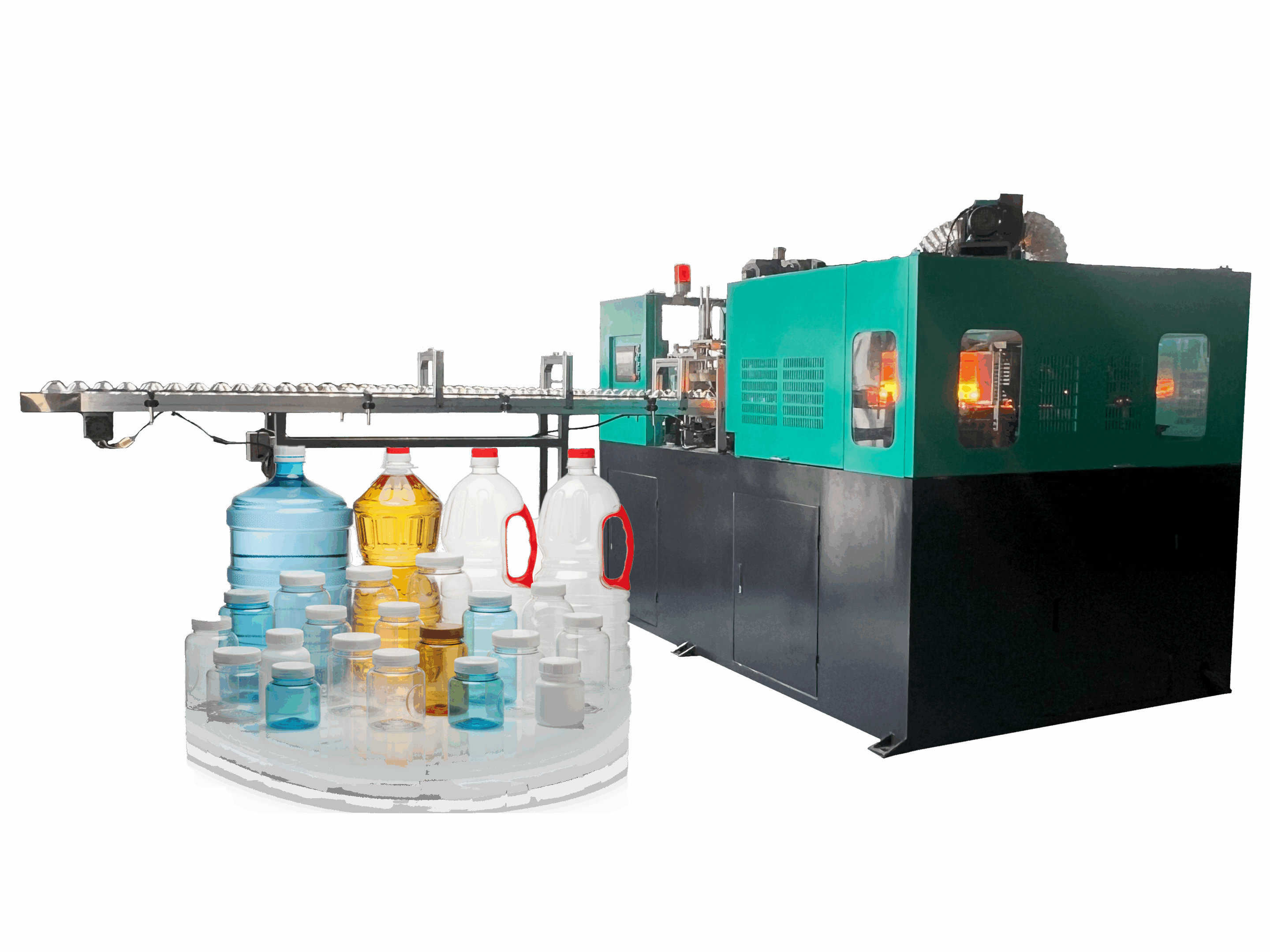
How Should I Inquire About the Implementation of the View Stripe Function for All-Electric Machines?

At LEKA Machine, we often see clients frustrated when their "transparent" stripes turn hazy or wavy during production, leading to rejected batches T-die flow channel 1. Simply asking for a view stripe isn’t enough; you must understand the underlying servo synchronization 2 to avoid costly quality defects and downtime.
To properly inquire about view stripe functions, you must verify that the auxiliary extruder uses a synchronous servo drive rather than a standard AC motor. This ensures the screw speed locks to the machine cycle, preventing the pulsing effects that cause uneven stripe widths in hydraulic systems.
Let’s break down the specific technical configurations and questions you need to address to ensure your new machine delivers consistent, high-quality bottles.
Do I need a specific extruder configuration to add a clear view stripe to my bottles?
In our assembly workshop, we have replaced many standard motors with servos because unstable stripes ruin otherwise perfect bottles. If your auxiliary extruder lacks precision, you will face constant "width-breathing" issues where the stripe expands and contracts, forcing your operators to constantly adjust settings.
You definitely need a dedicated satellite extruder equipped with a synchronous servo motor to ensure pulseless flow. Unlike standard AC motors, a servo drive integrates directly with the main controller, maintaining a consistent ratio even when cycle times fluctuate, which is critical for stripe linearity.
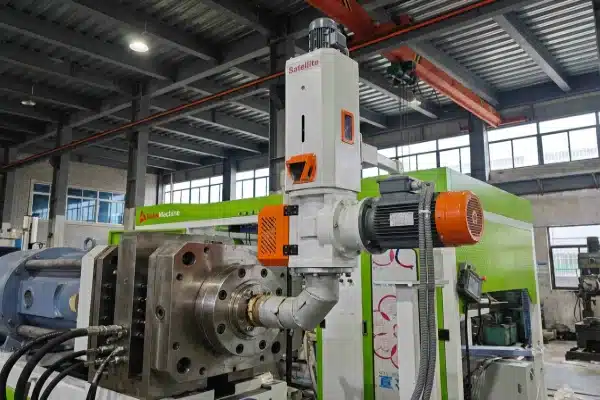
The Critical Role of the Satellite Extruder
When we configure machines for clients in Europe or North America, we emphasize that the "satellite" or "piggyback" extruder is not just an accessory—it is a precision metering device. In an all-electric EBM platform, this unit processes only 5-10% of the total shot weight, yet it dictates the visual quality of the final product.
The primary technical requirement here is Servo-Drive Synchronization. In older hydraulic systems, viscosity changes in the oil (known as "morning sickness") caused the screw speed to fluctuate, leading to "pulsing" stripes. At our factory, we use synchronous servo motor 3s that lock the rotation of the view stripe screw to the exact cycle time of the machine. This eliminates thermal drift. You must ask your supplier if the auxiliary unit is integrated into the main control bus (like Beckhoff or B&R) or if it runs as a standalone unit. Standalone units cannot adjust automatically if the main machine speeds up, leading to inconsistent ratios.
Mounting Orientation Matters
Another critical factor we consider during design is the physical location of the extruder. We recommend a Vertical Mounting configuration. This places the extruder directly above the die head, utilizing gravity and a short melt pipe.
Clear resins used for stripes (like virgin HDPE or PP) are highly susceptible to thermal degradation 4. If they sit in long, heated transfer pipes (common in horizontal mounting), they turn yellow or develop black carbon specks. Vertical mounting minimizes this "residence time."
Comparison of Mounting Configurations
| Характеристика | Vertical Mounting (Recommended) | Horizontal Mounting (Standard) |
|---|---|---|
| Residence Time | Low (Short melt path) | High (Long heated hoses) |
| Degradation Risk | Minimal (Less yellowing) | High (Prone to carbon specks) |
| Space Usage | Compact (Above die head) | Bulky (On carriage frame) |
| Техническое обслуживание | Harder screw access | Easier screw access |
Finally, ensure the screw design has an L/D ratio of roughly 24:1 or 25:1. This length ensures the resin is fully homogenized without generating excessive shear heat, which creates haze.
How does the die head design ensure the stripe remains straight and consistent during production?
We frequently troubleshoot issues for customers where stripes drift or cloud at the edges, which is almost always a flow geometry problem within the head. Without the right channel shape, your clear resin will wash out into the main body, creating a messy, undefined look that fails quality control.
The die head must utilize a T-shaped or keyhole flow channel to compensate for radial expansion differences. This specific geometry ensures the stripe width remains identical on both the inner and outer walls, creating sharp, defined edges rather than the cloudy, hazy boundaries caused by simple rectangular slots.

Flow Channel Geometry and Rheology
In our engineering department, we treat the view stripe as a "4th layer" in the extrusion process. The success of this merger depends on the geometry of the resin passage inside the die head manifold. A simple rectangular slot is insufficient. Because the plastic flows around a curved mandrel, the material on the outer radius travels a longer distance than the material on the inner radius.
To correct this, we utilize a T-Shaped or "Keyhole" Passage. This design delivers more material to the outer surface (the top of the "T"), matching the consumption rate of the inner surface. This balance is what creates a sharp boundary line between the clear and opaque materials. Without it, you get "cloudy" edges where the materials blend ineffectively.
Viscosity Management and Interface Stability
A major point of failure we see involves material viscosity. The translucent resin must generally be at a slightly higher viscosity (or lower temperature) than the opaque body resin.
- If the clear resin is too fluid: The pressure of the main body flow will compress it, causing it to "wash out" and spread uncontrollably.
- If the clear resin is too stiff: It will resist flow and protrude into the bottle wall, creating a physical bulge that creates stress points.
Common Defects and Die Head Causes
| Defect Symptom | Probable Cause | Техническое решение |
|---|---|---|
| Cloudy/Hazy Edges | Rectangular flow channel | Switch to T-shaped/Keyhole channel geometry. |
| Wavy Stripe | Pressure imbalance in head | Balance pressure drop between main and stripe channels. |
| Stripe Bulging | Stripe viscosity too high | Increase stripe temp or choose higher MFI resin. |
| Black Specks | Material stagnation | Polish flow channels; improve purge procedures. |
Additionally, we recommend Спиральная оправка designs over traditional "spider" heads. Spider heads have metal legs that support the mandrel, creating weld lines. If a weld line intersects with your view stripe, it creates a weak point that can split during drop tests. Spiral mandrels eliminate these lines, providing a homogenous structure.
Can I easily adjust the stripe width and position through the control system?
Customers often ask our engineers if they can move the stripe position via the touchscreen, and it is painful to explain during setup that physical adjustments are needed. Misunderstanding this capability leads to long changeover times and frustration on the factory floor when production targets are missed.
You can easily adjust the stripe width via the HMI by changing the auxiliary extruder’s RPM, but position adjustment is mechanical. Changing the stripe’s location typically requires physically rotating the die head mandrel or sleeve, which cannot be done through the software control system.
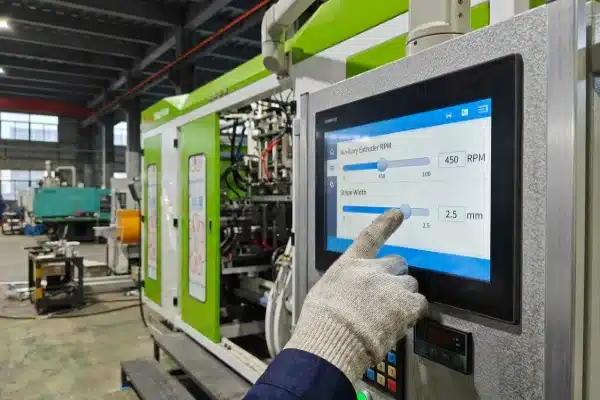
Electronic vs. Mechanical Control
It is vital to distinguish between what the servo system can do and what requires a wrench.
Width Adjustment (Electronic):
Since we use servo motors for the satellite extruder, you can control the stripe width dynamically. By increasing the RPM ratio on the HMI (Human-Machine Interface) 5, you pump more clear material into the stream, widening the stripe. Advanced all-electric systems allow for Dynamic Profiling. For example, if your bottle has a handle where the stripe must be thinner to avoid interference, the controller can ramp down the auxiliary extruder speed for that specific section of the parison.
Position Adjustment (Mechanical):
The circumferential position of the stripe (e.g., moving it from the side to the corner) is determined by the physical orientation of the nozzle inside the die head. This is not adjustable via the screen. To move the stripe, an operator must typically loosen bolts on the die head and rotate the distribution sleeve. When buying a machine, ask: "Does the die head feature an externally accessible rotation mechanism?" Some heads allow this via a worm gear, while others require dismantling the head—a massive difference in setup time.
Maintenance: The Hidden Cost of View Stripes
Adding this functionality increases your maintenance workload. The clear resin channel is small, and flow rates are low, meaning material stagnates easily.
- Carbon Buildup: If the machine is stopped without proper purging, the clear material burns, forming black specks.
- Heater Bands: The small transfer tubes use small heater bands that are prone to failure. We always include these in our recommended "Crash Kit" of spare parts because a single cold spot can freeze the entire line.
- Cleaning Frequency: While a standard head might run for 6 months, a view stripe head often needs cleaning every 2-3 months to maintain clarity.
Operational Checklist for View Stripes
| Task | Частота | Назначение |
|---|---|---|
| Purge Clear Channel | Every Shutdown | Prevents carbonization and black specks. |
| Check Heater Bands | Daily | Ensures transfer tube is at correct temp. |
| Inspect Seals | Еженедельник | Prevents resin leakage at the extruder junction. |
| Verify Sync Ratio | Setup | Ensures servo matches main cycle speed. |
Заключение
To successfully implement view stripes, you must specify a servo-driven satellite extruder to prevent pulsing and a T-shaped die head channel for sharp edges. While width is software-adjustable, position requires mechanical setup, so plan your changeovers accordingly.
Сноски
- Replaced broken link with an article explaining extrusion die design and melt flow channels. ↩︎
- Explains how servo synchronization ensures precise coordination in multi-axis systems. ↩︎
- Replaced broken link with an authoritative Wikipedia article defining synchronous motors. ↩︎
- Replaced broken link with an authoritative Wikipedia article on thermal degradation of polymers. ↩︎
- Describes HMI as a device for effective interaction between user and machine in industrial processes. ↩︎


0 Комментариев