
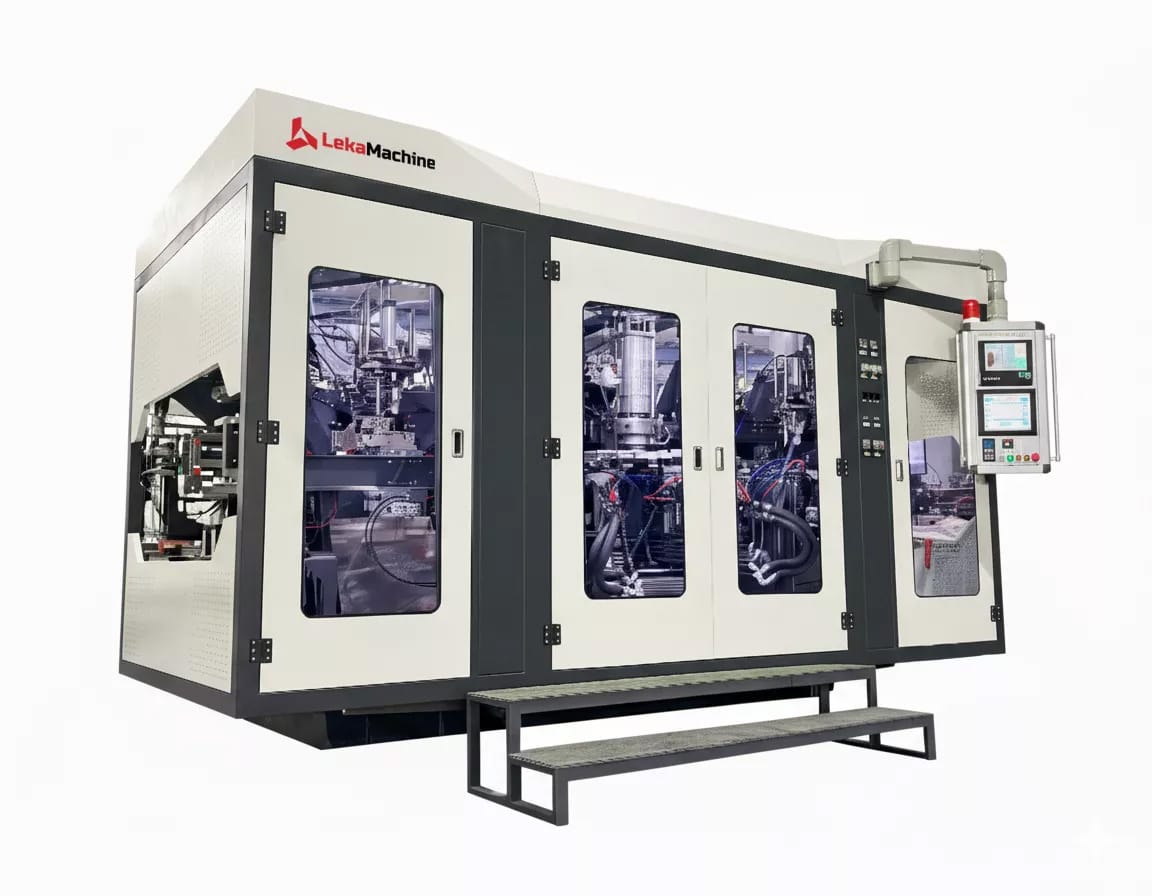
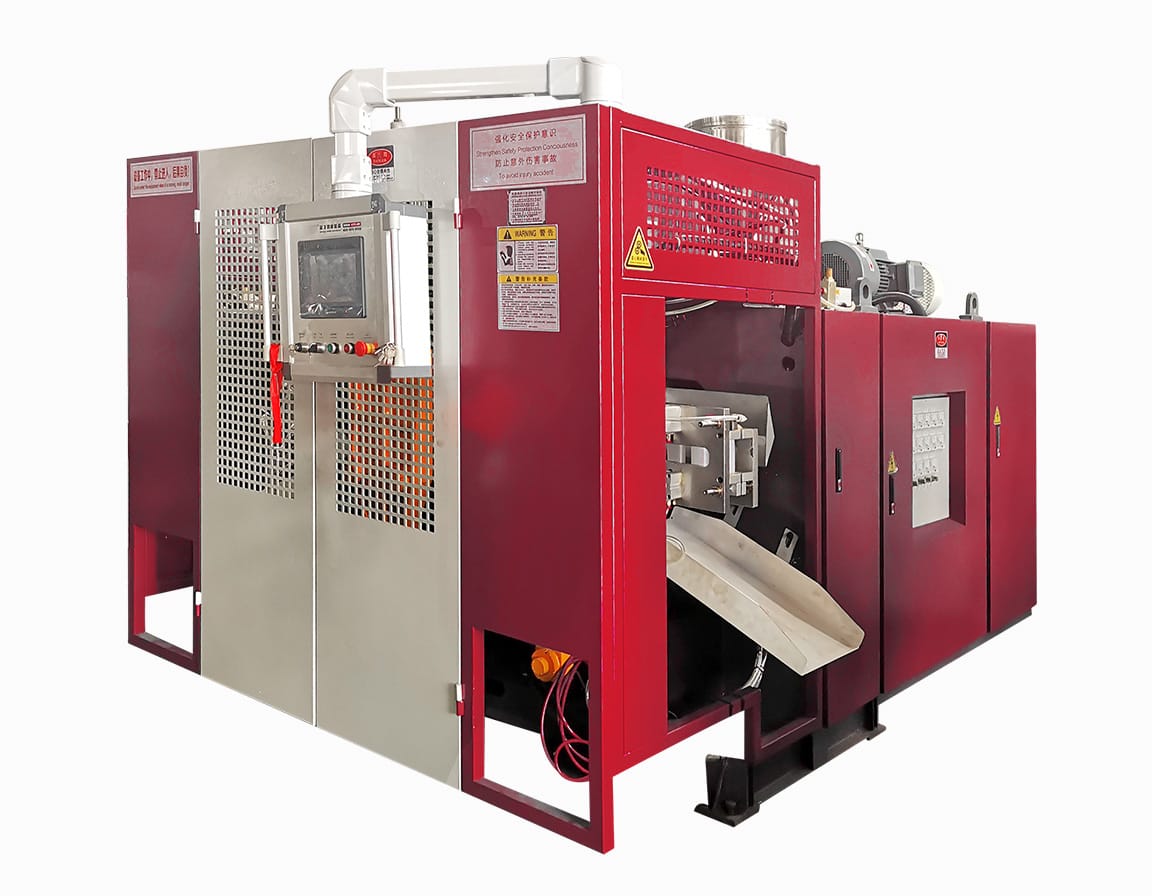
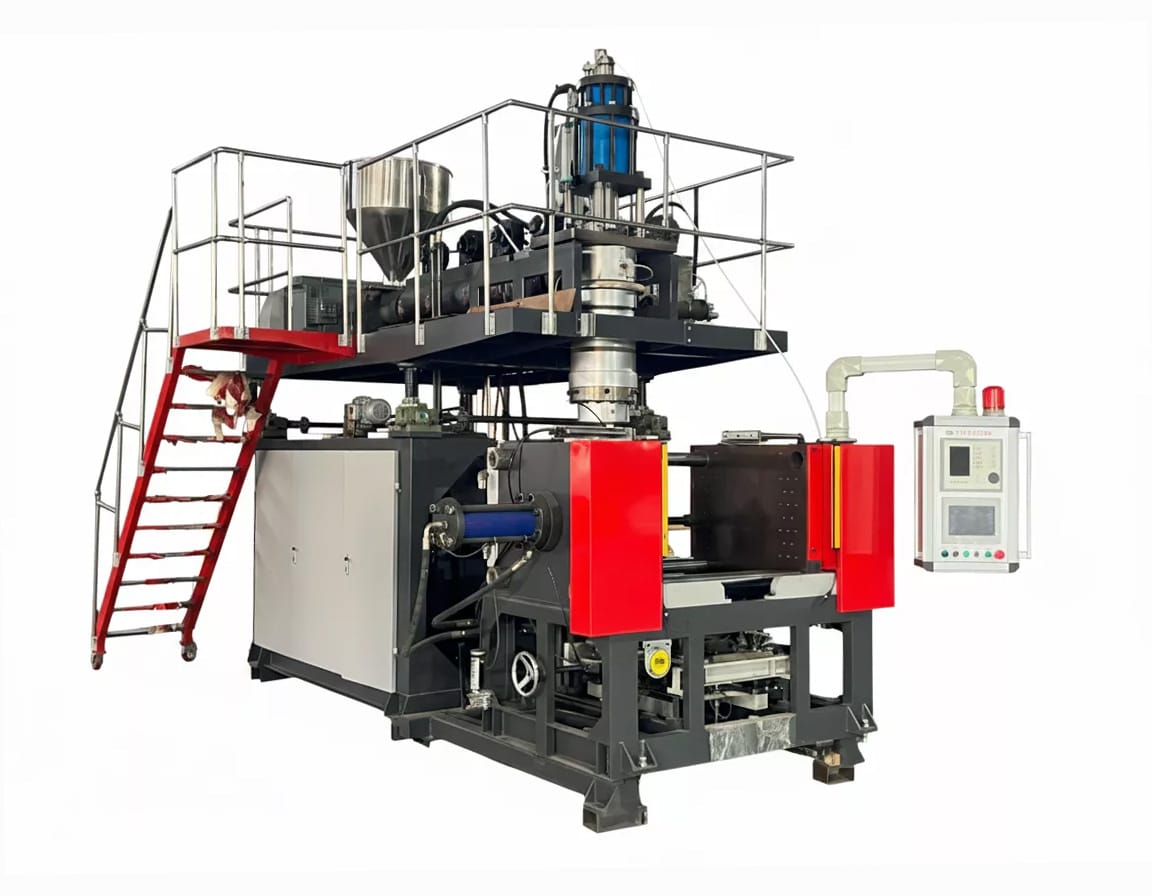
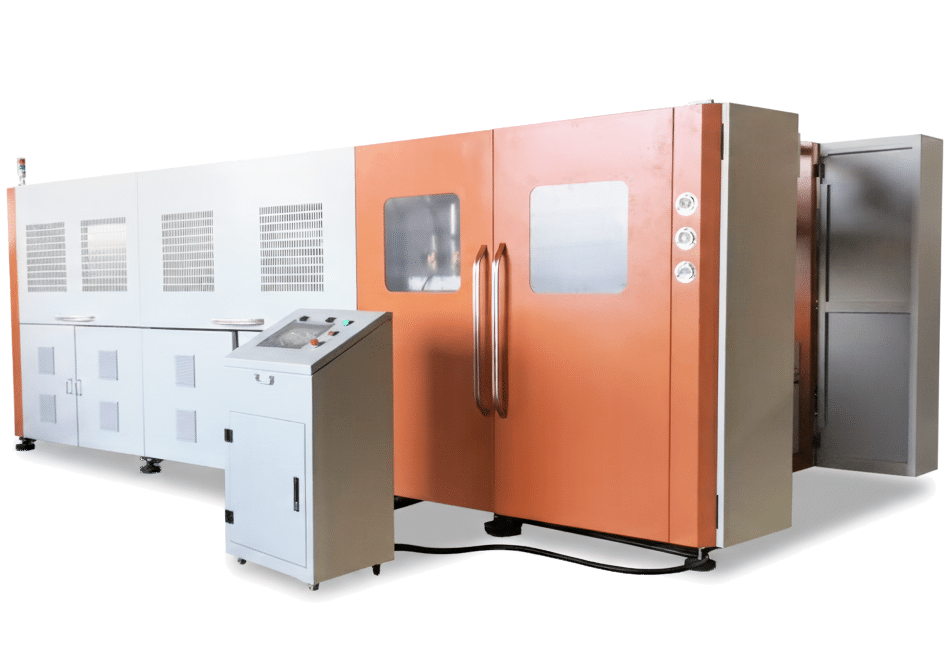
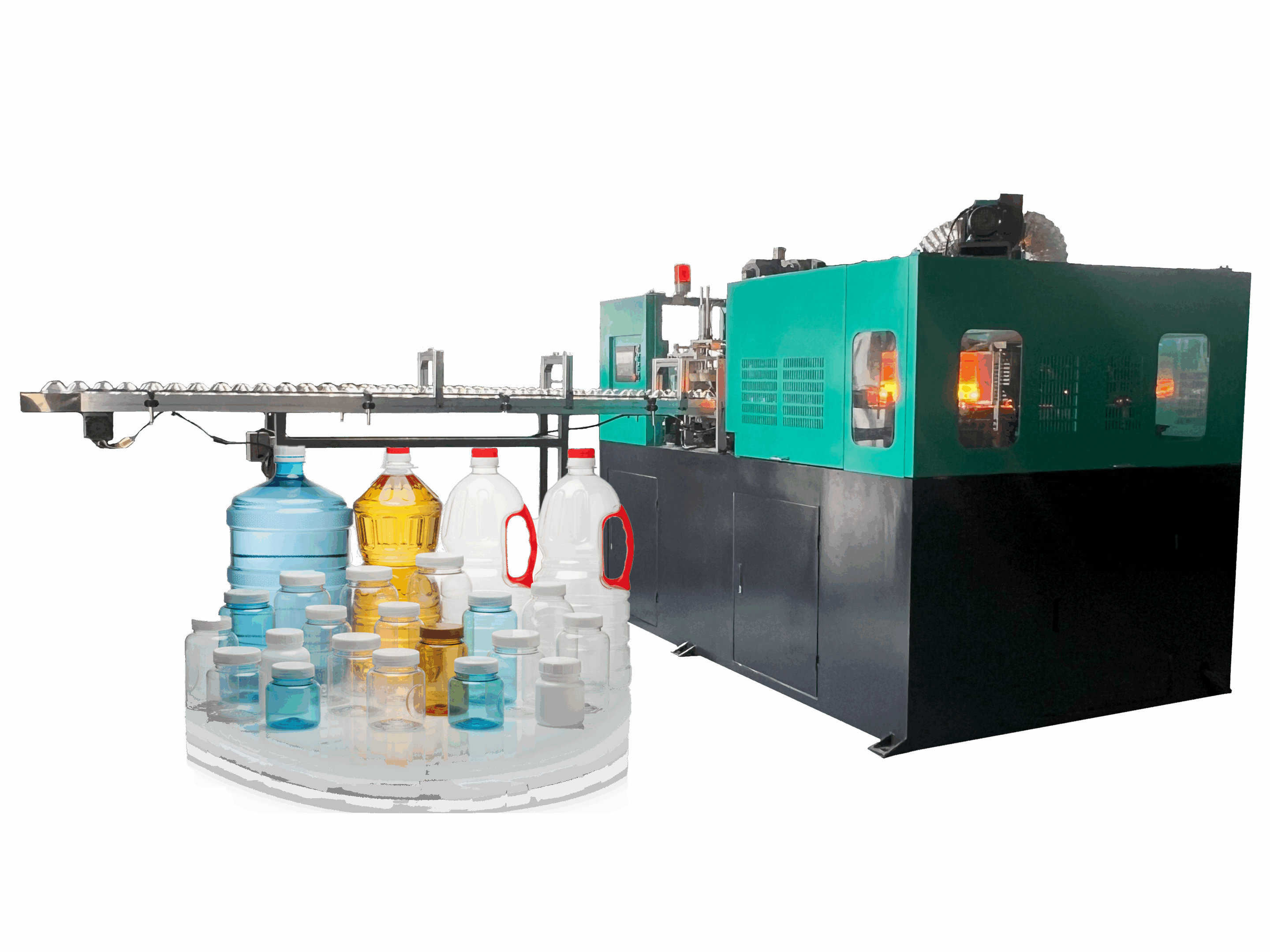
How can I determine if the blowing system of the ALL electric extrusion blow molding machine ensures the products are fully formed?
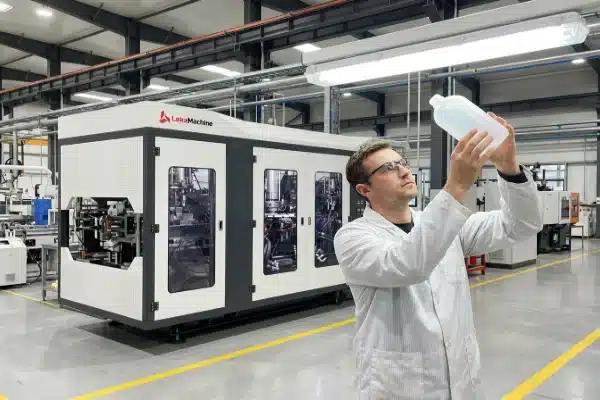
At our facility, we often see clients frustrated by inconsistent bottle quality, blaming the plastic resin when the real culprit is the machine’s pneumatic setup. Nothing kills profitability faster than a production line churning out undefined, rejected bottles. When we test new molds, we focus heavily on the blowing system’s precision to ensure every cavity produces a perfect replica.
To determine if the system works, verify it features proportional pressure control for multi-stage blowing, adequate mold venting efficiency, effective internal cooling technologies, and automated defect detection sensors. These combined elements ensure the plastic parison fully conforms to the mold cavity without deformation, weak spots, or leaks.
If your machine lacks these specific control mechanisms, you risk high scrap rates. Let’s examine the technical specifics we look for during a Заводские приемочные испытания (FAT) 1.
Does the machine offer precise multi-stage blowing pressure control?
When we calibrate flight controllers for complex bottle shapes, we rarely use a single blast of air. Using a "one-pressure-fits-all" approach usually results in blown-out bottoms or thin corners. We find that the ability to contour the air pressure is the difference between a mediocre bottle and a premium one.
Yes, high-end electric machines must utilize proportional valves rather than simple on/off pneumatics. This allows you to program a soft "Pre-Blow" to evenly expand the parison, followed by a high-pressure "Final Blow" to freeze detailed features, which is essential for consistent wall thickness and sharp corners.
The Importance of Proportional Valves
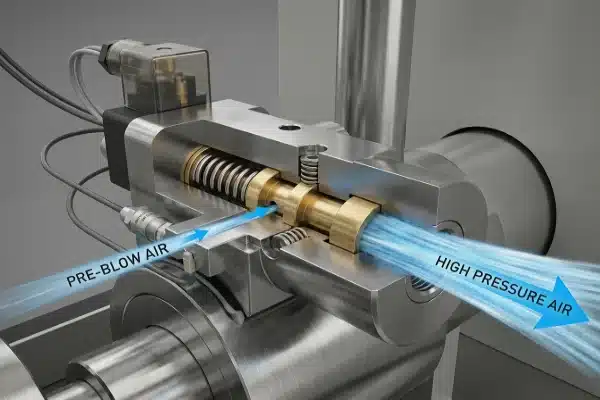
In our engineering experience, the most common reason for "soft" looking bottles is the use of simple "On/Off" pneumatic valves. These valves deliver a sudden shock of air that can distort the hot parison before it properly settles. To ensure full formation, you must verify the machine uses proportional solenoid control valves 2.
These allow you to program a specific pressure profile. For example, we often set a soft "Pre-Blow" (around 2–3 bar) to gently expand the parison evenly. Once the material touches the mold, the system ramps up to a high-pressure "Final Blow" (8–10 bar) to force the plastic into the engravings and freeze the details.
Real-Time Diagnostics
You should also demand real-time visibility. Advanced Human Machine Interface (HMI) 3 systems should plot the actual blowing pressure curve against the target setpoint for every cycle. If you see a slow ramp-up or a "jagged" curve, it instantly reveals pneumatic restrictions—such as clogged silencers or crimped lines—that cause incomplete formation.
Clamp Breathing Monitoring
Furthermore, high blowing pressure tries to force the mold open. A robust all-electric system should include "Clamp Breathing" monitoring. This tracks the platen position in microns during the blow phase. If the mold "breathes" (opens slightly) under pressure, you lose the parting line definition and generate mold flash defects 4.
Pressure Control Comparison
| Характеристика | Standard "On/Off" System | Proportional Control System |
|---|---|---|
| Air Delivery | Sudden, full-force impact | Gradual, staged ramp-up |
| Контроль над парами | Risk of blowing out the bottom | Controlled parison programming 5 |
| Corner Definition | Often rounded or soft | Sharp and crisp |
| Cycle Consistency | Низкий | High (repeatable profiles) |
How does the mold venting design affect the final bottle definition?
We often receive calls from operators blaming the machine for poor definition, only to find the mold is airtight. When we design auxiliary molds, we treat air evacuation as a priority. If the air inside the mold cannot get out, the plastic cannot get in to fill the detail.
Mold venting is critical because trapped air creates resistance against the expanding plastic. If the air cannot escape through sintered metal vents or vacuum channels quickly enough, it prevents the material from touching the mold walls, resulting in rounded corners and poor surface definition regardless of blowing pressure.

Venting Architecture
Poor definition is frequently a mold issue, not a machine issue. When inspecting the setup, verify that the mold design utilizes sintered metal vents 6 or specific vacuum-assist venting channels. This is particularly vital in deep cavities, such as handle areas, where air pockets tend to get trapped. If the air is compressed rather than evacuated, it acts like a cushion, preventing the plastic from taking the shape of the mold.
Exhaust Valve Positioning
The machine’s hardware plays a role here, too. You must check the Exhaust Valve Diameter and Positioning. Inadequate exhaust capability causes bottles to deform or bulge when the mold opens because the high-pressure air hasn’t fully left the bottle.
We recommend ensuring that large-diameter quick-dump valves are mounted close to the blow pin block. This minimizes back-pressure during the split-second decompression phase. If the exhaust path is too long or narrow, the bottle remains pressurized when the mold splits, distorting the dimensions you worked so hard to form.
Troubleshooting Definition Issues
- Check the corners: If corners are rounded, check for clogged vents.
- Check the surface: If the surface looks like an orange peel, air may be trapped between the plastic and the mold metal.
- Check the parting line: If the bottle bulges at the seam upon ejection, the exhaust valve is likely too slow or restricted.
Is the cooling time sufficient to prevent deformation after ejection?
In our production line, we know that speed is profit, but ejecting a bottle too early destroys its geometry. We constantly balance cycle time with structural rigidity. A bottle that looks perfect in the mold but warps in the bin is a failed product.
Cooling time must be long enough to solidify the plastic skin so it resists gravity after ejection. To speed this up without deformation, we recommend systems with "Internal Air Flushing," which cycles fresh cool air through the bottle to remove internal heat while maintaining blowing pressure.
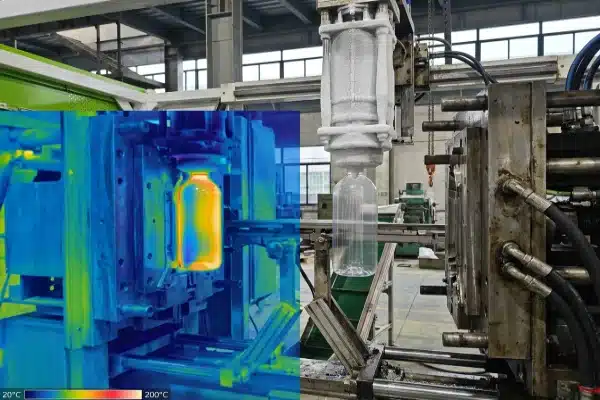
Internal Air Flushing (Air Exchange)
For faster cooling and rigid definition, check if the machine supports internal air cooling systems 7. Standard blowing holds static air inside the bottle, which heats up rapidly. Flushing allows fresh, cool air to continuously cycle through the blow pin and out an exhaust valve during the holding phase. This removes internal heat much faster than conduction through the mold metal alone.
Blow Pin Temperature Management
Another critical factor is the temperature of the blow pin itself. We always verify that the blow pin holders have dedicated water cooling channels, known as "cooled calibration."
If the blow pin is hot, the bottle neck will stick to it. When the pin retracts, it pulls the plastic, causing the neck to ovalize. A cooled pin ensures the neck finish "freezes" perfectly round and remains fully formed after the pin is withdrawn. This is non-negotiable for bottles that require automated capping downstream, as oval necks cause capping jams.
Cooling System Checklist for Formation
- Mold Temperature: Are the water channels free of scale and flow restrictions?
- Pin Cooling: Is the blow pin tip cool to the touch (or properly chilled)?
- Air Circulation: Is the exhaust valve open during the hold phase (if flushing is enabled)?
Can the system detect incomplete formation or air leaks automatically?
We believe you shouldn’t have to wait for a customer complaint to know you shipped a bad bottle. When we set up lines for export, we configure the machines to act as their own quality control inspectors. Automating this detection saves massive amounts of labor and material.
Modern systems detect issues automatically using "Pressure Decay" monitoring to find leaks before the mold opens. Additionally, servo-driven blow pins monitor torque to detect "Incomplete Necks" or short shots. If resistance is too low during insertion, the machine alerts the operator immediately, preventing defective parts from entering the bin.

In-Mold Leak Detection
A robust machine controller should feature integral pressure decay leak testing 8. Here is how we configure it: the machine shuts off the air supply milliseconds before the cycle ends and monitors the pressure drop.
If the pressure falls below a specific threshold while the bottle is still in the mold, the system knows there is a hole or a bad seal. It automatically rejects the bottle as a "leaker" and diverts it from the good conveyor. This prevents bad bottles from reaching the leak tester or, worse, the filling line.
Servo Neck Integrity Sensing
One of the distinct advantages of all-electric machines is the feedback provided by servo motor technology 9. Unlike hydraulic cylinders that just "ram" down, electric servo blow pins provide feedback.
The servo motor acts as a sensor. We program specific torque limits for the pin insertion.
- Too High Torque: The flash is not cut, or the neck is blocked.
- Too Low Torque: This indicates the parison neck wall is too thin or missing (a "short shot").
The machine can alarm for an "Incomplete Neck" before the mold even opens. This capability ensures that only fully formed necks make it out of the machine.
Automated Quality Features Summary
| Метод обнаружения | Defect Targeted | How it Works |
|---|---|---|
| Pressure Decay | Micro-leaks / Holes | Monitors pressure drop in the closed mold. |
| Servo Torque Monitor | Short Shots / Thin Necks | Measures resistance during blow pin insertion. |
| Sealing Force Control | Crushed Necks | Applies precise force to calibrate without crushing. |
| Platen Position | Flash / Parting Line | Monitors mold breathing during high-pressure blow. |
Заключение
Determining if an all-electric blow molding machine ensures fully formed products comes down to control and feedback. It requires a synergy between proportional pressure profiling, smart mold venting, а также automated servo detection. At Машина ЛЕКА 10, we focus on these "delivery-driven" engineering details—from FAT checklists to optimizing pressure curves—to ensure that when the machine hits your floor, it produces perfect bottles from day one.
Сноски
1. Checklist ensuring equipment meets design specifications before delivery. ↩︎
2. Valves that vary airflow output based on input signals. ↩︎
3. Dashboard interface connecting operators to industrial machine controls. ↩︎
4. Defect caused by excess plastic leaking between mold halves. ↩︎
5. Technique for varying wall thickness in extruded plastic tubes. ↩︎
6. Porous metal plugs used to vent trapped air in molds. ↩︎
7. Method of cycling cool air inside bottles to speed solidification. ↩︎
8. Testing method that identifies leaks by monitoring pressure drops. ↩︎
9. Electric motors providing precise control over position and torque. ↩︎
10. Manufacturer specializing in all-electric extrusion blow molding machines. ↩︎


0 Комментариев