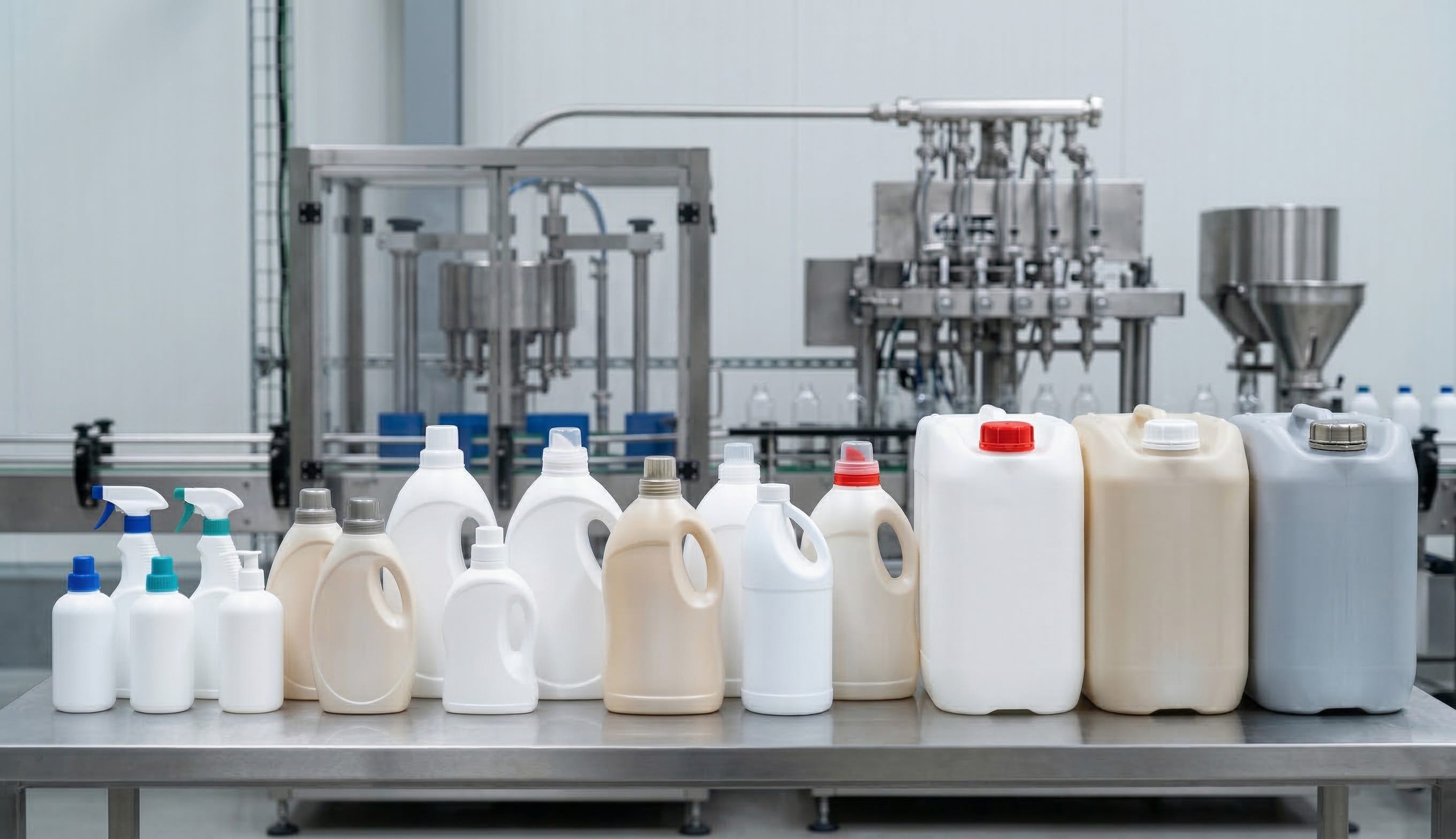
Capping Equipment for Bottling Lines
LEKA supplies custom capping equipment for manufacturers who need stable cap application, flexible bottle handling, and practical machine configuration for real production demands. We provide standalone capping machines as well as solutions prepared for integration with filling, labeling, and downstream packaging systems.
- Compatible with screw caps, press-on caps, pump caps, trigger caps, and more
- Custom-built around bottle format, cap structure, speed, and torque requirements
- Suitable for direct machine purchasing, line upgrades, and new packaging projects
- Designed for detergent, edible oil, beverage, cosmetic, and chemical liquid applications
Multiple Capping Solutions
LEKA supplies inline screw capping machines, press-on capping systems, rotary capping equipment, and customized configurations for different packaging requirements.
Wide Packaging Compatibility
Solutions can be matched to different cap structures, bottle shapes, container sizes, and production targets based on actual project requirements and line conditions.
Standalone or Line-Ready
We support direct single machine purchasing while also preparing capping equipment for connection with filling, labeling, sealing, conveying, and downstream packing systems.
Custom Engineering Support
Machine structure, torque logic, cap feeding method, bottle handling, electrical standard, and layout coordination can all be adjusted to suit your production project.
Four Practical Capping Solution Directions for Different Packaging Projects
Instead of presenting capping equipment as a single standard machine, LEKA structures this category around the main solution directions buyers actually compare: inline screw capping, press-on capping, rotary capping, and special capping systems for more demanding bottle and cap conditions.
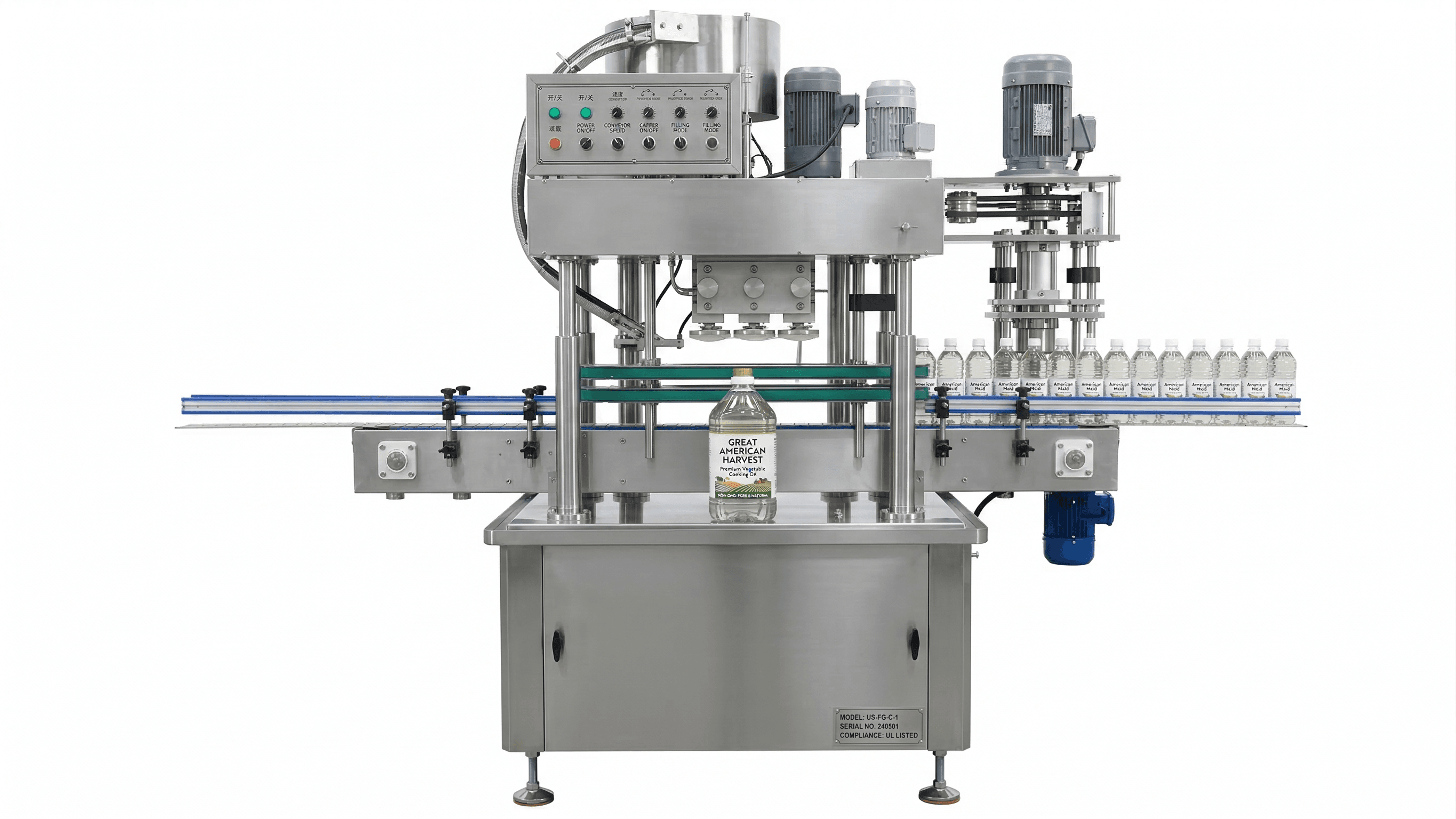
LK-FXZ Automatic Inline Screw Capping Machine
This type is suitable for manufacturers looking for a flexible inline solution that can be adapted to different bottle and cap combinations. It is a practical direction for general bottle capping projects where stable operation, straightforward layout integration, and adjustable handling logic are important.
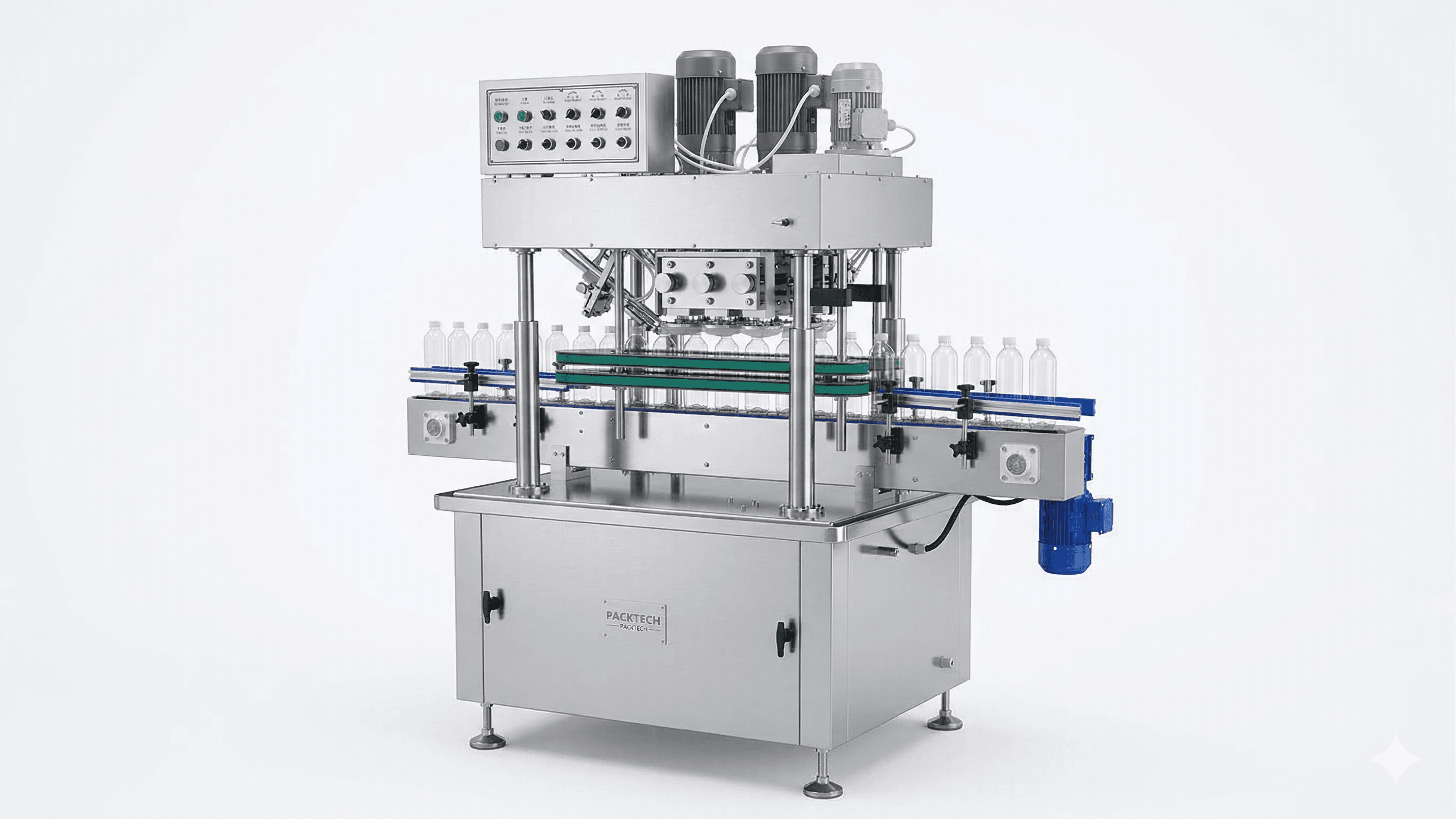
LK-FXZ Automatic Lid Pressing Machine
For packaging projects that require pressing or snap-fit style cap application, this solution direction is more appropriate than standard screw capping. It is suitable when cap placement logic, pressing consistency, and bottle stability all need to be handled in a controlled way.
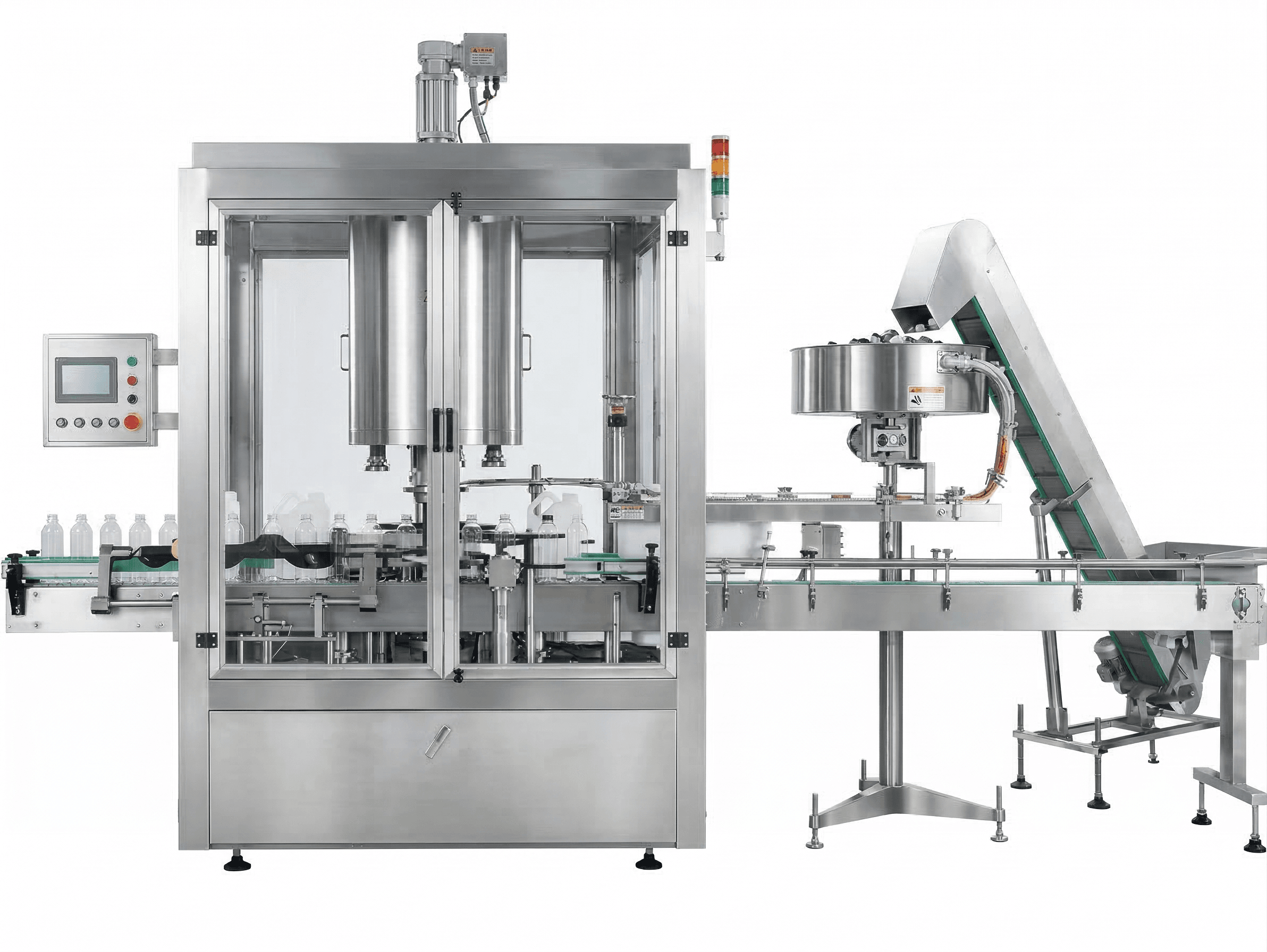
LK-YG-BB Automatic Rotary Capping Machine
Rotary capping is the stronger direction for customers looking at more continuous output and smoother bottle flow through the capping section. This type is more suitable when line rhythm, cap feeding continuity, and more production-oriented layouts become important factors.
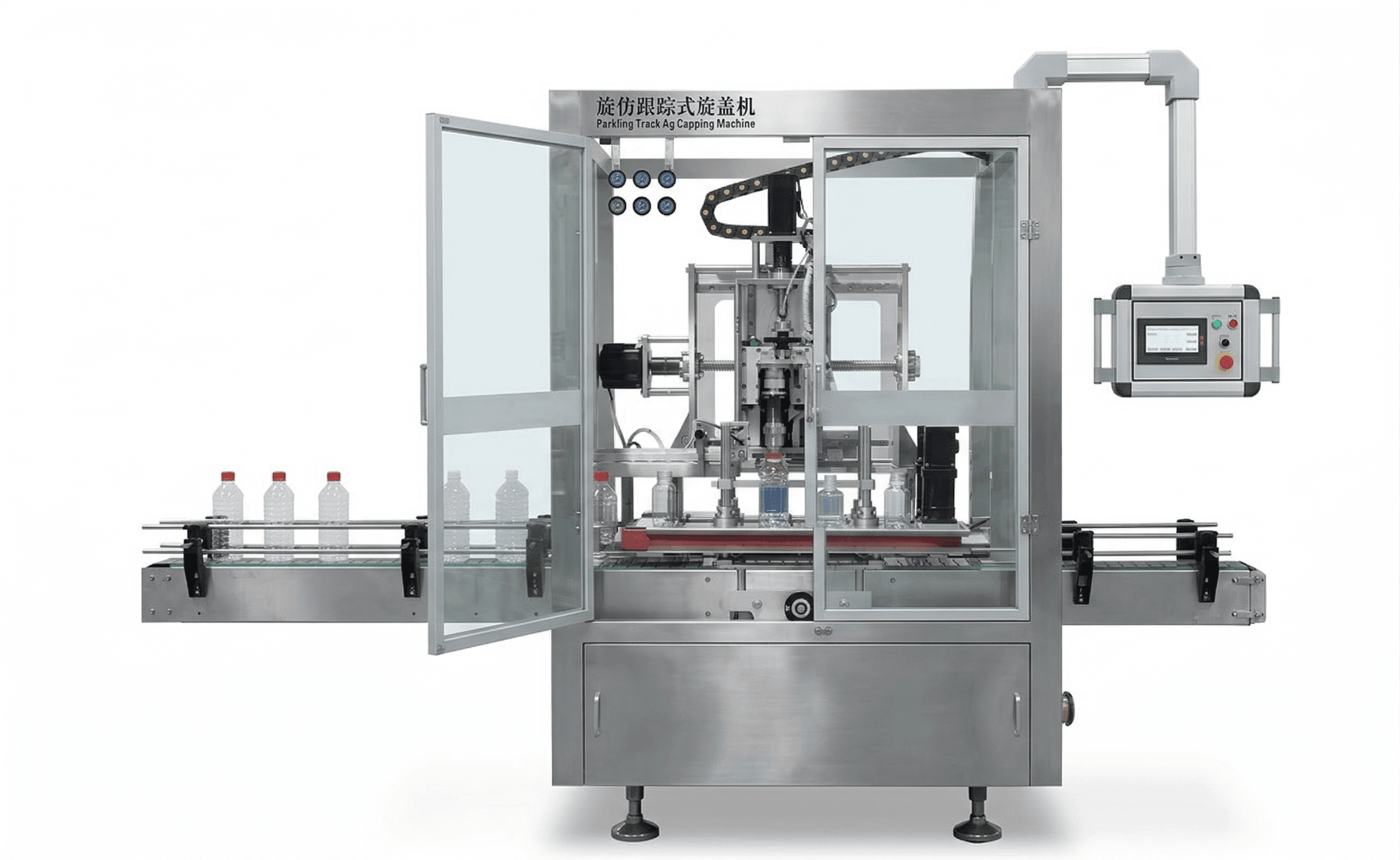
LK-Position Tracking Capping Machine
Some packaging projects require more specialized capping movement, bottle positioning, or cap application logic. This solution direction is intended for cases where standard inline or rotary approaches may not be the best fit and a more customized handling method is needed.
Configured Around Real Cap Styles, Bottle Formats, and Container Requirements
Capping projects rarely fail because a machine looks wrong on paper. They fail when cap style, bottle handling, or container variation is not matched properly. LEKA approaches capping compatibility from the actual packaging format first, then develops the machine direction around cap application logic, bottle stability, and production needs.
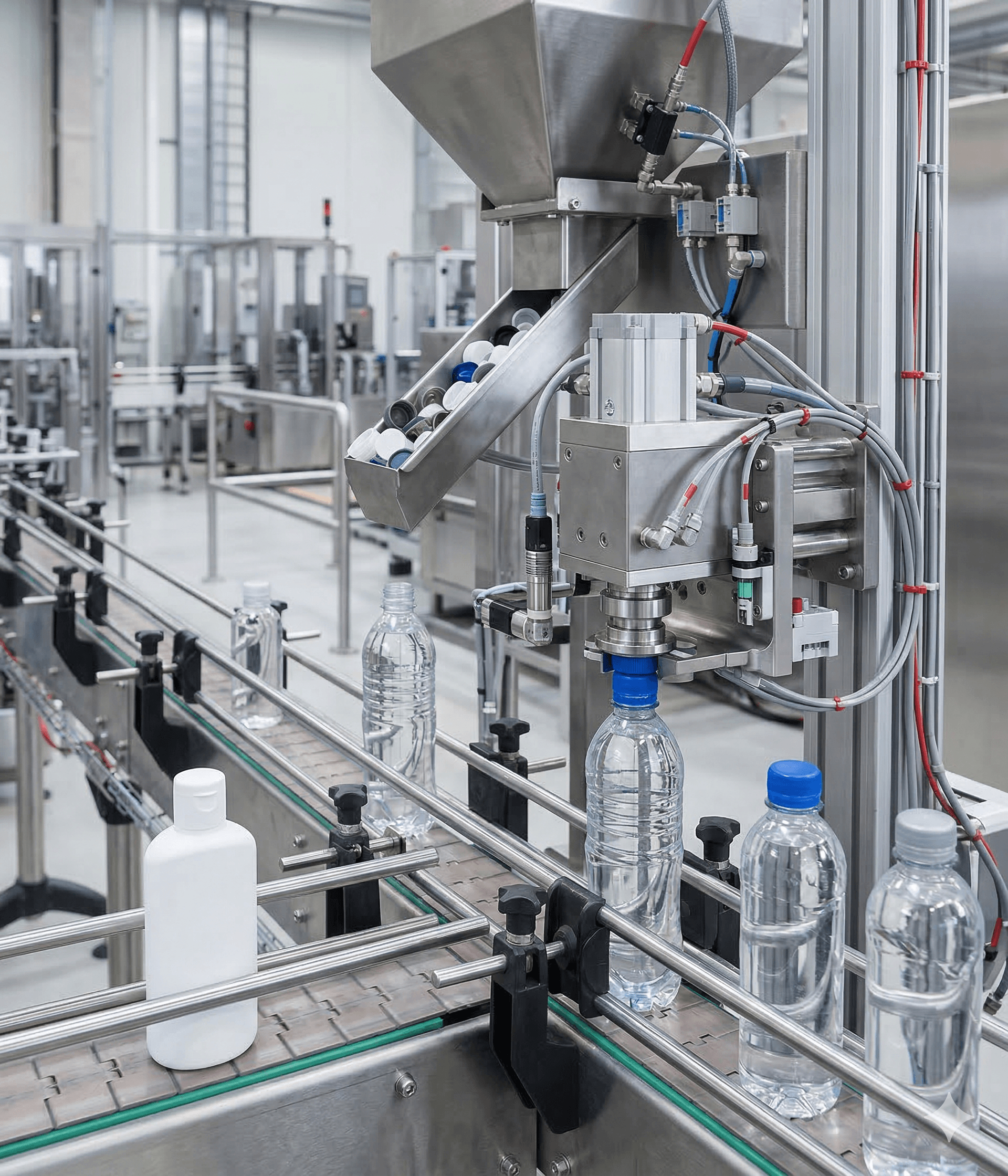
Suitable for Multiple Cap Structures and Closing Methods
LEKA capping equipment can be planned around different closure directions, including screw-type caps, press-on caps, pump caps, trigger caps, and other packaging formats that require more specific cap handling logic.
- Screw caps for common bottle packaging projects
- Press-on and snap-fit style closure directions
- Pump and trigger cap handling requirements
- Special cap projects with more customized arrangements
Adaptable to Different Bottle Shapes, Sizes, and Container Styles
Machine structure and handling logic can be adjusted for different bottle and container projects, including round bottles, square bottles, shaped bottles, jerry cans, larger containers, and other packaging formats where stability and positioning matter.
- Round, square, and custom bottle shapes
- Plastic bottles, glass bottles, and other container directions
- Small bottles, medium bottles, and larger packaging formats
- Project-based adjustment for non-standard bottle handling
For Standard Bottles
Common production projects can be matched with practical machine layouts for faster evaluation and more direct machine selection.
For Mixed Formats
When one project includes multiple bottle types or cap changes, the machine direction can be planned around more flexible handling logic.
For Custom Projects
More specific bottle positioning, cap feeding, torque control, and layout requirements can be developed around actual production needs.
Designed for Bottling Projects Across Six High-Demand Packaging Sectors
Capping requirements change from industry to industry. Different liquids, bottle formats, cap structures, and line targets often require different machine directions. LEKA approaches application planning by combining packaging type, cap style, and production logic instead of forcing all projects into the same equipment pattern.
Упаковка моющих средств
High DemandDetergent bottling often involves trigger caps, screw caps, pump closures, and bottle formats that need steady conveying and reliable cap handling.
Edible Oil Packaging
Fast Inquiry FitEdible oil lines usually require stable cap application, clean bottle flow, and practical layout coordination with filling, sealing, and labeling sections.
Cosmetics & Personal Care
Higher VariationCosmetic and personal care projects often bring more bottle variety, more appearance requirements, and more cap style variation than basic industrial packaging.
Beverage Bottling
Line Rhythm FocusBeverage applications usually place greater emphasis on output rhythm, smooth bottle transfer, and stronger continuity across the full bottling line.
Daily Chemical Packaging
Flexible Format RangeDaily chemical products often cover many bottle shapes, cap styles, and filling viscosities, which makes capping flexibility especially important.
Chemical Liquid Packaging
Custom Project FitChemical liquid packaging may require stronger attention to bottle stability, closure reliability, and machine adjustment around larger or more specific container formats.
If your packaging project involves a specific bottle type, cap style, or industry requirement, LEKA can recommend a more suitable capping solution direction based on your real production target.
Discuss Your Industry ProjectA Practical Single-Machine Entry Point with Clear Line Expansion Potential
This category page is built primarily around standalone capping machine sales, because many customers first need to solve one specific capping task before they commit to a broader packaging upgrade. At the same time, LEKA does not treat capping equipment as an isolated island. Machine planning can also consider how the unit will connect with upstream and downstream processes when line coordination matters.
In practical project work, this gives buyers more flexibility: start from the capping section now, then expand into a more complete bottling layout when production planning moves forward.
Prepared for Filling Section Connection
Capping machines can be planned with consideration for bottle infeed rhythm, conveyor continuity, and transfer logic from filling equipment where upstream coordination affects line stability.
Compatible with Sealing, Labeling, and Packing Flow
When the project needs stronger downstream integration, the capping section can be aligned with sealing, labeling, shrink wrapping, cartoning, or other packaging steps.
Can Be Planned with Conveyors, Sorting, and Feeding Units
Conveyor layout, cap feeding direction, sorting arrangements, and related hardware can be considered together so the capping section works more naturally inside the full packaging workflow.
Useful for Both Immediate Purchase and Future Expansion
Some buyers need one machine now. Others need a capping section that can later connect into a fuller bottling line. LEKA can support both directions according to the stage of the project.
If you already know your capping requirement, LEKA can recommend a standalone machine. If you are planning a wider bottling project, the same discussion can also include filling, conveying, labeling, sealing, and downstream packing coordination.
Discuss Machine or Line PlanningBuilt Around the Packaging Task, Not a Fixed Machine Template
Many capping projects look similar at first glance but become very different once bottle geometry, cap behavior, line speed, and plant conditions are considered. LEKA approaches machine planning from the real packaging task first, then adjusts the equipment direction around production needs, handling logic, and future expansion requirements.
Practical engineering matters here. The right machine is not only about output, but also about bottle stability, cap feeding, torque consistency, integration logic, and long-term usability on the customer’s line.
Bottle & Cap Format Matching
Machine direction can be planned around bottle shape, container size, cap structure, and closure behavior so the capping section fits the actual packaging format instead of a generic assumption.
Torque and Application Logic
Cap tightening method, application consistency, and related handling logic can be adjusted according to project demands where cap stability and repeatability affect product quality.
Cap Feeding & Sorting Direction
Projects that need different cap feeding or sorting arrangements can be planned with more suitable cap delivery logic to support smoother machine operation.
Layout & Integration Planning
Equipment layout, conveyor connection, transfer rhythm, and future connection with filling, labeling, sealing, or packing sections can all be considered during machine planning.
Electrical & Project Standard Adaptation
Power configuration, control direction, and related project requirements can be aligned with customer-side conditions when site standards or export requirements matter.
Support for Different Project Stages
Whether the customer is only evaluating one capping task now or planning a broader packaging upgrade later, the machine direction can be discussed according to the real stage of the project.
If you already have bottle samples, cap samples, speed targets, or line layout requirements, LEKA can recommend a more suitable capping solution direction based on those real project inputs.
Send Your Packaging RequirementRepresentative Machine Directions for Different Capping Project Conditions
The models below are presented as representative reference points to help buyers understand the main capping solution directions available from LEKA. Final machine recommendation should still be based on your cap type, bottle format, speed target, and line conditions.
| Representative Model | Machine Direction | Typical Application Fit | Reference Capacity | Cap / Bottle Reference | Project Notes |
|---|---|---|---|---|---|
| LK-FXZ | Automatic Inline Screw Capping Machine | General bottle capping projects with flexible format requirements | Up to about 8,000 bottles/hour as a representative reference | Cap diameter about 20–50 mm; bottle diameter about 40–100 mm as representative reference | Suitable as a practical standalone machine direction with room for project-based adjustment |
| LK-FXZ-P | Automatic Lid Pressing Machine | Press-on or similar closure projects where cap seating consistency matters | Up to about 8,000 bottles/hour as a representative reference | Bottle diameter about 40–110 mm; bottle height about 150–300 mm; cap diameter about 45–160 mm as representative reference | More suitable when closure behavior differs from standard screw-capping logic |
| LK-YG-BB | Automatic Rotary Capping Machine | Projects that require stronger line continuity and more production-oriented output direction | Representative range from about 4,500 to 8,000 bottles/hour depending on configuration | Cap specification and bottle range can be customized according to project requirement | More suitable for projects leaning toward line integration and smoother bottle flow |
| LK-PTC | Position Tracking Capping Machine | Specialized bottle and cap projects that need more customized handling logic | About 3,000 bottles/hour as a representative reference | Bottle diameter about 30–110 mm; bottle height about 50–250 mm; cap diameter about 18–80 mm as representative reference | Useful for non-standard projects where positioning and application control are more important |
Why This Section Uses “Representative Reference”
A capping category page should help buyers understand the main machine directions without pretending that one fixed specification applies to every bottle, cap, and line condition. These references are meant to support faster evaluation, not replace project confirmation.
How Final Machine Selection Should Be Confirmed
The final recommendation should be confirmed according to closure type, bottle format, capacity target, layout condition, and any special handling requirement. This keeps the page commercially useful while remaining technically credible.
A More Practical Supplier Direction for Real Capping Projects
Buyers usually do not need another supplier who only repeats machine specifications. They need a supplier that can understand the packaging task, recommend a workable machine direction, and keep the project commercially realistic from evaluation to delivery and later expansion.
Broader Packaging Equipment Perspective
LEKA is building around bottle packaging equipment, not only one isolated machine category. That makes capping discussions more practical when the project also touches filling, conveying, labeling, sealing, or downstream packing.
Machine Selection Based on Packaging Reality
The discussion starts from bottle format, cap type, speed target, and project condition, rather than trying to force every inquiry into the same machine answer.
Single Machine Sales Without Losing Expansion Logic
Customers can start with one capping machine where needed, while still keeping the project open to later coordination with a fuller bottling line if production planning expands.
Custom Engineering Where It Actually Matters
LEKA can work around cap handling, bottle guidance, torque logic, feeding direction, and layout factors that often make the difference between a workable project and a frustrating one.
Support Across Different Project Stages
Whether the customer is still evaluating packaging direction, comparing machine types, or already preparing a purchasing decision, the communication can stay aligned with the actual stage of the project.
Commercially Useful, Not Just Technically Correct
A good machine answer is not only technically possible. It also needs to be commercially sensible for the product, the line target, the packaging format, and the buyer’s actual decision path.
If you are comparing capping solutions and want a recommendation that considers bottle format, cap type, production target, and future packaging direction together, LEKA can help structure that discussion more practically.
Обсудите свой проект с компанией LEKA.Questions Buyers Commonly Ask Before Choosing a Capping Solution
Capping equipment selection usually depends on more than one factor. Cap type, bottle format, production speed, layout condition, and future line planning can all affect the right machine direction. The questions below cover the most common issues buyers want to clarify before moving forward.
LEKA can supply multiple capping solution directions, including inline screw capping machines, press-on capping systems, rotary capping equipment, and more customized capping arrangements for projects with more specific packaging requirements.
Yes. Machine direction can be discussed around different bottle formats, cap structures, and closure logic. Final confirmation should still be based on the actual packaging requirement, especially when the project involves non-standard bottles, mixed formats, or more specialized cap behavior.
You can start with a standalone capping machine. That is one of the main commercial directions of this page. At the same time, LEKA can also discuss how that machine may later connect with filling, conveying, labeling, sealing, or downstream packaging if the project expands.
The most useful inputs usually include bottle shape, bottle size, cap type, target speed, product application, and any known layout requirement. If you have bottle samples, cap samples, or line photos, that can make the recommendation more accurate and more practical.
Yes. When the packaging task involves more specific bottle handling, cap feeding, torque logic, layout conditions, or project standards, LEKA can discuss a more customized machine direction instead of limiting the project to a fixed standard configuration.
The choice usually depends on cap type, bottle stability, production target, line rhythm, and how much flexibility the project needs. Inline solutions are often practical for general projects, rotary solutions are stronger for more continuous line flow, and specialized solutions are more appropriate when standard handling logic is not enough.
If your project still has unanswered questions about bottle format, cap style, speed target, or machine direction, LEKA can help narrow the choice down before you move into detailed equipment discussion.
Ask About Your Capping ProjectTell LEKA Your Bottle, Cap, and Production Target. We Will Help You Narrow Down the Right Capping Direction.
Whether you need one standalone capping machine or a solution prepared for future bottling line expansion, the most useful starting point is the real packaging requirement. Once LEKA understands your bottle format, cap type, speed target, and project condition, the machine recommendation becomes much more practical and much more accurate.
- Share your bottle shape, size, and container style
- Tell us the cap type or closure direction you need to handle
- Provide your target output or expected production speed
- Include any layout, line, or project planning information you already have
If you already have bottle photos, cap samples, line photos, or packaging specifications, include them in your inquiry to help LEKA recommend a more suitable machine direction.