
Машина для розлива моющих средств: как выбрать правильное решение для упаковки в бутылки.
A detergent filling machine should do more than just fill bottles. For small and medium OEM factories, it needs to handle different product viscosities, support changing bottle formats, maintain stable filling performance, and leave room for future line expansion. That is why choosing the right solution is less about chasing the highest quoted speed and more about matching the machine to real production conditions.
Many buyers discover the problem too late. On paper, one machine may seem suitable for detergent packaging. In daily use, however, bottle changes, foaming behavior, dripping, unstable dosing, and difficult coordination with capping or labeling equipment can quickly reduce efficiency. A machine that looks affordable at the quotation stage can become expensive once production problems start to appear.
For OEM factories, the right detergent filling setup is usually the one that balances filling stability, application flexibility, manageable investment, and upgrade potential. In this guide, I will walk through the key points that matter when selecting a detergent filling machine for bottle packaging projects.
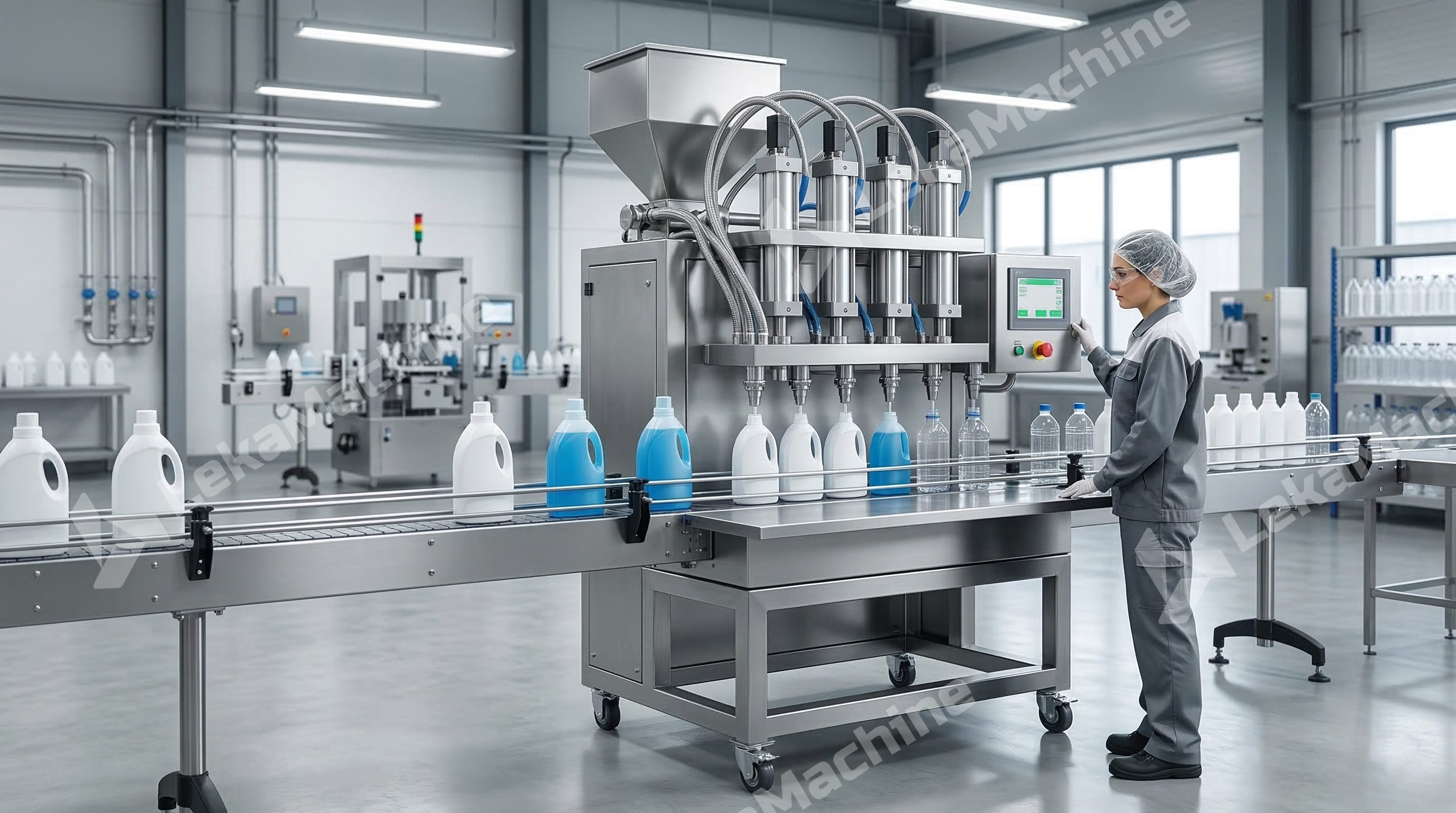
Why Detergent Filling Requires More Than a Generic Liquid Machine
Detergent products are often treated as ordinary liquids, but in practical filling work they are more demanding than that. Formula thickness can vary, some products foam more than others, and bottle types are rarely standardized across all projects. A factory may need to package small retail bottles one week and larger household containers the next.
This is exactly why OEM buyers should not select a machine based on price or headline output alone. The better method is to look at production fit from the start. That includes the detergent type, bottle range, operator workflow, filling rhythm, and the possibility of linking the filling process with the next packaging stages.
Before comparing quotations, it is worth checking whether your detergent project involves:
- different detergent viscosities across several customer orders
- bottles and jerry cans within the same workshop
- frequent bottle size changes
- foaming behavior that may affect nozzle control
- future plans for capping, labeling, sealing, or carton packing
Why Servo Piston Filling Is a Practical Direction for OEM Factories
For many detergent bottle packaging projects, servo piston filling is a practical choice because it offers better control over filling volume and fits real-world OEM production more comfortably than very basic low-control methods. It is especially useful when the factory needs a more stable process without moving immediately into a large, complex, fully automatic line.
Based on your current equipment direction, the detergent filling solution is positioned around a semi automatic servo piston filling setup with a typical speed target of 20 to 70 bottles per minute, built with SUS316 material, and with the ability to connect later to capping, labeling, induction sealing, and carton packing equipment.
That combination makes sense for small and medium OEM factories because it gives them a workable starting point. The investment remains more controllable, the operation is easier to manage, and the project still keeps room for later packaging line expansion.
A Useful Reference Table for Detergent Packaging Projects
Before choosing a filling machine, it helps to review the detergent project by packaging range and application scenario rather than by machine name alone. The reference table below uses packaging ranges already visible in the supplied equipment material, combined with the confirmed direction of your current filling setup. It should be used as a selection reference, not as a universal fixed specification for every machine.
| Packaging Scenario | Reference Filling Range | What Buyers Usually Prioritize | What Should Be Confirmed First |
|---|---|---|---|
| Small retail detergent bottles | 100–1000ml | Stable filling control, clean cut-off, easier bottle changeover | Bottle neck size, foam behavior, expected daily output |
| Medium household detergent packs | 1–5L | Viscosity handling, dosing consistency, operator convenience | Detergent thickness, bottle handle design, filling rhythm |
| Larger detergent containers | 1–10L | Container positioning, stable dosing, smoother downstream capping | Container variation, drip control, workshop space |
| Bulk detergent packaging projects | 100–300kg | Heavier container handling and more robust filling structure | Layout planning, safety needs, container transfer method |
| Current LEKA detergent direction | Semi automatic, 20–70 bottles/min | Flexible OEM production, step-by-step investment, upgrade potential | Actual detergent type, bottle range, labor plan, future integration |
Note: The packaging ranges above are reference ranges for project evaluation. They should not be presented as one fixed machine specification for all detergent projects. Final machine selection should still be confirmed according to the actual detergent formula, bottle type, filling target, and production plan.
How Bottle Design Affects Filling Efficiency
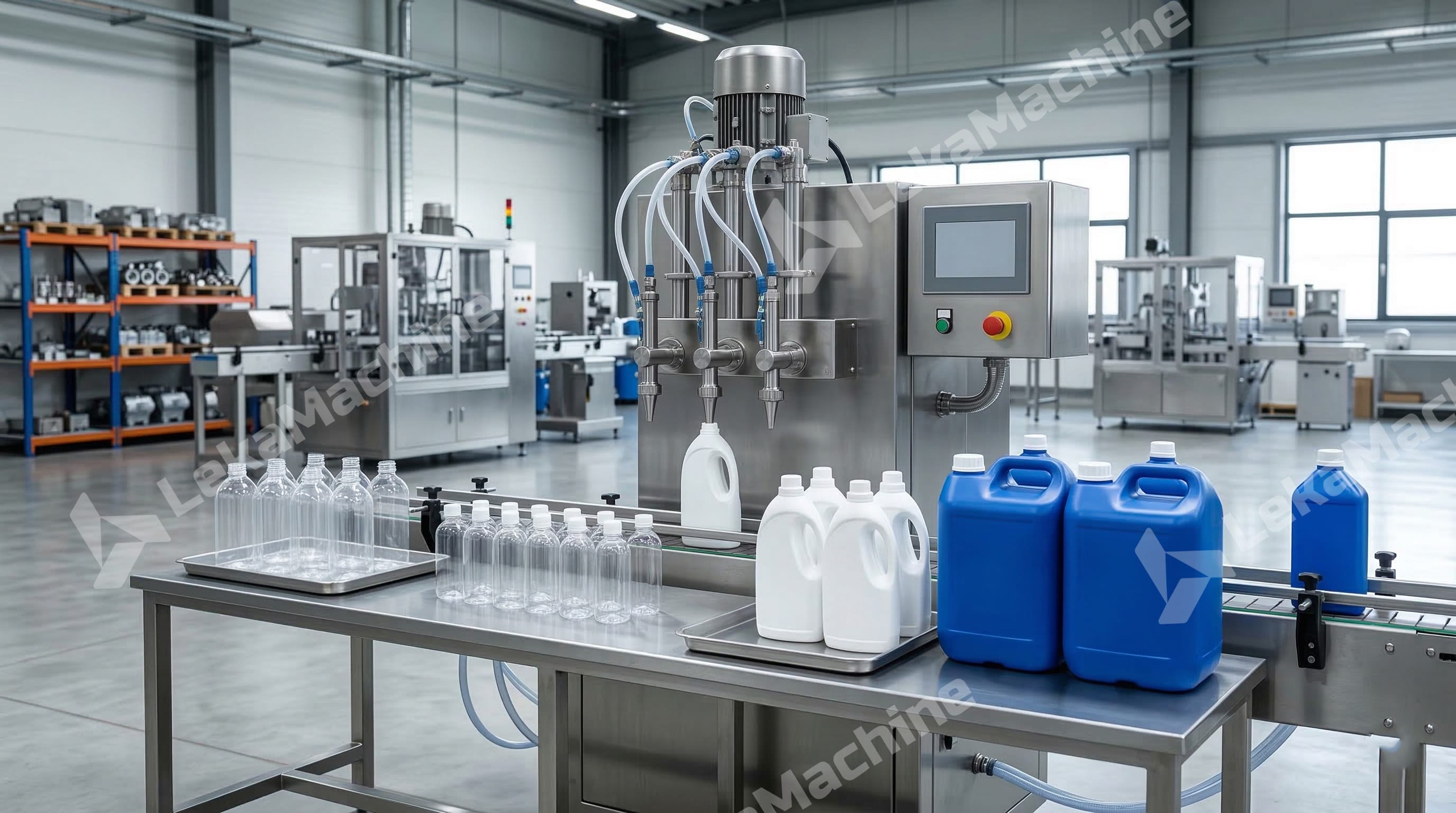
In detergent packaging, bottle structure matters almost as much as the product itself. Many buyers underestimate this point. A filling machine may work well with one bottle format but become inconvenient when the project shifts to another bottle height, neck opening, or container shape.
This matters even more for OEM factories because they often serve multiple customers. If bottle formats change often, a machine that is difficult to adjust can slow down production more than any quoted speed advantage can compensate for.
It is worth reviewing these bottle-related questions before buying:
- Does the bottle stand stably during filling?
- Will the same machine need to serve both bottles and jerry cans?
- How often will bottle sizes change between orders?
- Will bottle shape affect later capping and labeling steps?
- Is the filling setup easy enough for daily changeovers?
Why Semi Automatic Is Often the Smarter Starting Point
Many factories assume that fully automatic equipment is always the better choice. In reality, that is only true when production volume, bottle consistency, and investment plan already justify it. For many small and medium OEM factories, a semi automatic detergent filling machine is actually the more rational first step.
A semi automatic setup can be the better choice when:
- monthly order volume is still growing
- detergent packaging formats change regularly
- budget control remains important
- available workshop space is limited
- the business prefers to upgrade in stages instead of all at once
This is why a semi automatic servo piston filling solution often works well in OEM environments. It gives the factory better filling control than low-end basic methods while keeping the project flexible and financially manageable.
Think Beyond the Filling Step
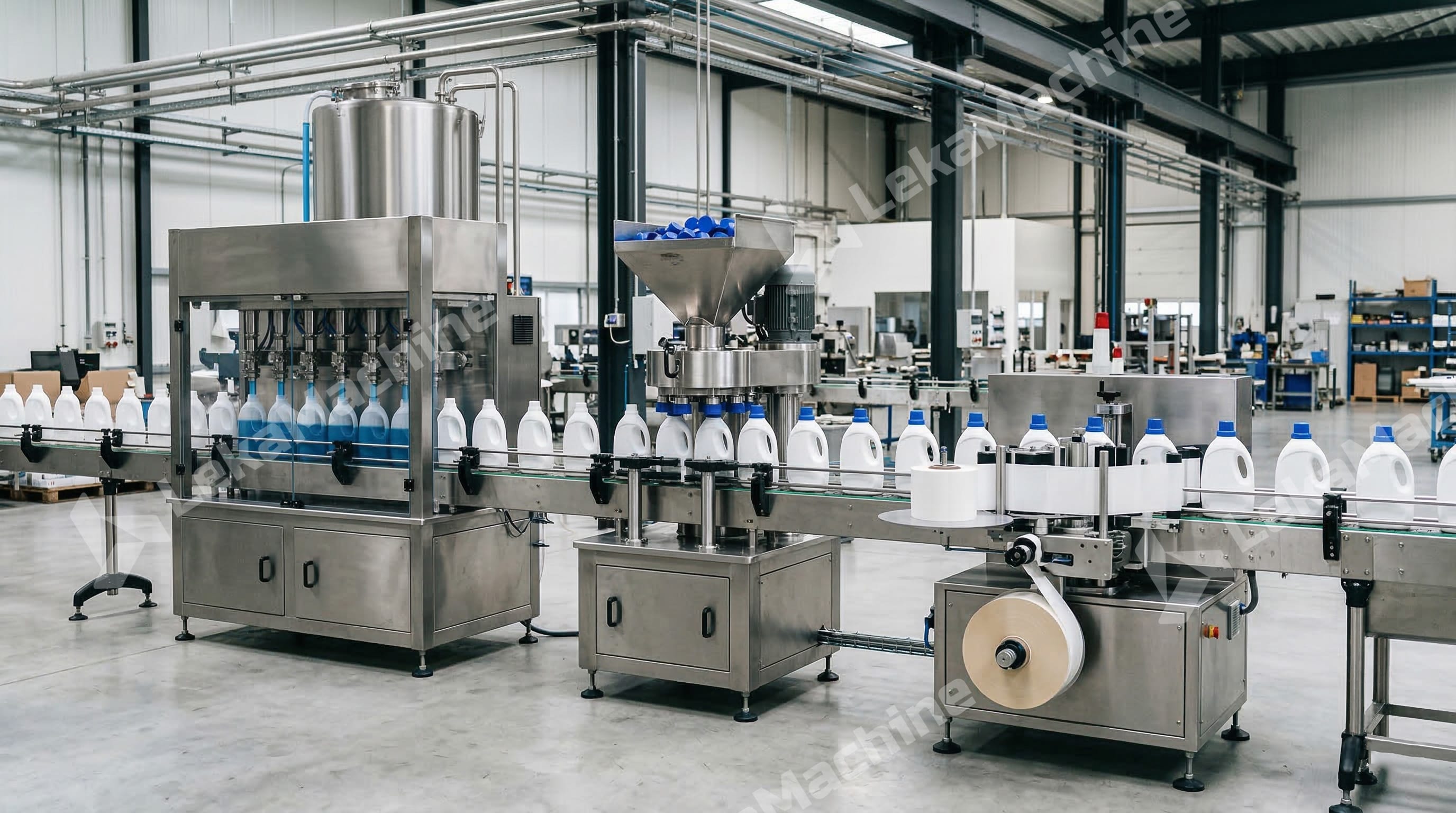
A detergent filling machine should never be evaluated as an isolated machine. In real production, filling is only one stage of the bottle packaging workflow. If the equipment cannot connect smoothly with the next stages, the project will become harder to expand later.
Your current direction already supports future connection with:
- capping machines
- labeling machines
- induction sealing equipment
- carton packing systems
That is a major advantage for OEM factories. Many buyers start with filling, then gradually build a more complete detergent packaging line as orders increase. Choosing a machine with integration potential from the beginning usually reduces upgrade cost and avoids avoidable line-matching problems later.
Common Buying Mistakes to Avoid
The most common mistake is choosing by quotation price alone. The second is focusing on output while ignoring detergent behavior, bottle variation, and future packaging line needs. In real projects, weak machine matching causes more trouble than modest speed differences.
Buyers should avoid these common mistakes:
- treating all liquid products as if they fill the same way
- ignoring bottle format variation across OEM orders
- buying a machine that is oversized for current production reality
- forgetting the need for future capping and labeling coordination
- assuming quoted speed automatically means stable real production output
The better approach is to judge the machine by total production fit. That means looking at detergent type, bottle structure, filling range, operating convenience, material suitability, and future upgrade potential together.
Final Advice for Detergent Bottle Packaging Buyers
The right detergent filling machine is not the one with the most aggressive brochure claim. It is the one that fits your current detergent products, your real bottle range, your workshop conditions, and your realistic production growth path.
For many small and medium OEM factories, a semi automatic servo piston filling solution is a strong starting point because it offers a practical balance between filling stability, flexibility, manageable investment, and future line expansion. When the machine can also connect with capping, labeling, induction sealing, and carton packing equipment, it becomes more than a filling unit. It becomes the foundation of a more complete detergent packaging process.
If you are comparing detergent filling options for bottles or jerry cans, talk to LEKA about your product type, package size, and production target before finalizing the machine configuration.
Talk to LEKA About Your Detergent Filling Project