
How to Choose the Right Filling Machine for Small and Medium OEM Production
Choosing the right filling machine is one of the most important decisions for small and medium OEM factories. The machine you select affects not only filling accuracy, but also production efficiency, labor cost, product consistency, and your ability to expand into a more complete packaging line later.
Many buyers compare filling machines by price first. That is understandable, but it often leads to the wrong decision. A low-cost machine that does not match your liquid, bottle type, or production target can create long-term problems such as unstable filling volume, dripping, difficult cleaning, inefficient changeovers, and poor compatibility with capping or labeling equipment.
For OEM factories handling bottled liquids, the smarter approach is to choose a machine based on real production needs. That means looking at your product type, container size, expected output, automation level, and whether the equipment can work with downstream packaging machines.
In this guide, I will walk through the main factors that matter when selecting a filling machine for small and medium OEM production, with a practical focus on bottled liquid applications.
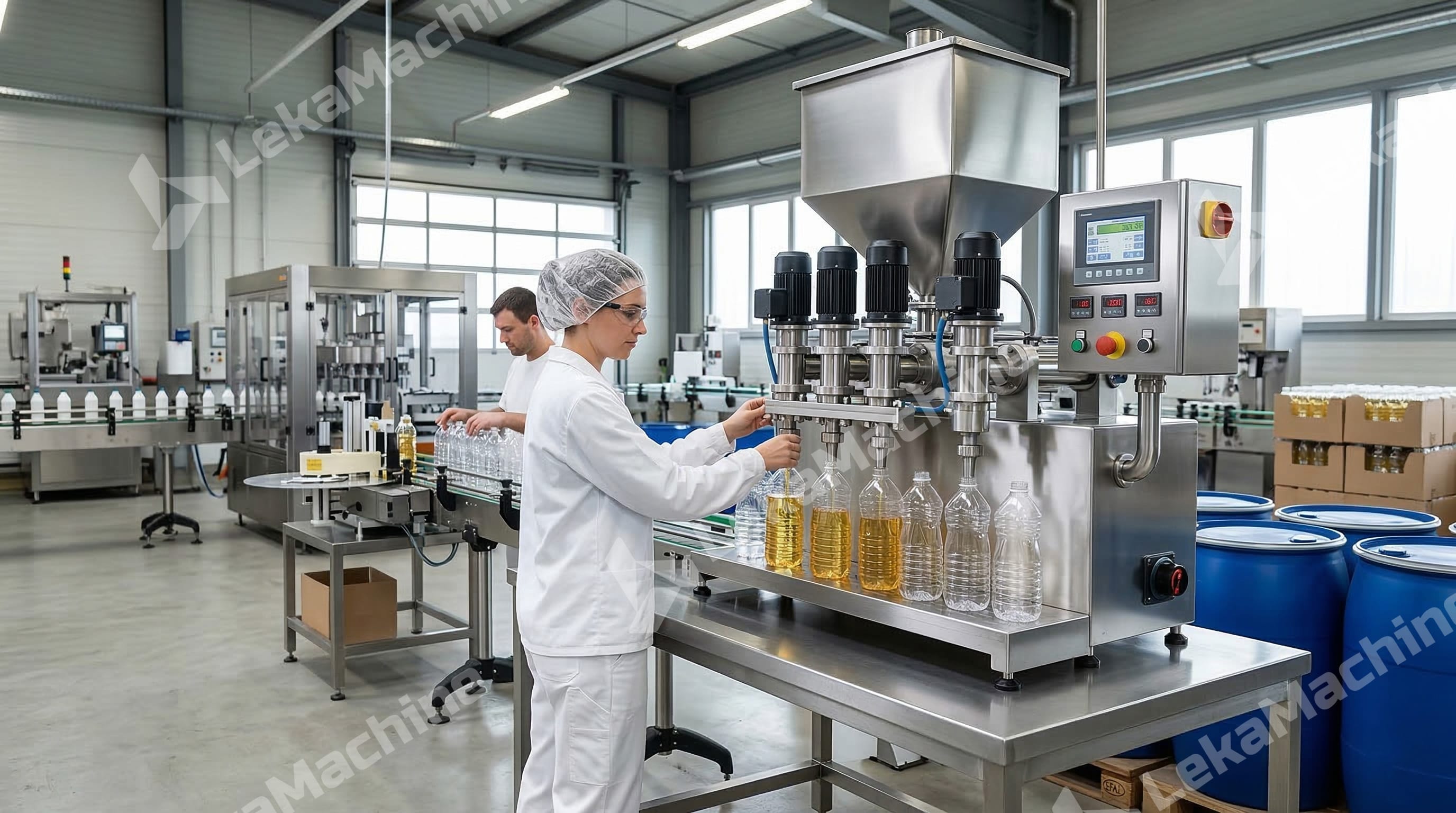
Why Filling Machine Selection Matters for OEM Factories
OEM production is usually more complex than single-product manufacturing. Many factories need to handle multiple bottle shapes, different filling volumes, and more than one liquid category within the same workshop. That creates a greater need for machine flexibility and stable day-to-day operation.
A suitable filling machine can help OEM factories:
- maintain more consistent filling performance across different orders
- reduce manual filling errors and product waste
- adapt to different bottle sizes more efficiently
- improve packaging line coordination
- prepare for future upgrades such as capping, labeling, induction sealing, and carton packing
If your factory works with different customers, product formats, or private label projects, choosing a machine with practical flexibility is often more valuable than choosing one designed for only a very narrow application.
Start with the Product You Need to Fill
The first step is to understand the liquid itself. Different products behave differently during filling, and that directly affects which machine type will be the best fit.
For example, detergent, edible oil, cleaner, disinfectant, and similar bottled liquids do not flow in exactly the same way. Some products are thin and fast-flowing. Others are more viscous and need better volume control. Some liquids may foam more easily, while others require cleaner nozzle cut-off performance to reduce dripping.
Before choosing a machine, it is worth reviewing these questions:
- Is the liquid low, medium, or high viscosity?
- Does the product foam during filling?
- Does the liquid require stronger corrosion resistance?
- Will one machine be used for multiple products?
- Do you need frequent cleaning or product changeover?
The more clearly you define your product range, the easier it becomes to avoid buying a machine that looks acceptable in a quotation but performs poorly in actual factory use.
Match the Machine to Your Bottle and Filling Range
Liquid type is only one part of the decision. Bottle type is equally important. Small and medium OEM factories often handle different packaging formats, so the machine should offer enough flexibility for normal production changes.
You should review:
- bottle shape and neck opening
- container stability during filling
- target filling volume
- how often bottle sizes change
- whether you may expand from small bottles to larger containers later
Many OEM buyers do not need the most complex equipment at the beginning. What they usually need is a machine that can cover their most common bottle sizes reliably, adjust without unnecessary difficulty, and support practical production growth.
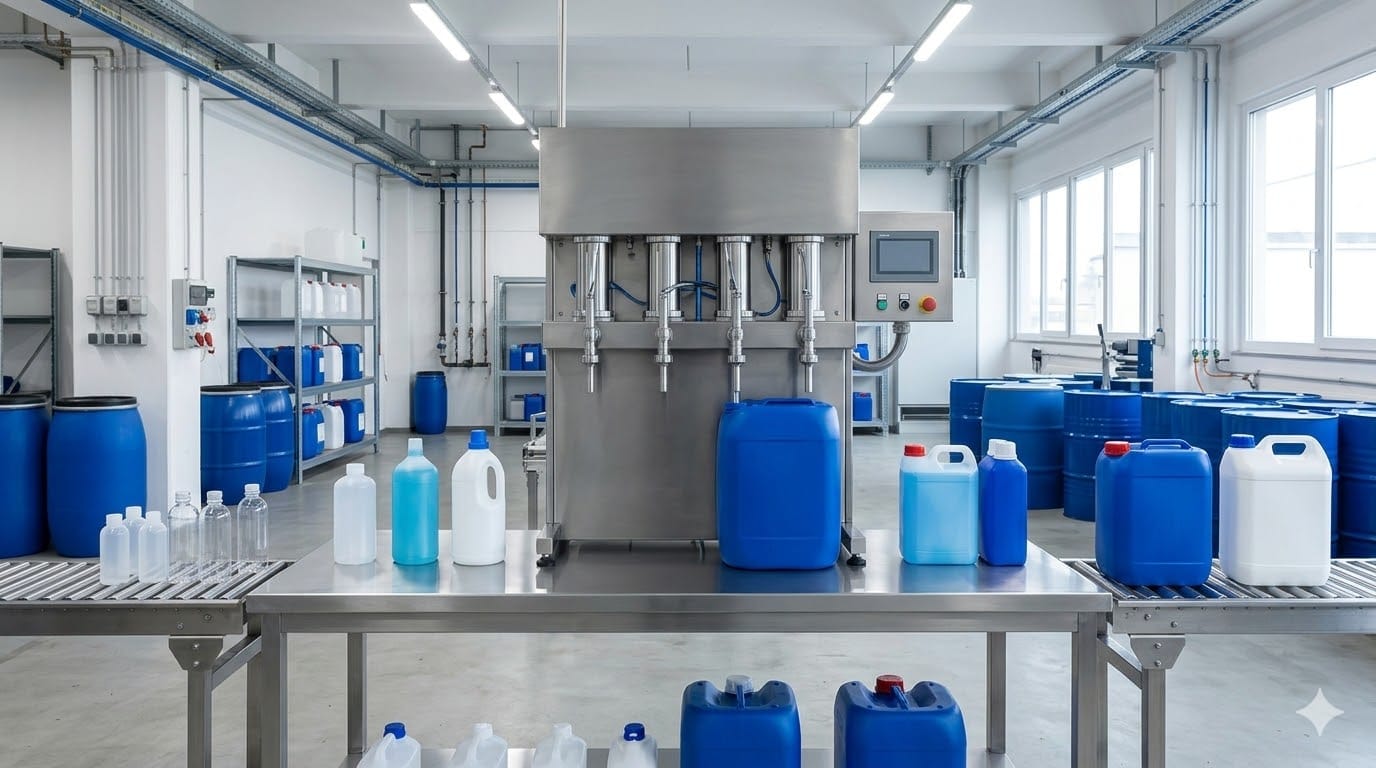
This is especially important for factories that run shorter production batches or handle private label projects with different packaging requirements.
Why Servo Piston Filling Is a Practical Choice
For many bottled liquid applications, a servo piston filling machine is a practical and reliable solution. It is especially suitable when the buyer needs better filling control, stable repeatability, and compatibility with a wider range of liquid products.
Compared with simpler filling methods, servo piston filling offers several practical advantages for OEM factories:
- more stable control over filling volume
- better adaptability for different liquid viscosities
- more consistent filling performance across repeated batches
- good suitability for common bottled liquid packaging applications
- stronger potential for integration into a broader packaging process
This is one reason why servo piston filling is often considered by factories that want to upgrade from manual or low-efficiency filling methods without moving immediately into a large fully automatic system.
For small and medium OEM production, that balance matters. The equipment should be advanced enough to improve consistency and efficiency, but not so complex that it creates unnecessary investment pressure or maintenance burden.
Semi Automatic or Fully Automatic: Which Is Better for OEM Production
Many buyers assume that fully automatic equipment is always the better choice. In real production, that is not always true.
For small and medium OEM factories, a semi automatic filling machine is often the more practical starting point. It usually requires lower initial investment, is easier to operate, and fits factories that are still building stable order volume.
A semi automatic setup can make more sense when:
- production volume is growing but not yet large enough for a full automatic line
- the factory handles different bottle types and frequent product changes
- available workshop space is limited
- budget control remains important
- the business prefers step-by-step equipment upgrading
Fully automatic equipment becomes more attractive when output is higher, packaging formats are more standardized, and labor reduction is a primary target. But for many OEM manufacturers, semi automatic filling still provides a strong balance between flexibility, cost control, and production stability.
Think Beyond Filling: Can the Machine Connect with Your Line?
A filling machine should not be judged as a standalone unit only. In real production, filling is just one stage in the packaging process.
If you already use downstream equipment or plan to expand later, line compatibility should be considered from the beginning. A practical filling solution should be able to work with related equipment such as:
- capping machines
- labeling machines
- induction sealing equipment
- carton packing systems
This matters because many small and medium OEM factories do not stay with one machine forever. They often start with a workable filling solution, then expand into a more complete bottle packaging line as orders increase.
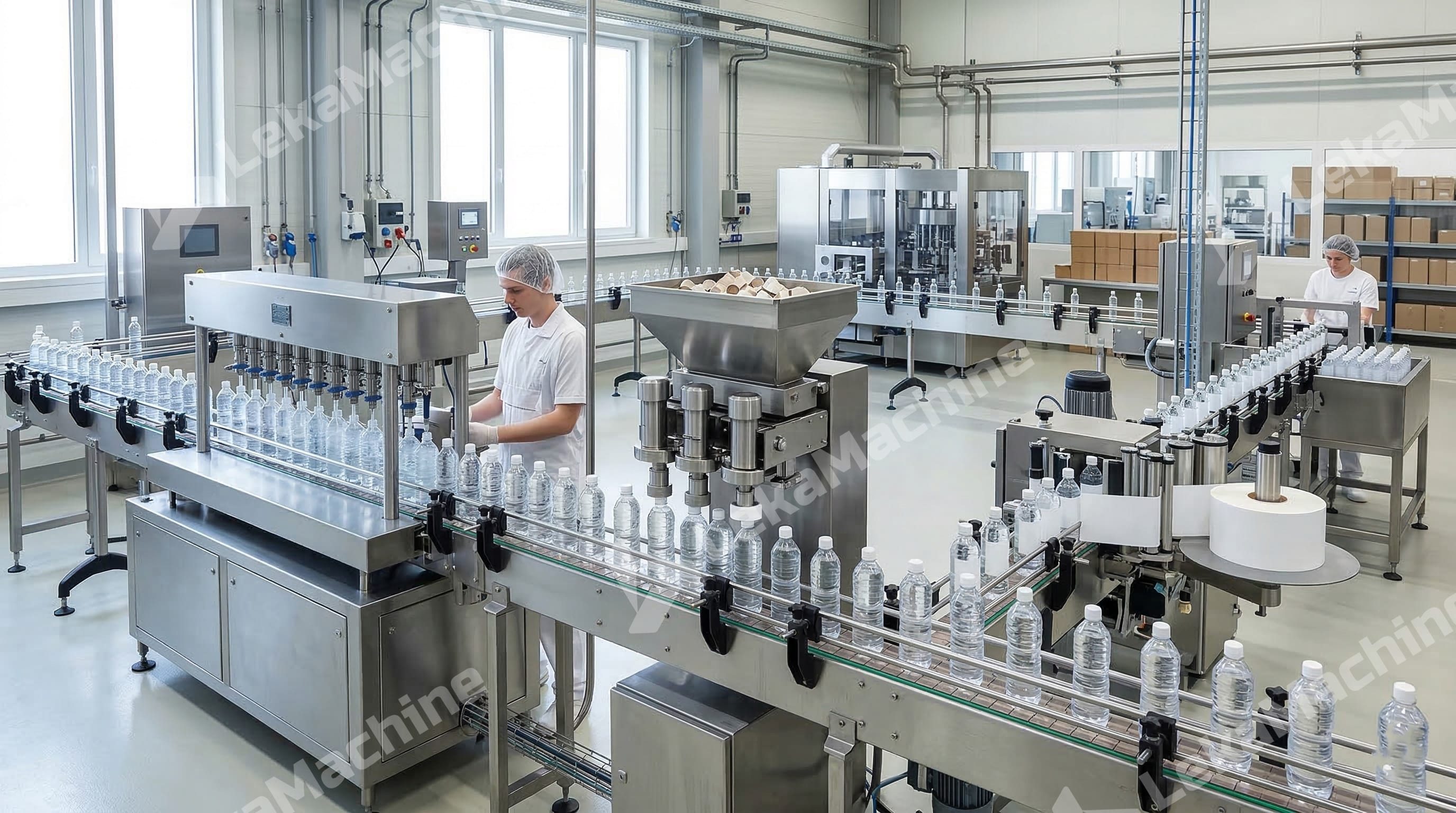
Buying with future integration in mind can reduce upgrade costs later and make the transition from single-machine operation to a coordinated packaging process much smoother.
Common Mistakes When Buying a Filling Machine
Many inquiries focus on speed first. Speed is important, but it should never be the only decision point. In actual factory use, machine selection problems usually come from poor matching rather than lack of speed alone.
The most common mistakes include:
- choosing based on price only
- ignoring liquid viscosity and filling behavior
- not considering bottle changeover requirements
- failing to think about future capping and labeling integration
- buying a machine that is oversized for current production reality
- underestimating cleaning and maintenance needs
A better method is to evaluate the machine by overall production fit. That includes product compatibility, bottle flexibility, operating convenience, material suitability, and upgrade potential.
Final Advice for Small and Medium OEM Buyers
The right filling machine is not simply the fastest option or the cheapest quotation. It is the machine that fits your current liquid products, your real bottle range, your available labor, and your realistic production growth plan.
For many small and medium OEM factories, a servo piston filling machine can be a practical choice because it offers a good balance of filling stability, flexibility, and upgrade potential. When supported by suitable material configuration and the ability to connect with capping, labeling, induction sealing, and carton packing equipment, it can become a strong foundation for a broader bottle packaging workflow.
If you are selecting equipment for detergent, edible oil, cleaner, disinfectant, or similar bottled liquid products, it is worth reviewing the filling method, automation level, and future line compatibility before making a final buying decision.
If you are planning a new OEM packaging setup or upgrading an existing bottling process, talk to LEKA for a practical recommendation based on your product, container type, and production target.
Talk to LEKA About Your Filling Project