
Fabric softener bottles may look simple, but good bottle production is never just about making a plastic container. For manufacturers and OEM packers, the bottle has to run smoothly through production, filling, capping, labeling, packing, transport, and end use.
In most commercial projects, fabric softener bottles are made from ПНД and produced by Экструзионно-выдувные машины. This combination is widely used because HDPE offers strength, chemical resistance, and practical design flexibility, while extrusion blow molding supports shaped bottles, grip areas, and handle structures commonly seen in household packaging.
This guide explains how fabric softener bottles are made, why HDPE is the standard choice in many projects, what matters in bottle design, and how bottle manufacturing connects with the full downstream packaging process.
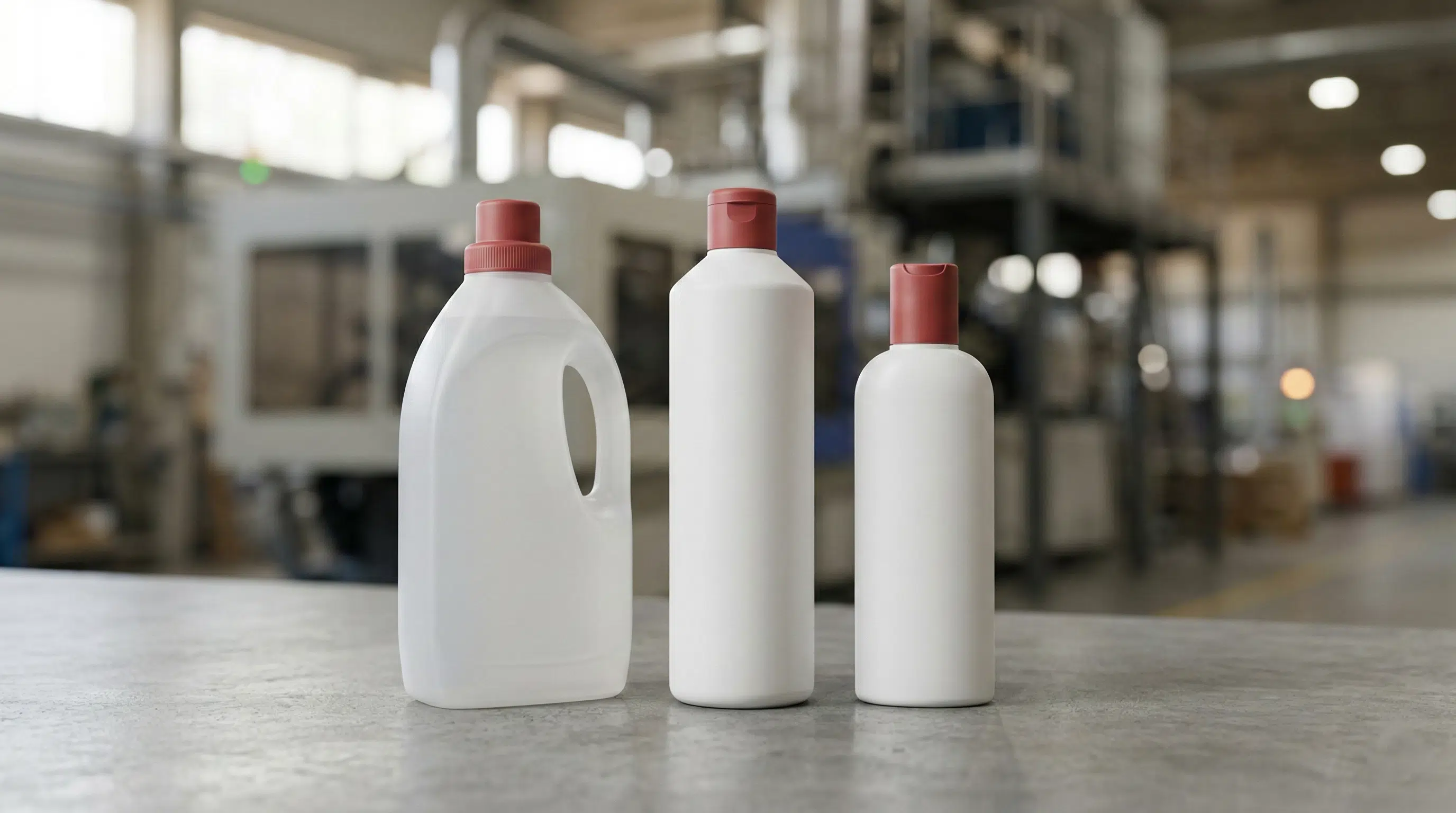
Why HDPE Is Commonly Used for Fabric Softener Bottles
For fabric softener packaging, HDPE is one of the most practical bottle materials. It is widely used in household chemical packaging because it combines durability, process stability, and flexibility in bottle design.
Compared with materials mainly used for transparent beverage-style containers, HDPE is better suited to the larger, opaque, ergonomic bottle formats often required for laundry and household liquid products.
Manufacturers usually choose HDPE for fabric softener bottles because it offers:
- Good chemical resistance for household liquid formulations
- Reliable rigidity for transport, warehousing, and shelf display
- Good impact resistance during handling and distribution
- Better design freedom for handle bottles, curved shoulders, and grip zones
- Stable processing performance in extrusion blow molding production
For many factories, HDPE is not only suitable for fabric softener bottles, but also for detergent bottles, bleach bottles, household cleaner bottles, and other daily chemical packaging containers.
Why Extrusion Blow Molding Is the Main Process
Most fabric softener bottles are produced by extrusion blow molding rather than stretch blow molding. The reason is straightforward: fabric softener packaging usually requires opaque HDPE bottles with practical shapes, integrated handles, good pouring comfort, and strong sidewall performance.
Extrusion blow molding is well suited for this because it allows the bottle body to be formed directly from molten plastic. That makes it easier to produce:
- Large-volume household bottles
- Handle bottles
- Irregular bottle shapes
- Heavy-duty HDPE containers
- Bottles designed for downstream filling and capping lines
For this reason, Экструзионно-выдувные машины remain the standard solution for many HDPE laundry and household chemical bottle projects.
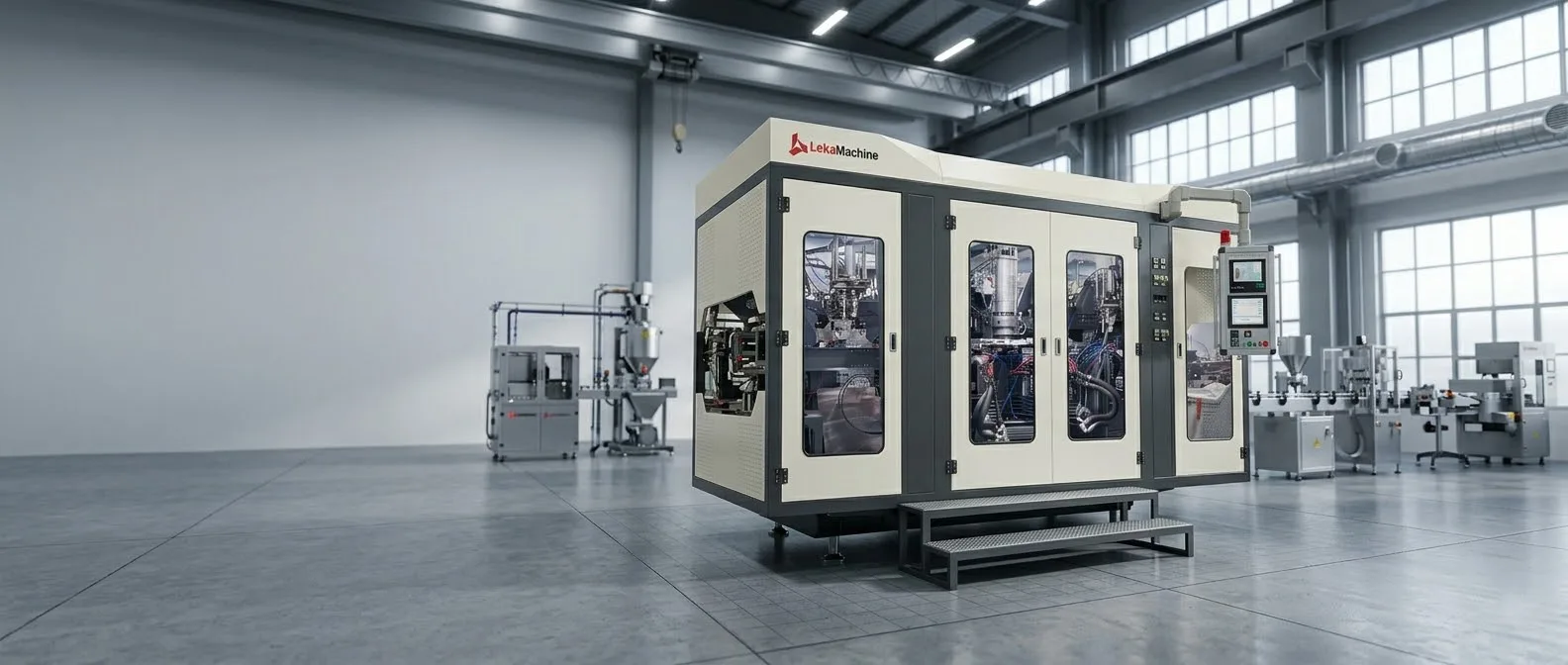
How Fabric Softener Bottles Are Made Step by Step
Although the exact process can vary based on bottle size, mold design, and target output, the main production flow is usually similar across most projects.
1. HDPE Resin Feeding and Material Preparation
The process starts with HDPE resin pellets being loaded into the hopper and fed into the extruder. If the bottle needs a specific color, opacity level, or visual finish, color masterbatch or selected additives may be added at this stage.
Material consistency matters from the beginning. Stable resin feeding helps improve bottle weight consistency, wall thickness distribution, and neck finish quality later in production.
2. Plasticizing and Parison Formation
Inside the extruder, the screw conveys and heats the HDPE until it becomes a uniform molten material. The melt is then pushed through the die head to form a hollow tube called the париж.
The parison is one of the most important control points in bottle production. If parison stability is poor, the final bottle may show uneven walls, weak corners, excess material usage, or inconsistent grip areas.
3. Mold Closing and Blow Forming
Once the parison reaches the correct length, the mold closes around it. Compressed air is introduced to expand the molten plastic against the mold cavity, creating the final bottle shape.
This is where the bottle body, shoulders, neck area, grip geometry, and any handle structure are formed. For fabric softener bottles, this stage is especially important because the bottle usually needs to balance ergonomics, appearance, and line compatibility.
4. Cooling and Shape Stabilization
After the bottle is formed, it remains in the mold for cooling. Cooling time directly affects bottle rigidity, dimensional stability, and production cycle efficiency.
If cooling is insufficient, the bottle may deform after ejection or show unstable geometry in later stages such as conveying, filling, and capping.
5. Deflashing and Trimming
Extrusion blow molding creates excess material at pinch-off areas, so the finished bottle must be trimmed after molding. This deflashing step is important for both appearance and function.
Clean trimming improves bottle edge quality, user handling comfort, and the overall finished look of the container.
6. Inspection and Leak Testing
After trimming, bottles are inspected for visual defects, dimensional consistency, neck accuracy, and sealing performance. Leak testing is critical because household liquid packaging must remain reliable during storage, shipping, and consumer use.
Typical checkpoints include:
- Bottle weight consistency
- Wall thickness balance
- Neck finish accuracy
- Handle strength
- Base stability
- Leak-tight performance
7. Transfer to Filling and Packaging
Once the bottles pass inspection, they move to downstream production. Depending on the project, this may include filling machines, capping machines, labeling machines, а также shrink wrapping and packing equipment.
For real factory operation, bottle manufacturing should never be treated as an isolated step. The bottle must also perform well across the full packaging line.
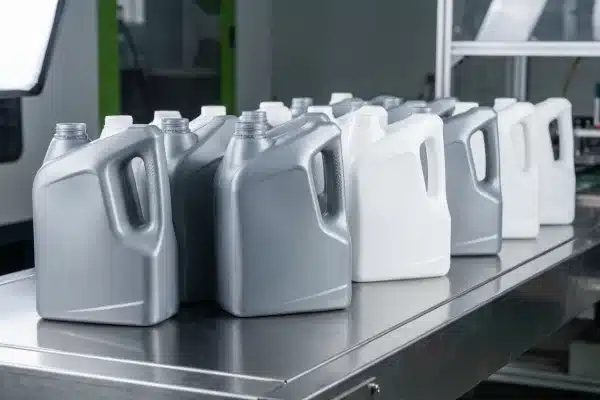
What Matters Most in Fabric Softener Bottle Design
A good fabric softener bottle is not only about visual appearance. It must also be easy to mold, easy to fill, easy to cap, easy to label, and easy for end users to handle. In practice, the best bottle designs balance manufacturing efficiency with market usability.
Ergonomic Grip and Handle Design
Fabric softener bottles are often larger than other household containers, so grip comfort matters. Sidewall shaping, finger zones, and handle positioning all influence how easy the bottle is to lift, pour, and control.
Wall Thickness Distribution
Balanced wall thickness helps reduce bottle weakness and unnecessary resin consumption. If one area is too thin, the bottle may collapse or deform. If another area is too thick, material costs increase without adding useful value.
Neck Finish Accuracy
The neck finish must match the closure system. If the neck is inconsistent, it can create capping problems, sealing failures, or downstream line instability. In household bottle production, neck accuracy is one of the most practical quality checkpoints.
Base Stability
The bottle base must allow stable movement on conveyors and reliable standing during filling, labeling, and packing. Poor base design often creates avoidable line problems later.
Label Panel and Shelf Presentation
Even when function comes first, the bottle still needs usable label space. A properly designed label panel improves branding, readability, and label application consistency.
Common Problems in Fabric Softener Bottle Production
When bottle design, material behavior, and machine settings are not well matched, several common issues can appear.
- Uneven wall thickness
- Weak handle or grip sections
- Neck finish defects
- Leakage near the closure area
- Bottle deformation after ejection
- Rough trimming edges
- Base instability on conveyors or filling lines
These problems usually do not come from a single cause. They are often related to parison control, mold cooling, blow pressure, trimming precision, and overall process repeatability.
For this reason, stable production depends on more than just the machine itself. It also depends on mold design, process setup, bottle structure, and how well the bottle is matched to the full packaging requirement.
From Bottle Manufacturing to Complete Packaging Line Integration
For many buyers, the real goal is not only to make empty bottles. The real goal is to build an efficient bottle packaging process. That is why bottle production should be evaluated together with downstream equipment planning.
In a practical project, fabric softener bottle production may be connected with:
- HDPE bottle blow molding machines
- chemical detergent filling machines
- automatic capping systems
- front, back, or wrap-around labeling machines
- shrink wrapping and case packing solutions
If the bottle is not designed correctly, filling accuracy, capping reliability, label positioning, and packing efficiency can all suffer. That is why experienced suppliers usually look at the bottle and the packaging line as one complete engineering process.
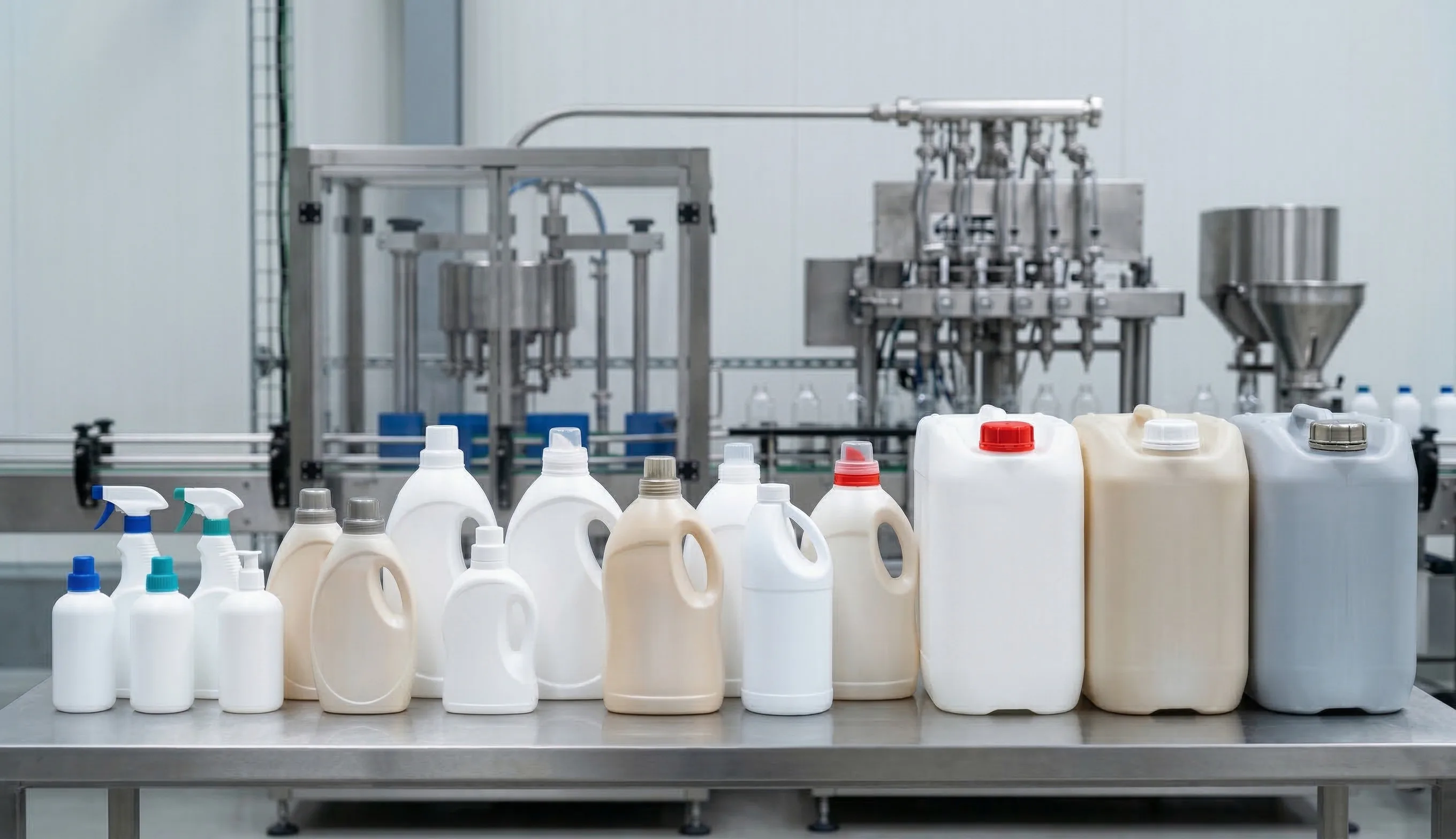
Fabric Softener Bottles vs PET Bottles
Some buyers compare HDPE fabric softener bottles with PET bottle production, but the two are usually used for different packaging needs.
HDPE extrusion blow molded bottles are more common for:
- Fabric softeners
- Laundry detergents
- Bleach
- Household cleaners
- Opaque handle bottles
PET stretch blow molded bottles are more common for:
- Clear beverage bottles
- Water bottles
- Some transparent personal care packaging
- High-clarity container applications
If your project requires transparent PET containers, a машина для выдувного формования с вытяжкой is usually the more suitable route. If your product requires a strong, shaped, opaque household bottle, HDPE extrusion blow molding is usually the better fit.
FAQ About Fabric Softener Bottle Manufacturing
What material are fabric softener bottles usually made from?
Most fabric softener bottles are commonly made from HDPE because it offers good strength, chemical resistance, and design flexibility for household packaging.
What machine is used to make fabric softener bottles?
In most HDPE household bottle projects, the bottles are produced with extrusion blow molding machines.
Why do many fabric softener bottles have handles or grip areas?
These features improve carrying comfort, pouring control, and overall user experience, especially for larger bottle sizes.
Why is wall thickness control important?
Wall thickness directly affects bottle strength, resin cost, dimensional stability, and downstream packaging performance. Poor distribution can cause weak sections or unnecessary material waste.
Are fabric softener bottles made the same way as PET bottles?
No. Fabric softener bottles are usually made from HDPE by extrusion blow molding, while PET bottles are normally made by stretch blow molding from preforms.
Why should bottle production be considered together with filling and packing?
Because the bottle must run smoothly through filling, capping, labeling, and packing equipment. Good bottle design improves the efficiency of the whole packaging line, not just the molding step.
Заключение
Fabric softener bottles are usually made from HDPE through extrusion blow molding because this process supports the bottle shapes, strength requirements, and practical handling features commonly needed in household chemical packaging.
But successful bottle production is not only about forming a container. It also depends on bottle design, wall thickness control, neck finish quality, cooling stability, trimming precision, leak testing, and downstream packaging compatibility.
For manufacturers planning a new bottle project, the best approach is to evaluate the full process from bottle making to filling, capping, labeling, and packing. That is how you build a production line that works reliably in real factory conditions, not just in theory.
If you are planning a new fabric softener bottle project, you can send LEKA your bottle size, output target, and line requirement here. We can help you match a practical solution for both bottle production and downstream packaging.