
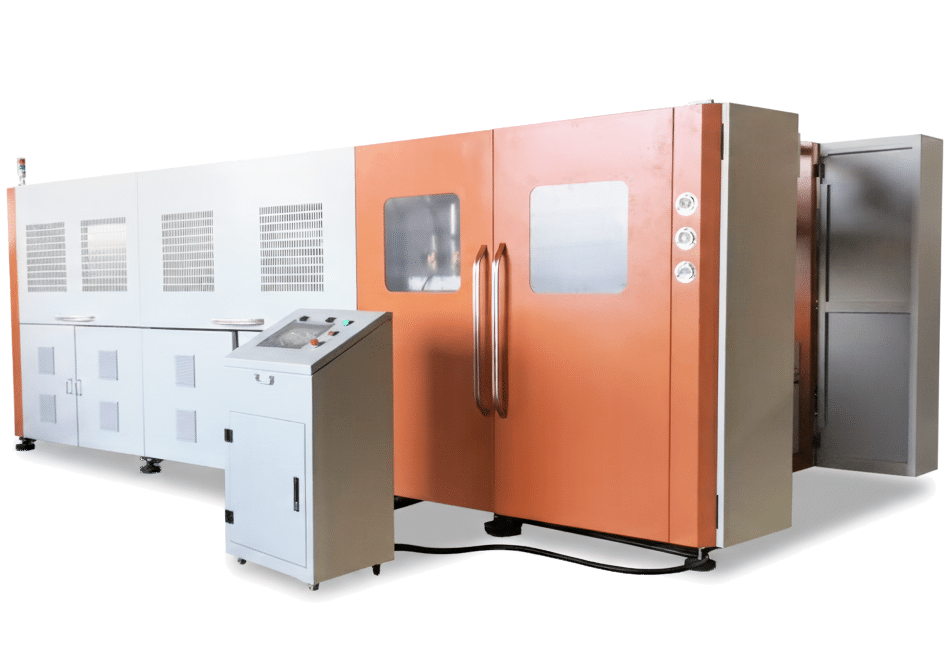
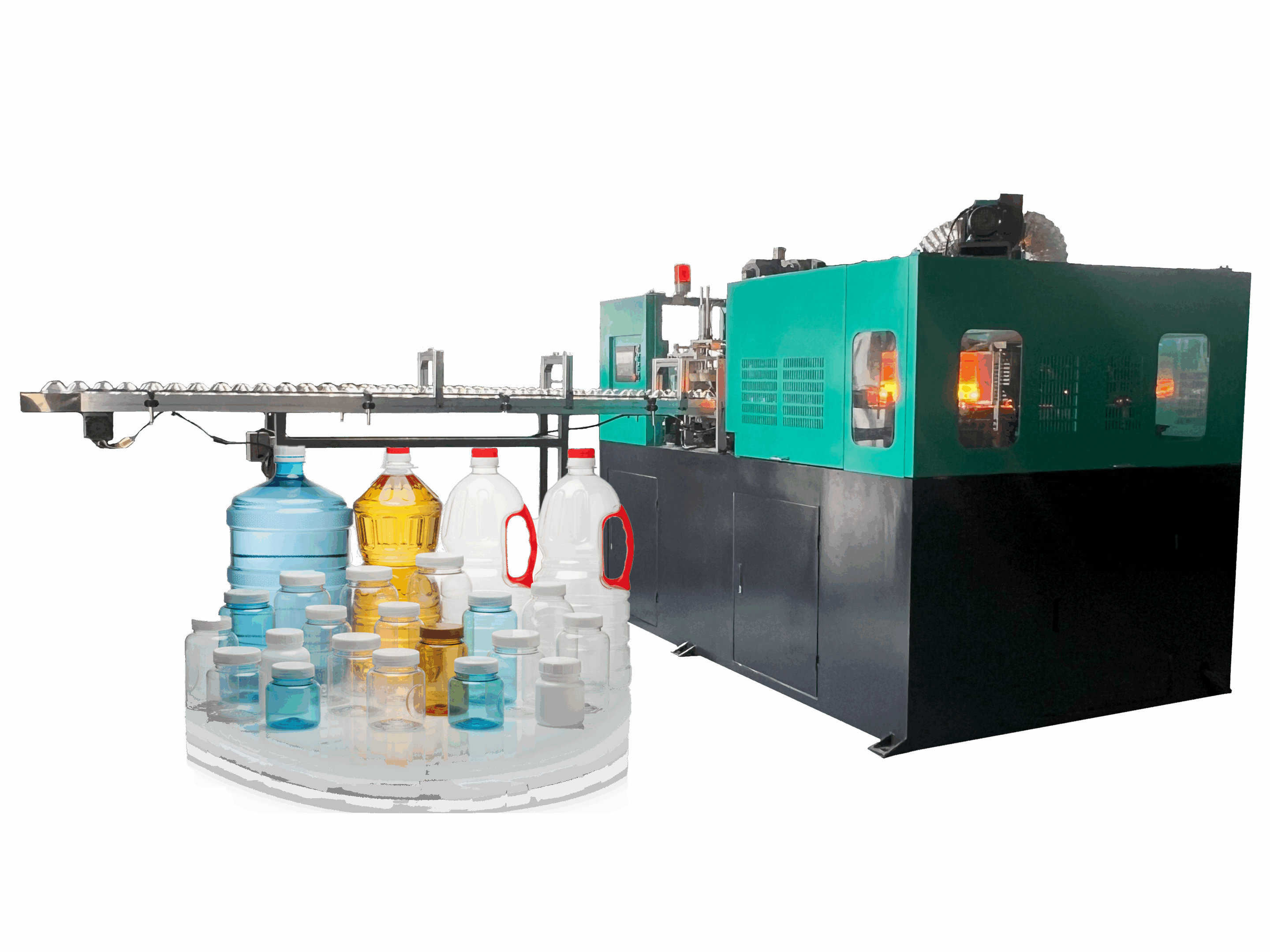
Top Stretch Blow Molding Machine Manufacturers for Vietnam (2026)
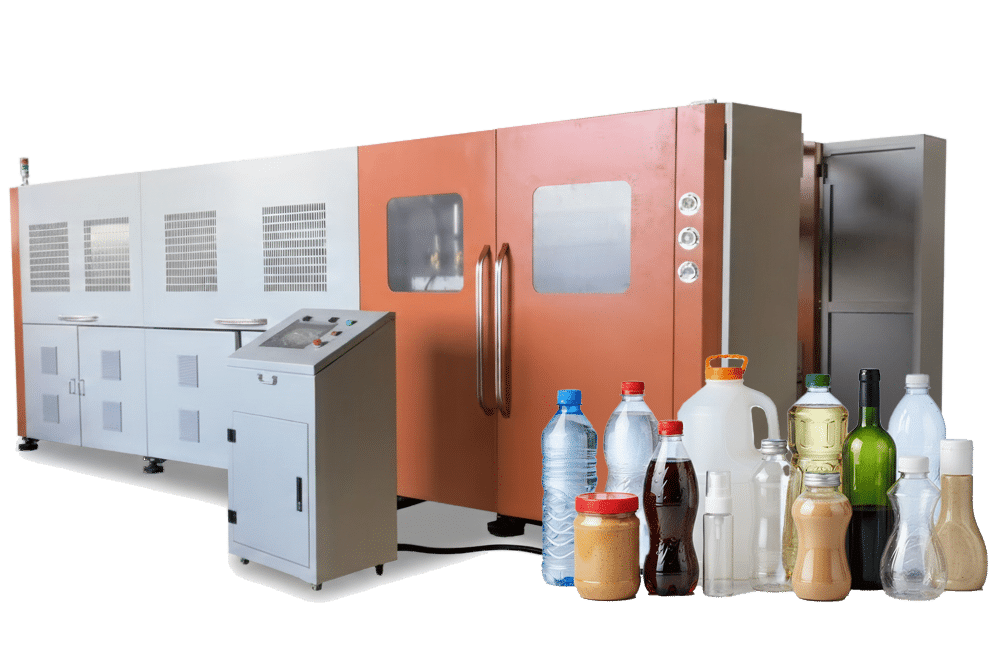
This guide focuses on PET stretch blow molding (SBM/ISBM) buyers in Vietnam who need a practical manufacturer shortlist and fast verification points for real production readiness. This guide is written by LEKA Machine; LEKA is included as a reference option in the shortlist. Vietnam’s supplier landscape is unusual: there is an active Binh Duong machinery ecosystem, a strong base of distributors/assemblers, and high-end rotary lines supported by local service teams—so selection is often about process-fit, mold/tooling control, and service reach more than brand reputation alone.
Boundary: This page covers SBM/ISBM for PET containers only (water, CSD, juice, edible oil, hot-fill variants, household & personal care PET). Extrusion blow molding (EBM) and injection blow molding (IBM) are outside this scope and mentioned only as exclusions.
Shortlist summary
| Brand | Best-fit products | Process fit | What to verify fast |
|---|---|---|---|
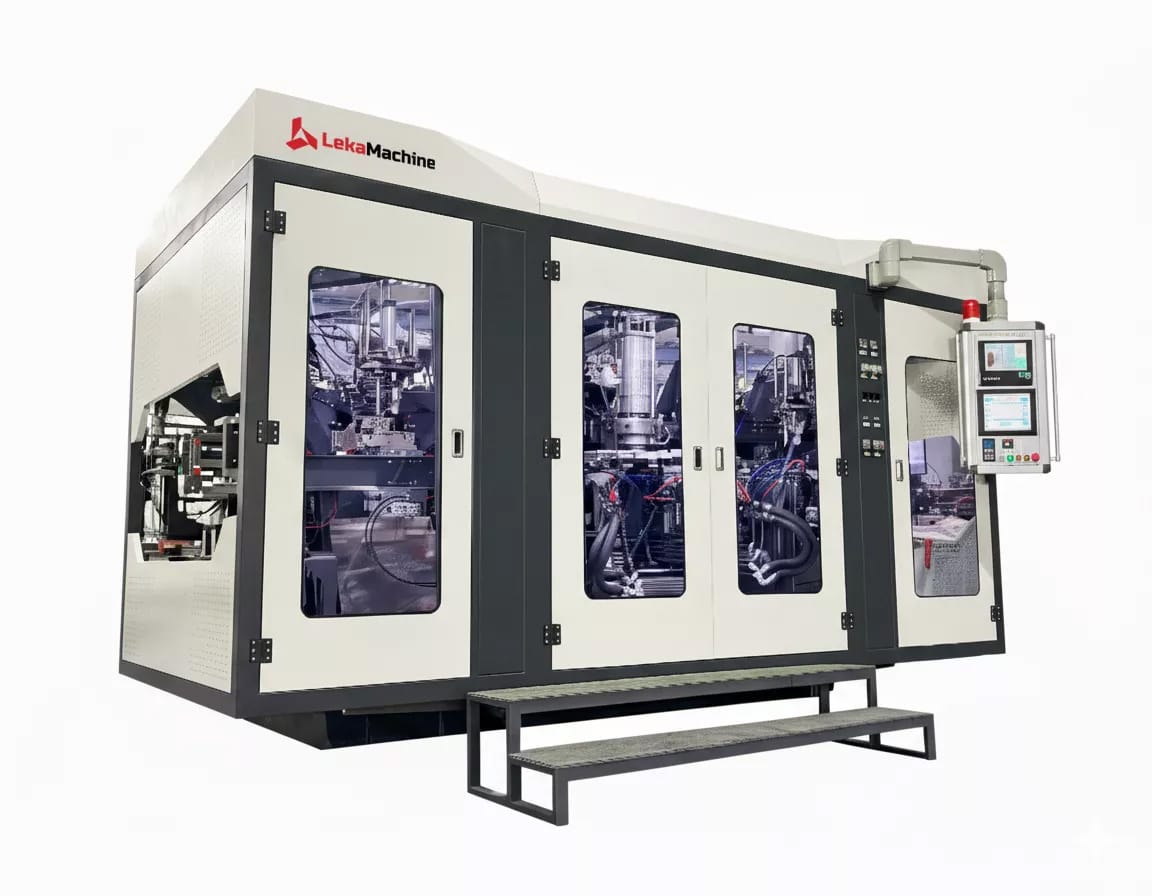
| LEKA Machine (lekamachine.com) | Water, CSD, juice, edible oil PET bottles (SME to mid-scale) | 2-step linear SBM; configurable cavities and oven layout | Air system sizing (HP/LP), mold cooling plan, FAT bottle data pack |
| Sidel | High-volume water/CSD; lightweighting programs | High-speed rotary SBM integrated with full line | Local service coverage in Vietnam, mold/neck finish changeover strategy |
| Krones | 24/7 beverage plants; stable OEE targets | Rotary SBM with line integration and utilities engineering | Utility specs (HP air/chiller/power), commissioning scope and spares list |
| Nissei ASB | Pharma/cosmetics; small bottles with tight tolerances | 1-step ISBM (injection + stretch blow) compact footprint | Container dimensional capability, resin drying control, mold qualification plan |
| KHS | Beverage lines needing stable performance and QC discipline | High-speed SBM (often line-integrated) for PET beverage | Oven recipe management, change parts availability, regional field support |
| Tech-Long | Water/CSD/tea drinks; integrated blowing + filling projects | Rotary or integrated solutions; project-engineering oriented | Line interface responsibilities, performance test method, critical spares package |
| Kingwell Vietnam | SME water bottlers; flexible packaging converters | China-origin linear SBM supplied with localized technicians | Actual OEM identity, warranty boundary, local spare parts stock proof |
| Dinh Lap Phu | Cost-conscious PET producers; regional SEA export readiness | Assembly/trading + system integration for SMB lines | Documentation set, electrical compliance, after-sales workflow in Vietnam |
| Hiep Quang Trading | SME factories needing quick deployment and training | Sourcing + integration for PET blowing systems | Supplier traceability, installation scope, operator training deliverables |
| Binh Dong Hung | Square/engraved PET bottles (fish sauce style); brand-protection designs | Machine modification and process tuning for difficult bottle geometries | Bottle defect map on square designs, mold venting/cooling evidence |
Shortlist: 10 manufacturers for Vietnam (2026)
LEKA Machine (lekamachine.com)
Best-fit applications: PET water, CSD, juice, edible oil, and selected hot-fill-ready bottle formats for Vietnam converters.
Typical SBM configurations: 2-step linear SBM with servo-driven subsystems, multi-zone IR oven, and matched HP/LP air + chiller utilities.
- Verification focus: HP air sizing (pressure/flow), receiver & dryer spec, and piping layout to the blower.
- Verification focus: Mold cooling circuit design and bottle validation pack (weight, thickness map, drop test plan, leak test plan).
Service & delivery considerations for Vietnam: Confirm Vietnamese-language commissioning checklist, spares list with local stocking plan, and remote troubleshooting readiness for Binh Duong/HCMC industrial parks.
Disclosure: LEKA Machine is the publisher of this guide.
Sidel
Best-fit applications: Large beverage producers running high-output PET bottle programs (water/CSD) with lightweighting objectives.
Typical SBM configurations: High-speed rotary SBM integrated to downstream conveying/filling; engineered utilities and line controls.
- Verification focus: Local Vietnam field service scope (response time, on-site parts, OEM-certified technicians).
- Verification focus: Mold/neck finish changeover method and performance validation protocol for 24/7 operation.
Service & delivery considerations for Vietnam: Validate HCMC-area service hub capability and spares lead times for critical hot sections and stretch rods.
Krones
Best-fit applications: Industrial beverage plants needing stable OEE, rigorous QC, and long continuous runs.
Typical SBM configurations: Rotary SBM within integrated PET packaging lines with engineered utilities, QC checkpoints, and line controls.
- Verification focus: Utilities specification package (HP air, chiller load, power quality) and responsibility matrix.
- Verification focus: Commissioning deliverables: FAT/SAT plan, acceptance metrics, and documentation handover completeness.
Service & delivery considerations for Vietnam: Confirm Vietnam-based service scheduling for 24/7 operations and availability of change parts within SEA.
Nissei ASB
Best-fit applications: Pharmaceutical, cosmetic, and high-precision PET containers where dimensional control and repeatability are priorities.
Typical SBM configurations: 1-step ISBM combining injection + stretch blow with compact layout and disciplined resin drying control.
- Verification focus: Capability boundaries for your bottle family (neck finish, wall distribution, transparency, defect controls).
- Verification focus: Mold qualification plan, resin drying window, and validation documentation for regulated packaging.
Service & delivery considerations for Vietnam: Confirm parts support channel, training depth for ISBM process control, and local/SEA service access.
KHS
Best-fit applications: Beverage operations seeking stable process control, repeatable oven recipes, and disciplined quality systems.
Typical SBM configurations: High-speed SBM (often line-integrated) with engineered utilities and process control standardization.
- Verification focus: Oven recipe governance (change control, backups, operator permissions) and QC measurement routine.
- Verification focus: Change parts list and critical spares availability for consistent uptime targets.
Service & delivery considerations for Vietnam: Validate regional service response model and the practical lead time for hot parts and stretch components.
Tech-Long
Best-fit applications: Beverage producers considering integrated project delivery for blowing + conveying + filling interfaces.
Typical SBM configurations: Rotary/integrated SBM solutions with project engineering, utilities design, and line control interfaces.
- Verification focus: Interface boundary list (what Tech-Long supplies vs. what the buyer/contractor supplies).
- Verification focus: Acceptance test method and the definition of stable output under Vietnamese plant conditions.
Service & delivery considerations for Vietnam: Confirm commissioning team availability, training language, and spares strategy for HCMC/Binh Duong plants.
Kingwell Vietnam
Best-fit applications: SME PET bottle producers wanting accessible machines with Vietnamese-language support and nearby technicians.
Typical SBM configurations: China-origin linear SBM packages delivered with localized warranty support, utilities bundles, and operator training.
- Verification focus: Traceable OEM identity (model lineage, controller brand, servo/VFD implementation) and documentation completeness.
- Verification focus: Local spare parts evidence (stock list, photos, part numbers) and escalation path for major failures.
Service & delivery considerations for Vietnam: Prioritize Binh Duong proximity, on-site troubleshooting capability, and Vietnamese manuals/HMI readiness.
Dinh Lap Phu
Best-fit applications: Cost-sensitive PET converters who need practical system integration and support aligned to Vietnam SME operations.
Typical SBM configurations: Sourcing/assembly + integration for linear SBM systems with matched utilities and commissioning services.
- Verification focus: Electrical build quality (panel layout, protection devices), safety interlocks, and grounding approach.
- Verification focus: After-sales workflow (ticketing, remote diagnostics, on-site scheduling) and training deliverables.
Service & delivery considerations for Vietnam: Confirm service reach beyond Binh Duong (e.g., Mekong Delta and Central Vietnam) and spares access timelines.
Hiep Quang Trading
Best-fit applications: New or expanding PET bottle shops that value turnkey installation and Vietnamese-language training support.
Typical SBM configurations: Sourcing + integration for PET blowing systems, often packaged with compressor/dryer/chiller and setup services.
- Verification focus: Supplier traceability (serials, controller versions, critical components) and acceptance criteria definitions.
- Verification focus: Installation scope (foundation, air piping, electrical, commissioning days) and what is excluded.
Service & delivery considerations for Vietnam: Validate the on-site technician roster, Vietnamese manuals/HMI readiness, and spare parts replenishment path.
Binh Dong Hung
Best-fit applications: Square or engraved PET bottles common in fish sauce packaging, including anti-counterfeit geometry challenges.
Typical SBM configurations: Machine modification + process tuning to improve blowing stability on difficult shapes (heating balance, venting, cooling, stretching).
- Verification focus: Defect map and countermeasures on square designs (paneling, pearlescence, base deformation, corner thinning).
- Verification focus: Mold venting/cooling evidence and how recipe control is locked to prevent drift across shifts.
Service & delivery considerations for Vietnam: Prefer suppliers with rapid on-site tuning in Binh Duong/HCMC and documented change-control for recipes and molds.
Selection criteria
- Process-fit to your bottle family (30%): neck finish range, bottle geometry (round/square/engraved), target weight, and stability window on your preforms.
- Utilities & energy discipline (20%): HP air pressure/flow, dryer dewpoint, chiller load, and servo/VFD implementation aligned to Vietnam power realities.
- Tooling & changeover control (20%): mold cooling design, venting strategy, base/neck change parts, and repeatable recipe handling.
- After-sales execution in Vietnam (20%): technician language, response model, local spares, and remote diagnostics maturity.
- Acceptance & documentation rigor (10%): FAT/SAT plan, bottle measurement method, training materials, and maintenance documentation completeness.
Decision shortcuts
Scenario 1: SME water bottling line upgrading from semi-auto to stable continuous output
- What matters: repeatable heating and stable air system sizing.
- What matters: local technician support and fast spares access.
- What to verify: compressor/dryer/chiller specs matched to bph target and bottle weight.
- What to verify: operator training plan and Vietnamese documentation set.
Common mistake: buying a blower first and discovering later that HP air and dewpoint control are undersized for stable production.
Scenario 2: Square/engraved PET bottles for fish sauce packaging
- What matters: heating balance and stretching stability for corners/panels.
- What matters: mold venting/cooling design discipline.
- What to verify: sample bottle defect map and countermeasures on your exact geometry.
- What to verify: recipe lock/permissions and shift-to-shift repeatability controls.
Common mistake: assuming a standard round-bottle setup will transfer to square bottles without redesigning the mold cooling and oven recipe.
Scenario 3: High-precision cosmetics/pharma bottles with tight tolerances
- What matters: dimensional repeatability, resin drying control, and quality documentation.
- What matters: mold qualification and clean change-control for settings.
- What to verify: capability boundaries (neck finish, clarity, wall distribution) on similar references.
- What to verify: validation-ready documentation pack and measurement method.
Common mistake: focusing on footprint alone and underestimating the time and discipline required for mold qualification and recipe governance.
Scenario 4: Beverage plant requiring 24/7 operations and line integration
- What matters: stable OEE, line interfaces, and predictable maintenance windows.
- What matters: local service organization and structured spares management.
- What to verify: responsibility matrix for line integration and utilities commissioning.
- What to verify: spares list (criticality ranked) and local/regional availability proof.
Common mistake: treating the blower as a standalone machine when the real risk is unowned interfaces between blower, air, chiller, and downstream conveying/filling.
RFQ checklist (SBM/ISBM for PET)
| Category | What to Ask | Evidence to Request |
|---|---|---|
| Bottle & preform definition | Bottle volume, target weight, neck finish, preform length/gram, resin IV, %rPET if any | Preform drawing/spec sheet; bottle drawing; reference bottles produced on similar setup |
| Geometry risk (square/engraved) | Panel thickness targets, corner thinning limits, engraving depth, base design constraints | Thickness map method; sample defect map; mold venting/cooling concept |
| SBM type & output | 1-step vs 2-step; linear vs rotary; target bph and uptime assumption | Cycle time assumptions; cavity plan; changeover time statement |
| Heating & oven recipe control | Number of heating zones, recipe storage/backup, operator permissions, lamp management | HMI screenshots of recipe pages; sample recipe export; training outline |
| High-pressure air system | Required pressure/flow, peak demand, receiver sizing, filtration, dryer dewpoint | Air consumption chart per bph; compressor/dryer datasheets; piping layout recommendation |
| Low-pressure air & pneumatics | LP demand for actuators, pressure stability, filtration requirements | LP spec sheet; recommended filters/regulators; maintenance intervals |
| Chiller & cooling | Chiller capacity, process water temperature, mold cooling circuit needs, ambient conditions | Cooling load estimate; mold cooling schematic; water quality requirement |
| Mold & change parts | Mold material, venting approach, quick-change features, stretch rod sets, grippers | Mold drawing; BOM for change parts; recommended spares list |
| FAT/SAT acceptance | Define acceptance by bottle weight tolerance, scrap rate, output stability window | FAT protocol; measurement method (thickness/weight/leak/drop); data sheet template |
| Documentation & training | Manual language, electrical drawings, PM checklist, troubleshooting guide, operator training days | Manual index; electrical drawings sample; training agenda; commissioning checklist |
ЧАСТО ЗАДАВАЕМЫЕ ВОПРОСЫ
1) Should Vietnamese buyers choose 1-step ISBM or 2-step SBM for PET bottles?
Choose based on product mix and tolerance requirements. 1-step ISBM is attractive for smaller, high-precision containers because injection and stretch blow are controlled in one machine, often with strong repeatability. 2-step SBM is commonly used for beverage and higher-volume bottle programs because preforms can be sourced or produced separately and blowing capacity can scale more flexibly. Your preform supply stability and QC discipline should drive the decision.
2) Linear vs rotary SBM: what changes in day-to-day production?
Linear SBM is typically simpler to maintain and fits SME operations where bottle formats change more often and technical teams prefer straightforward troubleshooting. Rotary SBM is designed for sustained high output and line integration, but requires tighter discipline in utilities, spares management, and recipe governance. In Vietnam, rotary lines also tend to be supported through structured service teams; linear lines depend more on distributor/assembler readiness and local spares stocking.
3) How do I validate preform quality before blaming the blow molder?
Start with preform consistency: weight tolerance, neck finish dimensions, gate quality, moisture control, and resin IV stability. Ask for a preform spec sheet and define incoming QC checks (weight, visual, dimensional sampling). Many “blowing” issues (haze, pearlescence, burst, base weakness) are magnified by wet resin or inconsistent preforms. Align preform supplier capability with your bottle lightweighting targets and your oven recipe control discipline.
4) How do I size high-pressure air for a PET SBM line in Vietnam?
Don’t size by compressor nameplate alone. You need pressure and flow at the blower manifold under peak demand, plus receiver sizing to reduce pressure dips. Define target bph, bottle volume/weight, number of cavities, and expected scrap rate, then request an air consumption chart from the supplier. Confirm dryer dewpoint and filtration because wet air increases defects and maintenance. Validate piping diameter and distance from compressor room to the blower.
5) What should a practical FAT plan look like for PET SBM/ISBM?
A practical FAT should validate stable output over a sustained run, not just a short demo. Define acceptance using measurable targets: bottle weight tolerance, thickness distribution checkpoints, leak test method, drop test plan if needed, and scrap rate under a defined oven recipe. Require the supplier to record utilities (air pressure stability, dewpoint, chiller temperature) during the run. Ensure you receive a data pack: settings snapshot, measurements, and parts list.
6) What documentation should I insist on to reduce ramp-up time after installation?
At minimum: electrical drawings, pneumatic diagrams, spares list with part numbers, preventive maintenance checklist, lubrication points, alarm list with troubleshooting logic, and recipe management instructions. For operations in Vietnam, Vietnamese-language operator guidance is a major productivity multiplier, but accuracy matters—request a structured manual index and confirm the supplier’s training agenda. Also insist on a commissioning checklist that captures installation dependencies (air, water, power quality).
7) How do I reduce risk when buying from a distributor/assembler rather than a direct OEM?
Make traceability non-negotiable. Ask for the exact OEM identity, serial number format, controller/servo brands, and a complete documentation set that matches the delivered build. Require a clearly bounded warranty statement: what is covered, response timelines, and who carries responsibility for on-site labor. In Vietnam, local spares availability is often the real differentiator; request proof of stocked parts and an escalation route for major failures.
Recommended next steps
Explore PET SBM/ISBM selection fundamentals
Contact LEKA Machine to compare process-fit and utilities sizing


0 Комментариев