





A Journey into the Heart of PET Bottle Production with Slany Cheuang, Technical Sales Manager at Leka Machine
Look around you. The crystal-clear water bottle on your desk, the gleaming soda bottle in the vending machine, the sturdy jar of cooking oil in your pantry—they all began their existence as something remarkably humble, an object resembling a thick-walled test tube. This is the blow mould preform. It is the silent, unsung hero in the multi-billion dollar beverage and indústria de embalagens. While seemingly simple, this intermediate product is a marvel of polymer science and precision engineering, and its qualidade is the single most critical factor determining the strength, clarity, barrier properties, and overall performance of the final bottle.
My name is Slany Cheuang, and as the Technical Sales Manager for Leka Machine, I’ve spent years deep in the trenches of blow moulding technology. I’ve witnessed firsthand how a superior preform, paired with a high-performance machine, can elevate a production line from merely functional to exceptionally profitable. Conversely, I’ve also seen how seemingly minor preform defects can cascade into a production nightmare of high scrap rates, frustrating downtime, and damaged brand reputation. This is why I’ve written this guide. This is more than just a technical breakdown; it’s a comprehensive business manual designed to empower you—whether you’re a seasoned production manager, a procurement specialist, or an entrepreneur entering the bottling industry. We will journey together from the molecular level of PET resin to the complex mechanics of injection and stretch blow moulding, and finally, to the crucial art of qualidade control. Let’s unlock the secrets to transforming a simple pellet of plastic into a perfect bottle.
Deep Dive: Deconstructing the Blow Mould Preform
What is a Blow Mould Preform, Really?

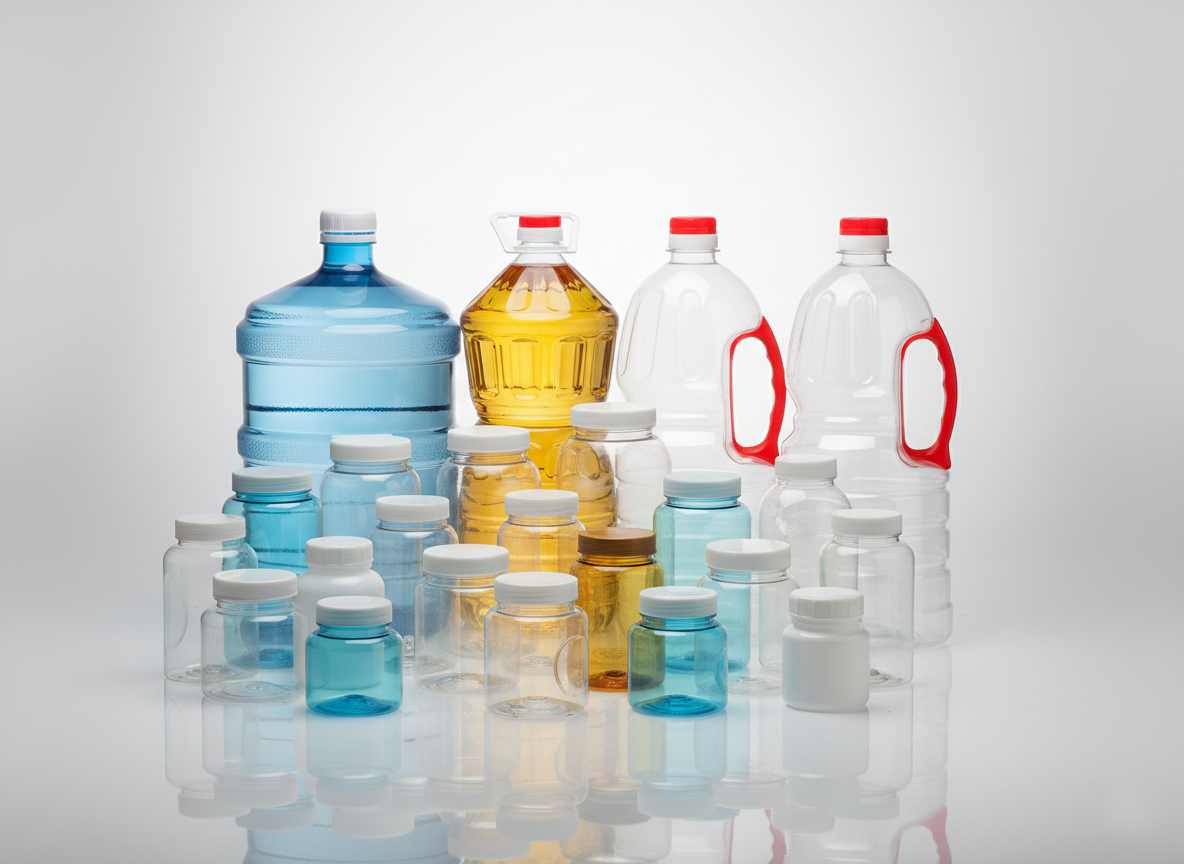
PET preforms used in a stretch blow molding machine to form plastic bottles for beverage, cosmetic, and household packaging
At its core, a blow mould preform is an intermediate plastic component manufactured through the process of injection moulding. It’s designed to be the precursor to a bottle. Think of it as a bottle in a highly concentrated, un-inflated state. It already possesses the final, finished neck and thread section of the bottle, but its body is a compact, thick-walled tube.
This preform is the cornerstone of the “two-step” golpe de estiramento moulding process, a method that has come to dominate the industry for high-volume production of PET containers. This separation of parceiro de fabricação stages is a deliberate stroke of industrial genius, devised for maximum efficiency, quality, and cost-effectiveness.
- Step One: High-speed, multi-cavity injection moulding machines produce thousands of identical preforms per hour.
- Step Two: These preforms are then cooled, stored, potentially transported across the globe, and finally fed into a separate stretch totalmente automática where they are reheated and blown into their final bottle shape.
This two-step approach embodies the modern industrial pursuit of specialization and optimization, allowing each stage to be perfected for its specific function.
The Anatomy of a Preform: A Blueprint for Perfection
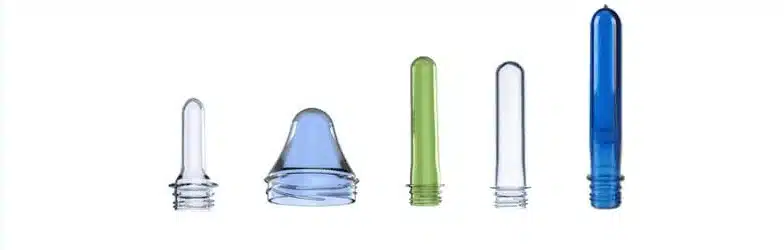
Set of plastic preforms used in a stretch blow molding machine to form bottles and containers.
While it may look like a simple tube, every feature of a preform is meticulously designed and engineered. Let’s dissect its key components:
Neck Finish
This is the most critical and complex part of the preform, and it is the only part that does not change its shape during the blowing process. It includes the threads for the cap, the tamper-evident band ring, and the sealing surface. The dimensional tolerances here are measured in fractions of a millimeter. A perfect neck finish ensures a hermetic seal with the cap, preventing leaks, preserving carbonation in sparkling beverages, and guaranteeing product integrity and consumer safety. Below the threads sits a crucial feature: the support ring (or flange). This small ledge is essential for the automated handling of the preform throughout the parceiro de fabricação process, from conveying it out of the injection mould to holding it securely in the stretch blow moulding machine.
Body
This is the main cylindrical section of the preform. Its length, diameter, and especially its wall thickness distribution are not arbitrary. They are calculated with extreme precision based on the design of the final bottle. The mass of plastic in the body, measured in grams, directly determines the weight, cost, and structural properties of the finished container. Engineers use concepts like “stretch ratios” (how much the plastic will be stretched axially and radially) to define the preform’s dimensions, ensuring that when blown, the material distributes evenly to create a bottle with consistent wall thickness, free from weak spots.
Gate and End-Cap
At the very bottom of the preform is a small circular mark known as the gate. This is the precise point where molten PET resin was injected into the mould cavity. The design and quality of the gate are subtle but vital indicators of the manufacturing process. A poorly formed gate can introduce internal stresses, leading to potential failure in the final bottle, particularly in carbonated beverage aplicativos where the base is under constant pressure. Modern, high-end preform moulds utilize advanced hot runner systems with valve gates. These systems use a physical pin to shut off the flow of plastic, resulting in a clean, flat, and aesthetically pleasing gate with minimal residual stress. This is far superior to older thermal gate designs which can leave a more pronounced and potentially problematic nub.
The Strategic Imperative of the Preform: Why Not Just Blow a Bottle Directly?
For anyone new to the industry, a logical question arises: why this two-step process? Why not mould the resin directly into a bottle? While “one-step” injection stretch máquinas de moldagem por sopro do exist and have their niche (typically for lower volumes, non-standard shapes, or different materials like polycarbonate), the two-step preform method offers overwhelming advantages for the mass production of PET bottles.
- Unrivaled Production Speeds: The core advantage is the decoupling of two very different processes. A state-of-the-art preform injection moulding system with a high-cavitation mould (e.g., 96 or 144 cavities) can churn out over 50,000 preforms per hour. A high-speed rotary stretch totalmente automática can blow over 80,000 bottles per hour. By separating these processes, manufacturers can run each at its absolute maximum optimized speed without one becoming a bottleneck for the other. This translates to a massive economy of scale and a lower cost per unit.
- Superior Quality Control and Defect Isolation: Quality control is fundamentally easier and more effective at the preform stage. It’s far simpler to inspect a small, solid, transparent object for defects like bubbles, black specks, or crystallinity than it is to inspect a large, thin-walled, empty bottle. Automated camera inspection systems can check every single preform as it exits the mould. If a defect is found in one cavity, only the preforms from that specific cavity need to be quarantined, not an entire batch of bottles. This early-stage rejection saves enormous costs in wasted material, energy, and machine time that would have been spent blowing a defective bottle.
- Astounding Logistics and Cost Efficiency: This is a game-changer for global supply chains. Consider this example: a standard 40-foot shipping container can hold approximately 80,000 to 100,000 empty 500ml water bottles. That same container can hold well over 1,000,000 preforms for those same bottles. The volumetric difference is staggering, often a factor of 10 or more. This massive reduction in volume drastically cuts down on warehousing space and transportation costs, making it economically viable to manufacture preforms in a centralized, highly efficient facility and ship them to bottling plants around the world.
- Incredible Design and Production Flexibility: A single preform design can be used to produce a family of bottles with different shapes and volumes. By simply changing the blow mould in the stretch totalmente automática and adjusting the heating and blowing parameters, a manufacturer can switch from producing a round bottle to a square one, or a 500ml bottle to a 600ml bottle, all using the exact same preform. This decouples the high capital investment of the injection mould from the relatively lower cost of blow moulds, dramatically reducing the cost and time required to launch new product designs.
The Material of Choice: Understanding PET and Its Alternatives
PET (Polyethylene Terephthalate): The Undisputed Industry Champion
When it comes to manufacturing blow mould preforms for bottles, PET is not just a material; it is the material. Its dominance is near-total, and for a host of excellent reasons that create a perfect synergy of properties:
- Crystal Clarity: It offers glass-like transparency, showcasing the product within.
- Excellent Barrier Properties: PET is very effective at keeping carbon dioxide in (essential for CSDs) and oxygen out (protecting flavor and extending shelf life).
- Superb Physical Strength and Toughness: When biaxially oriented during the golpe de estiramento moulding process, PET becomes incredibly strong and shatter-resistant, despite being very lightweight.
- Lightweight: A lightweight bottle reduces material costs and transportation fuel consumption.
- High Recyclability: PET is one of the most recycled plastics in the world, symbolized by the #1 resin identification code. The infrastructure for collecting and reprocessing PET is well-established globally.
A crucial property of PET resin for this application is its Intrinsic Viscosity (IV). This is a measure of the polymer’s molecular weight. A higher IV indicates longer polymer chains and, consequently, greater strength and melt viscosity. Resins for carbonated beverage bottles will typically have a higher IV (e.g., 0.80-0.84 dL/g) to withstand the pressure, while resins for still water bottles might have a lower IV (e.g., 0.76 dL/g).
The Rise of rPET (Recycled PET): The Sustainable Imperative
Sustainability is no longer a niche concern; it’s a core business driver. In response to consumer demand and government regulations, the use of rPET in preform manufacturing is exploding. rPET is post-consumer PET plastic (like used water bottles) that has been collected, cleaned, and re-pelletized. Incorporating rPET into new preforms, often in blends of 25%, 50%, or even 100%, significantly reduces the carbon footprint of the final product and promotes a circular economy. However, working with rPET presents challenges, such as potential color variations (a slight yellow or grey tint) and a possible drop in IV, which must be managed through advanced purification processes and careful blending.
Other Niche Materials
- PP (polipropileno): PP preforms are used for applications requiring higher heat resistance than PET can offer. This includes hot-fill beverage bottles (filled at temperatures up to 85-95°C) and containers destined for pasteurization or retort sterilization. PP is naturally hazy or translucent rather than transparent.
- HDPE (Polietileno de Alta Densidade): It’s important to clarify that HDPE is generally not used for the two-step golpe de estiramento moulding process that involves preforms. HDPE is the primary material for the extrusão blow moulding process, which is used to create products like milk jugs, detergent bottles, and industrial jerricans.
Decoding Preform Specifications: The Language of Procurement
For any B2B buyer or production manager, understanding the technical specifications of a preform is non-negotiable. These three parameters define the product:
- Weight (in grams): This is the most direct measure of the preform’s cost and the resulting bottle’s performance. A 21g preform will produce a more robust bottle than a 19g preform of the same design. Weight consistency is paramount; a deviation of even ±0.2g can affect the entire blowing process.
- Neck Finish Standard: This is a standardized code that defines every dimension of the neck area. For example, “PCO 1881” is a common lightweight standard for carbonated soft drinks, while “38mm 3-start” might be used for juice bottles with wider mouths. This parameter must perfectly match the specifications of the bottle cap and the handling parts of the filling line.
- Dimensions (Length and Diameter): The overall length and outer diameter of the preform body must be compatible with the heating oven and gripping mechanisms of the stretch totalmente automática. An incompatible preform simply will not run on the production line.
The Birth of a Preform: A Symphony of Heat, Pressure, and Speed
A preform is born inside a highly sophisticated, automated injection moulding cell. This is not a simple process; it is a high-tech ballet of precision-controlled variables where a tenth of a second or a single degree of temperature can make the difference between a perfect part and a piece of scrap.
Step-by-Step Breakdown of Preform Injection Moulding
Step 1: The Absolute Necessity of Drying
This is the most critical and often underestimated step. PET is a hygroscopic material, meaning it actively absorbs moisture from the surrounding air. If PET pellets containing even a tiny amount of moisture (more than 50 parts per million) are heated to melting temperature, a chemical reaction called hydrolysis occurs. This reaction breaks the long polymer chains that give PET its strength, drastically reducing its Intrinsic Viscosity. The result is a brittle, hazy preform that will fail during blowing or result in a fragile bottle.
To prevent this, PET resin must be meticulously dried. This is done in industrial dehumidifying dryers that circulate hot, extremely dry air (with a dew point of -40°C or lower) through a large hopper of resin at a temperature of 160-180°C for a continuous period of 4 to 6 hours. This process removes the absorbed water molecules, preserving the material’s integrity for moulding.
Step 2: Plasticizing and High-Velocity Injection
Once perfectly dried, the PET pellets are gravity-fed from the hopper into the barrel of the injection moulding machine. Inside the barrel, a rotating screw conveys the pellets forward. As they travel, heater bands surrounding the barrel melt the plastic, and the mechanical shearing action of the screw homogenizes it into a consistent, molten state.
When the mould is closed and clamped shut with hundreds of tons of force, the screw acts like a piston. It thrusts forward at an extremely high speed, injecting the molten PET under immense pressure (often over 15,000 PSI) through the hot runner system and into the multiple mould cavities. The speed and pressure profile of this injection is carefully controlled to ensure all cavities fill simultaneously and completely without degrading the material.
Step 3: Holding Pressure and Aggressive Cooling
Immediately after the cavities are filled, the process switches from the “injection” phase to the “holding” or “packing” phase. A sustained pressure is applied to push more material into the cavities. This is necessary to compensate for the volumetric shrinkage that naturally occurs as the plastic cools from a molten state to a solid. Without this holding pressure, the preforms would have sink marks and inconsistent weights.
Simultaneously, the most time-consuming part of the cycle begins: cooling. The preform mould is engineered with an intricate network of cooling channels through which chilled water is pumped at high velocity. This rapidly extracts heat from the plastic, allowing it to solidify and become stable enough for ejection. The efficiency of this cooling process is the primary determinant of the overall cycle time and, therefore, the productivity of the entire system.
Step 4: Ejection and Robotic Automation
Once the preform has cooled sufficiently, the mould opens. A robotic take-out plate, perfectly synchronized with the machine, enters the mould space, grips all the preforms (often by their neck finish), and gently lifts them out. The robot then places the hot preforms onto a cooling conveyor or directly into a container. As soon as the robot is clear, the mould closes again, and the entire cycle, which may take as little as 7 seconds, begins anew.
The Core Technology Powering the Process
- PET-Specific Injection Moulding Machines: These are not standard injection moulders. They are specially designed with features like a high-performance plasticizing unit optimized for PET, accumulators to deliver the ultra-high injection speeds required, and robust clamping units to handle the high pressures and fast cycle times.
- High-Cavitation Preform Molds: The mould is the heart of the operation and a masterpiece of engineering, often costing more than the machine itself. They are built from high-grade, hardened tool steels (like S136) to withstand millions of cycles. They incorporate sophisticated hot runner systems to keep the plastic molten all the way to the cavities, ensuring high-quality gates and minimal waste. The precision required in their manufacture is comparable to that of medical or aerospace components.
- Equipamento auxiliar: The moulding cell is supported by a host of critical auxiliary equipment, including the high-capacity resin dryers, mould temperature controllers, robotic handling systems, and often, inline quality inspection cameras.
As a supplier of complete production lines, we at Leka Machine understand that the performance of the blow moulding machine is intrinsically linked to the quality of the preform it is fed. We provide holistic solutions that include optimizing these critical injection moulding parameters to ensure our clients start with the best possible foundation for their products.
The Metamorphosis: From Preform to Bottle via Stretch Blow Moulding
With a supply of perfect preforms, the next stage of the journey begins in the stretch blow moulding machine. Here, the preform undergoes a dramatic transformation, expanding to many times its original size. The science behind this transformation is called “biaxial orientation.” By stretching the PET material both vertically (axially) and horizontally (radially) at a specific temperature, the long, tangled polymer chains are aligned into a structured, crisscross lattice. This orientation is what imparts the incredible strength, clarity, and barrier properties to the final PET bottle.
The Magic of the Stretch Blow Moulding Process
Step 1: The Art of Precision Reheating
The preforms are loaded from a hopper and automatically unscrambled and oriented so they are all neck-up. They are then conveyed through a long heating oven equipped with high-intensity infrared lamps. This is not a simple heating process; it is highly controlled and profiled. The lamps are arranged in multiple, independently adjustable zones. This allows for a precise heating profile to be applied to the preform body. For example, the section of the preform that will become the bottom corner of a square bottle may need more heat to allow it to stretch further, while the section near the neck needs less heat. The preforms are continuously rotated as they pass through the oven to ensure uniform heating around the circumference. The temperature of the preform at the exit of the oven (typically around 100-110°C) is critical to the success of the entire process.
Step 2: Stretching and Pre-Blowing
The heated preform is quickly transferred into a chilled, bottle-shaped blow mould, which closes and seals around the neck finish. Immediately, two things happen almost simultaneously. A hollow steel rod, called the stretch rod, descends into the preform, stretching it vertically all the way to the bottom of the mould. At the same time, a jet of low-pressure compressed air (the “pre-blow,” typically 8-12 bar) is introduced. This initial puff of air begins to inflate the preform, pushing it against the stretch rod and ensuring it is centered within the mould cavity before the main blow begins. The timing and pressure of the pre-blow are crucial for determining the material distribution in the final bottle.
Step 3: The Power of High-Pressure Blowing
Immediately following the pre-blow, the main, high-pressure blowing phase kicks in. A blast of high-pressure compressed air (typically 30-40 bar) is injected, rapidly expanding the preform outwards until it makes contato with the cold inner walls of the blow mould. This forces the plastic to take on the exact shape and intricate details (like logos or patterns) engraved on the mould surface.
Step 4: Cooling and Ejection
The bottle is held against the cold mould walls for a fraction of a second to allow it to cool and solidify in its new shape. The high-pressure air is then vented, the mould opens, and the finished bottle is ejected onto a conveyor, ready for filling. This entire four-step process, from preform entry to bottle exit, can happen in less than two seconds in a modern high-speed machine.
Choosing Your Weapon: Semi-Automatic vs. Fully Automatic Stretch Blow Moulding Machines
Your production needs, volume, and budget will determine which type of machine is right for you.
- Fully Automatic Stretch Blow Moulding Machines: These are the workhorses of the high-volume bottling industry. They are integrated systems where everything from preform loading to bottle ejection is automated, requiring minimal operator intervention. They offer exceptional speed, process consistency, and repeatable quality. They are the ideal choice for large-scale, standardized production runs where efficiency and low per-unit cost are paramount.
- Semi-Automatic Stretch Blow Moulding Machines: In these machines, an operator manually performs one or more steps, typically loading the preforms into the heating unit and then transferring the heated preforms into the blowing station. While their output is much lower, their initial capital investment is significantly less. This makes them an excellent choice for startups, small-batch production, product development and lab testing, or for businesses producing a wide variety of bottle shapes in lower quantities.
The Rogues’ Gallery: Common Preform Defects and Their Solutions
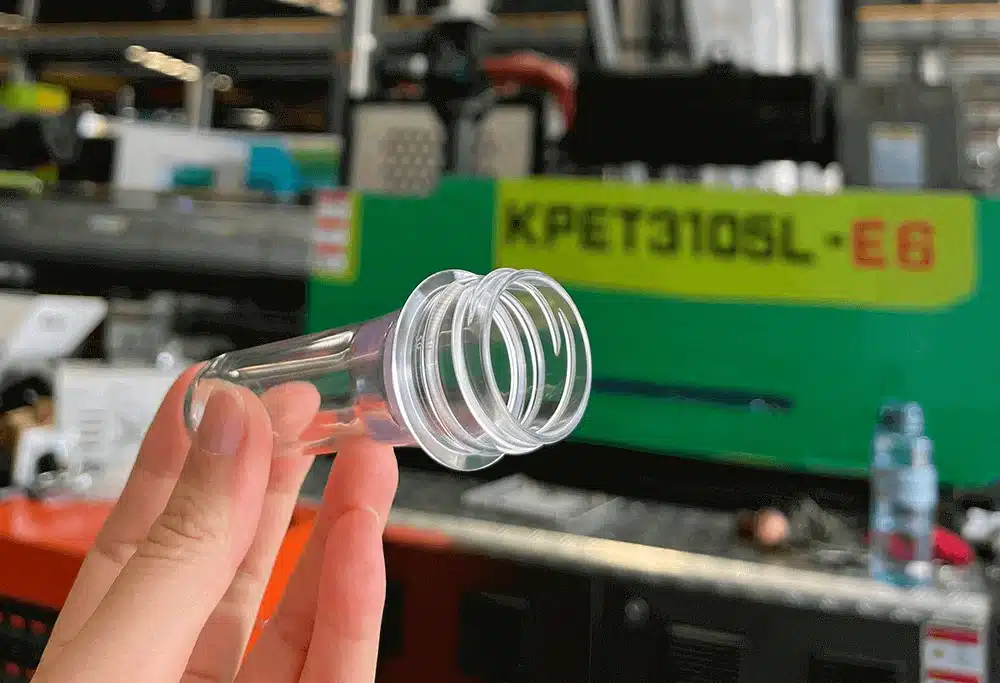
Transparent preform used by a stretch blow molding machine to form PET bottles.
In a high-speed production environment, even minor deviations from the optimal process can lead to defects. Identifying the root cause is key to maintaining high efficiency and low scrap rates.
A Troubleshooting Guide for Production Issues
| Defect Name | Visual Description | Common Causes | Potential Solutions |
|---|---|---|---|
| Crystallinity / Haziness | White, opaque, or cloudy patches on the preform, often at the gate or body. | Injection: Melt temperature too high, excessive shear heat, slow injection speed, or inadequate mould cooling. Heating: Overheating the preform in the blow moulder’s oven. | Injection: Lower melt temperature, optimize injection profile, check mould water flow and temperature. Heating: Reduce lamp power settings, increase ventilation in the oven. |
| Bubbles / Voids | Small, round air pockets trapped within the preform wall. | Injection: Incomplete drying of PET resin is the number one cause. Also can be caused by melt temperature being too high, leading to material degradation. | Injection: Verify dryer performance (temperature, airflow, dew point). Ensure proper resin residence time. Reduce barrel temperatures. |
| Black Specks / Contamination | Small black, brown, or colored dots embedded in the preform. | Injection: Burnt material (carbon) from the machine’s barrel or nozzle. Contamination in the raw material supply (e.g., dust, other plastics). | Injection: Purge the screw and barrel regularly. Clean the hopper and feeding system. Implement stringent raw material handling and storage protocols. |
| Short Shot / Incomplete Fill | The preform is not fully formed, typically with a missing or malformed end-cap. | Injection: Insufficient injection pressure or speed. Melt temperature too low, causing the plastic to freeze prematurely. Blocked gate in the mould. | Injection: Increase injection pressure/speed. Increase melt temperature. Check the mould for any blockages. |
| Uneven Wall Thickness / Eccentricity | The wall thickness of the preform body is not uniform around its circumference. Leads to uneven blowing. | Injection: Misalignment of the mould core and cavity. Uneven temperature distribution in the hot runner system. | Injection: Requires technical mould maintenance to check and correct alignment. Analyze and balance the hot runner system. |
| Pearlescence / Stress Whitening (in Bottle) | A pearly, white appearance in the final bottle, often in the base or sharp corners. | Soprando: Over-stretching the material. The preform temperature is too low in that specific area, causing the material to stress-whiten instead of stretching cleanly. | Soprando: Increase the preform temperature in the affected zones by adjusting the oven lamps. Reduce the stretch ratio by using a heavier preform or modifying the bottle design. |
The Litmus Test: How to Evaluate Preform Quality
A rigorous quality control protocol is essential. It should combine visual checks, precise measurements, and advanced performance analysis.
Key Quality Indicators for a World-Class Preform
- Visual Inspection: The preform must be perfectly transparent, like glass. There should be absolutely no haze, bubbles, black specks, sink marks, flash, or other visible flaws. The gate area should be clean and smooth. Using polarized light can help reveal internal stress patterns that are invisible to the naked eye.
- Dimensional and Weight Measurement: Every preform must conform to its design drawing. This involves using digital calipers, micrometers, and height gauges to check the neck finish dimensions, overall length, and diameters. Most importantly, the weight of each preform must be extremely consistent. For a 20g preform, a production tolerance of ±0.1g is a good standard to aim for.
- Physical Performance Analysis: This is where the laboratory comes in. Key tests include:
- Intrinsic Viscosity (IV) Test: This test measures the average molecular weight of the PET in the preform. It confirms that the drying and injection process did not degrade the material. The IV of the preform should be very close to the IV of the raw resin.
- Acetaldehyde (AA) Content Analysis: Acetaldehyde is a natural byproduct created during the processing of PET. While harmless in small amounts, at higher concentrations it can impart a slightly sweet, fruity taste to sensitive products like bottled water. Lab analysis using a gas chromatograph ensures AA levels are below the industry-accepted threshold (typically < 3 ppm).
The Nightmare of Poor-Quality Preforms
Attempting to save a small amount of money by purchasing cheap, low-quality preforms is one of the most catastrophic mistakes a bottling company can make. It is a classic case of being “penny wise and pound foolish.” Poor preforms will lead directly to a cascade of costly problems: high scrap rates during blowing, frequent line stoppages to clear jams and adjust parameters, inconsistent bottle performance (e.g., leaking, collapsing), and ultimately, the risk of product recalls and severe damage to your brand’s reputation. Investing in high-quality preforms is not a cost; it is insurance for your entire production operation.
The Strategic Choice: Selecting Your Preform and Machine Supplier
Factors to Consider When Selecting Preforms
Your choice must be driven by your final product. Key considerations include:
- Application: Will the bottle hold carbonated soft drinks (requiring high strength and a pressure-resistant base), hot-filled juices (requiring a heat-set design), water, or oil?
- Volume and Design: What is the target capacity and shape of your bottle? This will dictate the preform weight and dimensions.
- Color: Do you need a clear, transparent bottle, or do you require a colored preform (e.g., amber for UV protection, blue for aesthetic appeal)?
How to Choose a Reliable Machine Supplier Like Leka Machine
Choosing your machinery supplier is a long-term strategic partnership, not a one-time transaction. You are investing in the backbone of your production capability. Evaluate potential suppliers on:
- Technical Expertise: Do they truly understand the entire process, from resin to bottle? Can they offer expert advice on process optimization?
- Machine Quality and Reliability: Look at the build quality, the brands of key components used (e.g., PLCs, valves, servo motors), and ask for references from existing customers.
- After-Sales Support: What does their serviço structure look like? Do they offer installation, training, and readily available spare parts? A machine is only as good as the support that stands behind it.
- Holistic Solutions: Can they provide a complete turnkey solution, including auxiliary equipment and, as we will see, assistance with sourcing raw materials?
Critical Questions to Ask Your Blow Moulding Machine Manufacturer
Before you sign any purchase order, have a detailed technical discussion. Ask pointed questions:
- What is the realistic, guaranteed output (bottles per hour) for my specific bottle design on this machine?
- Can you provide a full list of the major component suppliers (e.g., Siemens, Schneider, Festo)?
- What is the total energy consumption of the machine (in kW) and the compressed air consumption (in m³/min)?
- What is your standard delivery time? (At Leka Machine, our standard delivery is 60-90 days).
- Can you detail your warranty policy and post-warranty service options?
- What level of operator and maintenance training is included with the purchase?
The Procurement Puzzle: How to Source Your Preforms
Once you have your machine and preform specifications defined, you need to secure a stable supply. This is a critical step, especially for new entrants to the market.
- Direct from a Specialized Preform Manufacturer: This is the standard route for large-scale operations. It allows for custom designs and offers the best unit price for large order quantities. However, it often comes with a high Minimum Order Quantity (MOQ) and requires you to have the technical expertise to vet and manage the supplier.
- Via a Local Distributor or Trader: For smaller quantities or standard sizes, a local packaging distributor can be a flexible option. MOQs are lower, and delivery is faster. The trade-off is typically a higher per-unit cost and a more limited selection.
- The Integrated Solution: Sourcing Assistance from Your Machine Supplier (Highly Recommended)This is a powerful and often overlooked strategy, particularly for international buyers purchasing a stretch blow moulding machine from a supplier in China. As an experienced equipment provider, Leka Machine offers more than just hardware. We leverage our extensive and deeply-vetted supply chain network within China to provide our clients with a seamless, one-stop preform sourcing service.The advantages of this integrated approach are immense:
- Guaranteed Compatibility, Zero Risk: We know our machines inside and out. We know precisely which preform specifications, materials, and weight tolerances will deliver optimal performance on our equipment. By allowing us to guide your procurement, you eliminate the significant risk of production issues caused by a mismatch between the preform and the machine.
- Vetted Quality, Total Peace of Mind: We have long-standing relationships with a network of premier preform suppliers who have been rigorously audited for quality and reliability. We act as your quality control agent on the ground, ensuring you receive stable, high-grade preforms without the lengthy and expensive process of finding and vetting suppliers yourself.
- Consolidated Logistics, Significant Cost Savings: We can coordinate the shipment of your initial order of preforms to be loaded into the very same container as your new blow moulding machine. This dramatically simplifies your international logistics, reduces shipping costs, and shortens your overall project timeline.
- A True Turnkey Solution for Faster Market Entry: This approach transforms the purchase into a complete production-ready package. When your equipment arrives, the raw materials you need to begin production arrive with it. For any business eager to launch its product and begin generating revenue quickly, the value of this streamlined process cannot be overstated.
When you engage with a knowledgeable equipment partner like us, always ask about value-added services like preform sourcing. It can make your journey into production simpler, faster, and more secure.
Perguntas frequentes (FAQ)
Q1: What is the difference between a Preform and a Parison?
A: This is a fundamental distinction between the two main types of blow moulding. A Preform is a solid, injection-moulded component (usually PET) with a finished neck, used in the two-step golpe de estiramento moulding process. A Parison is a hollow, molten tube of plastic (usually HDPE or PP) that is extruded from a die head and is used in the processo de sopro por extrusão.
Q2: How is a bottle actually formed in blow moulding?
A: É feito de duas maneiras principais. Estiramento e Sopro Moldagem envolve o reaquecimento de uma pré-forma sólida e, em seguida, a utilização de uma haste de estiramento e ar de alta pressão para esticá-la e inflá-la. A Moldagem por Sopro por Extrusão envolve a extrusão de uma parison quente e oca, capturando-a entre as duas metades de um molde e, em seguida, inflando-a com ar.
Q3: O que é exatamente uma máquina de moldagem por estiramento e sopro de PET?
A: É uma peça de equipamento altamente automatizada equipamentos industriais que executa todo o segundo passo do processo de duas etapas. Ela integra um sistema de ordenação de pré-formas, um forno de reaquecimento de precisão e a estação mecânica que estira e sopra a pré-forma em uma garrafa acabada. É a máquina essencial para a produção de garrafas PET.
Q4: As pré-formas para moldagem por sopro podem realmente ser recicladas?
A: Absolutamente. O PET é um dos plásticos mais recicláveis e reciclados globalmente. As garrafas de PET pós-consumo são coletadas, classificadas, limpas e reprocessadas em flocos ou pellets de rPET. Este rPET pode então ser usado para fabricar novas pré-formas, fechando efetivamente o ciclo em um sistema de reciclagem “garrafa-para-garrafa”.
Conclusão: A Relação Simbiótica Entre a Pré-forma e a Máquina
Percorremos um caminho desde a estrutura molecular da resina de PET até o final de alta pressão da formação da garrafa. A conclusão inevitável é que a criação de uma garrafa de alta qualidade é o resultado de uma parceria perfeita. É um processo construído sobre dois pilares inseparáveis: um fornecimento consistente de pré-formas meticulosamente projetadas e sem defeitos, e uma máquina de produção robusta, confiável e altamente eficiente capaz de desbloquear todo o potencial contido naquela pré-forma. Um não pode alcançar a excelência sem o outro.
Na Leka Machine, todo o nosso foco está em projetar e construir as soluções de maquinário para moldagem por sopro mais estáveis e eficientes do mercado. Entendemos que, ao investir em uma de nossas máquinas, você não está apenas comprando aço e eletrônicos; você está investindo na sua capacidade de produção, na qualidade do seu produto e na promessa futura da sua marca. O nosso compromisso vai além do hardware, fornecendo a orientação especializada e as soluções integradas necessárias para o seu sucesso.
Está pronto para transformar a sua visão de embalagem em uma realidade física impecável?
Entre em contato com a equipa de especialistas da Leka Machine hoje mesmo. Deixe-nos fornecer uma consulta gratuita e um orçamento detalhado e, juntos, vamos construir a sua história de sucesso.


0 comentários