

Como devo estipular as penalidades por atraso na entrega ao comprar uma máquina de moldagem por sopro de extrusão totalmente elétrica?
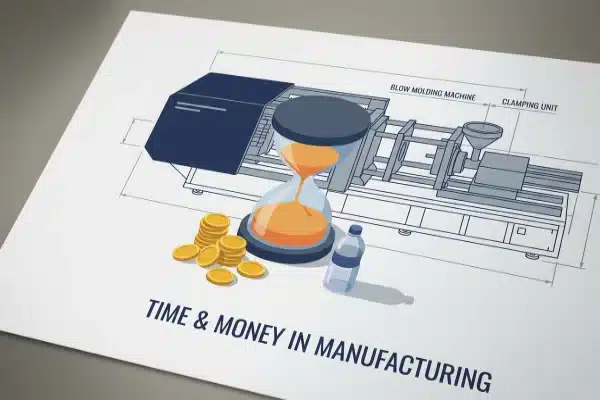
At our factory, we often see clients who have been burned by previous suppliers. They placed an order, paid the deposit, and then waited months beyond the promised date with zero leverage. Delay in machinery delivery does not just mean waiting; it means missed seasonal demands, lost contracts with bottle buyers, and bleeding cash on overheads. When we structure our projects, we understand that a contract without teeth is just a wish list. You need to secure your investment with clear, enforceable consequences for delays.
Effective penalty stipulations require clear definitions of "delivery date" (ex-works vs. arrival), a stepped percentage reduction usually capped at 5%–10% of the contract value, and a specific grace period. These clauses ensure suppliers prioritize your order without forcing them into bankruptcy, securing both your timeline and their cooperation.
To ensure your production line starts on time, you must move beyond verbal assurances and write precise performance clauses into your purchase agreement.
purchase agreement 1
What milestones should I define in the contract to monitor production progress?
In our project management system, we know that a machine doesn’t just "appear" at the end of four months. We encourage clients to demand visibility. If you only ask for a final delivery date, you remain in the dark until it is too late to react. By the time the deadline is missed, the damage is already done.
You must define tangible milestones beyond the signing date, including engineering drawing approval, major component procurement verification, mechanical assembly completion, and dry-cycle testing. Linking these stages to photographic evidence or video calls prevents "black box" manufacturing and ensures the timeline remains visible and manageable.
Breaking Down the Invisible Timeline
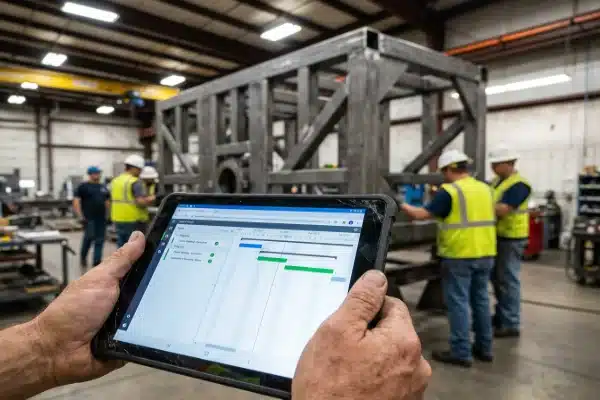
Many buyers make the mistake of thinking the manufacturing process is linear. In reality, the first 30% of the lead time often looks like "nothing is happening." This is where the risk is highest. If the supplier has not ordered the servo motors or the specific screw and barrel for your resin type within the first three weeks, they are already late.
servomotores 2
To prevent this, you should structure your contract to require updates at specific "Gates." This keeps the pressure on the supplier’s procurement team. We recommend asking for a Gantt chart at the beginning of the project and requiring bi-weekly updates against it.
Gantt chart 3
Critical Milestones for Verification
Do not accept "we are working on it" as an update. Your contract should stipulate that the supplier must provide digital proof for the following stages. If a stage is missed, it triggers an early warning discussion before the actual delivery date is threatened.
H3 – Recommended Milestone Checklist
| Milestone Phase | Typical Timeline | Proof Required | Why This Matters |
|---|---|---|---|
| Design Freeze | Week 2-3 | Signed PDF of mold platens and layout. | Ensures no confusion on bottle specs or cavity layout. |
| Component Procurement | Week 4-6 | Photos of servo drives/PLC on shelf. | Long-lead items (like Siemens/B&R PLCs) cause the biggest delays. |
| Frame Welding | Week 6-8 | Video of frame painting/machining. | Confirms physical construction has started. |
| Mechanical Assembly | Week 10-12 | Video of clamping unit movement. | The machine is taking shape; "Dry Run" is near. |
| First T1 Sample | Week 14-16 | Video of parison extrusion. | The machine is alive; verifies extrusion stability. |
By enforcing these checkpoints, you move from a passive buyer to an active project manager. It forces the factory to prioritize your machine over others that have less demanding customers.
How do I calculate fair liquidated damages for every week of delay?
We have reviewed many contracts from Europe and North America, and we see a pattern. Some buyers try to impose punishing fees that no manufacturer would sign, while others ask for nothing. Finding the balance is key. If the penalty is too high, we simply cannot accept the order due to risk. If it is too low, a busy factory might delay your machine to finish a VIP order first.
contracts from Europe 4
Calculate damages as a percentage of the total contract value, typically 0.5% to 1% for every full week of delay, capping the total at 5% to 10%. This standard incentivizes the manufacturer to recover lost time while preventing the contract from becoming financially unviable for them.

Liquidated Damages vs. Penalties
Legally, there is a difference. A "penalty" is designed to punish, and in many jurisdictions, courts will not enforce it. "Liquidated damages" are a pre-estimated measure of the money you lose because of the delay. Your contract language should reflect this. You are not "punishing" the supplier; you are recovering the cost of your lost production capacity.
The "Grace Period" Strategy
A fair contract usually includes a "Grace Period." This is a buffer zone—typically two weeks—where no penalty is applied. Manufacturing is complex; sometimes a heat treatment vendor is late, or a custom valve is backordered.
If we are late by one week, it is usually a minor logistical issue. If we are late by four weeks, it is a management failure. The grace period shows you are reasonable, which makes the supplier more willing to agree to the stricter percentage fees that kick in afterwards.
H3 – Example Calculation Structure
Scenario: You are buying a machine for $100,000. The agreed delivery is June 1st.
| Week of Delay | Penalty Rate | Amount Deducted | Notas |
|---|---|---|---|
| Week 1 (June 1-7) | 0% (Grace Period) | $0 | Supplier has breathing room for minor issues. |
| Week 2 (June 8-14) | 0% (Grace Period) | $0 | Still within reasonable margin of error. |
| Week 3 (June 15-21) | 0.5% | $500 | Financial pain begins. |
| Week 4 (June 22-28) | 0.5% | $500 | Cumulative deduction: $1,000. |
| Week 5+ | 1.0% | $1,000/week | Escalation for serious negligence. |
| Maximum Cap | 5% – 10% | Max $5k – $10k | The "Stop Loss" for the supplier. |
This structure is standard in the industry. It signals to the manufacturer that you are serious but professional. It protects your interests without scaring off quality suppliers.
Should I tie the final payment to a successful Factory Acceptance Test?
When we prepare a machine for shipment, the Factory Acceptance Test (FAT) is the final hurdle. For the buyer, this is the most powerful tool in the negotiation. If you have paid 100% of the money before the machine is tested, you have zero leverage to demand fixes. We have seen buyers struggle to get support for leaking hydraulics or unstable software because the supplier already had the cash.
Teste de Aceitação em Fábrica (TAF) 5
Yes, tying 20% to 30% of the total payment to a successful FAT is crucial. It ensures the machine meets cycle time and quality metrics before it leaves the factory floor, giving the supplier a strong financial motivation to resolve technical issues prior to shipment.

The "Golden Sample" Standard
The FAT should not just be "does the machine turn on?" It must be based on producing a specific bottle to a specific standard. In your contract, define the acceptance criteria clearly. This prevents the "it basically works" argument.
You need to verify:
- Tempo de ciclo: Does it meet the 12-second cycle promised in the quote?
- Bottle Weight Stability: Do 50 consecutive bottles stay within the ±1g tolerance?
- Flash Removal: Does the auto-deflasher work cleanly, or does it leave sharp edges?
The Payment Structure Ladder
We recommend a payment structure that keeps the supplier hungry until the end. A common mistake is paying too much at the "Before Shipment" stage without verifying the quality.
H3 – Recommended Payment Schedule
| Payment Stage | Percentage | Trigger Event | Risk to Buyer |
|---|---|---|---|
| Down Payment | 30% | Contract Signing | High (Cash is out, work hasn’t started). |
| Progress Payment | 30% | Mechanical Assembly Proof | Medium (Verifies materials are purchased). |
| Pre-Shipment (FAT) | 30% | Successful FAT Sign-off | Low (You only pay if it works). |
| Final Balance | 10% | Installation / 30 Days | Minimal (Ensures after-sales support). |
By holding 30% back until the FAT is signed, you ensure the supplier will work overtime to fix any parison control issues or cooling problems. They want that check, and they only get it if you are happy.
What clauses protect me if the supplier claims force majeure for shipping issues?
In recent years, exporting from Asia to the West has faced challenges, from container shortages to regional lockdowns. We have seen suppliers use "Force Majeure" as a blanket excuse to avoid penalties for delays that were actually their own fault. You need to distinguish between a genuine disaster and poor planning.
Force Majeure 6
Protect yourself by requiring official documentation from government bodies or chambers of commerce to validate any force majeure claim. Additionally, include a "time limit" clause that allows you to terminate the contract and receive a full refund if the force majeure event persists beyond 60 or 90 days.

Defining "Force Majeure" Strictly
Do not accept a generic "Unforeseen Circumstances" line in the contract. You need to list what counts: wars, natural disasters, government-imposed export bans, or fires.
Liquidated damages 7
Crucially, you must list what does not count:
- Power outages at the factory (they should have generators).
- Sub-supplier delays (that is their management problem).
- Increases in raw material prices (steel price hikes are their risk, not yours).
- Normal shipping delays (missing a booking is not a disaster).
The Right to Cancel
The most dangerous trap is being stuck in a contract indefinitely. If a supplier claims Force Majeure, the clock for penalties stops. This means they could theoretically make you wait six months without paying you a dime in damages.
resin type 8
To counter this, add a "Sunset Clause." If the Force Majeure event prevents delivery for more than 60 days, you have the right to cancel the order and get a full refund of your deposit. This prevents your capital from being held hostage by a zombie order. It forces the supplier to either find a solution (like paying for premium air freight for parts) or release you to find another machine builder.
screw and barrel 9
Conclusão
Drafting a strong contract for your extrusion blow molding machine is not about lack of trust; it is about clarifying expectations. By defining clear milestones, calculating fair liquidated damages, tying payments to a rigorous FAT, and restricting force majeure loopholes, you protect your business continuity. A good supplier will respect these terms because they are confident in their ability to deliver.
ex-works 10
Notas de rodapé
- Government guidance on structuring commercial contracts and performance clauses. ↩︎
- Product documentation from a major manufacturer of servo drives used in electric machinery. ↩︎
- Authoritative industry resource on using Gantt charts for project timeline management. ↩︎
- UN convention governing international contracts for the sale of goods (CISG). ↩︎
- General background definition of the acceptance testing process in engineering. ↩︎
- International Chamber of Commerce standards for force majeure and hardship clauses. ↩︎
- Legal definition distinguishing enforceable liquidated damages from punitive penalties. ↩︎
- Major material supplier explaining resin applications in blow molding processes. ↩︎
- Technical details from a leading manufacturer of plastic extrusion components. ↩︎
- Official US government guide defining Incoterms like Ex Works used in international shipping. ↩︎


0 comentários