
Como devo avaliar a experiência e o conhecimento técnico de um fornecedor na indústria de máquinas de moldagem por sopro e extrusão totalmente elétricas?
We often see buyers dazzled by shiny brochures, only to face nightmares later because the machine cannot handle real-world production. At LEKA Machine, we know true quality lies under the hood.
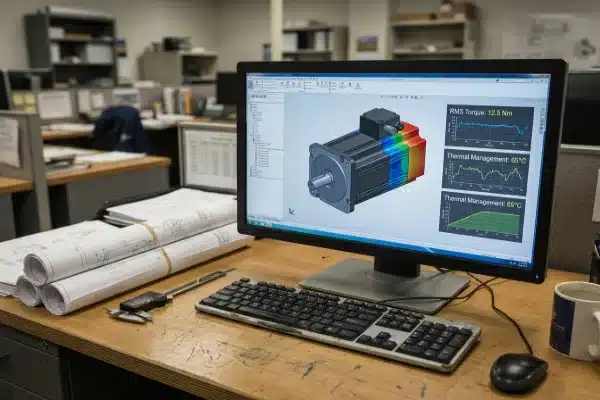
To evaluate a supplier’s expertise, audit their control over motion control source code rather than relying on locked libraries. Verify they calculate RMS torque for thermal management, not just peak force. Ensure they use shared DC bus architectures for energy efficiency and possess simulation tools to predict cycle times accurately.
Transitioning from hydraulic to all-electric machinery requires a completely different engineering mindset. It is not enough for a supplier to swap hydraulic cylinders for electric motors; they must understand the physics of motion control 1. Below, we break down exactly how to test a supplier’s technical depth.
What specific case studies can I request to prove their experience with all-electric technology?
When we demonstrate our machines, we show, not just tell. Many suppliers claim "all-electric" expertise but fail when handling complex mold geometries or heavy cavitation requirements.
Request case studies demonstrating successful "corner load" handling with asymmetrical molds, proving the toggle system prevents platen tilting. Ask for "Digital Twin" simulations comparing predicted versus actual cycle times. These proofs distinguish engineered electric solutions from crude hydraulic retrofits that destroy ball screws.
The Danger of "Hydraulic Retrofits"
The most significant red flag we see in the Chinese market is the "hydraulic retrofit." This happens when a supplier takes an old toggle design meant for hydraulic pressure and simply bolts a servo motor onto it.
At our factory, we redesigned our toggle geometry specifically for servo characteristics. Why? Because servo motors deliver force differently than hydraulic cylinders. A hydraulic system pushes with constant force, whereas a servo system relies on torque curves. If the toggle geometry is not optimized for this, the stress on the ball screw 2 becomes uneven.
Inspecting "Corner Load" Capabilities
You should ask for a case study involving an asymmetrical mold (for example, a jerry can with a handle on the far right side).
- O problema: Electric toggle systems are notoriously sensitive to platen tilting. If the clamping force is not perfectly distributed, the platen bends slightly.
- O resultado: This destroys the tie bars and causes premature wear on the ball screw.
- The Proof: Ask for a reference where the supplier ran an off-center bottle for more than 12 months without mechanical failure.
Digital Twin vs. Guesswork
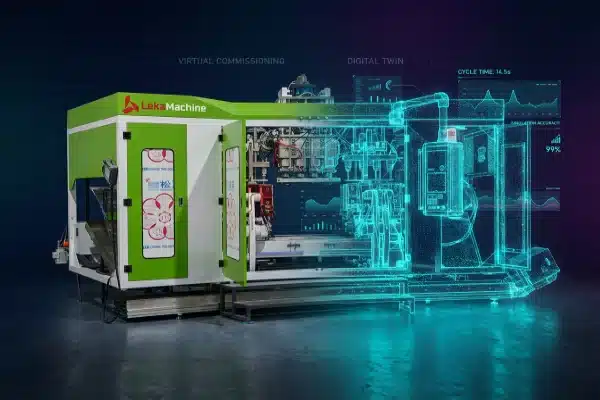
Top-tier suppliers do not guess your cycle time; they simulate it. We use Digital Twin simulations 3 to model the specific inertia of a client’s heavy mold before we even cut the steel.
- Low-Tier Supplier: "We estimate 12 seconds based on similar machines."
- High-Tier Supplier: "Our simulation shows 11.4 seconds based on the motor torque limit and your mold weight."
Comparison: Native Electric vs. Retrofit Design
| Recurso | Native All-Electric Design | Hydraulic Retrofit Design |
|---|---|---|
| Toggle Geometry | Redesigned for servo torque curves. | Legacy design originally for cylinders. |
| Lubrication | Centralized, automated oil/grease with pressure monitoring. | Manual greasing points (high failure risk). |
| Frame Rigidity | Reinforced for high-acceleration vibration. | Standard frame (leads to resonance issues). |
| Ball Screw Life | 5+ years (calculated load). | 1-2 years (due to misalignment). |
How do I assess the engineering team’s ability to customize servo logic for my specific bottle design?
Our engineers often troubleshoot machines from other brands where the logic is locked inside a "black box." If a supplier cannot modify the code, your production flexibility dies.
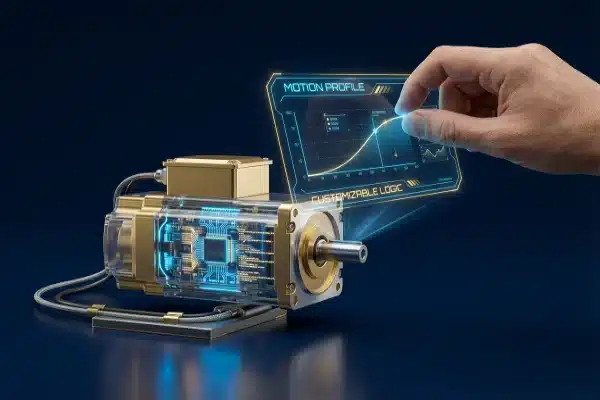
Assess their ability to customize logic by confirming they own the motion control source code, avoiding "black box" dependency on drive manufacturers. Test their expertise by requesting specific "soft-close" clamp profiles or synchronized "flying knife" cam logic to prevent parison stringing.
The "Black Box" Risk
Many assemblers buy a "technology library" from drive manufacturers like B&R or Beckhoff. This gets the machine running quickly, but the supplier does not actually own the code.
- Why this hurts you: Suppose you need a specific "cushion braking" profile because your heavy mold slams shut too hard. If the supplier relies on a locked library, they cannot change the braking curve without hiring an external consultant from the drive company. This costs you time and money.
- O teste: Ask them, "If I need to change the acceleration curve of the carriage movement next year, can your in-house team do it remotely, or do you need to contact the servo manufacturer?"
Evaluating "Flying Knife" Synchronization
For extrusion blow molding, cutting the parison (the plastic tube) is critical.
- Amateur Logic: Uses a simple trigger. The knife fires when the timer ends. If the parison is falling faster than usual, the knife tears the plastic, creating "whiskers" or strings that ruin the bottle seal.
- Expert Logic: Uses an Electronic Cam (E-Cam) 4. The knife is a "slaved axis" to the extruder. If the extrusion speed changes, the knife speed adjusts automatically to match the parison velocity perfectly.
Troubleshooting Logic Capability
We recommend giving the supplier a hypothetical scenario to test their critical thinking.
- Cenário: "My bottle has a very thin neck. I need the mold to close fast, slow down to 10% speed for the last 5mm to protect the neck insert, and then lock at full force."
- Bad Answer: "We can adjust the hydraulic pressure." (Shows they don’t understand electrics).
- Good Answer: "We will adjust the servo position loop to switch from velocity control to torque control at the specific encoder position of the mold close."
What questions should I ask about their history with servo motor integration and troubleshooting?
We spend months calibrating thermal loads during R&D because heat is the enemy of electronics. Inexperienced suppliers skip this, leading to overheating drives when summer temperatures rise in your factory.
Ask to see Engineering calculations for Root Mean Square (RMS) torque to ensure motors handle thermal heat during rapid cycling, not just peak clamping force. Inquire about their DC Bus architecture; experts use shared bus topologies to regenerate braking energy, while novices waste it as heat.
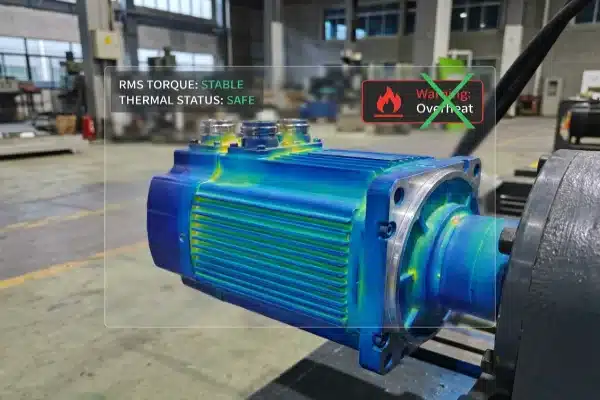
RMS vs. Peak Torque: The Thermal Trap
Incompetent suppliers size motors based on "Peak Torque"—the maximum force needed to lock the mold. However, in blow molding, the cycle is fast. The motor starts and stops every few seconds.
- The Physics: Every start/stop generates heat.
- The Metric: RMS (Root Mean Square) Torque calculates the continuous heat load over the entire cycle.
- O risco: If a supplier ignores RMS, the motor works fine in winter or during slow cycles. But in summer, running at high speed, the drive will trip on "Overheat" alarms, stopping your production.
DC Bus Sharing Architecture
This is the hallmark of a true electric machine expert.
- Independent Drives: When the heavy clamp brakes (stops), that energia cinética 5 is dumped into a braking resistor and turned into waste heat. You pay for the electricity to move it, and then you pay to cool the cabinet.
- Shared DC Bus: The clamp drive and extruder drive are connected. When the clamp brakes, the generated electricity flows across the bus to power the extruder motor.
- The Benefit: This reduces energy consumption by 15-20% compared to non-shared electric systems.
Lubrication: The Achilles Heel
Electric machines rely on heavy-load ball screws. If these dry out, they gall 6, costing thousands of dollars to replace.
- Red Flag: The manual says "Grease by hand once a week." Human error ensures this will be forgotten.
- Requirement: Automated, centralized lubrication. Crucially, it must have pressure monitoring. If a line gets blocked, the system must alarm antes the screw is damaged.
Supplier Response Assessment Matrix
| Question to Ask | Rookie Supplier Answer | Expert Supplier Answer |
|---|---|---|
| "How do you size the motors?" | "We use the biggest one to be safe." | "We calculate RMS torque 7 based on your target cycle time and ambient temp." |
| "What happens when the mold brakes?" | "The resistor dissipates the energy." | "We use a Shared DC Bus 8 to transfer regen energy to the extruder." |
| "How is the ball screw protected?" | "Just grease it regularly." | "Auto-lube system with pressure sensors at every distribution point." |
Can I ask for references from other clients running similar all-electric production lines?
We encourage clients to talk to our existing partners because transparent feedback builds trust. However, references are useless if you don’t ask the right technical questions about long-term maintenance.
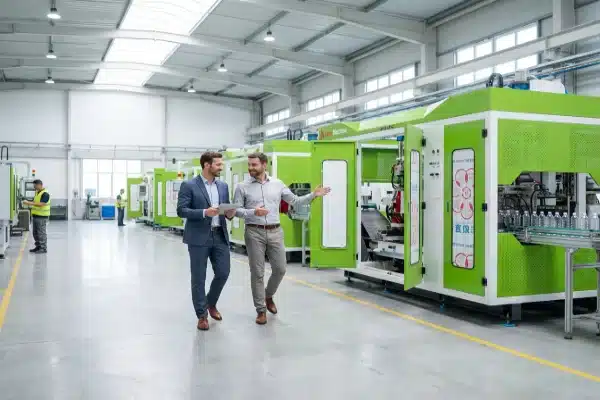
You must request references specifically for all-electric lines running similar cycle times. Ask these clients if they have "Administrator Access" to drive parameters for maintenance and verify if the supplier’s local technicians carry oscilloscopes for analyzing servo frequency response data during troubleshooting.
The "Right to Repair" Check
In the electric world, parameters are everything. Many suppliers lock the servo drive parameters to prevent "tampering."
- O problema: If a motor fails and you replace it, you often need to reset the "Home" position or adjust the torque limit slightly for a new, fragile mold.
- The Requirement: Ask the reference client: "Do you have the Administrator Password for the drives? Or do you have to wait for the supplier to dial in remotely for every small adjustment?"
- At LEKA, we believe you bought the machine, so you own the access.
The Service Technician’s Toolkit
How a supplier troubleshoots tells you everything about their expertise.
- The Multimeter vs. The Oscilloscope: A multimeter is fine for checking if a wire is broken. It is useless for diagnosing "servo jitter" or vibration issues.
- The Expert Approach: Ask references if the supplier’s technicians carry laptops with drive tuning software (like Siemens STARTER or Rexroth IndraWorks) and oscilloscopes.
- Por que isso é importante: Troubleshooting a vibration issue requires analyzing millisecond-level frequency response data 9. If the technician shows up with just a screwdriver and a voltmeter, they are guessing.
Verifying "Similar" Production
Ensure the reference is relevant. An all-electric machine running a 40-second cycle for a large tank is under very different stress than one running a 6-second cycle for a 200ml shampoo bottle.
- Tempo de ciclo: High-speed cycling generates exponentially more heat and wear on the ball screws.
- Material: Running HDPE is standard. Running PCR (Recycled) 10 or PETG requires different screw torque and control logic.
Conclusão
Validating a supplier requires digging into their engineering math, not just their price tag. Choose a partner who understands the physics of electric molding, ensures open access to code, and designs for thermal reality.
Notas de rodapé
1. Fundamentals of motion physics in industrial machine design. ↩︎
2. How ball screws function and fail in high-stress applications. ↩︎
3. Overview of digital twin technology for predictive simulation. ↩︎
4. Explanation of electronic camming (E-Cam) for axis synchronization. ↩︎
5. Definition of kinetic energy relevant to machine braking physics. ↩︎
6. Understanding galling wear on unlubricated metal surfaces. ↩︎
7. Technical guide to calculating RMS torque for motor sizing. ↩︎
8. Benefits of shared DC bus systems for energy efficiency. ↩︎
9. Importance of frequency response in servo tuning and troubleshooting. ↩︎
10. Practical steps for successfully processing PCR plastics in packaging. ↩︎


0 comentários