
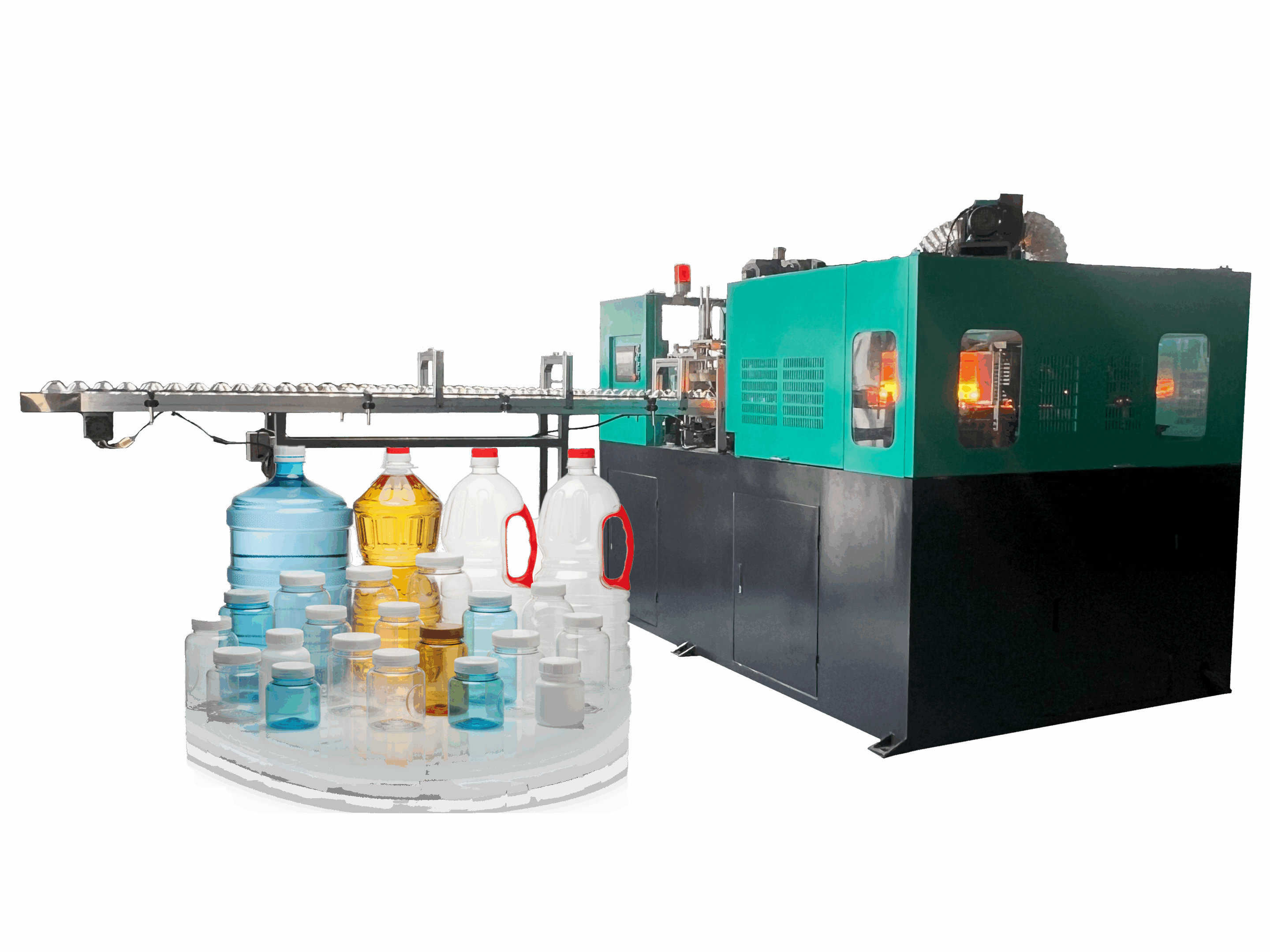
Introduction: Why OEM Bottle Factories Need Custom Plastic Processing Machinery
In the high-volume world of contract packaging, the difference between profit and loss often comes down to a fraction of a second in cycle time or a few grams of resin per bottle.
For Original Equipment Manufacturers (OEMs) and contract packers, the era of buying a standard, “off-the-shelf” machine and hoping for the best is fading. To stay competitive, bottle makers are shifting toward tailored lines.
But what does “custom” really mean in this context? It isn’t about gold-plated components; it is about right-sizing the equipment to your specific portfolio. It means configuring the extrusora screw to handle specific percentages of recycled material or designing a die head that allows for rapid weight adjustments without stopping the line.
OEM bottle factories in the food, beverage, and início care sectors share common goals: lowering the Total Cost of Ownership (TCO), achieving faster changeovers for fragmented SKU lists, and maintaining stable quality for demanding big-brand clients.
Achieving this requires viewing plastic processing machinery not as a commodity, but as a strategic asset designed around your specific production reality.
- Understanding OEM Bottle Factories
- What “Plastic Processing Machinery” Means
- Extrusion Blow Molding for HDPE and PP
- Stretch Blow Molding for PET and rPET
- Why Off-the-Shelf Machines Are Not Enough
- Designing Custom Machinery Around Your Portfolio
- Key Performance Specs to Focus On
- Sustainability, Materials, and Compliance
- How Custom Projects Usually Run
- Choosing a Trusted Partner
- Real-World Case Studies
- PERGUNTAS FREQUENTES
Understanding OEM Bottle Factories as Your Target Reader
What Counts as an OEM Bottle Factory?
When we talk about OEM bottle factories, we are referring to the engines of the packaging world. This includes contract packers who fill water, soft drinks, and condiments for various brands. It also includes “Growth-Stage CPG Brands” that have moved away from outsourcing to bring bottling in-house to control their own destiny.
Whether you are a dedicated bottle blower or a packer with an integrated blow-fill line, the pressure is the same: efficiency is king.
Common Scale and Decision Makers
These facilities are not small operations. We typically see companies with annual revenues between $25 million and $500 million. They operate multiple production lines and employ anywhere from 50 to 400 people.
The decision to upgrade plastic processing machinery isn’t made in a vacuum. It involves the Plant Manager, who owns efficiency KPIs; the Procurement Director, who controls the CapEx budget; and the Maintenance Lead, who evaluates serviceability. They upgrade equipment every 3 to 5 years, usually triggered by new contracts or the need to replace energy-hungry hydraulic machines.
What “Plastic Processing Machinery” Means in an OEM Bottle Plant
Core Technologies: EBM and SBM
In the context of a bottle plant, “plastic processing machinery” primarily refers to two technologies:
- Moldagem por extrusão e sopro (EBM): Used for HDPE and PP containers like shampoo bottles, jerricans, and detergent jugs.
- Moldagem por sopro com estiramento (SBM): The standard for PET water and beverage bottles.
While injection molding machines are used to create the initial preforms for SBM, many OEMs outsource the preforms and focus their floor space on the blowing process.
The Line Layout
A modern machinery layout is an ecosystem. It links the upstream resin handling (drying, mixing, loading) to the specialized máquina de moldagem por sopro, and finally to downstream automation like leak testers and palletizers.
For an OEM, the machinery isn’t just the blower; it’s the entire integrated line that ensures a raw pellet becomes a palletized, quality-checked bottle without human intervention.
Extrusion Blow Molding for HDPE and PP Bottles
When OEMs Choose EBM
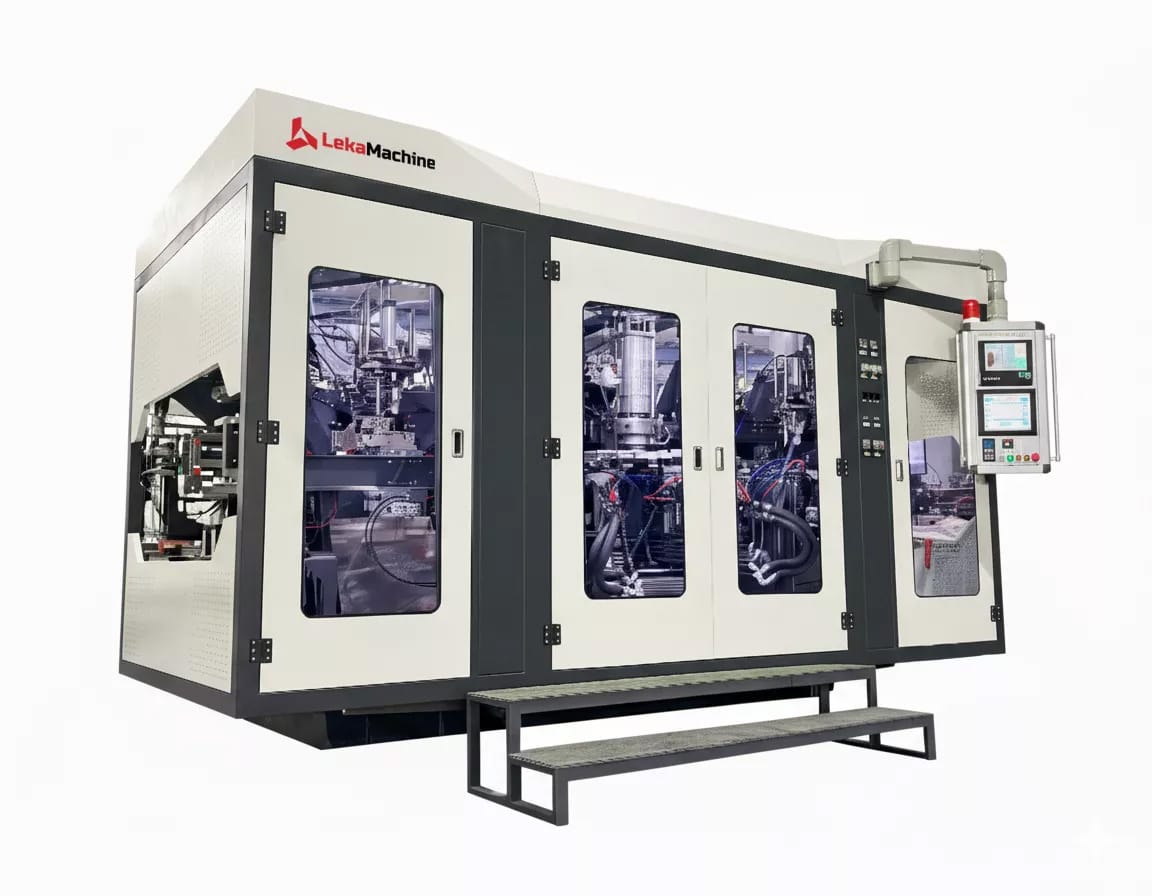
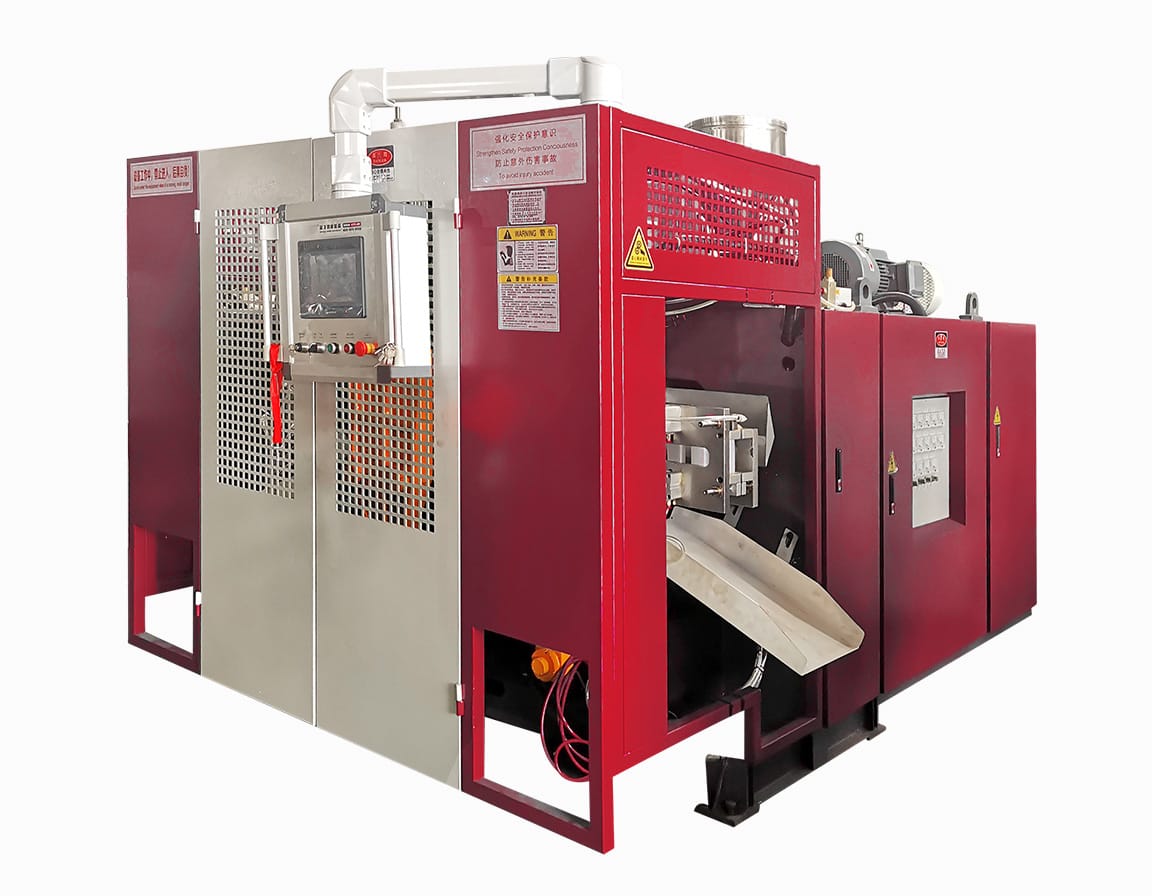
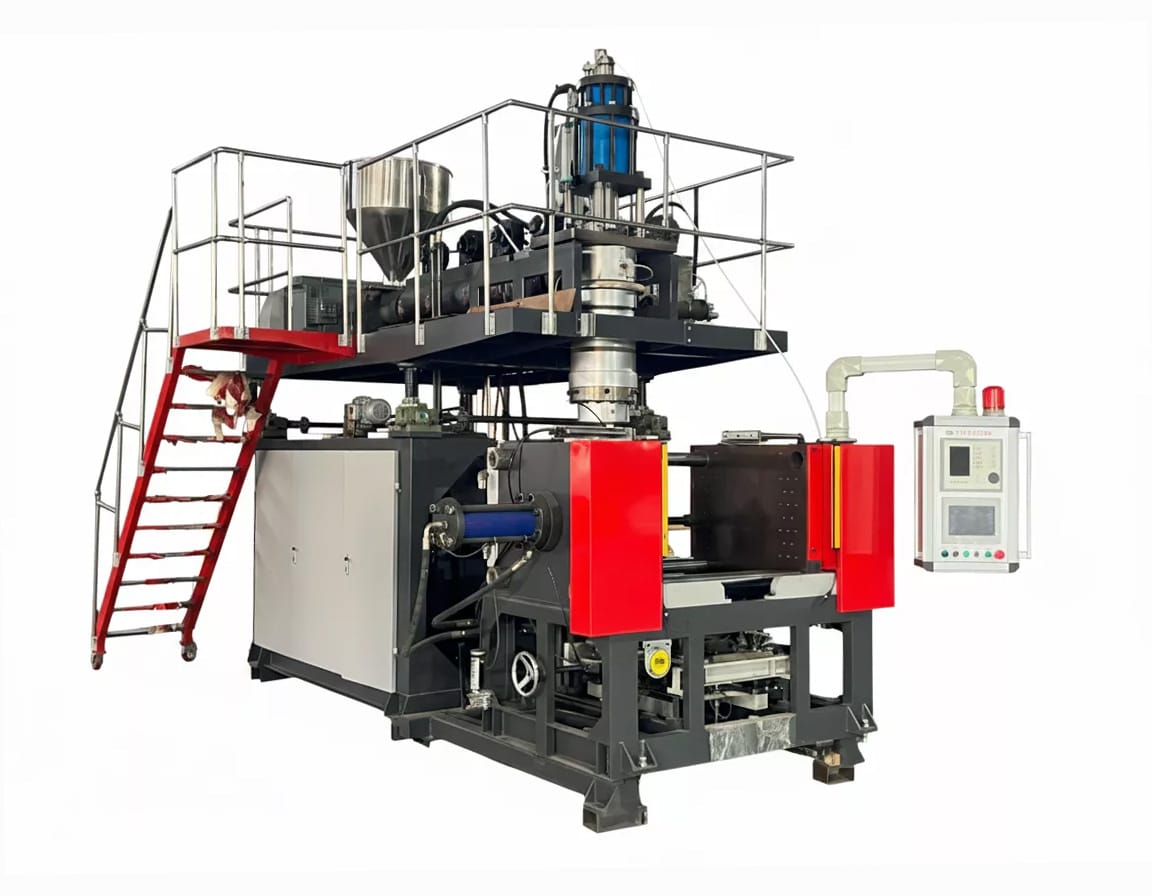
OEMs turn to moldagem por extrusão e sopro when they need opaque, durable containers with handles or complex shapes. This is the domain of our Série FORMA, which is born for versatility. It is the go-to solução for jerry cans, detergent bottles, cosmetic vials, and industrial drums.
Key Customization Levers
Customization in EBM is critical for profitability.
- Die-Head Design: A custom cabeça da matriz ensures precise wall thickness control, which is vital for lightweighting.
- Parison Control: Sophisticated programming allows for thinning the bottle where strength isn’t needed and reinforcing critical stress points.
- Multi-Layer Options: For food or chemical products, co-extrusion (Co-Ex) allows for a barrier layer, protecting the product inside or utilizing recycled material in the middle layer to save costs.
Stretch Blow Molding for PET and rPET Bottles
When OEMs Choose SBM
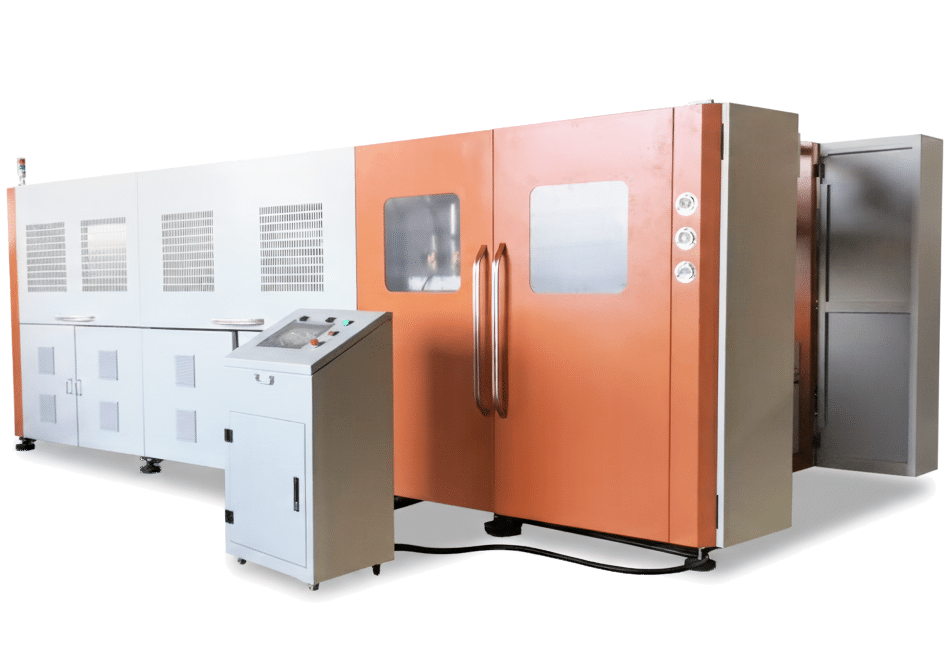
For high-speed production of crystal-clear water, juice, and carbonated soft drink (CSD) bottles, Stretch Moldagem por sopro is the only viable choice. Our série AQUA is optimized for this sector, delivering maximum throughput and stability for standardized bottle types.
Customizing for Efficiency
In a two-stage SBM process, customization often happens in the heating oven. Different neck finishes and preform weights require unique heating profiles to ensure the plastic stretches evenly without crystallizing.
For brands prioritizing sustainability, custom oven designs and air recovery systems are essential to process rPET (recycled PET) effectively, maintaining bottle strength while cutting grams off the weight.
Why Off-the-Shelf Machines Are Not Enough for OEM Bottle Factories
The Hidden Costs of “Generic” Machinery
Buying a generic machine is often a false economy. The “hidden costs” manifest as scrap rates, excessive energy consumption, and unplanned downtime.
A machine that isn’t tuned to your specific resin or bottle shape will consume more electricity—often 0.35–0.50 kWh/kg—whereas a tailored machine can target ≤0.22 kWh/kg.
Unique Portfolios Demand Tailored Solutions
OEMs rarely produce just one standard bottle. You deal with SKU proliferation—different flavors, sizes, and handle designs that force changeovers 3 to 6 times a week.
An off-the-shelf machine might take 4 hours to change a mold. A customized solution with servo-driven quick-lock platens can reduce that to under 25 minutes. This flexibility is the difference between meeting a client’s SLA and paying late penalties.
Designing Custom Plastic Processing Machinery Around Your Bottle Portfolio
Starting from the Bottle
We always start with the bottle design. Defining volumes, neck finishes, and material requirements dictates the machine specs. For example, a 5-liter jerry can requires a significantly different machine configuration than a 100ml cosmetic bottle.
Capacity and Specs
Planning starts with the math: bottles per year divided by operating hours gives us the required cycles per hour. This determines the number of cavities and the necessary clamping force.
- Clamping Force: We customize this to ensure the mold stays closed under pressure. Our série TITAN offers massive clamping force (up to 4000 KN) for large industrial containers, while the Série FORMA offers agility for smaller items.
- Quick Changeovers: For OEMs running many SKUs, we design the machine layout for rapid mold swaps, utilizing universal quick-disconnects and recipe libraries.
Key Performance Specs OEMs Should Focus On
Beyond the sticker price, savvy Procurement Managers focus on:
- Throughput and OEE: Looking for stable cycles and a Cpk >1.33 on critical dimensions.
- Consumo de energia: Demanding guaranteed energy benchmarks, such as ≤0.22 kWh/kg.
- Automation Level: Integrating leak testers, vision QC, and palletizers into a single vendor responsibility reduces labor costs and liability.
- Digital Layer: Modern plastic processing machinery must offer IIoT gateways for remote diagnostics and predictive maintenance to solve the skills gap in the workforce.
Sustainability, Materials, and Regulatory Requirements
Shifting to Recycled Materials
Sustainability is no longer optional; it is a mandate from brand owners. Processing >30% PCR (Post-Consumer Recycled) material or bio-based HDPE requires optimized screw designs to prevent material degradation.
Compliance and Reporting
OEMs must meet strict standards like FDA or FSSC 22000. Custom machinery supports this with food-grade lubricants and hygienic designs. Furthermore, modern machines provide Scope-2 and Scope-3 data exports, helping you report carbon footprints to your clients.
How Custom Projects for OEM Bottle Factories Usually Run
A successful custom project follows a structured path:
- Needs Analysis: We review bottle designs, resin types, and output targets.
- Concept & ROI: We build a TCO model proving the payback period, usually aiming for under 3.5 years.
- Prototyping: We develop sample bottles and conduct mold trials on a lab line.
- FAT/SAT: The machine undergoes a Factory Acceptance Test (FAT) at our site and a Site Acceptance Test (SAT) at yours, ensuring it meets the guaranteed output.
Choosing a Trusted Partner for Custom Plastic Processing Machinery
Red Flags and Green Flags
When evaluating suppliers, look for “Green Flags” like a willingness to customize, written energy-savings guarantees, and a clear spare-parts strategy. “Red Flags” include vague answers about local service support or a lack of bilingual technical documentation.
The Importance of Support
For an OEM, downtime is the enemy. You need a partner who offers 24-hour spare parts dispatch and has engineers available for on-site support within 72 hours.
Example Use Cases and Mini Case Studies
- Upgrading a Regional OEM (Europe): A contract manufacturer in Poland replaced aging hydraulic machines with our Série FORMA (hybrid/electric). The result was a reduction in energy costs by over 30% and a significant drop in noise levels, meeting stricter EU regulations.
- Growth-Stage CPG Brand (North America): A personal care brand brought bottling in-house to escape the long lead times of external suppliers. We installed a flexible série BOTTLER line that allowed them to run multiple bottle shapes for lotions and soaps on a single machine, securing their supply chain.
- OEM Water Bottler (Asia): Facing pressure to use rPET, a bottler switched to our série AQUA. The custom oven profile allowed them to process 50% rPET preforms without cosmetic defects, satisfying their global brand client.
How LEKA Machine Supports OEM Bottle Factories
At LEKAmachine, we don’t just sell iron; we sell production security. Our focus is squarely on Moldagem por extrusão e sopro e Moldagem por sopro com estiramento equipment designed for the real-world needs of OEMs.
We offer deep customization—from proprietary die heads to integrated downstream automation. With a headquarters in Singapore and parceiro de fabricação in Vietnam/China, we serve clients in over 70 countries. We handle the entire supply chain, including order management, pre-shipment inspection, and door-to-door logistics.
Ready to upgrade your production line?
FAQ Section
What is the best plastic processing machinery setup for an OEM bottle factory?
The “best” setup depends on your product mix. For high-mix, low-volume HDPE products, a flexible Máquina de sopro por extrusão like the FORMA series is ideal. For high-volume water bottles, a dedicated high-speed SBM line like the AQUA series is superior.
How do I calculate how many máquinas de moldagem por sopro my OEM plant really needs?
Start with your annual bottle target. Divide this by your operating days and hours to get a required hourly output. Compare this against the cycle time of the specific bottle size. We offer calculators to help determine the optimal cavity count and machine size.
Is it better to buy used plastic processing machinery or invest in a custom new line?
While used machines have a lower upfront cost, they often come with higher energy bills (hydraulics), slower changeovers, and no warranty. A new, custom line often has a better ROI over 3-5 years due to OPEX savings and higher efficiency.
How long does it take for custom plastic processing machinery to pay for itself?
Most OEM projects target an ROI of less than 3.5 years. With energy-efficient servo technologies, the payback can be even faster depending on local electricity rates.
Can one factory run both HDPE EBM and PET SBM efficiently under one roof?
Absolutely. Many contract packers operate “hybrid” halls. The key is managing the different utility requirements (e.g., different cooling water temperatures and compressed air pressures) for EBM and SBM lines.


0 comentários