
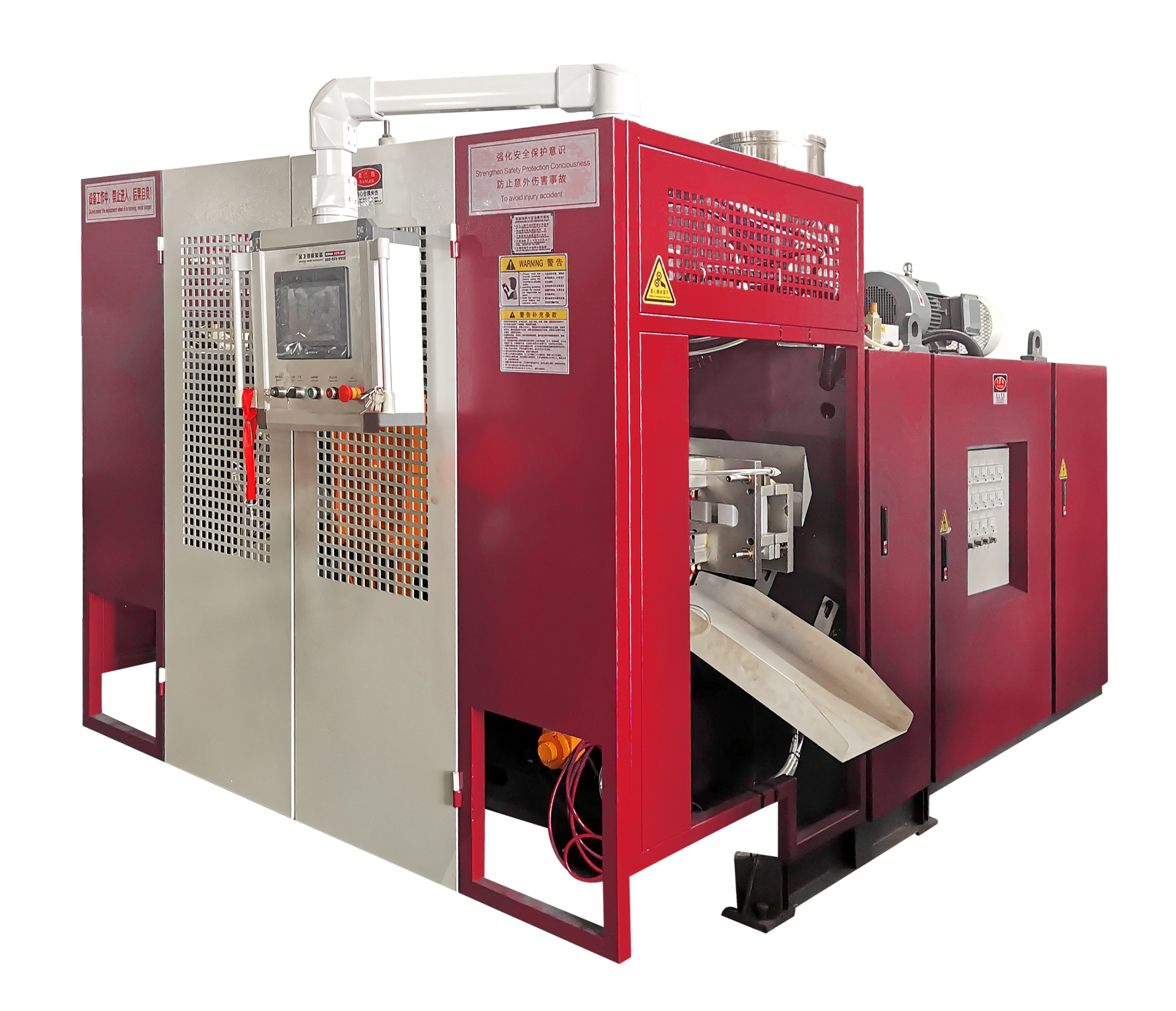





Top Extrusion Blow Molding Machine Manufacturers for Afghanistan (2026)
This guide is written for Afghan factory owners, procurement managers, and engineering leads sourcing sopro por extrusão (EBM) equipment for HDPE containers, jerry cans, and multi-layer tanks. Afghanistan is an import-reliant market: the practical decision is less about “who is local” and more about which OEM can ship reliably, commission safely, and keep you running with parts and remote support. This guide is written by LEKA Machine; LEKA is included as a reference option in the shortlist.
Boundary: This page covers EBM only (continuous or accumulator head). SBM/IBM systems are excluded because the tooling, preform workflow, and process controls are fundamentally different from EBM.
Shortlist summary
| Brand | Best-fit products | Process fit | What to verify fast |
|---|---|---|---|
| BEKUM | Industrial containers, technical parts, multi-layer formats | Electric/hybrid/hydraulic; continuous & accumulator options | Used/refurb availability; FAT scope for multi-layer & leak tests |
| DAWSON | Small bottles, detergent containers, jerry cans (10–25L) | Multi-die head, high-cavitation small-bottle lines; turnkey packages | Spare parts kit list; voltage tolerance + stabilizer specification |
| JWELL | General packaging, mid-volume containers, automation add-ons | Electric/hybrid EBM; integration of downstream automation | HMI language pack; remote diagnostics readiness for Kabul sites |
| Kautex Maschinenbau | Used European machines for bottles, jerry cans, technical parts | Often sourced refurbished; strong tooling/process ecosystem | Refurb report + wear parts; commissioning plan + training depth |
| Máquina LEKA (lekamachine.com) | HDPE bottles, jerry cans (10–20L), drums; regrind-capable builds | Servo-driven EBM; turnkey install + training + spares approach | PCR/regrind screw & filtration; corridor logistics + on-site SAT plan |
| Leshan | Everyday containers, jerry cans, industrial packs | Hydraulic/economic + accumulator lines; broad export footprint | Operator training materials; spare kit completeness for 12–18 months |
| MAGIC MP | Precision packaging, technical parts; electric machine preference | All-electric platforms available; stable process control focus | Service route into Afghanistan; electrical protection + UPS strategy |
| PARKER Plastic Machinery | Jerry cans, drums, larger containers; accumulator-head demand | Accumulator head EBM; hybrid/servo options | Head & parison control; spares for hydraulics + heaters + sensors |
| Shandong Tongjia | Bottles, drums/barrels, multi-layer chemical packs | Single/double station; multi-layer options in common builds | Mold cooling + cycle stability; power fluctuation protection specs |
| Uniloy | Used North American machines for bottles & handled containers | Reciprocating screw & accumulator systems; robust legacy installs | Used-machine documentation; local spares sourcing strategy |
Shortlist: 10 manufacturers serving Afghanistan’s EBM buyers
BEKUM
Aplicações mais adequadas: Industrial HDPE containers, technical parts, and multi-layer packs where process stability matters.
Typical EBM configurations: Electric/hybrid/hydraulic platforms; continuous or accumulator head; multi-layer heads for barrier or structural layers.
- Verification focus: If buying used/refurb, request wear-part replacement scope (screw/barrel, head seals, clamp guides) plus test-run evidence.
- Verification focus: Confirm the FAT includes your bottle/tank geometry, leak test method, and parison programming repeatability.
Considerações sobre serviços e entregas para o Afeganistão: Plan spares and commissioning around northern corridor entry (Hairaton/Termez) and limited local maintenance capacity.
Entre em contato conoscoDAWSON
Aplicações mais adequadas: Small-to-medium HDPE bottles and handled containers, including growing 10–20L jerry can demand.
Typical EBM configurations: Multi-die head high-output bottle lines; jerry can configurations with downstream deflashing/leak testing options.
- Verification focus: Confirm the turnkey scope: install, electrical commissioning, mold trials, operator training, and shift-handover documentation.
- Verification focus: Specify power quality protections (voltage stabilizer/UPS strategy) and servo drive fault-handling under generator power.
Considerações sobre serviços e entregas para o Afeganistão: Lock the delivery path early (Tashkent air hub vs Hairaton/Termez) and ship a 1–2 year consumables kit with the machine.
Entre em contato conoscoJWELL
Aplicações mais adequadas: General packaging and mid-volume container programs needing integration with automation or auxiliary lines.
Typical EBM configurations: Electric/hybrid EBM builds with optional downstream automation (cooling, take-out, trimming, conveyors).
- Verification focus: Confirm HMI language support and that alarm/help text is understandable for local operators and supervisors.
- Verification focus: Validate remote diagnostics (VPN-ready, spare I/O, logs export) so troubleshooting doesn’t depend on immediate site visits.
Considerações sobre serviços e entregas para o Afeganistão: Align installation windows with border/route variability and plan for staged spare shipments to Kabul.
Entre em contato conoscoKautex Maschinenbau
Aplicações mais adequadas: Buyers prioritizing used European equipment for bottles, handled packs, and stable long-run production.
Typical EBM configurations: Commonly sourced refurbished; continuous or accumulator platforms depending on model and application.
- Verification focus: Demand a refurbishment report covering screw/barrel condition, head sealing surfaces, clamp parallelism, and electrical updates.
- Verification focus: Confirm commissioning scope in Afghanistan: who installs, who trains, and what happens if output quality fails on site.
Considerações sobre serviços e entregas para o Afeganistão: Used-machine projects succeed when spares are pre-positioned and the installation team is scheduled around northern corridor clearance.
Entre em contato conoscoMáquina LEKA (lekamachine.com)
Aplicações mais adequadas: HDPE bottles, 10–20L jerry cans, and drums where regrind/PCR usage and power stability are practical constraints.
Typical EBM configurations: Servo-driven EBM with voltage-stabilization strategy, on-site installation & training, and spares-forward delivery model.
- Verification focus: Specify the regrind/PCR package (screw geometry, melt filtration, screen-change approach) and validate it during FAT trials.
- Verification focus: Confirm the Afghanistan commissioning plan (SAT checklist, training schedule, spare kit packing list) before shipment dispatch.
Considerações sobre serviços e entregas para o Afeganistão: Plan shipments via Hairaton/Termez or Tashkent routing, with a 1–2 year spare parts kit to reduce downtime risk.
Divulgação: A LEKA Machine é a editora deste guia.
Entre em contato conoscoLeshan
Aplicações mais adequadas: Practical container and jerry can production where robust operation and spares planning matter more than premium branding.
Typical EBM configurations: Hydraulic and accumulator lines for a wide range of volumes; common export configurations for everyday HDPE packs.
- Verification focus: Confirm training deliverables (maintenance intervals, troubleshooting SOPs, wiring diagrams) suitable for low local technician availability.
- Verification focus: Check spare kit completeness: heaters, thermocouples, seals, valves, sensors, contactors, and critical hydraulic items.
Considerações sobre serviços e entregas para o Afeganistão: Build your plan around predictable border clearance steps and reduce return-visit dependency through spares + remote support readiness.
Entre em contato conoscoMAGIC MP
Aplicações mais adequadas: Buyers who prefer precision-oriented process control and electric-machine operating discipline for stable quality.
Typical EBM configurations: All-electric EBM platforms (plus broader portfolio) with emphasis on repeatability and controlled energy use.
- Verification focus: Validate electrical protection design (grounding, surge protection, UPS where needed) for unstable grid + generator switching.
- Verification focus: Confirm service pathway into Afghanistan (travel logistics, response times, and what can be resolved by remote diagnostics).
Considerações sobre serviços e entregas para o Afeganistão: Prioritize a spares-forward contract and documented remote-support workflow to avoid extended downtime in Kabul.
Entre em contato conoscoPARKER Plastic Machinery
Aplicações mais adequadas: Large handled packs, jerry cans, and drums where accumulator-head stability is valued.
Typical EBM configurations: Accumulator head EBM lines with hybrid/servo options and common configurations for 20–25L jerry cans.
- Verification focus: Confirm head performance and parison programming capability for thick-handles, corners, and multi-layer tank structures.
- Verification focus: Align spares kit with the real risk items (hydraulic seals, proportional valves, heater bands, sensors, and PLC spares).
Considerações sobre serviços e entregas para o Afeganistão: Lock in a turnkey-style commissioning model and ship critical spares with the machine to offset scarce local support.
Entre em contato conoscoShandong Tongjia
Aplicações mais adequadas: Bottles, drums/barrels, and chemical packs where multi-layer capability is often requested.
Typical EBM configurations: Single/double station EBM; multi-layer heads for selected container families; common export configurations.
- Verification focus: Validate cycle stability (cooling layout, clamp repeatability, deflashing approach) on your material grade and wall-thickness targets.
- Verification focus: Confirm generator-friendly settings, servo/hydraulic tuning, and voltage fluctuation protection to avoid nuisance stops and damage.
Considerações sobre serviços e entregas para o Afeganistão: Use a corridor-ready packing list, clear HS codes, and spare-part mapping for fast customs and reduced restart time.
Entre em contato conoscoUniloy
Aplicações mais adequadas: Buyers considering used machines for bottles and handled packs, typically via the secondary machinery market.
Typical EBM configurations: Reciprocating screw and accumulator-based EBM systems with long-running legacy installations.
- Verification focus: For used units, insist on documentation (hours, rebuild history, replaced components) plus a run-off video on comparable products.
- Verification focus: Ensure you can source consumables locally or via fast freight (heaters, seals, sensors, valves) without waiting for long lead times.
Considerações sobre serviços e entregas para o Afeganistão: Used-machine success depends on pre-shipped spares and a commissioning technician who can train operators to self-recover faults.
Entre em contato conoscoSelection criteria
- Turnkey capability (30%): on-site installation, operator training, process handover, and SAT checklist discipline.
- Power resilience (20%): servo drive tolerance, stabilizer/UPS strategy, generator switching behavior, and protection design.
- Material flexibility (20%): regrind/PCR percentage, filtration strategy, screw/barrel metallurgy, and melt stability.
- Application fit (20%): multi-layer head needs (tanks), handle definition (jerry cans), and wall distribution repeatability.
- Spare parts readiness (10%): 12–24 month consumables kit, critical spares list, and fast replenishment route.
Decision shortcuts
Scenario A: You need multi-layer water storage tanks (3–4 layers)
- What matters: stable layer distribution and thick-wall control.
- What matters: accumulator head sizing and parison programming range.
- What to verify: a real multi-layer trial with your target wall thickness and cooling time.
- What to verify: head changeover time and layer ratio repeatability across shifts.
Common mistake: Approving the machine on “sample looks OK” without validating layer ratio stability after several hours of production.
Scenario B: You will run on unstable grid power or diesel generators
- What matters: servo/hydraulic protection against undervoltage and frequency drift.
- What matters: restart logic after power events without damaging screw, heaters, or PLC I/O.
- What to verify: stabilizer specification and allowed voltage window in writing.
- What to verify: fault logs and recovery steps that operators can execute without external engineers.
Common mistake: Buying a sensitive control stack without a realistic electrical protection and grounding plan for the factory.
Scenario C: You plan to use high regrind/PCR to control resin costs
- What matters: melt filtration and screw design to handle contamination and viscosity swing.
- What matters: stable output without burn, gels, or black specks over long runs.
- What to verify: PCR/regrind trials during FAT with your real material stream.
- What to verify: spares for filtration components and a defined cleaning/maintenance routine.
Common mistake: Assuming “it can run regrind” means it can run your regrind quality at your target output with acceptable scrap.
Scenario D: You are targeting the 10–20L jerry can niche (fuel/water transport)
- What matters: handle strength, corner definition, and leak performance under rough use.
- What matters: cycle stability with consistent wall distribution to avoid weak points.
- What to verify: mold design assumptions (pinch-off, handle insert, venting) and deflashing method.
- What to verify: leak test approach and how rejects are detected and segregated.
Common mistake: Over-focusing on hourly output while ignoring handle failure rates and leak rejects that destroy real throughput.
RFQ checklist
| Categoria | O que perguntar | Provas a serem solicitadas |
|---|---|---|
| Product scope | Target product drawings, volume range, wall targets, handle and neck specs | Similar product run video + sample measurements + cycle time record |
| Material | Virgin vs regrind/PCR %, melt flow range, contamination expectations | Screw design proposal + filtration plan + recommended cleaning SOP |
| Power resilience | Allowed voltage window, generator compatibility, stabilizer/UPS inclusion | Electrical schematic + protection bill-of-materials + fault recovery steps |
| EBM head & control | Continuous vs accumulator; parison programming range; multi-layer needs | Head spec sheet + parison curve examples + layer ratio control method |
| Turnkey & training | Installation duration, training agenda, SAT checklist, acceptance criteria | Commissioning plan + training slides + SAT sign-off template |
| Spares strategy | 1–2 year spare kit scope, consumables list, replenishment lead time | Itemized spares packing list + criticality ranking + part numbers |
| Logistics | Routing plan to Afghanistan, packing standards, customs documentation | Packing photos, crate list, HS codes, and a corridor-ready shipping plan |
PERGUNTAS FREQUENTES
1) Are there any industrial-scale EBM machine manufacturers located inside Afghanistan?
In practice, Afghan EBM buyers should plan on importing. Local market participants may appear in directories, but they typically act as traders, end-product manufacturers, or intermediaries handling sourcing and paperwork rather than building EBM machines. For procurement planning, assume your OEM, commissioning team, and spares pipeline are external—and structure the project around logistics, training, and spare-part readiness from day one.
2) Why do many Afghan buyers consider used European machines?
Used European EBM equipment can be attractive when capital is constrained and buyers want proven mechanical platforms. The risk is not the brand name; it’s the refurbishment depth, missing documentation, and the difficulty of recovering from failures without local specialists. If you go used, treat it like an engineering project: verify rebuild scope, insist on a run-off, pre-buy wear parts, and secure a commissioning plan that works for Afghan site realities.
3) What matters most for importing heavy EBM equipment into Afghanistan?
Route predictability and paperwork completeness drive outcomes. Afghanistan has no seaport access, so many projects depend on northern corridor routing and transshipment planning. The practical checklist is: corridor-ready packing list, accurate HS codes, clear crate markings, and a pre-agreed site unloading plan. Build schedule buffers for border clearance variability, and avoid “just-in-time” deliveries for critical spares—ship them with the machine.
4) What does “turnkey” really need to include for Afghanistan?
In Afghanistan, turnkey should mean more than installation. It should include electrical commissioning, mold trials on your target product, operator training (start-up/shutdown, alarms, quality control), maintenance SOPs, and a defined spare-part kit (1–2 years) to reduce dependence on emergency travel. A good turnkey scope ends with a signed SAT checklist and a trained team capable of restarting production after common faults.
5) How do I evaluate “energy-resilient” specs for unstable power?
Ask for the allowable voltage/frequency window, protection design, and recovery behavior under generator switching. Servo systems can be efficient, but they must be protected with proper stabilizers, grounding, and fault logic. The most practical test is procedural: can your operators follow a clear recovery checklist and resume stable extrusion without repeated alarms, heater damage, or PLC I/O faults? Get that workflow written and trained.
6) How should I verify regrind/PCR capability on an EBM machine?
Don’t accept generic claims. Define your regrind/PCR percentage, contamination level, and required output, then run a controlled trial during FAT using your real material stream (or a representative substitute you approve). Confirm screw geometry, melt filtration, and screen-change strategy. Also verify cleaning and preventive maintenance routines, because PCR performance is a system behavior—material prep, filtration, temperature stability, and operator discipline all matter.
7) What’s the fastest way to avoid buying the wrong machine for 10–20L jerry cans?
Focus on handle strength, leak integrity, and wall distribution—not just “pieces per hour.” Jerry cans punish weak corners and inconsistent thickness, especially in off-grid rural use. Ask for a jerry-can-specific trial, confirm the mold pinch-off and deflashing method, and make leak testing part of acceptance. A machine that looks fast on video can be slow in reality if rejects and rework dominate the shift.
Próximos passos recomendados
Explore the EBM machine selection pillar
Contact LEKA Machine for an Afghanistan-ready EBM RFQ pack
Image plan
- IMAGE_TITLE: Afghanistan EBM sourcing reality (imports only)
WP_ALT: Map-style visual showing Afghanistan importing EBM machines via northern corridors
Concept: Clean infographic with route arrows and icons for spares, commissioning, and training. - IMAGE_TITLE: Multi-layer water tank EBM overview
WP_ALT: Cutaway diagram of a 3–4 layer HDPE water tank made by extrusion blow molding
Concept: Technical illustration showing layers, die head, and parison programming idea. - IMAGE_TITLE: Jerry can 10–20L EBM verification checklist
WP_ALT: Checklist graphic highlighting handle strength, leak test, and wall distribution for jerry cans
Concept: Workshop bench flatlay with jerry can sample and check icons. - IMAGE_TITLE: Power-resilience essentials for Afghan factories
WP_ALT: Diagram showing voltage stabilizer, grounding, and generator interface for an EBM line
Concept: Simple block diagram with protective devices and control cabinet icon. - IMAGE_TITLE: Regrind/PCR package components for EBM
WP_ALT: Visual showing hopper, filtration, screw, and melt flow for regrind-capable EBM processing
Concept: Technical component layout with arrows and short labels. - IMAGE_TITLE: Turnkey scope and SAT handover flow
WP_ALT: Flowchart of turnkey EBM project steps from packing to SAT sign-off and training
Concept: Process flow with milestones: shipping, install, mold trial, training, SAT, spares.


0 comentários