
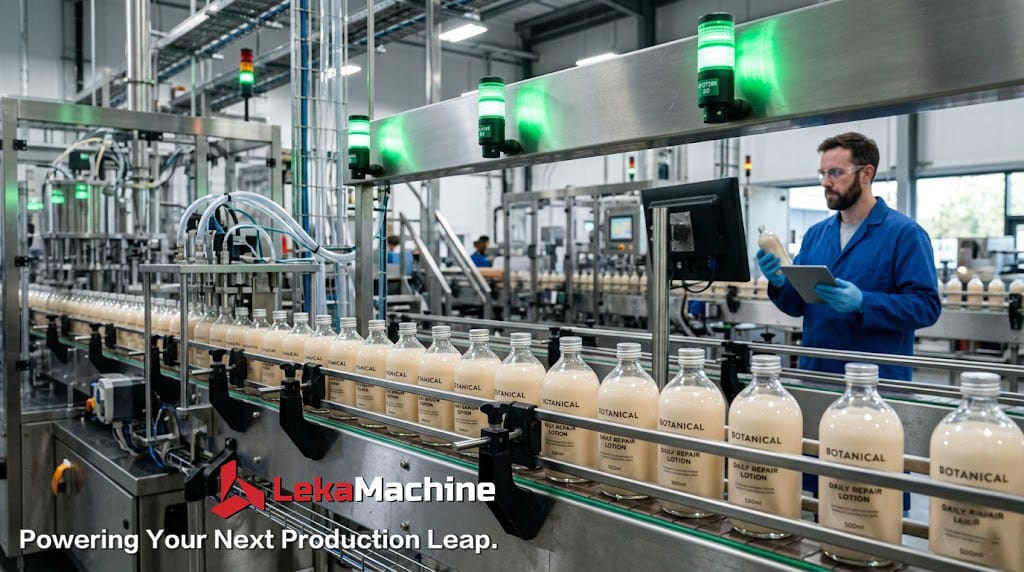
Liquid Soap Filling Machine Buyer’s Guide: How to Choose the Right Line in 2026
A liquid soap filling machine is not just about putting soap into bottles. The real buying decision depends on viscosity, foaming behavior, bottle stability, neck finish, cap type, changeover needs, and target output. This guide is built for buyers comparing standalone filling machines with more complete filling, capping, labeling, and packing line options.
Typical Products
Liquid soap, hand wash, dish soap, body wash, shampoo, lotion, detergent, and similar daily chemical liquids.
Main Buying Inputs
Liquid behavior, bottle size, neck and cap style, filling range, output target, and whether the project needs a full line.
Best Use of This Guide
Use it to narrow the right machine route before asking for quotation, sample testing, or packaging-line matching advice.
Quick answer: A liquid soap filling machine is packaging equipment designed to fill measured volumes of liquid soap into bottles, jars, or jerrycans with cleaner control than manual filling. For most projects, machine choice should start with your liquid’s viscosity and foaming behavior, then move to bottle format, cap type, target speed, and line-integration needs.
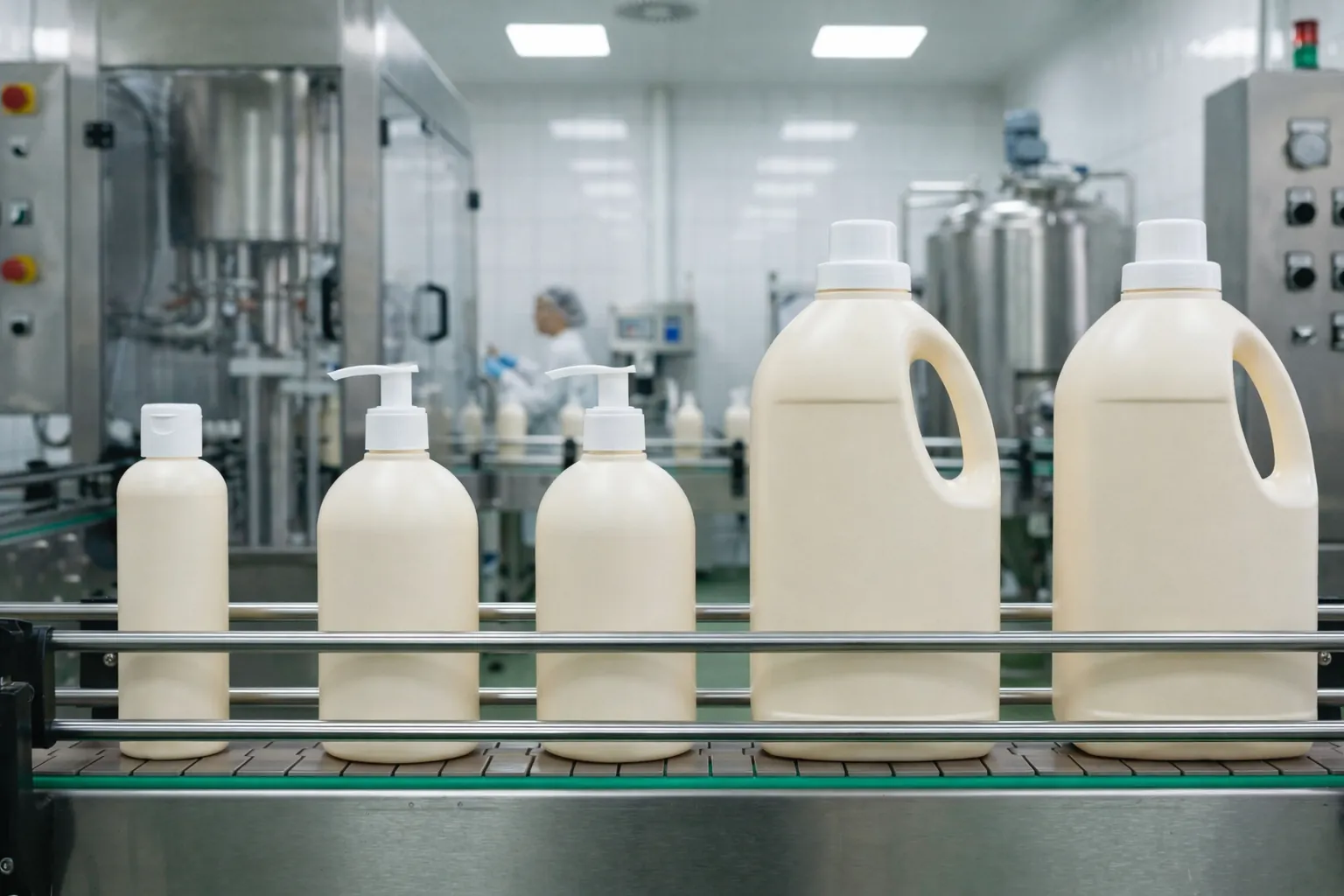 Automatic liquid soap filling line for pump bottles and daily chemical products.
What Is a Liquid Soap Filling Machine?
A liquid soap filling machine is used to dispense a controlled amount of soap into containers at repeatable speed and volume. Depending on the project, that may mean a smaller semi-automatic setup for limited production or a more integrated automatic line that connects filling with capping, labeling, coding, and shrink packing.
Liquid soap projects usually need more care than simple water-like products. Soap can be thick, stringy, foamy, or slippery during bottle handling. That is why buyers should not choose equipment by price or headline speed alone. A practical decision comes from matching the machine route to the actual product and package.
Why buyers automate
More stable fill volume, cleaner bottle presentation, less product waste, and easier coordination with downstream packaging equipment.
Where problems usually start
Wrong filling principle for the formula, poor nozzle control, unstable bottle handling, or weak cap and label matching.
Best buying mindset
Think in project terms: liquid plus bottle plus cap plus output plus layout, not just one machine model number.
What Products Can This Kind of Machine Fill?
The same buying logic can apply across several daily chemical and personal care products. On LEKA’s current filling machines page, the route already covers detergent, lotion, shampoo, body wash, and liquid soap discussion, which makes this keyword a strong fit for a broader bottle packaging inquiry rather than a narrow one-product page.
- Hand soap in pump bottles and refill bottles
- Dish soap in squeeze bottles and larger household packs
- Body wash and shower gel in retail containers
- Shampoo and lotion where appearance and changeover matter
- Daily chemical liquids that may share the same line direction
If the project is closer to household chemical packaging or larger HDPE containers, LEKA’s chemical and detergent filling machine page is often the better internal route for bottle and jerrycan matching.
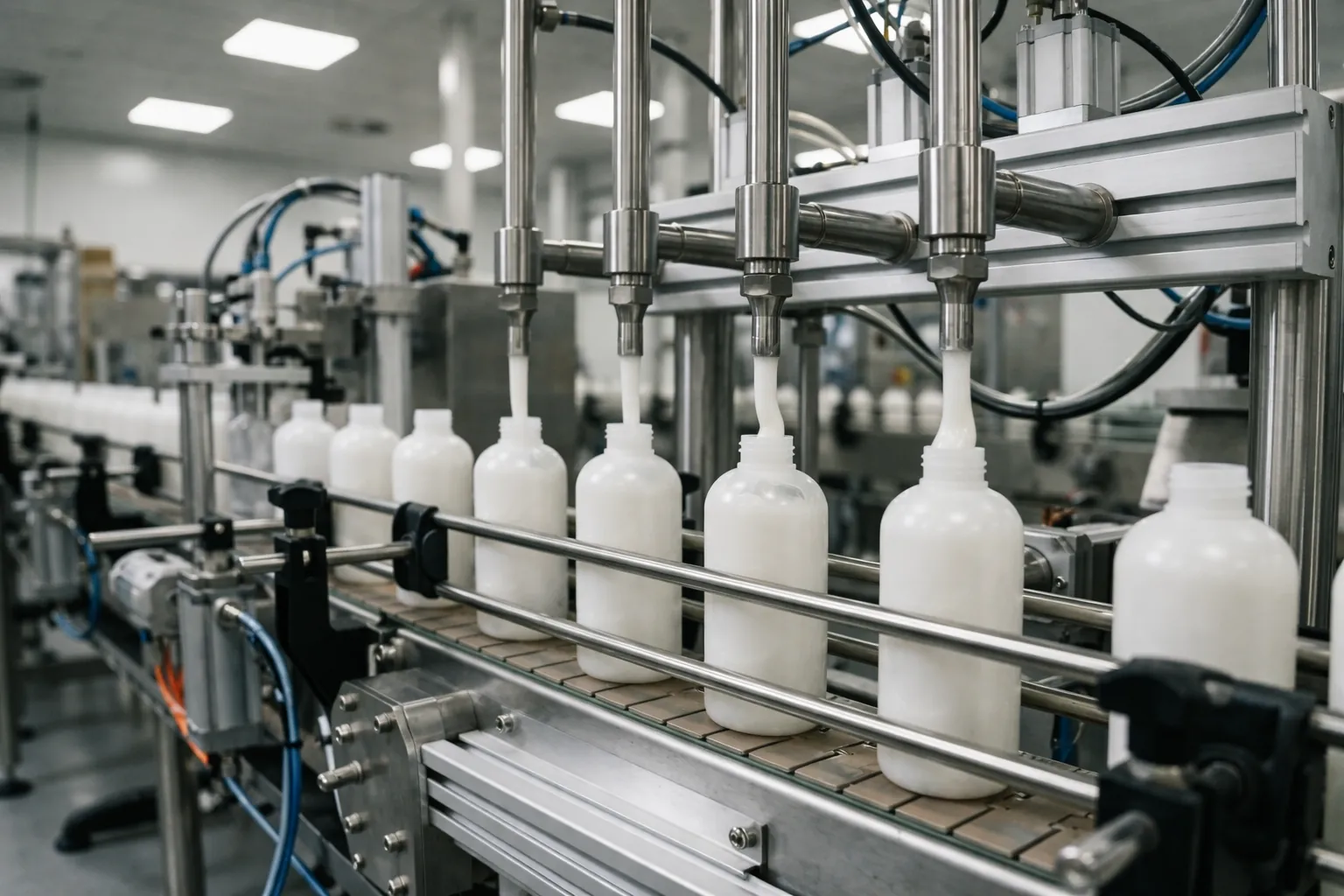 Different bottle formats for liquid soap, shampoo, body wash, and detergent filling projects.
Why Liquid Soap Needs More Than a Generic Filler
Buyers often compare liquid soap filling with ordinary liquid filling, but the process is usually more sensitive. Formula behavior can change with temperature, fragrance load, surfactants, and viscosity range. Some soaps foam heavily. Others pull strings at the nozzle. Some bottles look stable when empty but become harder to handle once the filling speed increases.
Liquid-side challenges
- Viscosity may vary across SKUs or seasons
- Foam can affect fill presentation and final level
- Nozzle drips can dirty bottles and conveyors
- Some formulas need slower, smoother filling action
Package-side challenges
- Tall bottles can wobble during infeed and capping
- Pump caps and trigger caps require stable neck handling
- Flat or shaped bottles can affect label registration
- Multi-size projects need faster changeover planning
This is exactly why LEKA’s product structure now emphasizes line logic. The real project discussion often includes not only the filler, but also capping machines, labeling machines, and shrink wrapping systems.
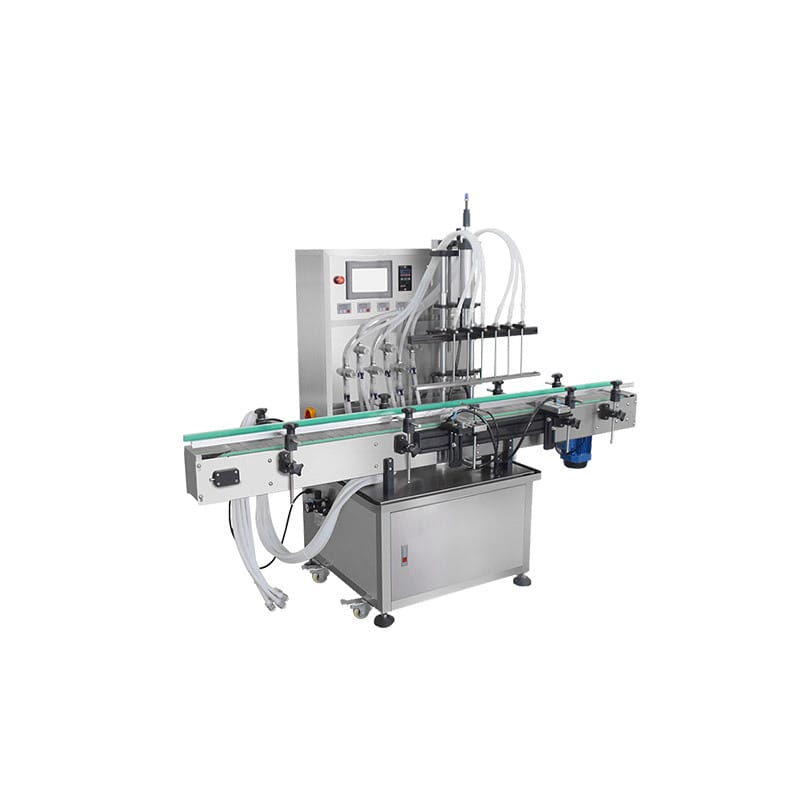 Anti-drip filling nozzles help handle viscous and foamy liquid soap more cleanly.
Which Filling Technology Is Usually Best for Liquid Soap?
There is no honest one-line answer for every formula. The best route depends on how thick the soap is, how much it foams, how sensitive the bottle presentation is, and whether the line needs flexibility across multiple SKUs. In practice, most buyers compare piston, pump, flowmeter, and gravity-style routes.
| Filling Route | Best Fit | Main Strength | What to Watch |
|---|---|---|---|
| Piston filling | Common choice for thicker soaps, gels, and dedicated soap projects | Stable volumetric control for more viscous products | Should still be checked against real product behavior, cleaning needs, and changeover expectations |
| Pump filling | Useful when product range varies across personal care SKUs | Flexible route for broader liquid behavior and multi-product discussion | Performance depends on pump type, calibration, and formula consistency |
| Flowmeter or servo-controlled filling | Projects that care about cleaner adjustment, recipe repeatability, or broader automation logic | Good control, cleaner parameter setting, and easier integration in some automatic lines | Needs correct configuration and practical sample testing rather than catalog assumptions |
| Gravity-style filling | More suitable for thin, free-flowing, non-foamy liquids | Simple route where the liquid behavior allows it | Usually not the first recommendation for typical liquid soap projects |
For many liquid soap inquiries, piston or pump-based discussion is the practical starting point. However, the safest engineering answer is still sample-based confirmation. Buyers should ask suppliers to test the actual formula, bottle, and target speed instead of relying on generic statements such as “one machine fits all viscosities.”
Semi-Automatic or Automatic: Which Route Makes More Sense?
The right automation level depends on output target, labor cost, SKU count, and whether you are planning only filling or a more complete bottle packaging line.
| Route | Best For | Why Buyers Choose It | Typical Limitation |
|---|---|---|---|
| Semi-automatic | Smaller output, early-stage brands, pilot production, or projects still validating product and bottle fit | Lower entry risk and easier start when demand is still developing | More operator dependence and weaker line integration |
| Automatic inline filling | Regular production with clearer output and bottle format | Better consistency, cleaner handling, and easier connection to capping and labeling | Needs better planning for layout, utilities, and changeover |
| More integrated line setup | Buyers who want one coordinated route from filling to end-of-line packaging | Less mismatch between machines and stronger full-line workflow | Quotation depends heavily on project details rather than generic online pricing |
If the project already includes cap type, label style, and final bundle or case-packing direction, it is usually better to discuss the filling machine together with line integration instead of treating the filler as an isolated purchase.
What Affects Liquid Soap Filling Machine Price?
Online price ranges can be misleading because two machines described as “liquid soap filling machines” may be built for very different production realities. Soap projects are priced by configuration, not by keyword alone.
- Filling principle and control method
- Number of filling heads and required output
- Whether the line includes bottle infeed, cap feeding, capping, labeling, coding, or packing
- Container range, bottle stability, and changeover requirements
- Material contact parts, cleaning expectations, and sanitary design level
- Customization for pump caps, trigger caps, jerrycans, or non-standard bottles
A better buying question is not “What is the cheapest liquid soap filling machine?” but “What configuration can run my product cleanly, at my target output, with acceptable changeover and downstream matching?”
Standalone Filler or Complete Packaging Line?
A standalone filler is suitable when the buyer already has stable downstream equipment or only needs to solve the filling step. A complete line becomes more attractive when bottle stability, cap consistency, label presentation, or grouped transport packaging all need to work together.
Standalone machine discussion
Best for buyers replacing one machine, validating a new SKU, or adding filling capacity to an existing line.
Complete line discussion
Best for new projects, cleaner line matching, and buyers who want filling, capping, labeling, and secondary packaging planned together.
LEKA’s current site structure already reflects this broader approach. The business started from manufacturing roots and is now expanding into bottle packaging equipment and complete line solutions, as outlined on the About LEKA Machine page.
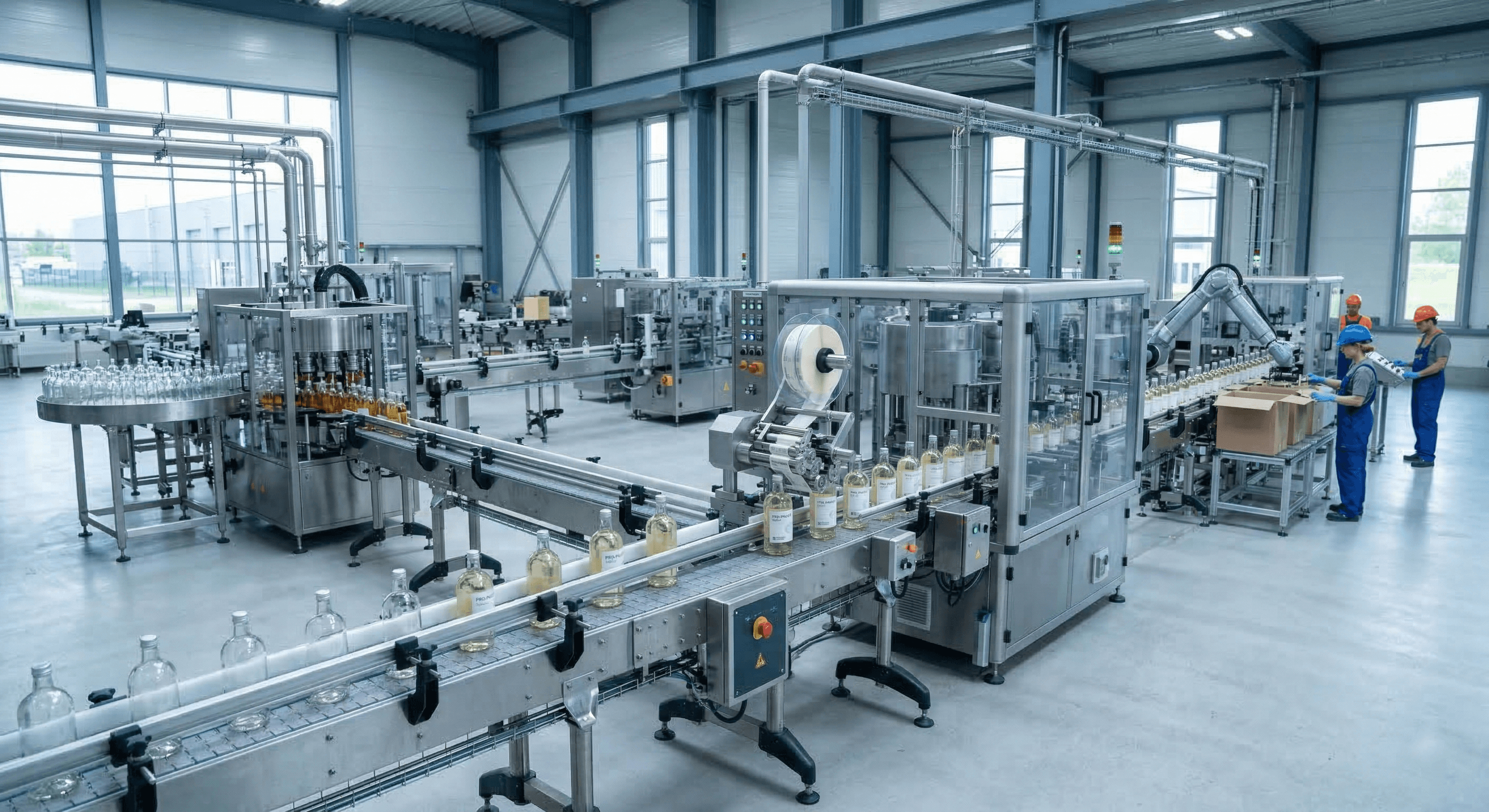 Integrated filling, capping, and labeling line for daily chemical bottle packaging.
What Information Should You Send Before Asking for Quotation?
Better inquiry inputs lead to a faster and more realistic machine recommendation. LEKA’s current detergent filling page already asks buyers to provide liquid type and viscosity range, bottle or jerrycan size, filling volume, and output target. For liquid soap projects, this same logic works very well.
- Product type and approximate viscosity behavior
- Whether the formula foams easily or pulls strings at the nozzle
- Container photos, dimensions, and filling volume range
- Neck finish, cap style, and whether you use pump caps or trigger caps
- Target bottles per hour or daily output
- Number of SKUs and expected changeover frequency
- Whether you need filling only or a wider line including capping, labeling, and shrink packing
If you can share bottle samples, cap samples, and a product sample, the machine direction becomes much more reliable than a quotation based only on text.
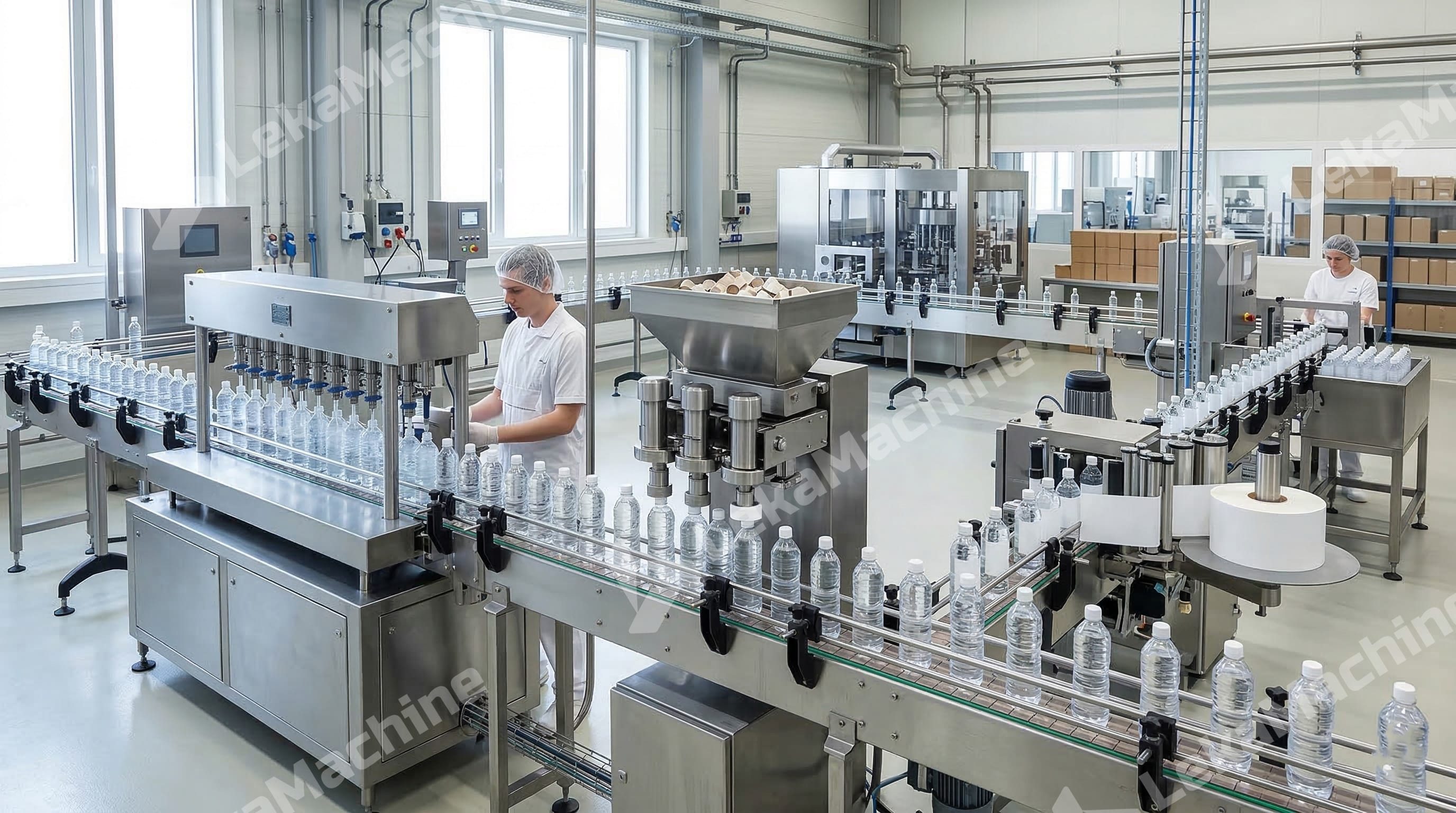 Bottle and cap samples help improve liquid soap filling machine matching and quotation accuracy.
Questions Worth Asking Any Supplier
- Which filling principle do you recommend for this exact formula, and why?
- Can you test my sample before finalizing the machine route?
- How does the machine handle foam, stringing, and nozzle cleanliness?
- Can the same system run my full bottle-size range without painful changeovers?
- How will cap type affect capping performance and bottle stability?
- If I add labeling or shrink wrapping later, what should I plan now?
- What information do you need from me to make the quotation more accurate?
Frequently Asked Questions About Liquid Soap Filling Machines
What is usually the best filling machine for liquid soap?
For many liquid soap projects, piston or pump-based discussion is the right starting point, especially when the product is thicker than water or the SKU range is broader. The final answer should still be based on the real formula, bottle, cap type, and target output.
Can one machine fill different soap bottle sizes?
In many projects, yes. But “can fill multiple sizes” is not enough by itself. Buyers should also ask how much manual adjustment is required, how long changeover takes, and whether label and cap matching stay stable after switching bottle formats.
Is piston filling always better than pump filling?
No. Piston filling is often strong for thicker and more dedicated soap routes, while pump-based discussion can make more sense for multi-SKU or broader liquid behavior. The right answer depends on what you are filling, not on a universal slogan.
Do I need only a filler, or should I ask about a full line?
If you already have stable downstream equipment, a standalone filler may be enough. If your project also involves cap matching, label presentation, or bundled shipment packs, it is usually smarter to discuss the full line from the start.
What is the fastest way to get a useful quotation?
Send the product type, sample behavior, bottle photo and dimensions, filling volume, cap type, target output, and whether you need filling only or a wider packaging line. Real inputs produce a much better quotation than a generic “please send price list” inquiry.
Discuss the Right Liquid Soap Filling Route with LEKA
LEKA’s current direction is practical: help buyers move from product and bottle information to a workable machine or line setup. If your project includes liquid soap, body wash, shampoo, detergent, or similar bottle-packaging needs, the best next step is to send the real project details instead of guessing from generic online machine lists.
- Share your product type, viscosity behavior, and fill volume range
- Add bottle photos, dimensions, neck finish, and cap type
- Tell us your output target and whether you need filling only or a complete line