
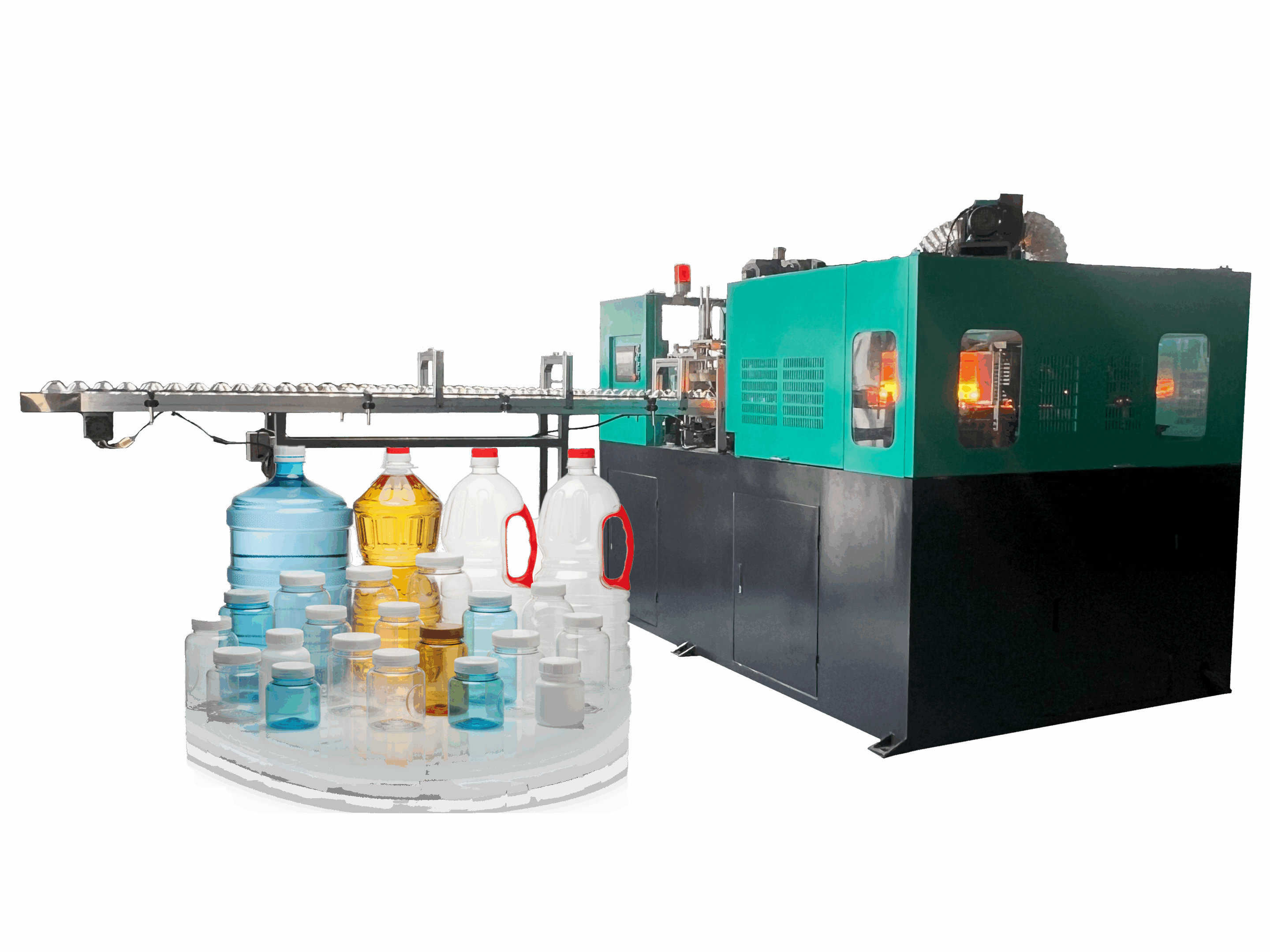
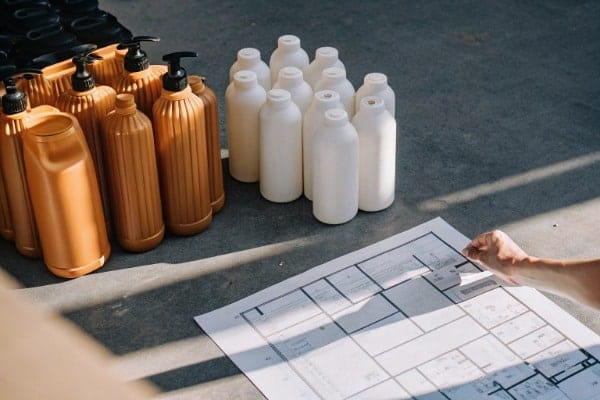
At our Guangdong facility, we see clients struggle with sizing machines daily. Choosing the wrong tonnage risks flash defects or wasted energy, hurting your bottom line immediately.
flash defects 1
To determine the correct tonnage, calculate the total projected area of your product and multiply it by the material's specific clamping factor. Generally, polyolefins require 0.3 to 0.5 tons per square inch. Always factor in a 10-20% safety margin to ensure mold stability during high-pressure blowing cycles.
Let's break down the specific calculations and considerations you need to make the right choice for your production line.
How do I calculate the necessary clamping force for my specific bottle dimensions?
When our engineers review customer drawings, we often find underestimated force requirements. Weak clamping leads to parting line gaps, ruining bottle aesthetics and increasing scrap rates significantly.
Calculate clamping force by measuring the bottle's projected area perpendicular to the mold opening direction. Multiply this area by the blowing pressure and a material factor. For standard HDPE bottles, a safe rule of thumb is approximately 3 to 5 kN of force per square centimeter of projected area.

Calculating the precise clamping force is the foundation of a stable manufacturing process. If you get this wrong, you will either damage your mold through excessive force or produce defective bottles with visible "flash" (excess plastic) along the seams because the mold cannot stay closed against the internal air pressure.
clamping force 2
Understanding Projected Area
The projected area is not the surface area of the entire bottle. Instead, imagine the shadow your bottle would cast if a light were shining directly perpendicular to the mold's parting line. This 2D "shadow" represents the area where the internal air pressure will try to force the mold halves apart.
The Calculation Formula
To get a baseline, you can use a simplified formula used by our engineering team:
$$ F = A \times P \times S $$
Where:
- F = Required Clamping Force (kN)
- A = Projected Area (cm²)
- P = Blowing Pressure (usually 6-8 bar for standard bottles)
- S = Safety Factor (typically 1.2 to 1.5 depending on material viscosity)
Material Viscosity Matters
Different plastics behave differently under pressure. Stiffer materials or those requiring higher blowing pressures to capture fine details (like PET or PC) will demand higher clamping tonnage than softer materials like LDPE.
Clamping Force Reference Table
Below is a reference guide we use when advising clients on initial machine selection based on material types.
| Jenis Material | Typical Blowing Pressure (Bar) | Clamping Force Factor (kN/cm²) | Application Example |
|---|---|---|---|
| LDPE / PE | 4 – 6 | 0.25 – 0.35 | Squeeze bottles, soft tubes |
| HDPE / PP | 6 – 8 | 0.35 – 0.50 | Shampoo bottles, jerry cans |
| PET / PVC | 8 – 12 | 0.50 – 0.70 | Cosmetic jars, clear containers |
| PC / ABS | 10 – 15 | 0.70 – 0.90 | 5-gallon water jugs, industrial parts |
By using this table, you can estimate that a standard 1-liter HDPE detergent bottle with a projected area of 150 cm² would require roughly 60-75 kN (approx. 6-8 tons) of clamping force per cavity. However, always consult with us before finalizing, as complex geometries with sharp corners may require higher pressures.
Does the number of cavities affect the tonnage I need to order?
We frequently advise clients that scaling production isn't just about adding cavities. Ignoring the cumulative force required for multi-cavity molds causes machine strain and poor product quality.
Yes, the number of cavities directly dictates your tonnage requirements. You must multiply the clamping force needed for a single bottle by the total number of cavities. Additionally, the machine's platen size must be large enough to accommodate the wider mold base required for multiple cavities without deflection.
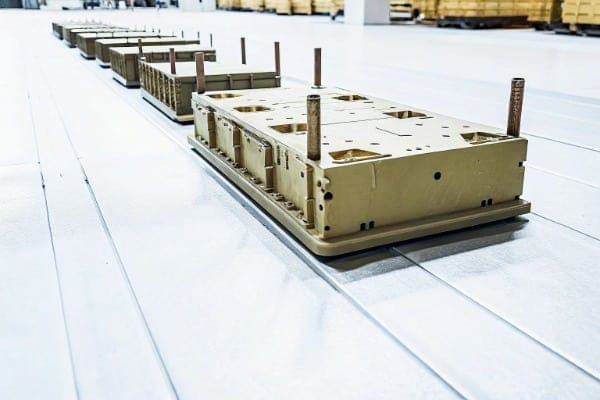
Scaling up from a single-cavity prototype to a mass-production mold is not as simple as just buying a bigger machine. The relationship between cavity count and tonnage is linear, but the engineering implications for the machine structure are exponential.
The Multiplier Effect
If a single bottle requires 10 tons of clamping force, a 4-cavity mold will theoretically require 40 tons. However, in practice, we recommend adding an extra margin. When you spread the force across a wider area (the platen), you introduce the risk of platen deflection. This is where the metal plates holding the mold actually bend slightly under pressure, causing the center cavities to flash while the outer cavities seal perfectly.
Platen Size vs. Tonnage
You might find a machine with enough tonnage (e.g., 50 tons) but with platens that are physically too small to mount a 6-cavity mold. Conversely, a machine might have large enough platens but lack the hydraulic or electric muscle to keep them closed.
Center of Pressure
For multi-cavity setups, the mold design must ensure the "center of pressure" aligns with the center of the machine's clamping unit. If you have a 4-cavity mold where the bottles are arranged asymmetrically, the clamping force will be uneven. This wears out the toggle mechanism or ball screws on electric machines unevenly, leading to premature maintenance issues.
Efficiency Considerations
Running high-cavity molds on all-electric machines is particularly advantageous. Electric toggle systems provide a rigid lock-up that is often more stable than hydraulic direct-clamping for multi-cavity applications. This rigidity ensures that every cavity, from the first to the eighth, produces an identical bottle.
Key Takeaway: Do not just sum up the tonnage. Ensure the machine's tie-bar distance (the space between the metal bars) is wide enough to fit your multi-cavity mold, and that the clamping unit is rated to prevent deflection across that entire width.
What is the relationship between product volume and the machine's extruder capacity?
In our testing lab, we ensure the extruder output matches the cycle time. If the screw cannot melt plastic fast enough, your cycle time suffers immensely.
Product volume determines the shot weight, which dictates the required extruder throughput. Your machine's plasticizing capacity (kg/hr) must exceed the total material consumption per hour. If the extruder is too small, cooling times are wasted waiting for material; if too large, resin degrades from excessive residence time.

The heart of any blow molding machine is the extruder. While tonnage keeps the mold closed, the extruder determines how fast you can actually produce bottles. Matching the extruder capacity to your product volume is a balancing act between speed and material quality.
Calculating Required Throughput
To size your extruder correctly, you need to know your Target Throughput (kg/hr).
The formula is:
$$ Throughput = (Weight_{bottle} + Weight_{flash}) \times Cavities \times (3600 / CycleTime_{seconds}) $$
For example, if you are producing a 50g bottle with 20g of flash (total shot 70g), using a 4-cavity mold, and running a 12-second cycle:
- Total shot per cycle: 280g (0.28 kg)
- Cycles per hour: 300
- Required Output: 84 kg/hr
If you buy a machine with an extruder rated for only 70 kg/hr, the machine will physically have to pause and wait for the plastic to melt, killing your efficiency.
The Danger of Oversizing
You might think, "I'll just buy the biggest extruder available." This is a mistake. If you run a small bottle on a massive extruder, the plastic sits inside the heated barrel for too long. This is called Residence Time.
- Thermal Degradation: Plastic that sits too long burns or turns yellow (especially sensitive materials like PVC or PC).
- Poor Mixing: Screws are designed to work best at 60-80% capacity. Running them at 10% results in poor color mixing and inconsistent melt temperature.
Screw Design and L/D Ratio
For high-quality bottles, the Length-to-Diameter (L/D) ratio of the screw is critical.
- Standard (24:1): Good for general purpose HDPE.
- High Mixing (30:1): Essential for adding masterbatch (color) or running PCR (recycled material) to ensure a uniform look.
We always recommend calculating your maximum and minimum production scenarios. Your extruder should be able to handle your peak demand at about 85% of its max RPM, leaving room for surge capacity without overheating the material.
Should I oversize the machine tonnage to accommodate future product lines?
We often see buyers torn between current budget and future growth. Oversizing seems safe, but running small molds on massive machines wastes energy and capital unnecessarily.
Oversizing is generally recommended only if you have concrete plans for larger products within two years. While a 20% buffer is wise, buying double the necessary tonnage increases upfront costs and energy consumption. Instead, focus on flexible machine designs that allow for easy mold changes and modular upgrades.
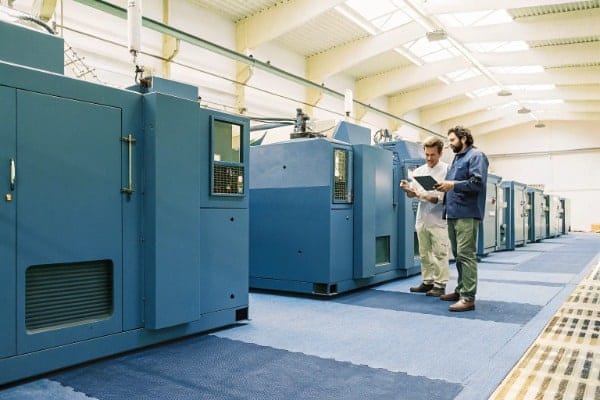
The temptation to "future-proof" your production line by buying a machine twice the size you currently need is strong. However, in the competitive world of plastic manufacturing, efficiency is everything. An oversized machine can be a silent profit killer.
The Hidden Costs of Oversizing
- Energy Penalty: Even with efficient all-electric machines, moving a massive 20-ton platen to close a tiny mold requires more energy than moving a 5-ton platen. You are paying to move heavy steel that adds no value to the product.
- Floor Space: Larger tonnage machines have a significantly larger footprint. In Europe or high-rent districts, floor space is a premium asset.
- Cycle Time Drag: Larger machines generally have longer "dry cycle" times (the time it takes to open and close without plastic). A 50-ton machine might close in 1.5 seconds, while a 150-ton machine might take 2.5 seconds. Over a year, that 1-second difference equals millions of lost bottles.
When Oversizing Makes Sense
There are specific scenarios where we do recommend going bigger:
- High-Pressure Materials: If you plan to switch from HDPE to Engineering Plastics (like PC or Polysulfone) later, you will need the extra clamp force.
- Stack Molds: If you anticipate moving to stack mold technology (two parting lines) to double output, you need the extra daylight and tonnage now.
A Better Strategy: Modularity
Instead of buying raw tonnage, look for flexibility.
- Interchangeable Heads: Ensure the machine can swap between single, double, or quad die-heads easily.
- Software Upgrades: Modern electric machines often have software limits. Sometimes you can unlock performance features later.
Strategic Advice: Analyze your 2-year business plan. If the probability of needing the larger machine is under 50%, buy the machine that fits your current needs with a standard 20% safety margin. The ROI from running an optimized machine will likely pay for the deposit on a second machine when you actually need it.
Why should I choose an all-electric extrusion blow molding machine instead of a hydraulic machine?
Our export data shows a massive shift toward electrics in Europe. Hydraulic systems are messy and energy-hungry, while electrics offer the precision modern markets demand.
Choose all-electric machines for their superior energy efficiency, cleanliness, and precision. They eliminate hydraulic oil, reducing maintenance and contamination risks, while servo motors provide exact control over movements. Although the initial cost is higher, the total cost of ownership is lower due to significant operational savings.

The debate between hydraulic and electric is the most common conversation we have with new clients. While hydraulic machines have been the workhorses of the industry for decades, the technology has plateaued. All-electric machines represent the future, and for good reason.
Core Technology Differences
- Hydraulic: Relies on a central pump pushing oil through hoses to move cylinders. Even when the machine is idle (cooling phase), the pump often keeps running to maintain pressure, wasting energy.
- All-Electric: Uses individual servo motors for each axis (clamping, carriage movement, extrusion, blow pin). When a motor isn't moving, it uses zero energy.
Precision and Repeatability
Hydraulic oil viscosity changes with temperature. In the morning, the oil is cold and thick; by afternoon, it's hot and thin. This variance affects cycle times and bottle weights. Electric motors are digital. If you tell a servo to move 350.5mm, it moves exactly 350.5mm, whether it is winter or summer. This repeatability allows for tighter tolerances, which is critical for automated filling lines where a 1mm variance can cause a jam.
Comparison Table: Hydraulic vs. All-Electric
| Fitur | Mesin Hidrolik | Mesin Serba Listrik |
|---|---|---|
| Efisiensi Energi | Low (40-60% wasted heat) | High (90%+ efficiency) |
| Presisi | Variable (affected by oil temp) | Exact (0.01mm repeatability) |
| Cleanliness | Risk of leaks, oil mist | Cleanroom ready |
| Tingkat Kebisingan | High (> 75 dB) | Low (< 65 dB) |
| Pemeliharaan | High (oil changes, filters, seals) | Low (grease lubrication only) |
| Biaya Awal | Lebih rendah | Higher (20-30% premium) |
The "Clean" Factor
For our clients in the food and pharmaceutical sectors, the biggest selling point isn't even the energy—it's the absence of oil. A single hydraulic hose burst can contaminate a week's worth of production and ruin a factory's hygiene rating. Electric machines eliminate this risk entirely.
How much can I save on electricity bills with all-electric technology?
We track power consumption across all our installations. Clients switching from hydraulic to electric models are often shocked by the immediate drop in their monthly utility bills.
You can expect to save between 30% and 60% on electricity bills with all-electric technology. Unlike hydraulic pumps that draw power constantly, servo motors consume energy only during active movement. This "power-on-demand" efficiency drastically reduces overhead, often paying for the price difference within 18 to 36 months.
Energy cost is often the second largest expense in molding, right after raw materials. In regions like Europe or parts of the Americas where industrial electricity rates are high, the efficiency of your machine dictates your profit margin.
Where do the savings come from?
- No Idling Loss: In a hydraulic cycle, the cooling time can be 50% of the total cycle. During this time, the hydraulic pump is often idling but still drawing 20-30% of its full load power just to circulate oil. An electric motor draws nearly 0 watts during cooling.
- Regenerative Braking: Modern all-electric drives function like electric cars. When the heavy clamping unit decelerates to close the mold, the kinetic energy is captured by the motor, converted back into electricity, and fed into the system to power other axes (like the extruder).
- No Cooling Water for Oil: Hydraulic systems need chillers to keep the oil cool. This is a secondary energy cost (powering the chiller) that electric machines eliminate entirely.
ROI Calculator Example
Let's look at a real-world scenario for a 10-liter jerry can production line:
- Hydraulic Machine: Consumes average 45 kWh.
- Electric Machine: Consumes average 20 kWh.
- Savings: 25 kWh per hour.
- Operation: 24 hours/day, 300 days/year = 7,200 hours.
- Total Savings: 180,000 kWh per year.
- Cost of Power: At $0.15/kWh, that is $27,000 saved per year.
If the electric machine costs $50,000 more upfront, the Return on Investment (ROI) is achieved in less than two years. After that, the $27,000 annual saving goes straight to your net profit.
Will eliminating hydraulic oil leaks improve my food safety compliance?
During factory audits, we see how oil leaks panic quality managers. Contamination risks can shut down production lines, making hydraulic systems a liability for food packaging.
Yes, eliminating hydraulic oil removes a critical contamination vector, significantly boosting food safety compliance. All-electric machines are ideal for cleanroom environments because they generate no oil mist or leaks. This ensures your bottles remain sterile and compliant with strict FDA or EU food contact regulations.
For manufacturers supplying the food, beverage, or pharmaceutical industries, HACCP (Hazard Analysis Critical Control Point) yang keluar GMP (Good Manufacturing Practice) compliance is non-negotiable. Hydraulic machines are inherently risky in these environments.
The "Dirty Floor" Problem
Hydraulic machines inevitably leak. It might be a slow drip from a worn seal or a catastrophic hose failure.
- Direct Contamination: Oil mist can settle on the parison (the hot plastic tube) before it is blown, embedding hydrocarbons into the bottle wall.
- Indirect Contamination: Oil on the floor is tracked by operators' shoes into packing areas or cleanrooms.
Cleanroom Compatibility
All-electric machines are the standard for medical and pharma packaging.
- No Oil Mist: Air quality remains pure, reducing the load on HEPA filters in cleanrooms.
- Sterile Appearance: The machines look cleaner. When your customers (brands like Nestlé or Danone) audit your factory, a clean, oil-free floor with silent electric machines signals high process control and hygiene standards.
Reduced Chemical Usage
Without hydraulic oil, you also eliminate the need for oil spill cleanup kits, harsh degreasers, and the disposal of hazardous waste (used oil and filters). This aligns your production with ESG (Environmental, Social, and Governance) goals, which is increasingly important for securing contracts with global multinationals.
Does an all-electric system offer better parison control for wall thickness?
We calibrate parison controllers to micron-level precision. Hydraulic valves struggle with drift, but electric actuators respond instantly, ensuring every bottle meets strict weight and thickness specifications.
servo drives 3
All-electric systems offer superior parison control due to the precise responsiveness of servo motors. They provide closed-loop feedback with 0.1mm accuracy, eliminating the pressure fluctuations common in hydraulics. This results in uniform wall thickness, reduced material usage, and fewer rejected bottles due to thin spots.
Parison control (or profile programming) is the technique of varying the thickness of the plastic tube as it extrudes, so that the final bottle has uniform wall thickness despite its complex shape (e.g., thick corners, thin body).
cleanroom environments 5
The Response Time Advantage
In a hydraulic system, when the controller signals "thicken the parison," a valve must open, oil must flow, and a cylinder must move. This takes milliseconds, but there is a lag (hysteresis).
- Hydraulic Lag: 20-50 milliseconds.
- Electric Response: < 5 milliseconds.
This speed difference means electric machines can make sharper, more defined changes in thickness. You can reinforce a bottle's shoulder without wasting plastic on the neck.
kinetic energy 6
Material Savings (Lightweighting)
Because electric actuators are so precise and don't drift as the machine warms up, you can run closer to the failure limit without fear.
- Scenario: A bottle needs to weigh at least 48g to pass the drop test.
- Hydraulic Approach: You target 52g to be safe because the process varies by ±2g.
- Electric Approach: You target 49g because the process varies by only ±0.2g.
Result: You save 3g of resin per bottle. On a run of 1 million bottles, that is 3,000 kg of plastic saved. This is pure profit and a massive sustainability win.
Comparison of Control Methods
| Aspect | Hydraulic Parison Control | Electric Parison Control |
|---|---|---|
| Actuation | Servo-valve & Cylinder | Servo Motor & Ball Screw |
| Resolution | Limited by fluid dynamics | High resolution encoder |
| Drift | High (temp dependent) | Near Zero |
| Pemeliharaan | Valve cleaning, seal replacement | None (sealed unit) |
Is the maintenance cost significantly lower without hydraulic components?
Our service team receives far fewer emergency calls for electric machines. Without hoses to burst or valves to clog, routine maintenance becomes predictable and much less frequent.
Hydraulic oil viscosity 7
Maintenance costs are significantly lower because there are no filters, seals, or oil to replace. Hydraulic systems require constant monitoring for leaks and fluid degradation, whereas electric machines primarily need simple lubrication. This reduction in consumables and labor can lower annual maintenance expenses by over 50%.
Many buyers focus on the purchase price but forget the Total Biaya Kepemilikan (TCO). Maintenance is the silent killer of TCO for hydraulic machines.
The "No Oil" Advantage
Eliminating the hydraulic power pack removes roughly 70% of the moving parts that typically fail in a blow molding machine.
- No Oil Changes: Hydraulic oil is expensive and must be changed annually (hundreds of liters).
- No Filter Changes: Oil filters clog and need regular replacement.
- No Hose Replacements: Hydraulic hoses degrade over time and are a major safety hazard if they burst under pressure.
Predictive Maintenance via Industry 4.0
Electric machines are natively digital. The servo drives constantly monitor torque, temperature, and current.
- Warning Signs: If a ball screw is starting to wear, the motor torque will increase slightly to compensate. The machine can alert you months in advance: "Axis Z Maintenance Required."
- Hydraulic Reality: Usually, you don't know a hydraulic pump is failing until it fails completely or makes a terrible noise, causing unplanned downtime.
Downtime Comparison
Unplanned downtime is the most expensive cost in manufacturing.
- Hydraulic Downtime: Often involves diagnosing complex valve logic, draining oil, and cleaning up leaks. A repair can take 1-2 days.
- Electric Downtime: Usually involves swapping a modular drive or motor. Because it's plug-and-play, repairs can often be done in hours.
Maintenance Checklist Comparison
| Task | Hydraulic Frequency | Electric Frequency |
|---|---|---|
| Check Oil Level | Daily | N/A |
| Check for Leaks | Daily | N/A |
| Filter Replacement | Bulanan | N/A |
| Grease Lubrication | Mingguan | Monthly (Auto-lube common) |
| Oil Analysis | Triwulanan | N/A |
| Drive Belt Check | N/A | Triwulanan |
By switching to electric, your maintenance team stops being "firefighters" fixing leaks and starts being process optimizers.
LDPE 9
Kesimpulan
Switching to all-electric technology ensures precision, cleanliness, and long-term savings. Evaluating tonnage and capacity correctly guarantees you maximize these benefits for a profitable production line.
projected area 10
Catatan kaki
1. Explains the manufacturing defect caused by insufficient clamping force. ↩︎
2. Details the force required to keep the mold closed during processing. ↩︎
3. Explains the electronic amplifiers used to control electric motors. ↩︎
4. Official EPA page defining hazardous waste and disposal regulations. ↩︎
5. Describes the controlled environment required for medical packaging. ↩︎
6. Defines the energy type captured by regenerative braking systems. ↩︎
7. Discusses how fluid properties affect hydraulic machine performance. ↩︎
8. Explains the additive used for coloring plastics during extrusion. ↩︎
9. Provides properties of Low-density polyethylene, a common molding material. ↩︎
10. Defines the geometric concept used to calculate required tonnage. ↩︎


0 Komentar