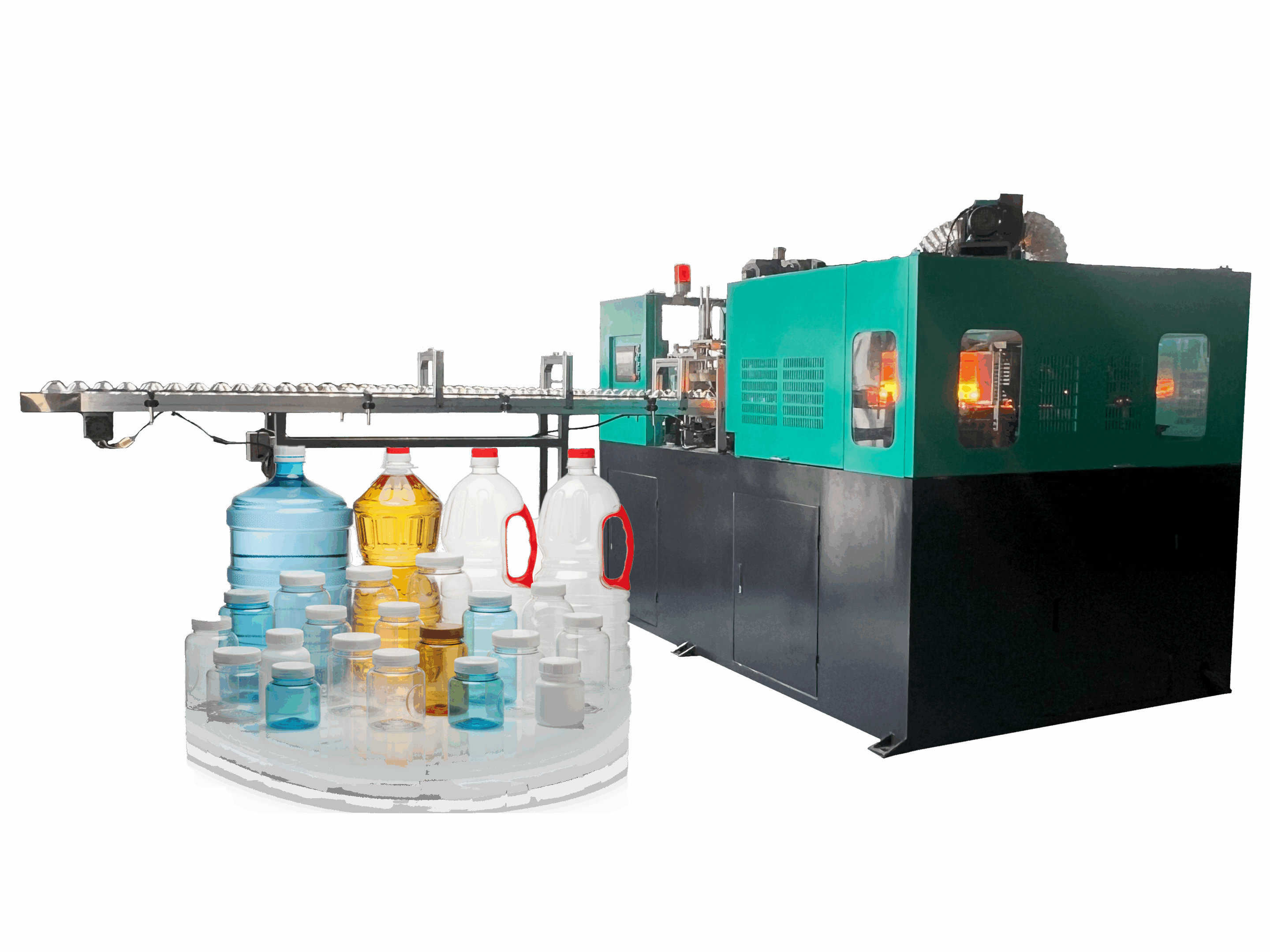
Panduan Utama untuk Mesin Pengolahan Plastik: Dari Pelet Mentah hingga Produk Jadi

Waktu membaca: (Jumlah kata: )

30 September 2025

Panduan Utama untuk Mesin Pengolahan Plastik: Dari Pelet Mentah hingga Produk Jadi

Hello, and welcome. My name is Alex, and for the better part of two decades, I’ve lived and breathed the world of plastics manufacturing. I’ve walked the floors of sprawling automotive factories, consulted with small startups making consumer goods, and gotten my hands dirty troubleshooting the machines that are the lifeblood of this industry. One of the most common questions I get, whether from an ambitious entrepreneur or a seasoned engineer, is always some variation of: “What machine do I actually need to make my product?”It’s the foundational question, and getting it right is the difference between a thriving business and a very expensive paperweight.


Look around you right now. The device you’re reading this on, the pen on your desk, the dashboard of your car, the water bottle you’ll drink from later—our modern world is quite literally built from plastics. The global market for plastic processing machinery was valued at over $35 billion USD in 2024 and is expected to grow steadily. This isn’t just an industry; it’s the engine of modern production.

This guide is the culmination of my experience. I’m going to pull back the curtain and give you a complete tour of the world of plastic processing machinery. We won’t just skim the surface. We will go deep into the major machine types, break down how to choose the right one for your specific needs, compare the critical decision of buying new versus used, and even cover the essentials of safety and maintenance. My goal is to arm you with the knowledge to make a confident, informed, and profitable decision.

Part 1: The Fundamentals of Plastic Processing

Before we can talk about the machines, we have to understand the magic they perform. At its core, all plastic processing, no matter how complex the machine, boils down to a beautifully simple three-step principle that I call “Melt, Shape, Cool.”

How Plastic is Transformed: The Core Principle of Melt, Shape, Cool

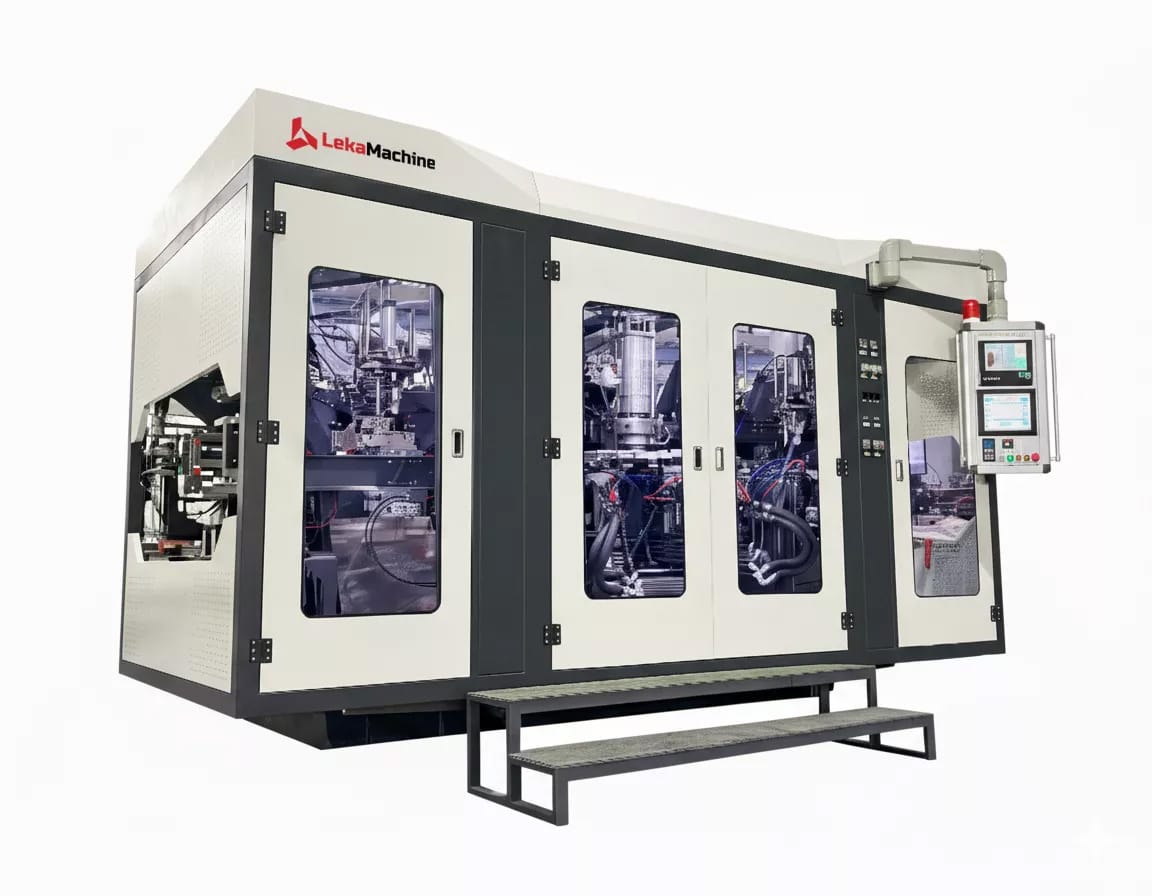
Blow Molding Machine Workflow

Imagine you’re baking a cake. You take your raw ingredients (flour, sugar, eggs) and mix them. That’s your raw plastic, which usually comes in the form of small pellets or granules.

  1. Melt: You put the cake batter in a hot oven. Similarly, we feed plastic pellets into a heated barrel. A large rotating screw pushes these pellets forward, and the combination of heat from heater bands and the friction from the screw’s movement melts them into a consistent, liquid-like state called “molten plastic” or “melt.”
  2. Shape: You pour the batter into a cake pan, which gives it its final form. In our world, this is the most critical step. We force this molten plastic—either by injecting it, pushing it, or blowing it—into a precisely engineered mold or through a die. This cavity is the negative space of the part we want to create.
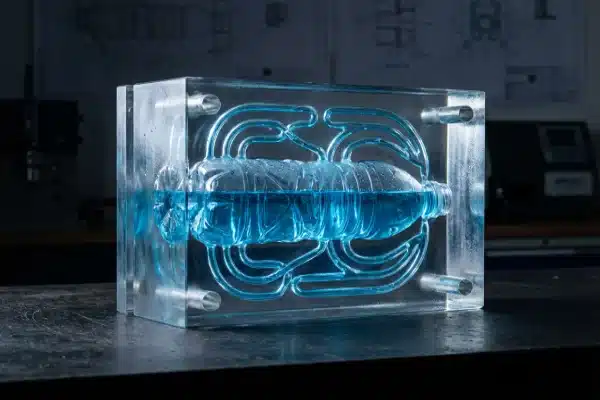
  3. Cool: You take the cake out of the oven and let it cool to become a solid object. Likewise, the mold is cooled (usually with circulating water), allowing the plastic to solidify and harden into its final, durable shape. The part is then ejected, and the cycle begins again, sometimes in mere seconds.

A crucial detail to understand here is the type of plastic you’re working with. The vast majority of processes use Thermoplastics. Think of them like butter or candle wax. You can melt them, solidify them, and then melt them again. This property makes them highly recyclable. Common examples include PET (soda bottles), HDPE (milk jugs), PVC (pipes), and Polypropylene (containers and car parts).

Less common in high-volume processing are Thermosets. Think of these like the cake batter we mentioned. Once you bake it, you can’t un-bake it. A chemical reaction occurs (curing) that permanently sets the material’s shape. They are known for high strength and temperature resistance. Examples include epoxy, silicone, and polyurethane. The machine you choose must be compatible with the material your product demands.

Why is Choosing the Right Plastic Processing Machinery So Critical?

I cannot overstate this. Your choice of machinery is the single most important capital investment you will make. It’s the heart of your operation, and it directly dictates four key business outcomes:

  • Product Quality & Consistency: The right machine will produce parts with incredible precision, down to the thousandth of an inch, every single time. The wrong machine will produce parts with flaws, inconsistent weights, and structural weaknesses, leading to customer rejection and brand damage.
  • Production Speed & Efficiency (Cycle Time): In manufacturing, time is literally money. An injection molding machine might complete a cycle in 10 seconds, while a rotational molding machine could take 40 minutes. Choosing a process that doesn’t match your volume needs will either leave you unable to meet demand or with a cripplingly high cost-per-part.
  • Operational Costs: This goes beyond the sticker price. A modern, all-electric machine might cost more upfront but can slash your energy bill by up to 50-70% compared to an older hydraulic machine. That’s a massive long-term saving.
  • Return on Investment (ROI): Ultimately, it all comes down to this. The right machine, properly utilized, will pay for itself and become a profit center. The wrong one will bleed money through downtime, material waste, high labor costs, and rejected parts. It’s a decision that echoes on your balance sheet for years to come.

Part 2: Major Types of Plastic Processing Machinery

Now for the main event. Let’s walk through the workhorses of the industry. Each one is a specialized tool designed for a specific job. Using the wrong one is like trying to hammer a nail with a screwdriver—it might work, but it will be messy, inefficient, and the result will be poor.

1. Injection Molding Machines: For High-Volume, Complex Parts

If there’s one machine that’s the undisputed king of the plastics world, it’s the injection molding machine. It is the most versatile and widely used process, responsible for a staggering variety of the plastic items we use every day. If you have a solid, detailed plastic part, chances are it was injection molded.

How it Works

The process is a high-speed, high-pressure cycle.

  1. Clamping: A powerful hydraulic or electric mechanism closes the two halves of a steel mold, holding it shut with immense force (measured in tons).
  2. Injection: The screw inside the heated barrel pushes forward like a plunger, injecting a precise “shot” of molten plastic into the mold’s cavity at very high pressure, filling every tiny detail.
  3. Cooling: The plastic cools and solidifies inside the mold. This is often the longest part of the cycle.
  4. Ejection: The mold opens, and ejector pins push the finished part out, where it can be collected by a robot or dropped into a bin. The mold then closes, and the cycle repeats.

Komponen Utama: Bagian utamanya adalah unit penjepit (yang membuka dan menutup cetakan) serta unit injeksi (yang melelehkan dan menyuntikkan plastik). menutup untuk mencegahnya melesak. Kemudian, "pin tiup" utama turun, mengkalibrasi leher, dan menerapkan udara bertekanan tinggi. Cetakan itu sendiri adalah alat khusus yang diproduksi secara presisi yang menentukan bentuk bagian produk.

Produk yang Dihasilkan: Bata Lego (contoh klasik presisi), tutup botol, casing ponsel, casing remote TV, dashboard mobil, jarum suntik medis, konektor listrik, dan komponen teknik yang kompleks.

KeuntunganKekurangan
Presisi & Kompleksitas Tak Tertandingi: Dapat menghasilkan bagian yang sangat rumit dan detail.Biaya Cetakan Awal yang Tinggi: Cetakan harganya mahal, seringkali mencapai puluhan ribu dolar atau lebih.
Sangat Baik untuk Produksi Massal: Setelah berjalan, waktu siklus sangat cepat (hitungan detik), menghasilkan biaya per bagian yang sangat rendah.Tidak Efektif Biaya untuk Produksi Skala Kecil: Biaya cetakan yang tinggi sulit dijustifikasi untuk produksi volume rendah.
Biaya Tenaga Kerja Rendah & Otomatisasi Tinggi: Proses ini mudah diotomatisasi dengan robotika.Waktu Setup yang Lebih Lama: Mengganti cetakan berat dan menyetel prosesnya bisa memakan waktu berjam-jam.
Pilihan Material yang Luas: Dapat bekerja dengan hampir semua termoplastik.Kendala Desain: Beberapa geometri (seperti undercut) dapat menambah kompleksitas dan biaya yang signifikan pada cetakan.

Common Injection Molding Defects and How to Troubleshoot Them

Berdasarkan pengalaman saya, bahkan setup terbaik pun dapat mengalami masalah. Mengetahui apa yang harus diperhatikan adalah kuncinya. Berikut adalah beberapa cacat paling umum yang saya lihat di lantai pabrik.

CacatIsyarat VisualPenyebab Umum
FlashLapisan tipis plastik berlebih yang keluar dari rongga cetakan, biasanya di sepanjang garis pisah.1. Gaya penjepit terlalu rendah.
2. Tekanan atau kecepatan injeksi terlalu tinggi.
3. Cetakan aus atau rusak.
Tanda WastafelKawah kecil atau cekungan di permukaan, biasanya di atas bagian produk yang lebih tebal.1. Tekanan atau waktu penahanan tidak memadai.
2. Waktu pendinginan terlalu singkat.
3. Suhu leleh terlalu tinggi.
WarpingProduk melengkung atau bengkok dari bentuk yang diinginkan setelah pendinginan.1. Pendinginan tidak merata di dalam cetakan.
2. Produk dikeluarkan saat masih terlalu panas.
3. Desain produk yang buruk (misalnya, ketebalan dinding tidak seragam).
Short Shot (Suntikan Kurang)Produk tidak lengkap karena plastik cair tidak sepenuhnya memenuhi rongga cetakan.1. Ukuran suntikan tidak cukup.
2. Tekanan atau kecepatan injeksi terlalu rendah.
3. Gerbang atau ventilasi pada cetakan tersumbat.

2. Mesin Ekstrusi: Untuk Bentuk Linier Kontinu

Jika cetak injeksi adalah tentang membuat benda, individual, maka ekstrusi adalah tentang membuat panjang suatu bentuk yang kontinu. Analogi inti yang selalu saya gunakan adalah memeras pasta gigi dari sebuah tabung. Bentuk bukaan tabung (die) menentukan bentuk pita pasta gigi yang keluar.

How it Works

Ini adalah proses yang lebih sederhana dan lebih kontinu dibandingkan cetak injeksi. Butiran plastik dimasukkan ke dalam laras berpemanas dengan sekrup. Sekrup melelehkan plastik dan mendorongnya secara stabil ke depan, memaksanya melalui die berbentuk di ujungnya. Profil kontinu yang dihasilkan, disebut “ekstrudat”, kemudian didinginkan (seringkali dalam bak air) dan dipotong sesuai panjang atau digulung ke dalam gulungan.

Produk yang Dihasilkan: Proses ini untuk segala sesuatu yang panjang dan seragam dalam penampangnya. Contohnya pipa (PVC, PEX), bingkai jendela, pelapis dinding vinil, pagar dek, talang hujan, sedotan minum, dan film atau kantong plastik (menggunakan die melingkar khusus).

KeuntunganKekurangan
Volume Produksi Tinggi: Ini adalah proses kontinu yang dapat berjalan 24/7, menghasilkan produk dalam jumlah sangat besar.Terbatas pada Penampang Seragam: Anda tidak dapat membuat bagian multi-dimensi yang kompleks.
Biaya Perkakas Rendah: Die jauh lebih sederhana dan lebih murah untuk dibuat dibandingkan cetakan injeksi yang kompleks.Finishing Pasca-Ekstrusi Sering Diperlukan: Produk seringkali perlu dipotong, dibor, atau dirakit setelah dibuat.
Serbaguna untuk Berbagai Profil: Satu lini ekstrusi dapat membuat banyak produk berbeda hanya dengan mengganti die.Low Product Complexity: The parts are inherently simple in their geometry.

Troubleshooting Common Extrusion Problems

Ekstrusi memerlukan pemantauan konstan. Berikut beberapa masalah yang dapat muncul:

MasalahIsyarat VisualPenyebab Umum
Melt Fracture (Keretakan Lelehan)Permukaan ekstrudat yang kasar, terdistorsi, atau bergelombang.1. Kecepatan lelehan melalui die terlalu tinggi.
2. Suhu lelehan terlalu rendah, membuat plastik terlalu kental.
Die Swell (Pembengkakan Die)Ekstrudat mengembang ukurannya setelah keluar dari die. (Pembengkakan tertentu normal, tetapi pembengkakan berlebihan adalah masalah).1. Geometri die tidak tepat (panjang land terlalu pendek).
2. Elastisitas lelehan tinggi dari polimer spesifik yang digunakan.
Surging (Lonjakan)Output dari ekstruder berfluktuasi, menyebabkan variasi ketebalan atau diameter produk.1. Pengumpanan bahan baku yang tidak konsisten dari hopper.
2. Sekrup atau barrel yang aus.
3. Fluktuasi suhu pemanas.

3. Mesin Blow Molding: Untuk Produk Berongga

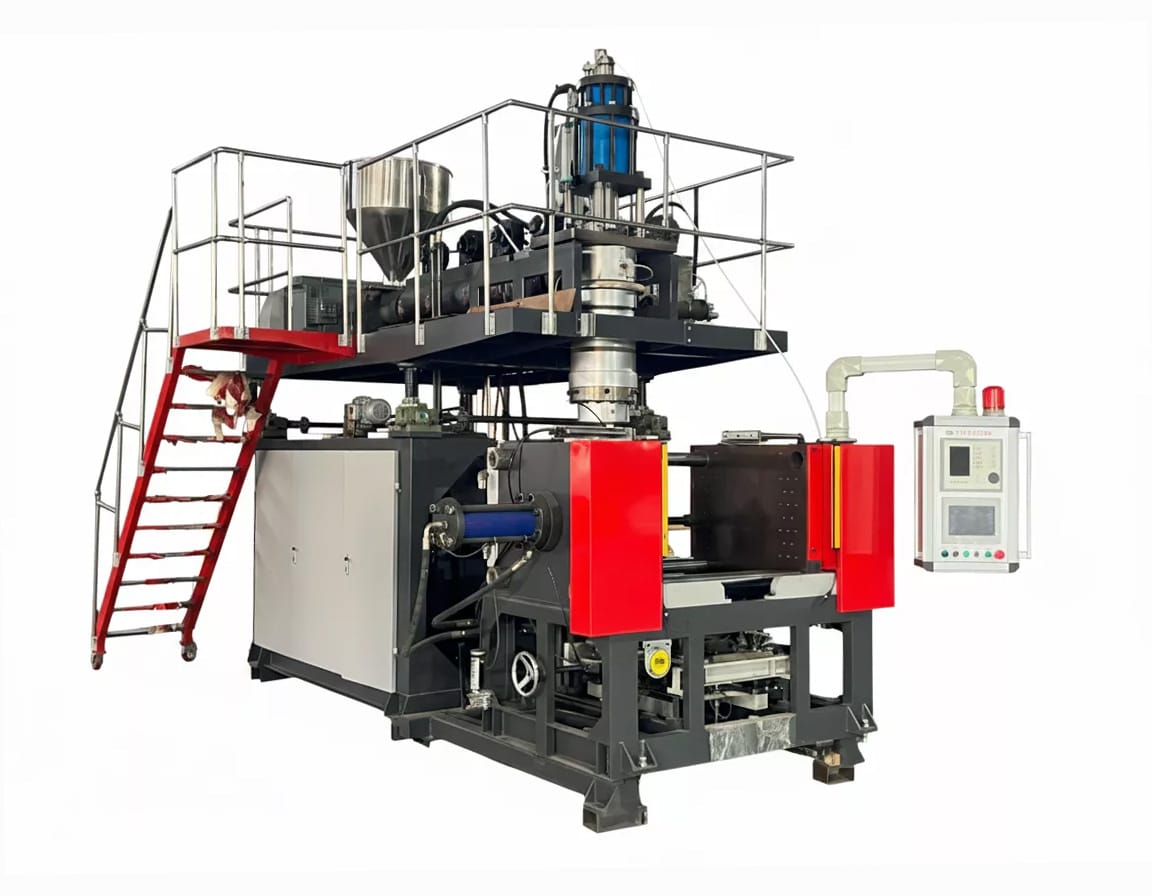
Bagaimana menurut Anda kita mendapatkan miliaran botol plastik berdinding tipis yang seragam sempurna? Jawabannya adalah blow molding, sebuah proses brilian yang seperti versi high-tech dari peniupan kaca. Jika produk Anda perlu berongga dan menampung sesuatu (seperti cairan, bubuk, atau bahkan hanya udara), ini adalah proses Anda.

How it Works

  1. Buat Parison: Pertama, mesin membuat tabung berongga dari plastik leleh, disebut “parison”. Ini biasanya dilakukan dengan ekstruder kecil.
  2. Tangkap dalam Cetakan: Cetakan dua bagian menutup di sekitar parison, menjepitnya hingga tertutup di bagian bawah.
  3. Tiup: Sebuah pin dimasukkan ke bagian atas parison, dan udara bertekanan ditiupkan, mengembangkan plastik lunak seperti balon sampai menekan dinding cetakan yang dingin.
  4. Dinginkan & Keluarkan: Plastik mendingin dan memadat menjadi bentuk cetakan. Cetakan terbuka, dan bagian berongga yang sudah jadi dikeluarkan.

Produk yang Dihasilkan: Ini adalah metode andalan untuk wadah berongga apa pun. Botol air, jerigen susu, botol sampo dan deterjen, drum dan tong besar, tangki bahan bakar otomotif, dan mainan berongga.

KeuntunganKekurangan
Ideal untuk Bagian Berongga: Ini adalah cara paling efisien untuk memproduksi objek berongga dalam skala besar.Terbatas pada Bentuk Berongga: Tidak dapat menghasilkan bagian padat.
Siklus Produksi Cepat: Prosesnya sangat cepat, terutama untuk botol kecil.Mengontrol Ketebalan Dinding Bisa Rumit: Mencapai dinding yang seragam sempurna bisa menjadi tantangan.
Biaya Perkakas Rendah: Cetakan umumnya lebih murah daripada cetakan injeksi bertekanan tinggi.Limbah Material (Flash): Proses sering menciptakan material berlebih (flash) yang perlu dipotong dan didaur ulang.

Common Blow Molding Issues and Solutions

Ketebalan dinding adalah hal yang sangat penting dalam blow molding. Di sinilah sebagian besar masalah muncul.

MasalahIsyarat VisualPenyebab Umum
Ketebalan Dinding Tidak MerataDinding wadah terlihat lebih tebal di beberapa area dan berbahaya tipis di area lain.1. Parison tidak terpusat di dalam cetakan.
2. Suhu lelehan tidak konsisten menyebabkan parison melorot.
3. Udara bocor dari cetakan.
Lubang atau RobekanLubang pada bagian yang sudah jadi.1. Kontaminasi pada bahan baku plastik.
2. Parison terlalu dingin dan teregang terlalu jauh, menyebabkannya robek.
Flash BerlebihanSejumlah besar material yang dipotong, yang boros dan memperlambat produksi.1. Kedua bagian cetakan tidak menutup dengan benar.
2. Tekanan lelehan terlalu tinggi.

4. Jenis Mesin Penting Lainnya yang Perlu Anda Ketahui

  • Thermoforming: Ini adalah proses yang lebih sederhana di mana lembaran plastik dipanaskan hingga menjadi lentur, lalu direntangkan di atas atau ke dalam cetakan dan didinginkan. Bayangkan kemasan kerang plastik untuk beri, tutup cangkir kopi sekali pakai, dan cangkir yogurt. Ini sangat bagus untuk kemasan berdinding tipis.
  • Rotational Molding (Rotomolding): Untuk membuat bagian berongga, sangat besar, dan tanpa sambungan, rotomolding adalah yang terbaik. Serbuk plastik ditempatkan di dalam cetakan logam besar. Cetakan kemudian dipanaskan dan diputar perlahan pada dua sumbu, memungkinkan serbuk meleleh dan melapisi bagian dalam cetakan secara merata. Hasilnya adalah bagian yang sangat kuat dan bebas tegangan. Bayangkan tangki penyimpanan air besar, kayak, seluncuran taman bermain, dan kerucut lalu lintas.
  • Mesin Daur Ulang Plastik: Ini adalah kategori yang berkembang pesat dan sangat penting. Ini bukan satu mesin melainkan sebuah sistem mesin. Ini mencakup mesin penghancur untuk memecah limbah, jalur pencucian untuk membersihkannya, dan pelletizing extruders that melt the clean plastic flakes and turn them back into uniform raw material pellets that can be used to make new products.

Part 3: How to Choose the Right Plastic Processing Machine: A Buyer’s Guide

Alright, now that you understand the tools, let’s talk about how to pick the right one from the toolbox. When a client comes to me asking what machine to buy, I don’t start by talking about machines. I start by talking about their product. The product dictates the process, not the other way around. I’ve seen people buy a machine they got a “good deal” on, only to find it’s completely wrong for the part they need to make. That’s a catastrophic mistake.

Key Factors to Consider Before You Buy

Let’s break down the decision-making process into four critical pillars. You need a solid answer for each of these before you even think about talking to a sales rep.

  1. The Product: This is your north star.
    • Geometry & Complexity: Is your part solid and intricate? Injection Molding. Is it hollow? Blow Molding. Is it long and uniform? Extrusion. Is it a massive, hollow tank? Rotational Molding. This is the first and most important cut.
    • Size & Weight: The physical size of your part determines the size of the machine. For injection molding, this is measured in “clamping tonnage”—the force needed to hold the mold shut. A tiny electrical connector might need a 30-ton press, while a car bumper needs a 3,000-ton behemoth.
    • Required Precision: Are you making a life-saving medical device with tolerances of a few microns, or a simple garden flower pot? The precision you need will dictate the quality (and cost) of the machine and mold you require.
  2. The Material: What plastic does your product need to be made from?Some materials like PVC are challenging to run and require specialized screws and barrels to prevent corrosion. High-temperature materials like PEEK or Ultem require machines capable of reaching and maintaining much higher temperatures. You must ensure the machine you’re considering is engineered to handle your specific polymer.
  3. Production Volume: How many parts do you need to make, and how fast?Are you making 10 million bottle caps a year or 500 kayaks? For 10 million parts, you need a high-speed, multi-cavity injection molding system. For 500 kayaks, a rotational molding setup is perfect. Mismatching volume is a recipe for financial disaster. Be realistic about your market demand.
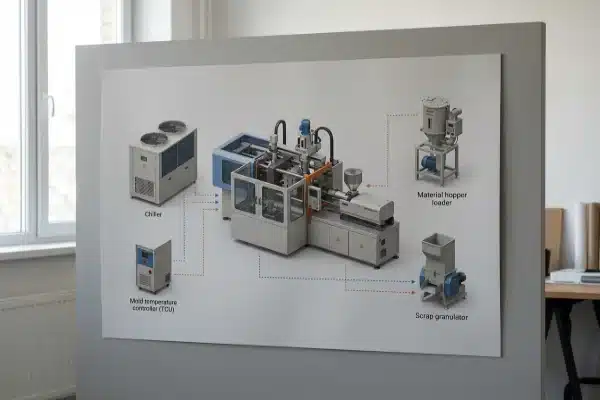
  4. Budget: This is about more than just the machine’s price tag.You need to budget for the entire “cell”: the machine itself, the mold/die (which can be hugely expensive), auxiliary equipment (material dryers, chillers, grinders, robots), installation, shipping, and training for your staff. I always advise clients to budget for the total cost of ownership, not just the initial purchase price.

Get Our Free Machine Purchase Checklist! (PDF)

This process can be overwhelming. That’s why I’ve put together a comprehensive checklist that walks you through every question you need to ask—from part design and material specs to power requirements and maintenance needs. Don’t talk to a salesperson without it.

Click here to download

Should You Buy New or Used Plastic Processing Equipment?

This is one of the biggest debates, and frankly, there’s no single right answer. It completely depends on your budget, risk tolerance, and technical expertise. I’ve seen both strategies succeed and fail spectacularly.

Here’s a head-to-head comparison based on my experience:

FaktorBuying New EquipmentBuying Used Equipment
Biaya AwalHigh. You’re paying a premium for the latest technology and a machine with zero wear and tear.Significantly Lower. You can often get a capable machine for 30-60% of the cost of a new one. This is the primary driver for the used market.
TeknologiCutting-Edge. You get the latest in energy efficiency (all-electric drives), smart controls (Industry 4.0), and automation.Proven, but Dated. The machine might be a workhorse, but it will likely be less energy-efficient and lack modern data-tracking and self-diagnostic capabilities.
Warranty & SupportComprehensive. The manufacturer provides a full warranty, technical support, training, and readily available parts.None (“As-is, where-is”). You are on your own. There is no warranty. If it breaks the day after you install it, the repair bill is yours.
Waktu PimpinLong. It can take anywhere from 3 to 12 months for a new machine to be built and delivered.Immediate. You can often find a machine that is available to be shipped right away.
RiskLow. The machine is guaranteed to work as specified out of the box.High. You’re buying a machine with an unknown history. It could have hidden mechanical problems, electrical issues, or a worn-out screw and barrel. A thorough inspection by an expert is non-negotiable.

My advice?

  • Buy New if: You have the capital, your product requires the highest precision, you want maximum energy efficiency, and you cannot afford the risk of unexpected downtime.
  • Buy Used if: Your budget is tight, you have a strong in-house technical team that can inspect and repair equipment, the technology for your product hasn’t changed much, and you’ve found a reputable dealer (like PlastiWin or others) who can vouch for the machine’s condition.

How Much Does Plastic Processing Machinery Cost?

This is the million-dollar question—sometimes literally. There’s no simple “price list.” The cost is highly dependent on type, size, brand, and features. A machine from a top-tier German or Japanese brand will cost significantly more than one from a reputable Taiwanese or Chinese manufacturer.

However, to give you a rough ballpark, here are some very general estimates. Please, use these for preliminary budgeting only!

Machine TypeSizeEstimated New Price Range (USD)Estimated Used Price Range (USD)
Cetakan InjeksiSmall (50-150 Ton)$50,000 – $150,000$15,000 – $60,000
Cetakan InjeksiMedium (300-500 Ton)$180,000 – $400,000$50,000 – $120,000
EkstruderSmall (2.5 inch / 65mm)$60,000 – $150,000$20,000 – $60,000
Cetakan tiupSmall Bottle Machine$80,000 – $250,000$30,000 – $90,000

Remember the hidden costs! Auxiliary equipment can easily add another 20-50% to the total cost. Don’t get caught by surprise.

Part 4: Operational Essentials: Safety, Maintenance, and Compliance

Let me be blunt: there is no room for compromise on safety. These are powerful, heavy industrial machines that operate at high temperatures and extreme pressures. A beautiful, efficient production line means nothing if your people aren’t safe. Building a culture of safety and proactive maintenance from day one is essential.

Critical Safety Protocols for Operating Plastic Machinery

  • Personal Protective Equipment (PPE): At a minimum, this means safety glasses with side shields and heat-resistant gloves. Depending on the noise level, hearing protection may also be necessary.
  • Lockout/Tagout (LOTO): This is arguably the most important safety procedure in any factory. Before anyone performs maintenance or enters a machine’s operational area, the machine must be completely de-energized (electrical, hydraulic, pneumatic) and locked out, with a tag indicating who is working on it. This prevents accidental startup and has saved countless lives.
  • High Temperature & Pressure Awareness: Molten plastic can be over 400°F (200°C), and hydraulic systems can operate at over 2,000 PSI. Leaks can cause severe burns or injection injuries. All operators must be trained to respect these hazards.
  • Machine Guarding: All safety guards, gates, and emergency stop buttons must be in place and functioning perfectly. Never, ever bypass a safety feature to “speed things up.” It’s a direct path to tragedy.

A Basic Maintenance Checklist to Maximize Machine Lifespan

A well-maintained machine is a reliable and profitable machine. Neglect is its worst enemy. Here is the basic weekly checklist I recommend for every press on your floor:

  • Check Fluid Levels: Inspect hydraulic oil levels and look for any leaks around hoses and fittings.
  • Lubricate: Ensure all grease points on the clamping mechanism and other moving parts are properly lubricated according to the manufacturer’s schedule.
  • Cleanliness: Keep the area around the machine clean and free of oil, water, and plastic pellets. A clean machine is easier to inspect for problems.
  • Check Heater Bands: Verify that all temperature zones on the barrel are heating correctly.
  • Inspect Safety Features: Physically test the emergency stop buttons and ensure all safety gates are functioning and interlocked.
  • Listen: Sometimes the first sign of a problem is a new or unusual noise—a squeal, a clank, a hiss. Train your operators to report anything out of the ordinary immediately.

Understanding Industry Standards and Compliance (e.g., ISO, CE)

When you’re looking at machinery, especially from international sources, you’ll see certification marks. Two of the most important are:

  • CE Marking: This indicates that a machine sold within the European Economic Area meets the EU’s high safety, health, and environmental protection requirements. It’s a strong indicator of a well-designed and safe machine.
  • ISO 9001: This is a certification for the manufacturer’s quality management system. It doesn’t certify the machine itself, but it shows that the company has robust processes in place for design, production, and quality control, which is a very good sign.

Part 5: The Industry Ecosystem and Essential Resources

You’re not alone on this journey. A rich ecosystem of manufacturers, suppliers, and publications exists to support the industry.

Leading Manufacturers and Brands to Know

The landscape of manufacturers is vast, but they generally fall into a few tiers.

  • Premium European & Japanese Brands: (e.g., Arburg, Engel, KraussMaffei, Sumitomo Demag, Nissei). Known for cutting-edge technology, incredible precision, and reliability—with a premium price tag to match.
  • North American Brands: (e.g., Milacron, Husky, UBE). Strong players with a long history, particularly in specific market segments like packaging and large tonnage machines.
  • Value-Oriented Asian Brands: (e.g., Haitian, Yizumi, Chen Hsong). These brands, particularly from China and Taiwan, have made enormous strides in quality and now offer incredible value. Haitian is, by volume, the largest seller of injection molding machines in the world.

Where to Find More Information: Magazines and Catalogs

To stay current, you need to read. My go-to resources are:

  • Industry Magazines: Publications like Plastics Machinery & Manufacturing yang keluar Plastics Technology are invaluable for news on new technologies, market trends, and expert columns.
  • Catalogs & Parts: If you need parts or auxiliary equipment, companies like Plastic Process Equipment, Inc. (PPE) offer extensive catalogs. For specific machine parts, the best way to find a PDF catalog is to search Google for "[Brand Name] [Machine Model] parts catalog PDF".

Part 6: The Future of Plastic Processing: Trends to Watch

This industry never stands still. Three massive trends are shaping our future right now.

  • Sustainability & Circular Economy: This is the biggest one. The push for sustainability is driving innovation in two areas:
    1. Efisiensi Energi: All-electric machines are replacing hydraulic ones, dramatically reducing power consumption.
    2. Recycling: There’s huge investment in more sophisticated recycling machinery and processes to create a “circular economy” where plastic waste is efficiently turned back into high-quality raw materials. The ability to process recycled content is becoming a standard feature on new machines.
  • Industry 4.0 & Automation: The “smart factory” is here. Machines are now equipped with sensors that monitor their own health and performance in real-time. They can predict when a part is about to fail, automatically adjust parameters to maintain quality, and communicate with a central factory management system. This leads to less downtime, higher quality, and more data-driven decision-making.
  • Additive Manufacturing (3D Printing): While not a direct replacement for high-volume processes like injection molding, 3D printing is a revolutionary complementary technology. It’s used for rapid prototyping (to test a design before cutting an expensive steel mold), creating custom jigs and fixtures for the factory floor, and for low-volume production of highly complex parts.

Conclusion: Making a Smart Investment in Your Production Future

We have covered a tremendous amount of ground. We’ve gone from the basic “Melt, Shape, Cool” principle to the intricacies of troubleshooting common defects, the financial calculus of buying new versus used, and the future of the smart factory.

If there’s one thing I want you to take away from this guide, it’s this: choosing your plastic processing machinery is not just a technical decision; it’s a foundational business strategy. The choices you make will directly impact your product’s quality, your operational efficiency, and your company’s profitability for the next decade or more.

Do your homework. Understand your product inside and out. Be realistic about your budget and your volume needs. And never, ever compromise on safety and maintenance. The right machine, in the hands of a well-trained team, isn’t just a piece of capital equipment—it’s a license to print money.

Ready to find the right machine for your project? Contact our experts today for a free, one-on-one needs analysis. We’ll help you navigate the options and build the perfect production solution.

Tentang Penulis

Alex Thompson is a mechanical engineer and manufacturing consultant with over 20 years of hands-on experience in the plastics industry. Having managed production lines for Tier 1 automotive suppliers and consulted for over 50 startups in the consumer goods space, Alex specializes in process optimization, machinery selection, and building efficient, safe, and profitable manufacturing operations from the ground up.

Pertanyaan yang Sering Diajukan (FAQ)

Q1: What is the most common type of plastic processing machine?

A: By a significant margin, the injection molding machine is the most common and versatile. Its ability to produce a massive variety of complex, solid plastic parts with high precision and incredible speed makes it the backbone of the industry, used for everything from tiny medical components to large automotive panels.

Q2: How much does a small plastic injection molding machine cost?

A: The price varies greatly by brand, features, and condition, but as a general guideline, a new, small machine (in the 50 to 150-ton range) can cost anywhere from $50,000 to $150,000 USD. A reliable used machine in the same size range could be found for $15,000 to $60,000. Remember to budget for auxiliary equipment and installation on top of this price.

Q3: Can I make money with a plastic recycling machine?

A: Absolutely. A plastic recycling business can be very profitable, but its success depends on two key factors: securing a consistent, low-cost supply of clean plastic waste, and having a ready market of buyers for your recycled pellets. The machinery itself—shredders, washing lines, and pelletizers—is a significant investment, so a solid business plan is essential.

Q4: What’s the main difference between injection molding and extrusion?

A: The simplest way to think about it is in the output. Injection molding creates discrete, individual parts in a cyclical process (like a phone case). Extrusion creates continuous, long shapes in a non-stop process (like a pipe or a window frame). You choose one or the other based entirely on the geometry of your final product.

Q5: Where can I find used plastic processing machinery for sale?

A: You can find used equipment through several channels. Specialized dealers and online marketplaces like PlastiWin are a great place to start as they often inspect and sometimes refurbish the machines. You can also look at industrial equipment auctions and liquidations, or even purchase directly from factories that are upgrading their production lines. I always recommend hiring an independent technician to inspect any used machine before you purchase.


Buka Proses Pengadaan Mesin Blow Molding Profesional Sekarang!

    Slany Cheung

    Slany Cheung

    Penulis

    Halo, saya Slany Cheung, Manajer Penjualan di Lekamachine. Dengan pengalaman 12 tahun di industri mesin blow moulding, saya memiliki pemahaman yang mendalam tentang tantangan dan peluang yang dihadapi bisnis dalam mengoptimalkan produksi dan meningkatkan efisiensi. Di Lekamachine, kami berspesialisasi dalam menyediakan solusi blow moulding yang terintegrasi dan sepenuhnya otomatis, melayani industri mulai dari kosmetik dan farmasi hingga wadah industri besar.

    Melalui platform ini, saya bertujuan untuk berbagi wawasan berharga tentang teknologi blow moulding, tren pasar, dan praktik terbaik. Tujuan saya adalah untuk membantu bisnis membuat keputusan yang tepat, meningkatkan proses produksi mereka, dan tetap kompetitif dalam industri yang terus berkembang. Bergabunglah dengan saya saat kita mengeksplorasi inovasi dan strategi terbaru yang membentuk masa depan blow molding.

    Anda mungkin juga menyukai...

    0 Komentar

    Kirim Komentar

    Alamat email Anda tidak akan dipublikasikan. Ruas yang wajib ditandai *