
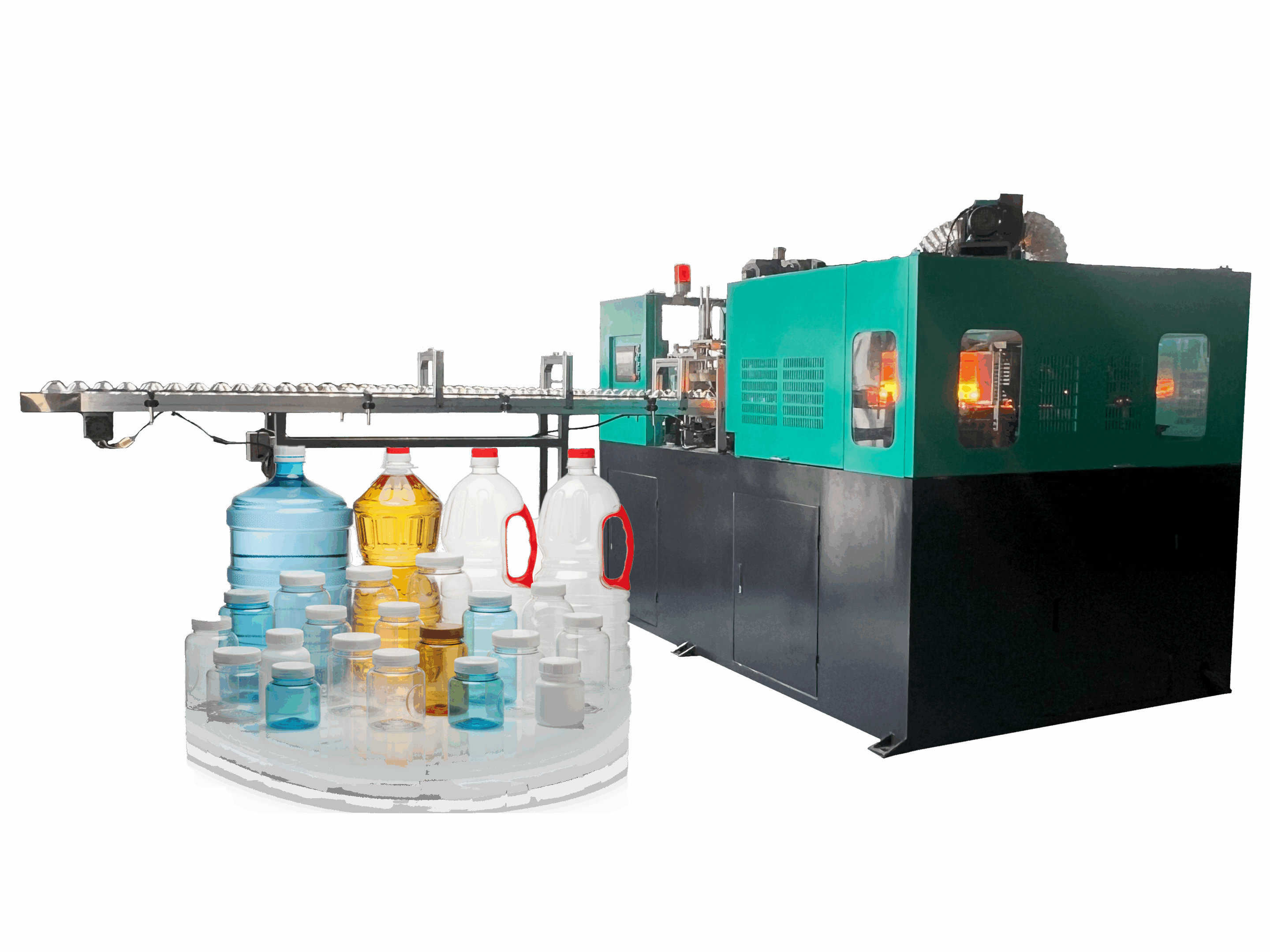
How do you master blow mould preform selection and processing for flawless bottles?

At our factory, we often see production lines struggle because of overlooked details in the initial setup. It is frustrating to watch high-speed machines produce scrap simply due to poor raw material choices. We solve this by analyzing the entire process before a single mold opens.
To master preform processing, you must match Intrinsic Viscosity (IV) to pressure needs, strictly control moisture below 50 ppm to prevent brittleness, and align heating profiles with wall thickness. Correct selection ensures compatibility between neck finishes and downstream filling lines while adhering to optimal stretch ratios for maximum strength.
Let’s break down the specific technical adjustments and selection criteria that will turn your raw PET into premium containers.
How do I select the correct preform weight and neck finish for my bottle design?
When we engineer lines for our clients, we find that selecting the wrong preform weight is the most expensive long-term mistake. It forces you to use more resin than necessary, draining profitability with every cycle.
Select preform weight based on the target bottle volume and desired wall thickness, ensuring the stretch ratio sits between 8:1 and 12:1. Choose a neck finish like PCO 1881 for carbonated drinks or 29/25 for water to match your filling equipment and minimize resin usage per unit.
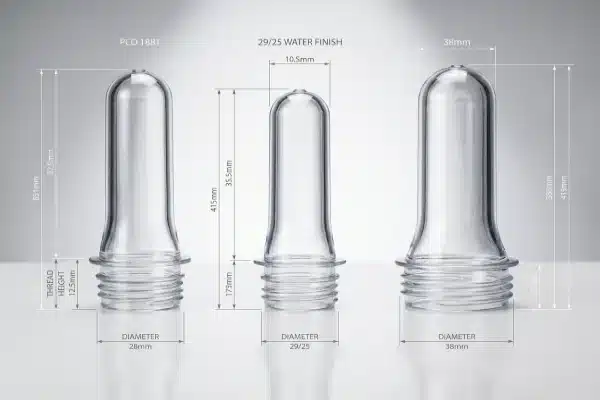
Selecting the right preform is not just about fitting the cap; it is about engineering the bottle for survival and cost-efficiency. At LEKA Machine, we guide our partners to look beyond the immediate geometry and consider the physics of the blow molding process.
The Critical Role of Stretch Ratios
The "Stretch Ratio" is the foundation of bottle strength. It defines how much the PET material stretches from its original preform shape to the final bottle shape. If you get this wrong, the molecular chains in the plastic won’t align correctly, leading to weak bottles or uneven wall distribution.
You must calculate the Total Area Stretch Ratio, which combines both the axial (vertical) and hoop (horizontal) stretch.
- Too Low (<8x): The material will not strain-harden. This results in poor drop impact resistance and a "lazy" distribution of plastic.
- Too High (>12x): You risk over-stretching, which causes stress whitening (pearlescence) and can even burst the preform during the blow phase.
Optimizing Weight and Neck Finish
Lightweighting is a massive trend, but it requires precision. Switching from a standard neck to a lighter variant, such as the 26/22 GME, can save up to 1.88g of resin per unit. Over a year of production, this equals tons of raw material savings.
However, compatibility is key. We have seen instances where a factory bought preforms with a PCO 1881 finish because it was cheaper, only to find their existing grippers and filling heads were designed for PCO 1810. The result was a costly retrofit of the downstream line.
Common Neck Finish Applications
| Neck Finish Standard | Typical Application | Key Advantage |
|---|---|---|
| PCO 1881 (28mm) | Carbonated Soft Drinks (CSD) | Short neck design reduces weight; high pressure retention. |
| 29/25 (29mm) | Still Water / Mineral Water | Lightweight; optimized for high-speed rotary capping. |
| 38mm 3-Start | Juices / Dairy | Wider opening for easier pouring; easier to clean. |
| 30/25 | High-End Water | Taller neck profile offers a premium look for branding. |
Always verify that the preform weight allows for a safe "Process Window." If you choose a preform that is too light, you will have razor-thin walls that deform under stack load. If it is too heavy, you waste money and struggle to cool the thick bottom, slowing down your cycle time.
What are the most common preform defects that will ruin my production yield?
Our technicians frequently visit facilities where operators blame the machine for what is actually a material defect. Seeing piles of rejected bottles due to misunderstood visual cues is painful, especially when the fix is simple.
Common defects include pearlescence caused by over-stretching cold material and haze resulting from overheating. You may also face yellowing from acetaldehyde formation due to moisture, or bottom leaks caused by crystalline gate nubs. Identifying these early prevents thousands of wasted units and protects your machinery.
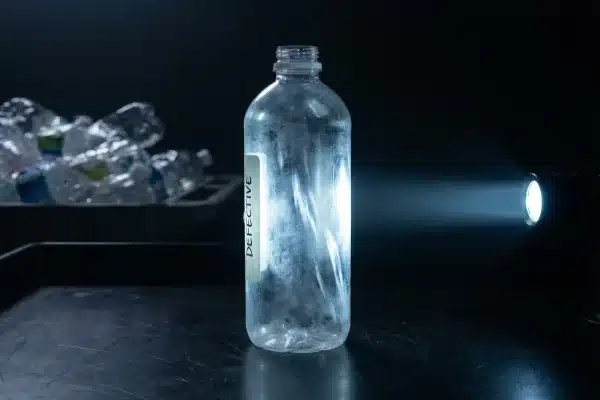
Defects in blow molding act as a diagnostic language. They tell you exactly what is happening inside the oven and the mold, provided you know how to read them.
Glass Transition (Tg) 1
Distinguishing Pearlescence from Haze
One of the most frequent points of confusion we encounter is the difference between a "white" bottle and a "hazy" bottle. To the untrained eye, they look similar, but the causes are opposites.
- Pearlescence (Stress Whitening): This usually looks like a pearl-white sheen. It happens when you try to stretch PET that is too cold. The material tears at a microscopic level rather than flowing.
- Solusi: Increase heat in that specific zone or reduce the pre-blow pressure delay.
- Cold Haze vs. Heat Haze:
- Heat Haze: If the bottle looks milky or opaque (like fog), the PET has crystallized because it was too hot. Solusi: Decrease oven temperature and increase ventilation.
- Cold Haze: A pearl-like opacity can sometimes be misidentified. Always check the physical temperature.
The Hidden Danger of Gate Nubs
The injection gate—the small point at the very center of the preform bottom—is a critical stress point. We always inspect this area for crystallinity (opacity).
If the gate nub is opaque, it means the plastic crystallized during the injection molding phase (likely due to poor cooling in the injection mold). In the blow molding phase, this crystallized spot will not stretch. It acts as a stress concentrator. When the stretch rod hits it, it can punch through or cause a micro-crack. This results in "bottom leaks" that are often only discovered after the bottle is filled and on the shelf.
Infrared (IR) energy 2
Moisture-Related Defects
Moisture is the silent killer of PET quality. If your preforms contain moisture above 50 ppm, hydrolysis occurs during reheating. This breaks the molecular chains.
- Visual Defect: Bubbles or a rough surface finish.
- Invisible Defect: Acetaldehyde (AA) formation, which affects the taste of water, and a dramatic drop in Intrinsic Viscosity (IV), causing bottles to shatter when dropped.
Troubleshooting Cheat Sheet
| Defect Appearance | Likely Cause | Corrective Action |
|---|---|---|
| Milky / Opaque Body | Overheating (Crystallization) | Reduce overall lamp percentage; check oven ventilation. |
| Pearl-White Sheen | Under-heating (Cold Stretch) | Increase heat in the affected zone; check lamp status. |
| Off-Center Gate | Bent Stretch Rod / Uneven Heat | Check rod alignment; ensure preform rotates in oven. |
| Thick Neck / Shoulder | Insufficient Heat near Neck | Increase Zones 1 & 2 intensity; shield neck finish. |
| Bottom Leaks | Gate Crystallinity / Over-stretch | Check preform gate quality; delay pre-blow timing. |
How does PET resin quality impact the strength and clarity of my final bottles?
We refuse to let our high-performance machines run on sub-standard raw materials because the output is never consistent. Low-quality resin leads to weak bottles that burst during filling, damaging both your reputation and our equipment’s reliability.
molecular weight 3
Resin quality directly dictates burst strength and stress crack resistance through its Intrinsic Viscosity (IV). High IV resin (above 0.80 dL/g) is essential for carbonated beverages, while lower IV suits still water. Furthermore, proper drying to remove moisture preserves molecular weight, ensuring bottles pass drop tests without shattering.
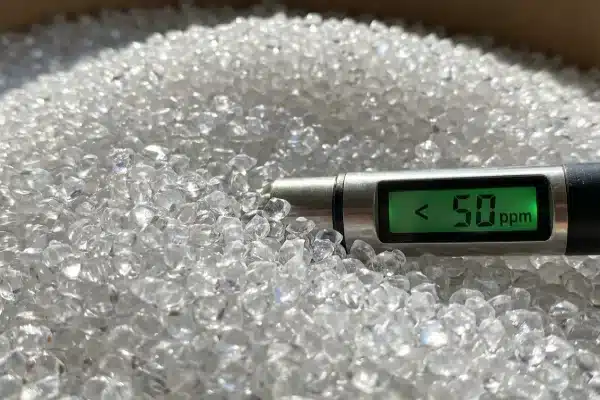
The quality of the bottle is determined before the preform even enters the blow molding machine. It starts with the resin chemistry.
hydrolysis 5
Intrinsic Viscosity (IV) Matching
Intrinsic Viscosity is a measure of the polymer’s molecular weight. Think of it as the length of the molecular chains. Longer chains (Higher IV) get tangled more easily, creating a stronger, tougher material.
- For Still Water (IV ~0.72 – 0.78 dL/g): You do not need extreme pressure resistance. Using a lower IV resin is easier to process and flows faster during injection, reducing cycle times.
- For CSD / Carbonated Drinks (IV > 0.80 – 0.85 dL/g): These bottles must withstand internal pressure from carbonation (often 4.0 volumes of CO2). If you use water-grade resin for CSD, the bottles will creep (expand) significantly on the shelf, losing carbonation, or they may burst under stress.
Using a high IV resin for a small water bottle is a waste of money and energy (harder to melt). Using low IV resin for soda is a safety risk.
acetaldehyde 6
Moisture Control and Hydrolysis
PET is hygroscopic; it absorbs water from the air. We cannot stress this enough: You must dry PET resin to below 0.06% (ideally <50 ppm) moisture before injection molding.
If wet resin is melted, a chemical reaction called hydrolysis occurs. The water molecules cut the polymer chains.
- IV Drop: You might buy 0.80 IV resin, but if processed wet, the preform might effectively have an IV of 0.70.
- Brittleness: The bottle will look fine and clear, but it will be brittle. A simple drop from waist height will shatter it like glass.
- Visuals: Severe moisture leads to "splay" marks (silver streaks) on the preform, which translate to visual defects on the bottle.
Impact of Additives and Reheat Agents
Modern production often uses "Fast Reheat" (FR) additives or colorants. These change how the material absorbs Infrared (IR) energy.
- Dark Colors: Absorb heat rapidly. If you run a black preform with settings meant for clear PET, you will melt it.
- FR Additives: Designed to improve machine efficiency. However, they narrow the process window. You must be aggressive with cooling and precise with heating to prevent degradation.
Resin Selection Guide
| Aplikasi | Recommended IV Range | Key Property Needed |
|---|---|---|
| Small Water (<500ml) | 0.72 – 0.76 dL/g | Flowability, Clarity, Cost. |
| Large Water (5L-20L) | 0.76 – 0.80 dL/g | Toughness, Drop Resistance. |
| Carbonated Drinks | 0.80 – 0.84 dL/g | Stress Crack Resistance (ESCR), Creep Resistance. |
| Hot Fill | 0.78 – 0.82 dL/g (Copolymer) | Thermal Stability, Crystallization control. |
What heating adjustments must I make to process different preform wall thicknesses efficiently?
In our testing facility, we constantly have to recalibrate our ovens when switching between thick and thin preforms. Ignoring the physics of wall thickness results in burnt surfaces or cold cores, making stable, high-speed production impossible.
injection gate 7
Thick-walled preforms require a soak time strategy with lower heat over longer durations to equilibrate core temperature without burning the surface. Conversely, thin walls need rapid, intense short-wave infrared penetration. Adjust oven lamp intensity and ventilation to ensure the inner wall temperature is sufficiently high for uniform stretching.

The goal of heating is not just to make the preform hot; it is to achieve a specific temperature profile where the inside is slightly hotter than the outside. This is difficult because we heat from the outside in.
PCO 1881 9
The Strategy for Thick Walls: "Soak Time"
Preforms with walls thicker than 4.0mm are notoriously difficult. Plastic is an insulator, meaning it resists heat transfer. If you blast a thick preform with high intensity, the outer skin will degrade (crystallize/haze) before the heat penetrates to the inner core.
- Our Approach: We use a "Low and Slow" profile.
- Reduce the voltage on the IR lamps.
- Slow down the heating track (or add more heating modules) to increase residence time.
- Soak Time: Allow time between heating zones (if possible) for the heat to conduct inward naturally. This ensures the core temperature equilibrates without the surface overheating.
Wavelength Matching
The type of IR radiation matters.
- Short-Wave IR (1.0-1.2 μm): Penetrates deeper into the PET. This is excellent for thick walls but requires specific lamp technology.
- Medium-Wave IR: Heats the surface efficiently but struggles to penetrate. Good for thin-walled water bottles.
The "Free-Blow" Test (Natural Stretch Ratio)
How do you know if your heating is right? We recommend the Free-Blow Test.
- Disconnect the mold halves or leave them open (if safety permits/machine allows).
- Heat a preform and blow it without the mold constraint.
- Observe the shape.
- Result: The bubble will expand until it hits its "Natural Stretch Ratio" (NSR).
- Analysis: If the bubble is pear-shaped or lopsided, your heating is uneven. If the bubble bursts too early, it is too hot. This test reveals the resin’s exact strain-hardening diameter, helping you verify if your mold volume forces the material beyond its natural limit.
Handling Aged Preforms
A hidden variable is the age of your stock. Preforms have "thermal memory."
- Fresh Preforms: Dry and consistent.
- Aged Preforms (>3 months): If stored in a humid warehouse, they absorb moisture. This changes the Glass Transition (Tg) behavior.
- Adjustment: Aged preforms typically require higher initial energy to "wake up" the molecules and initiate stretching. If you use settings from a fresh batch on an old batch, you will likely see cold-stretch defects.
Kesimpulan
Flawless bottle production is not an accident; it is the result of aligning physics with engineering. By selecting the right IV and neck finish, drying your resin, and tailoring your heating profile to the preform’s wall thickness, you eliminate waste and maximize profit.
Intrinsic Viscosity (IV) 10
Catatan kaki
- General definition of this thermal property. ↩︎
- Leading manufacturer explaining IR heating technology. ↩︎
- Educational resource explaining polymer chain physics. ↩︎
- Government safety standards for industrial ventilation. ↩︎
- Scientific overview of polymer degradation by water. ↩︎
- FDA regulations regarding PET contaminants and safety. ↩︎
- Major manufacturer of preform injection systems. ↩︎
- Definition of the material science phenomenon. ↩︎
- Official industry standard specifications for this neck finish. ↩︎
- Standard test method for determining IV in PET. ↩︎


0 Komentar