
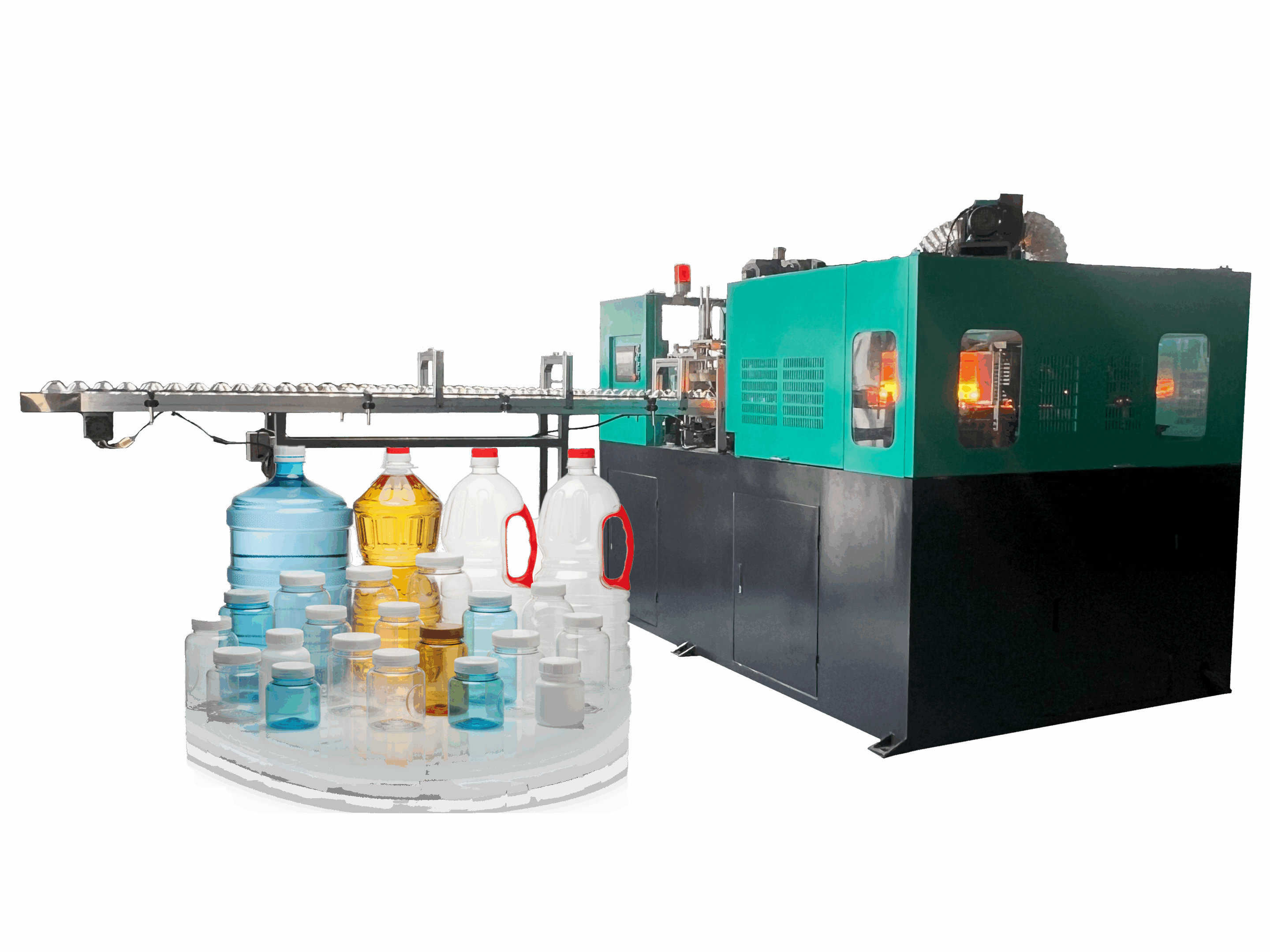

At our factory, we often see clients panic when a new machine arrives but the anchor bolts do not align with the pre-drilled holes vacuum loaders 1. This mismatch kills production schedules immediately.
To confirm anchor dimensions match, request a 3D STEP file rather than just 2D PDFs to visualize collisions. Verify the "No-Go Zones" for screw extraction and cabinet door swings, and cross-reference the dynamic floor load calculations with your facility’s structural blueprints before pouring concrete.
Here is the step-by-step guide we use to ensure your factory floor is ready for a seamless installation 1 meter (3 ft) 2.
When will you provide the detailed foundation drawing and layout plan?
In our engineering department, we delay releasing final drawings until the auxiliary equipment list is finalized to prevent costly layout errors later.
We provide preliminary layout plans two weeks after the deposit, but the detailed foundation drawing is issued only after confirming auxiliary equipment specs. This ensures the footprint accounts for vacuum loaders, drying hoppers, and mezzanine decks, preventing vertical interference with your factory’s roof trusses.
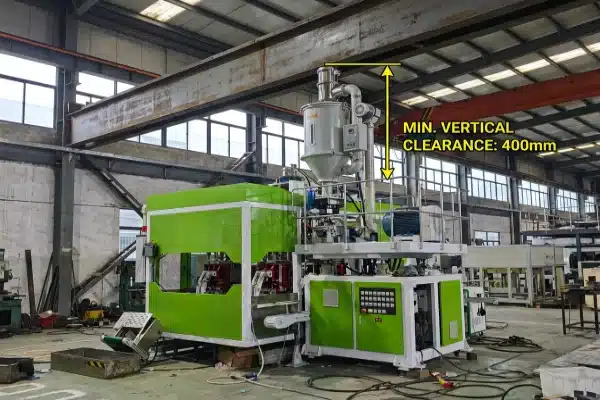
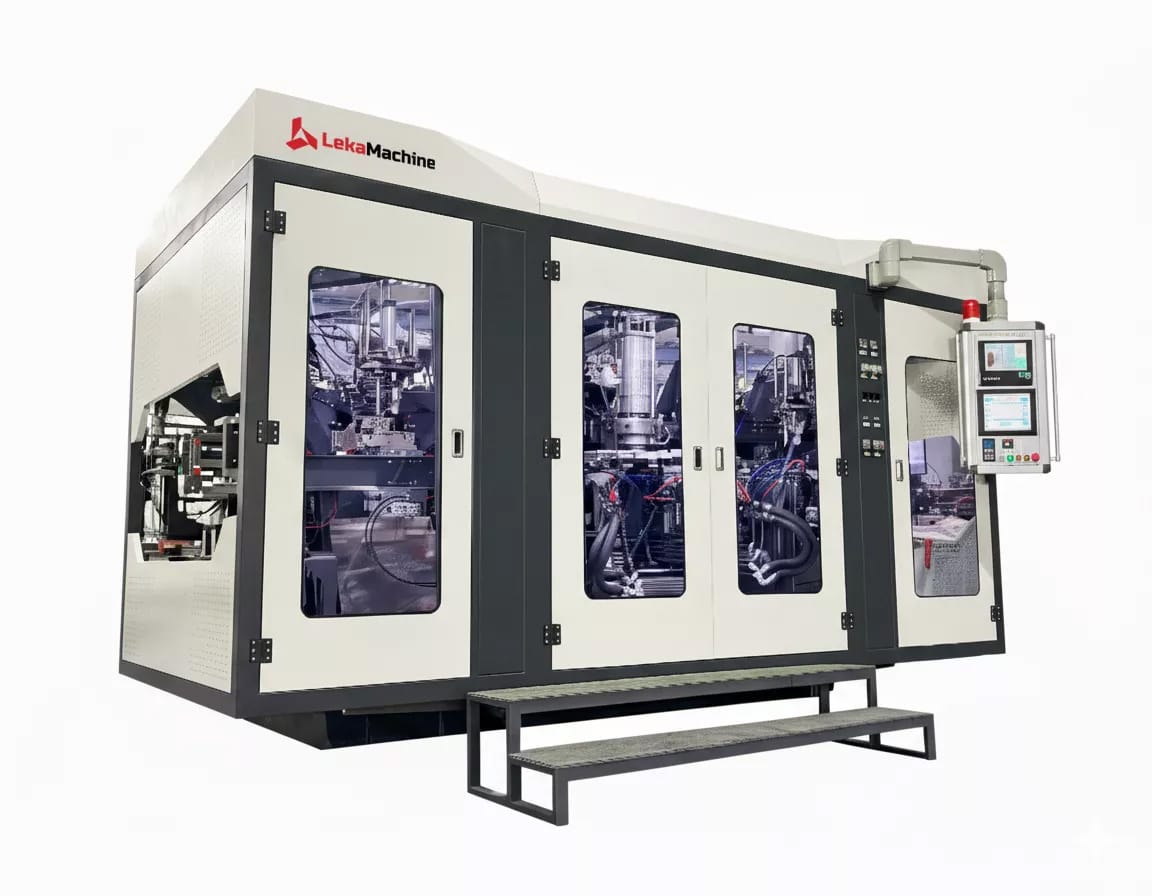
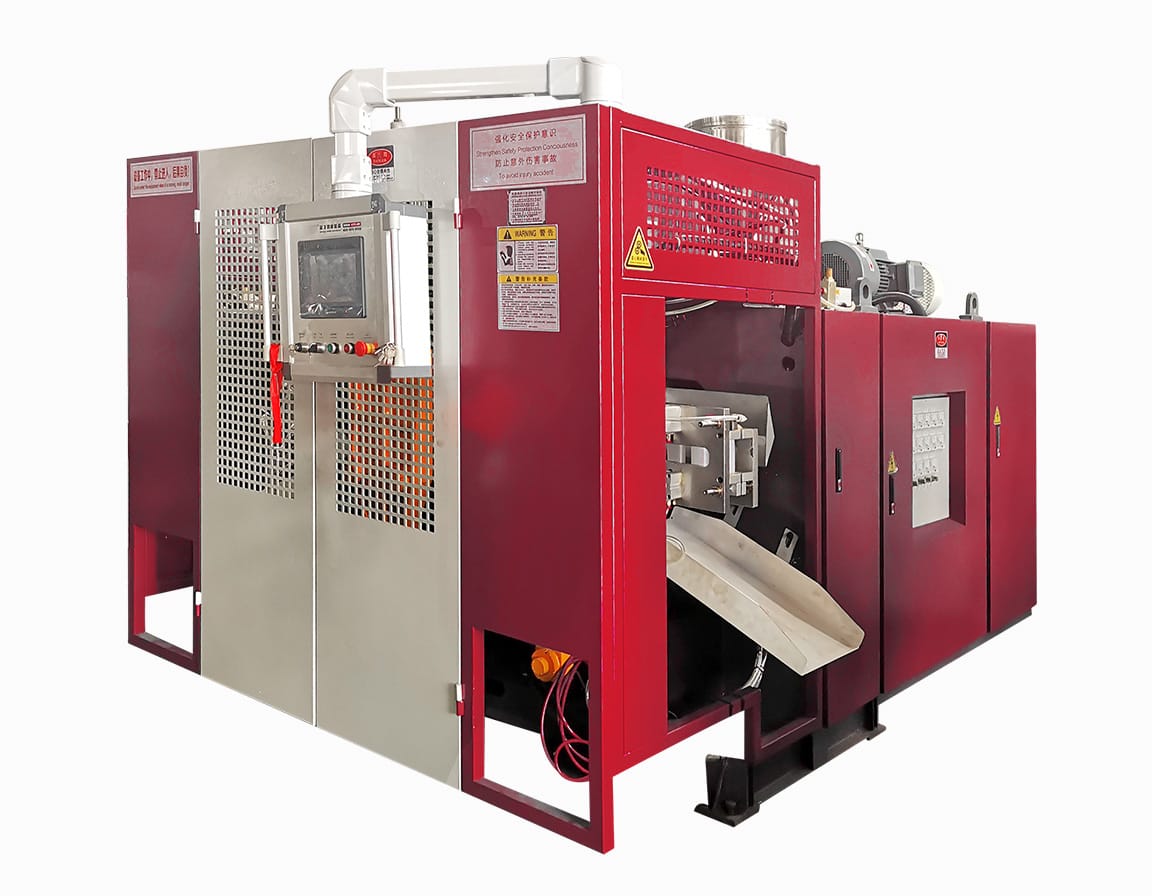
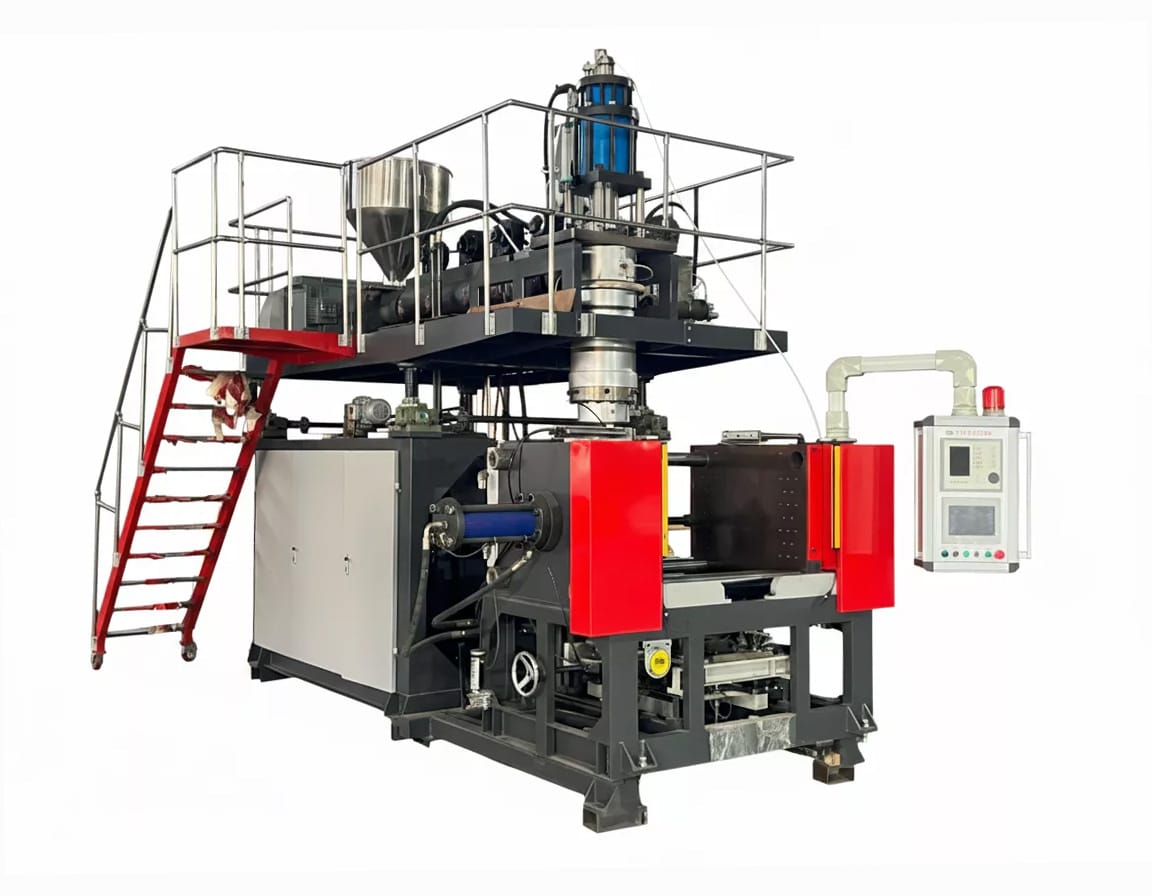
Many buyers assume the machine dimensions listed in the brochure are the final numbers. However, when we build a custom extrusion blow molding solution, the height and footprint change based on the configuration.
The Hidden Height Factor
The most common mistake we see involves vertical clearance. All-electric machines are generally taller than hydraulic ones because the servo motors are often mounted on top of the clamp or extrusion unit.
If you only look at the "machine height," you might miss the add-ons. You must add the height of the vacuum loader, , drying hopper, and the mezzanine deck. We have seen cases where a client’s roof trusses or overhead crane rails blocked the installation of the hopper, forcing them to modify the building structure at the last minute.
Demand a 3D STEP File
Do not rely on 2D PDFs. In our experience, 2D drawings hide three-dimensional problems. We always encourage clients to ask for a simplified 3D CAD model (.STEP) of the machine. You can drop this file into your factory’s digital twin or layout software. This instantly reveals collisions with building columns, cable trays, or low-hanging lights that a flat piece of paper will never show.
Comparison of Layout Data Sources
| Data Source | What It Shows | What It Misses | Risk Level |
|---|---|---|---|
| Sales Brochure | General footprint (L x W x H) | Ancillary equipment, door swings, service zones | Tinggi |
| 2D PDF Layout | Bolt locations, utility points | Overhead collisions (cranes/trusses), vertical clearance | Sedang |
| 3D STEP File | Full volumetric volume | None (if factory model is accurate) | Rendah |
By using a 3D model 3D CAD model (.STEP) 3, you can virtually "place" the machine in your facility weeks before it physically ships from our assembly line.
How much clearance is required around the machine for maintenance access?
When we visit customer sites, we frequently see machines boxed in by walls, making routine screw maintenance nearly impossible without moving the whole unit.
You must maintain a specific "Screw Extraction" zone behind the extruder equal to the screw length plus one meter. Additionally, allow a 1-meter safety buffer in front of electrical cabinets for door swings and arc flash safety, and ensure enough turning radius for forklifts during mold changes.
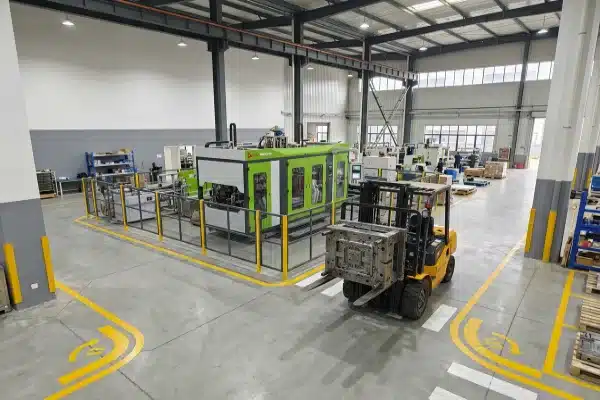
Space management is about more than just fitting the machine into the room. It is about serviceability and safety. If you block critical access points, simple maintenance tasks that should take two hours will take two days.
The "Screw Extraction" No-Go Zone
The most critical dimension is behind the machine. Over time, the extruder screw will need to be removed for cleaning or replacement. This is a rigid steel component that cannot be bent.
You must verify that the layout drawing specifically marks a "No-Go Zone" behind the extruder. This distance must be equal to the full length of the extruder screw plus 1 meter. If you build a wall, place a pillar, or install a permanent heavy rack in this zone, you will eventually have to disconnect and physically move the entire machine just to pull the screw out. This is a nightmare scenario that happens more often than you might think.
Electrical and Safety Clearance
Electrical codes (like NEC or IEC) are strict. You cannot place the machine right up against a wall on the cabinet side. We require at least 1 meter (3 ft) of clearance in front of any open electrical panel.
- Door Swing: You must account for the full arc of the largest cabinet door.
- Escape Route: If an arc flash or electrical fault occurs during troubleshooting, the technician needs space to jump back safely.
Logistics for Mold Changes
The machine fits, but can you load it? We always ask clients to check their forklift turning radius. Ensure your layout includes a wide enough turning aisle. Your forklift or mold cart needs to maneuver a heavy mold into the clamp area without hitting the safety fencing, the wall, or the neighboring machine.
Critical Clearance Dimensions Checklist
| Zone | Required Distance | Reason |
|---|---|---|
| Rear (Extruder) | Screw Length + 1.0m | Screw removal/maintenance |
| Front (Operator) | Min 1.2m | Operator movement & part takeout |
| Side (Electrical) | Max Door Width + 1.0m | Code compliance & technician safety |
| Perimeter | Forklift Turn Radius | Mold loading/unloading |
Can you confirm the exact location of electrical and water connection points?
Our assembly team places water manifolds on specific sides to keep operators dry, but site-specific cable trenches often conflict with standard machine designs.
You must verify if the gland plate is positioned for top or bottom cable entry to avoid violating bend radius limits. Furthermore, identify the specific "Clean Earth" grounding lug location for servo drives and ensure water manifolds are positioned on the non-operator side to prevent slip hazards.

Connecting utilities sounds simple, but all-electric machines have specific needs that differ from hydraulic ones. Mismatched connections result in messy cables, tripping hazards, and dangerous electrical noise.
The Isolation Transformer Footprint
All-electric machines often require a large, external Isolation Transformer or Line Reactor to handle voltage matching and mitigate harmonics. The surprise for many clients is that this component is often not inside the main electrical cabinet.
It is a separate heavy box, often 1m x 1m. You must verify its physical dimensions and the cable length limits. Usually, it must be placed within 3–5 meters of the machine. If your layout does not account for this extra footprint, you might end up blocking a walkway or a forklift lane.
Top vs. Bottom Cable Entry
Electric machines use massive power cables. These cables are stiff and very difficult to bend. You must confirm if the Gland Plate (where cables enter the cabinet) is on the top or the bottom.
- Top Entry: Requires overhead cable trays.
- Bottom Entry: Requires floor trenches.
Trying to force a top-entry machine to accept bottom-fed cables (or vice versa) often violates the cable's minimum bend radius, stressing the connections and risking failure.
Clean Grounding and Water Safety
High-speed servos create electrical noise. To protect the machine, we require a dedicated "Clean Earth" grounding rod (less than 5 Ohms), separate from the building’s general "dirty" ground. The foundation drawing must show exactly where this Grounding Lug is located to keep the grounding strap short.
Finally, check the water manifolds. We design them to be on the non-operator side. If your drawing shows them near the operator station, request a modification. Leaking hoses in the primary workspace create a chronic slip hazard that is easily avoidable.
Utility Connection Verification Table
| Utility | Key Question to Ask | Mengapa Ini Penting |
|---|---|---|
| Power Cables | Top or Bottom entry? | Avoids cable stress; dictates tray vs. trench. |
| Transformer | Internal or External? | Prevents surprise loss of floor space. |
| Grounding | Location of Clean Earth lug? | Protects sensitive servo drives from noise. |
| Chilled Water | Operator or Non-operator side? | Keeps the floor dry and safe. |
What are the floor load requirements for this specific all-electric model?
We calculate structural requirements differently for electric machines because their rapid acceleration creates distinct oscillation forces compared to hydraulic models.
Do not rely solely on static dead weight; your foundation engineer must calculate concrete depth based on the Dynamic Load to handle oscillation forces. High acceleration from electric servos creates a rocking moment, and ignoring this can cause the floor to crack or the machine to shift.
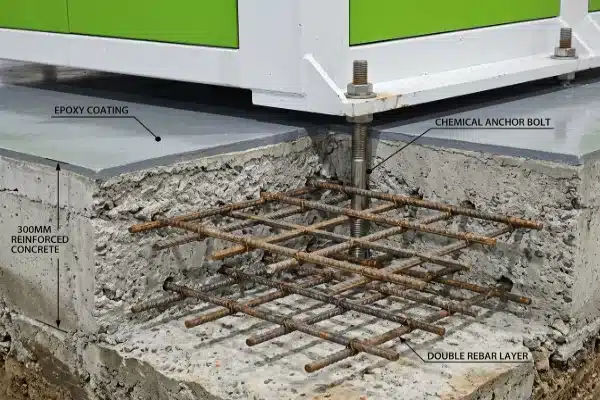
A common misconception is that if the floor can hold the weight of the machine, it is strong enough. For all-electric extrusion blow molding machines, this is not true. The physics are different.
Dynamic vs. Static Load
Hydraulic machines move relatively smoothly. Electric machines, however, are snappy. They have high acceleration and deceleration rates. This creates a "rocking" moment or Dynamic Load.
- Static Load: The dead weight of the machine sitting still.
- Dynamic Load: The force exerted when the heavy clamp opens and closes rapidly (often every few seconds).
If your civil engineer only calculates for static weight, the concrete may crack over time due to fatigue. The machine might even "walk" or shift its position, ruining alignment with downstream conveyors.
Foundation Depth and Reinforcement
We usually recommend a concrete depth of at least 200mm to 300mm (8 to 12 inches) with dual-layer rebar reinforcement for these machines. The concrete density should be high grade (C30 or higher).
Anchor Bolts and Leveling
Because of the rocking motion, standard expansion bolts are sometimes insufficient. We often recommend chemical anchors or J-bolts set into the concrete before pouring. This ensures the machine stays rigid. A rigid machine means consistent bottle weight and faster cycle times.
Floor Load Specification Guidelines
| Parameter | Standard Hydraulic | All-Electric High Speed |
|---|---|---|
| Primary Force | Vertical (Dead Weight) | Horizontal/Rocking (Dynamic) |
| Concrete Depth | Standard Industrial (150mm) | Reinforced (250mm+) |
| Anchoring | Standard Expansion Bolts | Chemical Anchors or Cast-in J-Bolts |
| Risk of Shifting | Rendah | High (requires better friction/anchoring) |
Kesimpulan
Correctly preparing your facility prevents expensive delays. By verifying the screw extraction zone, planning for dynamic Dynamic Load 5 dynamic floor load calculations 6 loads, and confirming utility entry points, you ensure your LEKA machine is ready to produce from day one.
Catatan kaki
1. This Wikipedia page defines vacuum loaders and their use in material handling. ↩︎
2. OSHA guidelines for safe distances around electrical panels. ↩︎
3. This Wikipedia page defines the STEP file format and its use in CAD software. ↩︎
4. This page defines isolation transformers and their use in electrical systems. ↩︎
5. This dictionary entry defines dynamic load in engineering terms. ↩︎
6. This page defines dynamic load and explains its importance in structural engineering. ↩︎


0 Komentar