
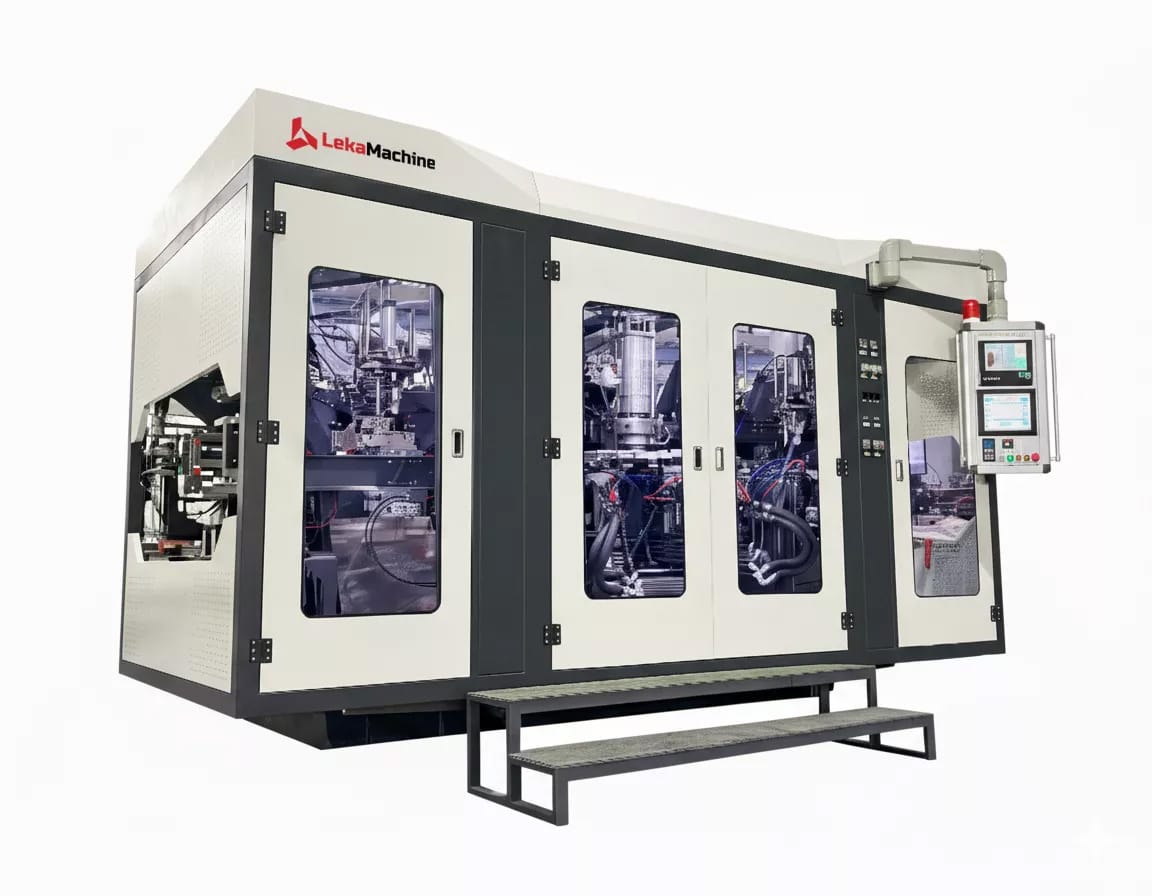
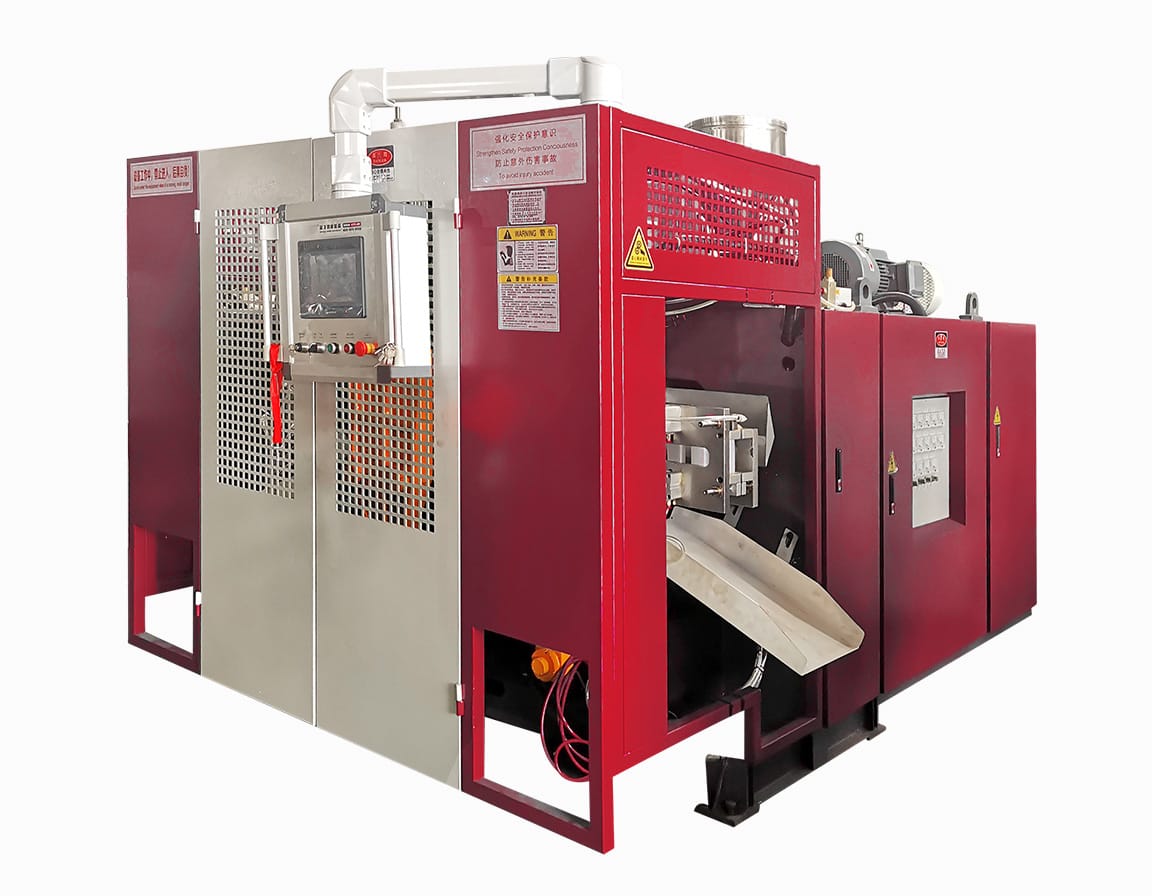



How Can You Ensure Essential Tools Are Included with Your All-Electric EBM Machine?
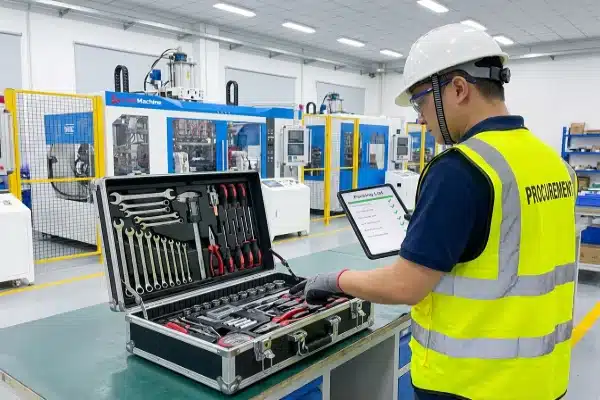
At our factory, we know the frustration of halting installation because a specific wrench is missing arc flash and shock hazards 1. To avoid this costly delay, verifying your toolkit contents before shipment is crucial for immediate startup.
To confirm special tools are included, request a detailed, itemized packing list separating standard maintenance tools from specialized die-head wrenches. Verify these items physically during the Factory Acceptance Test (FAT) and ensure they are cross-referenced against the Bill of Materials before the shipping container is sealed.
Proper verification prevents the nightmare of receiving a high-tech machine without the means to maintain it.
What Distinguishes Standard Maintenance Tools from Specialized EBM Instruments?
When we configure machines for export, we see buyers assume all tools are identical. However, failing to distinguish between general maintenance gear and machine-specific instruments creates significant operational risks.
Standard tools include basic hex keys and screwdrivers for routine adjustments, whereas specialized instruments comprise insulated high-voltage tools for servo drives and custom spanners for die-head calibration. You must explicitly verify that your contract covers both categories to ensure safe, precise maintenance of all-electric systems.
Understanding the “taxonomy of tooling” is the first step in avoiding disputes. In the context of all-electric extrusion blow molding (EBM) machinery 2, the toolkit is not just a box of accessories; it is an integral part of the machine’s operational infrastructure.
The Baseline Mechanical Kit
A standard toolkit generally covers the basics required for assembly and minor adjustments. In our experience, this usually resides in a blow-molded plastic case and includes items like metric Allen keys, open-ended spanners, and non-marring copper mallets for mold changes. These are the tools your operators will use daily. However, “standard” is a subjective term. To ensure nothing is missed, your procurement contract should mandate an itemized packing list.
Electrical Safety for Servo Systems
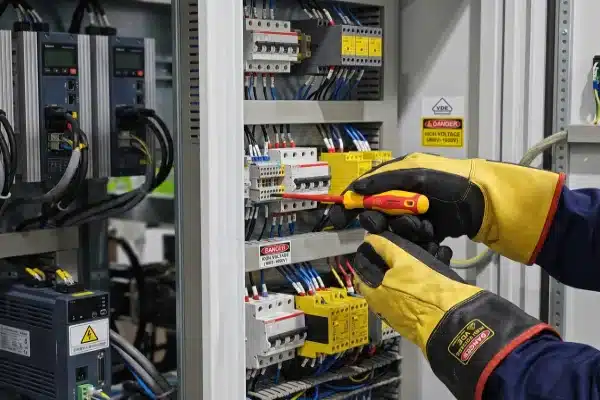
The shift to all-electric platforms introduces high-voltage cabinets (400V–1000V). Unlike hydraulic machines, maintenance here requires VDE-certified insulated tools 3 to protect personnel from arc flash and shock hazards. A standard mechanical toolbox is insufficient. You must verify the inclusion of:
- Insulated screwdrivers (Phillips and slotted).
- High-voltage rated pliers.
- Dielectric cable cutters.
Transmission and Calibration Tools
All-electric machines rely on timing belts and ball screws 4 for precision movement. These components require specific tensioning jigs and belt gauges to maintain synchronization. Without these, your team cannot calibrate the machine correctly, leading to wear on the servo bearings.
| Tool Category | Komponen Khas | Criticality for All-Electric EBM | Inclusion Status |
|---|---|---|---|
| Standard Mechanical | Hex keys, mallets, spanners | High (Daily Use) | Usually Base Price |
| High-Voltage Electrical | Insulated screwdrivers, pliers | Critical (Safety) | Often Optional |
| Transmission Tensioning | Belt gauges, tension jigs | Critical (Precision) | Rarely Included |
Do You Include Specific Wrenches for Die Head and Parison Control Adjustments?
We often remind clients that precise wall thickness control relies on specific hardware. Attempting to calibrate a hot die head with generic pliers is dangerous and damages your investment.
Yes, professional manufacturers must include custom spanner wrenches designed for the specific geometry of the die head and thin-profile anti-rotation wrenches for the parison controller actuators. These proprietary tools are essential for safe, micro-millimeter adjustments of the melt flow and must be itemized in the packing list.
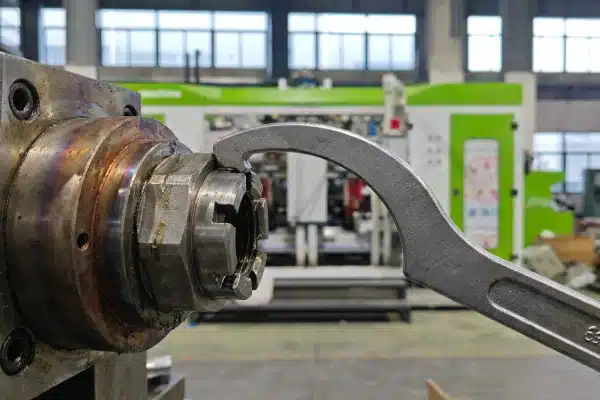
The die head is the heart of the blow molding process, and adjusting it requires more than brute force. The difference between a perfect bottle and a scrap part often comes down to micro-adjustments made at high temperatures (170°C–210°C).
The Danger of Generic Tools
Using a standard adjustable crescent wrench on a precision die head is a recipe for disaster. Die heads feature specific ratchet rings and locking nuts that require custom-machined C-spanners or hook spanners. These tools are designed to fit the exact curvature of the nut, allowing for safe torque application without slipping. If you use the wrong tool, you risk stripping the threads or rounding off the nuts, which can result in uneven wall thickness and permanent damage to the die head components.
Parison Controller Precision
Modern machines use servo-driven parison controllers to regulate wall thickness dynamically. These systems utilize actuators that require sensitive calibration. Crucially, many actuators feature an anti-rotation mechanism that must be held in place with a very thin, specific wrench during installation or adjustment.
- Risikonya: If a standard wrench is too thick to fit the flats, operators might try to tighten the actuator without holding the anti-rotation rod.
- The Consequence: This transmits torque directly into the internal seals and LVDT sensors 5, destroying the actuator and costing thousands in replacement parts.
Critical Verification Questions
When reviewing your packing list, look for specific line items such as “2-inch Hook Spanner” or “3mm Anti-Rotation Wrench.” If the list just says “Tool Set,” you are likely missing these proprietary items.
| Komponen | Required Specialized Tool | Risk of Missing Tool |
|---|---|---|
| Die Head Mandrel | Custom C-Spanner / Hook Spanner | Stripped threads, burn injuries |
| Parison Actuator | Thin-profile Anti-rotation Wrench | Broken internal sensors, actuator failure |
| Die Gap | Precision Feeler Gauges | Uneven parison thickness |
Are Screw Removal and Barrel Cleaning Tools Part of the Base Price?
In our negotiations, we find this is the most common misunderstanding. Buyers expect heavy-duty cleaning kits to be free, but industry standards usually classify these as optional aftermarket accessories.
Generally, comprehensive screw removal and deep-cleaning tools, such as high-carbon barrel brushes, brass scrapers, and media blasting kits, are not included in the base machine price. These are considered consumable or capital extras that buyers must explicitly request and budget for separately to ensure proper maintenance.
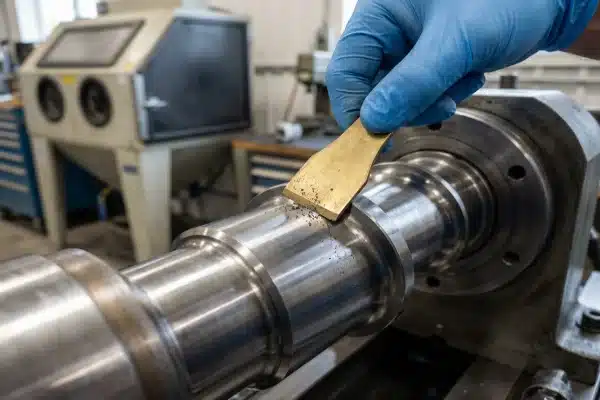
It is vital to distinguish between what is needed to run the machine and what is needed to overhaul it. While we always want to provide a turnkey solution, the economics of heavy maintenance equipment usually place it outside the standard scope of supply.
The “Base Price” Reality
The base price of an EBM machine typically covers the structural and operational hardware. It might include a simple extraction bolt to help start pulling the screw, but it rarely includes the full arsenal needed for a carbonized screw.
- Excluded Items: Heavy-duty wire-wool brushes sized to the barrel bore, rigid extension rods, and specialized brass scraping tools are almost always excluded.
- Why Brass? You cannot use steel tools to clean a screw, as they will scratch the bimetallic or nitrided coating. You must use soft brass or copper tools. Since these wear out, they are viewed as consumables (OpEx) rather than capital equipment (CapEx).
Advanced Cleaning Solutions
For factories running sensitive materials like PVC or PCR (Post-Consumer Recycled) resins, manual cleaning might not be enough.
- Chemical Purging: Emulsion compounds are used to strip color and carbon. These are chemical consumables, never included in the toolbox.
- Media Blasting: For total restoration, off-line media blasting cabinets (using plastic beads) are the gold standard. These are standalone machines costing thousands of dollars and are strictly separate purchases.
Strategic Budgeting
To avoid surprise costs later, we recommend adding a “Maintenance Starter Kit” line item to your initial purchase order. This ensures you have the brass scrapers and bore brushes on day one, rather than waiting weeks for them to arrive while your machine sits idle.
How Can I Verify the Toolbox Content Before the Container is Sealed?
We urge clients to be thorough before shipping. Relying on trust alone can lead to missing parts, so we implement strict procedures to guarantee your inventory is complete.
Implement a rigorous Factory Acceptance Test (FAT) that includes a physical line-by-line audit of the toolbox against the packing list. Follow this with a Container Loading Inspection (CLI) where you verify the specific toolbox is loaded and the container seal is documented via video and photography.
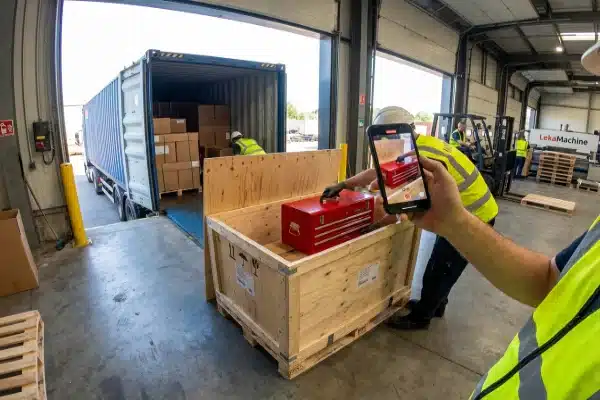
Paperwork is not enough. To ensure that the specialized tools you paid for actually arrive at your facility, you must integrate physical verification into your pre-shipment protocols.
The FAT Audit: Touch Every Tool
During the Factory Acceptance Test (FAT) 6, do not just watch the machine run dry cycles. Allocate time for a static inventory audit.
- Physical Check: Take the packing list and physically touch every item. Open the cases. Check the torque wrenches.
- Calibration Check: For precision tools like torque wrenches, verify the serial number on the tool matches the calibration certificate provided. If the certificate is missing or expired, reject the tool immediately.
- Fit Check: Ask the technician to demonstrate the die head spanner. Does it actually fit the nut? We have seen instances where suppliers packed generic spanners that were slightly the wrong size.
The CLI: Forensic Evidence
The gap between the FAT and the actual shipping date is the “danger zone” for lost items. A Container Loading Inspection (CLI) mitigates this.
- Video Monitoring: Use high-definition video to record the toolbox being placed into the crate and the crate being loaded into the container.
- Seal Verification: Document the high-security bolt seal on the container doors. Record the unique alphanumeric sequence. This “Spin Test” and photographic evidence prevent tampering during transit and provide irrefutable proof for insurance claims if the container arrives light.
Digital Tracking with RFID
For high-value or proprietary tooling, modern tracking solutions are becoming standard.
- RFID Tags: Some advanced setups utilize passive RFID tags embedded in tool handles. This allows a scanner to instantly reconcile the box contents against the ERP system before the lid is even closed.
- Benefit: This eliminates human error and ensures the shipping manifest is 100% accurate, preventing the “he-said-she-said” disputes that often occur regarding missing items.
| Verification Step | Action Item | Objective |
|---|---|---|
| FAT (Factory) | Physical audit & Fit test | Ensure tools exist and fit the machine. |
| Calibration | Match Serial # to Cert | Ensure torque wrenches are accurate. |
| CLI (Loading) | Video & Seal Log | Prevent pilferage after packing. |
Kesimpulan
To guarantee a smooth startup, do not assume tools are included. Demand detailed lists, budget for cleaning kits, and physically verify inventory before the container seal clicks shut.
Catatan kaki
- Details the dangers and safety considerations for arc flash hazards. ↩︎
- Provides an overview of all-electric extrusion blow molding machines. ↩︎
- Defines VDE certification for electrical safety tools and their importance. ↩︎
- Found a direct comparison and guide for choosing between timing belts and ball screws. ↩︎
- Explains the working principle and applications of LVDT sensors. ↩︎
- Explains the purpose and process of a Factory Acceptance Test. ↩︎




0 Komentar